Rose Suckers Below the Graft: What to Remove

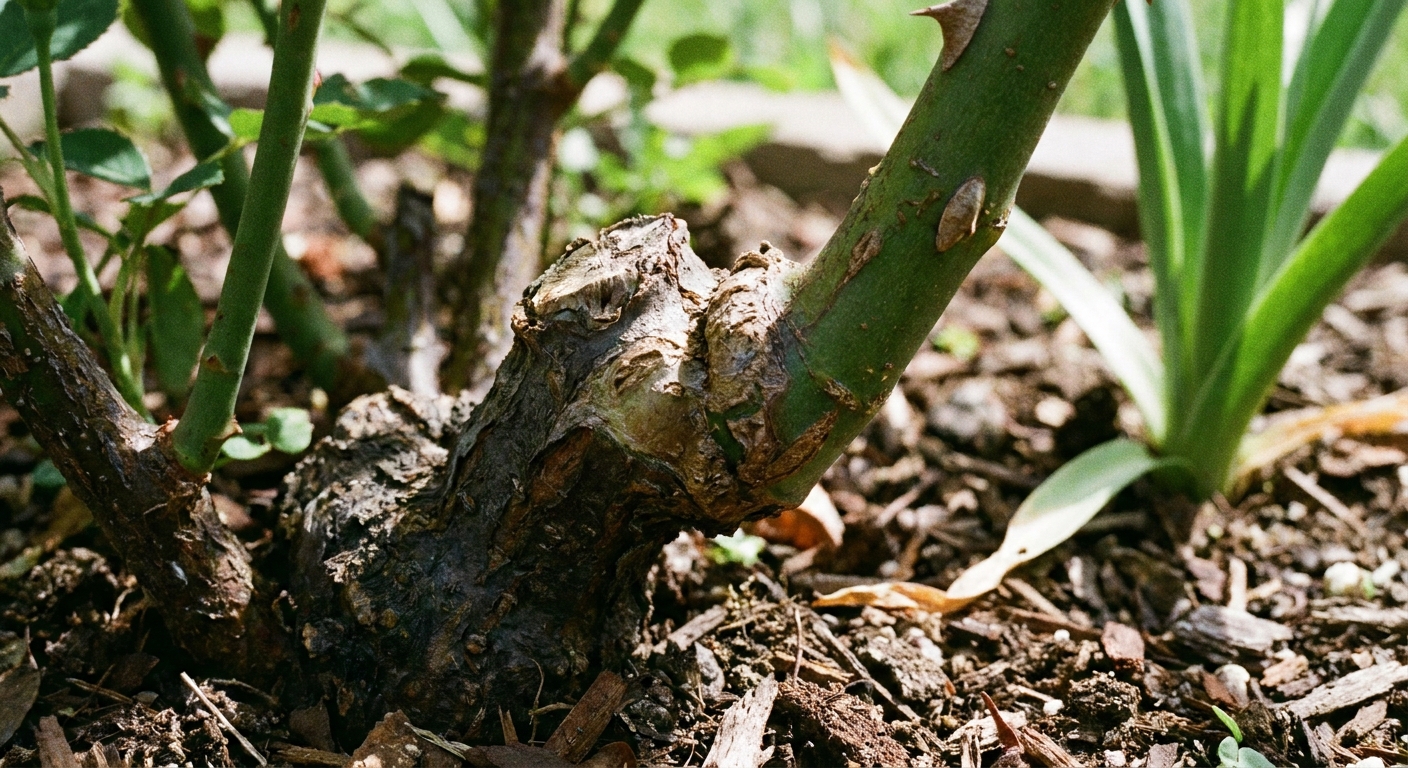
The first time I saw a sucker on a grafted rose, I was oddly proud. Look at that vigor, I thought. My rose is thriving. Two months later, that “thriving” cane was throwing a completely different flower color and the plant’s nice, well-behaved shape had turned into a thorny, chaotic octopus.
If your rose is grafted and it is sending up fast-growing shoots from low on the plant, especially from below a knobby swelling on the base, you may be looking at rootstock suckers. Those are not “extra” canes to keep. They are the understock trying to take over.

What a rose sucker is
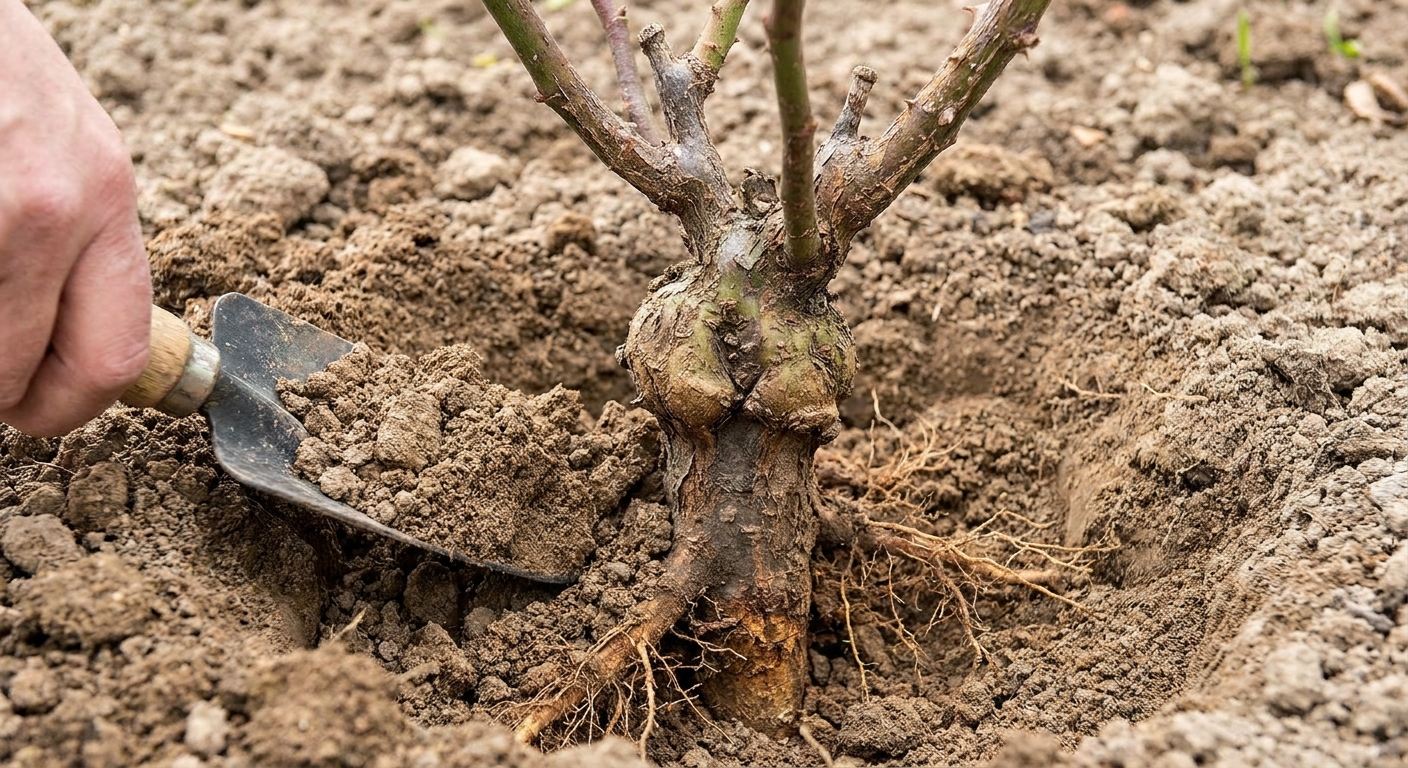
On many garden roses, the flowering variety you bought was grafted onto a tougher, more vigorous root system called rootstock. The point where the two were joined is the bud union (also called the graft union).
A sucker is a shoot that grows from the rootstock, not from the variety you chose. Left alone, it can outgrow the desired rose because rootstock is selected for strength and speed.
Why remove suckers
- They outcompete the grafted rose for light and resources and can reduce flowering over time.
- They can take over the framework, especially if they become the strongest, tallest canes on the plant.
- They are often thornier and wilder in habit, which makes pruning and training harder.
Find the bud union
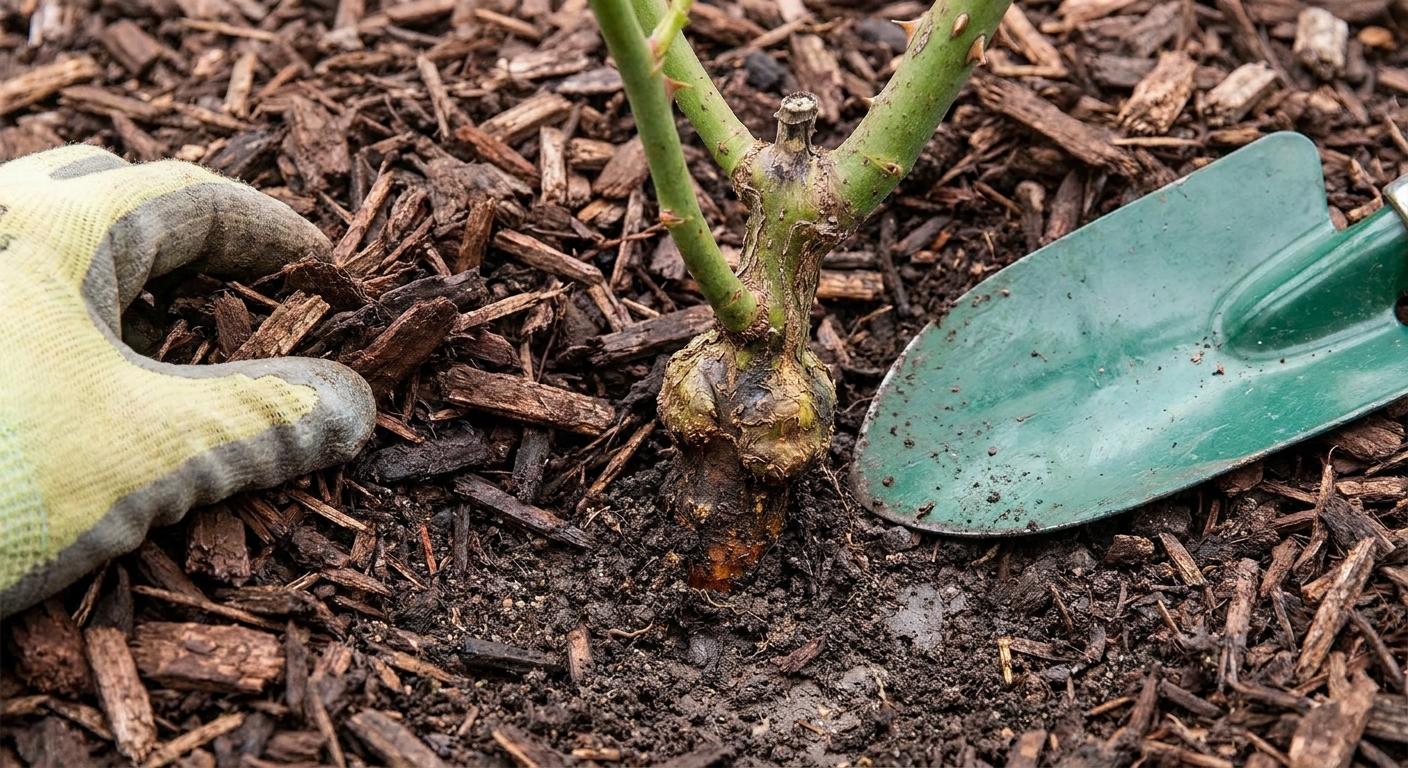
You cannot confidently identify suckers until you know where the graft is. The bud union is usually a swollen, knobby area near the soil line, like a little woody fist. Sometimes it is a lumpy bend where several canes branch out. On very young roses, or roses with soil and mulch piled up around the base, it can be surprisingly hard to spot at first.
Where to look
- In-ground roses: check right at the soil surface. In colder climates, the union is often buried a couple inches for winter protection, so you may need to gently pull mulch back.
- Container roses: the union is commonly above the potting mix, but not always. Still check around the base carefully.
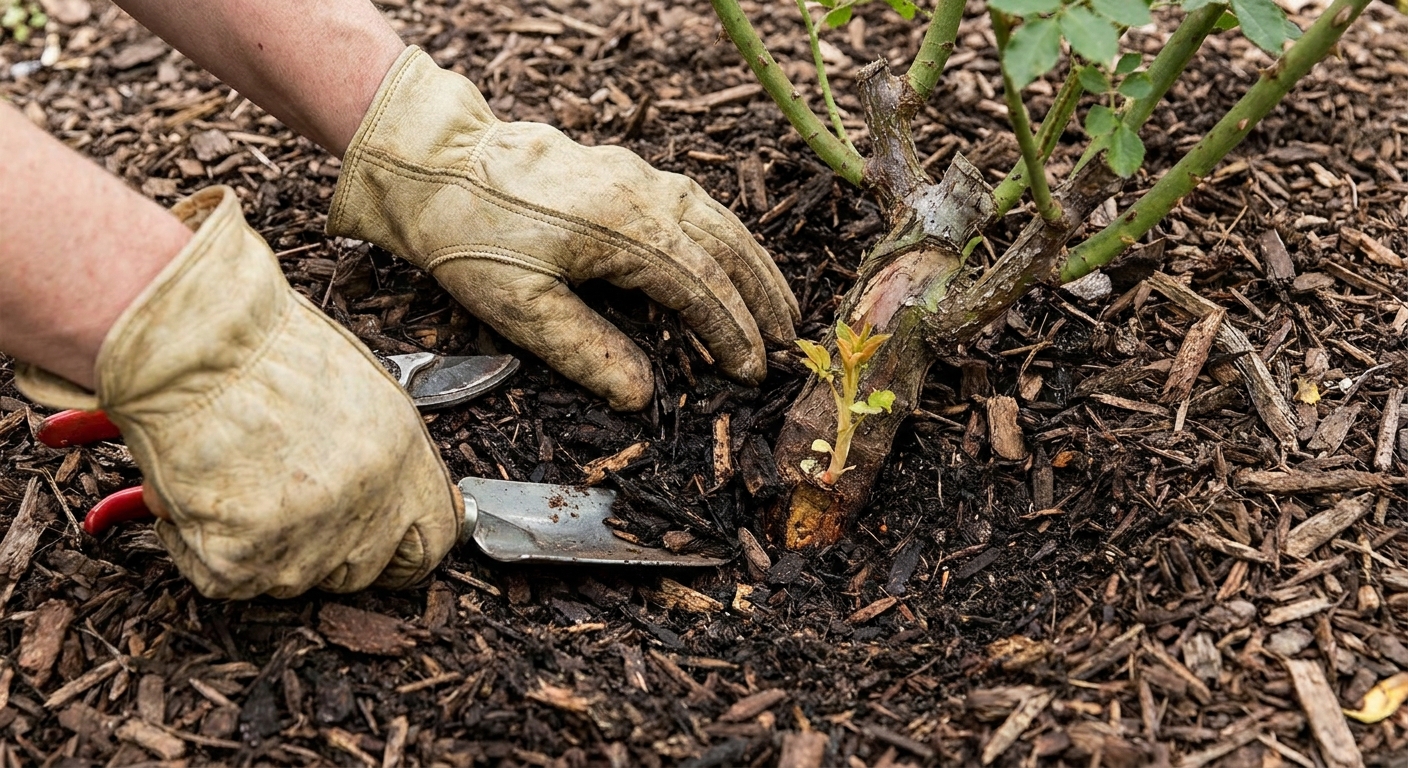
Tip: Brush soil away with your fingers or a small hand trowel. I avoid scraping hard with metal tools right against the crown because it is easy to nick bark.
Sucker or real cane
Gardeners sometimes hear “anything below the graft is a sucker,” and that is the best rule. But in real life, the graft can be buried, the plant can be crooked, and shoots can pop out at confusing angles. These clues help you decide.
1) Location
- Almost always a sucker: the shoot starts below the bud union, from the root crown or directly from a root.
- Usually your rose: the shoot starts above the bud union on the variety’s woody framework.
2) Growth
Rootstock shoots often grow like they have something to prove. They can be:
- thicker and longer quickly
- more upright, less graceful
- covered in more thorns, sometimes smaller and more densely packed
3) Leaves
This is the “hmm, that looks different” moment many gardeners notice first. Depending on the rootstock, sucker leaves may be:
- smaller or narrower
- lighter green or extra glossy
- different leaflet number (many roses have 5 leaflets per leaf, but some rootstocks may show 7 or have a different overall look)
Do not rely on leaflet count alone because healthy canes on your variety can also throw 7 leaflets. Instead, compare: hold a leaf from the suspicious cane next to a leaf from a known “good” cane and look at color, serration, and thickness.
4) Flowers
If you let a sucker mature, it may bloom with:
- single, simple flowers rather than the fuller blooms you expect
- different color
- a different bloom timing or cluster style
By the time it flowers, it has already taken energy. I treat flowers as confirmation, not the first test.
What to remove
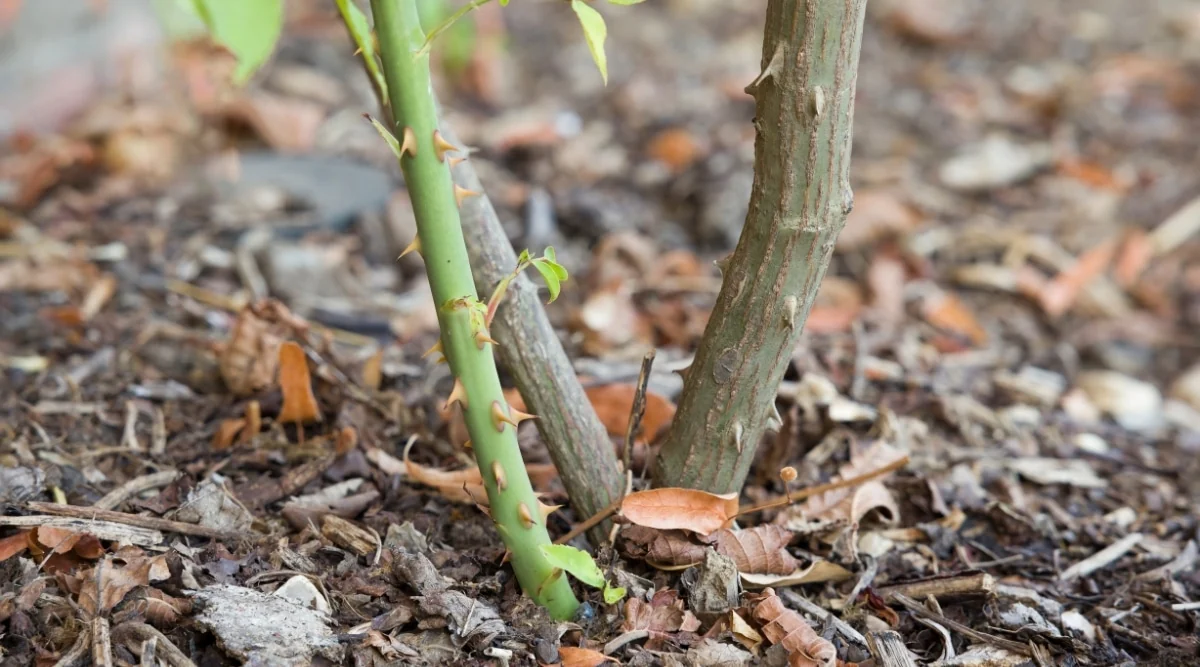
Here is the simple rule I teach new rose growers: If it starts below the bud union, it goes.
That includes shoots that:
- emerge from the soil near the plant and trace back to a root
- sprout from the rootstock trunk below the swollen union
- appear to come from the base but actually originate under the graft once you clear soil away
What not to remove: canes that clearly originate above the bud union, even if they are long. Those are part of seasonal pruning and shaping, which is a different decision than sucker removal.
How to remove suckers
This is the part most people get wrong, because it is tempting to just snip the sucker at ground level. Unfortunately, that often leaves behind the bud tissue that can resprout from the same spot.
Before you start
- Wear thick gloves and eye protection. Suckers are often the thorny ones, and they fight back.
- Use clean tools. If you are cutting, wipe pruners or a knife between plants, especially if you suspect cane disease.
Step 1: Expose the origin
Pull mulch back. Then gently scrape soil away until you can see where the sucker is attached.
- If it is coming from the rootstock stem below the union, you should be able to see the attachment.
- If it is coming from a root, follow it down as far as you reasonably can without turning your rose bed into an archaeological dig.
Step 2: Remove it at the source
Your goal is to remove the growth point that would re-sprout.
- If the shoot is young and flexible: try to pull or tear it downward from the point of origin. Done carefully, this often removes more of the basal bud tissue than a clean snip.
- If it is thick or woody: use sharp, clean pruners or a knife and cut it as flush as you can against the rootstock or root, without gouging into the main stem.
Step 3: Re-cover
After removal, smooth the soil back into place and reapply mulch, keeping it a little pulled back from the actual crown to avoid constant moisture against bark.
Step 4: Watch for repeats
Check the base every couple of weeks during active growth. The earlier you catch suckers, the easier they are to remove cleanly.
When to remove suckers
Remove suckers as soon as you spot them in any season the ground is workable.
- Spring: a very common time for suckers to pop as the plant wakes up.
- Summer: remove immediately, especially if you are fertilizing and irrigating because that can fuel rootstock growth.
- Fall: remove if you can clearly trace it below the union. Do not do major digging right before a hard freeze if your soil is already cold and wet.
- Winter in mild climates: fine to remove on a mild day if the plant is not frozen.
If you are also doing your regular seasonal rose pruning, treat sucker removal as separate. Pruning is about shaping the variety’s canes. Sucker removal is about protecting the variety from being replaced.
Tricky situations
Buried graft
If your bud union is below soil level, a cane can look like it comes from “the base” when it is actually above the union. Take 2 minutes to expose the union before you cut. It is worth the dirt under your nails.
Sucker away from the plant
That is classic root suckering. Rootstock can send shoots up from spreading roots. Follow it back gently. If it connects to a root, remove it flush to that root if possible.
Own-root roses
Some roses are grown on their own roots rather than grafted. These can still send up basal breaks from the crown, but they are not rootstock suckers because there is no rootstock. If you cannot find a bud union at all and the canes all look consistent, your rose may be own-root. In that case, “suckers” are often just new canes you might want to keep.
Dr. Huey and other rootstocks
In many regions, a common rootstock is Dr. Huey. Its shoots often have darker, sometimes purplish-red new growth and can bloom with deep red, semi-double flowers. If your pale pink rose suddenly has a cane racing upward with very different foliage, that is your cue to check below the graft.
That said, rootstock varies by region and grower. Some roses are grafted onto multiflora types, ‘Fortuniana’ in warm climates, or other understocks, so the exact leaf and flower look can differ. The location below the bud union is still your most reliable test.
Common mistakes
- Snipping at the surface: it usually comes back because the growth point is still there. Remove at the origin point.
- Leaving a stub: stubs resprout easily and can die back messily.
- Assuming thorniness equals sucker: some varieties are ferocious too. Location matters most.
- Removing the wrong cane during spring pruning: always find the bud union first, especially if the plant was planted deep.
- Letting suckers flower “just to see”: curiosity is charming, but it costs your rose energy.
FAQ
Will removing suckers hurt my rose?
If you remove only shoots that originate below the bud union, you are helping your rose. Be gentle with digging, and use sharp tools if you need to cut flush.
Should I seal the wound?
No sealant is necessary in most home gardens. Focus on removal at the source and good plant care. If you are working in very wet conditions, avoid leaving the crown area soggy under heavy mulch.
My rose keeps producing suckers. Is it dying?
Not necessarily. Some rootstocks are persistent. But repeated suckering can also happen if the grafted variety is stressed, damaged, or has died back. If most of what is growing now is below the union, the variety may be lost and the plant you have left is the rootstock.
What if the grafted rose is already gone?
If everything is coming from below the union and the blooms match the rootstock, replacement is often the simplest option unless you are happy growing the rootstock rose as-is.
Can I root the sucker to get a new rose?
You can, but it will not be the named variety you bought. It will be the rootstock rose, which is grown for toughness, not for showy blooms.
One quick check
Any time your rose looks “different” from last year, I want you to do one small, grounding thing: kneel down, brush back the mulch, and look for the bud union. Once you know where the graft is, the decision gets wonderfully simple.
Keep what grows above it. Remove what grows below it. Your rose will thank you with the kind of blooms that made you plant it in the first place.