
Rose of Sharon Care and Pruning

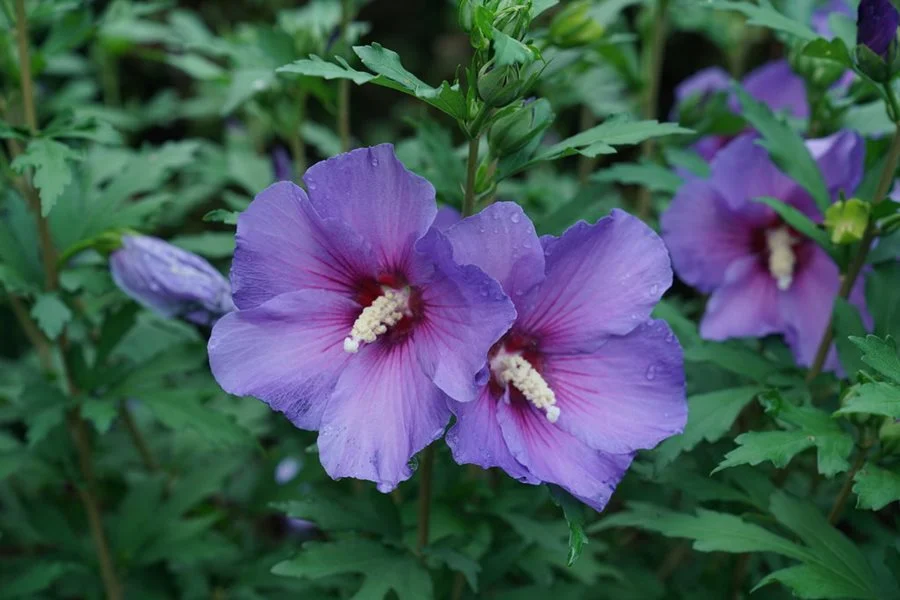
Rose of Sharon (Hibiscus syriacus) is one of the hibiscus that truly belongs in your landscape. It is a hardy, deciduous shrub that shrugs off winter, leafs out late, then pays you back with months of big, papery blooms when many shrubs are taking a nap.
Because Leafy Zen already has tropical indoor hibiscus covered, this page is all about the outdoor kind: how to site it, how to prune it (without sacrificing flowers), and how to keep it from turning into a too-close, too-tall "foundation hugger" (an overgrown shrub pressed against siding, windows, and walkways) or a seedling factory.

Quick ID: Rose of Sharon vs. Tropical Hibiscus
If you have ever bought a hibiscus in a pot at a big box store, that is usually tropical hibiscus (Hibiscus rosa-sinensis). Gorgeous, but it is not winter-hardy in most climates and it is typically treated as a houseplant or patio plant.
- Rose of Sharon: Woody shrub, deciduous, hardy in many regions (often USDA Zones 5 to 8, sometimes 9 depending on cultivar and local conditions), blooms on new wood in summer.
- Tropical hibiscus: Tender evergreen or semi-evergreen, frost sensitive, often blooms much of the year in warm conditions, usually grown in containers outside the tropics.
That "blooms on new wood" detail is your pruning superpower. It means you can prune in late winter and still get flowers.
Sun, Soil, and Placement
Sun needs
Rose of Sharon flowers best in full sun, meaning 6 or more hours of direct light. It will tolerate part sun, but you may see fewer blooms and a looser shape.
- Best: Full sun with good airflow for leaf health.
- Okay: Morning sun and afternoon shade, especially in hotter inland areas.
- Trouble spot: Deep shade. Expect lanky growth and skimpy flowering.
Soil and watering
This shrub is refreshingly un-fussy once established, but it does not enjoy soggy feet.
- Soil: Average garden soil is fine. Aim for well-drained. If you have heavy clay, loosen a wide area and top-dress with compost yearly rather than digging deep "bathtubs."
- Water: Water deeply during its first season. After that, it is fairly drought tolerant, but it will bloom better with consistent moisture during prolonged heat.
- Mulch: A 2 to 3 inch layer of mulch helps even out moisture and keeps mower damage away from the trunk. Keep mulch a few inches back from the stems.
Managing size near foundations
Rose of Sharon can mature around 6 to 12 feet tall and roughly 4 to 10 feet wide, depending on cultivar and pruning. That is wonderful as a privacy shrub, but it can be a headache planted right against a house.
- Spacing rule of thumb: Plant so the shrub can mature with at least 2 to 3 feet of breathing room from siding, eaves, and windows. More is better if you want easy access for pruning.
- Choose the right cultivar: Look for narrower or more compact forms if you are planting in a foundation bed.
- Plan for access: Leave a walkway gap so you can prune without doing the sideways hedge-trimmer shuffle.
When to Prune
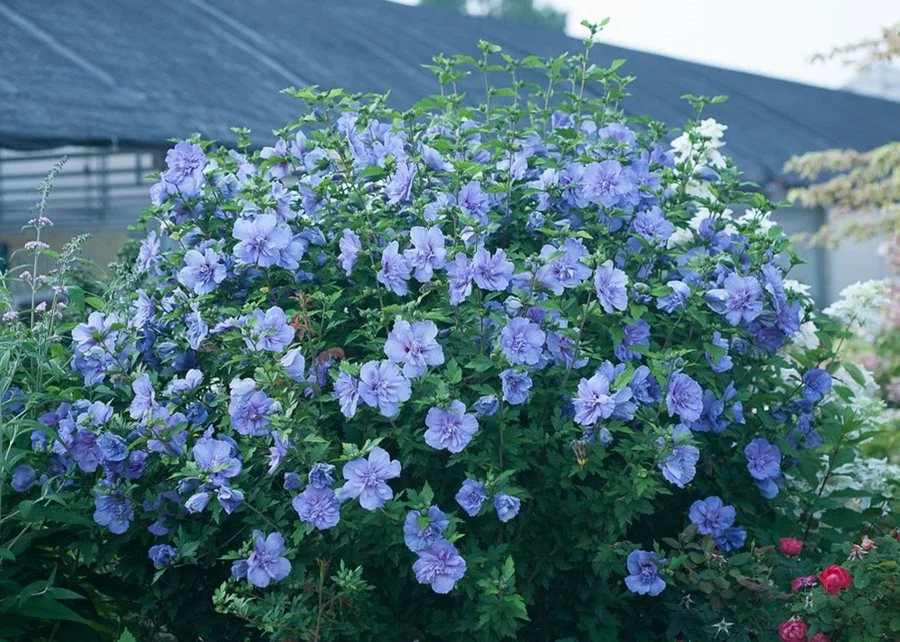
Rose of Sharon blooms on new growth, so you can prune it while it is dormant without wiping out your summer flowers.
Best timing
- Late winter to early spring: After the coldest weather has passed but before strong new growth starts. In many areas, that is late February through March, and sometimes into early April in colder zones.
- Why not fall: Fall pruning can encourage tender new growth that gets winter-damaged, and you lose the visual structure that helps you see what needs shaping.
About that late leaf-out panic
Rose of Sharon is famously late to wake up. I have watched gardeners declare it dead in late spring, only for it to pop green later, even edging into early summer in colder zones, like it is making a dramatic entrance.
If your plant is slow, scratch-test a twig. Green under the bark means it is alive. Be patient, and keep your pruners ready for late winter next year.
How to Prune
Before you start, grab sharp hand pruners, loppers for thicker stems, and a small pruning saw if the shrub has older, crowded wood. Wipe blades with alcohol if you are moving between plants.
Step 1: Start simple
- Dead, broken, or diseased branches
- Stems rubbing against each other
- Low branches you do not want (especially in tight foundation beds)
Step 2: Thin for airflow
Thinning means removing whole stems back to their point of origin, not just shearing tips. This keeps the shrub from turning into a dense mop that blooms only on the outside.
- Remove a few of the oldest, thickest stems at the base to refresh the shrub.
- Aim for an open, vase-like interior where light can reach into the middle.
Step 3: Control size
Once it is thinned, you can reduce height and width. Cut just above an outward-facing bud or branch junction.
- Light shaping: Trim back last year’s growth by about 1/3 for a tidier outline and plenty of blooms.
- Harder size reduction: You can cut stems back more aggressively if needed. Because it blooms on new wood, it will still flower, but expect later blooms and bigger, more vigorous shoots.
Clara’s practical note: If your goal is a naturally graceful shrub, resist the urge to poodle prune it into a perfect ball. Rose of Sharon looks happiest with a little wiggle and air.
Pruning Styles
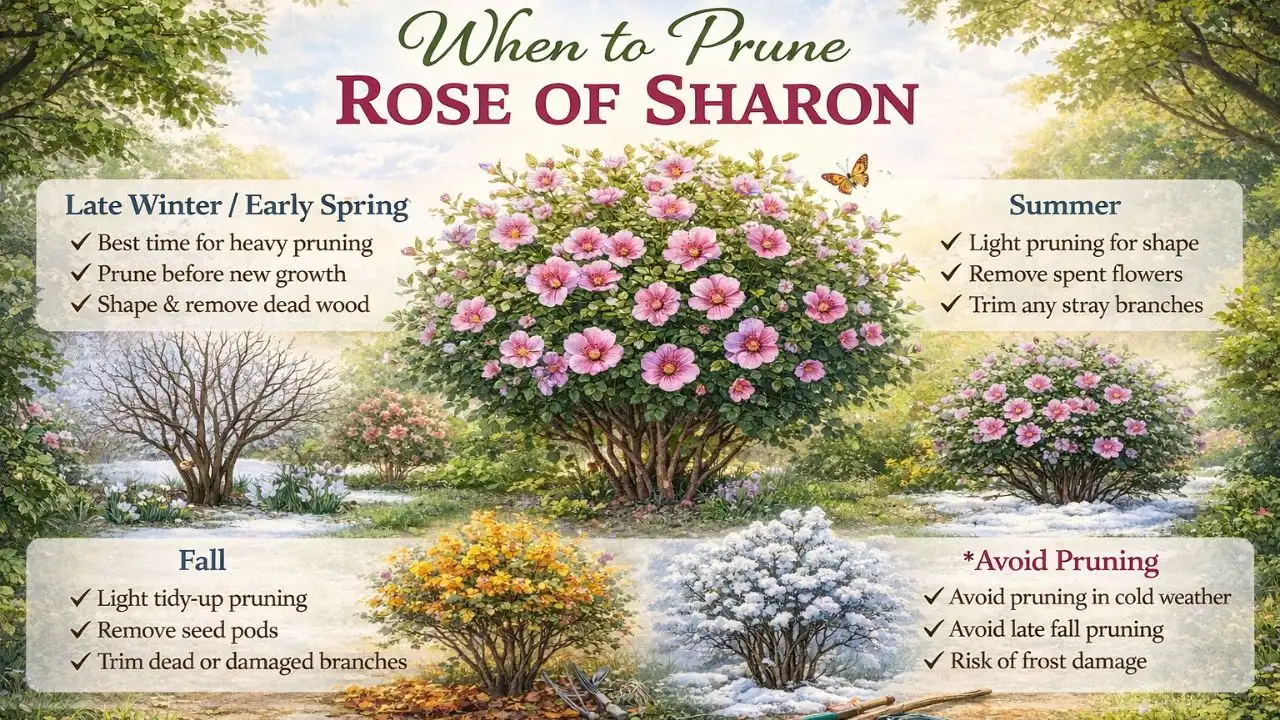
Natural multi-stem shrub
This is the default form and my personal favorite for most landscapes.
- Thin crowded stems at the base.
- Reduce height as needed by cutting back to a branching point.
- Keep the center open so leaves dry quickly after rain.
Small tree form
Rose of Sharon can be trained into a small tree form, which is handy when you want blooms above eye level without the shrub swallowing a walkway.
- Choose 1 to 3 strong trunks.
- Remove suckers and low side branches gradually over a couple of seasons.
- Maintain a canopy by thinning and lightly shortening upper branches each late winter.
Informal hedge or screen
For a flowering screen, spacing and pruning style matter.
- Space plants so they can touch at maturity without extreme shearing.
- Prune with thinning cuts so light reaches the lower branches, otherwise you get bare legs.
- Keep the top slightly narrower than the base so sun hits the lower leaves.
If you must shear, do it lightly after the main late winter pruning, and know you are trading some flower display for that crisp line.
Seedlings and Self-Sowing
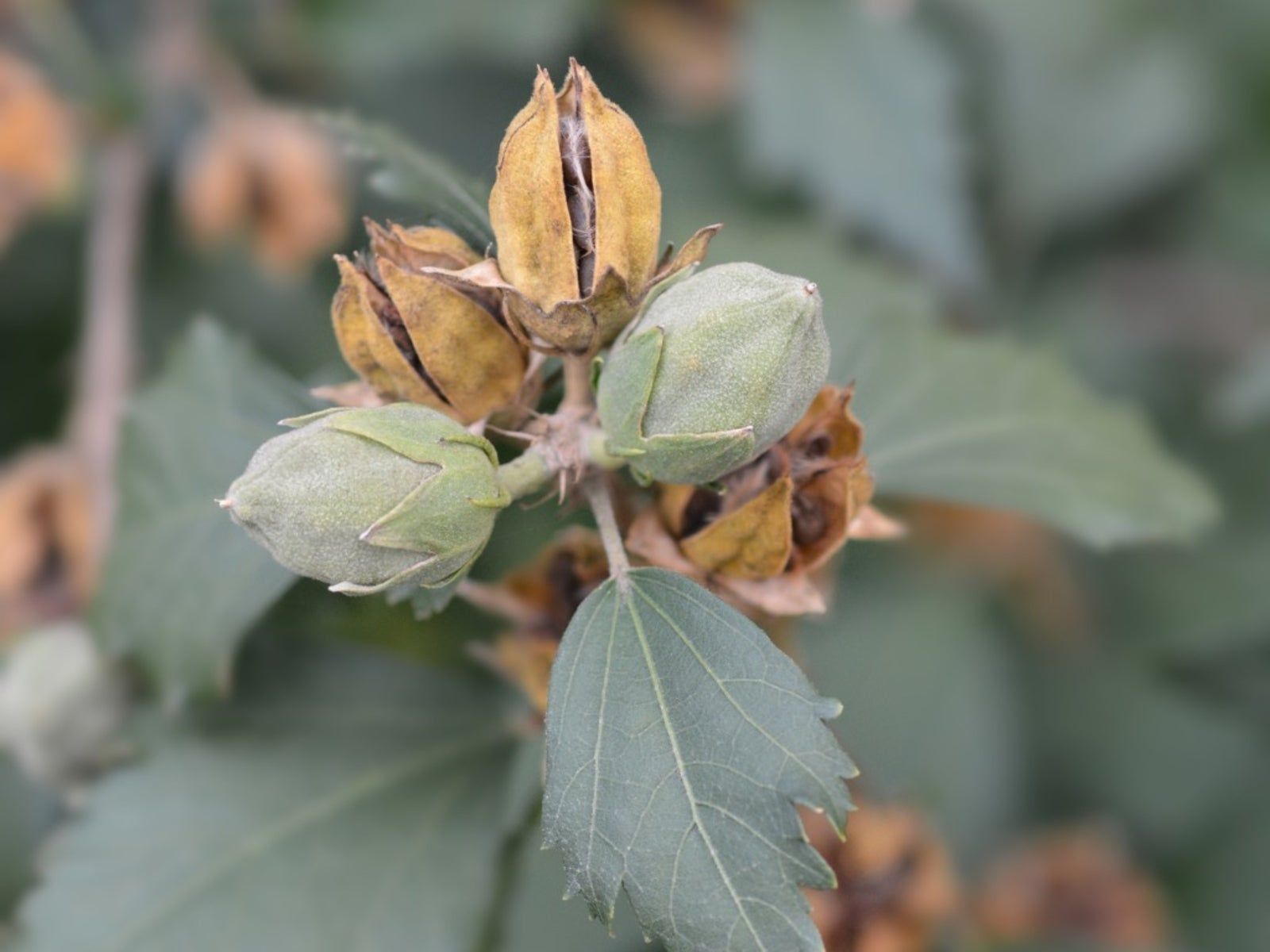
Some Rose of Sharon varieties can self-seed enthusiastically. In some regions and gardens, those seedlings pop up in beds, cracks, and anywhere the wind can tuck a seed. In certain areas, it can be considered invasive or a problem plant, including parts of the eastern United States. Check your state or provincial invasive plant lists and local extension guidance, and choose cultivars responsibly.
How to reduce seedlings
- Choose low-seed or sterile cultivars: Many modern varieties are bred to produce few or no viable seeds. (Always double-check tags and local notes because performance can vary by region.)
- Deadhead spent blooms: Snip off fading flowers before seed pods mature. This is easiest on smaller shrubs or tree forms.
- Mulch and patrol: A mulch layer makes seedlings easier to spot and pull.
How to remove seedlings
Seedlings are easiest when small. After rain or watering, pinch or pull them when they are just a few inches tall. If they are already woody, use a hand fork to loosen soil and remove the roots.
Do not compost mature seed pods if you are battling self-sowing. Bag them instead.
Common Problems
Too tall, too fast
- Fix: Late winter thinning plus height reduction cuts to a branching point.
- Long-term: Consider tree-form training or replacing with a smaller cultivar if it is planted in a tight foundation bed.
Leggy and bare at the bottom
- Fix: Improve light by thinning neighboring plants and thinning Rose of Sharon’s interior.
- Design trick: Underplant with low perennials to soften bare stems, but do not pile soil or mulch against the trunks.
Lots of leaves, not many flowers
- Check sun first. More sun almost always means more blooms.
- Go easy on high-nitrogen fertilizer. It can push leafy growth at the expense of flowers.
- Prune at the right time. Late winter is ideal.
Japanese beetles and aphids
Rose of Sharon can be a magnet for Japanese beetles in summer and aphids on tender new growth. You do not need to panic, but you do want to act early.
- Japanese beetles: Hand-pick into a bucket of soapy water in the cool morning, when they are sluggish. If the pressure is heavy every year, consider covering the shrub temporarily with netting during peak flight, or talk with your local extension office about region-appropriate control options.
- Aphids: Blast them off with a strong spray of water, especially on new tips. Avoid over-fertilizing with nitrogen, which can make new growth extra appealing. If needed, insecticidal soap can help when sprayed thoroughly on the undersides of leaves.
Leaf spot or powdery mildew
These show up most in humid weather or crowded plantings.
- Fix: Thin for airflow, water at the soil line (not overhead), and clean up fallen leaves. Most of the time, better spacing and sun do more than any spray.
Winter tip dieback
In colder zones, twig tips can die back. This is normal. In late winter, prune back to healthy wood and let the plant regrow.
Feeding and Fertilizer
Rose of Sharon is not a heavy feeder. For most gardens, a spring top-dress of compost and an annual mulch refresh is plenty.
- If you choose to fertilize, use a balanced, slow-release option in spring and avoid going heavy on nitrogen.
- If the shrub is lush but stingy with blooms, skip feeding and focus on sun and pruning instead.
Seasonal Checklist
Late winter to early spring
- Prune for structure, airflow, and size
- Remove old stems at the base if crowded
- Top-dress with compost, refresh mulch
Late spring to summer
- Water during dry spells for best bloom
- Deadhead if you want fewer seed pods
- Pull seedlings while small
- Watch for aphids on new tips and beetles on blooms
Fall
- Stop pruning
- Keep mulch tidy, but do not mound against stems
- Enjoy the structure and leave the rest for late winter
One Last Encouragement
Rose of Sharon is one of those shrubs that forgives beginners and rewards the curious. If pruning makes you nervous, start with the three D’s first: dead, damaged, and diseased. Then step back, sip something warm, and make one or two thinning cuts. You are not carving marble. You are simply helping a living plant breathe and bloom.
And if you talk to it while you prune, I will not judge. My ferns get pep talks daily.