
Rhaphidophora Tetrasperma Care Indoors

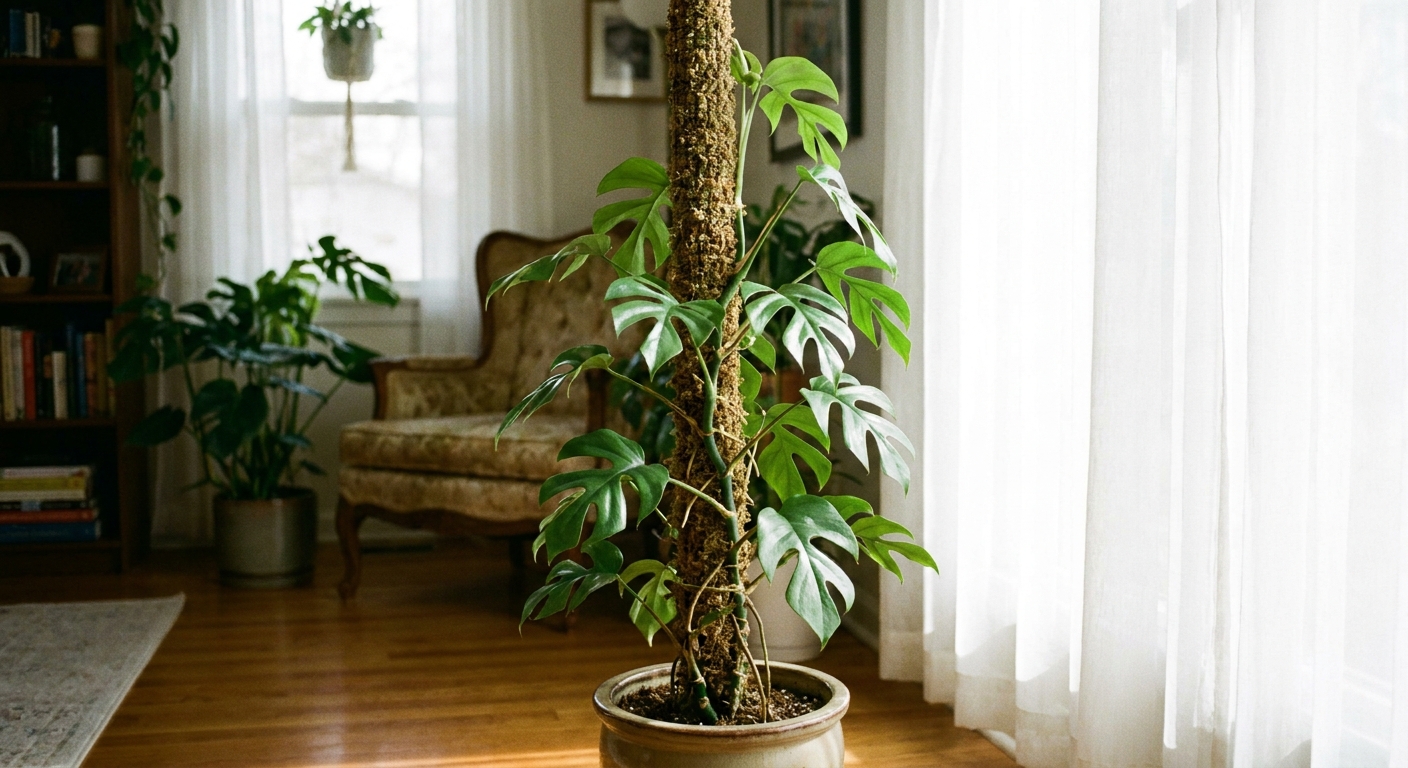
If you have ever wanted a plant that looks like it is auditioning for a tropical jungle movie but behaves like a fairly reasonable houseplant, Rhaphidophora tetrasperma is your friend. It is often sold as “mini monstera,” and the leaves really do develop those adorable splits that make you feel like you have your life together.
My biggest promise: you do not need a greenhouse. You just need a few simple care habits, a little patience, and a willingness to adjust when the plant tells you what it wants. I talk to my ferns. Your tetrasperma will be fine even if you do not.

Meet the mini monstera (and what it is not)
Rhaphidophora tetrasperma is an aroid that loves to climb. Indoors, it grows quickly when it is happy and will reward you with larger, more split leaves as it matures.
Rhaphidophora tetrasperma vs. Monstera deliciosa
- Different genus, similar vibe: Tetrasperma is not a true Monstera, even though the leaf splits look similar.
- Leaf size: Monstera deliciosa gets dramatically larger leaves and can develop both splits and holes. Tetrasperma stays smaller and usually shows splits rather than the classic Monstera “windows,” though very mature leaves can sometimes get a bit fancy in their own way.
- Growth habit: Both climb, but tetrasperma often looks more vine-like and benefits from early support.
Rhaphidophora tetrasperma vs. Rhaphidophora hayi
- Hayi is the shingle plant: Rhaphidophora hayi hugs a surface with flat, overlapping leaves like shingles.
- Tetrasperma wants to reach: It climbs too, but it throws out longer stems and wants something to grab and ascend.
- Care overlap: Both prefer bright indirect light, humidity, and an airy mix, but hayi is more “wall hugger,” tetrasperma is more “vine climber.”
If a plant label says “mini monstera,” odds are high it is tetrasperma, but the best confirmation is the leaf shape and growth pattern as it matures.
Light: bright and indirect
In my experience, light is the difference between a compact, leafy plant and a long, sparse vine that looks like it is reaching for help.
Best light indoors
- Bright indirect light is the sweet spot.
- Near an east window is often perfect. South or west can work if you soften it with a sheer curtain or move the plant back from the glass.
- Low light will not kill it quickly, but it will slow growth and cause legginess.
Can it take direct sun?
Gentle morning sun is usually fine. Harsh midday or afternoon sun can scorch leaves, especially if your plant has been living in lower light.
Quick light check
If you can comfortably read a book in that spot during the day without turning on a lamp, you are in the right neighborhood for tetrasperma.
If you want a less poetic option: aim for a bright spot within a few feet of a window (or right in an east window), with no hard sunbeams roasting the leaves.
Watering rhythm: soak, then breathe
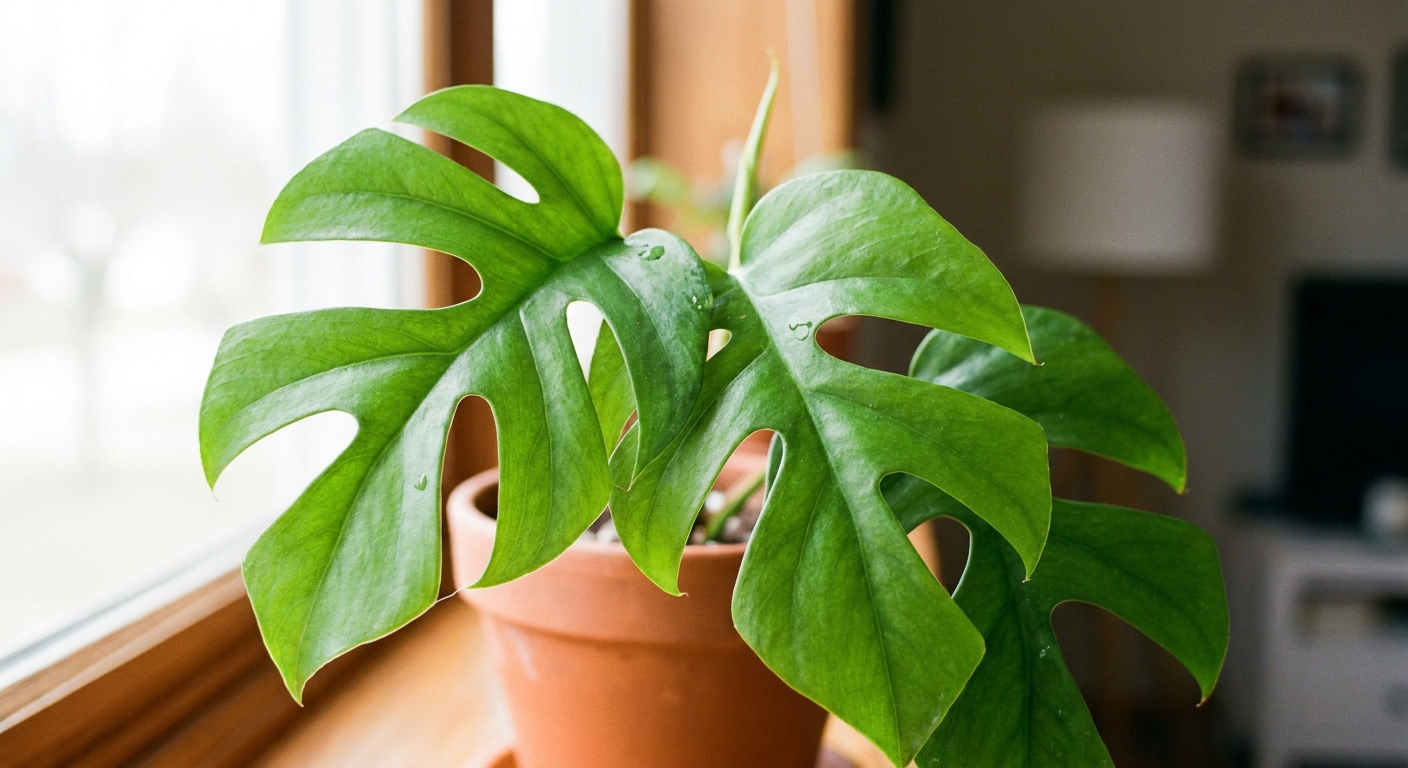
Mini monstera is happiest when you water thoroughly, then allow the potting mix to dry a bit before watering again. The goal is “evenly moist,” not “constantly wet.” In real life, that means the mix should get a proper drink, then partially dry out, then get watered again. Not swamp. Not desert. Somewhere in the middle where the roots can actually breathe.
When to water
- Water when the top 2 to 3 inches of the mix feels dry.
- If your pot is small or your home is warm and bright, that might be weekly. In winter, it might stretch to every 10 to 14 days.
How to water (my foolproof method)
- Take it to the sink or use a saucer.
- Water slowly until it runs from the drainage holes.
- Let it drain completely. No plant likes wet socks.
Signs you are overwatering
- Yellowing leaves starting lower on the plant
- Soft stems, mushy soil, or a sour smell
- Fungus gnats that will not leave you alone
Signs you are underwatering
- Crispy brown edges
- Drooping that perks up quickly after watering
- Soil pulling away from the pot sides
Root rot: spot it and fix it
If your tetrasperma is yellowing fast, staying damp forever, or smelling vaguely like a forgotten gym bag, do a quick root check. Root rot is not a moral failing. It is just roots sitting wet for too long.
How to check
- Slide the plant out of the pot and look at the roots.
- Healthy roots are firm and light-colored.
- Rotting roots are brown or black, mushy, and may smell sour.
What to do
- Trim mushy roots with clean scissors.
- Repot into fresh, chunky mix in a pot with drainage.
- Hold off on fertilizing for a few weeks and water a bit more cautiously while it recovers.
Humidity and temperature: tropical, not fussy
Rhaphidophora tetrasperma is forgiving, but it looks its best with a little extra humidity.
Ideal ranges
- Humidity: It is happiest around 40 to 60 percent plus, and it can absolutely enjoy 60 to 70 percent if your home naturally runs that way.
- Temperature: Aim for 65 to 85°F (18 to 29°C). Avoid cold drafts and heat vents.
Easy humidity boosts that actually work
- Group plants together
- Use a small humidifier nearby
- Move it to a naturally humid room with good light, like a bright bathroom
Misting is not harmful if you enjoy it, but it is usually a short-lived humidity boost. Think of it as a spa spritz, not a long-term plan.
Soil mix: chunky and airy
This is an aroid, which means it loves oxygen around the roots. A dense, peat-heavy mix stays wet too long and invites root trouble.
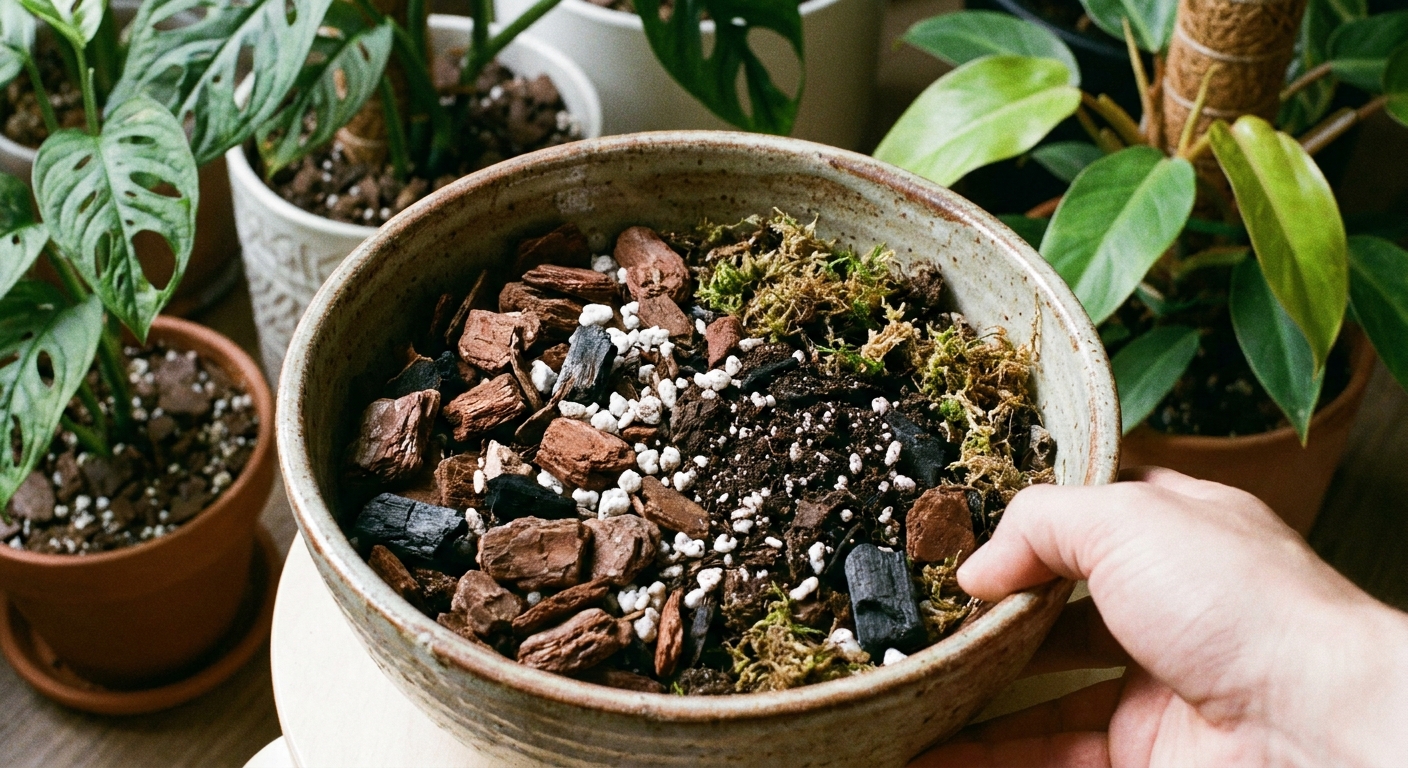
A simple DIY mix
- 2 parts indoor potting soil (quality, not bargain-bin dusty)
- 1 part orchid bark
- 1 part perlite or pumice
- Optional: a small handful of horticultural charcoal or worm castings
Pot choice matters
- Always use a pot with drainage holes.
- Terracotta dries faster and can be helpful if you tend to overwater.
- Plastic holds moisture longer and can be helpful if you forget to water.
Support and training: bigger leaves
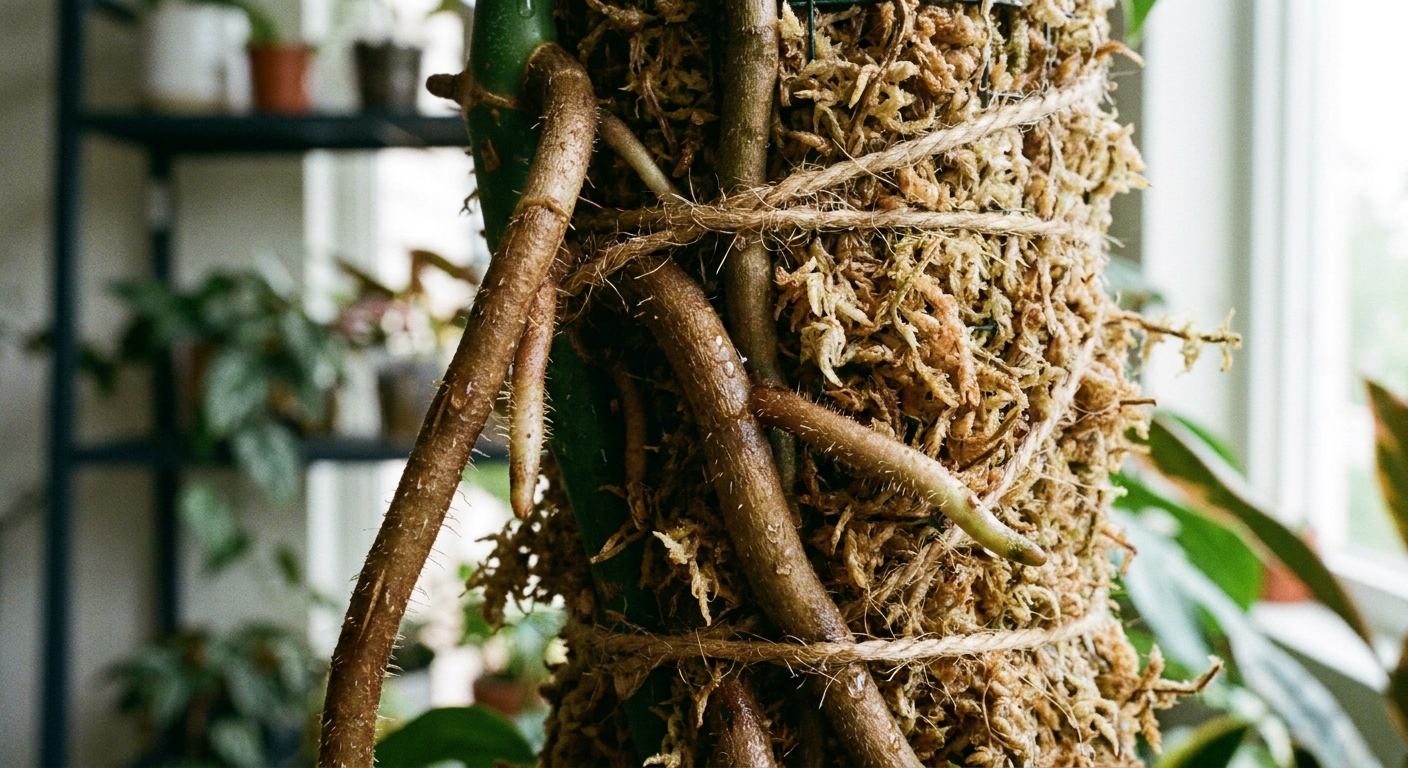
If there is one secret to a jaw-dropping tetrasperma, it is giving it something to climb. When the plant climbs, it tends to mature faster and produce larger leaves with deeper splits.
Best support options
- Moss pole: Great for aerial roots to grip, especially if kept lightly moist.
- Coir pole: Lower maintenance than moss, still supportive.
- Trellis: Works well, though aerial roots may not cling as easily.
How to attach it
- Gently guide the main stem upward.
- Use soft plant ties or Velcro garden tape. Avoid thin wire or anything that can cut into stems.
- As it grows, re-tie every few weeks so it stays snug but not strangled.
If you prefer a trailing look, you can let it spill from a hanging pot. Just know that trailing plants often develop smaller leaves over time compared to climbing ones.
Fertilizer: light feeding
Tetrasperma is a fast grower in spring and summer, and it appreciates a steady snack.
How to fertilize
- Use a balanced houseplant fertilizer at half strength.
- Feed every 2 to 4 weeks during spring and summer.
- Pause or reduce in fall and winter when growth slows.
Watch for overfeeding
- Brown leaf tips that do not match your watering
- White crust on the soil surface (salt buildup)
If you suspect buildup, flush the pot with plain water a few times, letting it drain fully each time.
Pruning and shaping: keep it bushy
This plant can get lanky, especially if it is searching for light or climbing support. Pruning is not just cosmetic. It is a way to redirect energy and encourage branching.
When to prune
- Anytime during active growth (spring through early fall) is easiest.
- Remove yellowing or damaged leaves as needed year-round.
How to prune
- Use clean, sharp snips.
- Cut just above a node (the little bump where leaves and roots emerge).
- Save your cuttings for propagation.
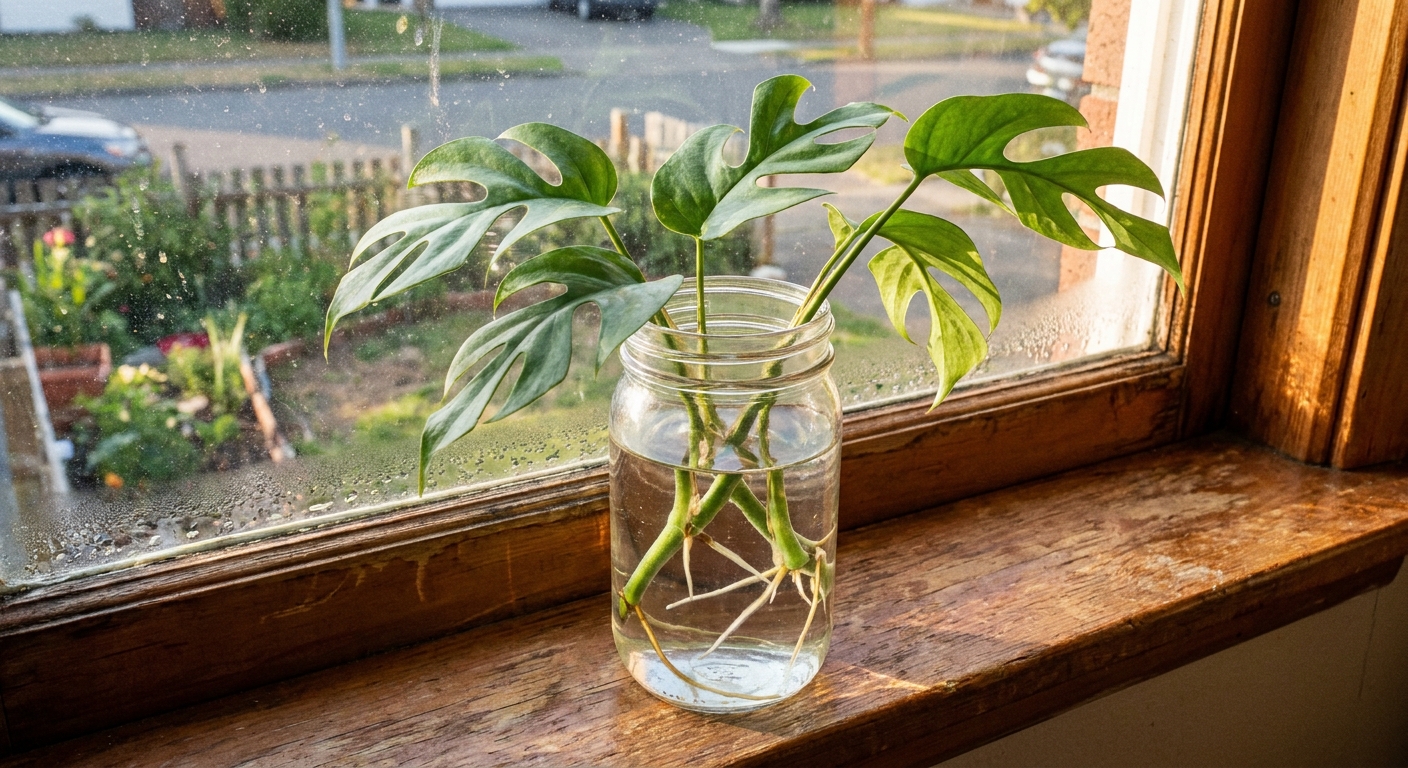
Propagation: water or moss
Propagating Rhaphidophora tetrasperma is delightfully straightforward, and it is the easiest way to turn one plant into two, or six, or an embarrassingly large collection you insist is “still manageable.”
What a good cutting looks like
- At least one node (this is essential)
- Ideally one leaf and a small aerial root nub
- 4 to 8 inches of stem is usually perfect
Water propagation
- Place the node under water, keep the leaf above water.
- Change water every few days, or at least weekly.
- Pot up when roots are 2 to 4 inches long and branching.
Moss propagation (my favorite for strong roots)
- Moisten sphagnum moss so it is damp, not dripping.
- Nestle the node into the moss.
- Cover loosely with a clear bag or place in a clear container to hold humidity.
- Pot up once roots are established and you see new growth.
Toxicity: pets and kids
A quick, responsible PSA: like many aroids, Rhaphidophora tetrasperma contains insoluble calcium oxalate crystals. If chewed, it can cause mouth and throat irritation, drooling, and stomach upset in cats, dogs, and humans.
- Keep it out of reach of curious pets and tiny plant taste-testers.
- If ingestion happens and symptoms show up, call your vet or a medical professional for guidance.
Troubleshooting common problems
Yellow leaves
One yellow leaf occasionally is normal, especially an older lower leaf. Multiple yellow leaves usually mean a care mismatch.
- Most common cause: overwatering or staying wet too long
- Also possible: sudden cold draft, low light, or nutrient deficiency
Fix: Check soil moisture, confirm drainage, and consider switching to a chunkier mix. Move to brighter indirect light if it is in a dim corner. If you suspect rot, do the root check above.
Leggy growth (long stems, small leaves, few splits)
- Cause: not enough light and/or no support
- Fix: move closer to a bright window, add a moss pole or trellis, and prune back to a node to encourage branching
Brown crispy edges
- Cause: underwatering, very low humidity, or salt buildup
- Fix: water more consistently, consider a humidifier, and flush the pot if you fertilize regularly
Leaves not splitting
Splits come with maturity and good conditions.
- Increase bright indirect light
- Let it climb
- Be patient. The plant has to earn its fancy leaves
Pests (spider mites, thrips, mealybugs)
Check the undersides of leaves and along the stems, especially if growth looks tired.
- Rinse the plant in the shower or sink
- Use a labeled insecticidal soap (or horticultural oil, if appropriate) and follow the directions
- If you use castile soap, keep it very diluted, test a small area first, and do treatments out of direct light to reduce leaf burn risk
- Repeat weekly for 3 to 4 weeks
Repotting: when and how
Repot when roots are circling the pot, poking out of drainage holes, or when the mix breaks down and starts holding too much water.
Timing
- Spring and early summer are ideal.
- Avoid repotting during winter if you can, but do not ignore real issues. Emergency repots can be necessary for rot, severe root binding, pests in the soil, or mix that has become hydrophobic and will not absorb water.
Pot sizing rule
Move up one pot size (usually 1 to 2 inches wider). Too large a pot holds extra moisture and can slow growth.
Quick care recap
- Light: bright indirect, gentle morning sun is okay
- Water: when top 2 to 3 inches are dry, soak and drain
- Humidity: average home is fine, 40 to 60 percent plus is happiest
- Soil: chunky aroid mix with bark and perlite
- Support: moss pole or trellis for bigger leaves and better splits
- Feeding: half-strength fertilizer in spring and summer
- Propagation: node cuttings in water or moss
- Toxicity: mildly toxic if chewed, keep away from pets and kids
If your mini monstera is struggling, do not panic. Plants are constant communicators. Once you learn their language, you will feel that quiet, grounding peace that keeps so many of us coming back to the dirt again and again.