
Revive a Severely Dehydrated Phalaenopsis Orchid

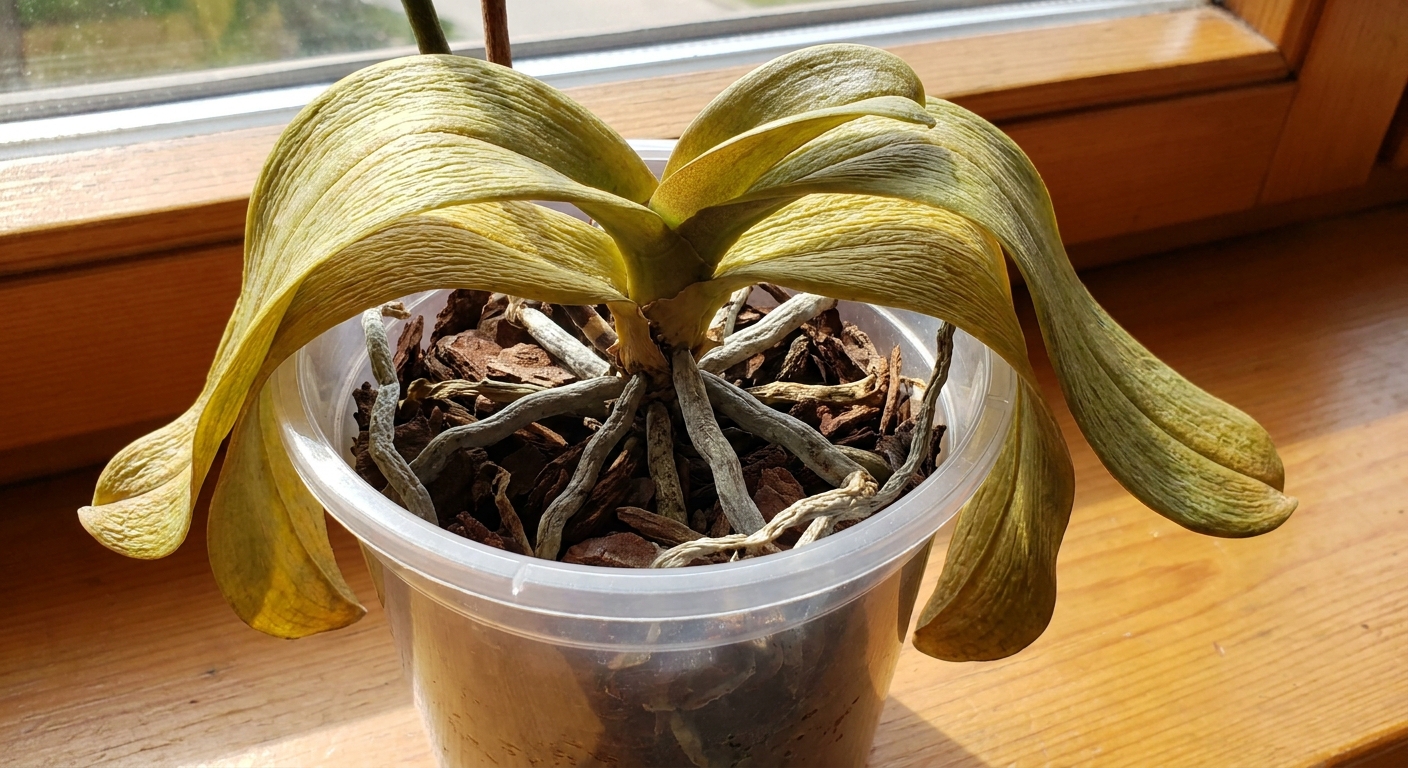
If your Phalaenopsis (Phal) orchid looks like it has been through a desert crossing, you are not alone. I have rescued plenty that arrived with limp leaves, crispy roots, and a pot that felt lighter than a paper cup. The good news is that Phals are forgiving when you rehydrate them slowly and fix the reason they dried out in the first place.
This guide focuses on severe dehydration, not the everyday “oops, I watered a day late” kind of wrinkling. We will triage what you are seeing, choose a safe rehydration method, and decide whether repotting is a lifesaver or extra stress.

Mild or severe?
Phalaenopsis leaves naturally show a little texture with age, and a single wrinkled lower leaf is not necessarily a crisis. What we are looking for is the pattern across the plant and the condition of the roots.
Signs it is mild (rehydrate normally)
- Leaves: Slightly less firm, faint accordion-like texture, but still hold their shape.
- Roots: Many roots look plump and silver when dry, turning green quickly after watering.
- Pot: Medium dries in 5 to 10 days, not overnight.
Signs it is severe (rehydrate in stages)
- Leaves: Deep pleating, limp like soft leather, sometimes floppy enough to fold.
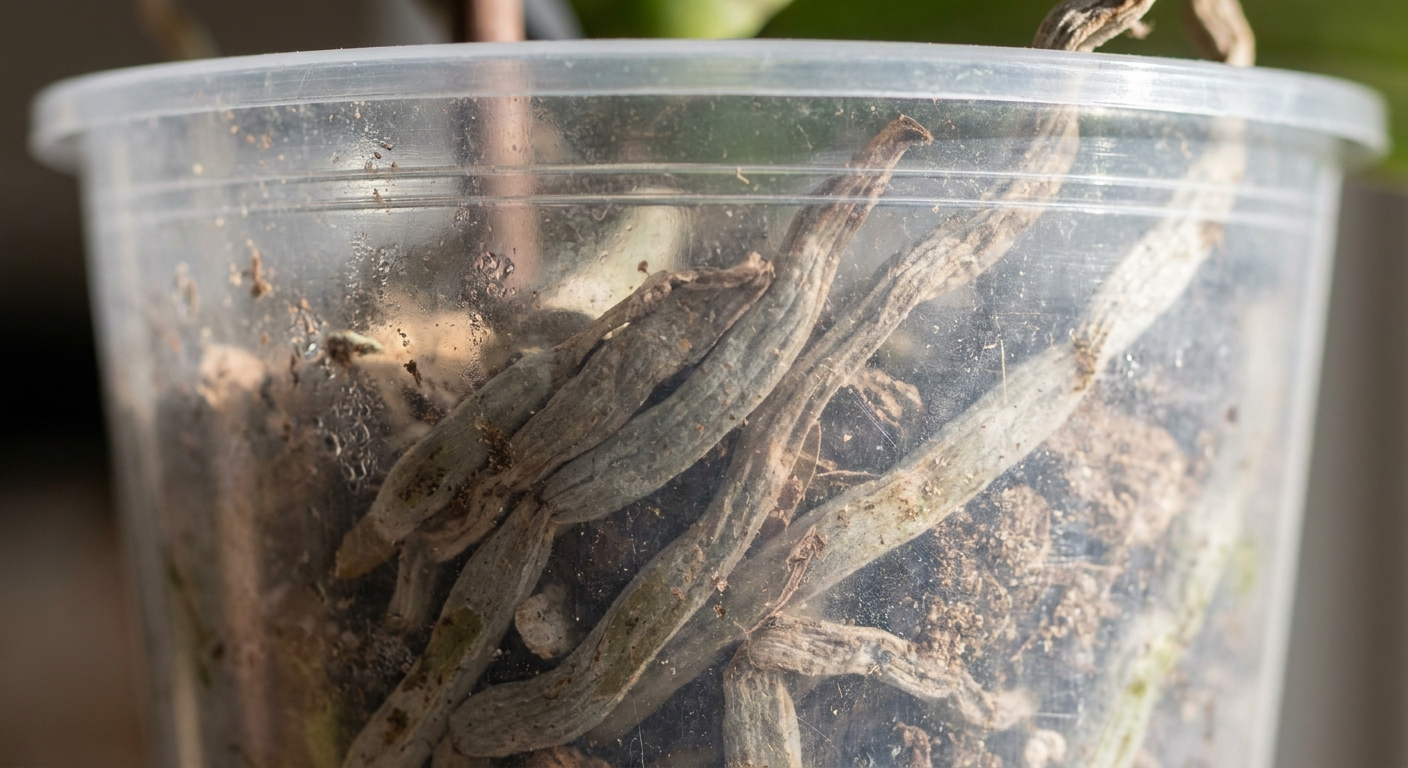
- Roots: Most visible roots look flat, papery, hollow, or brittle. Few turn green when wet.
- Medium: Bark is bone-dry and water channels straight through and still will not re-wet , or sphagnum moss can become water-repellent when very dry, old, compacted, or salt-laden and sheds water.
- Plant behavior: Bud blast, flower drop, stalled growth, and the whole plant feels “light” and stressed.
Quick root check: If your orchid is in a clear pot, look for roots pressed against the sides. Healthy roots are round and firm. Severely dehydrated roots often look like deflated drinking straws.
First aid
When a Phal is severely dehydrated, it is tempting to dunk it for hours. I know the urge. But a plant with compromised roots can swing from “parched” to “rotting” fast. Your goal is to rehydrate tissues without suffocating what roots remain .
Do this today
- Move to gentle light: Bright, indirect light. Avoid direct sun until it perks up.
- Warmth helps: Aim for 70 to 80°F if you can. Cold slows recovery.
- Boost humidity (realistically): Place the pot on a pebble tray with water below the pot, or group plants together. This can help a little right around the plant, but do not expect dramatic room-wide humidity changes.
- Skip fertilizer: No feed until you see new root tips or a new leaf starting. Fertilizer salts can stress dehydrated roots.
Avoid these common “rescues”
- Ice cubes: They chill roots and do not rehydrate evenly.
- Leaving the pot sitting in water: That is how dehydration turns into rot.
- Daily watering on a failing root system: Constant wetness starves roots of oxygen.
- Misting to rehydrate: Misting leaves does not replace root hydration, and water sitting in the crown raises the risk of crown rot.
Top-water or soak?
Both methods can work. The best choice depends on your potting medium and whether it has become water-repellent.
Water temperature: Use lukewarm water, roughly 68 to 77°F. Cold water slows recovery, especially in chilly homes.
Top-water is best when
- The medium still absorbs water (it darkens and stays evenly damp).
- You see at least some firm roots.
- You want the lowest rot risk while the plant is weak.
How to top-water for recovery: Take the orchid to the sink and run lukewarm water through the pot for 30 to 60 seconds. Let it drain completely. Repeat again in 10 minutes. This “double pass” helps re-wet bark or moss without prolonged soaking.
Soaking is best when
- Bark is so dry that water channels straight through and the pot stays mostly dry.
- Sphagnum is so dry that it resists wetting evenly.
- The plant is stable enough to handle a controlled soak.
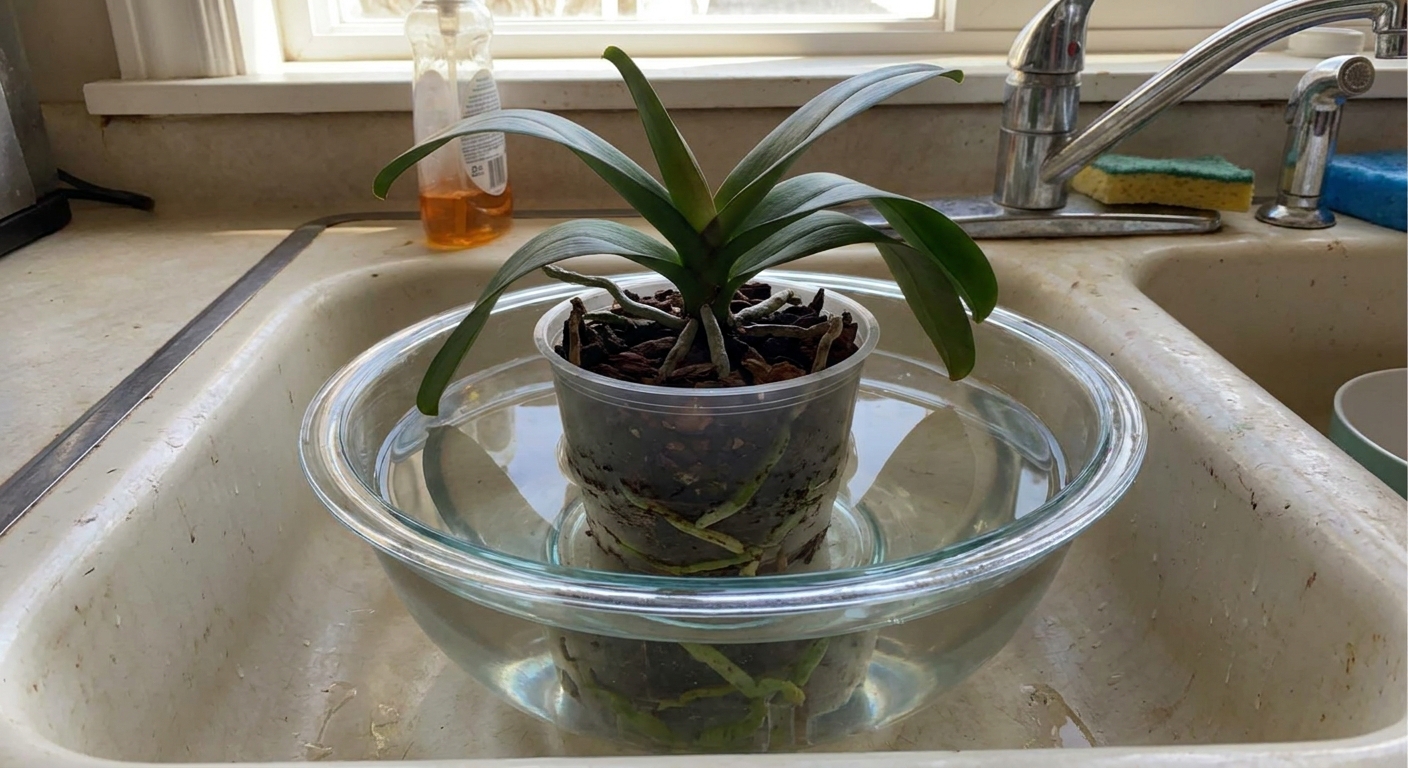
How to soak safely: Place the pot in a bowl of lukewarm water so the waterline sits just below the crown. Soak 10 to 20 minutes, then drain thoroughly.
Safety note: Avoid getting water into the crown. If it happens, tip the plant and blot it dry.
My rule: If your roots are already struggling, prioritize oxygen. Short, controlled soaks beat marathon dunks.
Staged plan (7 to 21 days)
Think of this like rehydrating a person after heat exhaustion. We are not chugging water in one go. We are restoring balance.
Days 1 to 3: re-wet the medium
- Use top-water, and add a short soak only if the medium is rejecting water.
- Let the pot drain until no dripping. Never leave standing water in the cachepot.
- Keep in bright, indirect light, warm temperatures, and slightly higher humidity.
Days 4 to 10: settle into a rhythm
- Water again only when the pot feels very light and roots look silver, not green.
- If in bark, this may be every 4 to 7 days during recovery.
- If in sphagnum, it may be every 7 to 10 days.
Decision point: too wet is a problem
If the medium stays wet for more than about 7 to 10 days and roots are declining (smell, mush, blackening), stop soaking and reassess. Compaction, breakdown, or rot may be blocking oxygen.
Days 10 to 21: watch for real recovery
- Best sign: new root tips that look bright green or reddish and glossy.
- Also good: a new leaf emerging from the crown, or leaves slowly firming up.
- Normal: old wrinkles may never fully disappear. Leaves can stay a bit pleated even after the plant is healthy.
If nothing improves by week 3 and roots continue to decline, dehydration is often only half the story. The other half is usually dead medium, root rot, or a pot that never fit the root system . That is when a careful repot can help.
Bark vs sphagnum
Phals can thrive in either medium, but the recovery strategy is different because bark and moss hold water and air differently.
If your orchid is in bark
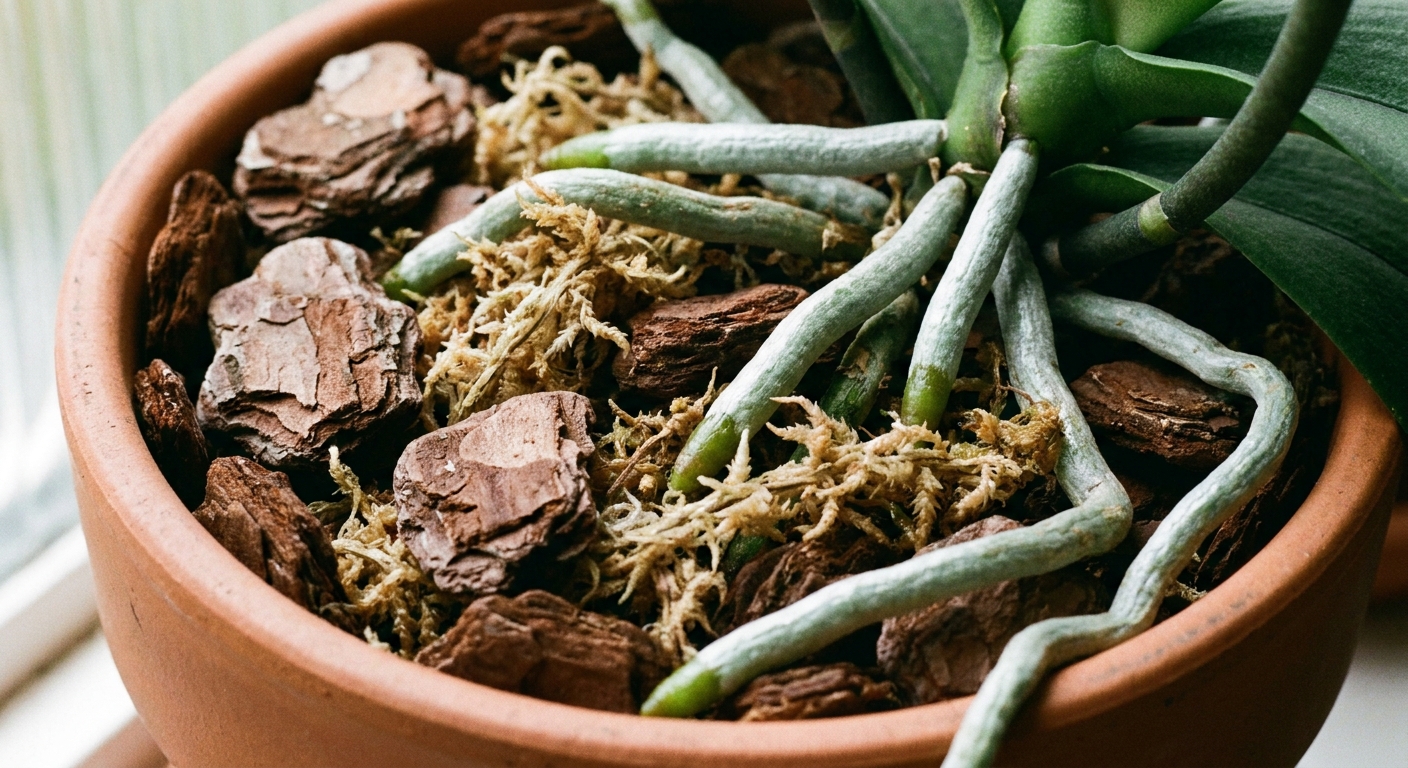
Bark is airy, which is wonderful for preventing rot. The downside is that very dry bark can be hard to re-wet, and severely dehydrated orchids often need a bit more consistent moisture while they rebuild roots. Also note that fresh chunky bark can drain quickly and still be fine. The red flag is when it will not re-wet and the pot is dry again very fast.
- Re-wet technique: Use the double top-water method, or a 10 to 15 minute soak once, then return to normal watering.
- Humidity boost helps: Recovery is faster with moderate humidity, especially in heated or air-conditioned homes.
- Consider a bark refresh: If the bark is old, sour-smelling, or breaking down into fines, repotting can be part of the fix.
If your orchid is in sphagnum moss
Sphagnum holds water longer, which can be helpful for dehydration. But it can also stay too wet around damaged roots, especially if it is packed tightly. It can also become water-repellent when very dry, old, or compacted, so it may need a little patience to re-wet evenly.
- Check density: If the moss is tight like a sponge, it can suffocate roots. Looser is better.
- Watering style: Top-water lightly and evenly, then let it approach dryness before watering again.
- Beware the wet core: Moss can look dry on top but be wet in the center. A wooden skewer inserted into the pot for 10 minutes tells the truth.
Spike choices
I love a blooming Phal as much as anyone, but when the plant is severely dehydrated, blooms are a luxury expense. Keeping a flower spike can slow recovery because the orchid keeps spending water and energy on flowers.
Keep the spike if
- The leaves are only mildly wrinkled and roots still look mostly healthy.
- The plant perks up within a week of improved watering.
Cut the spike if
- Leaves are limp and deeply pleated.
- Most roots are dead or hollow.
- Buds are blasting or flowers are dropping anyway.
Where to cut: Use clean snips and cut the spike close to the base, leaving a short stump. The plant will redirect energy into roots and leaves, which is exactly what you want right now.
Repot or wait?
Repotting is stressful for any orchid, and a severely dehydrated one is already running on fumes. But sometimes the pot and medium are the reason the plant cannot rehydrate.
Repotting helps when
- Medium is broken down: It stays soggy, smells musty, or looks like compost.
- Roots are failing: You suspect rot plus dehydration from a damaged root system.
- Moss is packed tight: Watering is inconsistent and roots are suffocating.
- The pot is wrong: No drainage, or the root ball swims in a pot that is too large.
Repotting can hurt when
- The orchid is so weak that disturbing the few functioning roots could set it back.
- The medium is fine and the issue was simply missed watering or very low humidity.
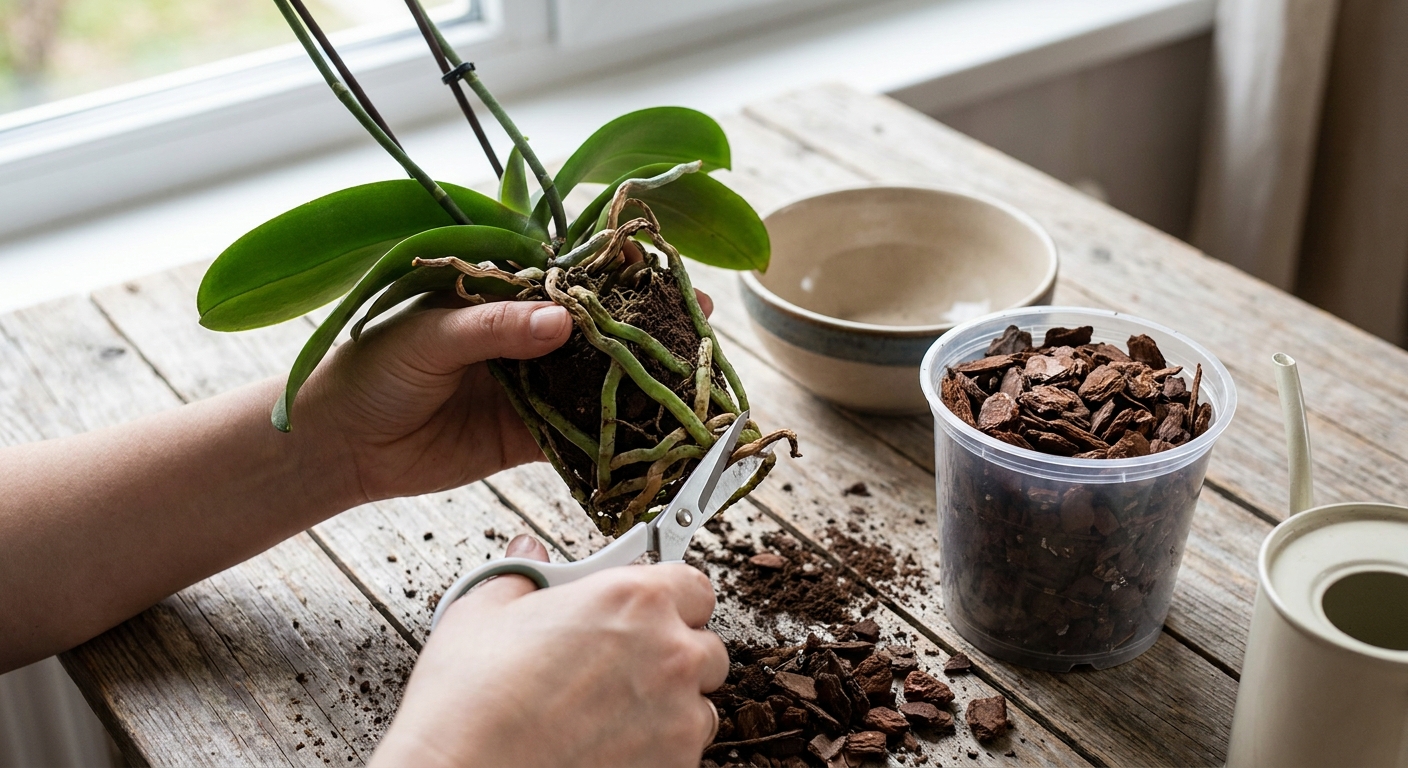
If you repot, do it gently
- Prep clean tools: Use clean scissors or snips, and sterilize between plants.
- Remove old medium: Tease it away slowly. Do not rip velamen off roots. Discard old medium.
- Trim only what is truly dead: Dead roots are hollow, mushy, or papery and collapse when pinched. Firm roots stay.
- Choose a snug pot: Orchids like cozy. Oversized pots stay wet too long.
- Pick a recovery-friendly medium: Chunky bark with a small amount of sphagnum mixed in can offer a nice balance of air and moisture.
- When to water after trimming: If you cut roots, letting cuts dry can help. Often that is 12 to 24 hours. If your home is very dry or the plant is dangerously dehydrated, lean toward the shorter end and focus on warmth and humidity rather than a long dry wait.
If roots are mostly gone
If your orchid has very few viable roots, it can still come back, but it needs a high-humidity, high-airflow setup that encourages new root growth without keeping the crown wet.
Try a humidity tent (with airflow)
- Place the orchid (in its pot or loosely supported) in a clear storage bin or large clear bag.
- Keep the opening slightly ajar for air exchange, or add a few small holes.
- Keep the medium barely damp, not wet.
- Bright, indirect light and warmth are your best friends.
- Monitor for mold: If you see fuzz or smell funk, increase ventilation, reduce moisture, and wipe the inside of the tent. Condensation should not drip into the crown.
Keep the crown dry
The crown is the growth center at the top where new leaves emerge. Water trapped there can cause crown rot, which is often fatal. If water gets in, blot it with a paper towel corner or let a gentle fan run nearby.
Why it dried out
Rehydration is only half the rescue. If you do not fix the cause, the same problem returns on a loop. Here are the usual suspects:
- Underwatering: Watering too lightly, or not soaking long enough for your medium to fully wet.
- Hydrophobic medium: Bark or moss that is so dry, old, compacted, or salty that it resists wetting evenly.
- Too much airflow or heat: A plant near a vent, fan, heater, sunny window, or hot glass drying out faster than you expect.
- Pot mismatch: Pot too small and the medium dries too fast, or too large and the center stays wet and roots decline.
- Hidden rot: Roots are damaged, so the plant cannot drink even when water is present.
- Old, broken-down mix: Less air, more soggy pockets, more root loss, and then dehydration symptoms on top.
Troubleshooting
“I watered, but the leaves are still wrinkled.”
Wrinkles are a symptom, not a switch. Leaves can take weeks to firm up, and older leaves may never look perfect again. Watch for new root tips and new leaf growth instead.
“The medium dries out in one day.”
Likely chunky bark in very dry air, a pot near a vent, or a root system too small to slow drying. Move away from HVAC drafts, raise local humidity, and consider adding a small amount of sphagnum into the mix at the next repot.
“Now it smells weird and roots look mushy.”
That is rot. Stop soaking, increase airflow, and consider a careful repot into fresh, airy medium. Dehydrated orchids often have hidden rot because damaged roots cannot drink, even when water is present.
“Leaves are yellowing from the bottom.”
One lower leaf yellowing can be normal aging, especially after stress. Multiple leaves yellowing quickly can point to root failure. Check roots and adjust your plan.
What success looks like
Here is the realistic timeline I like to set so you do not lose heart:
- Within 7 days: The orchid stops getting worse. Flowers may fade, but the plant stabilizes.
- Within 2 to 6 weeks: New root tips appear if conditions are right.
- Within 1 to 3 months: A new leaf begins, and the plant feels more anchored in the pot.
- Next blooming cycle: Many rescued Phals skip flowering until they rebuild. That is normal and honestly a good sign of good priorities.
If you want one simple mantra to keep you steady: rehydrate slowly, keep roots airy, and measure progress by new growth.