
Real Christmas Tree Care

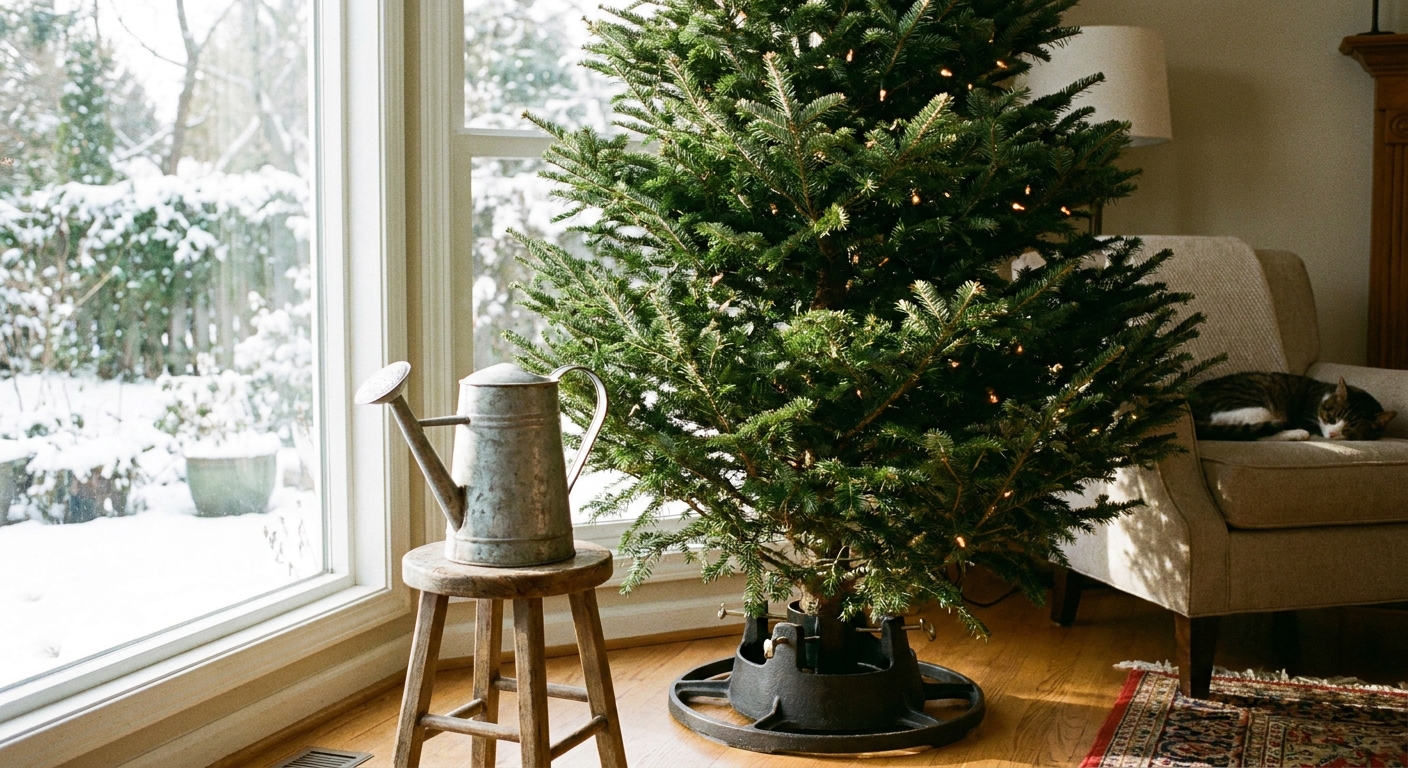
Nothing makes a home feel instantly cozier than a real Christmas tree. That piney smell, the soft hush of needles under twinkle lights, the little ritual of watering it like it is a houseplant on holiday. The secret to a tree that stays lush and holds its needles is not luck. It is water, a good stand, and a cool spot away from heat.
Let’s walk through what actually works, step by step, so your tree stays fresh and your season stays safe.

Start strong: choose and prep
Choose the freshest tree you can
A fresh tree is easier to keep than a thirsty one that has already dried out on the lot. When you are shopping, look for a combination of these signs:
- Supple needles that bend a bit instead of snapping right away (note: this varies by species, so do not rely on only one test)
- Good needle color, not dull gray-green
- Minimal needle drop when you gently shake or run your hand along a branch
- A sticky, fragrant trunk near the base, which is a good sign of sap and moisture
- A solid feel when you tap the trunk or lift the tree slightly, not overly light or hollow
Make a fresh cut before it goes in the stand
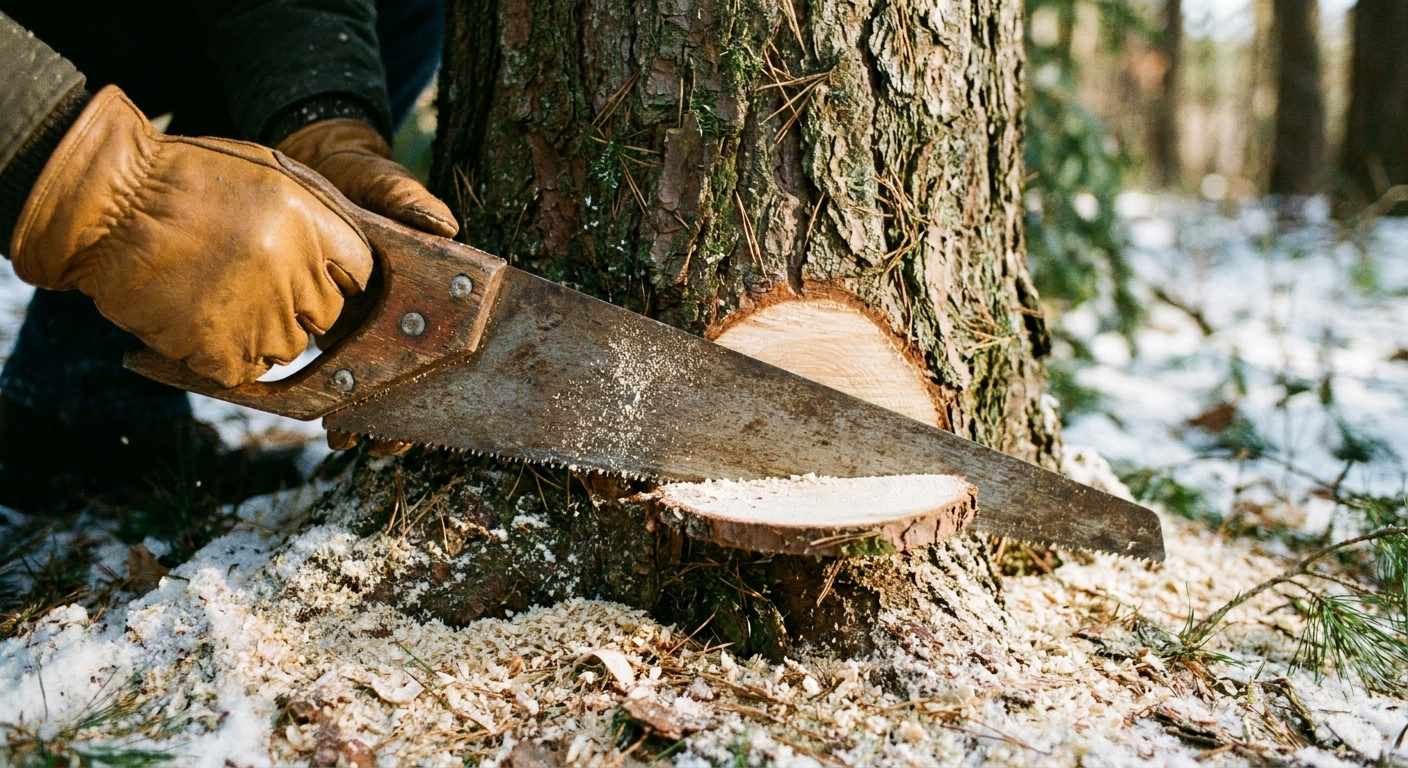
If you can, ask the lot to cut 1/2 inch to 1 inch off the bottom of the trunk right before you bring it home. The cut surface can begin to dry and become less permeable within hours. If the tree was cut a day or more ago (or you are not sure), a fresh trim at home helps it take up water again.
Also: drilling holes in the trunk is not helpful for water uptake. And do not whittle the trunk into a point. You want a flat, clean cut so the tree can drink evenly.
Stand setup: stable and hydrated
Use a stand that holds enough water
A real Christmas tree can drink an astonishing amount in the first few days. Choose a stand that holds at least 1 quart of water per inch of trunk diameter (a common extension-style rule of thumb). For example, a 5-inch trunk does best with a stand that holds at least 5 quarts.
Do not shave the trunk to fit
If the trunk is too wide for the stand, swap stands or choose a different tree. Shaving the sides removes the outermost water-absorbing tissue, which can shorten your tree’s life and increase needle drop.
Stabilize it before you decorate
Get the tree straight and stable first, then decorate. A wobbly tree is not just annoying, it is a tipping hazard once ornaments and lights are on.
- Tighten stand bolts evenly, alternating sides
- Use a tree skirt that does not block access to the reservoir
- If you have pets or toddlers, consider clear fishing line anchored to a wall hook for extra stability
Watering rules that work
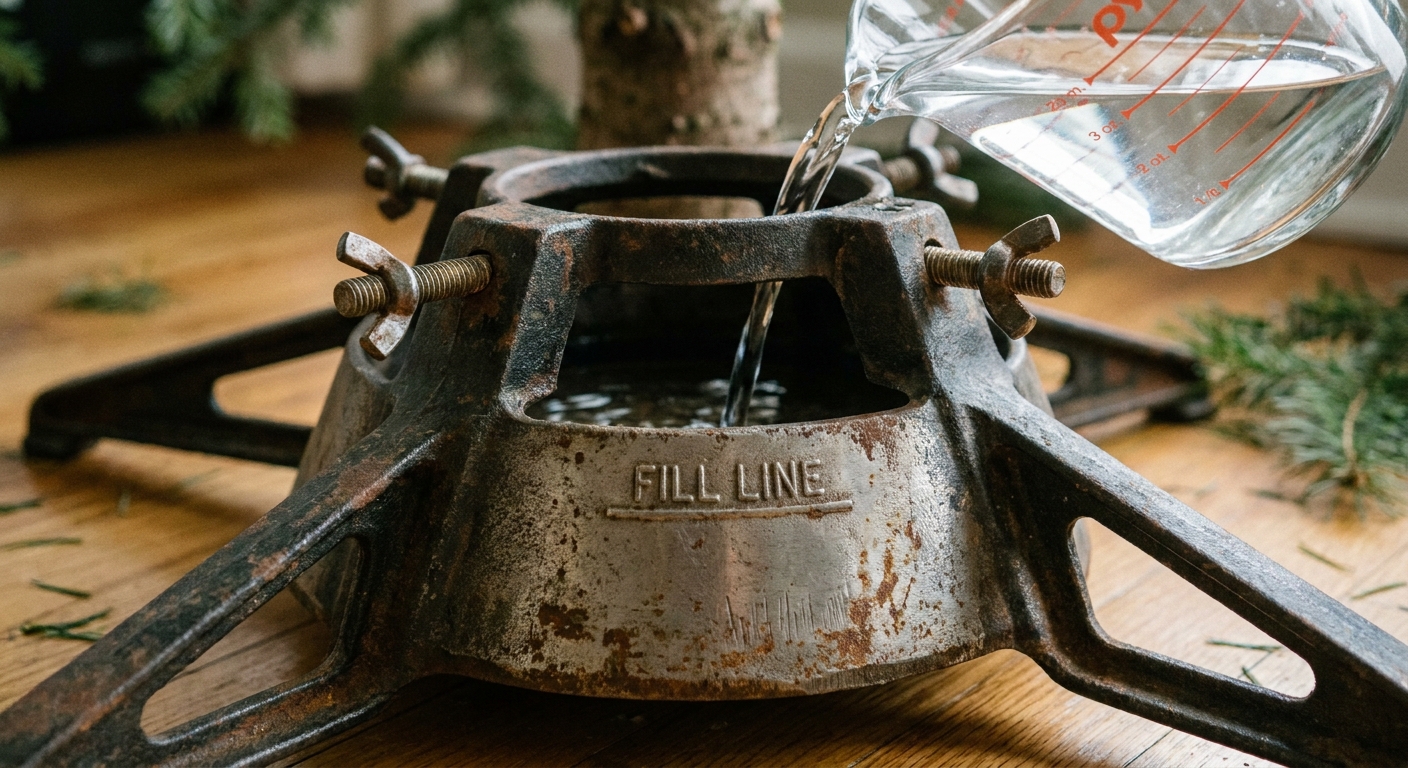
Fill the stand immediately
Your #1 job in the first hour is getting water into the stand. Early hydration makes a noticeable difference in needle retention.
Check water level daily, twice at first
For the first 2 to 3 days, check morning and evening if you can. It is very common for the water level to drop fast and leave the cut trunk exposed. Once the base dries, it can be difficult to get the tree drinking again.
Golden rule: keep the cut end of the trunk submerged at all times.
Use plain tap water
Plain water is exactly what a cut tree needs. Skip the additives. Most “tree food” tricks do not outperform consistent watering, and some mixtures can encourage bacterial growth in the stand.
How much will it drink?
It depends on species, home humidity, and temperature, but a typical 6 to 7 foot tree often drinks 1 quart to 1 gallon per day, especially early on. If you are surprised, you are not alone. I have watched a thirsty fir empty a stand overnight like it was trying to beat a personal record.
If your tree stops drinking
If the water level barely moves for a day and the tree feels dry, try this:
- Confirm the trunk base is still submerged
- Move the tree to a cooler spot if possible
- If it dried out significantly, you may need to take it down and recut the base
Placement: keep it cool
Keep it away from heat
Heat is the fast lane to needle drop. Place your tree away from:
- Heat vents and radiators
- Fireplaces and wood stoves
- Space heaters
- Sunny windows that create a warm hot spot during the day
Even a few feet makes a difference. If you can feel warm air on your hand where the tree will stand, your tree is going to dry faster there too. If it is practical, aim for a cooler room (roughly 60 to 70°F).
Watch the room humidity
Dry winter air dries trees faster. If you already run a humidifier for comfort, your tree will appreciate it. Just keep cords and water safely managed and never create slippery floors around the stand.
Fire safety basics
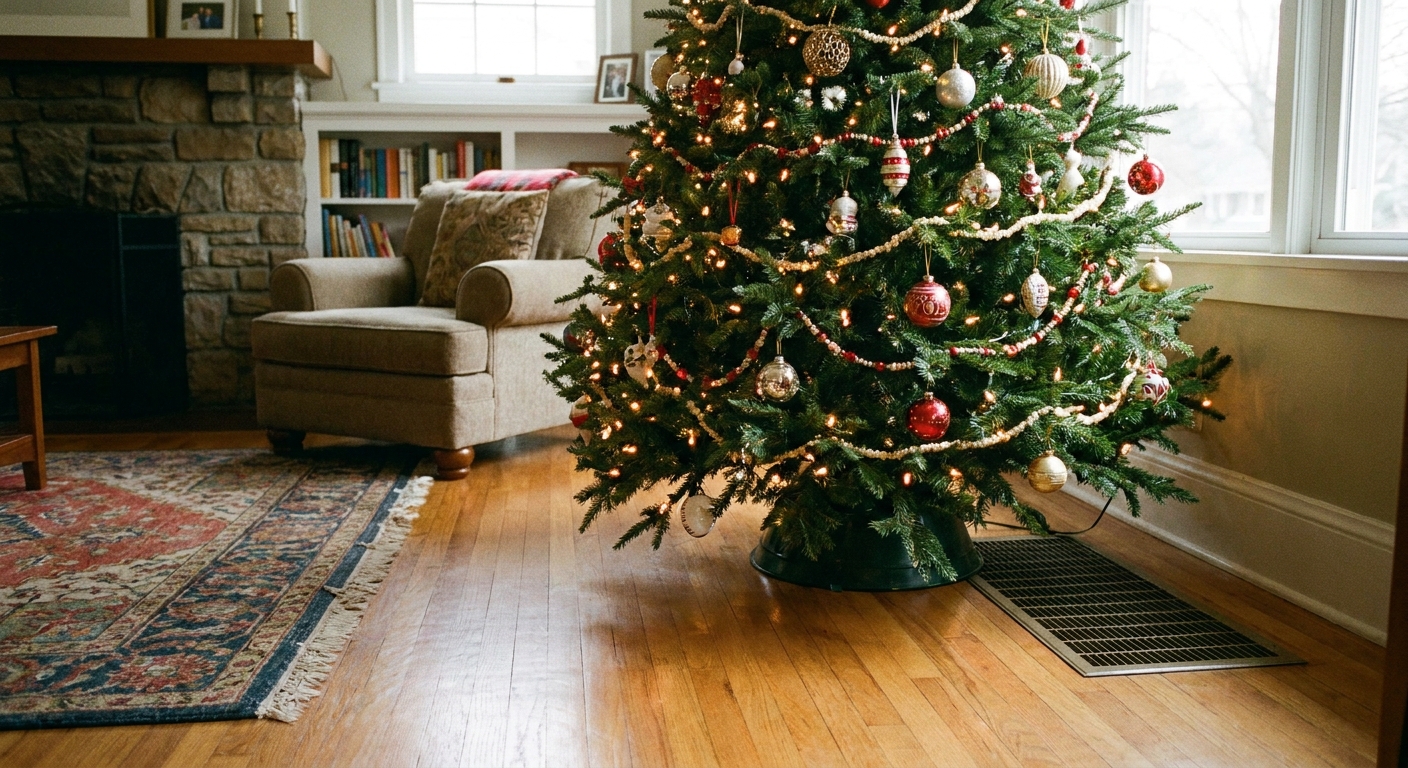
A well-watered tree is much less likely to become a hazard. A dry tree is another story. Keep these safety habits simple and consistent.
Lights: choose safe sets
- Use LED lights when possible. They run cooler and are energy efficient.
- Inspect cords for frays, cracked insulation, or loose bulbs before hanging.
- Avoid overloading outlets. Use a quality surge-protected power strip if needed.
- If outlets are near watering and moisture, consider a GFCI-protected outlet for extra protection.
- Turn tree lights off before bed and when leaving the house.
Candles and open flame
Keep candles well away from the tree and never place them on the same surface as low branches. If you love candlelight, consider flameless candles near the tree for the same glow without the risk.
Pets and tree water
Even with plain water, tree stand water can collect needles and sap and it can be tempting to pets. If you have a curious drinker, block access with a sturdy tree collar, a gate, or strategic furniture placement.
Know when a tree is too dry
Take the tree down promptly if you notice:
- Rapid, heavy needle drop
- Brittle needles that snap easily
- Branches that feel papery and dry
- The tree no longer drinks water
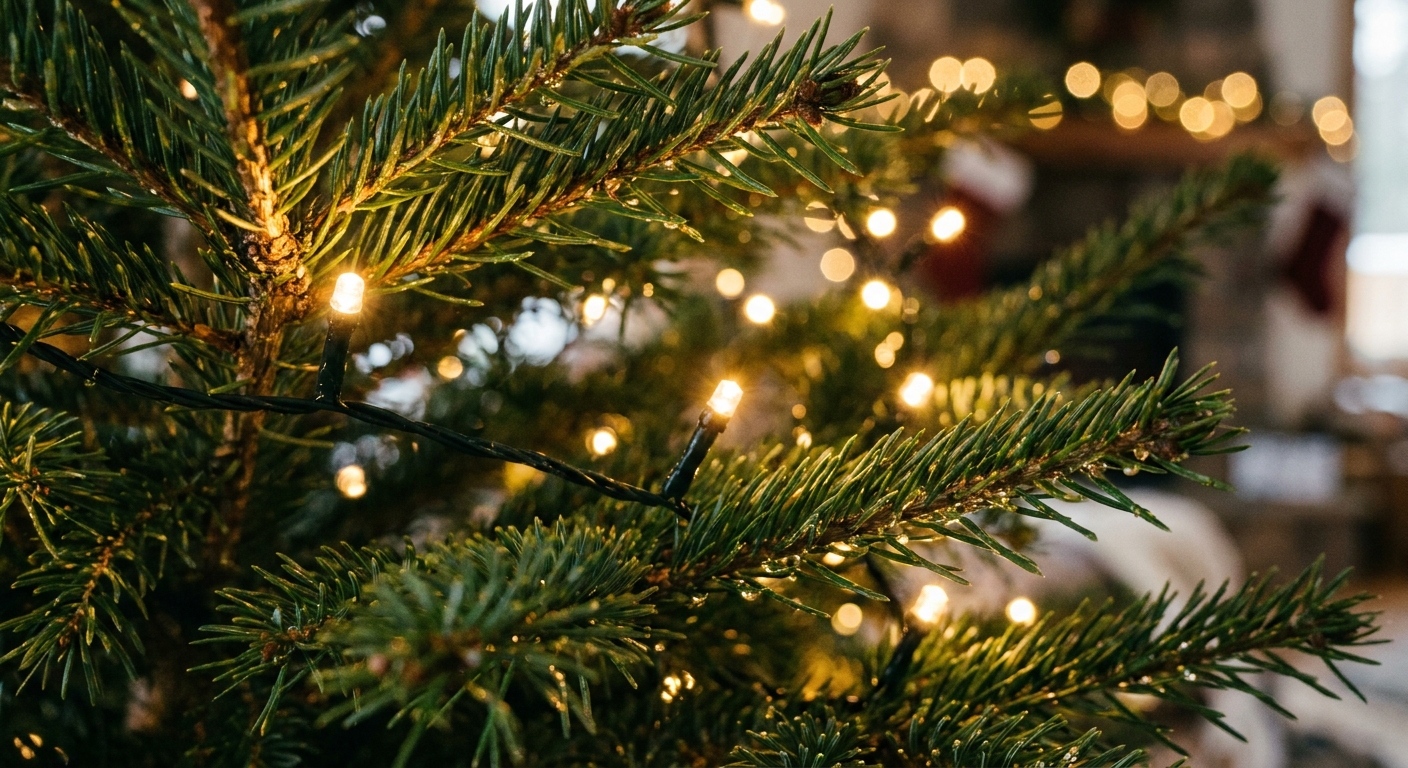
Needle retention tips
Choose species that hold needles
If you are still shopping, these tend to have better needle retention than many other options:
- Fraser fir
- Noble fir
- Nordmann fir
- Douglas fir (great scent, can vary by freshness)
Spruces can be stunning, but they often drop needles more readily indoors if they dry out.
Do not let the stand run dry
I am repeating this because it is truly the make-or-break factor. If you do one thing right, do this one.
Limit heat and airflow
Warm, dry air moving across branches speeds moisture loss. Redirect vents if you can, and keep the tree out of traffic wind from frequently opened doors.
Gentle handling helps
Needles shed more when branches are repeatedly bumped and flexed. If you have an enthusiastic dog or a curious toddler, a simple baby gate around the tree can save your sanity and your needles.
Quick daily checklist
- Check the water level and top off as needed
- Confirm the trunk base is still underwater
- Feel the room temperature near the tree, especially if the heat has been running
- Look at lights and cords for any damage or hot spots
- Turn lights off before bed
After Christmas: disposal
Curbside pickup and drop-off
Many towns offer tree pickup or drop-off days. Remove all tinsel, hooks, and lights first. If your tree has flocking or artificial “snow,” check local rules, since some programs cannot accept treated trees.
Mulch it, if you can
If you have access to a chipper program, Christmas tree chips make wonderful mulch for paths and around shrubs. Use it like any other wood chip mulch:
- Keep it a few inches away from trunks and stems to prevent rot
- Aim for a 2 to 4 inch layer
Use branches in the garden
Evergreen boughs are fantastic winter helpers. Lay them over tender perennials or newly planted bulbs to reduce freeze-thaw heaving and harsh wind. In spring, remove and compost them once growth resumes.
Wildlife options
Some areas accept trees for fish habitat projects or erosion control. It is worth a quick search with your city name and “Christmas tree recycling.”
Do not burn it
Do not burn your Christmas tree in a fireplace or wood stove unless local guidance explicitly says it is allowed. Trees can spark, flare fast, and contribute to creosote buildup.
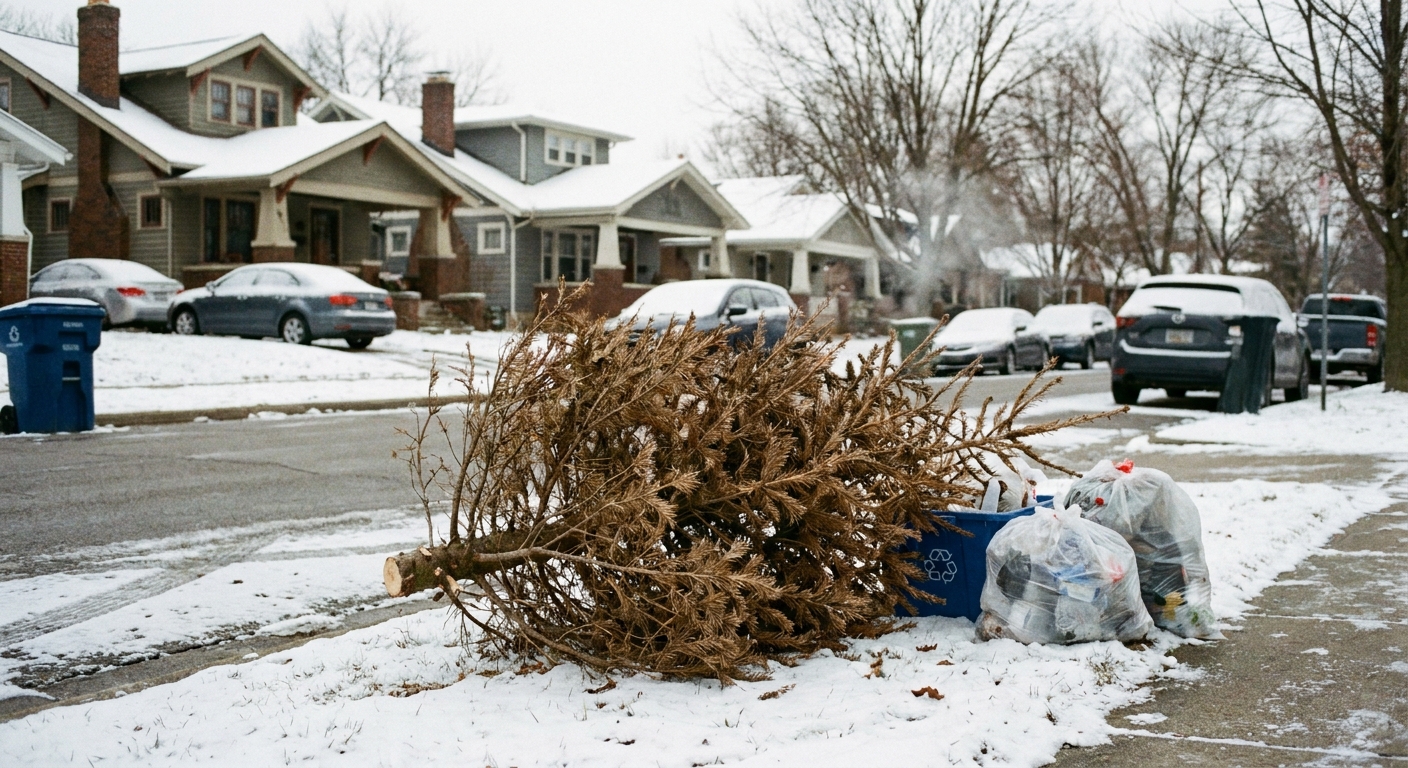
Cut tree vs potted tree
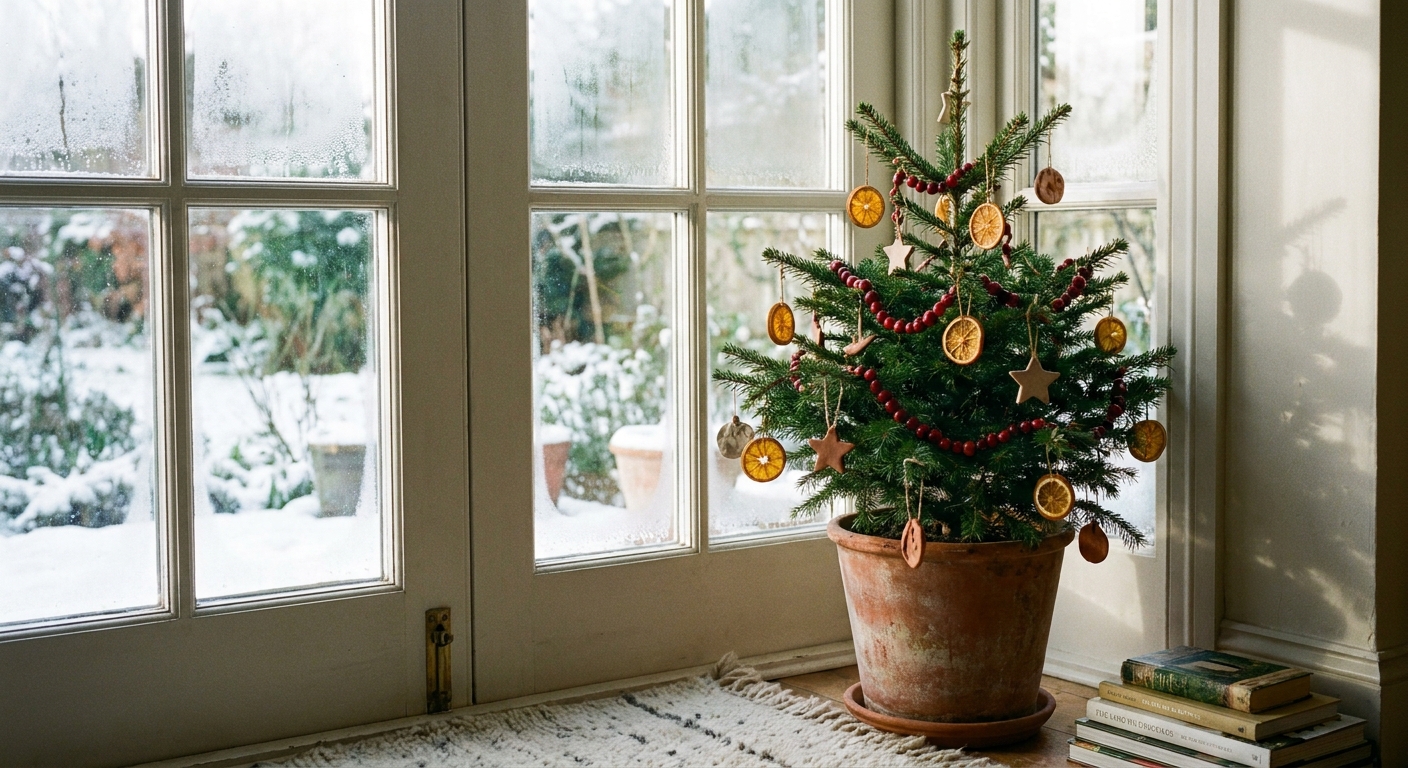
Live potted Christmas trees are charming, and they can be the more sustainable option if they are handled gently. They are also a bit trickier indoors.
If you choose a live potted tree
- Limit indoor time to about 7 to 10 days if possible. If your home is warm, 5 to 7 days is even better. Warm indoor conditions can nudge the tree out of dormancy.
- Keep it cool indoors, away from heat sources, just like a cut tree.
- Water the root ball when the top inch feels dry. Do not let it sit in a puddle.
- Acclimate gradually when moving it back outdoors, ideally in a sheltered spot for a few days before full exposure.
If your goal is to plant it after the holidays, make sure the species is hardy in your region and that you can dig when the ground is not frozen solid.
Troubleshooting
Why is my tree dropping needles even though I am watering?
Usually it is one of three things: the tree was already dry when you bought it, the stand ran dry briefly and the trunk dried and slowed uptake, or the tree is sitting in a warm spot near heat or sun. Double-check placement, keep the cut end submerged, and consider a fresh recut if it stopped drinking.
Should I spray the tree with water?
Misting can help a little in very dry homes, but it is not a substitute for keeping the stand full. If you mist, do it lightly and keep water away from electrical connections and outlets.
How long should a real tree last indoors?
With a fresh tree, a good stand, daily water, and cool placement, many trees look great for about 3 to 4 weeks, and sometimes up to 5 in ideal conditions. If you put it up very early, needle retention becomes much more dependent on temperature and consistent watering.
A last little pep talk
If you are worried you will mess it up, breathe. A Christmas tree is not judging you. It just wants water and a cool corner to hang out in while your house smells like a forest. Set a daily reminder on your phone, keep a watering pitcher nearby, and enjoy the season one calm check-in at a time.