
Raven ZZ Plant Care

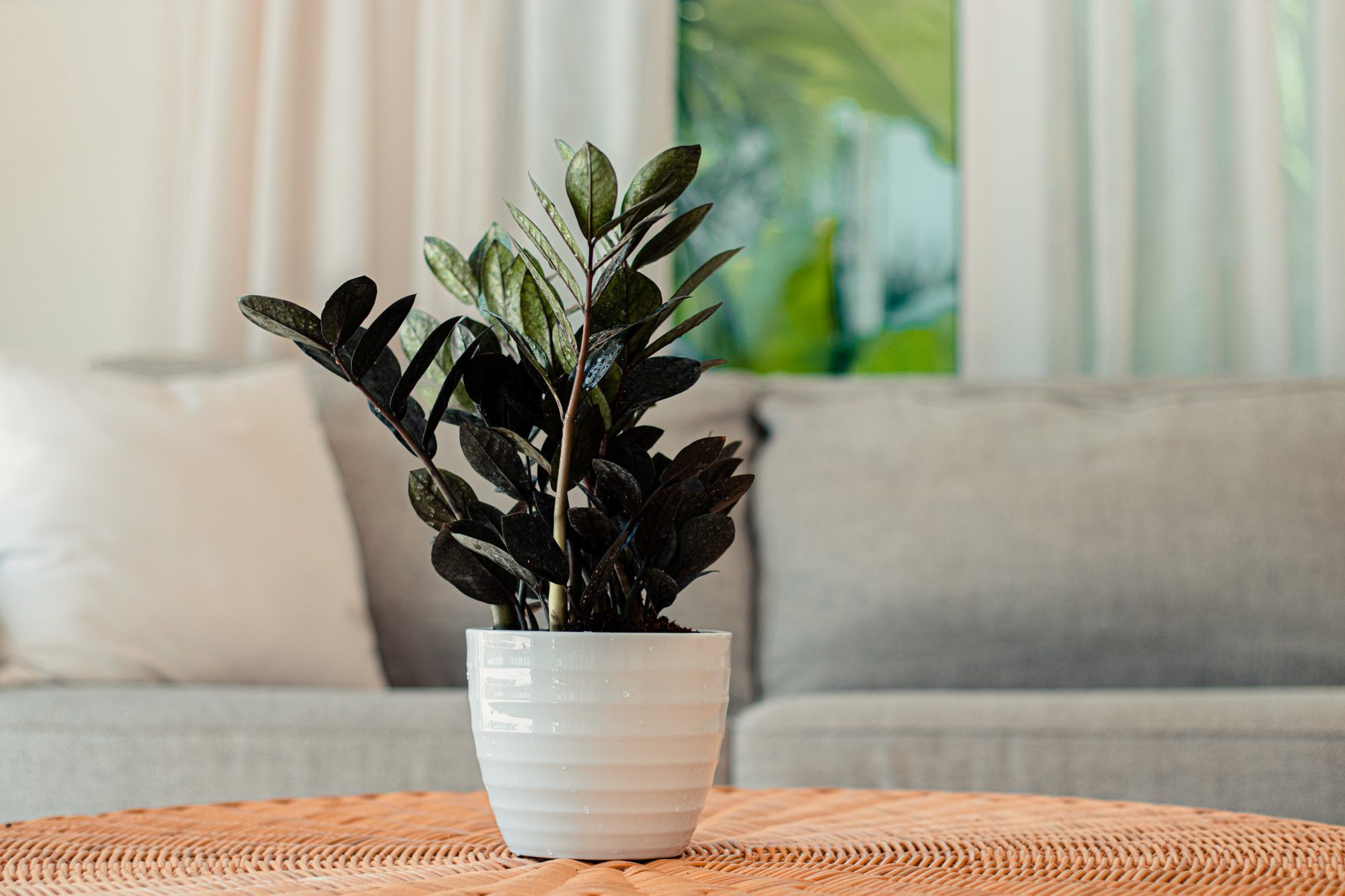
Raven ZZ (Zamioculcas zamiifolia ‘Raven’) is the moody, black-leaf cousin of the classic green ZZ plant, and yes, it really is that easygoing. The big difference is not that Raven is “harder” but that its dramatic color comes with a few tradeoffs: it tends to grow a bit slower, it shows dust more easily because of the high-contrast dark leaves, and it can show stress in sneaky ways if it sits wet.
If you have ever loved a plant and then immediately worried you would ruin it, welcome. Pull up a chair. I will talk you through exactly what Raven ZZ wants, why it wants it, and how it differs from a regular ZZ so you can stop guessing.

Raven ZZ vs regular ZZ
Raven ZZ is a cultivar of the same species as the standard green ZZ. Care is very similar, but the dark foliage changes how the plant handles light and, in many homes, how quickly it decides to grow.
The black leaf secret
New Raven ZZ growth starts out bright green, then darkens to deep purple-black over a few weeks. Those dark leaves contain different pigments (including anthocyanins). The practical takeaway is this: Raven generally tolerates low light well, but it often grows slower than a green ZZ in the same conditions. Darker foliage can be a little less efficient at capturing light, especially in dim rooms, so growth tends to be more deliberate.
Growth habit
Both types grow from thick underground rhizomes that store water and energy. Raven tends to:
- Push fewer new stems per season
- Hold its shape longer and look tidy with less pruning
- Show color change as part of normal growth, which can confuse new plant parents
Price myths
Raven ZZ used to be genuinely hard to find, which drove up prices. Now it is widely tissue-cultured and commonly stocked. A higher price today usually reflects pot size and retailer markup, not “rare genetics.” If someone is charging collector prices for a tiny Raven, you can keep walking.
Light
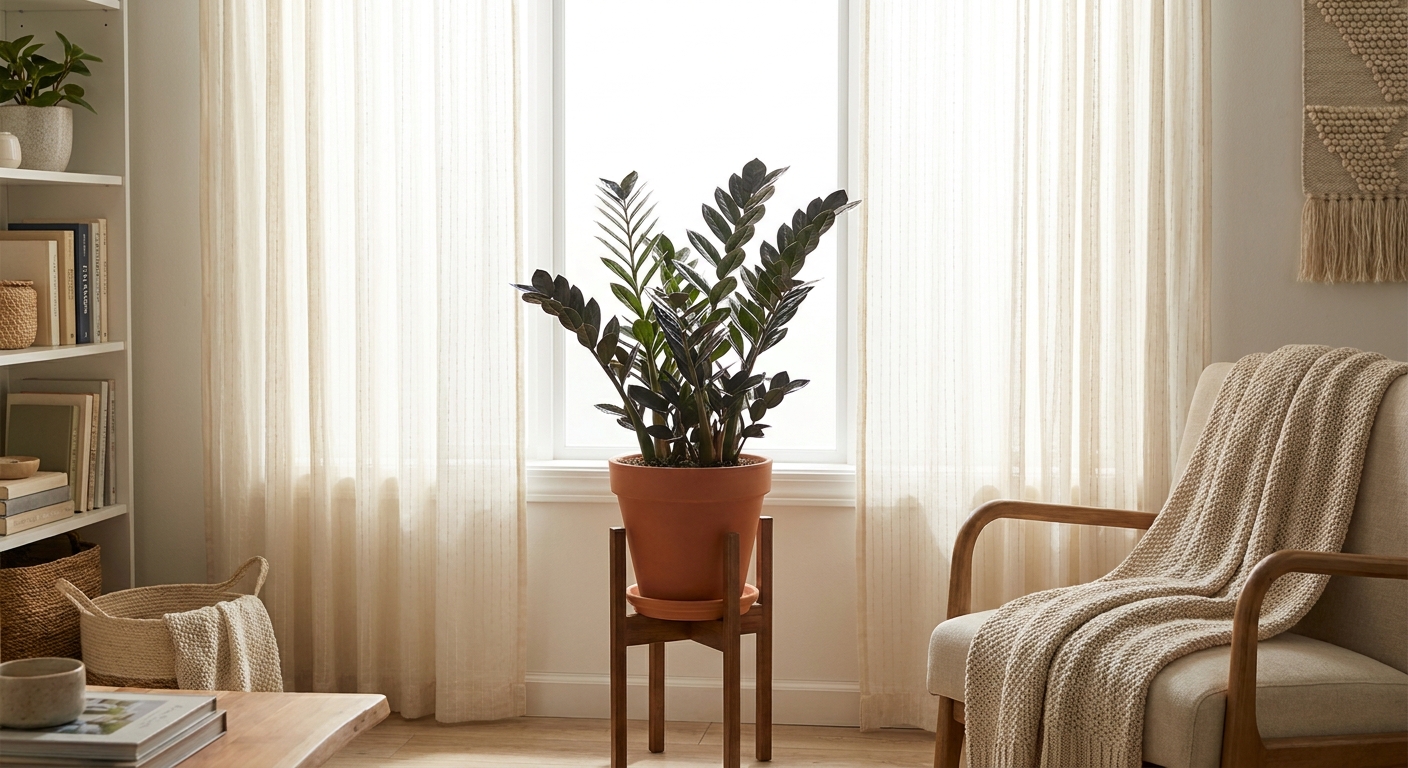
Raven ZZ is famously tolerant of low light, but “tolerant” does not mean “thriving.” Think of light as the speed dial for growth.
Best light
- Ideal: the brightest available indirect light, like near an east window, or a few feet back from a south or west window with filtered light
- Works well: bright north light in many homes, especially if the window is large and unobstructed (north can be dim in some climates, so treat it as “brightest you have”)
- Acceptable: medium light in a room with multiple windows
- Survival mode: low light corners where you can still comfortably read during the day. If you need a lamp on for most of the day, it is probably too dim.
If your Raven is not growing, light is usually the reason, not fertilizer.
Direct sun
A little gentle morning sun can be fine, but harsh afternoon sun can scorch leaves, especially if the plant was grown in lower light and suddenly moved. If you see washed-out patches, crispy edges, or a dull, bronzed look, pull it back from the glass.
Rotate for even growth
Raven ZZ will lean toward its brightest light source. Give the pot a quarter-turn every couple of weeks to keep the stems upright and the plant symmetrical.
Water
If Raven ZZ had a personal motto, it would be: When in doubt, wait. Those rhizomes store water like little canteens, which is why the plant forgives missed waterings. It does not forgive constantly damp soil or water lingering in the bottom of a pot.
How often to water
Instead of a schedule, use a simple test:
- Let the pot dry out almost completely.
- Check the bottom half of the pot with a wooden skewer (or your finger if the pot is shallow).
- Water thoroughly, then let excess drain away.
- Do not leave water sitting in a saucer or cachepot.
In many homes, that ends up being every 2 to 4 weeks, sometimes longer in winter.
Signs you are overwatering
- Yellowing leaves starting on older stems
- Mushy stems at the base
- A pot that stays heavy for many days after watering
- Soil that smells sour or “swampy”
Overwatering is not “too much water in one day.” It is watering again before the roots and rhizomes have used what is already there.
Signs you are underwatering
- Wrinkling or slight shriveling of stems
- Leaflets that curl inward and feel less firm
- Very slow growth over a long period in otherwise good light
Raven ZZ can go dry longer than most houseplants, but it still appreciates a deep drink once it is ready. One common gotcha: letting it go bone-dry for a long time, then soaking it repeatedly, can stress roots too. If it has been neglected for a while, rehydrate, then go back to the dry-down routine.
Soil and pot
You can grow Raven ZZ in many mixes as long as the pot drains quickly and does not stay wet.
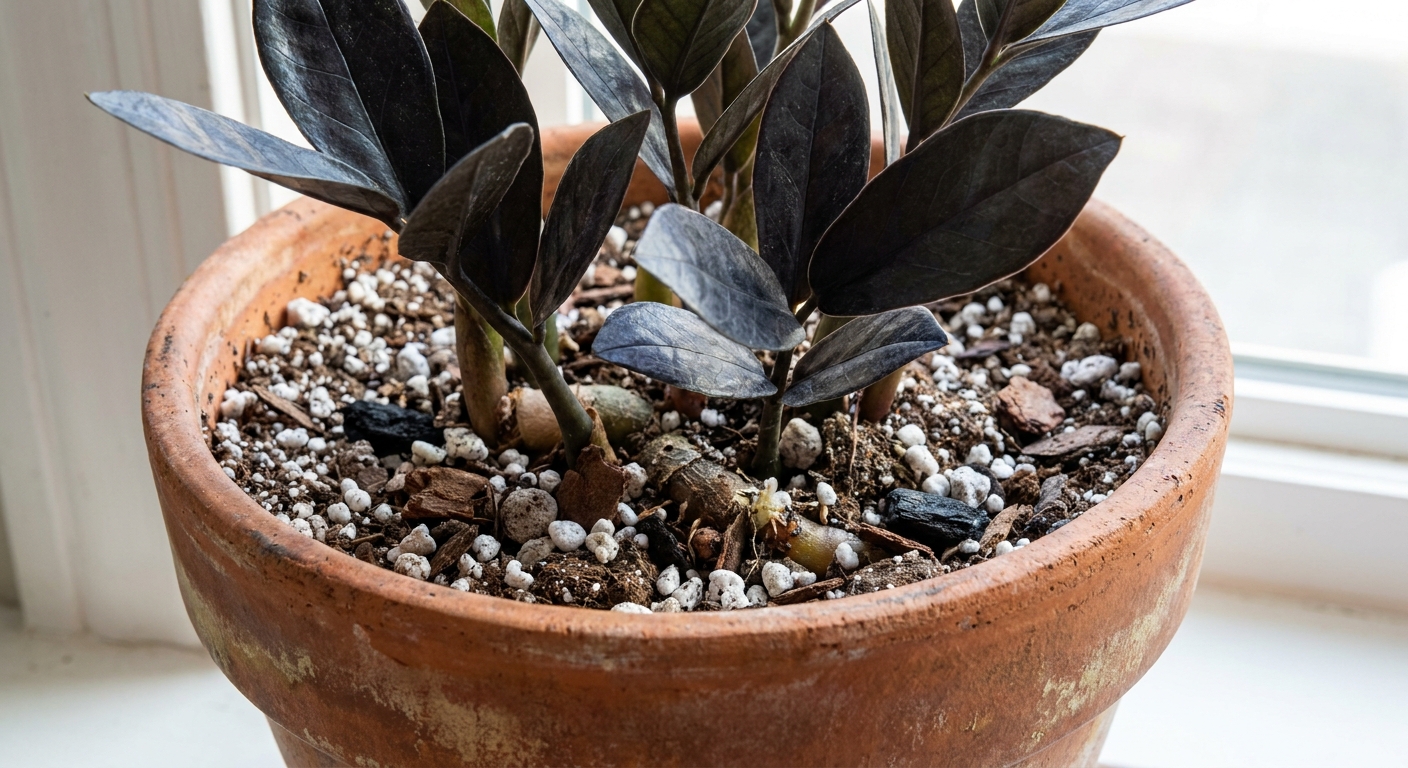
A reliable mix
A great, low-fuss blend is:
- 2 parts quality potting mix
- 1 part perlite or pumice
- 1 part orchid bark (optional but excellent for airflow)
Choose a pot with drainage holes. If you love decorative cachepots, keep Raven in a nursery pot inside so you can drain it properly.
Terracotta vs plastic
- Terracotta: dries faster, great for heavy-handed waterers
- Plastic: holds moisture longer, fine if you are patient with watering
Temperature and humidity
Raven ZZ is happy in typical home conditions.
- Temperature: aim for normal indoor temps (about 65 to 80 F). Avoid cold drafts and windowsills that get chilly at night. Prolonged temps below about 55 F can cause stress.
- Humidity: average household humidity is fine. If your air is extremely dry, growth may slow and spider mites become more likely, but you do not need to run a jungle-level humidifier for this plant.
Fertilizing
Raven ZZ is not a heavy feeder. Over-fertilizing can cause weak, stretched growth and salt buildup in the soil.
When and how to fertilize
- Spring through summer: fertilize once a month or every 6 weeks
- Fall and winter: skip, unless the plant is actively growing under strong light
- Use a balanced liquid fertilizer at half strength
If your Raven is in low light, fertilizing more will not “force” growth. It will just stress the roots.
Flush the soil
Every few months, water deeply until plenty drains out to help rinse away fertilizer salts, especially if you use tap water that leaves white crusts on the soil surface or pot.
Growth expectations
Raven ZZ grows in bursts. You may see nothing for weeks, then a cluster of new stems that look like little green spears. Those spears unfurl into leaflets and slowly darken.
How fast it grows
In bright indirect light, a healthy Raven often puts out a few new stems during the warm season. In medium to low light, growth can be very slow, and that is still normal.
Why new leaves are green
That bright green new growth is not a problem to fix. It is part of Raven’s normal maturation. The leaves darken as they harden off. Be patient, and resist the urge to move the plant around chasing color.
Cleaning and shine
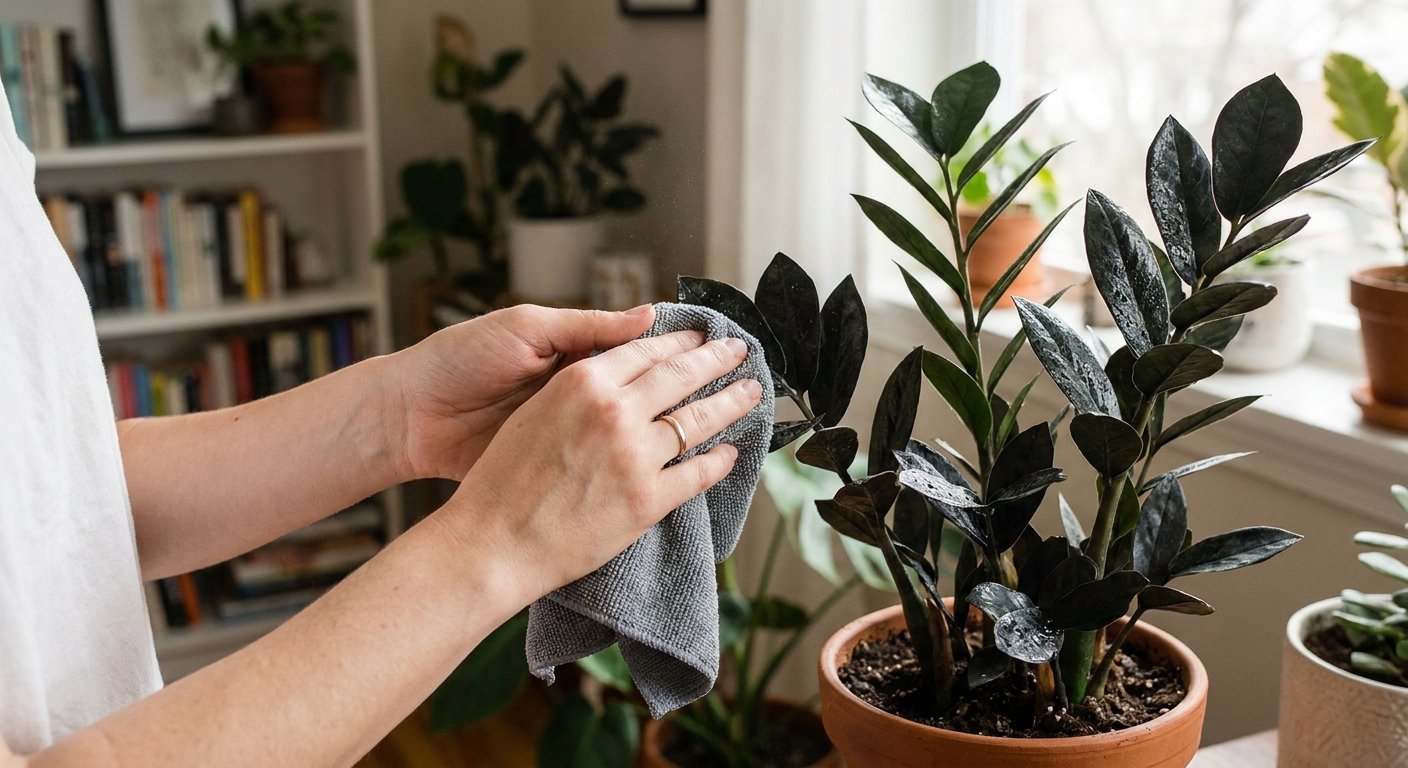
Raven’s dark foliage is gorgeous, and it also makes dust more obvious. Dust reduces light absorption, which can slow growth even more in a plant that already takes its time.
How to clean leaves
- Wipe leaflets gently with a damp microfiber cloth
- Support the leaflet from underneath so you do not crease it
- Skip oily leaf shine products, which can clog pores and attract more dust
I tell my own Raven, out loud, that we are doing “spa day.” It does not answer, but it does look better after.
Pests
ZZ plants are not pest magnets, but they can still pick up common houseplant hitchhikers.
What to look for
- Mealybugs: white cottony clusters in leaf joints
- Scale: small brown bumps on stems and leaf undersides
- Spider mites: fine webbing and stippled, dull leaflets, more common in very dry air
Simple routine
Once every couple of weeks, take 30 seconds to look:
- Under a few leaflets
- Along the stem where leaflets attach
- At the soil surface for fungus gnats, which often indicate overly wet soil
If you catch pests early, a wipe-down with diluted insecticidal soap can help. For mealybugs, a gentle rubbing alcohol dab on the insects themselves is often effective. For scale and spider mites, plan on repeated treatments (usually every 7 to 10 days for 2 to 4 rounds), plus physical removal of scale where possible. Persistence is the whole game.
Troubleshooting
Raven ZZ is resilient, but it has a few common stress signals. Here is how I sort them out quickly.
Yellow leaves
- Most common cause: overwatering or slow-draining soil
- Also possible: very low light combined with frequent watering
- Also possible: prolonged drought followed by frequent heavy watering (roots get stressed, then stay wet)
- What to do: let the pot dry, check for mushy stems, consider repotting into a chunkier mix if soil stays wet
One or two older leaves yellowing occasionally can also be normal aging, especially if the plant just pushed new growth.
Soft or mushy stems
This is a red flag for rot. Unpot the plant, inspect rhizomes, and remove any mushy, smelly sections with a clean blade. Rot often shows up as rhizomes that feel soft instead of firm. Repot in fresh, dry, well-draining mix and wait to water for at least a week.
Brown tips or crispy patches
- Too much direct sun
- Extreme underwatering for long stretches
- Salt buildup from fertilizer or hard water
Trim only the dead, crisp parts for looks. The damaged tissue will not turn green again.
Leaves look dull or blotchy
Often it is just dust. Wipe a few leaflets and see if the shine returns. If dullness comes with tiny speckling, check closely for spider mites.
Raven is not turning black
New growth is green first, always. If older leaves stay green for months, the plant may be in very low light or the growth may be from a mixed pot that includes regular ZZ stems. Increase light gradually and give it time.
Pruning
Raven ZZ does not need much pruning. When you do prune, think in whole stems, not individual leaflets.
What to remove
- Yellow, collapsing, or mushy stems (remove promptly)
- Broken stems
- The occasional fully yellow old stem, if you prefer a tidier look
Where to cut
Use clean shears and cut the entire stem at the soil line. Avoid plucking individual leaflets. It usually looks messier and does not help the plant.
Repotting and propagation
When to repot
Raven ZZ likes being slightly snug. Many plants are fine for 2 to 4 years, sometimes longer, depending on light and how fast they dry out. Repot when you see rhizomes pressing hard against the pot, the plant becomes unstable, or the mix breaks down and stays wet too long.
How to repot
- Go up only 1 to 2 inches in diameter
- Use fresh, airy mix
- Keep the plant at the same soil level, do not bury stems deeper
- Wait about a week before watering if you disturbed roots a lot
Propagation expectations
You can propagate Raven ZZ by division or leaf cuttings, but patience is required. Leaf cuttings can take months to form tiny rhizomes. If you want faster results, divide a mature clump when repotting.
Toxicity and handling
Raven ZZ is considered toxic if ingested (pets and kids included). The sap can also irritate skin in some people.
- Place it out of reach of curious nibblers.
- If you prune or repot, consider gloves if you are sensitive.
- Wash hands after handling and avoid touching your eyes.
Quick care summary
- Light: brightest indirect light you can give it for best growth; tolerates low light with slower growth
- Water: only when mostly dry; drench and drain; do not let it sit in runoff
- Soil: chunky and fast-draining
- Fertilizer: half-strength monthly in spring and summer
- Temp: typical home temps; avoid cold drafts
- Cleaning: wipe leaves regularly to remove dust
- Watch-outs: yellowing and mushy stems usually mean too much moisture
If you remember only one thing, make it this: Raven ZZ thrives on neglect, as long as that neglect includes good light and dry soil between waterings. The rest is just fine-tuning.