
Pothos Repotting

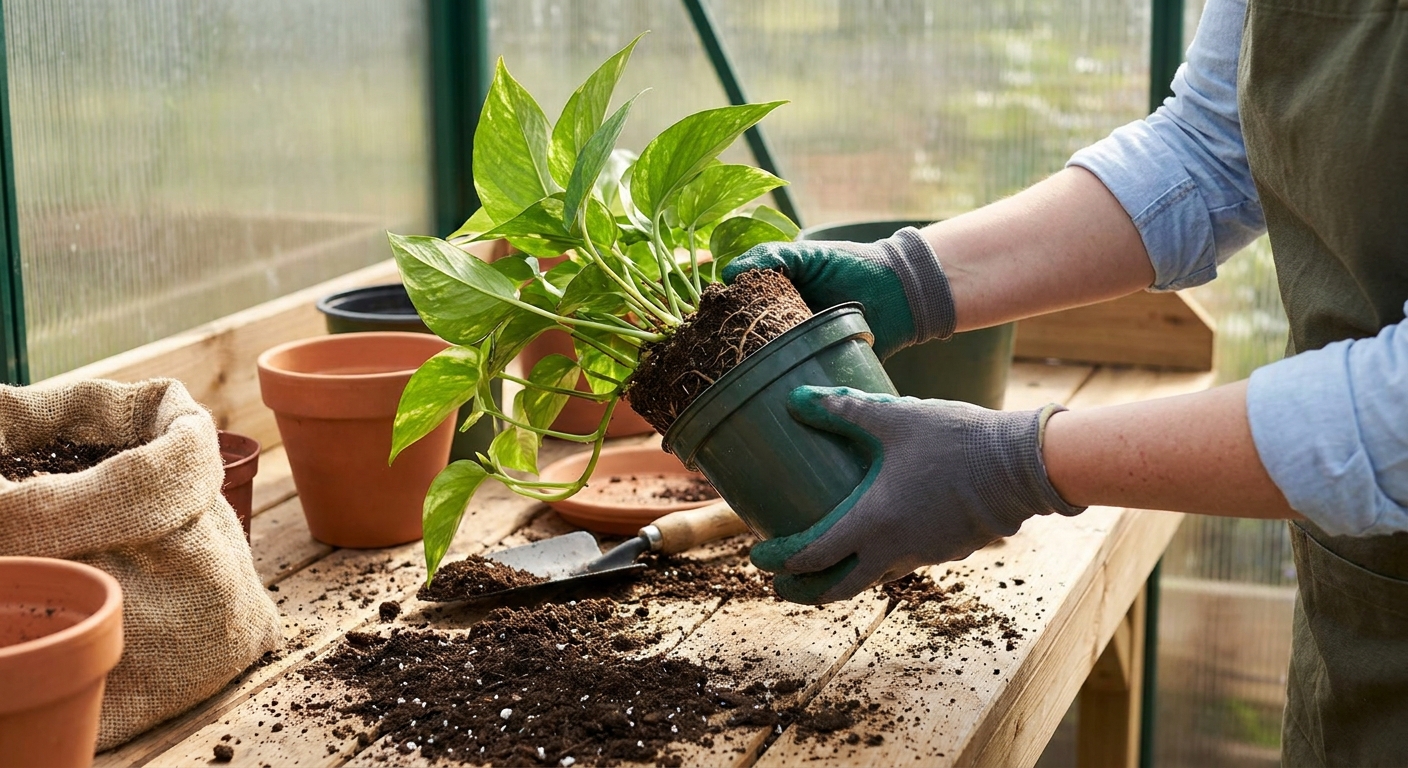
Pothos is famously forgiving, but repotting can still feel like open-heart surgery when you love your plant (and your floors). The good news: pothos usually responds really well to a refresh once it has outgrown its pot, especially when it is actively growing, as long as you size up slowly and give those roots a chunky, airy mix.
Below, I’ll walk you through when to repot, how big to go, what soil blend works best for pothos (and other aroids), and a gentle step-by-step that minimizes shock. If you want the universal basics first, hop over to our general guide: how to repot a houseplant.

When to repot pothos
Pothos can tolerate being a little snug, and many plants even look their best with a modestly full root ball. The trick is recognizing when “snug” becomes “stressed.”
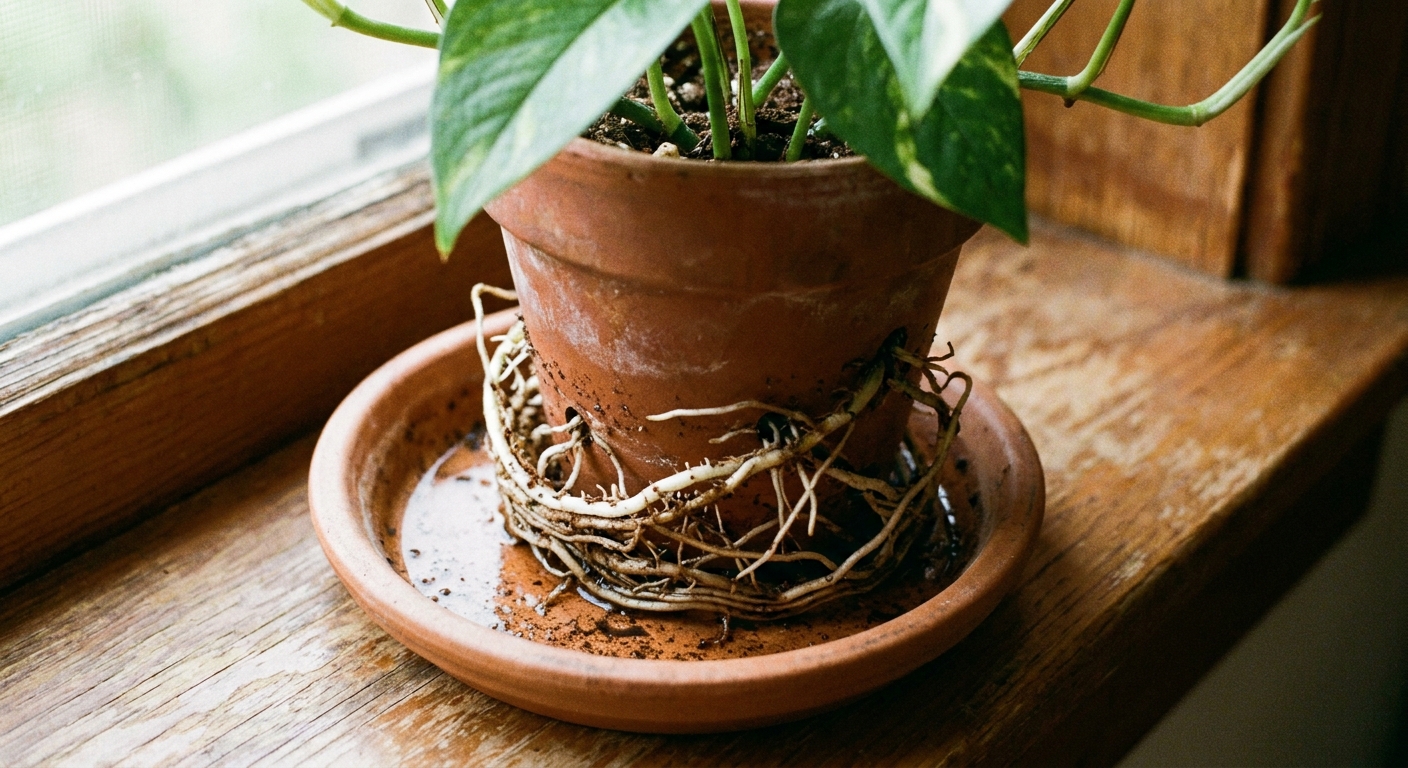
Clear signs your pothos is root-bound
- Roots circling the bottom or poking out of drainage holes.
- Water runs straight through the pot and the plant is thirsty again in a day or two.
- Stalled growth during bright months, especially if you are fertilizing lightly and consistently.
- Leaves getting smaller on new growth (not always light related, but often a clue).
- The root ball is pot-shaped and holds together like a dense sponge when you slide it out.
- Soil volume seems to shrink because roots have replaced most of the potting mix.
When you can wait
- Your pothos is growing steadily and soil still absorbs water evenly.
- Roots are visible but not dense and circling tightly.
- You repotted within the last 12 to 18 months and the plant looks happy.
Best time of year
Spring through summer is easiest on pothos because it is naturally in a growth rhythm. Late winter can also work if your home has enough warmth and longer, brighter days to support active growth. You can repot in fall or winter if the plant is truly struggling, just be more conservative: keep disturbance minimal and avoid heavy fertilizing afterward.
If it is not root-bound but the soil is a mess
Sometimes the roots are fine, but the mix has turned hydrophobic (water beads and runs off) or compacted into a brick. In that case, a gentle repot into fresh mix can still help, even if you keep the pot the same size.
How big should the new pot be?
With pothos, bigger is not always better. Oversizing is one of the fastest ways to invite soggy soil and root rot, especially in lower light homes.
The simple sizing rule
Choose a pot that is 1 to 2 inches wider than the current pot (2 inches max for most indoor pothos). If your plant is in a 4-inch pot, go to a 5- or 6-inch pot. If it is in an 8-inch pot, go to a 9- or 10-inch pot.
Drainage is non-negotiable
Pick a pot with drainage holes. If you love a hole-free cachepot, keep pothos in a nursery pot inside it so you can water thoroughly, let it drain fully, then tuck it back in.
Also, skip the classic “rocks at the bottom” trick. It does not improve drainage in containers, and it can leave you with less soil volume for roots. Good drainage comes from a hole plus a well-structured mix.
Material matters a little
- Terracotta dries faster and is great if you tend to overwater.
- Plastic or glazed ceramic holds moisture longer and suits dry homes or bright windows.
Best soil for pothos
Pothos is an aroid, and aroids want two things that sound contradictory but are actually best friends: moisture and air. The right mix holds some water while still draining fast and leaving pockets of oxygen around the roots.
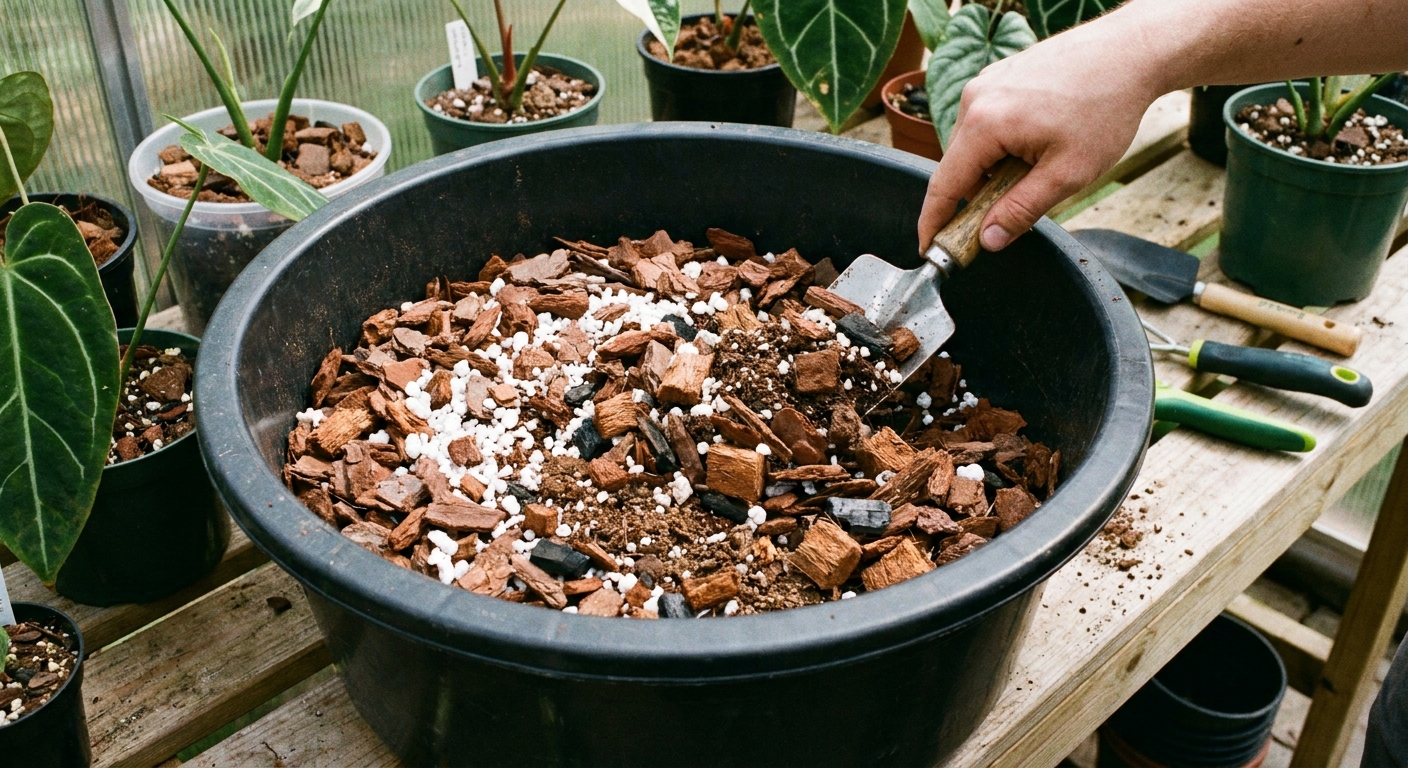
A dependable pothos soil recipe
- 2 parts high-quality indoor potting mix (peat or coco coir based is fine)
- 1 part orchid bark (small to medium chips)
- 1 part perlite or pumice
- Optional: a small handful of worm castings for gentle nutrition
If you want a simpler shortcut
Use an indoor potting mix and add 30 to 40 percent perlite and bark combined. Your goal is a mix that looks chunky, not like dense mud.
What to avoid
- Garden soil indoors (too heavy, compacts easily, can bring pests).
- Pure potting mix with no amendments if you tend to water generously.
- Lots of sand as a drainage fix. It often makes mixes heavier and less airy in containers.
- Reusing old mix that is compacted or has had rot issues. Fresh mix is cheap insurance.
How to repot pothos
Before you start, I like to water the plant 1 to 2 days ahead. Slightly moist roots slide out more easily, and the plant is better hydrated for the transition.
What you will need
- A pot with drainage holes (1 to 2 inches wider)
- Fresh chunky aroid mix
- Clean pruners or scissors
- Gloves (optional, but pothos sap can irritate skin)
- A saucer or tray for mess control
Quick safety note
Pothos is toxic if chewed (calcium oxalate crystals), so keep leaves and cuttings away from pets and small kids.
1) Slide it out and check the roots
Tip the pot on its side and support the base of the plant. Gently squeeze the pot or tap the rim until the root ball releases. If it is stubborn, run a butter knife around the inside edge.
Healthy pothos roots are typically white to tan and firm. If you find roots that are black, mushy, or smell sour, trim them off with clean pruners. If you are making multiple cuts, wipe or disinfect your blades between snips to avoid spreading problems.
2) Tease, do not shred
If roots are circling tightly, loosen the outer layer with your fingers. Think “untangling a necklace,” not “ripping Velcro.” You can gently pull apart the bottom third of the root ball and free a few circling roots so they grow outward into the new mix.
If your pothos is extremely root-bound, you can make 2 to 4 shallow vertical slices down the sides of the root ball with a clean knife. This can encourage new roots to branch outward, but it is strictly for the “this plant is basically a root brick” situation. If the roots already look stressed or rotted, skip slicing and keep handling as gentle as possible.
3) Add soil, set height, and backfill
Put a layer of mix in the bottom so the plant sits with the top of the root ball about 1 inch below the rim. Then fill around the sides with fresh mix, tapping the pot lightly to settle. Do not pack it down hard. Roots want air.
4) Water once, thoroughly
Water until it drains from the bottom. This settles the soil around roots and removes dry pockets. If the mix sinks a lot, top up with a bit more.
5) Give it a calm recovery week
- Put it back in bright, indirect light.
- Skip fertilizer for 3 to 4 weeks.
- Let the top inch or two dry before watering again.
How to avoid repotting shock
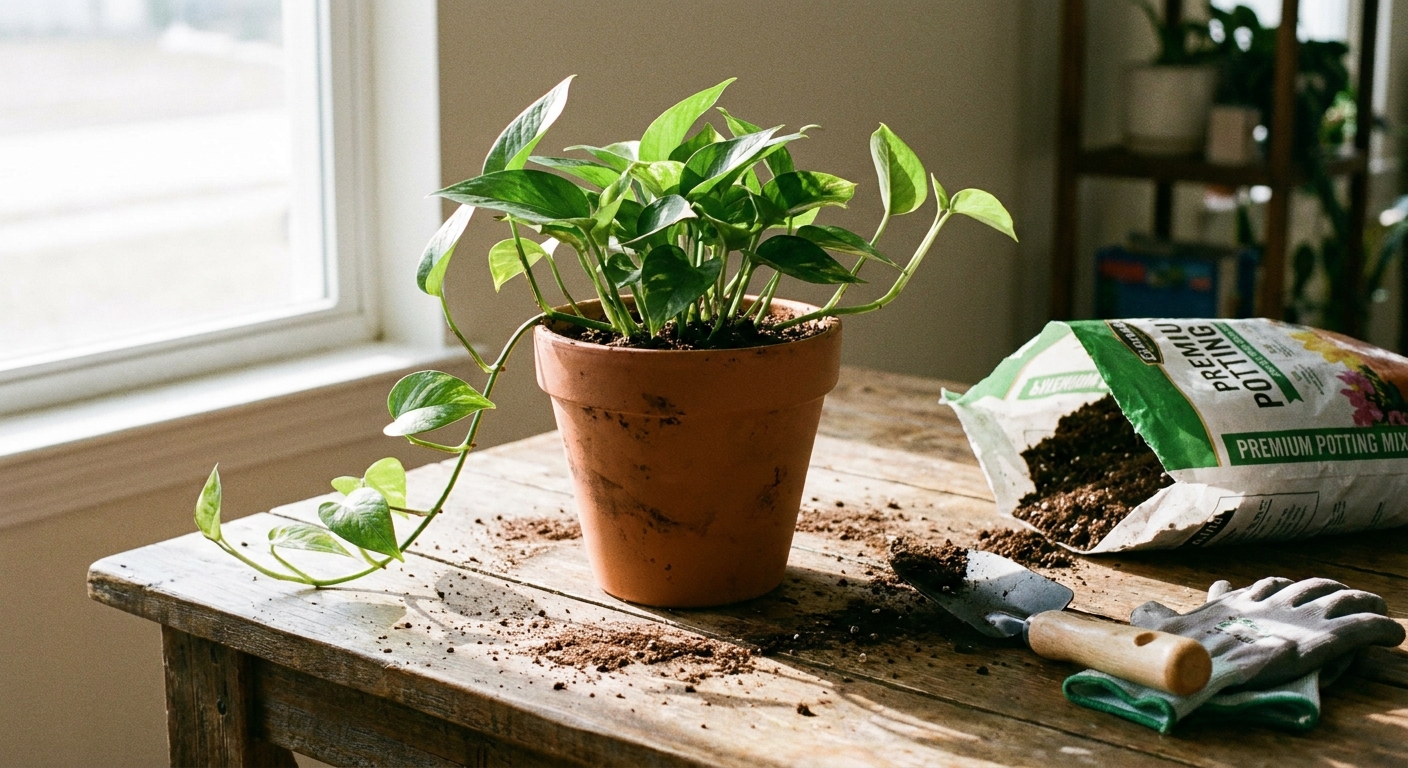
Pothos usually bounces back fast, but a little droop right after repotting is normal. It is the plant adjusting to new moisture patterns and re-establishing root to soil contact.
My best shock-minimizing tips
- Do not upsize too much. Oversized pots stay wet longer.
- Keep the same light level for a week or two. Now is not the moment to move it from a shelf to a blazing window.
- Match moisture to the new pot. Fresh mix can hold water differently than old mix, so check before you water.
- Do not “fix” droop with more water unless the soil is actually dry.
Yellow leaves after repotting
- One or two older yellow leaves: common adjustment, especially if roots were very tight.
- Several yellowing leaves quickly: often too-wet soil, oversized pot, or low light.
When to add a support
Pothos can trail beautifully, but it is also a climber. If you want a taller look and you are chasing bigger leaves, a support can help, but results vary indoors. Strong light, consistent training, and time do a lot of the heavy lifting.
Best time to add a pole
Add a moss pole, coir pole, or trellis during repotting. Installing it later can spear roots and undo all your careful work.
How to do it gently
- Place the pole close to the pot wall, not directly through the center of the root ball.
- Gently tie a few vines with soft plant Velcro or twine. Do not cinch tight.
- If it is real moss, keeping it slightly moist can encourage aerial roots to grab on.
Aftercare checklist
- Week 1: Bright, indirect light. Water only if the top layer dries. Expect mild droop to improve within days.
- Weeks 2 to 4: Resume your normal watering rhythm, adjusted for the new pot. Watch for new growth tips as the “all clear” sign.
- After week 4: Start fertilizer again at half strength if you use it.
If you are unsure whether your plant needs water, lift the pot. A freshly watered pot feels noticeably heavy, and that simple habit prevents a lot of root trouble.
Quick FAQ
How often should I repot pothos?
Most indoor pothos appreciate repotting every 12 to 24 months, depending on light, pot size, and how fast it grows. Faster growth in bright light usually means more frequent repotting.
Can I repot and prune at the same time?
Yes, lightly. If you plan a big haircut, I prefer to do it one to two weeks later so the plant is not juggling multiple stressors at once.
Should I break up the roots completely?
No. With pothos, gentle teasing on the outside is usually enough. You want to encourage outward growth, not strip the plant of its root-to-soil contact.
What if my pothos is in a hanging basket with tangled vines?
Set the basket on a table, and coil vines loosely like a soft rope to keep them out of the soil. If a vine snaps, you can root the cutting in water or soil. Pothos is generous like that.
What if my pot is huge and I cannot realistically repot?
Top-dress instead. Scrape off the top 1 to 2 inches of old soil (avoid ripping roots), then replace with fresh mix. It is not as dramatic as a full repot, but it can improve watering and give the plant a small nutrient and texture refresh.