
Pothos Plant Care


Pothos is the plant I hand to anyone who whispers, “I kill everything.” It is forgiving, fast-growing, and genuinely satisfying to watch as those vines spill over a shelf like a little green waterfall.
Botanically, the classic houseplant “pothos” is Epipremnum aureum (Golden pothos and many of its popular sports and cultivars). That said, the pothos label gets used loosely in shops, and you may also see other Epipremnum types or even Scindapsus (like satin pothos) sold under the same nickname. Care is similar, but they are not all the same plant.
Below is the care routine I use at home, plus fixes for the most common pothos problems I see again and again: yellow leaves, leggy vines, droopy stems, and the dreaded mushy roots.
Pothos basics at a glance
- Light: Medium to bright indirect light is ideal. Tolerates low light, grows slower.
- Water: Water when the top 1 to 2 inches of soil are dry.
- Soil: Light, airy potting mix with added perlite or bark for drainage.
- Temp: 65 to 85°F (18 to 29°C). Protect from cold drafts.
- Humidity: Average home humidity is fine. A little higher can boost growth.
- Fertilizer: Light feeding in spring and summer.
- Pet safety: Toxic if chewed (calcium oxalate crystals). Keep away from pets and kids.
Light requirements
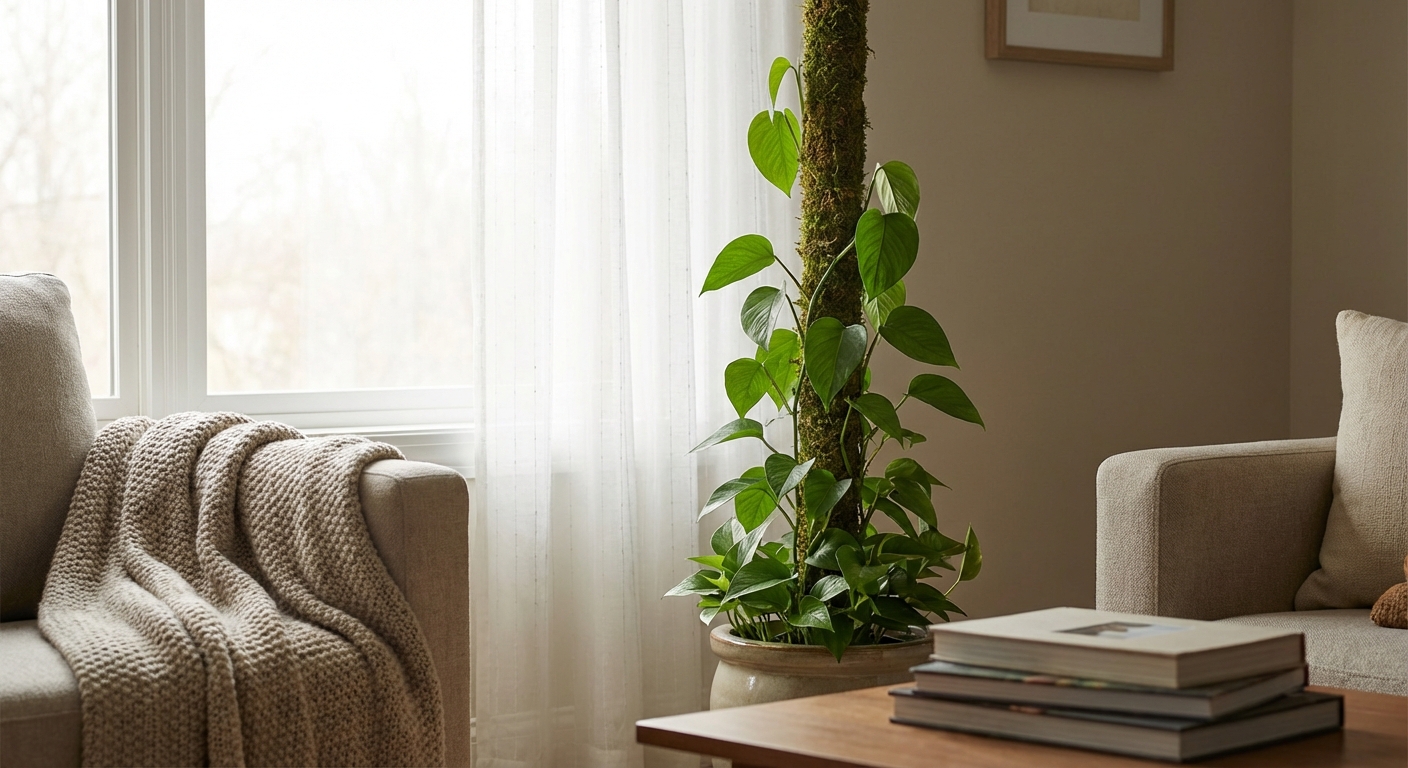
Think “bright shade.” In the wild, pothos climbs trees under a canopy, so it loves bright, indirect light indoors.
What “indirect light” means: a bright room where sunlight does not hit the leaves directly. If you can read comfortably without turning on a lamp, you are usually in the right neighborhood.
Best light
- Near an east window: gentle morning sun is usually perfect.
- A few feet back from a south or west window: bright light without the harsh, direct midday rays.
- Under a grow light: great for fast, lush growth, especially in winter.
Low light vs bright light
Pothos will survive in low light, but it often becomes leggy, with smaller leaves and longer gaps between them (longer internodes). Variegated varieties also tend to lose their pattern in dimmer spots.
Can pothos handle direct sun?
A little early morning sun can be fine. Hot afternoon sun can scorch leaves, leaving pale, crispy patches. If you see scorching, pull it back from the window or add a sheer curtain.
Too little light vs too much
- Needs more light: long bare stretches of stem, smaller new leaves, slower growth, variegation fading.
- Getting too much light: bleached areas, crispy edges, or scorched patches (especially in strong afternoon sun).
How to water pothos
If pothos care has one secret, it is this: water deeply, then let it dry a bit. Constantly damp soil is what gets pothos into trouble.
When to water
Check the pot with your finger. When the top 1 to 2 inches feel dry, it is time. In many homes that looks like:
- Spring and summer: about every 7 to 10 days
- Fall and winter: about every 10 to 21 days
Your actual schedule depends on pot size, light, temperature, and how airy your soil mix is. A pothos in bright light in a small pot dries quickly. A pothos in low light in a big pot can stay wet for ages.
How to water correctly
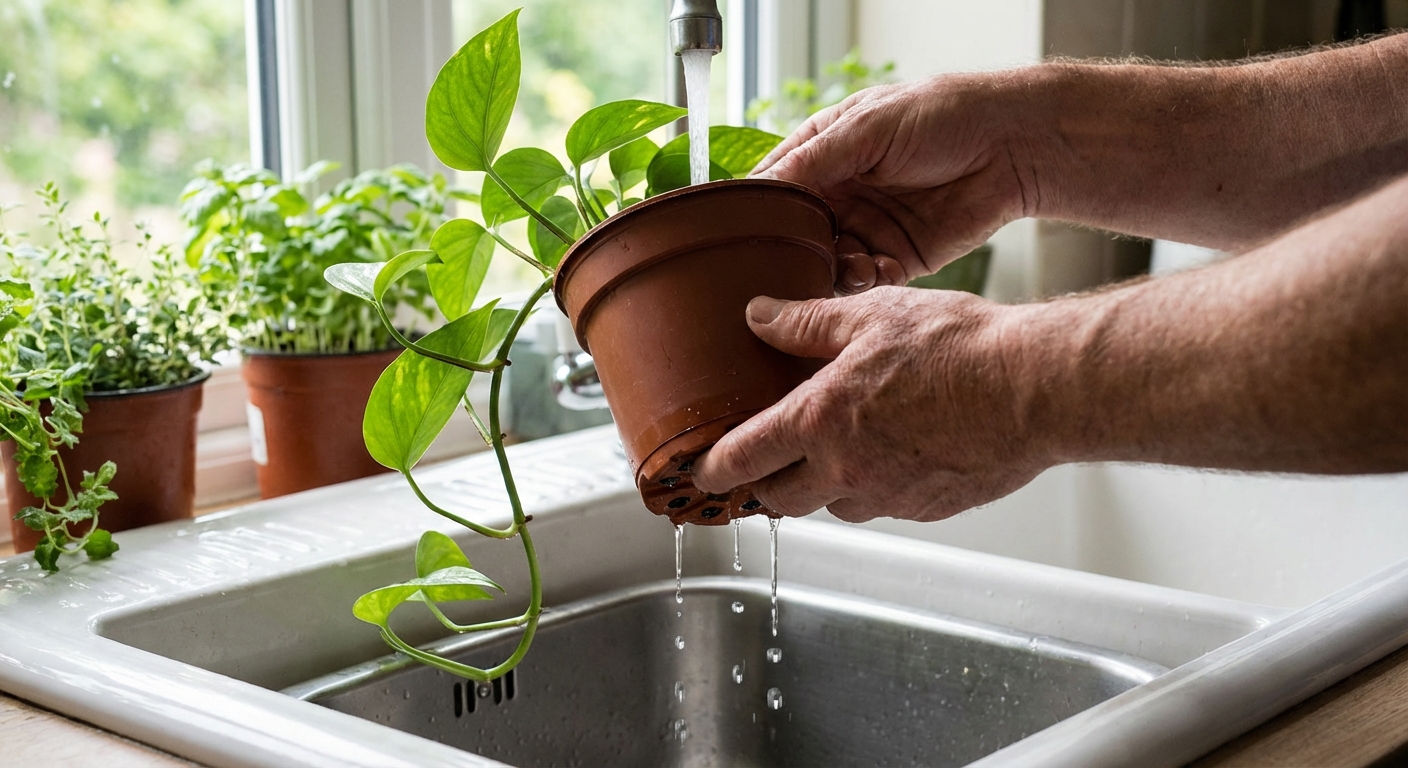
- Water until you see a steady stream out of the drainage holes.
- Let it drain completely. Do not let it sit in a saucer of water.
- Empty cachepots (decorative outer pots) so roots are not soaking.
Signs you are underwatering
- Leaves feel thin, soft, or slightly curled
- Vines droop but perk up after watering
- Soil pulls away from the pot edge and feels very dry
Signs you are overwatering
- Yellow leaves, especially lower ones
- Soil smells sour or stays wet for days
- Blackened stems near the soil line
Soil and potting
Pothos is not fussy, but it grows best in a mix that holds a little moisture while still letting roots breathe.
Best soil mix
A simple recipe that works beautifully:
- 2 parts quality indoor potting mix
- 1 part perlite or pumice
- 1 part orchid bark or fine pine bark (optional, but pothos loves the air pockets)
If you prefer to buy rather than mix, choose an aroid-style indoor mix or any potting soil you can lighten with perlite.
Pot choice and drainage
Use a pot with a drainage hole, always. Terracotta is lovely for pothos that tend to stay too wet because it dries faster. Plastic holds moisture longer and can be great in brighter, warmer rooms.
When to repot
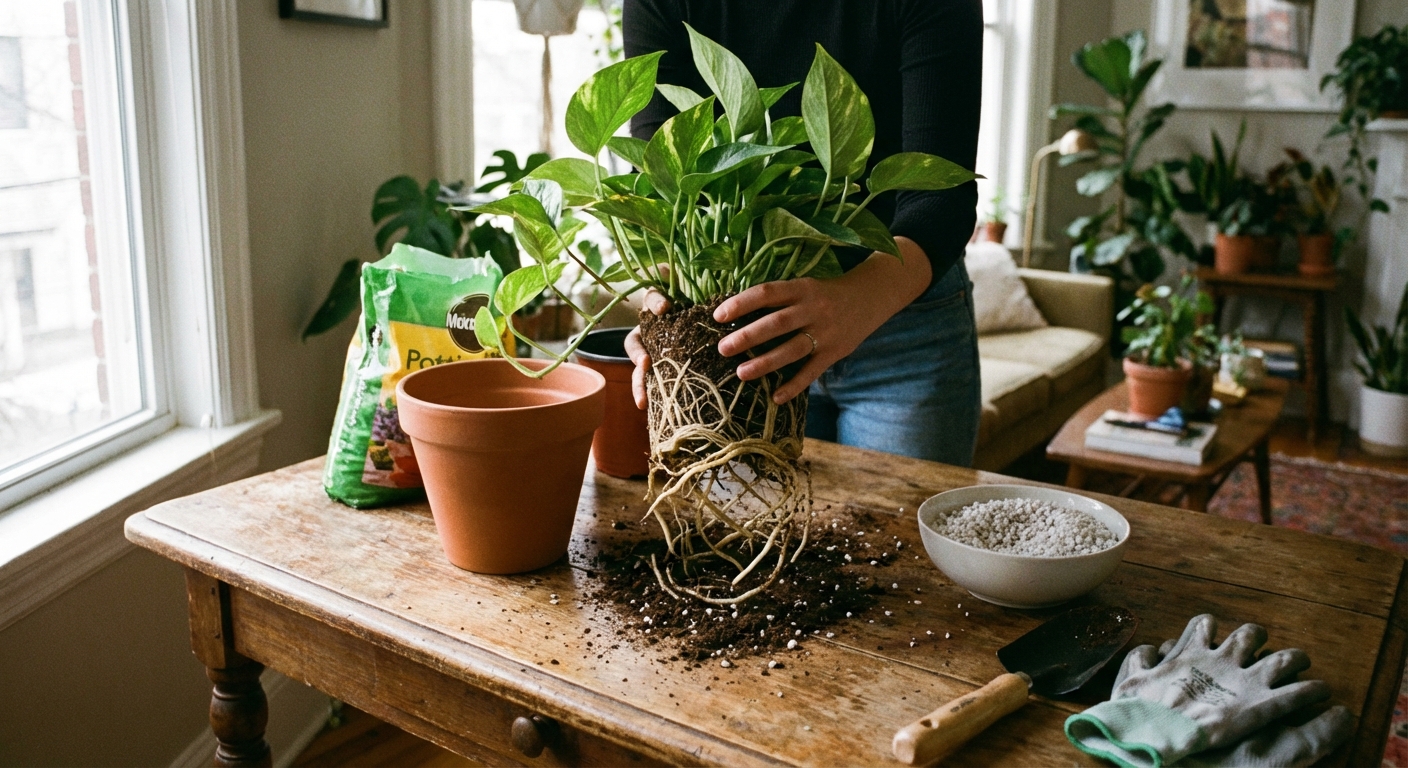
- Roots circling the bottom or poking out of drainage holes
- Soil dries out extremely fast (every 2 to 3 days)
- Growth stalls even in good light
Repot in spring or early summer if you can, moving up just 1 to 2 inches in pot diameter. Oversized pots hold extra wet soil, which is how root rot gets invited to the party.
Yellow or droopy after repotting
A little sulking after repotting can be normal. Give it steady, bright indirect light, keep watering conservative while it re-establishes roots, and avoid fertilizing for 3 to 4 weeks.
Humidity and temperature
Pothos adapts to average home humidity, but it often grows more vigorously in a slightly more humid space.
- Practical humidity target: 40 to 60% (higher is fine)
- Temperature: 65 to 85°F (18 to 29°C)
Keep pothos away from cold windows in winter and from heating vents that blast hot, dry air. If your plant gets crispy edges in winter, a small humidifier nearby can make a noticeable difference.
Fertilizing pothos
Pothos is not a heavy feeder, but a little nutrition during active growth helps leaves size up and color up.
Simple fertilizer plan
- Spring through summer: feed every 4 to 6 weeks with a balanced houseplant fertilizer at half strength
- Fall and winter: pause, or feed lightly every 8 to 10 weeks if the plant is still pushing new growth in bright light
If you are into gentle, soil-friendly options, worm castings as a thin top-dress are pothos-approved. Just keep it light so you do not smother the soil surface.
Pruning and training
Pruning is how you turn a scraggly pothos into a lush one. Snipping a vine often encourages dormant nodes to wake up and branch, which usually means more stems and a fuller look over time. Indoors, it is not a guaranteed “every time,” but it is still your best tool.
How to prune
- Find a node, the little bump where a leaf meets the stem.
- Cut just above a node to encourage new growth from nearby nodes on the mother plant.
- Save the cuttings for propagation (more on that below).
Make leaves bigger
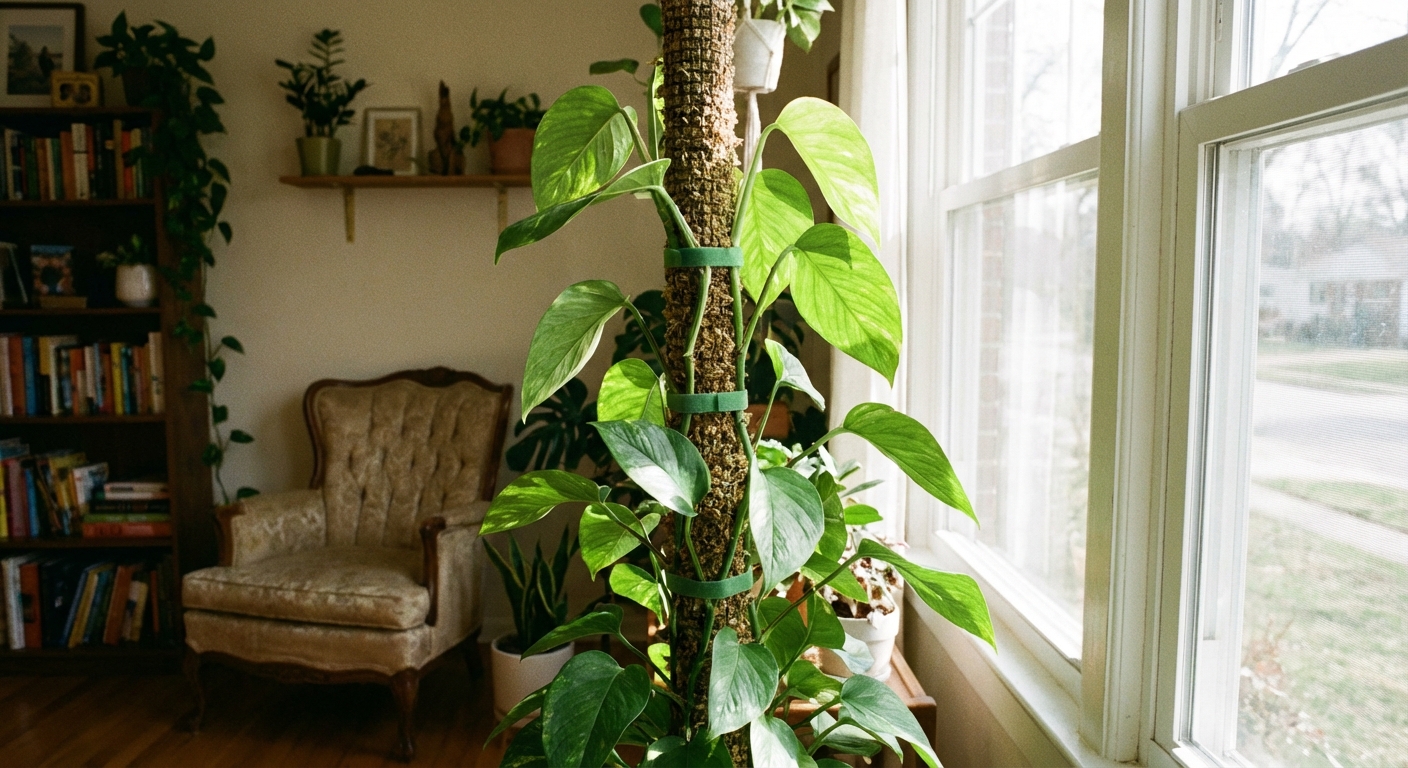
Want bigger leaves? Let your pothos climb. Give it a moss pole, coir pole, or a trellis, and keep the support slightly moist if it is real moss. Climbing triggers more mature leaf growth over time.
Aerial roots
Little nubby roots along the stem are normal, especially on climbing vines. They help the plant grip and can also root if they touch soil or moss.
Propagation
Pothos propagation is wonderfully beginner-friendly. If you can snip a stem and keep it from drying out, you can make a new plant.
Where to cut
Cut a vine into sections with at least one node each. The node is where roots form. Leaves alone will not root.
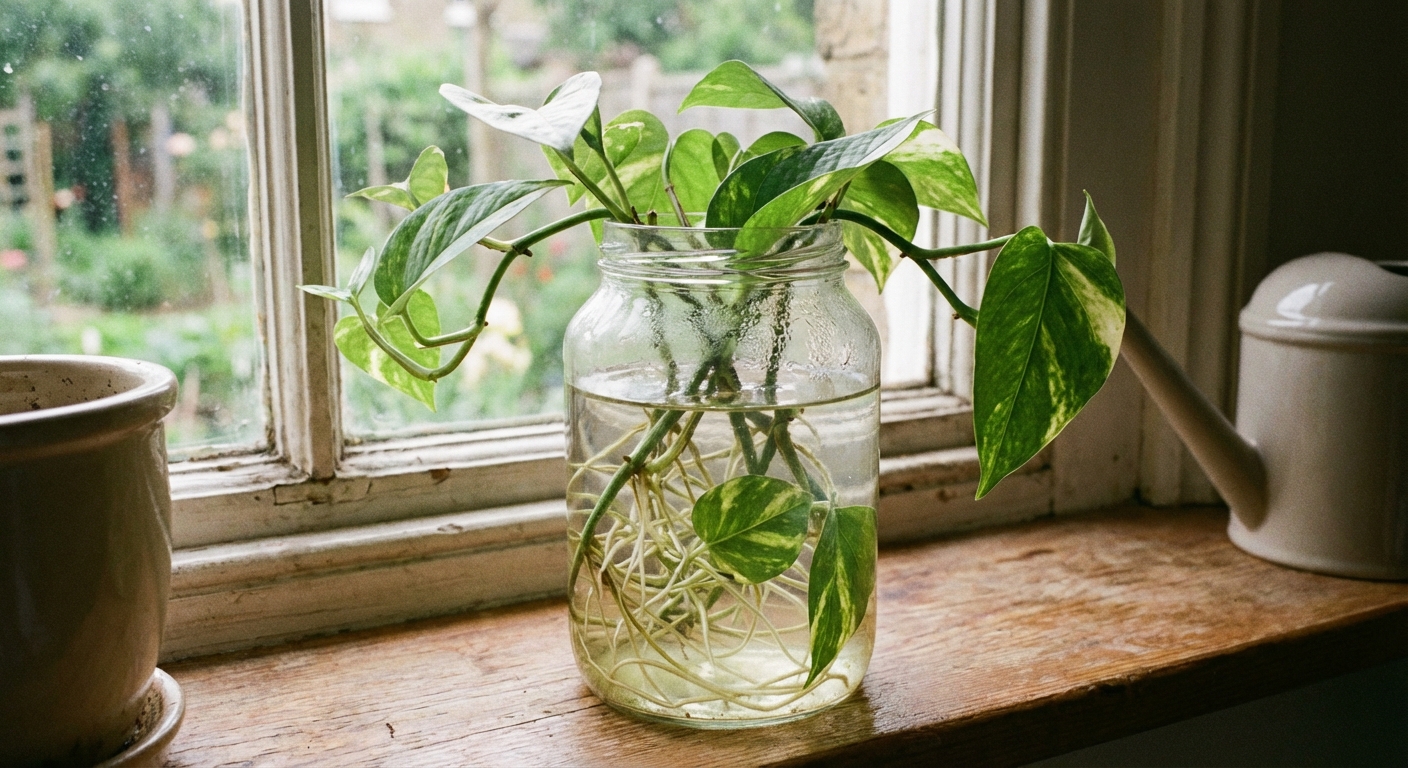
Water propagation
- Take a cutting with 1 to 3 leaves and at least 1 node.
- Remove any leaf that would sit underwater.
- Place the node in a jar of clean water in bright, indirect light.
- Refresh the water every 7 to 10 days.
- Pot up when roots are about 2 to 4 inches long, ideally with a few branches.
Soil propagation
- Stick the node into pre-moistened potting mix (or mix plus perlite).
- Keep the soil lightly damp, not soggy.
- Optional: cover with a clear bag to boost humidity for the first couple weeks.
- Check for resistance after 3 to 5 weeks. That gentle tug telling you “I am anchored” is a good sign.
Propagation tip for a fuller pot
Plant multiple cuttings around the rim of the pot. This creates a thick, lush plant faster than trying to fill in a single stem.
Variety highlights
Most pothos care is the same across varieties. The biggest difference is light: more variegation usually means the plant needs brighter indirect light to hold its pattern. In lower light, all varieties tend to stretch with longer gaps between leaves.
Golden pothos
The classic. Green leaves splashed with yellow-gold. Fast, forgiving, and a great first pothos.
Marble Queen pothos
Cream and green marbling. Needs brighter light than Golden to stay nicely variegated. Growth is often a bit slower.
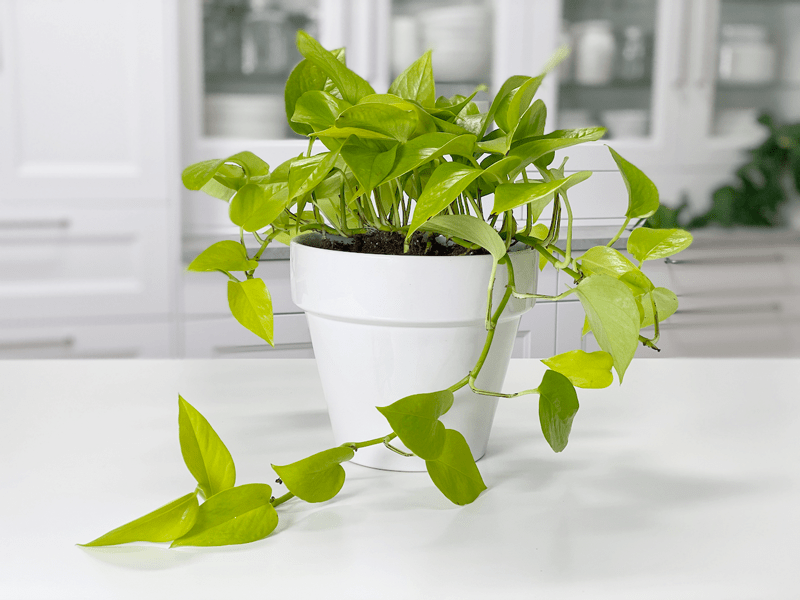
Neon pothos
Electric chartreuse leaves that glow in bright indirect light. In low light it can shift greener.
N’Joy pothos
Crisp white and green patches with smaller leaves and a more compact feel. Likes bright indirect light and tends to be slower-growing than Golden.
Common pothos problems (and fixes)
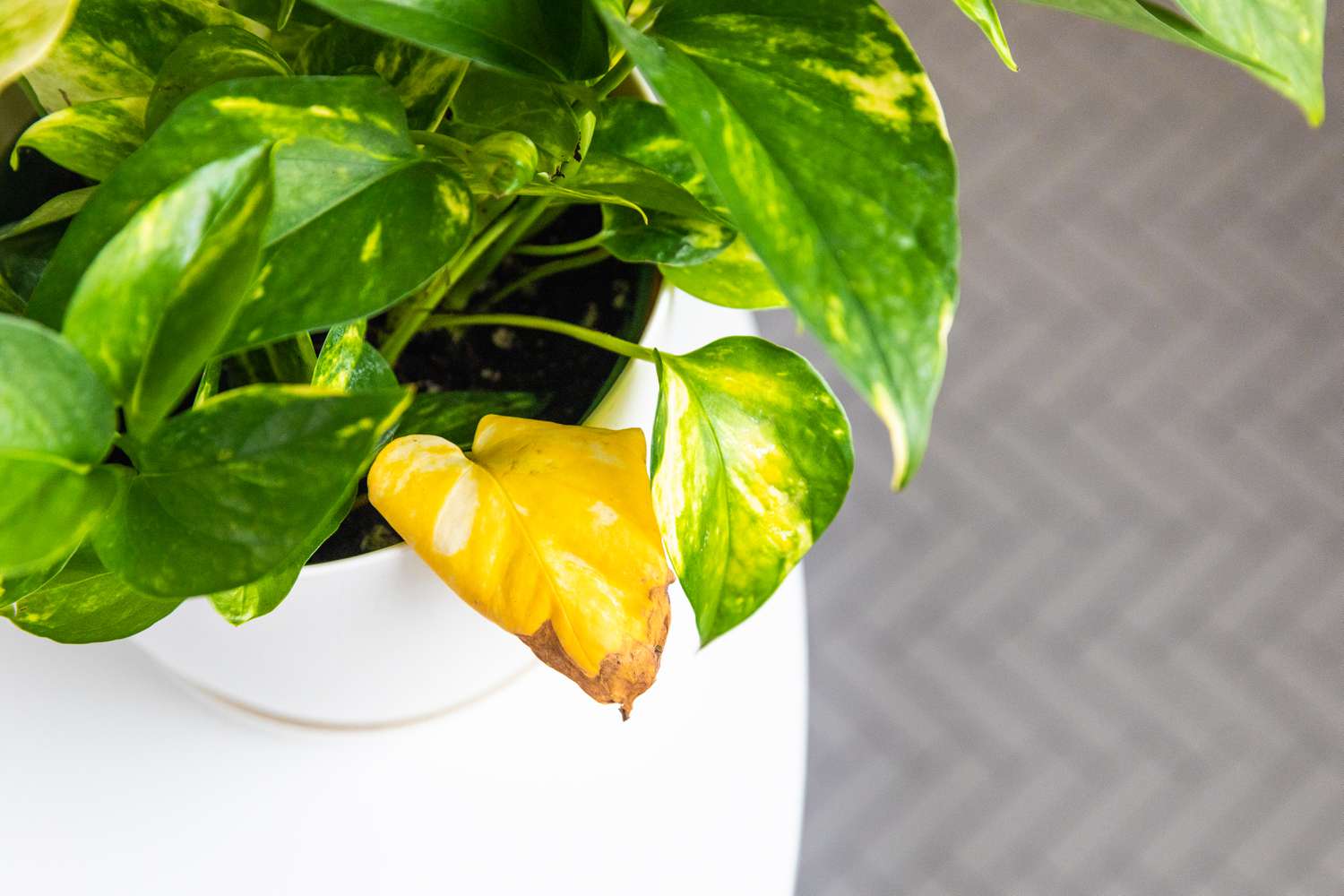
Yellow leaves
One yellow leaf now and then is normal, especially on older growth. Multiple yellowing leaves usually point to watering issues.
- Most common cause: overwatering or soil staying wet too long.
- Fix: let the pot dry to the top 2 inches, then adjust your schedule. Make sure you have drainage and an airy mix.
- Also check: low light (soil dries slowly), cold drafts, or fertilizer buildup.
Brown tips or edges
- Cause: underwatering, very dry air, or salt buildup from fertilizer or hard water.
- Fix: water thoroughly when the top 1 to 2 inches are dry, consider filtered water, and flush the pot monthly by watering until lots of water drains out.
Leggy growth (long vines, small leaves)
- Cause: not enough light, plus no pruning.
- Fix: move to brighter indirect light, prune back to just above nodes, and propagate the cuttings back into the pot for instant fullness.
Drooping vines
- If the soil is dry: it is thirsty. Water deeply.
- If the soil is wet: roots may be stressed. Let it dry, then consider repotting into a chunkier mix if it stays soggy.
Root rot
Soft, brown, smelly roots and yellowing leaves are classic signs. The best confirmation is to inspect the roots.
- Unpot the plant and rinse the roots.
- Trim away mushy roots and any blackened stems.
- Repot into fresh, airy mix in a pot with drainage.
- Water lightly once, then wait until the top 2 inches dry before watering again.
Pests (spider mites, mealybugs, scale)
Pothos is usually easy, but pests happen, especially in dry indoor air.
- First step: isolate the plant.
- Wash: rinse leaves and stems in the shower or sink.
- Treat: insecticidal soap is a solid, plant-friendly default. If you use diluted castile soap, keep it mild and test on a small area first to avoid leaf damage. Repeat treatments every 7 to 10 days for a few rounds.
Care tips that make pothos thrive
- Rotate the pot every week or two so growth stays even.
- Dust the leaves occasionally. Clean leaves photosynthesize better and look shinier.
- Use a trellis or pole if you want bigger leaves and faster growth.
- Group plants to gently raise humidity without fuss.
If your pothos looks tired, do not panic. Nine times out of ten, it just wants brighter indirect light and a calmer watering routine.
Toxicity and safety
Pothos contains calcium oxalate crystals. If a pet or child chews it, you may see mouth irritation, drooling, pawing at the mouth, or mild vomiting.
- What to do: rinse the mouth gently, offer water, and remove any plant bits you can safely.
- Then: call your vet (for pets) or Poison Control (for people) for guidance, especially if symptoms are persistent or severe.
FAQ
How often should I water pothos?
Water when the top 1 to 2 inches of soil are dry. For typical indoor conditions, that is often weekly-ish in brighter months and less often in winter. If you want the full walkthrough and signs to watch for, see the watering section above.
Does pothos like to be root bound?
It tolerates being a bit snug, but very root-bound plants dry too fast and may slow down. Repot when roots fill the pot and circle heavily, usually every 1 to 2 years.
Can pothos live in water forever?
It can live in water for a long time if you refresh the water and provide nutrients. For long-term water growing, add a very dilute hydroponic fertilizer occasionally and keep the jar clean.
Is pothos the same as philodendron?
They are different plants, though they look similar. Pothos (Epipremnum aureum) usually has thicker, waxier leaves and a distinctive little “wing” or groove along the petiole. Care is similar, but pothos is often even more forgiving.