
Ponytail Palm Care for Beginners

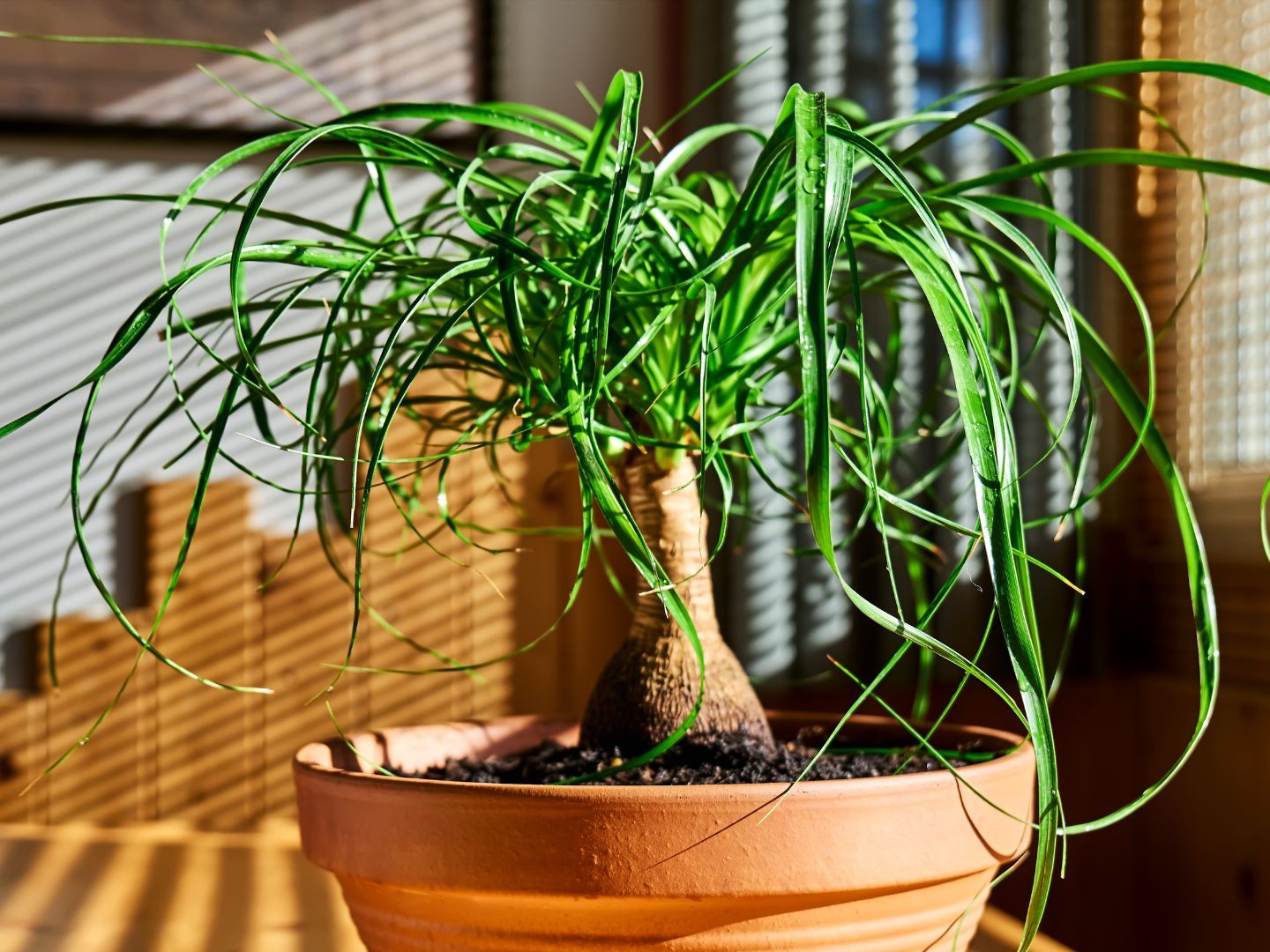
If you have ever wished for a houseplant that does not sulk when you forget it for a week (or two), meet the ponytail palm. Despite the name, Beaucarnea recurvata is not a true palm at all. It is a drought-tolerant, succulent-like plant with a chunky, water-storing trunk and a fountain of curly, ribbon-like leaves that look like a playful ponytail.
This is one of my favorite “confidence builder” plants for Leafy Zen readers because it rewards a relaxed approach. The big secret is simple: give it strong light and resist the urge to water on a schedule.
Quick facts (so you know what you are growing)
- Common name: Ponytail palm
- Botanical name: Beaucarnea recurvata
- What it actually is: A drought-tolerant plant that stores water in its trunk (not a moisture-loving palm)
- Growth rate: Slow and steady
- Beginner friendliness: Very high, as long as you do not overwater
- Toxicity: Generally considered non-toxic to pets, but chewing any plant can cause mild stomach upset
Light: the make-or-break ingredient
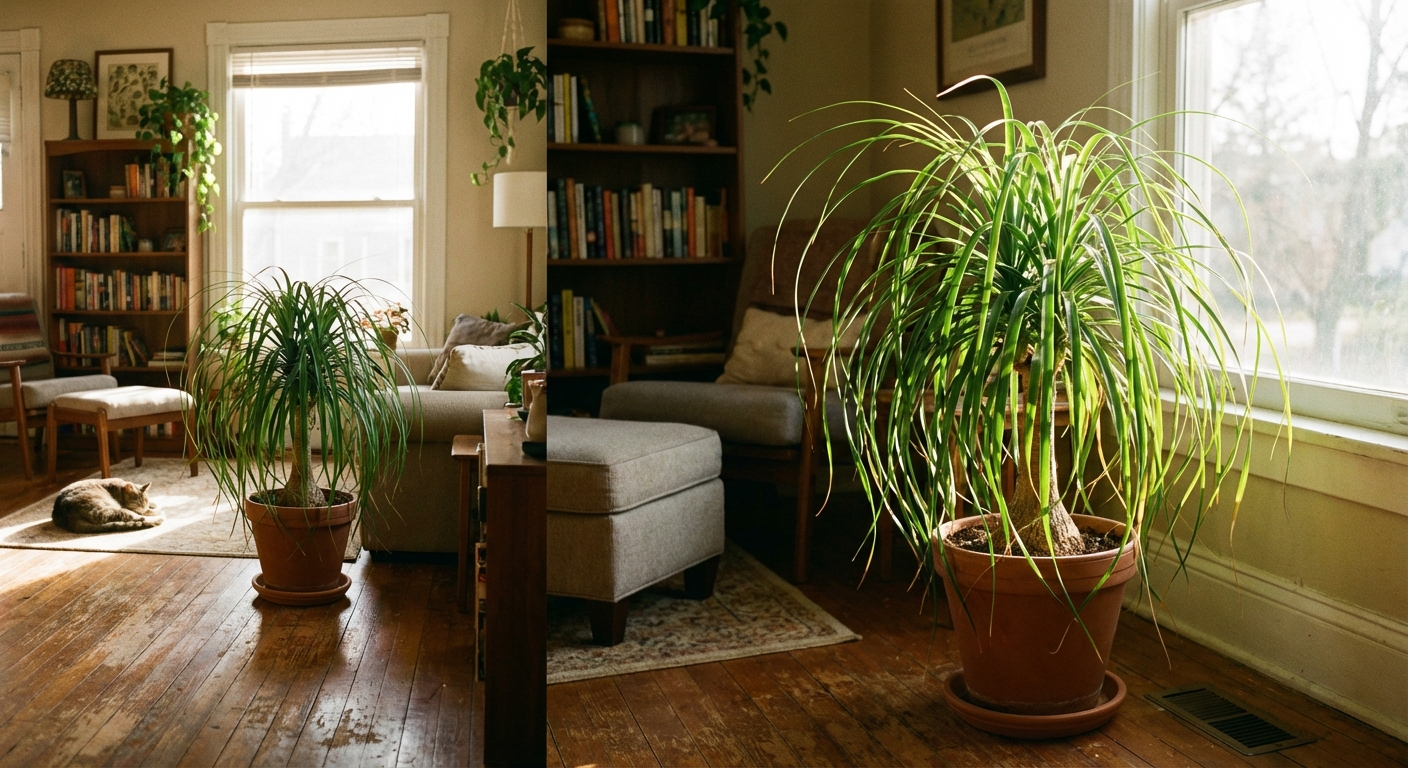
Ponytail palms are happiest in bright light, including a few hours of gentle direct sun. More light means tighter growth, better color, and sturdier leaves.
Best indoor placement
- Ideal: Right next to a south or west window (use a sheer curtain if the sun is scorching hot in summer).
- Great: An east window with bright morning sun.
- Okay (but slower): Bright, indirect light a few feet back from a window.
Signs it wants more light
- Leaves stretch longer and look less “fountain-like.”
- New growth is pale or thin.
- The plant leans toward the window. (Rotate the pot monthly for even growth.)
Watering: treat it like a succulent
Here is the ponytail palm mantra I repeat to myself: soak, then ignore. That swollen base is a built-in canteen. Overwatering is the fastest way to turn this low-maintenance plant into a stressful one.
How to water (the beginner-proof method)
- Check dryness first: Stick a finger 2 to 3 inches into the soil. If it is dry that far down, you can water.
- Water deeply: Pour until water runs out of the drainage holes.
- Drain completely: Never let it sit in a saucer of water.
- Wait: Do not water again until the mix is mostly dry.
How often is “often”?
It depends on light, pot size, and season, but a common rhythm is:
- Spring and summer: Every 2 to 4 weeks
- Fall and winter: Every 4 to 6 weeks (sometimes longer in low light)
If you are torn between watering and waiting, wait. A ponytail palm bounces back from dryness far more easily than it recovers from soggy roots.
Soil and pot: fast-draining is non-negotiable
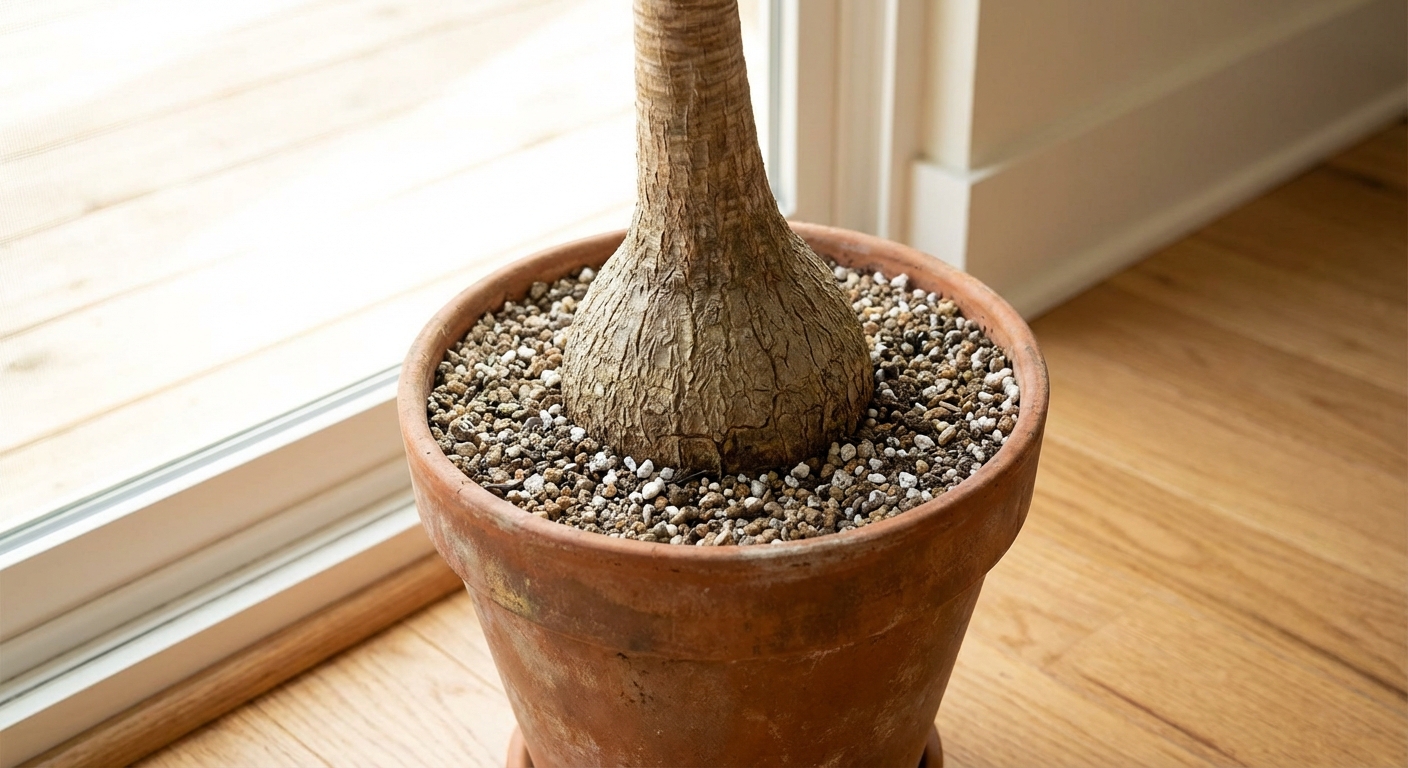
Ponytail palms like airy soil that dries quickly. Think “cactus conditions,” not “tropical palm.”
Best soil mix
- Easy option: Cactus and succulent potting mix.
- DIY upgrade: 2 parts potting mix + 1 part perlite or pumice + 1 part coarse sand (optional).
Choose the right pot
- Always use a pot with drainage holes.
- Terracotta helps the soil dry faster, which is great for heavy-handed waterers.
- A slightly snug pot is fine. These plants do not mind being a bit tight.
Temperature and humidity: relaxed houseplant vibes
Ponytail palms are wonderfully adaptable indoors.
- Temperature: Aim for 60 to 80°F. Brief dips cooler than that are usually fine, but protect it from cold drafts and frosty windows.
- Humidity: Average home humidity is perfect. No special misting required.
If your plant is near a heating vent, redirect the airflow. Constant hot air can dry the leaf tips.
Fertilizer: optional, light, and only in the growing season
This is not a heavy feeder. If you want to encourage steady growth, feed lightly.
- When: Spring through early fall
- How: A balanced liquid houseplant fertilizer at 1/4 to 1/2 strength every 4 to 6 weeks
- Skip: Fertilizing in winter when growth slows
Too much fertilizer can contribute to brown tips, so gentle is the goal.
Slow growth: what to expect (and why that is a good thing)
Ponytail palms grow slowly indoors, and that is part of their charm. You are not signing up for weekly repots or dramatic takeovers of your living room. Many plants stay a manageable size for years, especially in a pot.
New leaves typically emerge from the center of the crown. Older leaves naturally arch outward and down. That relaxed, draping shape is normal and gorgeous.
Repotting: infrequent, gentle, and best done in spring
If there is one “rule” I will nudge you to follow, it is this: do not repot a ponytail palm just because it has been a year. They prefer stability.
When to repot
- Roots are circling densely and pushing up through drainage holes.
- The plant dries out extremely fast, like within a few days of watering.
- The pot is becoming unstable and top-heavy.
How often
- Most homes: Every 3 to 5 years
- Very slow-growing plants in lower light: Even longer
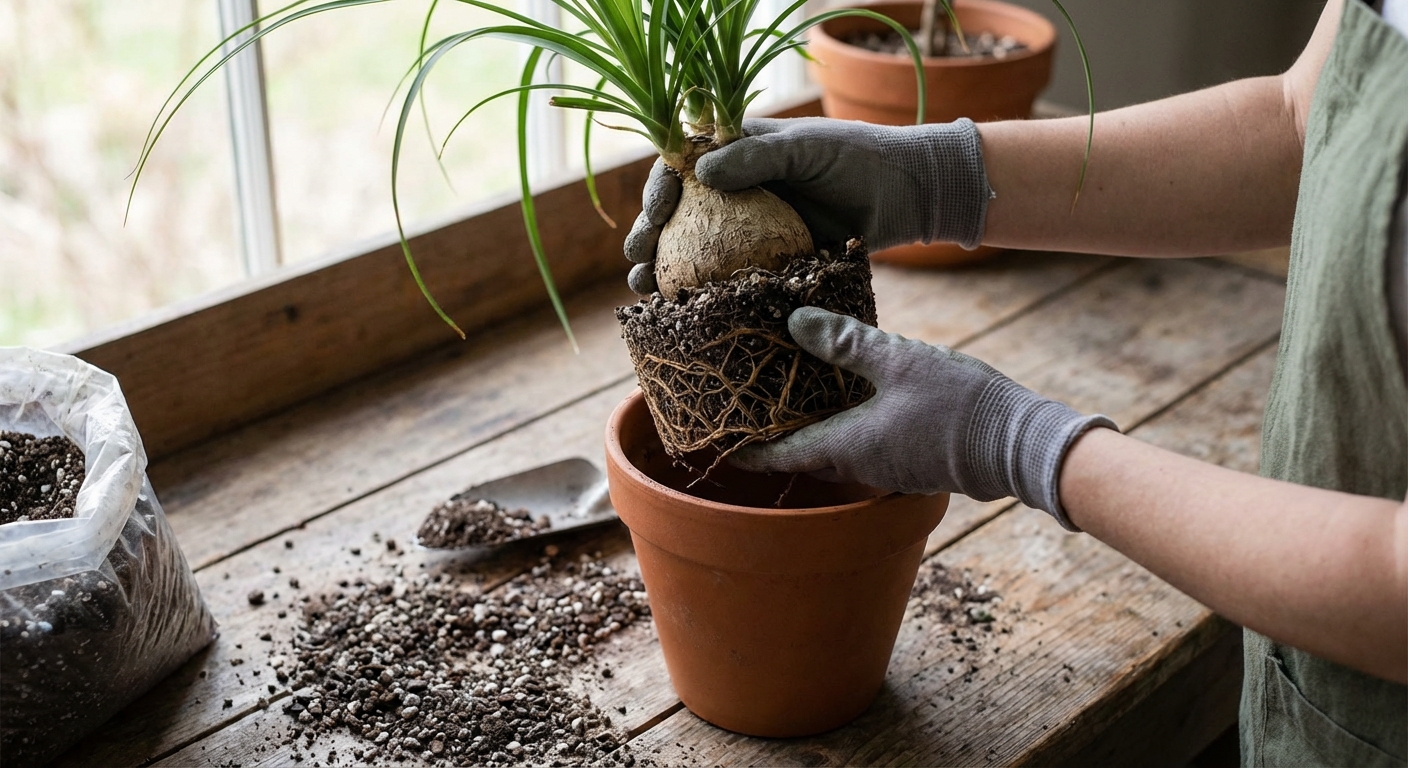
Repotting steps
- Choose a pot only 1 to 2 inches wider than the old one.
- Use a gritty, fast-draining mix.
- Keep the swollen base slightly above the soil line. Do not bury it deeply.
- After repotting, wait about a week to water if the roots were disturbed. This helps prevent rot.
Brown leaf tips: the most common complaint
Brown tips happen to even well-loved ponytail palms. The good news is that it is usually cosmetic, not a crisis.
Common causes
- Underwatering for long stretches: Not occasional dryness, but repeated “bone dry for months.”
- Minerals from tap water: Salt and fluoride buildup can crisp tips over time.
- Too much fertilizer: Excess salts burn tender leaf ends.
- Hot, dry airflow: Heating vents and constant drafts.
- Normal aging: The oldest leaves can brown as the plant matures.
How to fix it
- Adjust watering: Use the “dry 2 to 3 inches down” test. Deep watering beats frequent sips.
- Flush the soil: Every few months, water thoroughly to wash out salts, letting it drain completely.
- Try filtered or rain water: Especially if your tap water is hard.
- Fertilize less: Lower strength, less often.
- Move it from harsh airflow: A small shift can make a big difference.
Can you trim the brown tips?
Yes. Use clean scissors and follow the natural shape of the leaf, snipping only the brown part. Leave a thin sliver of brown if needed so you do not cut into healthy tissue. It is like a tiny houseplant haircut. Low drama, high satisfaction.
Overwatering and root rot: what it looks like
Because ponytail palms store water, they can look “fine” for a while even if the roots are struggling. Watch for these signs:
- Persistent wet soil days after watering
- Mushy or soft base (the trunk should feel firm)
- Sudden leaf yellowing or drooping that does not improve
- A sour smell from the pot
If you suspect rot, stop watering and let the soil dry significantly. If the base is soft or the smell is strong, unpot the plant, trim dead roots, and repot into dry, fresh, gritty mix in a pot with drainage.
Everyday care checklist (for the “I just want it to live” crowd)
- Light: Bright, near a window. A little sun is great.
- Water: Only when mostly dry. Drench, drain, repeat.
- Soil: Cactus-style, fast-draining.
- Pot: Drainage holes, slightly snug is fine.
- Repot: Every 3 to 5 years, or when truly needed.
- Brown tips: Usually water quality, airflow, or mild salt buildup. Trim if you want.
Why ponytail palms are perfect for beginners
If you are new to houseplants, ponytail palms teach a surprisingly calming lesson: you do not have to fuss to be a good plant parent. Give it sunshine, give it a thorough drink once in a while, and then let it do its slow, graceful thing.
And if you catch me whispering “you are doing great” to mine while I water, no you did not.