
Polka Dot Plant Care for Beginners

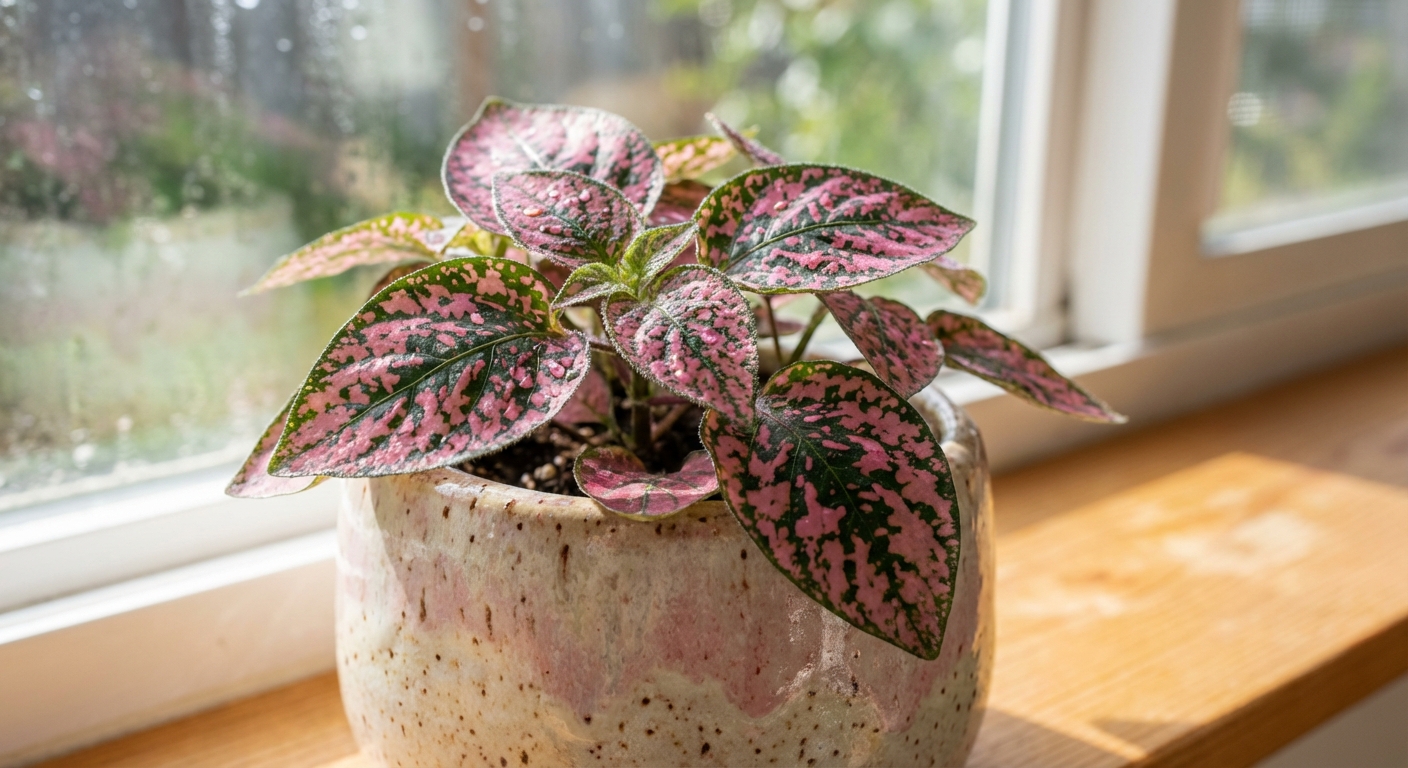
Polka dot plant, or Hypoestes phyllostachya, is one of those houseplants that looks like it was sprinkled with confetti. The catch is that it can get a little dramatic if its needs are off by just a notch. Too little light and it stretches like it is trying to eavesdrop on the sun. Too dry, and the leaves crisp. But once you understand what it is asking for, Hypoestes is wonderfully beginner-friendly and fast growing.
Meet the polka dot plant
Hypoestes is grown for its speckled foliage, not its flowers. Those freckles come in several colors, and bright, indirect light tends to make the pattern bolder. In low light, the speckles often fade. In harsh direct sun, colors can wash out and leaves can scorch. It is often sold in small nursery pots as a “gift plant,” which makes it feel disposable, but it can absolutely be a long-term houseplant with a little routine care.
Common varieties and colors
- Pink polka dot plant: The classic. Green leaves splashed with pink. Often the most vigorous and widely available.
- Red polka dot plant: Deeper raspberry to red spotting. Needs strong, indirect light to hold that richer color.
- White polka dot plant: Crisp white spotting. Can look slightly more delicate and may show stress faster if humidity is low or sun is too direct.
Pet safety
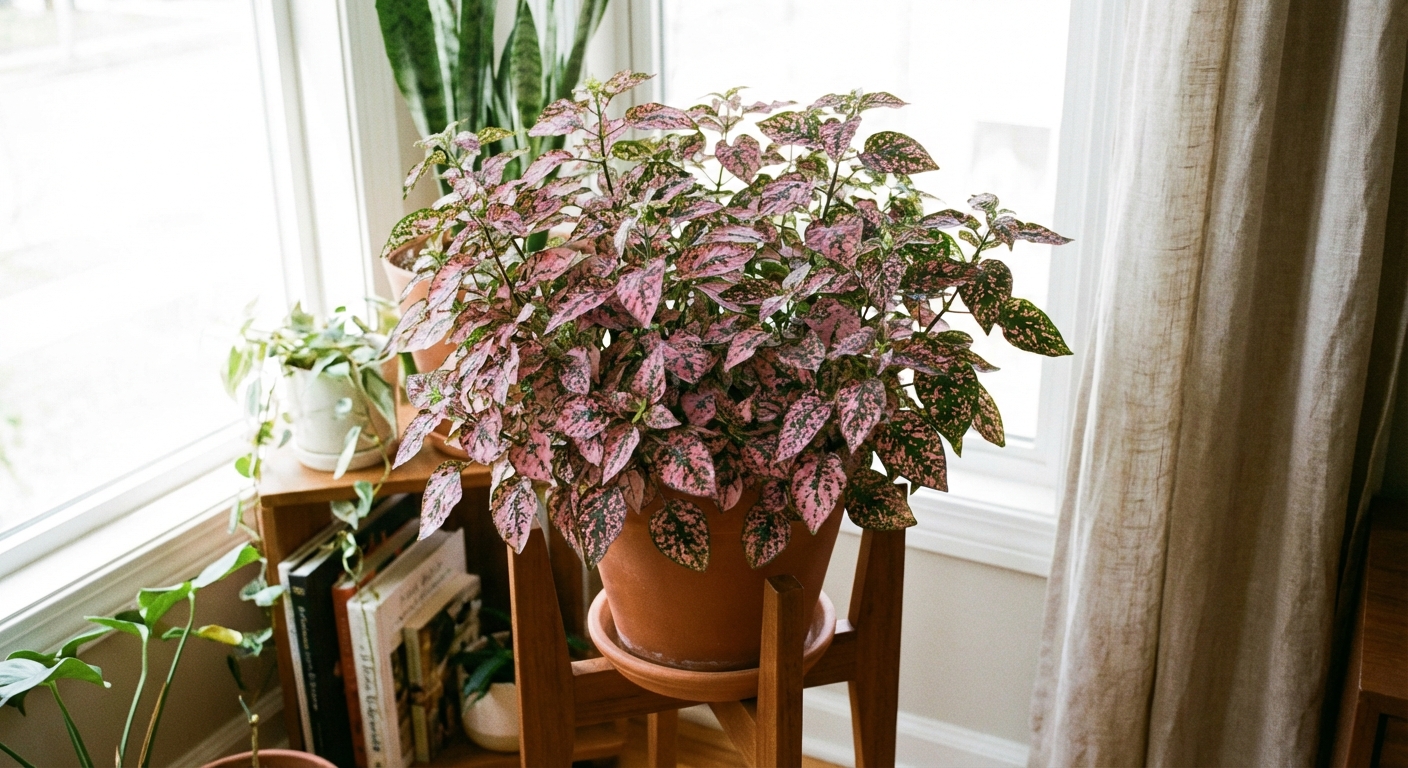
Good news if you share your space with four-legged roommates: polka dot plant is commonly listed as non-toxic to cats and dogs. Still, any plant can cause mild stomach upset if a pet eats a lot of it, so if your cat is a committed leaf enthusiast, keep it out of reach.
If pet safety is a deciding factor in your home, it is worth double-checking a current, reputable source (like the ASPCA) for the specific plant you have, since common names get reused and listings can change.
Light
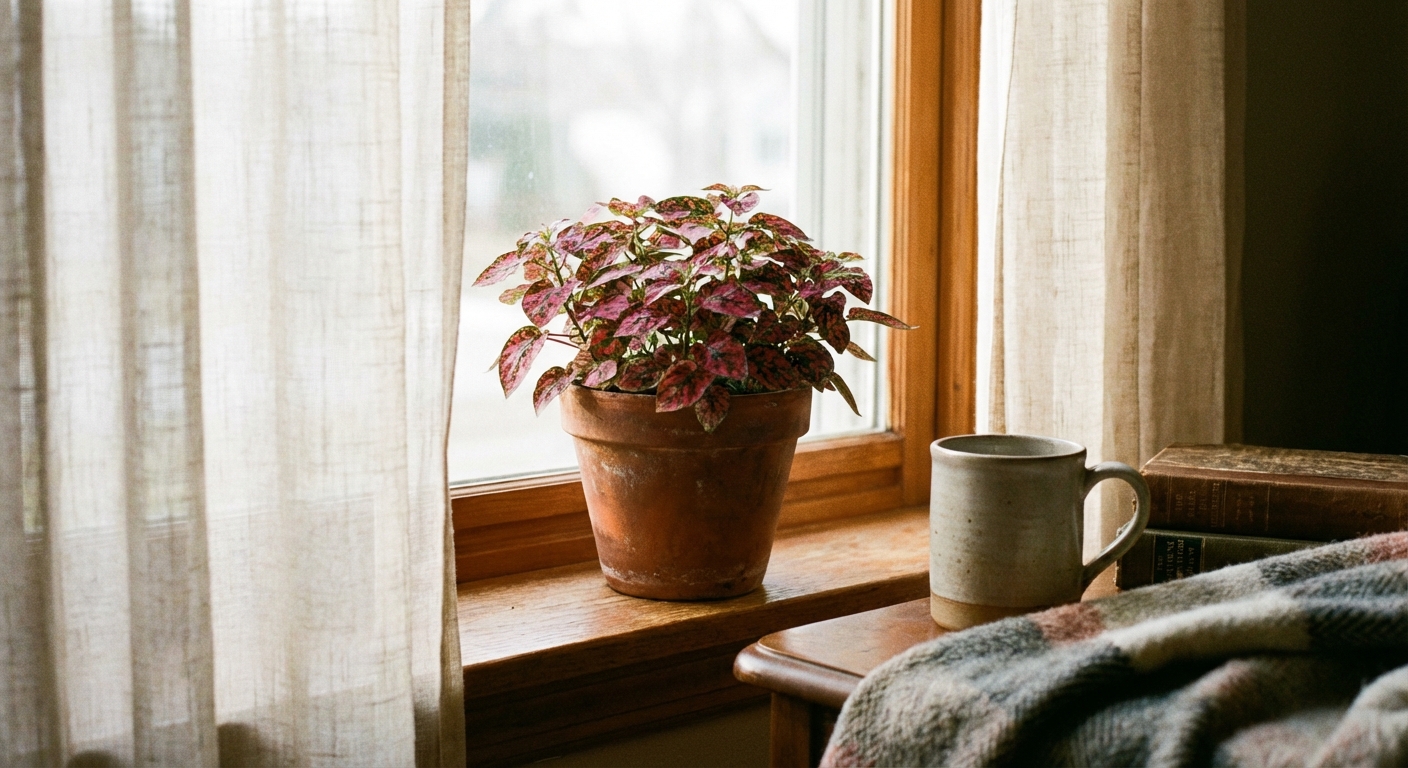
If one thing makes or breaks Hypoestes, it is light. Polka dot plant wants bright, indirect light. Think: close to an east window, or a few feet back from a bright south or west window with a sheer curtain.
Why Hypoestes gets leggy in low light
Legginess is your polka dot plant doing what plants have always done: reaching for more light. In lower light, stems elongate and leaves space out. You end up with a tall, floppy plant with fewer freckles and bigger gaps between leaf nodes.
How to tell if the light is right
- Great light: Lots of leaves, short internodes (tight spacing), bold spotting.
- Too little light: Fading color, stretching, leaning hard toward the window.
- Too much direct sun: Scorchy patches, crispy edges, washed-out leaves, especially on white varieties.
Quick placement tips
- East-facing window: Usually ideal with minimal fuss.
- South or west window: Use a sheer curtain or place the plant back from the glass.
- North window: Often too dim unless the window is large and unobstructed. Consider a grow light.
Watering
Polka dot plant likes consistency. Aim for soil that stays lightly and evenly moist, especially in spring and summer when it grows quickly.
When to water
- Check the pot with your finger.
- Water when the top 1 inch of soil feels dry. In a tiny pot or bright, warm spot, that can be frequent. In winter, it can slow way down.
- Water thoroughly until excess drains out, then empty the saucer.
What underwatering looks like
- Drooping leaves that perk up after watering
- Crispy edges, especially in dry air
- Leaf drop if it stays dry too long
What overwatering looks like
- Yellowing leaves
- Soft stems near the soil line
- Soil that stays wet for many days
If your plant is collapsing and the soil is wet, pause watering and improve airflow and drainage. If it is collapsing and the soil is bone dry, give it a deep drink and consider stepping up humidity.
Humidity and temperature
Hypoestes is happiest with moderate to high humidity. If your home is dry, it will still survive, but you will often see crisp leaf edges and faster leaf drop.
Simple humidity boosts
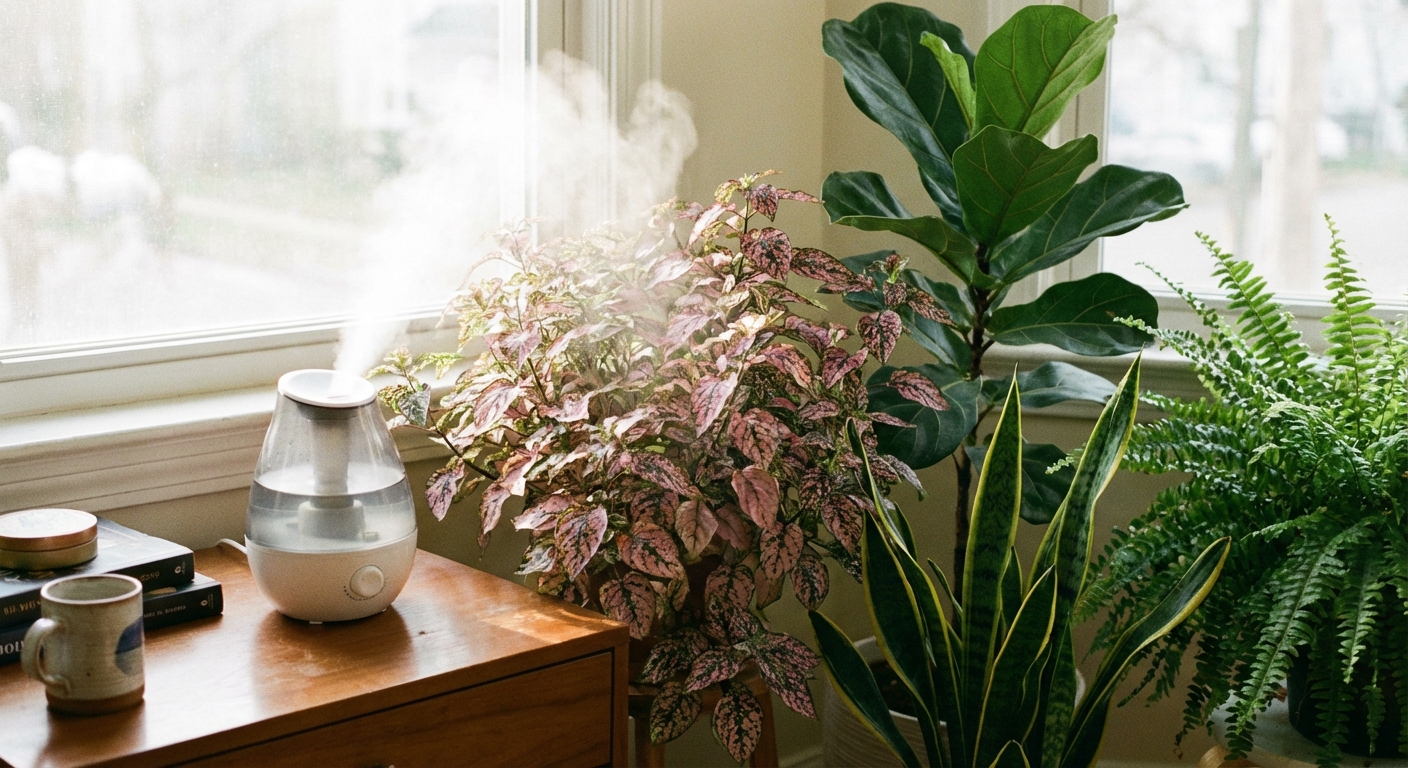
- Group plants together: They create a small humid pocket.
- Use a humidifier: The best option for consistently dry homes.
- Pebble tray: Can create a minor, very local effect right around the plant, especially in a small space. In a typical room, do not expect miracles.
Aim for typical indoor temps around 65 to 80°F (18 to 27°C). Try to keep it above 60°F (15°C). Avoid cold drafts and chilly windows in winter. Hypoestes can sulk if it gets too cold.
Soil and pot
Polka dot plant wants soil that drains well but does not dry out instantly. A simple mix works beautifully:
- Potting mix as the base
- Add a handful of perlite for airflow
- Optional: a bit of coco coir or fine bark for structure
Always use a pot with a drainage hole. Hypoestes is one of those plants that can go from “fine” to “root trouble” quickly if it sits in water.
Repotting
Polka dot plant does not need a huge home, but it does like fresh soil. Repot when you see roots circling the inside of the pot, popping out the drainage hole, or when the plant dries out very fast after watering.
- How often: Often every 12 to 18 months, depending on growth rate and pot size.
- When: Spring is ideal.
- How: Size up one pot (about 1 to 2 inches wider), refresh soil, and keep the crown at the same level.
Pinching
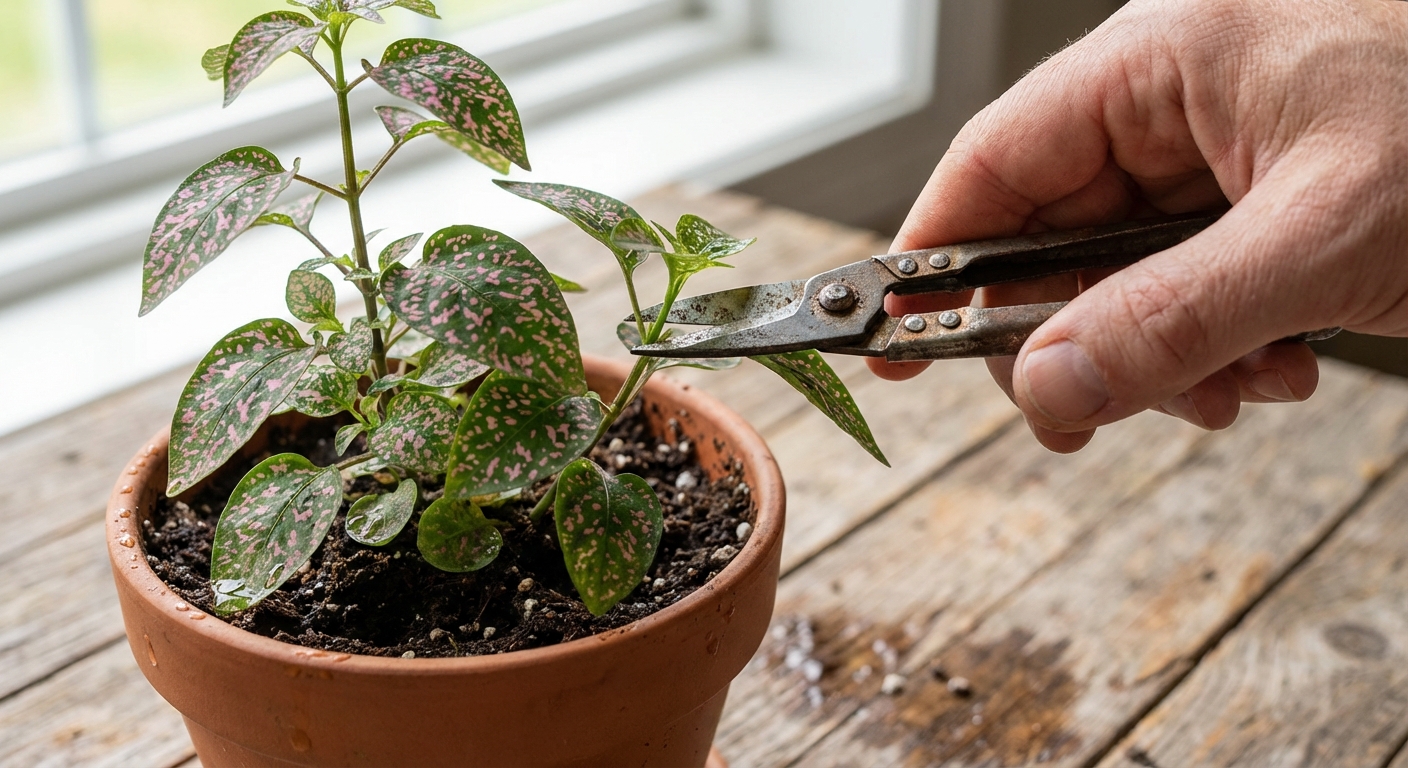
If you want that full, mounded look you see at the nursery, you have to pinch. I know it feels mean the first time, but it is the kindest thing you can do for Hypoestes.
How to pinch a polka dot plant
- Find a stem that is getting longer than the rest.
- Locate a leaf pair (a node).
- Pinch or snip the stem just above that node.
- New side shoots will grow from the node, making the plant branch out.
Pinch as needed during active growth (often every 1 to 2 weeks in bright light). This is how you prevent the “one tall stalk with a sad pom-pom” look.
Leggy polka dot plant
Legginess happens to almost everyone with Hypoestes at least once. The fix is straightforward, and your plant usually bounces back quickly.
Step-by-step rescue
- Increase light: Move it closer to a bright window or add a small grow light.
- Pinch hard: Cut back the longest stems by one third to one half, just above a node.
- Rotate the pot: Turn it a quarter turn weekly so it grows evenly.
- Feed lightly: During spring and summer, use a balanced houseplant fertilizer at half strength every 4 to 6 weeks (or a little more often if it is growing fast in strong light).
Can you root the cuttings?
Yes, and it is so satisfying. Hypoestes roots easily from stem cuttings.
- Take a 3 to 5 inch cutting below a node.
- Remove the lowest leaves.
- Root in water or moist potting mix in bright, indirect light.
- Pot up once roots are a couple inches long (water rooting) or once you feel resistance (soil rooting).
Lifespan
Polka dot plant can be a little like a favorite pair of sneakers: adorable, useful, and not always built for forever indoors. It is a short-lived perennial that often gets woody, leggy, or tired-looking over time, even with good care.
The cheat code is propagation. If you take cuttings a couple times a year, you can keep “the same plant” going indefinitely, just in fresher, perkier generations.
Fertilizer
Hypoestes grows quickly in good light, which means it appreciates light feeding. Too much fertilizer can cause weak, floppy growth.
- When: Spring through early fall
- How often: Every 4 to 6 weeks, or every 2 to 4 weeks if it is actively growing fast in bright light
- What: Balanced liquid fertilizer diluted to half strength
In winter, it often slows down. Skip fertilizer during that time unless it is actively pushing new growth under a grow light.
Flowers
Polka dot plant can produce small, lilac-toned flowers. They are cute, but flowering can shift the plant’s energy away from leaf production, and some plants get leggier after blooming.
If you want the plant to stay compact and leaf-focused, you can pinch off flower spikes as they appear. If you are curious, let it bloom once and see how it behaves in your home. Gardening is allowed to be an experiment.
Common problems
Leaves curling or crispy edges
- Likely cause: Low humidity, underwatering, or hot sun
- Fix: Water more consistently, move to bright indirect light, add humidity
Fading color
- Likely cause: Not enough light
- Fix: Brighter location or grow light, plus regular pinching
Yellowing leaves
- Likely cause: Overwatering or poor drainage
- Fix: Let the top inch dry, ensure drainage, consider repotting into airier soil
Drooping
- Likely cause: Soil too dry or too wet
- Fix: Check soil moisture. Dry means water deeply. Wet means pause and increase airflow and drainage.
Pests
- Common culprits: Spider mites, aphids, mealybugs
- Signs: Sticky residue, tiny webbing, distorted new growth
- Fix: Rinse the plant, isolate it, then treat with insecticidal soap or diluted neem oil, repeating weekly for a few rounds. If you use neem, avoid applying right before strong light, since leaf burn can happen.
Care checklist
- Light: Bright, indirect light for best color
- Water: When top 1 inch is dry, do not let it sit in water
- Humidity: Moderate to high if possible
- Pinch: Regularly for bushiness
- Leggy plant: More light + harder pinch back
- Rotate: Weekly for even growth
- Refresh: Repot occasionally and take cuttings to keep it going long-term
If you want a plant that teaches you how to read light and moisture cues without punishing you too harshly, Hypoestes is a sweet little teacher. Keep it bright, keep it evenly moist, and pinch like you mean it. The freckles will follow.