
Poison Ivy: Identify, Remove, and Stop It From Coming Back

Poison ivy is one of those plants that makes you question your eyesight and your life choices at the exact same time. It blends in, it climbs, it hides under shrubs, and then it leaves you a souvenir rash for your trouble.
The good news: you can learn to spot it quickly, remove it safely, and keep it from returning. I will walk you through identification (including common look-alikes), the safest way to pull or cut it, how to clean everything you touched, and the follow-up checks that stop regrowth before it gets a foothold again.
If you only do three things: (1) suit up with nitrile gloves and long sleeves, (2) bag it and never burn it, (3) wash skin, clothes, and tools like you mean it.

Poison ivy identification
Poison ivy (Toxicodendron radicans) changes its look depending on light, season, and whether it is growing as a groundcover or climbing vine. That is why the classic rhyme can help, but it is not the whole story.
Key traits
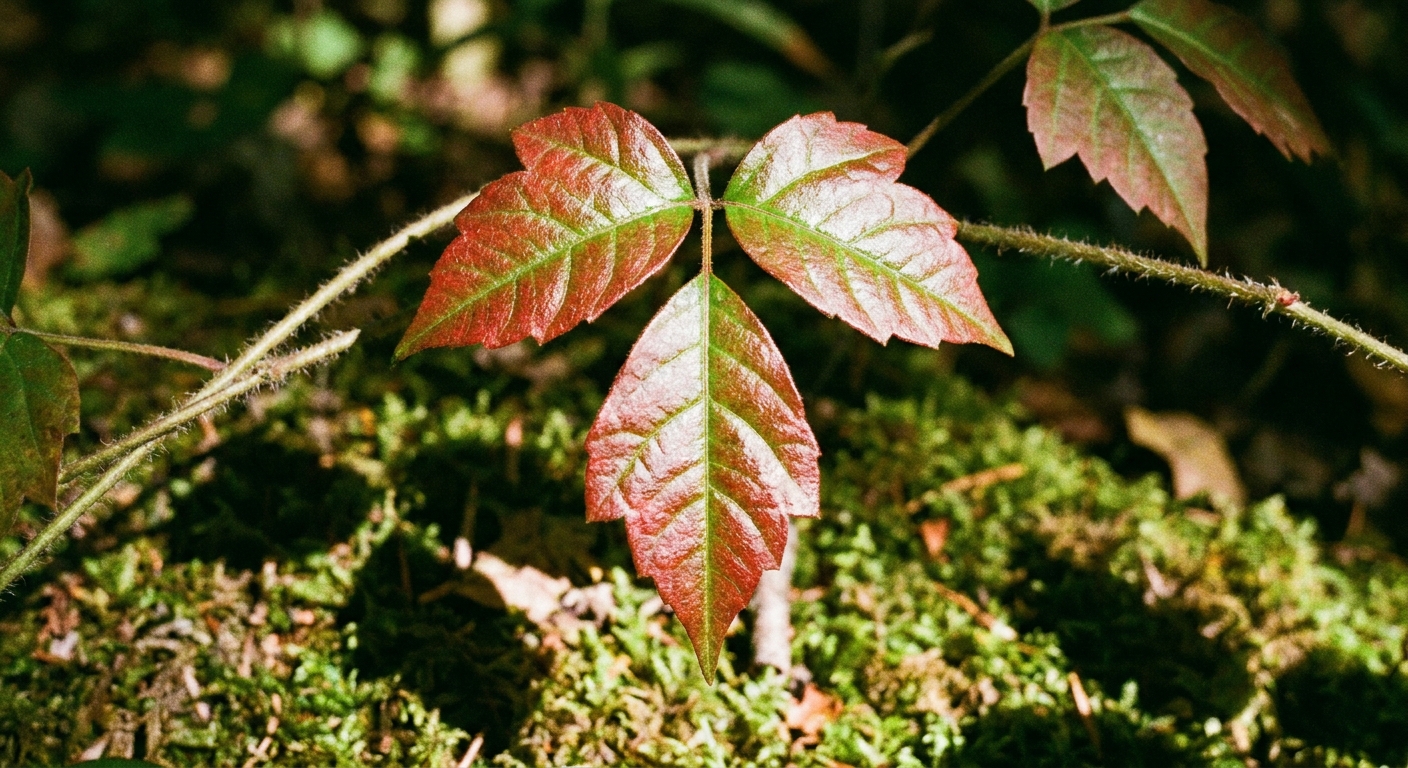
- Three leaflets per leaf: One leaflet on a longer little stem in the center, two side leaflets with shorter stems.
- Leaf edges vary: They can be smooth, toothed, or lightly lobed. Do not rely on “jagged” or “smooth” alone.
- Shiny or dull: New growth can look glossy. Older leaves can look more matte and slightly textured.
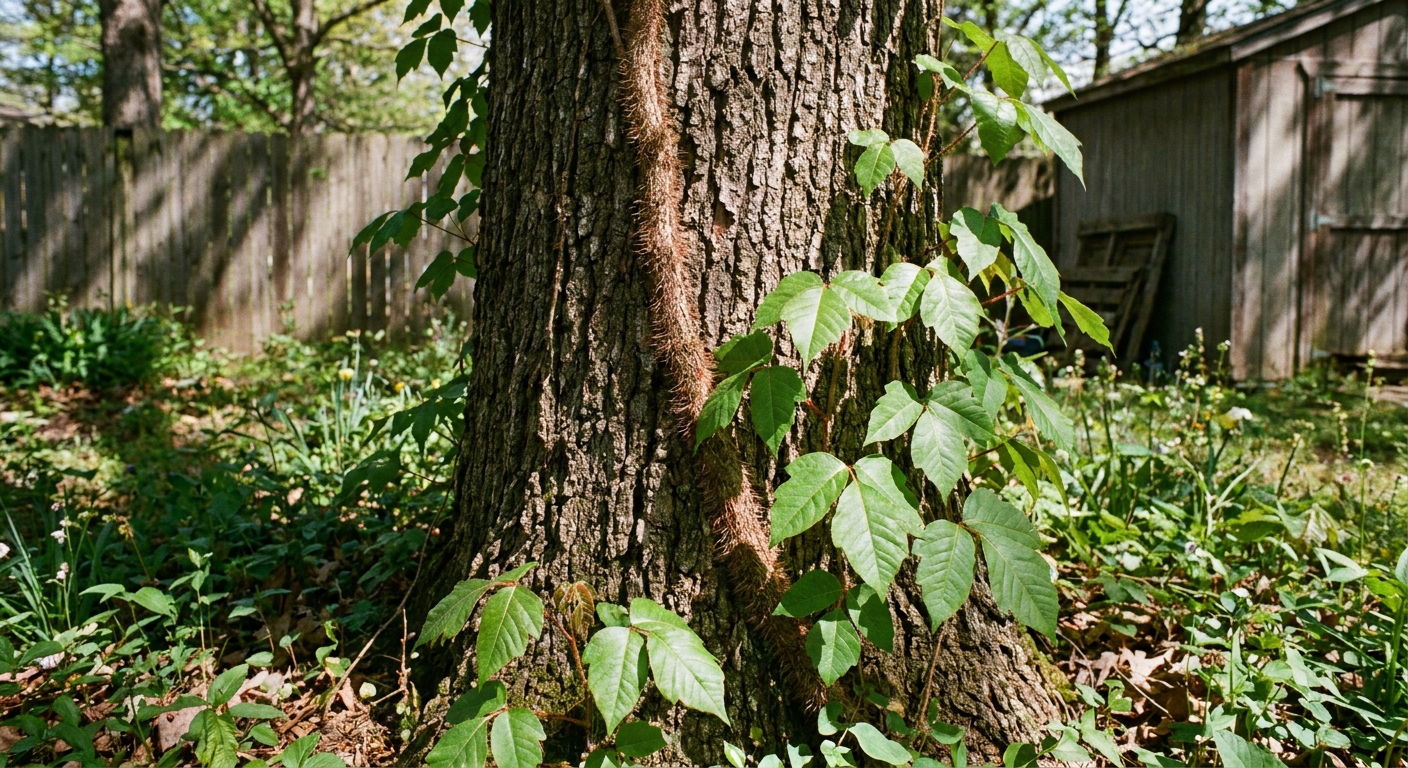
- Growth habit: It can sprawl as a low groundcover, form shrubby clumps, or climb trees and fences as a vine.
- Climbing vines have hairy roots: Mature vines often look like a fuzzy, brown rope attached to bark or siding.
- Seasonal color: Green in summer, often turns red, orange, or yellow in fall.
Remember: the irritating oil (urushiol) can be present on leaves, stems, and roots, and it can remain irritating on dead plant material and contaminated surfaces for a long time. Even leafless winter vines and old yard debris can still cause a rash.
Related plants
If you live outside the classic “poison ivy zone,” or you travel, keep these cousins in mind:
- Poison oak: Often looks more oak-like with lobed leaflets (still usually in threes). Treat it the same way.
- Poison sumac: A shrub or small tree with many leaflets on one stem (not threes). It is less common, but reactions can be severe.
When in doubt, handle unknown vines and shrubs like they are toxicodendron and protect your skin.
Look-alikes
The two mix-ups I see most often are Virginia creeper (harmless but vigorous) and boxelder seedlings (a tree that pops up everywhere). Here is how to tell them apart without needing a botany degree.
Poison ivy vs Virginia creeper
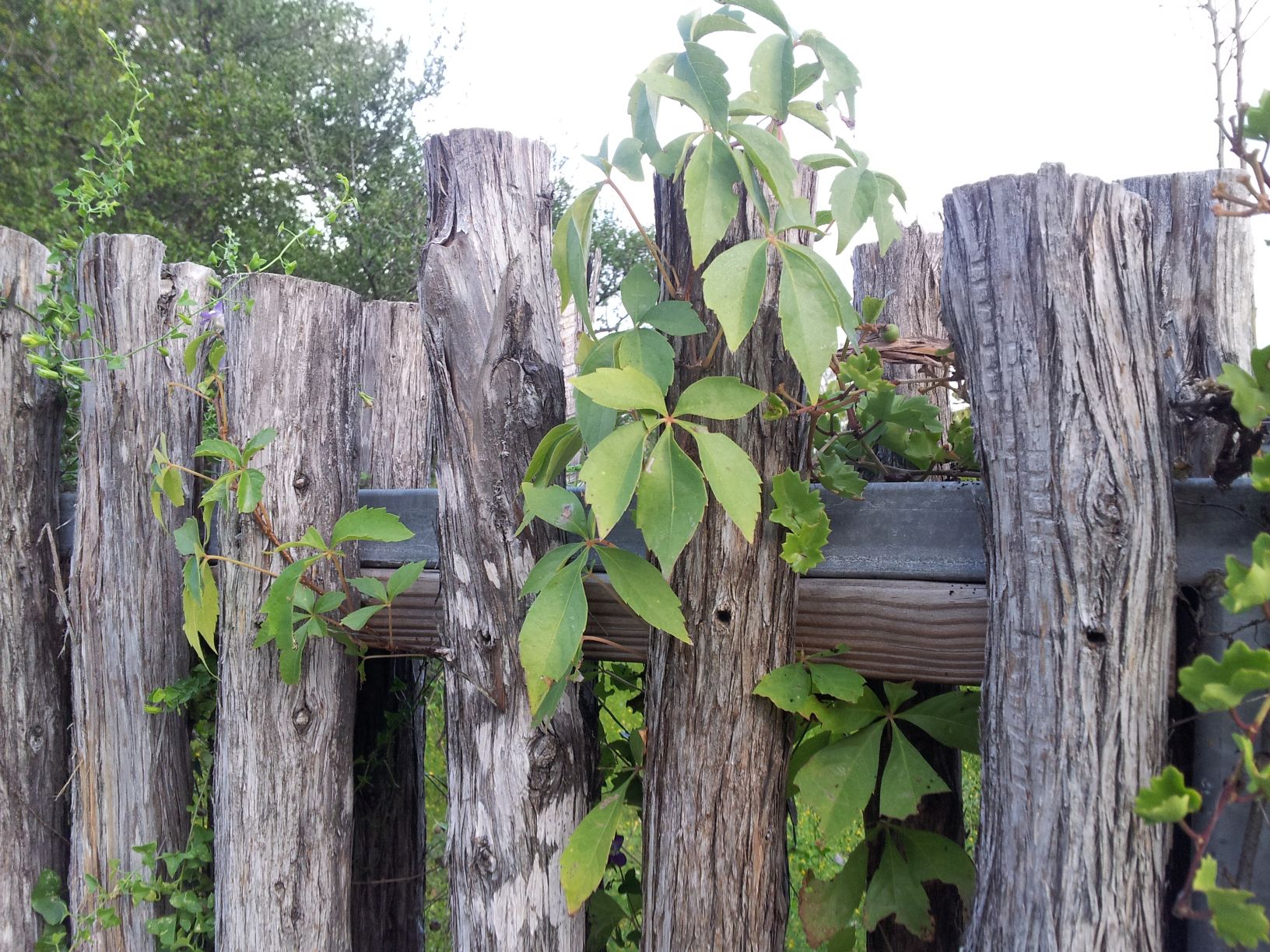
- Leaflets: Poison ivy has 3. Virginia creeper most often has 5 leaflets (sometimes 3 on very young growth, which is where the confusion starts).
- Vines: Virginia creeper climbs with tendrils and adhesive pads. Poison ivy climbs with hairy aerial roots.
- Berries: Virginia creeper berries are dark blue to purple. Poison ivy berries are typically whitish or pale.
Poison ivy vs boxelder
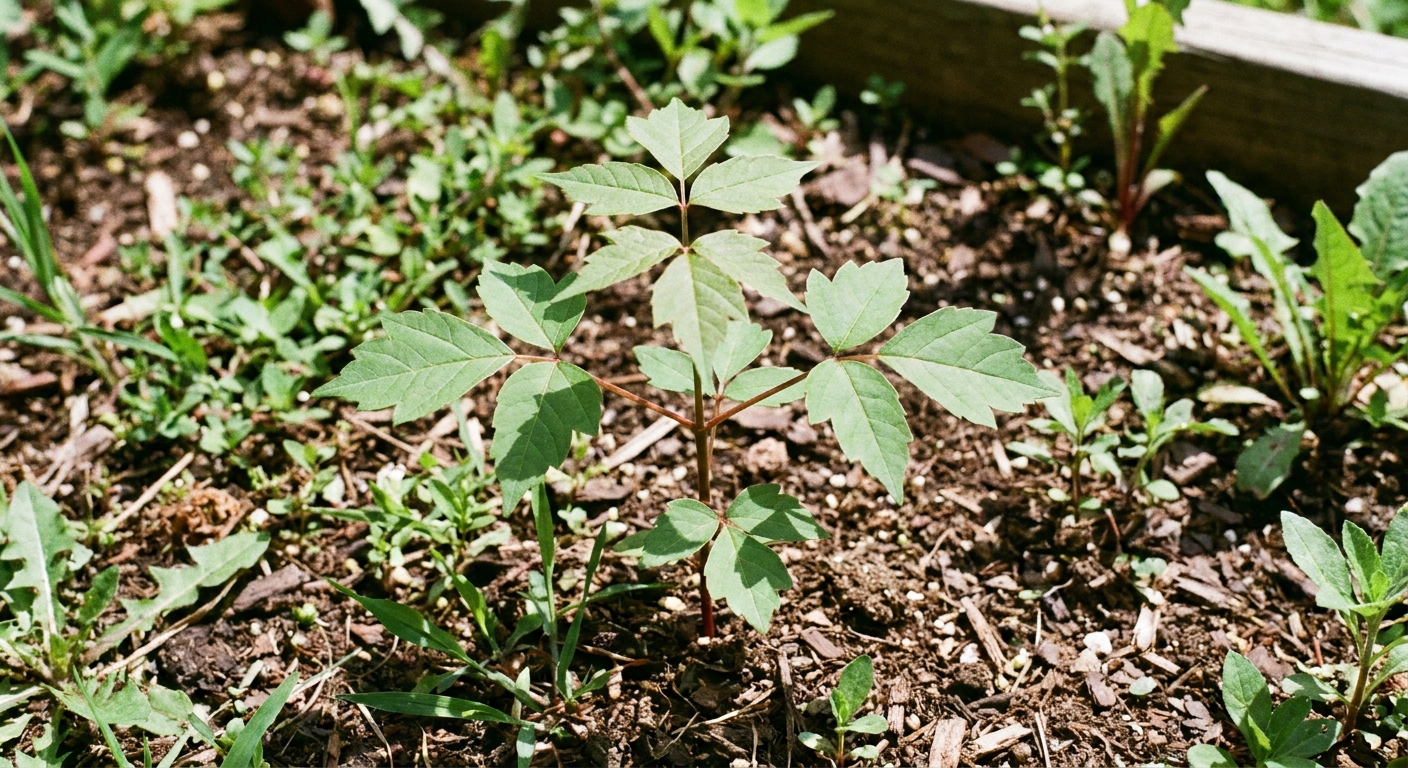
- Plant type: Boxelder is a tree seedling, not a vine.
- Leaf arrangement: Boxelder leaves are opposite each other on the stem (two leaves directly across). Poison ivy leaves are usually alternate (staggered).
- Leaf structure: Boxelder leaves are often compound with 3 to 5 leaflets (sometimes more), and can look variable and a little “maple-ish.”
If you are ever unsure, treat the plant as poison ivy until confirmed. Gloves and long sleeves are cheaper than a doctor visit.
When to remove it
You can tackle poison ivy almost any time you can access it, but some moments are kinder to your skin and your workload.
Best windows
- Cool, calm days: Less sweating means less chance oil spreads on your skin.
- After a light rain (once leaves are dry): Soil is softer for pulling roots. Wet leaves can brush more easily, so wait until the plant surface is dry.
- Before it fruits: Cutting it down before berries mature reduces spread by birds.
Use extra caution
- Hot days: Sweat and frequent face-touching increase rash risk.
- Windy days: Vines whip around and brush you. Also a bad time for spraying if you use herbicide.
- When it is climbing high: Falling risks are real. For big tree vines, consider professional help.
Safety kit
I know it is tempting to “just yank it real quick.” Poison ivy is the plant that punishes shortcuts. Dress and prep like you are handling something messy, because you are.
Wear
- Long sleeves and long pants you can wash immediately
- Closed shoes or boots plus socks
- Nitrile gloves under sturdy work gloves (nitrile helps block oil, fabric gloves soak it up)
- Eye protection if you are cutting overhead vines
- A disposable mask if you are disturbing a lot of dry plant material (mainly to reduce dust and face-touching). It does not protect against “urushiol fumes,” because that is not a thing. The real inhalation danger is burning poison ivy.
Use
- Hand pruners or loppers for cutting vines
- A digging fork or shovel for lifting roots and runners
- Heavy-duty trash bags
- Marker tape or flags to mark patches you will revisit
Pro tip from my own “oops” file: keep a dedicated poison ivy tool bucket so you are not tossing contaminated pruners back into your everyday garden tote.
Safe removal
There is no single best method. The safest approach depends on whether poison ivy is a small patch, a long runner, or a mature vine climbing a tree.
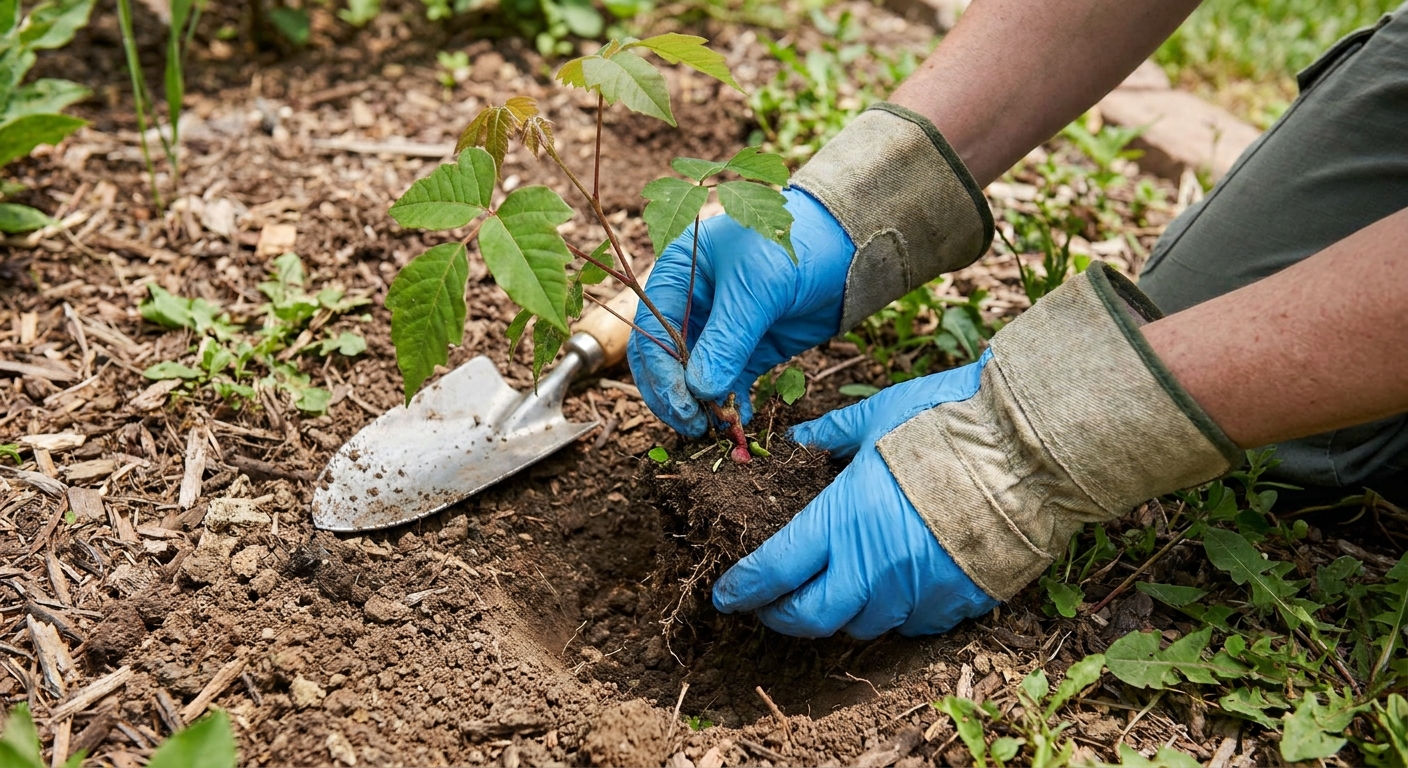
Method 1: Dig and pull
This works best for new growth, shallow roots, and groundcover patches you can fully access.
- Trace the stems back to the main crown, where stems meet the soil.
- Loosen soil with a digging fork 4 to 6 inches away from the crown.
- Lift the root mass and pull slowly. Try to remove as much of the root and creeping runners as you can.
- Bag immediately to reduce brushing against it later.
- Recheck the area in 2 to 3 weeks for sprouts.
Expect some regrowth if pieces of root remain. Poison ivy is persistent, not magical. You just keep showing up.
Method 2: Cut and paint
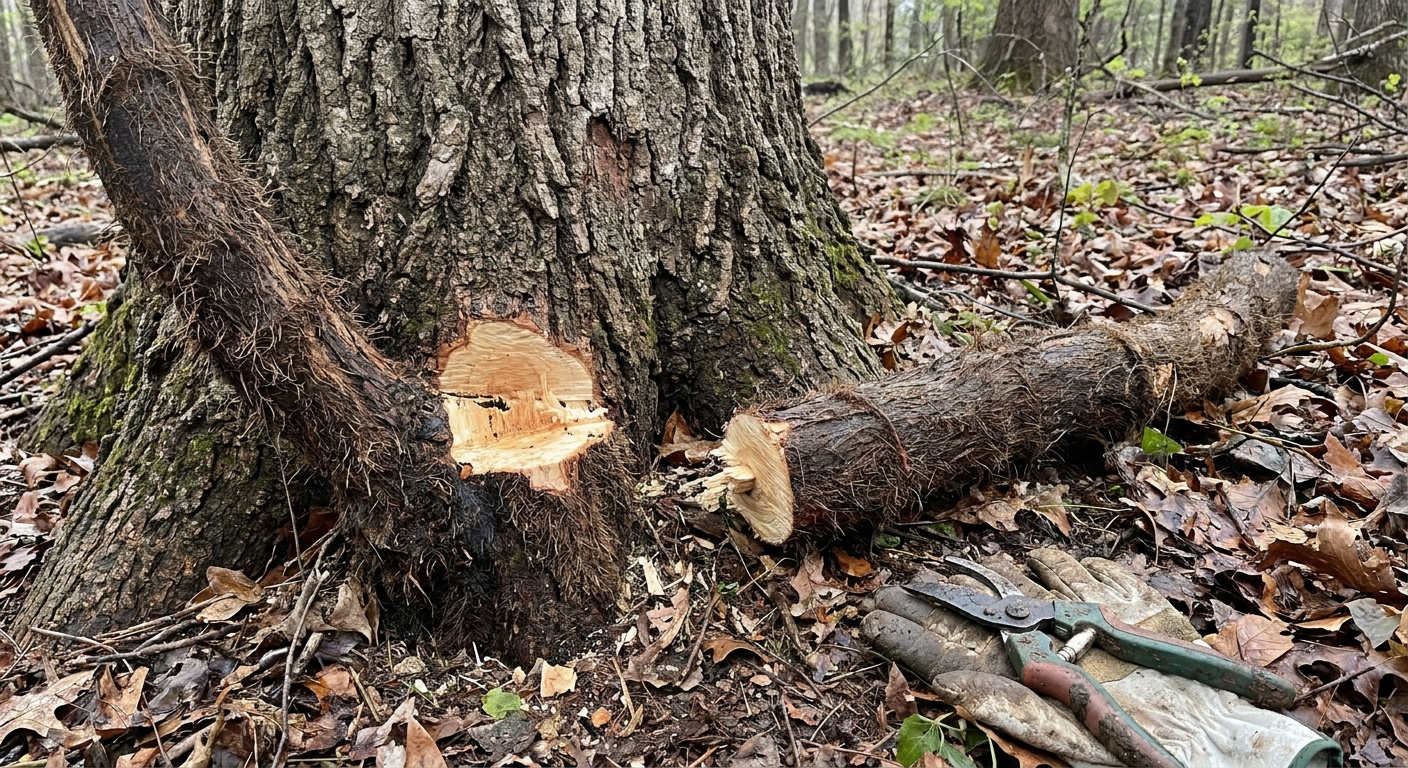
For mature climbing vines, pulling can damage bark and spread oil. Instead, cut the vine and treat the stump if you are using herbicide.
- Cut the vine twice, removing a 3 to 6 inch section near the ground so it cannot reconnect.
- Do not yank the upper vine off the tree. Let it die and fall away over time.
- If using herbicide: brush a cut-stump product onto the freshly cut surface, following the label. Common actives include triclopyr (often best for woody vines) and glyphosate. Follow local rules and avoid drift onto desirable plants.
If you avoid herbicides, repeated cutting works too, but you must be consistent. Cut new shoots every time they appear until the root reserves run out.
Method 3: Smothering
Smothering is a slower, low-contact option for areas like steep banks or dense groundcover where digging is difficult.
- Cut the vines low if you can do so safely.
- Cover the area with thick cardboard.
- Top with 3 to 6 inches of mulch.
- Check edges for escapes, because poison ivy loves to run sideways.
This can take a full season or more. Think of it as outlasting the plant, not defeating it in one weekend.
Disposal
Bagging vs compost
Urushiol does not “rot away quickly” in the way people hope. It can stay irritating on dead vines and surfaces for months, sometimes longer. Because home compost piles are rarely hot enough, consistently enough, to reliably break it down, I recommend this:
- Do bag it in heavy-duty trash bags. Double-bag if it is juicy and fresh.
- Do follow local disposal rules. Some municipalities accept bagged yard waste, others require trash. Industrial or high-heat composting programs may have different guidance.
- Do not compost it at home if you plan to handle that compost later.
- Do not chip or shred it. The main issue is contaminating equipment and spreading oil-coated bits around where they can contact skin later. (Again, the inhalation danger is burning.)
Never burn it
Burning poison ivy is dangerous. Urushiol can hitch a ride on smoke particles and cause severe reactions if inhaled. If you remember only one disposal rule, make it this one: do not burn poison ivy.
Aftercare
Many poison ivy rashes come from the “clean-up later” phase. You finish the work, wipe your forehead, grab the doorknob, and suddenly the oil is everywhere.
Clothes and gloves
- Do not hug your laundry basket. Carefully remove clothes without dragging them across your face or bare arms.
- Wash separately from other laundry in hot water with regular detergent.
- Run an extra rinse if the load was heavily contaminated.
- Work gloves: if they are washable, wash them alone. If they are older fabric gloves that soaked up oil, retiring them is sometimes the safest choice.
Skin
- Wash as soon as possible with cool to lukewarm water and soap. The goal is to lift oil off the skin, not open pores with very hot water.
- Use friction: lather well and gently scrub with your hands or a washcloth, then rinse thoroughly.
- Consider urushiol-cleansing products: washes like Tecnu or Zanfel can be very effective when used as directed, especially if you suspect you had a good solid brush-by.
- Clean under nails carefully, since oil loves to hide there.
Tools and surfaces
- Wipe tools with rubbing alcohol or a degreasing soap solution, then rinse and dry.
- Do not forget lopper handles, shovel grips, and phone cases.
- If you used a wheelbarrow, rinse and scrub it too.
Pets
Dogs and cats usually do not break out like we do, but urushiol can ride on fur. If your pet barrels through poison ivy, you can get the rash from cuddling them later. A bath (with gloves on) can save you a lot of regret.
If you get a rash
I am not a medical professional, but a few practical, non-dramatic basics help:
- Wash early: if you think you were exposed, washing promptly can reduce how much oil binds to skin.
- Do not scratch: easier said than done, but broken skin invites infection.
- OTC help: options like hydrocortisone cream, calamine, oatmeal baths, or oral antihistamines (for itch) may help some people. Follow the package directions.
- Call a clinician for facial or genital rashes, widespread blistering, fever, signs of infection, or if you have any breathing symptoms. If smoke was involved, treat breathing issues as urgent.
How it spreads
Poison ivy comes back for two main reasons: runners and seeds.
Runners and roots
Ground-growing poison ivy often spreads by creeping roots and runners. If you pull the top but leave runner fragments, new shoots pop up nearby.
- Follow the vine in both directions before you pull.
- Dig out the crown where multiple stems meet.
- Return for follow-ups every few weeks during the growing season and cut any sprouts immediately.
Birds
Birds eat poison ivy berries and deposit seeds along fence lines, under shrubs, and at the edges of woods. That is why you often see it “randomly” appear far from the original patch.
- Patrol the edges: fencelines, hedges, under bird perches, and along tree lines.
- Remove young plants early: seedlings are much easier to pull, and less risky.
- Fill bare soil with mulch or dense plantings so new seedlings have less room to establish.
Seasonal checks
Poison ivy control is more like brushing your teeth than remodeling a kitchen. Small, consistent actions keep it manageable.
- Early spring: Look for new shoots and pull small plants while the soil is soft.
- Late spring to midsummer: Recheck every 2 to 4 weeks, especially after rain and warm spells.
- Late summer: Watch for flowering and berry formation. Remove before berries ripen when possible.
- Fall: Scout again as leaves change color. It can be easier to spot red poison ivy among fading greens.
- Winter: Note vine locations on trees. Leafless vines are easier to see, but still handle with caution.
Quick do and do not
Do
- Assume the oil can linger on dead plant material and contaminated surfaces
- Wear nitrile gloves and long clothing
- Bag plant material promptly
- Clean tools, shoes, and high-touch surfaces after
- Plan a follow-up check for sprouts
Do not
- Burn poison ivy
- Compost it at home
- Weed-whack, shred, or chip it
- Pull heavy vines off trees
- Wait until it has berries to take action
My calm pep talk
You are not “bad at gardening” if poison ivy keeps showing up. It is an adaptable native plant with multiple ways to spread, and it is very good at exploiting neglected corners.
Start small. Pick one patch. Suit up, remove it safely, clean up thoroughly, then put a reminder on your calendar for the follow-up check. That is how you win, one careful visit at a time.