
Poinsettia Care After Christmas

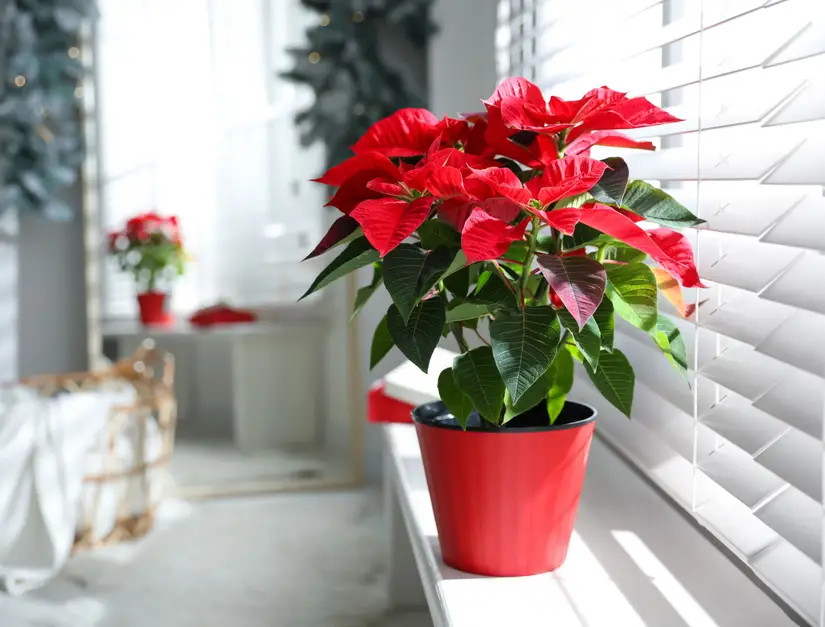
Poinsettias get treated like disposable holiday decor, which is a little unfair to a plant that is perfectly capable of living for years. If your poinsettia still has decent leaves and firm stems after Christmas, you have options: keep it as a leafy houseplant, try for color next winter, or compost it with zero guilt if it is already declining fast.
Let’s walk through what to do right now, how to help it recover through winter and spring, and the basics of coaxing bracts to color again next season. No magic, no pressure, and definitely no “guaranteed red by December” promises.

Keep it or toss it?
I’m a big believer in choosing the level of plant responsibility that fits your life. Use this quick checklist.
Keep it if:
- Stems feel firm (not hollow or mushy).
- Most leaves are still attached, even if the bracts are fading.
- The soil drains, and the pot has a drainage hole (or can be modified).
- You can give it a bright window for the rest of winter.
Compost it (or replace it) if:
- Stems are soft, blackened, or smell sour.
- The plant is dropping leaves daily and the root ball stays wet for days.
- You see heavy white fuzzy mold at the base, or roots are brown and slimy.
- You simply do not want another plant project right now.
If you are on the fence, try keeping it for two more weeks with good light and careful watering. A poinsettia that can rebound usually starts pushing new green growth fairly quickly once conditions improve.
Right after the holidays
Light
Bright light is the number one “keep it alive” factor after Christmas. Aim for:
- Bright, indirect light all day, or a few hours of gentle morning sun.
- A spot near an east or south window, with the plant a bit back from harsh midday sun if sun through glass gets intense.
If your home is dim in winter, a simple grow light on a timer for 10 to 12 hours a day can make a huge difference.
Temperature
Poinsettias like typical home temps but hate extremes.
- Ideal range: 65 to 75°F (18 to 24°C) days. A little cooler at night is fine.
- Keep away from drafty doors, cold windows at night, and heating vents.
Humidity
Winter air can be bone-dry. You do not need a rainforest, just a small bump helps prevent leaf drop.
- Set the pot on a pebble tray with water (pot sits on stones, not in water).
- Group plants together to create a tiny humidity pocket.
- If you run a humidifier, aim for 40 to 55% humidity.
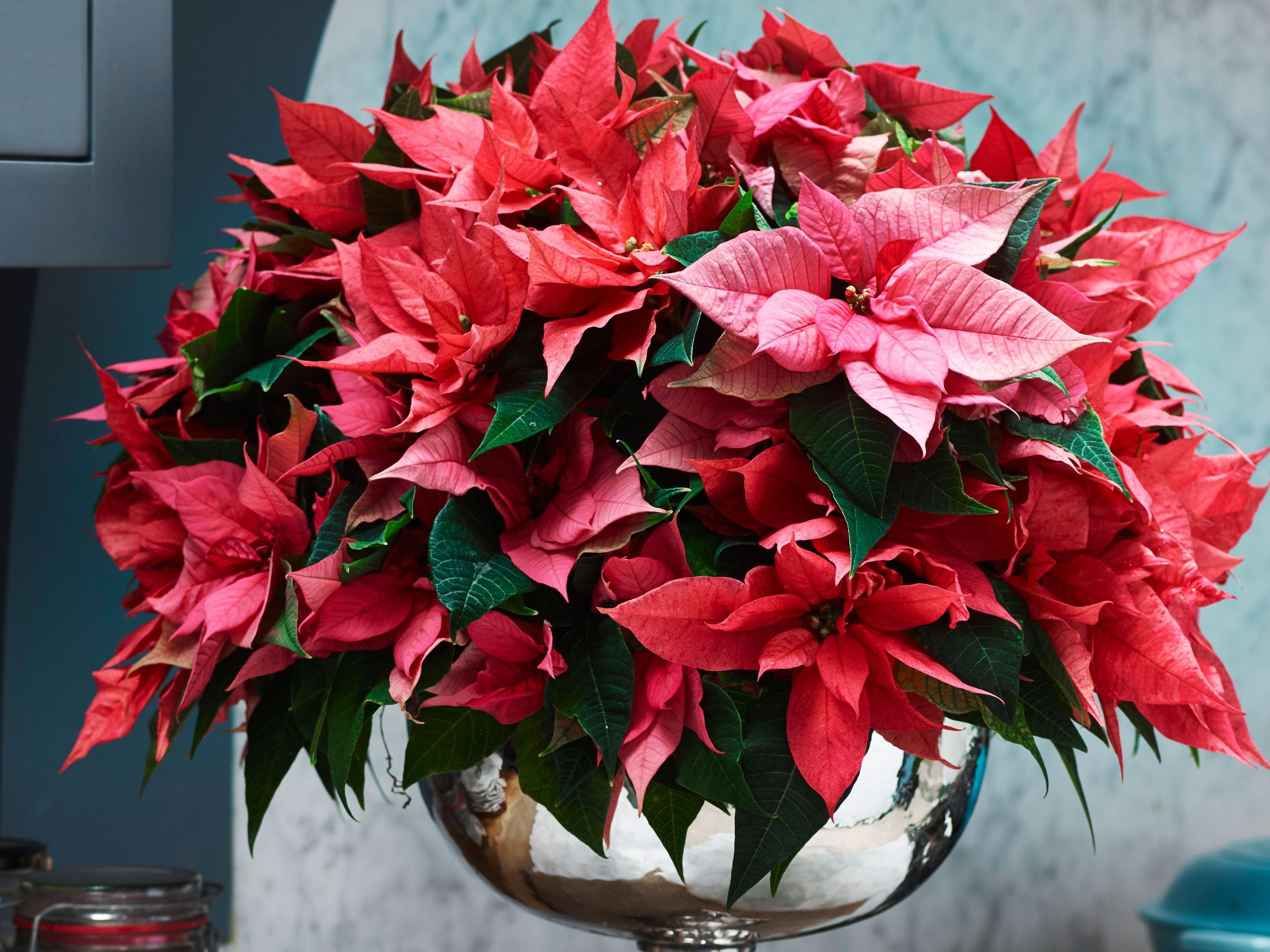
Watering after Christmas
Poinsettias are famous for dying from “too much love.” The roots need oxygen as much as they need moisture.
How often to water
Instead of a calendar schedule, use the soil:
- Water when the top 1 inch of soil feels dry to the touch. (That rule works best for typical small to medium nursery pots. For bigger pots, check a little deeper.)
- If the pot feels light when you lift it, it is usually time.
How to water correctly
- Take off foil or punch plenty of holes in it so water cannot pool at the bottom.
- If it is sitting inside a decorative cachepot, lift the nursery pot out to water and let it drain fully before putting it back.
- Water slowly until you see water run out of the drainage holes.
- Empty the saucer after 10 to 15 minutes so roots are not sitting in water.
Yellow leaves: too wet or too dry?
Annoyingly, both can cause yellowing. Here is the clue:
- Wet soil + yellow leaves often points to overwatering or poor drainage.
- Dry soil + limp leaves points to underwatering or a root ball that got too dry and became water-repellent.
If the root ball got extremely dry, soak the pot in a sink or bowl for 10 to 15 minutes, then drain thoroughly.
When to cut back
Most poinsettias naturally fade and drop some leaves as winter moves on. Pruning helps shape the plant and encourages bushier growth.
Timing
- Late winter to early spring is a common window, often around February to March when the bracts look tired and the plant is ready to reset.
How much to cut
- Use clean, sharp pruners.
- Cut stems back to about 4 to 6 inches tall, leaving a few nodes (those little bumps where leaves emerge).
- Remove weak or crossing stems to improve airflow.
Expect milky sap. It can be irritating to skin, and it is smart to keep it away from pets that like to chew houseplants. Poinsettias are generally considered low-toxicity, but they can still cause mild stomach upset and mouth irritation. Many households live safely with poinsettias, but “not a snack” is still a good policy.
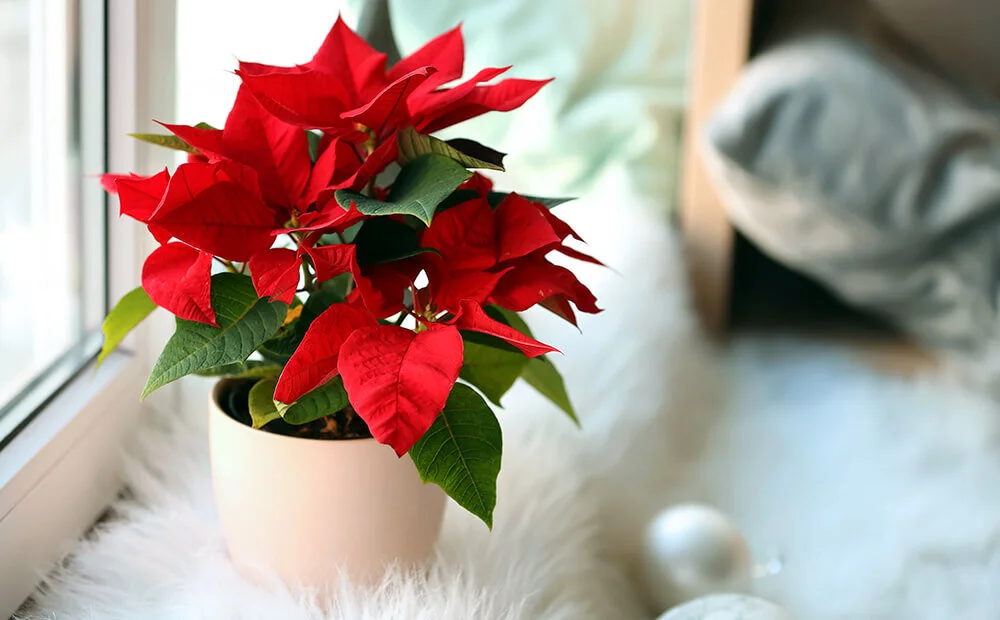
Spring and early summer
Feeding
Once you see fresh new leaves, you can start fertilizing lightly.
- Use a balanced houseplant fertilizer at half strength every 4 weeks.
- Skip feeding if the plant is stressed, droopy, or the soil is staying wet too long.
Repotting (only if needed)
If roots are circling tightly or water runs straight through, repot in spring.
- Choose a pot only 1 to 2 inches wider than the current one.
- Use a well-draining mix (quality potting soil with extra perlite is great).
A too-large pot holds extra wet soil and can lead to root trouble, so resist the urge to upsize dramatically.
Outdoor summer (optional)
If you live where nights stay consistently above 55°F (13°C), your poinsettia can enjoy a summer outdoors. This often makes sturdier growth than indoor-only life. If a cool snap is coming, bring it in.
How to transition outside
- Start in bright shade for a week to prevent sun scorch.
- Gradually introduce morning sun if you want, but avoid harsh afternoon sun.
- Keep watering consistent. Outdoor pots dry faster, especially in wind.
Pinching for a bushier plant
To avoid a tall, sparse poinsettia, pinch growing tips in early summer.
- Pinch or trim the top inch of each stem when it has several new leaves.
- Stop major pinching by mid to late summer so the plant can set buds later.
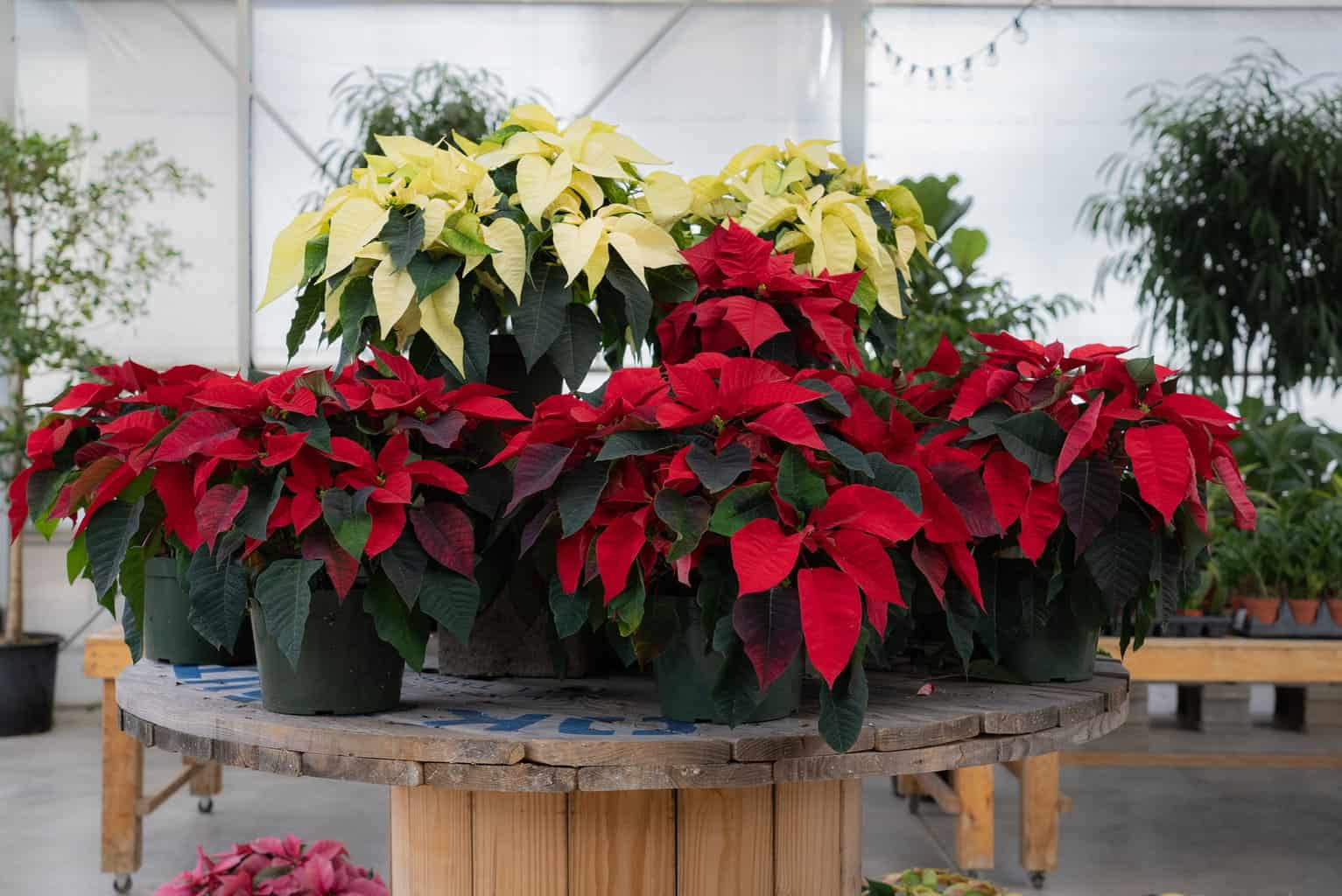
How to rebloom
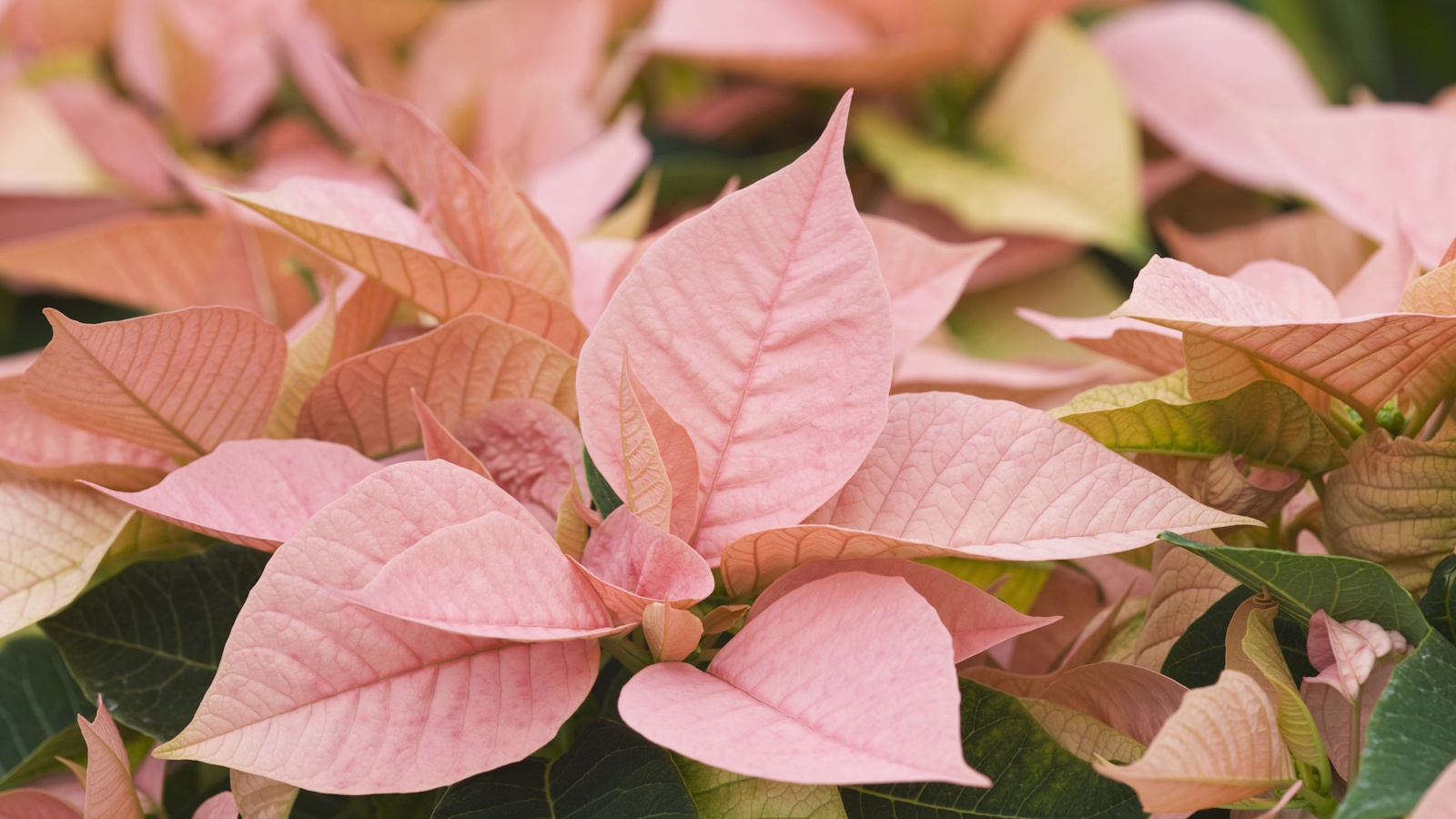
Here is the big secret: the colorful “flowers” are actually bracts, and they color up when the plant experiences long, uninterrupted nights for weeks. Indoors, stray lamplight can throw the timing off.
When to start
Count backward from when you want color. Many poinsettias need about 10 to 12 weeks of long nights to color well (sometimes a bit longer, depending on the variety and your home conditions). Starting in late September or early October is common for December color, but timing varies.
The light schedule
- Give the plant 14 to 16 hours of darkness every night.
- Give 8 to 10 hours of bright light during the day.
What “darkness” means in real life
Think “no household lighting in the room.” The goal is to avoid evening light that is bright enough to disrupt the plant’s night signal.
- Put the plant in a closet or a dark room each evening, then bring it back to a bright window in the morning.
- Or cover it with a breathable box that does not touch the leaves, then remove it daily.
Keep temperatures steady during this period and continue careful watering. Buds often form first, then bracts slowly begin to blush.
If you miss a night, do not panic. Just get back on schedule. Reblooming is a “best effort” project, not a moral test.
Troubleshooting
Leaf drop
- Sudden leaf drop is often from cold drafts, heat blasts, or rapid changes.
- Gradual leaf drop can be low light or watering issues.
Move it to brighter light, stabilize temperature, and let the top inch of soil dry before watering.
Wilting with wet soil
This can signal root stress. Check drainage immediately and never let the pot sit in water. If the mix is soggy and smells off, consider repotting into fresh, airy soil and trimming dead roots.
White crust on soil
Usually mineral salts from tap water or leftover fertilizer. Scrape off the top half inch and replace with fresh mix, or flush the pot with water and let it drain thoroughly.
Sticky leaves
Check for sap-sucking pests like whiteflies, mealybugs, scale, or aphids. Sticky residue is often honeydew.
- Rinse leaves in the sink or shower.
- Wipe with insecticidal soap, following label directions.
- Isolate from other plants until you are sure it is clear.
Expectation reset
Keeping a poinsettia alive is very doable. Getting it to rebloom is doable too, but it depends on variety, light discipline, and timing. Even if it never turns fire-engine red again, you will still have a lovely green houseplant that can be shaped, pruned, and enjoyed.
And if you decide to compost it and start fresh next year, that is not failure. That is simply gardening, where every season teaches you something new.