
Plant Tulip and Daffodil Bulbs in Fall

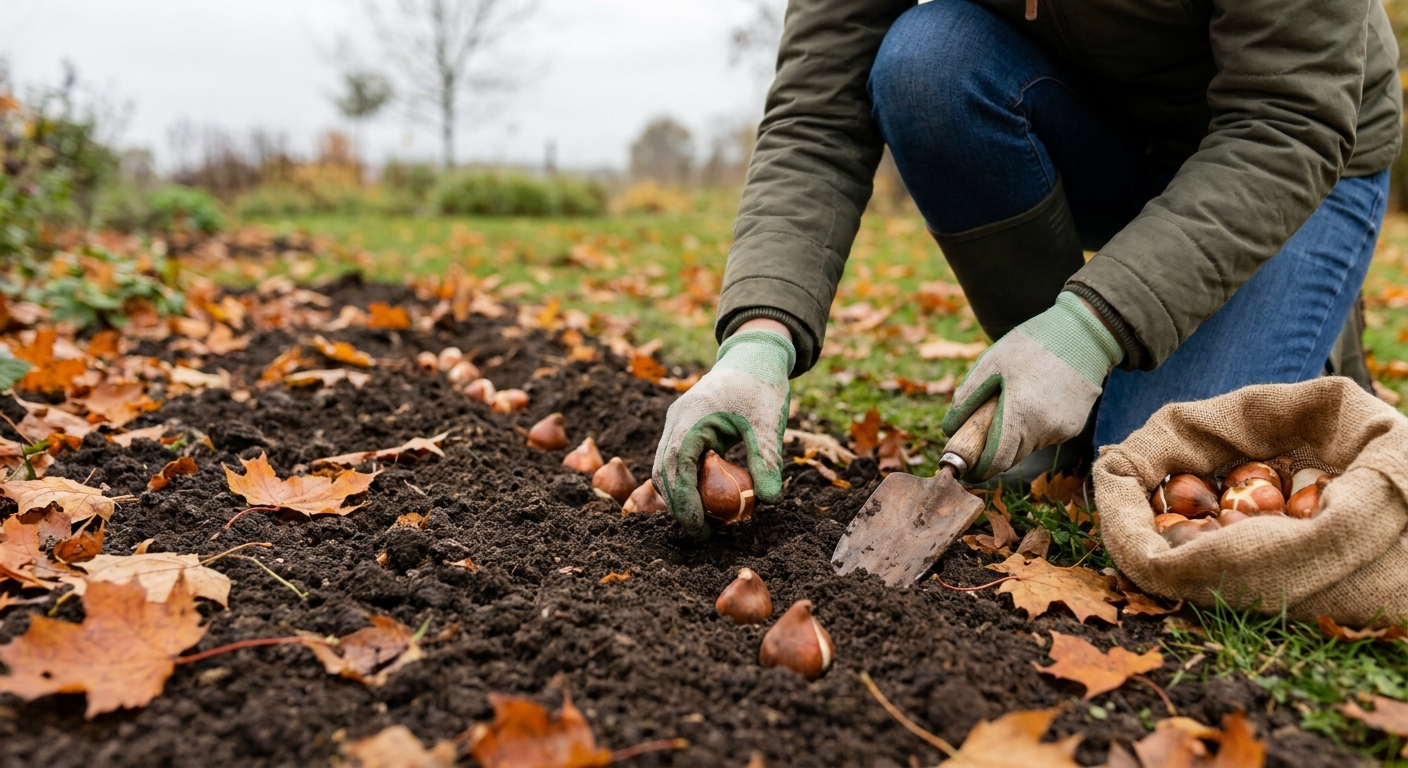
There is a particular kind of hope tucked into a fall-planted bulb. You do the work when the garden looks like it is winding down, then months later you get a burst of color that feels like the earth kept a promise.
This guide walks you through planting tulip and daffodil bulbs in fall, with the details that actually matter: where to plant, how to choose good bulbs, depth and spacing, cold needs, drainage, critter protection, and what to do right after planting.
If you are looking for what to do after your spring bulbs bloom, that is a different job. Our Spring Bulb Care After Flowering article focuses on post-bloom care like letting foliage ripen and managing seed heads. This page is all about fall installation.

When to plant in fall (timing that works)
The goal is to plant when the soil has cooled, but before the ground freezes solid. Cool soil helps bulbs settle in and start root growth without pushing leafy growth.
- Best rule of thumb: plant about 2 to 6 weeks before hard freeze.
- Soil temperature sweet spot: roughly 40 to 55°F (4 to 13°C) at about 4 inches deep.
- Too early: warm soil can encourage rot or early top growth.
- Too late: bulbs can still be planted if you can dig, but expect smaller blooms the first spring if roots do not have time to establish.
If you forget a bag of bulbs in the garage until late fall, do not panic. Plant them as soon as you can work the soil. Bulbs sitting out of the ground are almost always worse off than bulbs planted late.
Site selection: sun, soil, and spring water
Tulips and daffodils are happiest where spring is bright and the soil drains well. In early spring, many gardens are sunnier than you think because trees have not leafed out yet.
Light
- Full sun to part sun is ideal, especially for tulips (they bloom best with more sun).
- Daffodils tolerate a bit more shade and often do well under deciduous trees.
Drainage (the non-negotiable)
Bulbs hate wet feet in winter. If you have a spot where puddles linger after rain, pick a different location or improve the site before you plant.
- Choose: raised beds, slopes, or areas with naturally crumbly soil.
- Avoid: low pockets, downspout splash zones, compacted clay that stays slick and saturated.
Design tip that looks natural
For a relaxed, “it just happened” look: toss a handful of bulbs gently onto the bed and plant them where they land. Then you can adjust spacing a bit without making a perfect grid.
How to pick high-quality bulbs
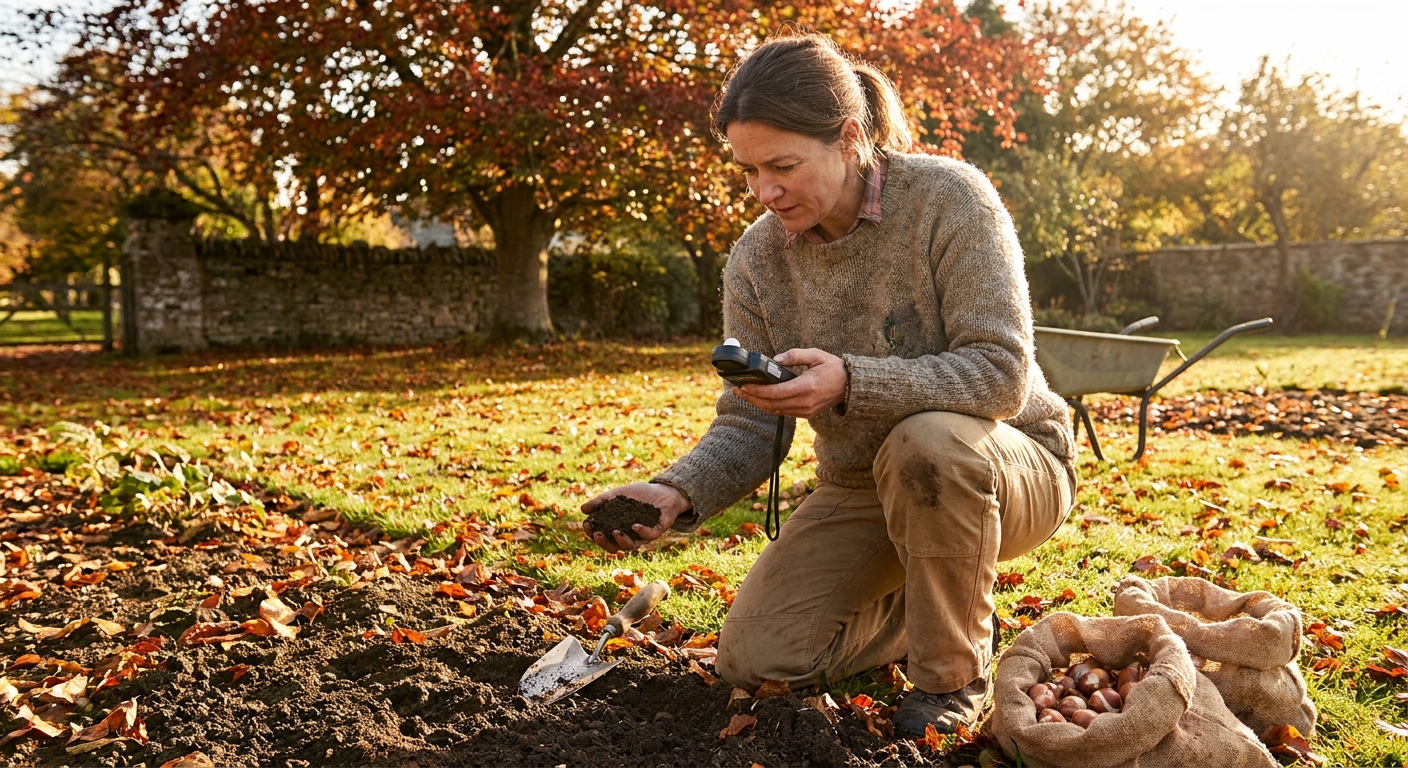
Good bulbs feel like tiny, sleeping engines. If they are plump and firm, you are already halfway to success.
- Choose bulbs that are firm, heavy for their size, and dry to the touch.
- Skip bulbs that are squishy, moldy, oozing, badly scarred, or smell sour.
- Size matters: for both tulips and daffodils, larger bulbs generally produce larger blooms the first year.
- Tulip note: a papery outer tunic that flakes a little is normal. Missing tunic is not automatically bad if the bulb is still firm.
Store unplanted bulbs in a cool, dry, well-ventilated place out of direct sun. Do not keep them sealed in an airtight bag where moisture can build up.
Tools and materials that make planting easier
- Hand trowel or hori-hori knife for small groupings
- Bulb planter or auger for quick holes (especially in looser soil)
- Spade for trench planting when you have lots of bulbs
- Compost for a gentle soil boost
- Mulch (shredded leaves, straw, or bark) for temperature moderation
- Hardware cloth or bulb cages if critters are bold in your yard
I am a fan of trench planting for big drifts. One wide, shallow excavation is often faster than digging 30 separate holes, and it gives you consistent depth.
Depth: how deep to plant tulips and daffodils
Depth is the most common bulb mistake, and it is also the easiest to fix. Plant too shallow and you risk frost heaving, floppy stems, and bulbs drying out. Plant too deep and blooms can be delayed or weaker.
The simple rule
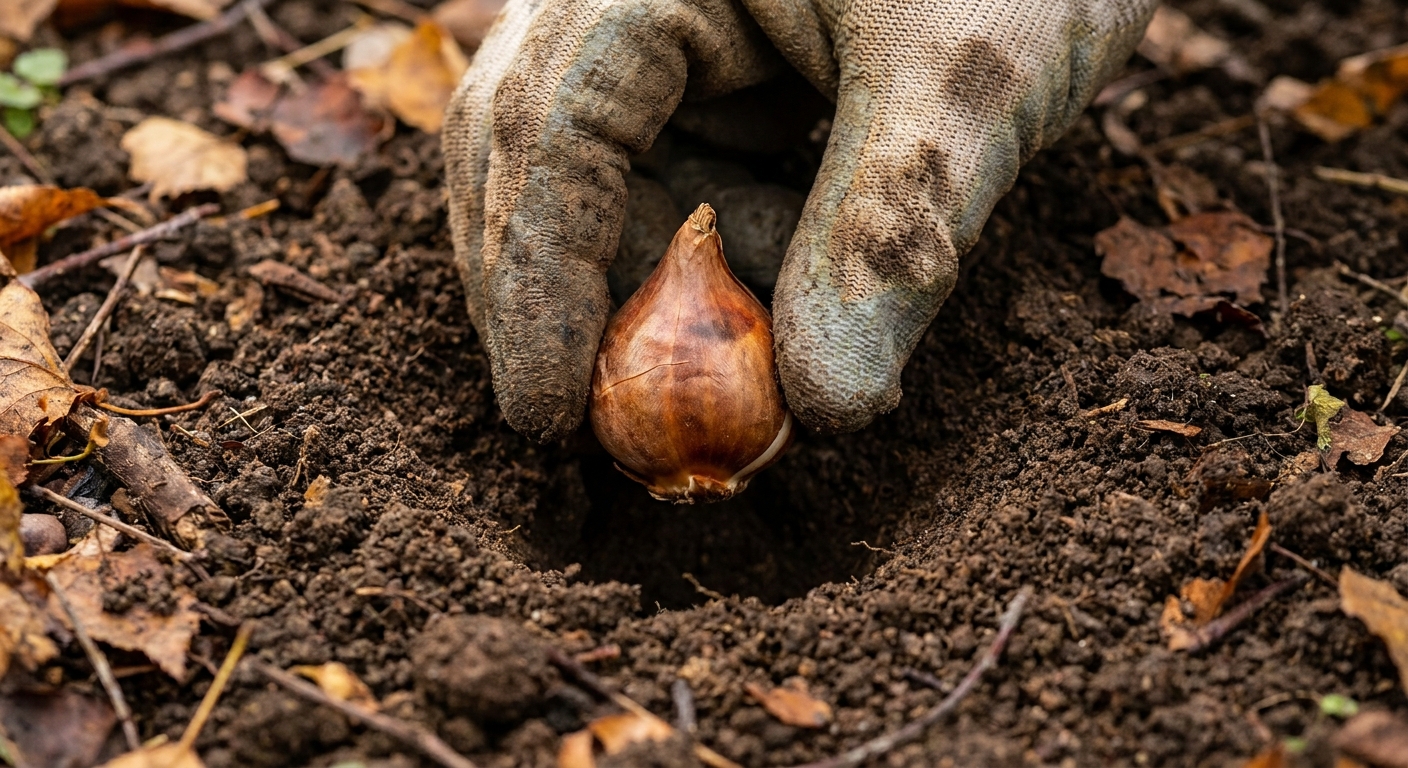
Plant bulbs at a depth about 2 to 3 times the bulb’s height, measured from the bottom of the bulb to the soil surface.
Practical depth guidelines
- Large tulips: about 6 to 8 inches deep
- Large daffodils: about 6 to 8 inches deep
- Smaller tulips and small daffodils: about 4 to 6 inches deep
- Very small bulbs (miniature types): about 3 to 4 inches deep
Soil type tweak: in sandy soil you can plant a bit deeper (it drains fast). In heavy clay, stay closer to the shallower end of the range and focus on improving drainage.
Which way is up?
Pointy end up, root plate down. If you truly cannot tell, plant the bulb on its side. Most bulbs will still correct themselves, they will just spend extra energy doing it.
Spacing: how far apart to plant
Spacing affects how full your display looks and how well bulbs can naturalize over time. Tulips are often treated as more of a “show” bulb, while many daffodils multiply and form clumps.
Spacing guidelines by bulb size
- Large tulips: 4 to 6 inches apart
- Large daffodils: 6 inches apart (up to 8 inches if you want room for clumps to expand)
- Small or miniature bulbs: 2 to 4 inches apart
If you want that lush “spring bouquet” effect, plant closer. If you want bulbs to bulk up and spread without being disturbed for years, give daffodils a bit more elbow room.
Cold needs: do tulips and daffodils need winter chill?
Yes. Most tulips and daffodils are built to experience winter. That cold period helps trigger the internal chemistry that leads to strong spring growth.
Chill requirement basics
- Most tulips and many daffodils need roughly 12 to 16 weeks of cold conditions to perform well.
- In cold-winter climates, nature handles this automatically.
- In mild-winter climates, some bulbs may bloom weakly or not at all unless pre-chilled, and certain varieties perform better than others.
If your winters are mild
If you live where winter rarely provides extended cold, you have two good options:
- Choose varieties known for warm climates (often labeled for your zone).
- Pre-chill bulbs in a breathable bag in the refrigerator for 12 to 16 weeks, then plant when outdoor soil is cool. Keep bulbs away from ripening fruit, which releases ethylene gas that can damage developing flower embryos.
Soil prep and drainage fixes (without over-fertilizing)
Bulbs carry their own lunch in their scales. They do not need heavy fertilizing at planting, and too much nitrogen can encourage leafy growth at the expense of blooms.
My favorite low-fuss prep
- Loosen soil to planting depth and a bit beyond so roots can run.
- Mix in 1 to 2 inches of compost if your soil is tired or compacted.
- If drainage is poor, amend with compost and consider a raised area rather than adding sand to clay (sand plus clay can turn into a cement-like texture).
About bulb fertilizer and bone meal
If you use a bulb fertilizer, choose one that is lower in nitrogen and follow the label rate. If you garden organically, compost and healthy soil biology do a lot of heavy lifting. Bone meal is not a magic fix and can attract animals in some areas, so I skip it when critters are a problem.
Step-by-step: planting tulips and daffodils
- Lay out your bulbs on the soil surface first to check spacing and overall look.
- Dig holes or a trench to the correct depth.
- Set bulbs in place pointy side up.
- Backfill gently, breaking up big clods so bulbs are surrounded by soil, not air pockets.
- Water thoroughly once after planting to settle soil and kickstart root growth.
- Mulch lightly after the ground begins to cool (or right away in very cold regions) to buffer temperature swings.
Try to plant at a consistent depth within each grouping. That way your blooms open more evenly, which is oddly satisfying in a way only gardeners understand.
Critter protection (because squirrels read gardening blogs too)
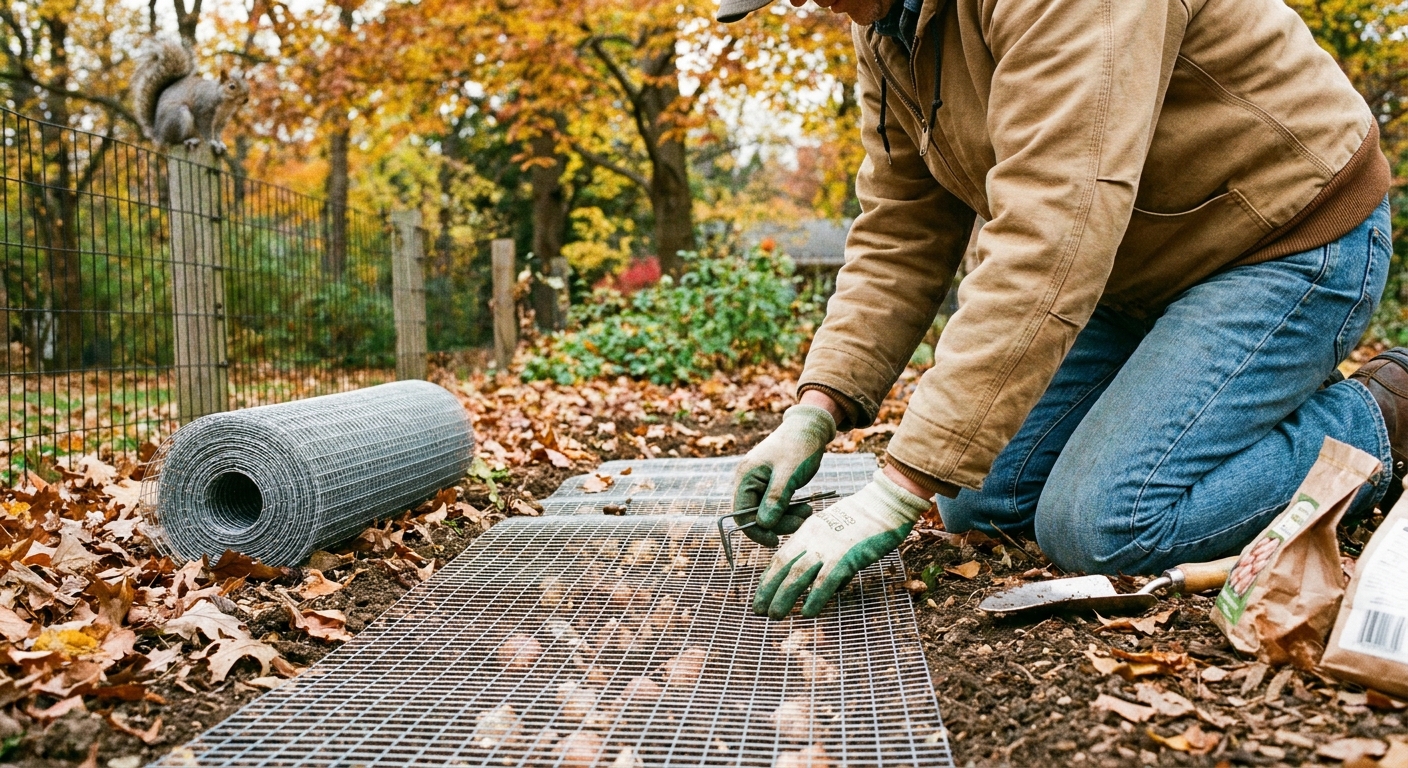
Tulips are a favorite snack for squirrels and chipmunks in many areas. Daffodils are usually ignored because they contain compounds that taste nasty or can be toxic, but hungry critters will still dig around.
Best defenses
- Hardware cloth: line the hole or trench with hardware cloth, plant bulbs, then fold it over and cover with soil.
- Bulb cages: great for small plantings or containers.
- Top dressing: a thin layer of sharp gravel can discourage digging in some gardens.
- Distraction is not a plan: repellents can help temporarily, but physical barriers are the most reliable.
Container planting tips
No yard? No problem. Tulips and daffodils can be gorgeous in pots, especially near an entry where you will actually see them on chilly spring mornings.
- Use a container with drainage holes. This is essential.
- Choose a larger pot so soil does not freeze and thaw as fast.
- Plant at the same depth guidelines, measuring from the bulb bottom to the soil surface.
- Water after planting, then keep soil slightly moist, not soggy.
- In very cold areas, protect pots in winter by tucking them against a house wall, insulating with leaves, or moving to an unheated garage once the soil freezes.
What to do right after planting
This is the part many people skip, then wonder why the results were “meh.” These small steps make a difference.
- Water once deeply right after planting, even if rain is coming. Root growth begins in fall.
- Mark your spots with a discreet label or photo on your phone. Future-you will thank you in spring when you are itching to plant something else right there.
- Mulch 2 to 3 inches once temperatures drop. Mulch does not “warm” the soil, it stabilizes it, which helps prevent frost heave.
- Do not keep watering weekly unless your fall is unusually dry. Soggy soil is the enemy.
Quick troubleshooting
My bulbs came up but did not bloom
- Bulbs may have been too small, planted too shallow, or did not get enough cold.
- In containers, winter temperature swings can interrupt chilling.
Bulbs disappeared
- Likely dug up by squirrels or rodents. Next time use hardware cloth or cages, especially for tulips.
Leaves appear in fall
- This can happen after a warm spell. Usually it is not fatal, but it can reduce spring performance. Mulch after the soil cools to reduce temperature whiplash.
Rotting bulbs
- Almost always a drainage issue, occasionally poor-quality bulbs. Improve drainage, avoid low spots, and plant firm bulbs only.
A final note from the dirt
If you are nervous about getting it “perfect,” you are in good company. Bulbs are forgiving, and the garden is generous with second chances. Plant them at a sensible depth, give them decent drainage, and let winter do its quiet work. Spring will handle the rest.