
Pitcher Plants in Winter: Temperate vs Tropical Dormancy

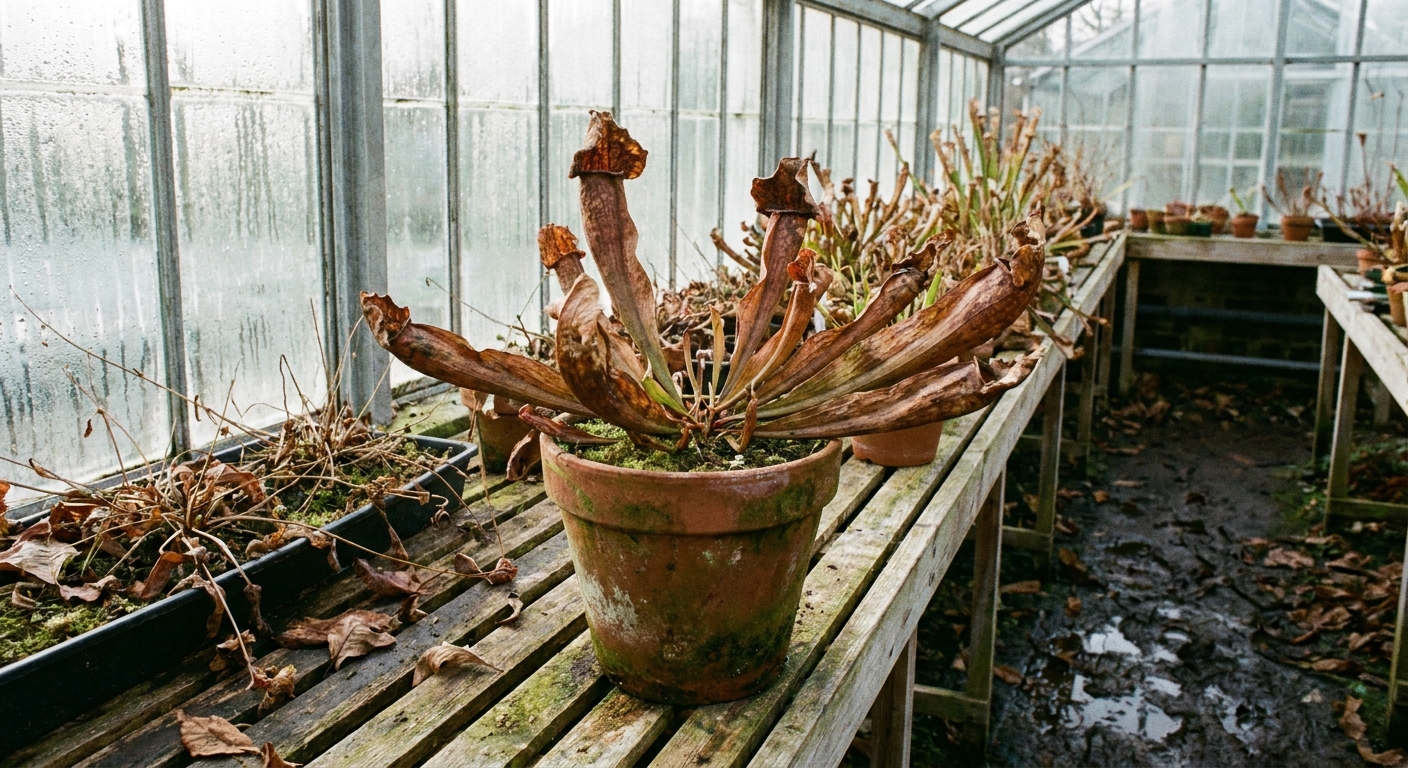
Winter is where pitcher plant care gets confusing fast, because “pitcher plant” can mean two very different lifestyles. Some are built for snowy naps and actually need a cold rest to stay healthy. Others are tropical rainforest plants that sulk, stall, or rot if you chill them like a tulip bulb.
Let’s sort it out by type so you can stop guessing and start giving your plant the winter it evolved for.

First, identify what you have
Most winter care mistakes happen because a warm-growing plant gets treated like a cold-hardy one, or vice versa. Use these quick clues.
Temperate carnivorous plants (need cold dormancy)
- Sarracenia (North American trumpet pitchers)
- Dionaea muscipula (Venus flytrap, often sold beside Sarracenia and has similar dormancy needs)
- Drosera temperate sundews (some form winter buds called hibernacula)
- Darlingtonia californica (cobra lily, temperate but with special temperature preferences)
Tropical carnivorous plants (no cold dormancy)
- Nepenthes (tropical Asian pitcher plants with hanging pitchers)
- Cephalotus follicularis (Australian pitcher plant, not a true “tropical dormancy” plant, but it does not want a deep freeze)
Fast visual shortcut: If your plant makes upright tubes from the soil surface, it is probably Sarracenia and wants dormancy. If it makes leaves with a tendril and a dangling pitcher at the end, it is Nepenthes and wants steady warmth.
Quick note: Venus flytraps and sundews are not pitcher plants, but they get included here on purpose because they are commonly sold alongside pitcher plants and their winter needs overlap with temperate pitchers.
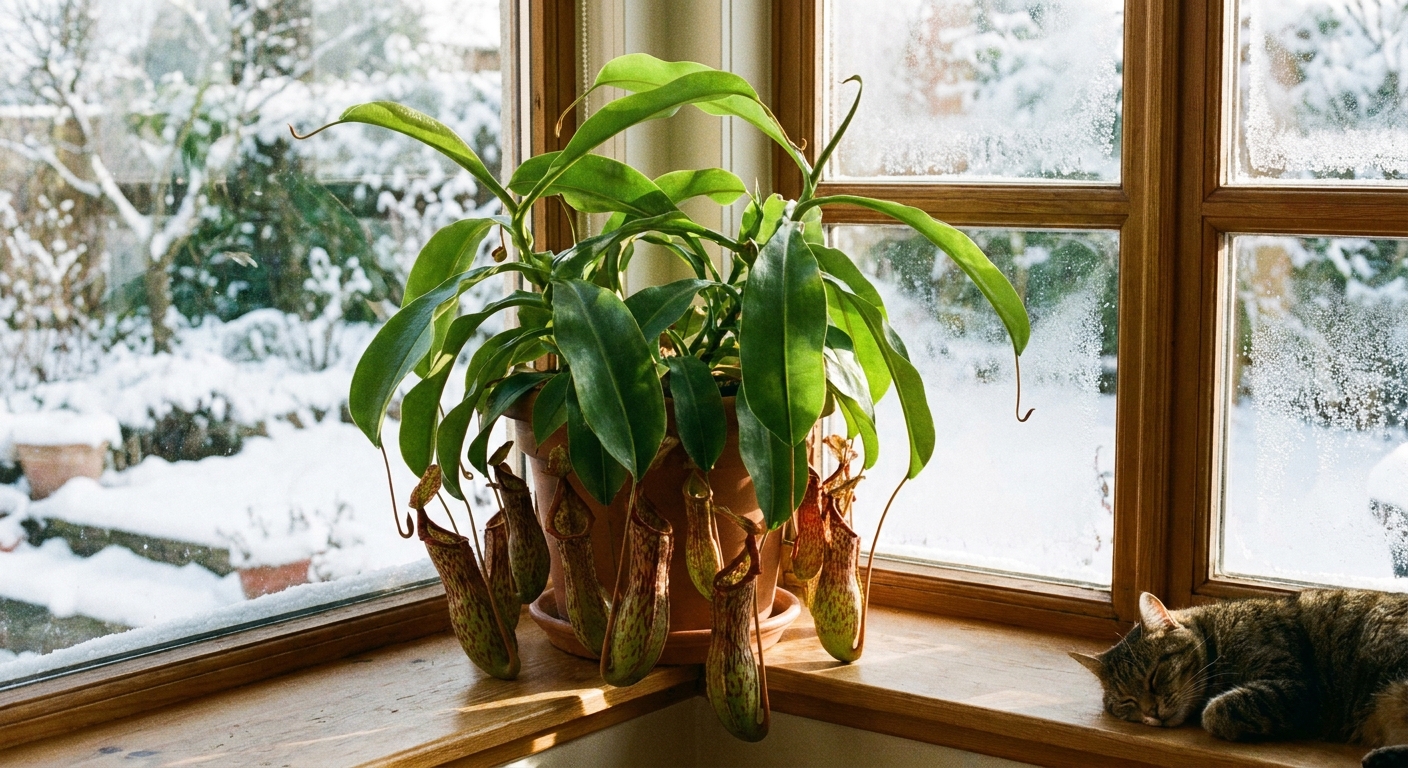
Temperate types: Sarracenia need a cold winter
If you grow Sarracenia, think of winter as part of the care cycle, not a threat. In nature, these plants experience months of chilly nights and short days. That rest period helps reset growth hormones, strengthens spring growth, and keeps them from slowly declining year after year.
What dormancy should look like
- Growth slows or stops.
- New pitchers may be smaller, darker, or not form at all.
- Older pitchers brown from the top down.
Target winter conditions
- Temperature: roughly 35 to 50°F (1 to 10°C) is a sweet spot for many growers.
- Day length: short days are fine. Bright light is helpful but not mandatory like it is in summer.
- Dormancy length: about 8 to 12 weeks for most windowsill growers, often longer in true outdoor climates.
Winter watering for temperate pitchers
This is where people overlove their plants into rot. During dormancy:
- Keep the medium just damp, not swampy.
- If you use the tray method in summer, switch to a shallow tray or let the tray go dry for a day before refilling.
- Use only rainwater, distilled, or reverse osmosis water. Tap water mineral buildup still matters in winter.
Do you cut the pitchers back?
You can, but you do not have to. My rule of thumb:
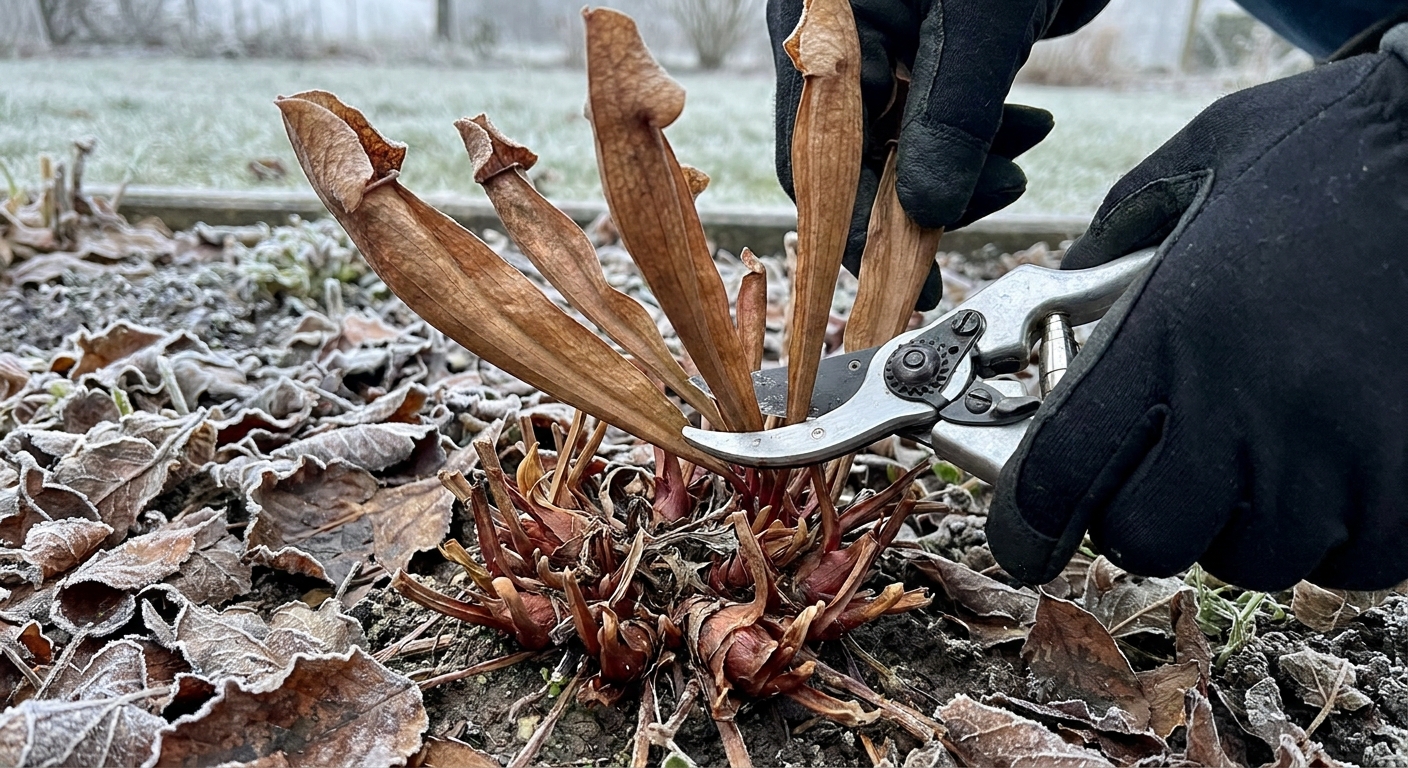
- Trim fully brown pitchers to reduce mold and make spring cleanup easier.
- Leave any green or partly green tissue since it can still photosynthesize.
- Use clean scissors and avoid cutting into the crown.
Tropical types: Nepenthes want steady warmth
Most Nepenthes do not “go dormant” in the way temperate carnivores do. In winter, they may slow because your home is darker and drier, but they still want warmth and gentle consistency.
Which Nepenthes need warmth most
If your plant is a common houseplant-style Nepenthes from a nursery, it is usually a hybrid that tolerates typical indoor conditions. The ones that truly hate cold are:
- Lowland Nepenthes (warmth-loving species): often prefer nights above 65°F (18°C) and days 75 to 90°F (24 to 32°C).
- Many common hybrids lean intermediate and do well with nights 55 to 65°F (13 to 18°C).
A practical warning: If your Nepenthes sits against a cold windowpane, it can get chilled even when the room thermostat looks fine. Those cold drafts can stall growth and cause blackened leaf tips.
Winter light for Nepenthes
- A bright south or east window is ideal in winter.
- Rotate the pot weekly so it does not lean.
- If pitchers stop forming, low light is often the culprit. Consider a simple grow light for 10 to 14 hours daily.
Winter watering for Nepenthes
Nepenthes like airy, oxygen-rich roots, especially in winter. The goal is evenly moist, not soggy.
- Water when the top layer feels just barely damp, not wet.
- Do not keep Nepenthes sitting in a water tray long-term.
- Use rainwater, distilled, or RO.
Humidity
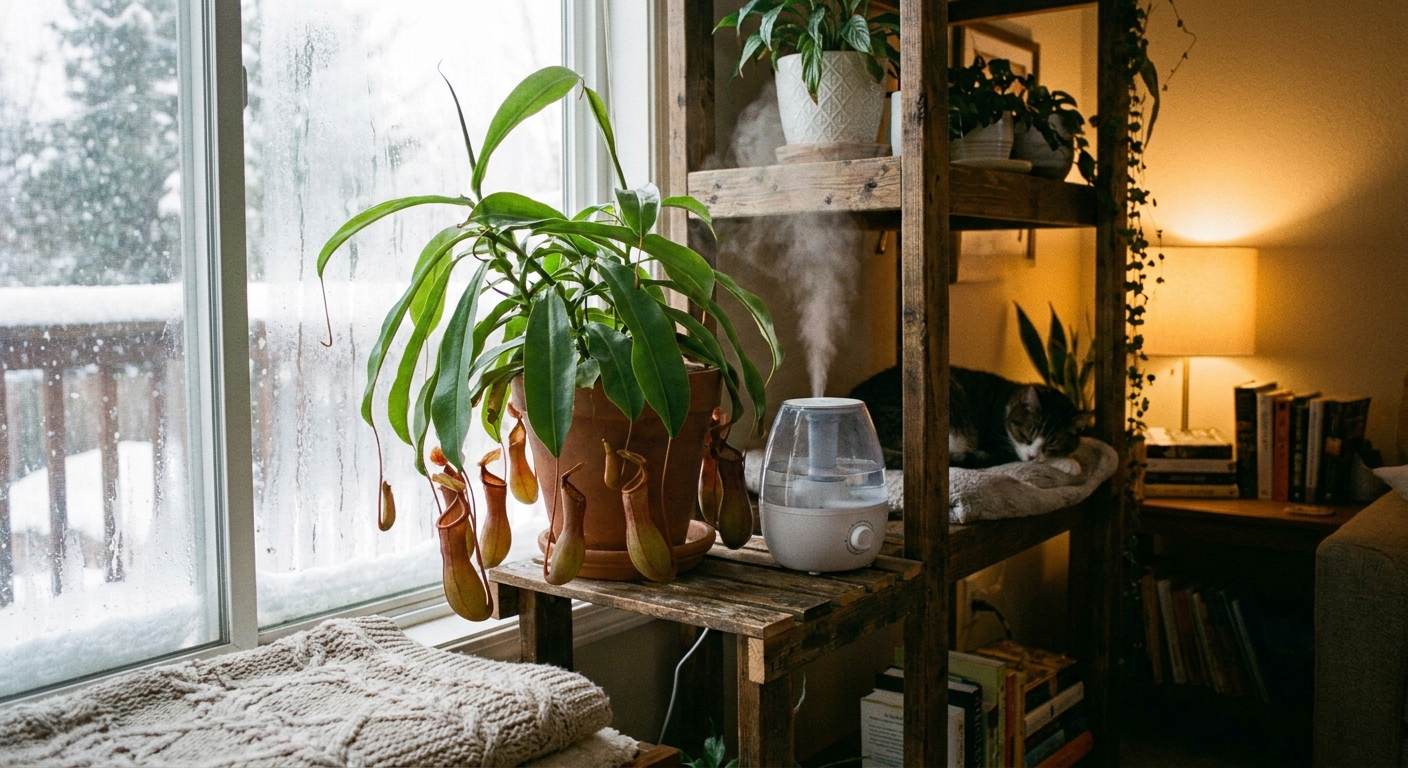
Indoor winter air can be brutally dry. Low humidity is a common reason pitchers dry up or fail to inflate.
- Aim for 50%+ if you can.
- Group plants together, run a humidifier nearby, or place the pot on a pebble tray (keep the pot above the waterline).
- Avoid misting as your main strategy. It is fleeting and can encourage leaf spotting in cool rooms.
Cold-climate safety
If you are growing temperate pitcher plants and winters are real where you live, outdoor dormancy can be perfect, as long as you protect the plant from the two big dangers: repeated freeze-thaw cycles and desiccating wind.
Safe options for Sarracenia
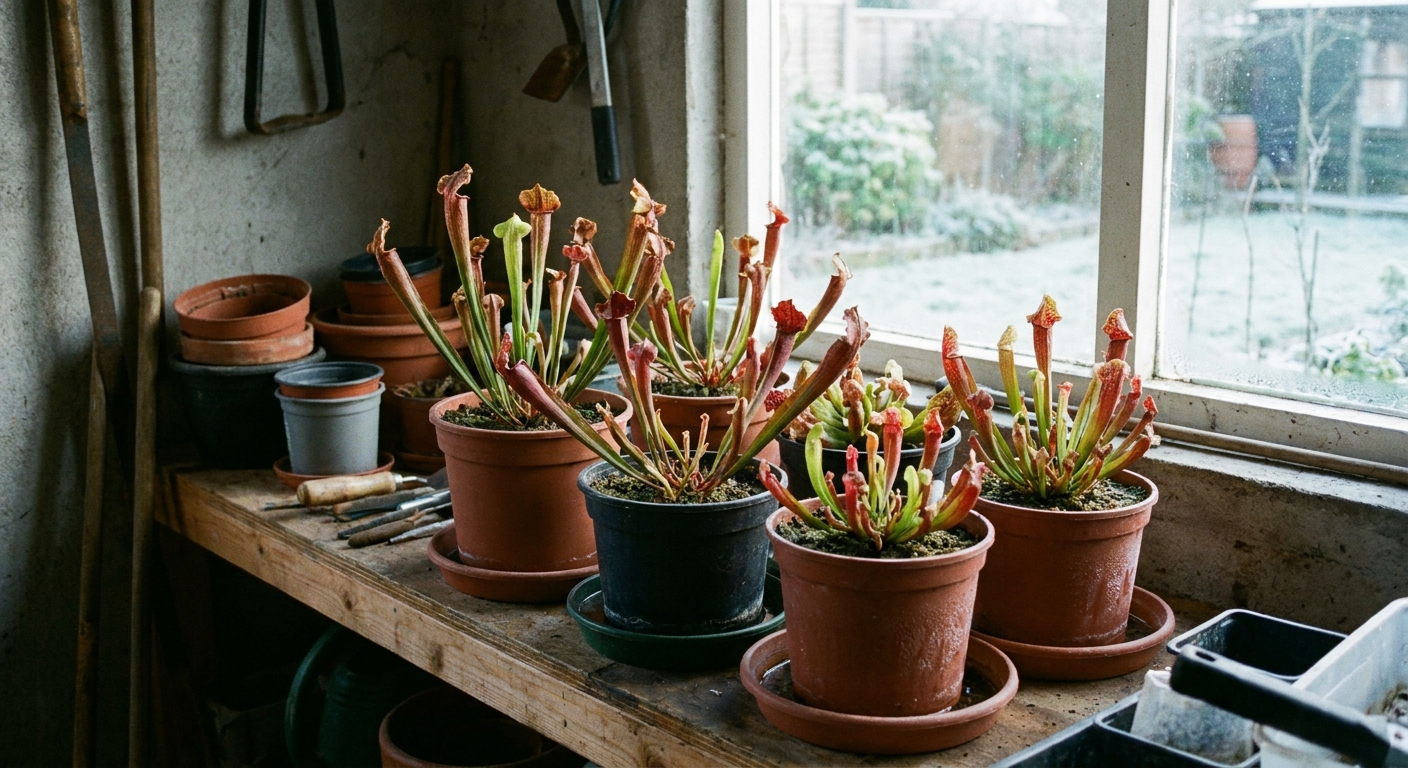
- Unheated garage or shed: Bright is nice, but not required. Check moisture every 2 to 3 weeks.
- Cold frame: Great protection from wind and temperature swings.
- Buried pot method: Sink the pot into the ground up to the rim and mulch around it to stabilize temperatures.
What to avoid
- Warm indoor living rooms for Sarracenia. Without cold dormancy they often weaken over time.
- Letting pots freeze solid for long periods, especially small pots. Rhizomes are tougher than people think, but container plants are more vulnerable than in-ground plants.
- Sealed plastic bags outdoors in sun. They can heat up unexpectedly on a bright winter day and then refreeze at night.
Quick checklist before you put plants away
- Remove dead bugs and old black pitchers if they are mushy or mold-prone.
- Ensure the potting mix is damp, not saturated.
- Label your plants. In spring, you will thank winter you.
Troubleshooting
“My Sarracenia is turning brown. Is it dying?”
Brown pitchers in late fall and winter are normal. Focus on the crown. If the rhizome is firm and not foul-smelling, dormancy is likely on track.
“My Nepenthes stopped making pitchers.”
Most often it is low light or low humidity. Increase light first, then humidity. Keep temperatures stable and avoid overwatering.
“There is mold on my dormant plant.”
Improve airflow and remove mushy tissue. Keep the medium only damp. Mild surface mold is common in cool, still air, but spreading gray fuzz on living tissue means it is time to act.
“Can I refrigerate my Sarracenia?”
Some growers do, but it is not my favorite first choice for beginners. Refrigerators are dry, lightless, and easy to forget. If you do use this method, keep the plant cool and slightly damp, check it regularly, and prevent fungal growth with good sanitation and airflow.
At-a-glance winter rules
- Sarracenia: wants cold dormancy, less water, can live in an unheated protected spot.
- Nepenthes: no cold dormancy, keep warm and bright, water carefully, boost humidity.
- When in doubt: identify the genus first. Winter care is not one-size-fits-all.
If you tell me the name on your plant tag or share a photo of the pitchers and leaves, I can help you confirm which group it belongs to and what winter setup will work best on your windowsill.