
Philodendron Micans Care and Propagation

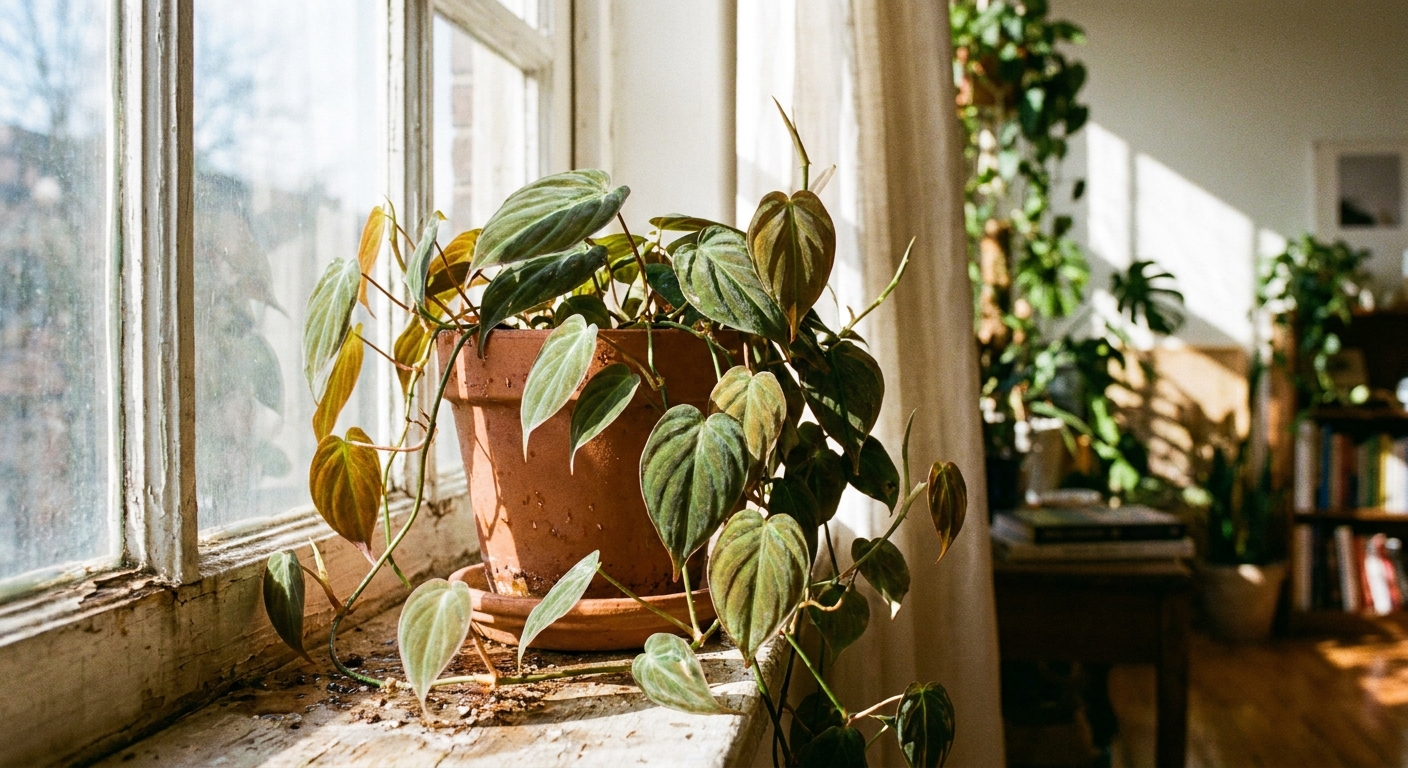
Philodendron micans is the plant I recommend to anyone who wants a trailing houseplant with a little drama. Those heart-shaped leaves look soft like velvet, with a bronze-green sheen that shifts in the light. But micans is not just a “generic philodendron.” Treat it like a basic heartleaf and, in low light or without support, you can end up with long bare stretches, smaller leaves, and a less dramatic velvet effect overall.
This page is all about what makes micans different: the kind of light that keeps the foliage velvety and tight, when to let it trail versus climb, how to build an airy soil mix, and how to propagate cuttings successfully in water or soil.

Meet Philodendron micans
Micans is a vining philodendron with soft, velvety leaves and a naturally trailing habit. In the wild, it can scramble up trees, and that is the big clue for home care: micans is happiest when it can either trail freely with enough light, or climb with support so it can size up its leaves.
Naming note: You may see this plant labeled as Philodendron micans, Philodendron hederaceum ‘Micans’, or even Philodendron scandens ‘Micans’. Whatever the tag says, the care is the same.
Compared with common heartleaf philodendron (Philodendron hederaceum), micans usually:
- Shows leggy growth faster in low light, with bigger gaps between leaves (internodes).
- Needs brighter light to keep rich color and a dense, fuzzy look.
- Responds strongly to support (moss pole or plank) by making larger, more mature leaves.
Light: velvet and short internodes
If I could only adjust one thing for a struggling micans, it would be light. The goal is bright, indirect light , meaning strong filtered light that fuels tight growth without scorching the leaves.
Best placements
- Near an east window: gentle morning sun, usually perfect.
- Near a south or west window: great if you soften the rays with a sheer curtain or place the plant a few feet back.
- Under a grow light: a wonderful option if your home is dim or winter is long.
Signs your micans needs more light
- Long stretches of vine with fewer leaves
- Leaves getting smaller over time
- Fading color, less bronzy sheen
- Plant reaching toward the window
Signs of too much direct sun
- Bleached patches or crispy edges
- Leaves that look dull and stressed rather than rich and velvety
Clara tip: Rotate the pot a quarter turn weekly. Micans will lean, and rotating keeps growth balanced so the plant looks lush from every angle.
Trail or climb
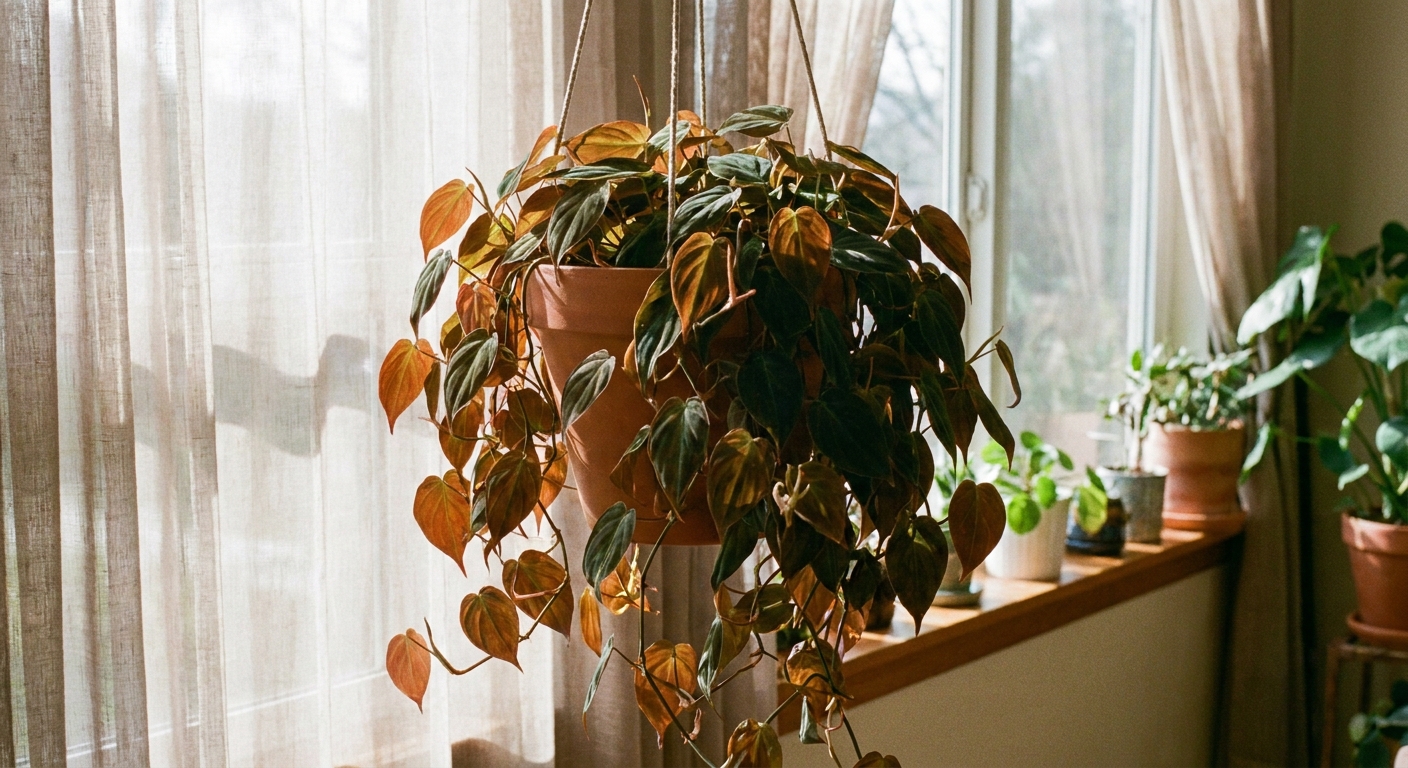
Micans can be gorgeous in a hanging basket, but if you want bigger leaves and a more tropical presence, give it something to climb. This is one of the clearest ways micans care differs from a beginner heartleaf setup.
Hanging and trailing
Best if you love the waterfall effect. To keep it full:
- Prioritize high-indirect light.
- Pinch or prune vine tips to encourage branching.
- Consider planting multiple cuttings in one pot for instant fullness.
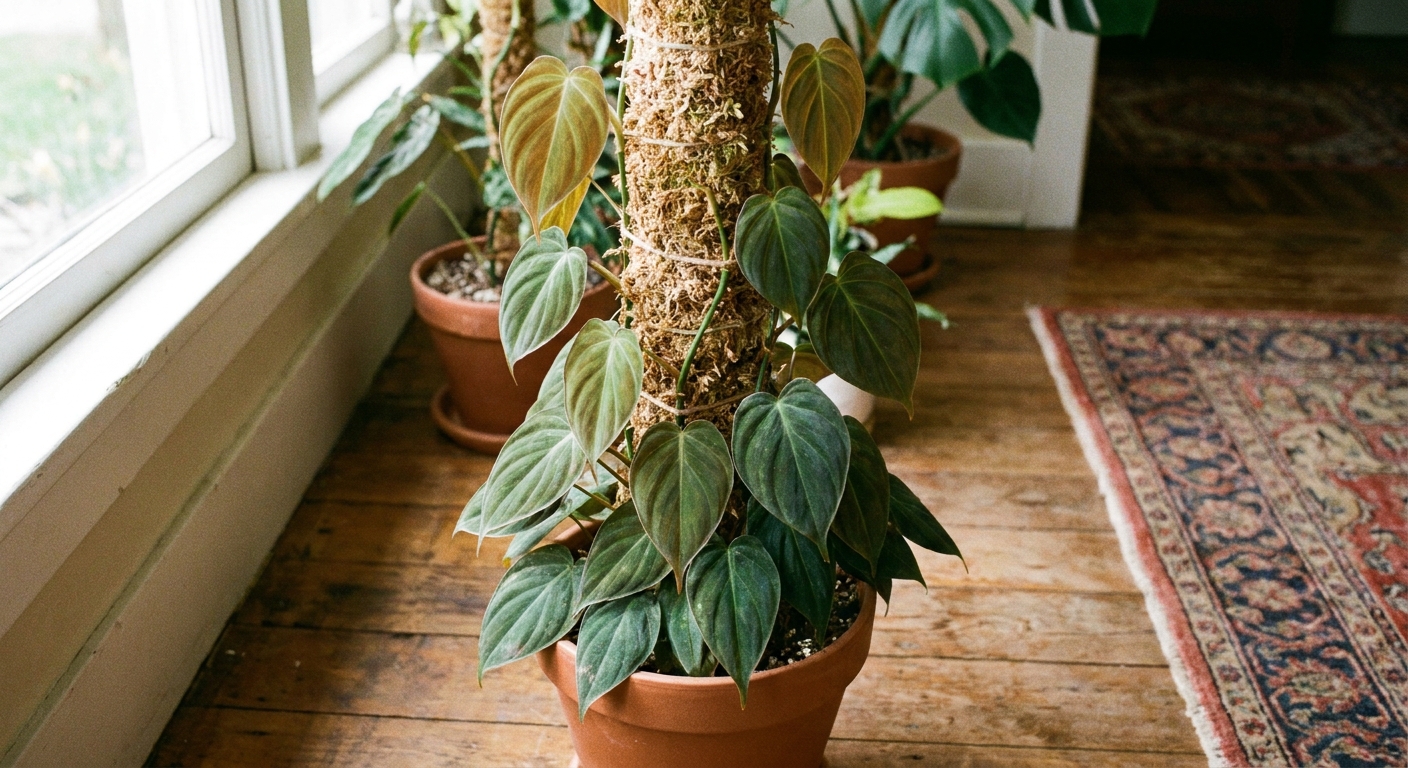
Climbing support
Best if you want leaf size and a more upright display. Options:
- Moss pole : encourages aerial roots to grab and can increase leaf size when kept lightly moist.
- Coco coir pole: lower maintenance, less moisture retention than moss.
- Wood plank: surprisingly effective and cleaner if you dislike damp poles.
Gently secure vines with soft plant ties and guide nodes toward the support. Once the vine attaches, micans often shifts into a more mature growth pattern.
Soil and potting
Micans hates sitting in a dense, wet mix. Those fine roots need oxygen, and soggy soil is the fast track to yellowing leaves and rot.
An easy micans soil recipe
A great starting mix is:
- 2 parts quality indoor potting mix (peat- or coco-based)
- 1 part orchid bark (chunky for airflow)
- 1 part perlite or pumice
- Optional: a small handful of horticultural charcoal for freshness
You want a mix that feels springy and chunky, not muddy. When you water, it should flow through rather than puddle on top.
Pot choice
- Use a pot with drainage holes, always.
- Terracotta can be helpful if you tend to overwater.
- Size up only 1 to 2 inches wider when repotting. Oversized pots stay wet longer.
Repot when roots are circling the pot, water runs straight through too quickly, or growth slows despite good light. For most homes, that is every 12 to 24 months.
Watering: evenly moist, not wet
Micans likes a rhythm. Think “water thoroughly, then let it breathe.”
When to water
Water when the top 1 to 2 inches of soil are dry, then soak until water runs out the drainage holes. Empty the saucer so the roots are not sitting in runoff.
Common watering mistakes
- Too-frequent small sips: often leads to uneven moisture and a chronically damp top layer, especially in heavier mixes.
- Letting it bone dry repeatedly: can lead to limp leaves, crispy edges, and leaf drop.
- Cold, waterlogged soil in winter: the classic root rot setup.
Seasonal note: In spring and summer, micans usually drinks faster. In winter, slow down and rely on the soil feel, not the calendar.
Fertilizer
To keep foliage rich and growth steady, micans appreciates light feeding when it is actively growing.
- Spring through early fall: fertilize about once a month with a balanced houseplant fertilizer at half strength.
- Late fall and winter: pause or reduce to every 6 to 8 weeks if the plant is still pushing growth under strong light.
If you notice smaller new leaves and pale color even with good light, nutrition is worth checking. If you see brown, crispy tips and a white crust on soil, you may be overfeeding. Flush the pot with plain water and ease up.
Pruning
Micans gets fuller when you tell it, kindly but firmly, where to branch. Pruning is not a punishment. It is a pep talk.
How to prune
- Use clean scissors.
- Cut just above a node (the little bump where a leaf and aerial root can emerge).
- Trim long, bare vines back to a healthier section.
Save those cuttings. Micans is one of the easiest philodendrons to propagate, and replanting cuttings back into the mother pot is the quickest route to a lush container.
Propagation
For micans, both water and soil propagation work well. The best method depends on your patience level and how hands-on you want to be.
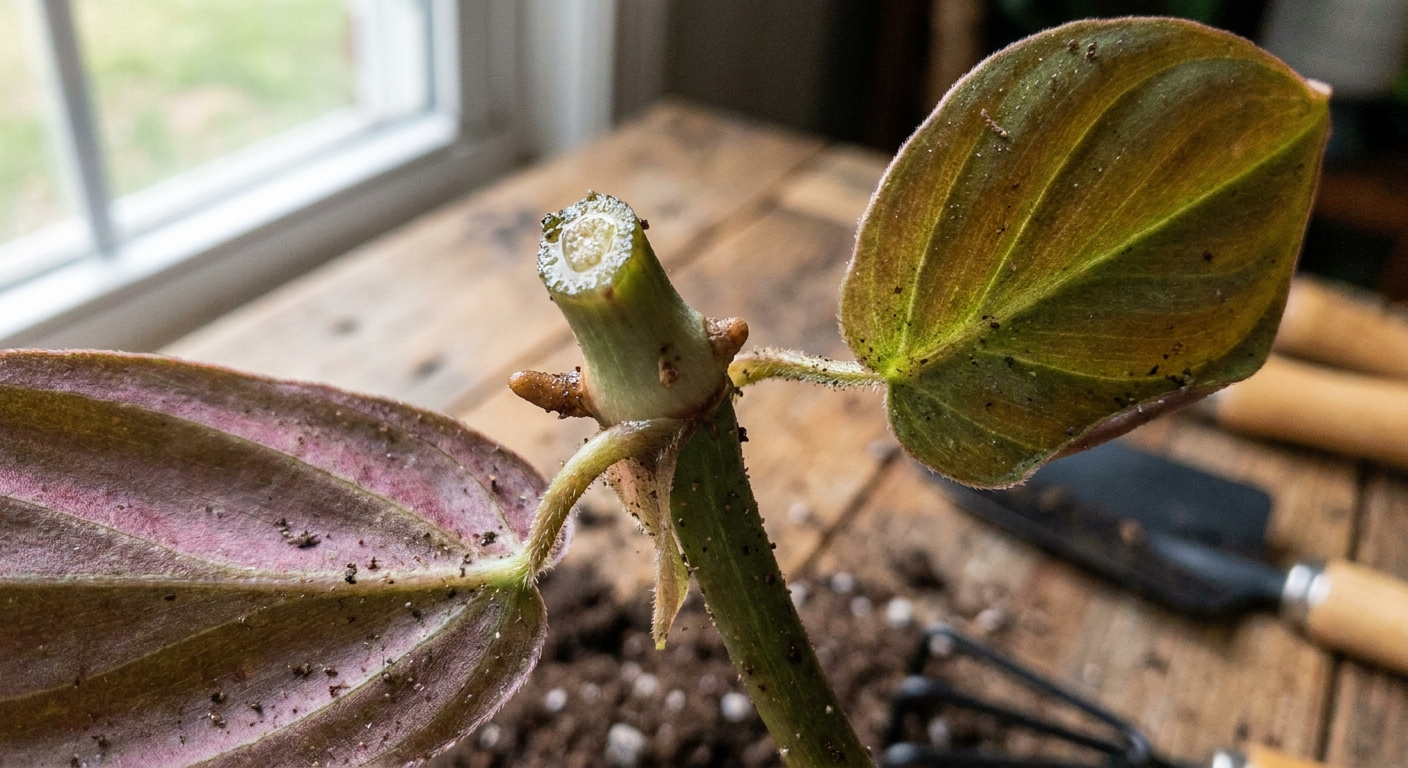
First, take the right cutting
- Choose a healthy vine with several leaves.
- Cut a section with at least 1 to 2 nodes. Nodes are non-negotiable. A leaf alone will not grow roots.
- Remove the lowest leaf or two so nodes can sit in water or soil.
Water propagation
This is great if you like watching roots form.
- Place the nodes in a jar of room-temperature water, leaves above the waterline.
- Keep in bright, indirect light.
- Refresh water every 5 to 7 days, or sooner if it looks cloudy.
- Pot up when roots are a few inches long and branching, usually in a few weeks depending on warmth and light.
Transition tip: When moving from water to soil, keep the soil slightly more moist for the first 1 to 2 weeks. Water roots need a short adjustment period to become soil roots.
Soil propagation
This can be faster long-term because roots form directly in the medium they will live in.
- Use a small pot with a chunky mix similar to your adult soil.
- Insert nodes into the mix and gently firm around them.
- Water lightly, then keep the mix evenly moist, not soaked.
- Optional: cover with a clear bag with a little airflow to hold humidity.
You will know it is rooting when you see new growth and the cutting resists a gentle tug.
Temperature and humidity
Micans prefers average indoor warmth. Aim for roughly 65 to 85°F (18 to 29°C) and keep it away from cold drafts.
Humidity helps those leaves stay supple, but you do not need a rainforest. If your home is very dry, consider:
- Grouping plants together
- Running a small humidifier nearby
- Using a pebble tray (helpful, but modest impact)
Common problems
Leggy vines with small leaves
- Cause: usually low light, sometimes underfeeding
- Fix: move to brighter indirect light, prune to encourage branching, fertilize lightly in the growing season
Yellow leaves
- Cause: overwatering or soil staying dense and wet
- Fix: let the mix dry a bit more between waterings, repot into a chunkier blend, check roots for rot
Root rot: what to do now
- Clues: persistent yellowing, limp growth despite wet soil, sour smell, mushy dark roots
- Immediate steps: unpot the plant, rinse the root ball, trim mushy roots with clean scissors, then repot into fresh airy mix in a pot with drainage. Hold off on fertilizer until you see new growth.
Crispy edges or curled leaves
- Cause: inconsistent watering, very dry air, or too much sun
- Fix: adjust watering rhythm, move out of harsh direct sun, bump humidity slightly
Dull foliage (less velvet look)
- Cause: low light, dusty leaves, or stress
- Fix: increase light and gently dust leaves with a soft, dry brush or microfiber cloth. Avoid heavy wiping and skip leaf-shine products. They can leave residue that interferes with normal gas exchange and attracts dust.
Pests
Micans is not uniquely pest-prone, but its dense foliage can hide early infestations. Check stems, nodes, and the undersides of leaves when you water.
Spider mites
- Clues: fine webbing, stippled or speckled leaves
- What to do: rinse the plant thoroughly, then treat with insecticidal soap or horticultural oil, repeating weekly for a few rounds
Mealybugs
- Clues: white cottony clusters at nodes and leaf joints
- What to do: dab with 70% isopropyl alcohol on a cotton swab, then follow up with soap sprays
Thrips
- Clues: silvery streaks, distorted new growth, tiny fast-moving insects
- What to do: isolate immediately, remove heavily damaged leaves, treat with insecticidal soap. If the infestation is persistent, consider a labeled systemic option where available and appropriate for indoor use.
Safety note: Always follow your product label, and consider pets, kids, and ventilation when treating houseplants. Systemic products vary by country and availability.
My sustainability note: Start with the gentlest effective approach. Physical rinsing and repeated soap treatments solve many early outbreaks without escalating to harsher controls.
Toxicity and pet safety
Like other philodendrons, micans contains calcium oxalate crystals and is toxic if chewed or ingested. Keep it out of reach of pets and small children. If you suspect a bite, rinse the mouth and contact your vet, poison control, or a medical professional for guidance.
Quick care checklist
- Light: bright, indirect for compact growth and rich velvet color
- Soil: chunky and airy, never dense
- Water: when top 1 to 2 inches are dry, then water thoroughly
- Support: trail for a cascade, climb for bigger leaves
- Fertilizer: monthly at half strength in the growing season
- Propagation: nodes in water or soil, then replant to thicken the pot
If you want the most wow from micans, give it stronger filtered light than you think, prune it like you mean it, and keep the roots in a mix that breathes. Velvet leaves are not luck. They are good growing conditions, repeated gently.