
Philodendron Birkin Care and Common Problems

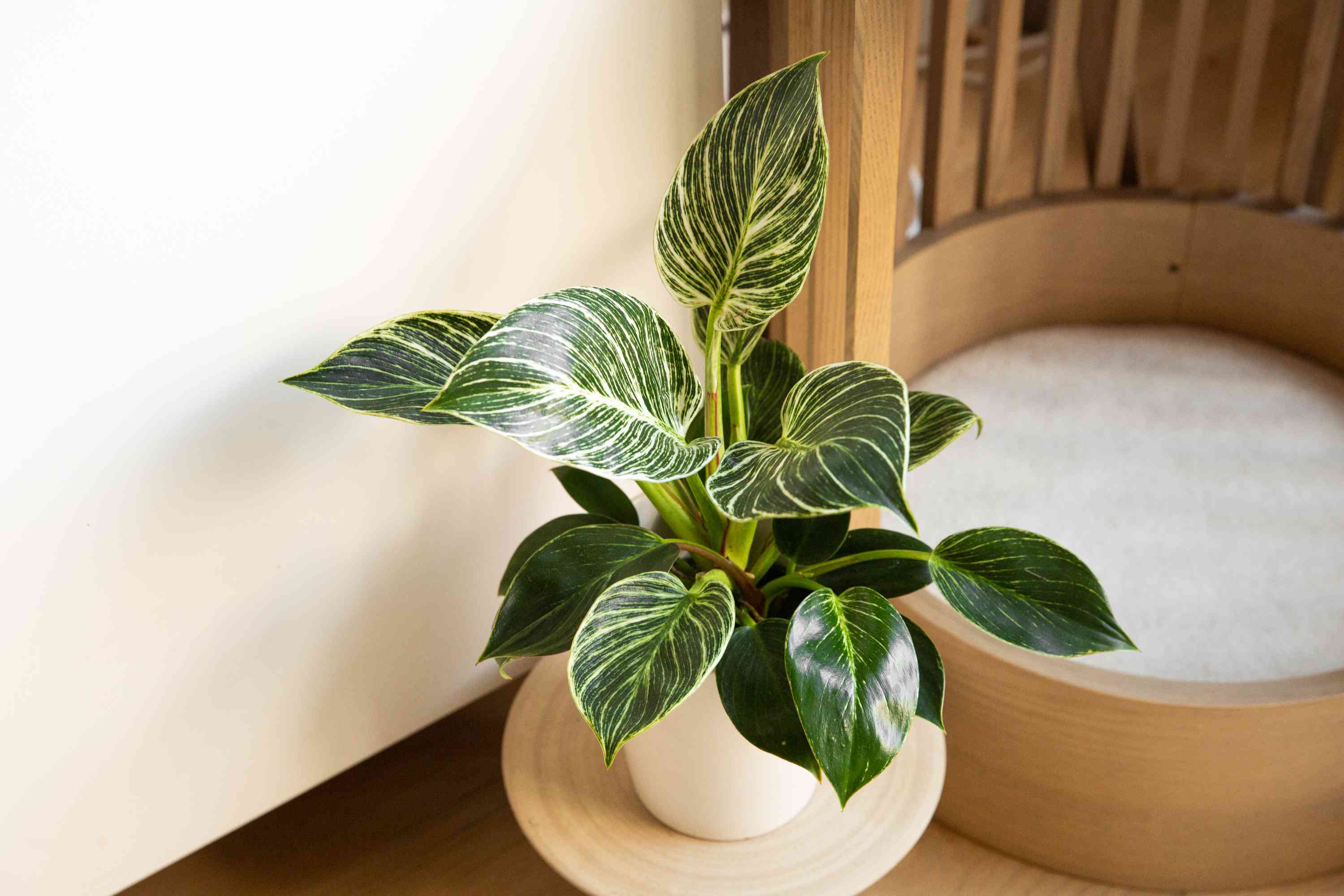
Philodendron Birkin is one of those houseplants that looks like it came pre-decorated. Those pinstripe leaves can stop you mid-aisle at the nursery, and then the questions start the second you bring it home: Why are my new leaves greener? Why is it yellowing? Is it reverting? Am I overwatering?
Let’s keep this simple and steady. Birkin is a compact, self-heading philodendron that likes consistency: bright, filtered light, an airy mix, and watering that follows the soil, not the calendar. I’ll walk you through the essentials, then we’ll troubleshoot the most common hiccups.

How to identify Philodendron Birkin
What the striping should look like
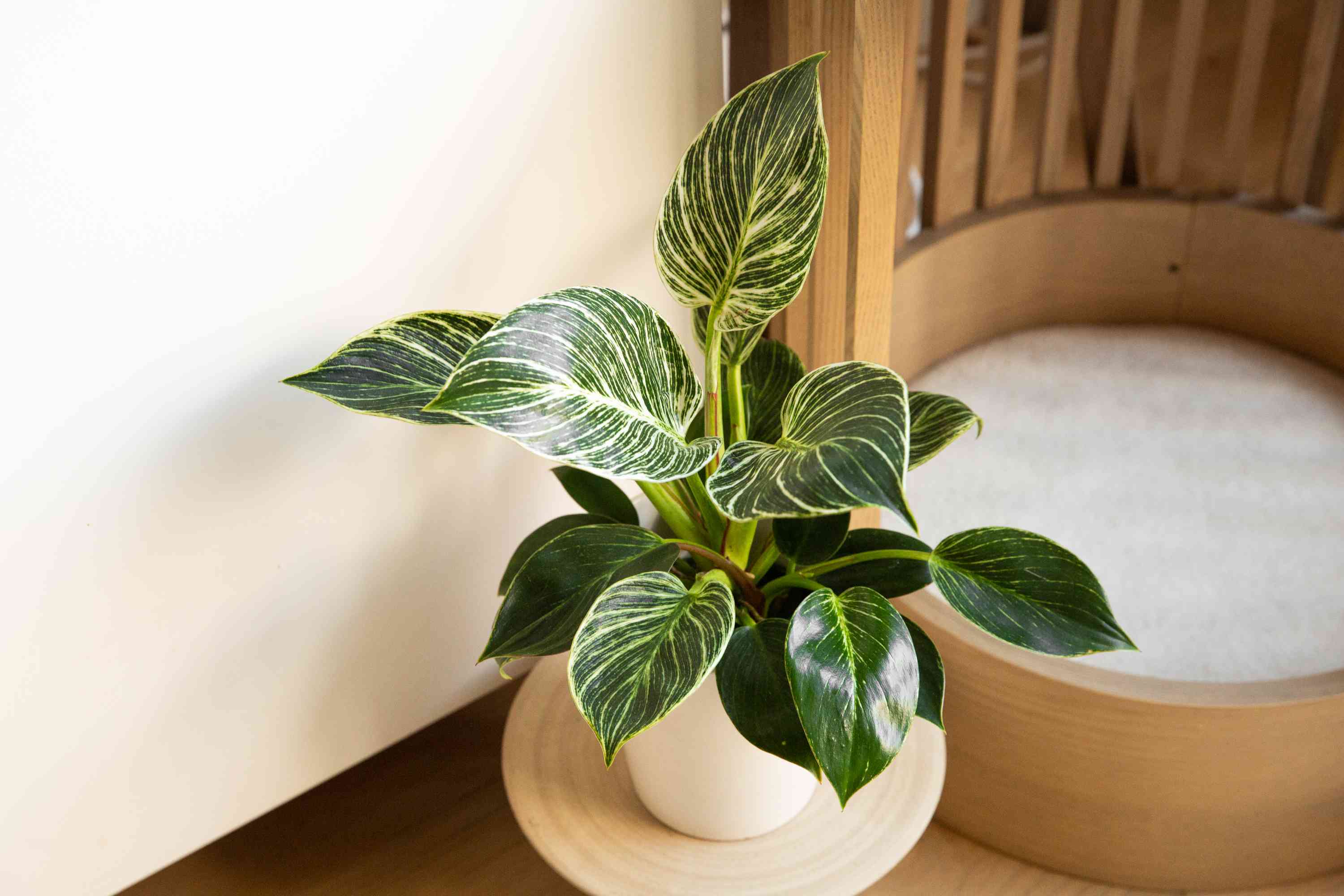
Classic Birkin leaves are deep green with thin, creamy white stripes that radiate from the midrib. The striping can vary leaf to leaf, and that’s normal. Some leaves look like delicate paintbrush strokes, others come out more boldly marked.
Striping vs. reversion
Birkin can “revert,” meaning it starts pushing growth that looks more like its non-variegated ancestor. Reverted leaves are usually much greener with little to no striping, sometimes with broader blocks of color instead of fine lines.
- Normal variation: One or two less-striped leaves, especially on a young plant or during low-light seasons.
- Possible reversion: Several new leaves in a row become mostly solid green, and the plant continues that trend.
If you’re seeing greener new growth, first adjust light. Variegation generally holds better in brighter indirect light. If the plant keeps reverting and you want to preserve the striped look, you can prune back to the last nicely striped node and encourage new growth from there.
Light
Birkin is happiest in bright indirect light. Think: near an east window, or a few feet back from a bright south or west window with a sheer curtain.
- Too little light: slower growth, smaller leaves, leggy spacing, and striping that fades.
- Too much direct sun: washed-out patches or crispy, tan scorch spots, especially on lighter-striped areas.
If you’ve only got one good window, rotate the pot every week or two so the plant grows evenly instead of leaning like it’s trying to eavesdrop.
Watering
Most Birkin problems I see come down to watering rhythm. The goal is evenly moist soil that still breathes, not soggy soil and not bone-dry for weeks.
A dependable cadence
- Water when the top 1 to 2 inches of soil are dry.
- If your pot is small or your home is warm and bright, you might water weekly.
- If it’s winter, low light, or your pot is larger, it may be every 10 to 14 days or longer.
How to water well
- Water thoroughly until it drains from the bottom.
- Empty the saucer after 10 to 15 minutes so roots don’t sit in runoff.
- If the mix has become water-repellent, bottom-water once, then refresh the mix soon.
Clara tip: pick up the pot. A light pot usually means it’s time. A heavy pot means wait. Your hands learn this faster than any app.
Soil and potting
Birkin likes an airy, fast-draining mix that still holds a little moisture. The easiest way to get there is to “chunk up” a quality indoor potting soil.
An easy Birkin mix
- 2 parts potting soil
- 1 part orchid bark
- 1 part perlite or pumice
You want water to move through, with plenty of oxygen pockets for roots. If the plant stays wet for many days after watering, add more bark and perlite next repot.
Pot choice and repot timing
- Choose a pot with a drainage hole, always.
- Repot when roots circle the bottom or poke out the drain hole, usually every 1 to 2 years.
- Size up only 1 to 2 inches wider. Oversized pots hold water too long and invite root rot.
Temperature and humidity
Birkin does well in normal household conditions.
- Temperature: aim for 65 to 85 F (18 to 29 C). Avoid cold drafts and vents.
- Humidity: average home humidity is usually fine, but 40 to 60 percent helps leaves stay lush and edges less crispy.
If your air is dry, a small humidifier nearby (not blasting directly at the leaves) can make a noticeable difference during winter heat.
Fertilizer
Birkin isn’t a heavy feeder. Over-fertilizing can cause leaf tip burn and stressed growth.
- Feed in spring and summer with a balanced houseplant fertilizer at half strength every 4 to 6 weeks.
- Skip fertilizing in winter unless your plant is actively growing under strong light.
- Flush the pot with plain water every couple of months to reduce salt buildup.
If your plant is in fresh soil, you can usually wait 4 to 8 weeks after repotting before feeding again.
Propagation
Birkin can be propagated from stem cuttings, but it isn’t the fastest plant to root, and you’ll get the best results during spring and summer. You’ll need a cutting with at least one node (a node is the bump where leaves and roots come from).
Water method
- Take a clean cutting with 1 to 2 nodes and at least one healthy leaf.
- Place the node in water (keep leaves above the waterline).
- Refresh water every few days.
- Pot up once roots are a couple inches long, then keep the soil lightly moist for the first week or two.
Soil method
- Plant the node in a chunky mix and keep it evenly moist, not soggy.
- Higher humidity helps. A clear bag over the pot can work, as long as there’s a little airflow.
Note: variegation can be unpredictable. A propagated cutting may not stripe exactly like the parent, especially if the plant has started to revert.
Toxicity
Like other philodendrons, Birkin contains calcium oxalate crystals and is considered toxic if chewed or ingested. Keep it away from pets and small children. If you suspect a pet has bitten the plant (drooling, pawing at the mouth, vomiting), contact your vet. For humans, call your local poison control for guidance.
Common problems
Yellow leaves
Yellowing is the number-one Birkin complaint, and it usually has a fix. Use this quick checklist.
- One older bottom leaf turns yellow: often normal aging. Snip it off once it’s mostly yellow.
- Multiple yellow leaves + damp soil: likely overwatering or a mix that holds too much moisture. Let the soil dry more between waterings, increase light, and consider repotting into a chunkier mix.
- Yellow leaves + dry soil and wilting: underwatering. Water deeply, then adjust your cadence so the plant doesn’t swing from drought to flood.
- Yellow with mushy stems or a sour smell: root rot risk. Unpot, trim mushy roots, and repot into fresh airy mix. Reduce watering until new growth resumes.
Brown crispy edges or tips
- Dry air, inconsistent watering, or fertilizer salts are common culprits.
- Switch to filtered water if your tap water is very hard, and flush the soil occasionally.
- Trim crispy edges with clean scissors. The brown part won’t turn green again.
New leaves stuck or misshapen
This often happens when humidity is low or the plant is dry at the wrong moment.
- Increase humidity slightly and keep watering consistent.
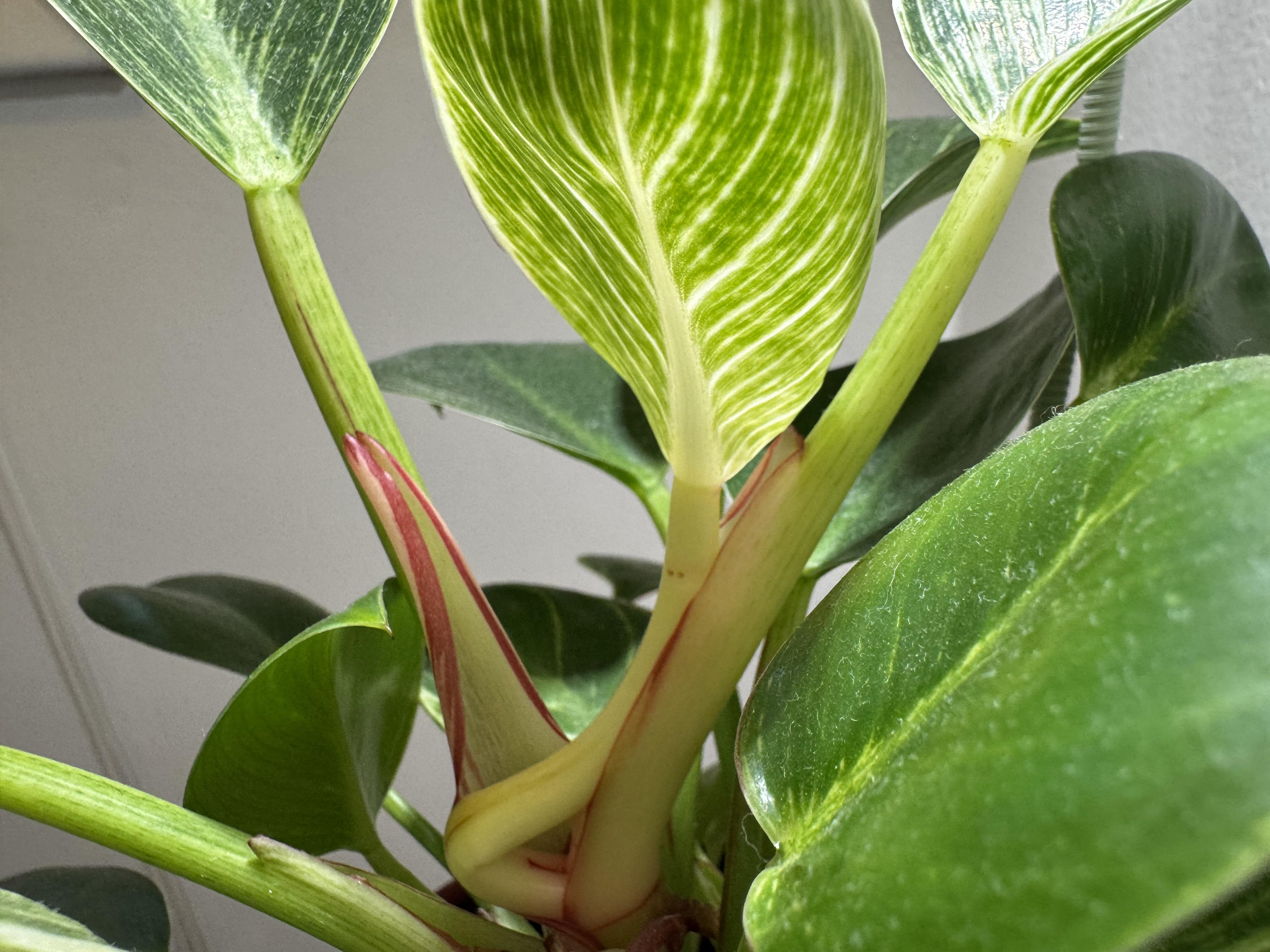
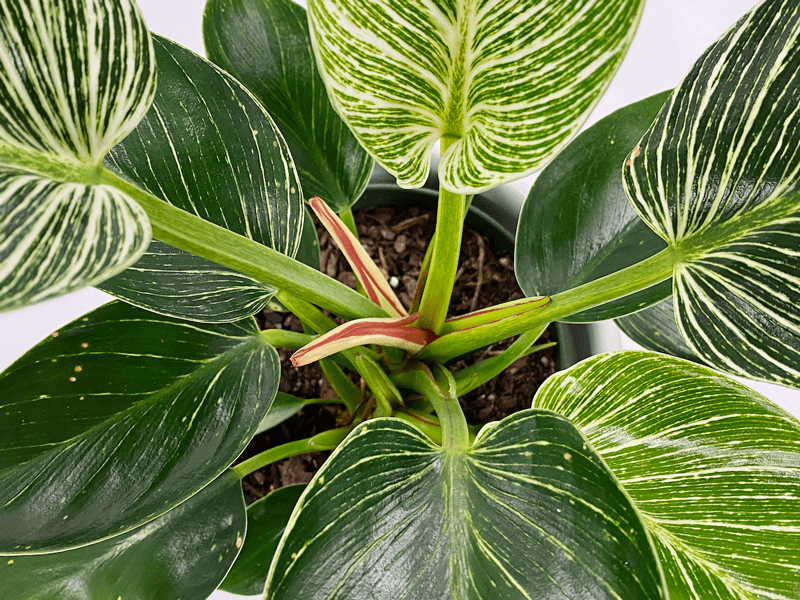
- Don’t force a stuck leaf open. If needed, you can gently mist the sheath and let it loosen naturally.
Leggy growth and fading stripes
This is almost always a light issue.
- Move the plant closer to a bright window, still out of direct sun.
- Add a grow light if your space is dim, especially in winter.
- Rotate the pot regularly for balanced growth.
Reversion to greener leaves
First, increase bright indirect light and give it a few new leaves to respond. If it continues, prune back to a node that produced nicely striped leaves. New shoots often return with better variegation when conditions are right, but there aren’t guarantees with any variegated plant.
Pest scouting
Birkin’s tight, layered growth makes it a cozy hiding place for pests. A quick weekly check saves a lot of grief.
What to look for
- Spider mites: fine webbing, tiny speckling, dusty-looking leaves, especially in dry air.
- Mealybugs: white cottony clusters in leaf joints and along stems.
- Scale: small brown bumps that don’t brush off easily.
- Thrips: silvery scarring, black specks of frass, distorted new growth.
A simple treatment routine
- Isolate the plant.
- Rinse foliage in the shower or wipe leaves with a damp cloth.
- Treat with insecticidal soap or horticultural oil, covering leaf undersides and stems.
- Repeat every 7 to 10 days for 3 to 4 rounds to catch new hatchlings.
Quick care checklist
- Light: bright indirect
- Water: when top 1 to 2 inches are dry
- Soil: chunky, airy, fast-draining
- Fertilizer: half-strength in spring and summer
- Best habit: weekly pest check and pot-lift test for watering
If your Birkin throws you a weird leaf now and then, you’re in good company. Plants are living, opinionated little beings. Give it stable light, breathable soil, and patient watering, and those pinstripes will usually reward you.