
Phalaenopsis in Winter: Watering, Light, and Room Temperature

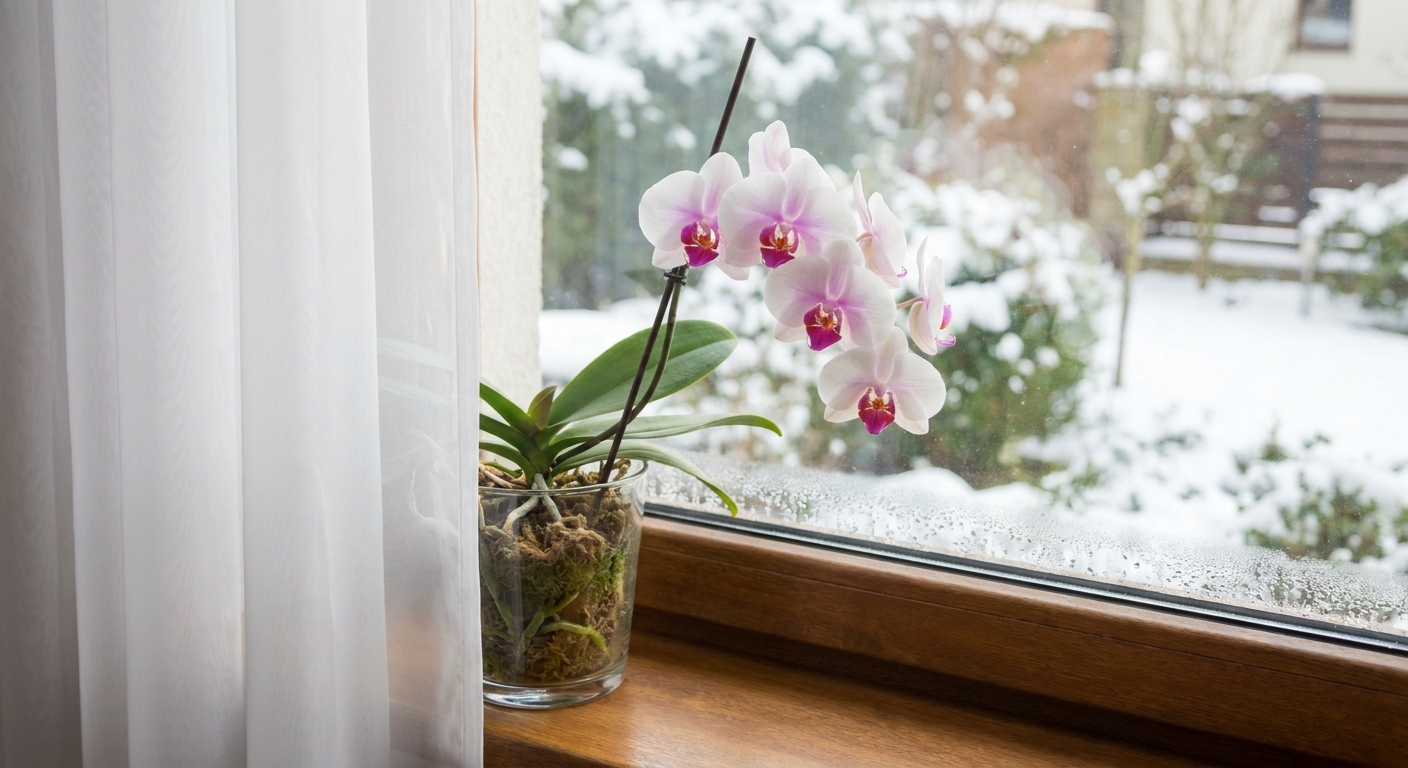
Winter changes everything for a Phalaenopsis (moth orchid), even when it lives on a cozy windowsill. Days get shorter, indoor air gets drier, and the plant naturally slows down. That does not mean your orchid is “failing” or that you need to fuss over it. It means your job shifts from growth mode to gentle, consistent maintenance.
This page is winter-first on purpose: we will focus on watering less at the right time, finding brighter light without cold drafts, and keeping temperatures stable so you can avoid the classic cold-season heartbreak of bud blast.

What winter does to a Phalaenopsis
Most Phalaenopsis orchids are warm-growing epiphytes. In nature they cling to trees, getting frequent moisture and then drying quickly with airflow. Indoors in winter, the big shift is that the plant uses water more slowly because:
- Lower light reduces photosynthesis and slows growth.
- Cooler nights (especially near windows) slow metabolism.
- Evaporation patterns change: heated air is dry, but potting mix can still stay wet longer if the room is cooler or airflow is poor.
Your winter goal is a balancing act: avoid soggy roots while also preventing dehydration from dry heated air.
Winter watering: less often, still thorough
If you remember one winter rule, make it this: water by the roots, not by the calendar. Many people keep the same schedule year-round, and winter is when root rot sneaks in.
How to tell your Phal actually needs water
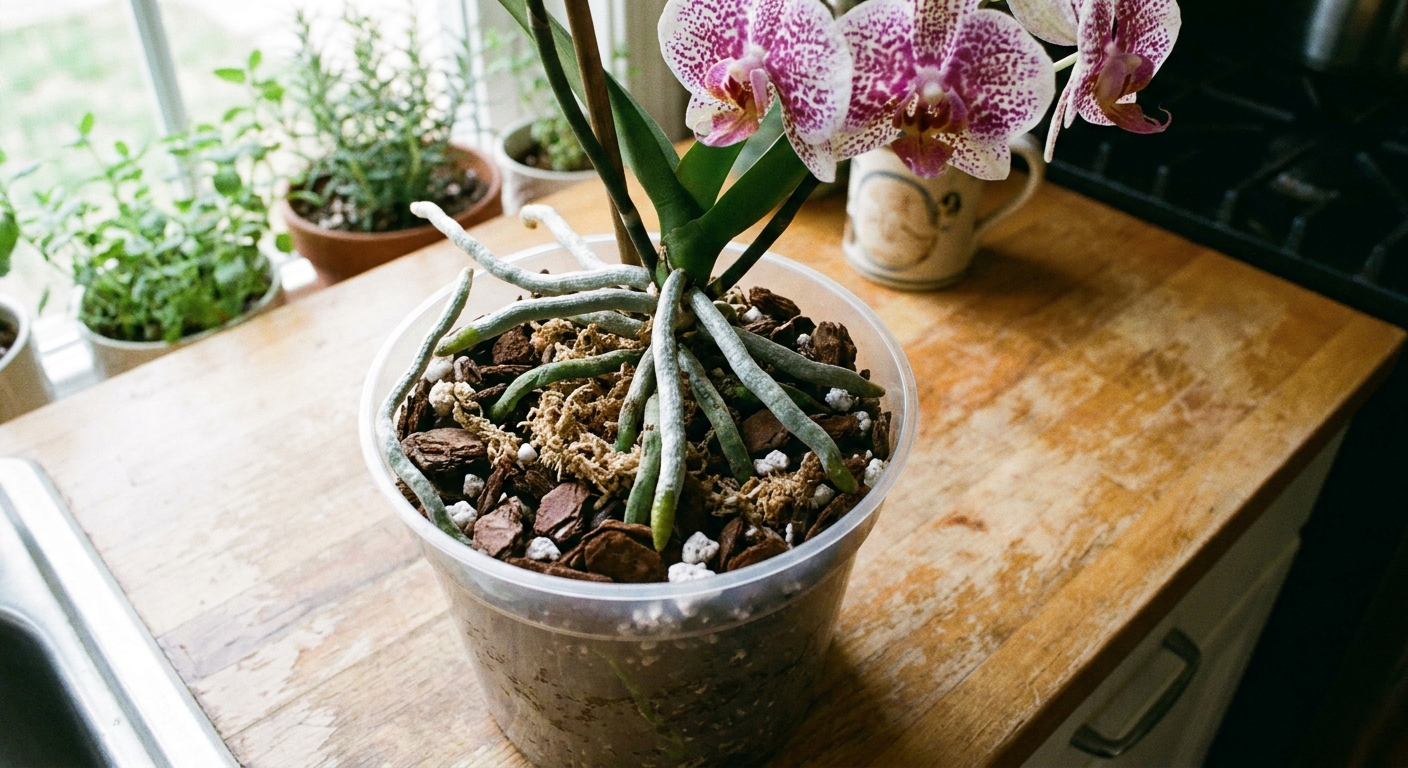
- Roots look silvery or pale through the pot (in clear pots). After watering they should turn plump and green.
- Pot feels light when you lift it.
- Medium is mostly dry through the pot, not just on top. In small pots, check an inch or two down and along the sides.
- Leaves lose a bit of firmness (slight limpness). Do not wait for deep wrinkling, that is a sign you went too far.
In many homes, winter watering lands around every 10 to 14 days. In a warm, bright spot it may be closer to weekly. In a cool room, it can stretch to 2 to 3 weeks.
Best winter method: soak, drain, and do not let it sit
- Take the orchid to the sink.
- Water thoroughly with room-temperature water until it runs freely from the drainage holes. Avoid very cold tap water in winter.
- Let it drain completely for several minutes.
- Empty the cachepot or saucer. Winter is no time for “wet feet.”
If your orchid is in bud or bloom, keep water off the flowers and avoid splashing into the crown. If water does collect in the crown, blot it out with a paper towel to reduce the risk of crown rot.
Winter fertilizer: usually less, sometimes none
When light is low and growth slows, fertilizing should slow down too. If your orchid is not actively growing new roots or leaves, it is often fine to pause fertilizer for winter. If you prefer to keep feeding, use a very dilute dose (about one-quarter strength) and apply it less often, such as every 3 to 4 waterings. Resume regular feeding when you see fresh root tips and new growth in brighter seasons.
One more note: if your home uses a water softener, avoid softened water for orchids. Use rainwater, filtered, or another low-mineral option when possible.
Protecting blooms: preventing bud blast
Bud blast is when buds yellow, shrivel, and drop before opening. In winter, it is most often tied to sudden environmental stress, but a plant’s recent history matters too. Transport shock, a recent repot, low humidity, or inconsistent watering can all contribute.
Common winter triggers
- Cold drafts from leaky windows or a door that opens often.
- Hot, dry blasts from forced-air vents, baseboard heaters, or space heaters.
- Rapid temperature swings day to night, or room to window glass.
- Ethylene gas from ripening fruit nearby (especially apples and bananas) can contribute, particularly in small, less ventilated spaces.
- Underwatering during bud development in very dry homes.
Simple placement rules
- Keep blooming orchids at least 3 feet from heater vents and radiators.
- Do not let leaves or buds touch cold window glass.
- Move orchids before you crack a window for fresh air, even for “just a minute.”
- Keep the fruit bowl on a different counter during bud and bloom time.
If you have a budded spike and must move the plant, do it gently and then leave it alone. Orchids tolerate consistency far better than constant “help.”
Light in winter: bright, not harsh
Phalaenopsis love bright, indirect light. In winter, many homes simply do not provide enough intensity for strong spikes and long-lasting blooms. The good news: winter sun is generally gentler, so you can often place a Phal closer to a window than you could in July. Still, bright sun through glass can burn leaves, especially on clear days.
Best window options (Northern Hemisphere)
- East window: often ideal, bright morning light with lower burn risk.
- South window: excellent in winter, but use a sheer curtain if you get strong midday sun.
- West window: can work, but watch for hot afternoon sun on unusually bright winter days.
- North window: often too dim unless unobstructed and very bright. Consider a grow light.
If you are in the Southern Hemisphere, reverse north and south guidance.
Signs your orchid wants more light
- Leaves are very dark green and growth is slow.
- No spike appears in winter when your plant is mature and otherwise healthy.
- Spikes form but buds are fewer than expected.
Grow lights: a winter sanity saver
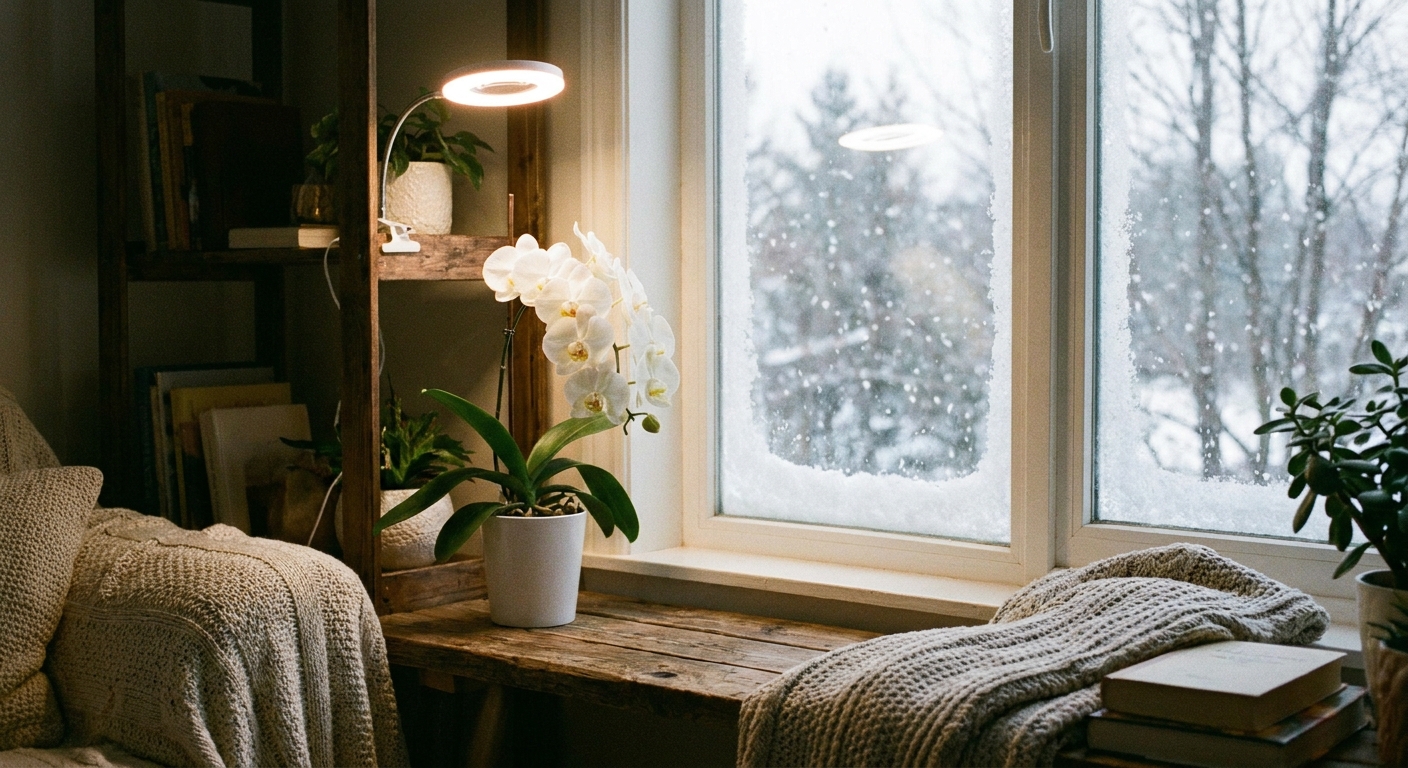
A small LED grow light can be magic in winter, especially in apartments. Aim for 10 to 12 hours of consistent light daily. Keep the light close enough to be useful but not so close that the leaves warm up noticeably.
Room temperature: stable wins
Phalaenopsis are comfortable in typical home temperatures, but winter extremes and sudden swings are what cause trouble.
Comfortable winter temperature range
- Day: about 68 to 78 F (20 to 26 C)
- Night: about 62 to 68 F (17 to 20 C)
A gentle night drop can support spiking on mature plants, but avoid letting the plant sit in a cold pocket. Remember: the air right next to a window can be much colder than the room thermometer suggests. Brief dips a bit below these numbers can happen, but prolonged cold, especially below about 55 F (13 C), increases the risk of damage.
Avoid these winter danger zones
- Directly above or beside a radiator or heat register.
- On a windowsill with icy glass or a drafty frame.
- Right under a ceiling fan in a cool room.
- Near an exterior door that opens frequently.
If your orchid lives near a window for light, create a buffer: set the pot 6 to 12 inches back from the glass, or place it on a table next to the window rather than on the sill.
Humidity and airflow: small tweaks, big payoff
Winter heating can drop indoor humidity to desert levels. Phalaenopsis do not need rainforest humidity to survive, but they do appreciate a little boost, especially while budding and blooming.
Easy humidity options
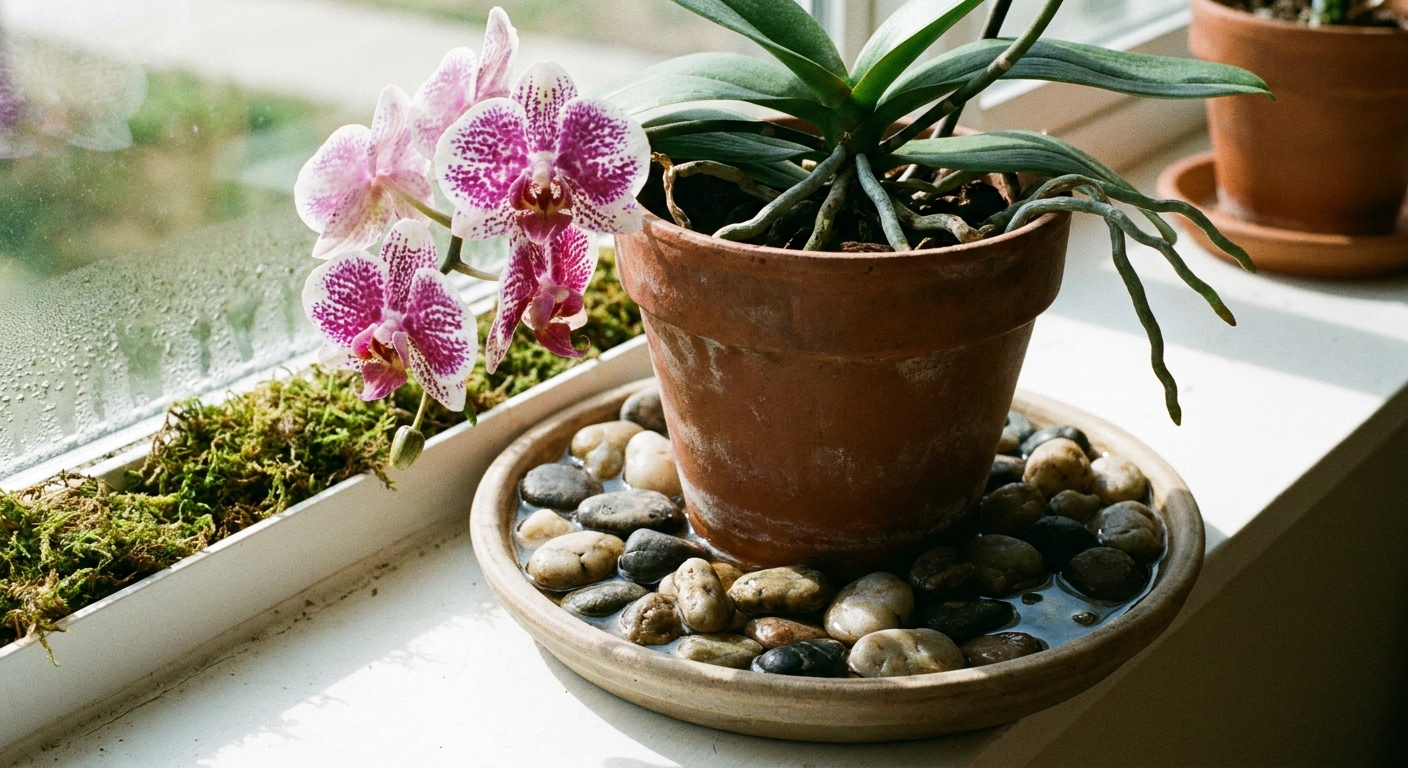
- Humidity tray: a shallow tray with pebbles and water, with the pot sitting on the pebbles above the water line.
- Small humidifier: steady, controllable humidity is great for buds and for your own skin, too.
- Plant grouping: clustering plants gently raises local humidity.
Aim for something like 40 to 60 percent if you can. If you go higher, make sure airflow is decent so the potting mix does not stay wet too long.
Airflow without drafts
Gentle airflow helps bark dry evenly and discourages fungus and rot. If you want a boost, use a small fan in the room on a low setting, aimed away from the plant. Avoid blasting the orchid with cold air or placing it in the path of a draft.
Winter care checklist for a thriving Phal
- Water less often, but water thoroughly and drain completely.
- Check roots before watering, especially in a cool room.
- Fertilize lightly or pause if growth is minimal.
- Increase light by moving closer to a bright window or adding a grow light.
- Stabilize temperature and keep buds away from drafts and heater blasts.
- Boost humidity gently if your home air is very dry.
- Add mild airflow to help the pot dry evenly, but avoid cold drafts.
- Leave spikes alone once buds form. Consistency protects blooms.
Troubleshooting: quick winter fixes
Buds turning yellow and falling
Most likely a draft, heater blast, or rapid temperature shift. Move the orchid to a more stable spot with bright light. Also check humidity, watering consistency, and whether the plant was recently moved, shipped, or repotted.
Wrinkled leaves but the pot feels wet
This often points to root trouble, not thirst. Roots may be rotting and unable to take up water. Let the mix dry more between waterings and consider checking the root system if symptoms continue.
Potting mix stays wet forever
Increase airflow, reduce watering frequency, and ensure the pot drains freely. If the bark is old and breaking down into smaller pieces, repotting after blooming may be the best fix.
No spike in winter
Usually a light issue. Increase brightness gradually, and keep nights a touch cooler than days if possible. Also confirm your orchid is mature enough and not recovering from recent stress.
A gentle winter mindset
I like to think of winter orchid care as a quiet conversation. Your Phalaenopsis is not asking for constant attention. It is asking for good light, comfortable warmth, and water only when it is truly ready. If you give it that, it will do what it does best: bloom beautifully when the rest of the world is sleeping.
And if you lose a bud or two along the way, take a breath. Orchids teach patience better than any plant I know. Adjust the environment, keep the roots healthy, and your Phal will forgive you.