
Peony Fall Cleanup

Peonies are the kind of perennial that make you feel like a gardening genius in June and then quietly test your follow-through in October. The good news is that fall peony care is simple once you know the why behind it. The big goals are: remove disease hiding places, protect roots where winters are rough, and divide only when your plant is truly asking for more elbow room.

When to cut back peonies in fall
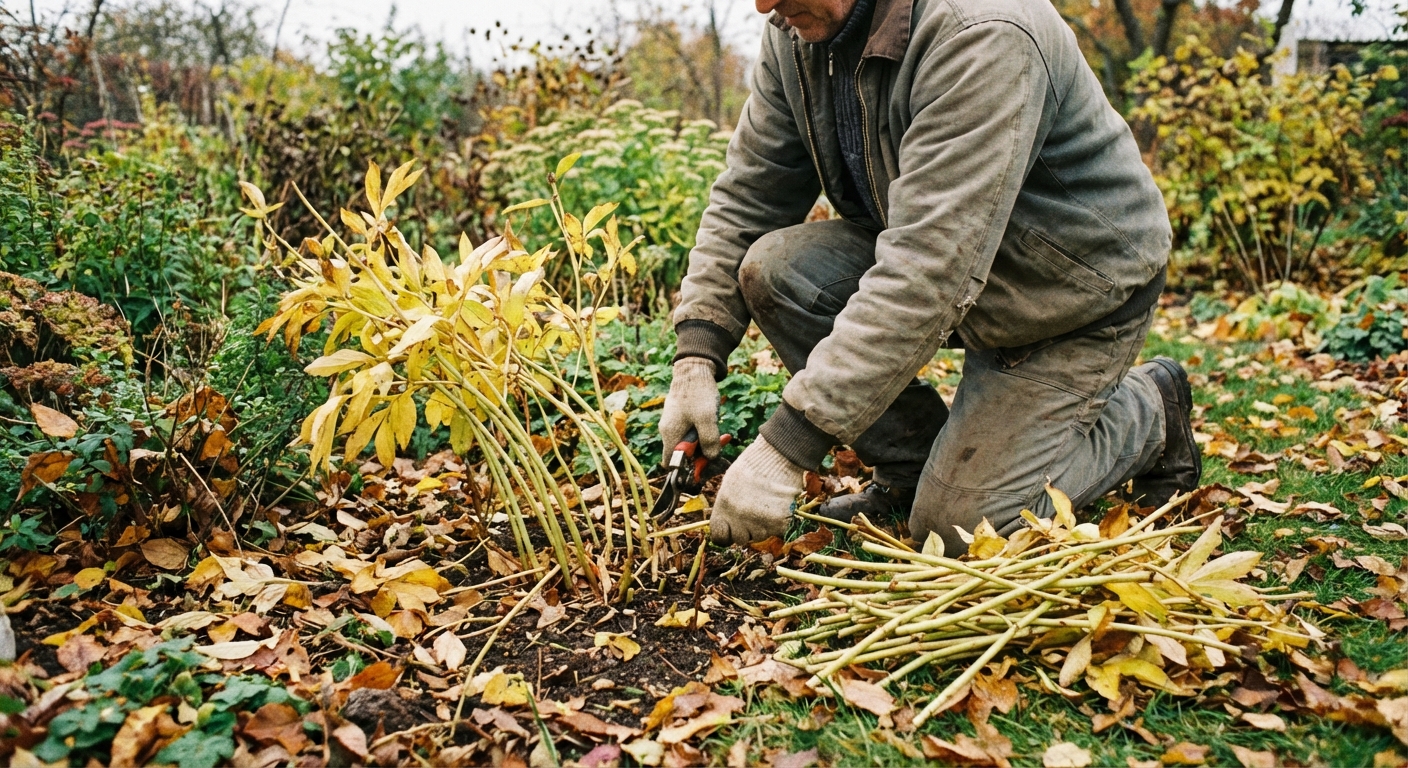
For most gardens, the sweet spot is after the first hard frost or when the foliage has turned mostly yellow and is starting to flop. By then, the plant has had time to move energy down into the crown and roots for next year.
Quick timing guide
- Cold zones (roughly USDA 3 to 5): Often late September through October, depending on your first frost.
- Moderate zones (roughly USDA 6 to 7): Usually October into November.
- Warm zones (roughly USDA 8): Wait until foliage naturally declines, often November to December. If it stays green, do not force it early unless disease pressure is high.
If your peony foliage looks healthy, waiting for frost is ideal. If you see obvious disease (more on that below), it is fine to cut back sooner and clean up thoroughly.
Disease-aware cleanup: what you are preventing
Peony problems often start because old foliage becomes a cozy winter hideout for spores and fungal gunk. Fall cleanup is not about making things look tidy. It is about breaking the disease cycle before spring.
Common issues that linger in plant debris
- Botrytis blight: Blackened shoots, gray fuzzy mold in wet weather, buds that brown and fail to open.
- Leaf blotch: Purplish-brown spots that can merge into larger blotches, often showing up in summer and worsening toward fall.
- Powdery mildew: White, dusty coating late in the season, usually cosmetic but still worth cleaning up.
Even if your peony looked fine, spores can still be present. That is why the safest default is a clean, low-to-the-ground cut once the plant is done for the season.
How to cut back peonies (step by step)
You do not need anything fancy, just clean tools and a calm little rhythm. I usually talk to my peonies while I work. They never answer, but I swear they listen.
Tools
- Bypass pruners or sturdy garden shears
- Gloves
- Bucket or tarp for debris
- Disinfectant for tools (70% isopropyl alcohol or a disinfecting spray)
Steps
- Choose a dry day if possible. Wet foliage spreads spores more easily.
- Cut stems down to 1 to 2 inches above soil level. Try not to leave hollow stem stubs standing tall, since they can trap moisture.
- Gather every leaf and stem piece. Do not leave a ring of debris around the crown.
- Sanitize pruners if you suspect disease, especially between plants.
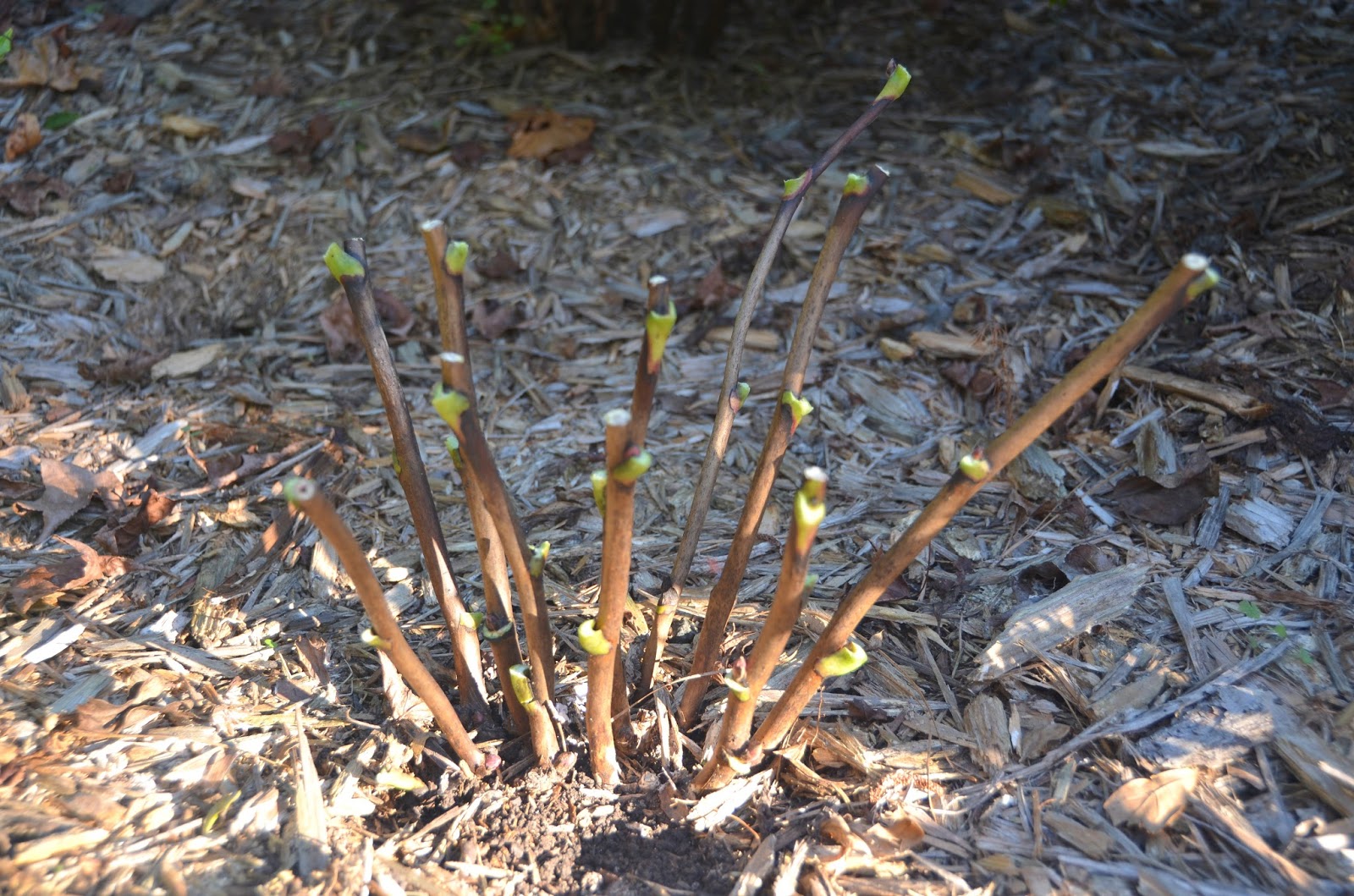
Important: This advice is for herbaceous peonies (the classic garden peonies that die back to the ground). Tree peonies should not be cut to the ground in fall. Itoh (intersectional) peonies act more like herbaceous peonies for fall cleanup, but they can have woodier bases, so cut back to just above the lowest healthy growth and avoid hacking into the crown.
Compost or trash: what to do with peony foliage
This is where gardeners get split into two camps, and I get it. Composting feels right. But peonies are one of those plants where being extra careful can save you years of frustration.
When it is okay to compost peony leaves
- The plant had no visible disease all season.
- Your compost pile gets hot (consistently, not just in theory) and you manage it actively.
When to bag and trash instead
- You saw botrytis, leaf blotch, or lots of spotting.
- You have had repeating peony issues year after year.
- You use a cold or passive compost pile that may not break down pathogens reliably.
If you are unsure, choose the safer route and dispose of it. Your compost is precious, and peony diseases are not invited.
The ant myth: do ants help peonies bloom?
Let us gently retire a persistent garden story: ants do not make peony buds open. Buds open because the plant is ready and temperatures cooperate.
So why are ants always on peonies?
Peony buds produce a sweet, sticky nectar on the outside of the bud. Ants love it. In return, ants may shoo away a few small pests while they snack, but it is not a required partnership for blooming.
If ants bother you on cut flowers, give blooms a gentle shake or a quick rinse in cool water. In the garden, I leave them be. They are just having their seasonal dessert.
Mulching peonies for winter (especially in cold zones)
Peonies are tough, but winter can be sneaky. The real danger is often not deep cold. It is freeze-thaw cycles that heave crowns up and down, stressing buds and roots.
When to mulch
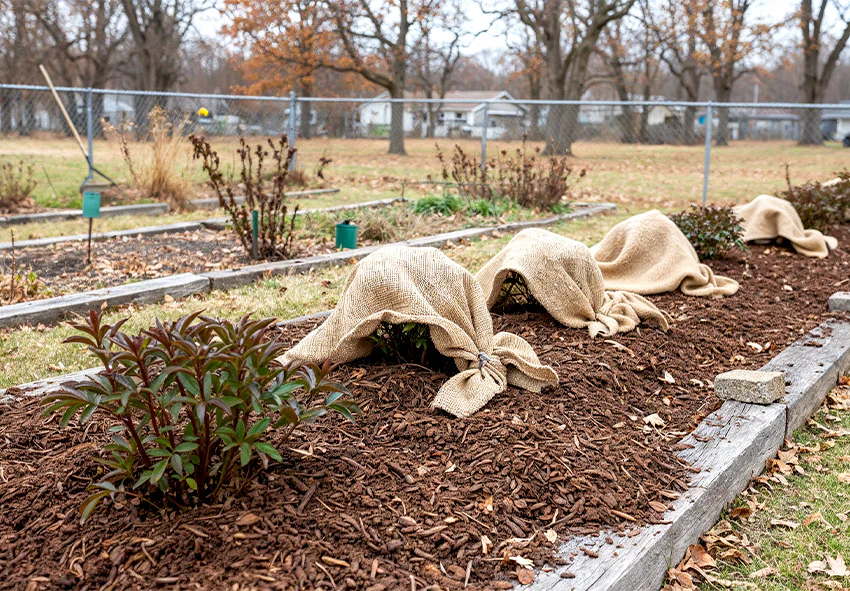
Mulch after the ground starts to cool and you have had a frost or two. If you mulch too early, you can trap warmth and moisture, which encourages rot.
How much mulch
- Zones 3 to 5: 2 to 4 inches of loose mulch is usually plenty.
- Zone 6: 1 to 2 inches can help with heaving, especially in exposed spots.
- Zones 7 to 8: Often no mulch is needed for cold protection, but a light layer can moderate soil moisture.
Best mulch materials
- Chopped leaves (not matted)
- Pine needles
- Clean straw (not hay)
- Fine bark or shredded bark
Keep mulch from smothering the crown. Think of a donut, not a volcano. Pull mulch back an inch or two from the exact center where stems emerge.
When to divide peonies (and when to leave them alone)
Peonies are not like daylilies that beg for dividing every few years. Peonies prefer to settle in and stay put. Divide only when you have a clear reason.
Signs your peony is crowded and ready
- Fewer blooms than in past years, even with good sun
- Smaller flowers and weaker stems
- A dense clump with lots of thin, unproductive stems
- You need to move it for construction or redesign
Best time of year to divide
Early fall is ideal, usually late August through September in many climates, or about 6 weeks before the ground freezes. This gives roots time to heal and start establishing before winter.
Spring division is possible in a pinch, but it often sets plants back more and can reduce blooms for a year or two.
How to divide peonies (timing, tools, and technique)
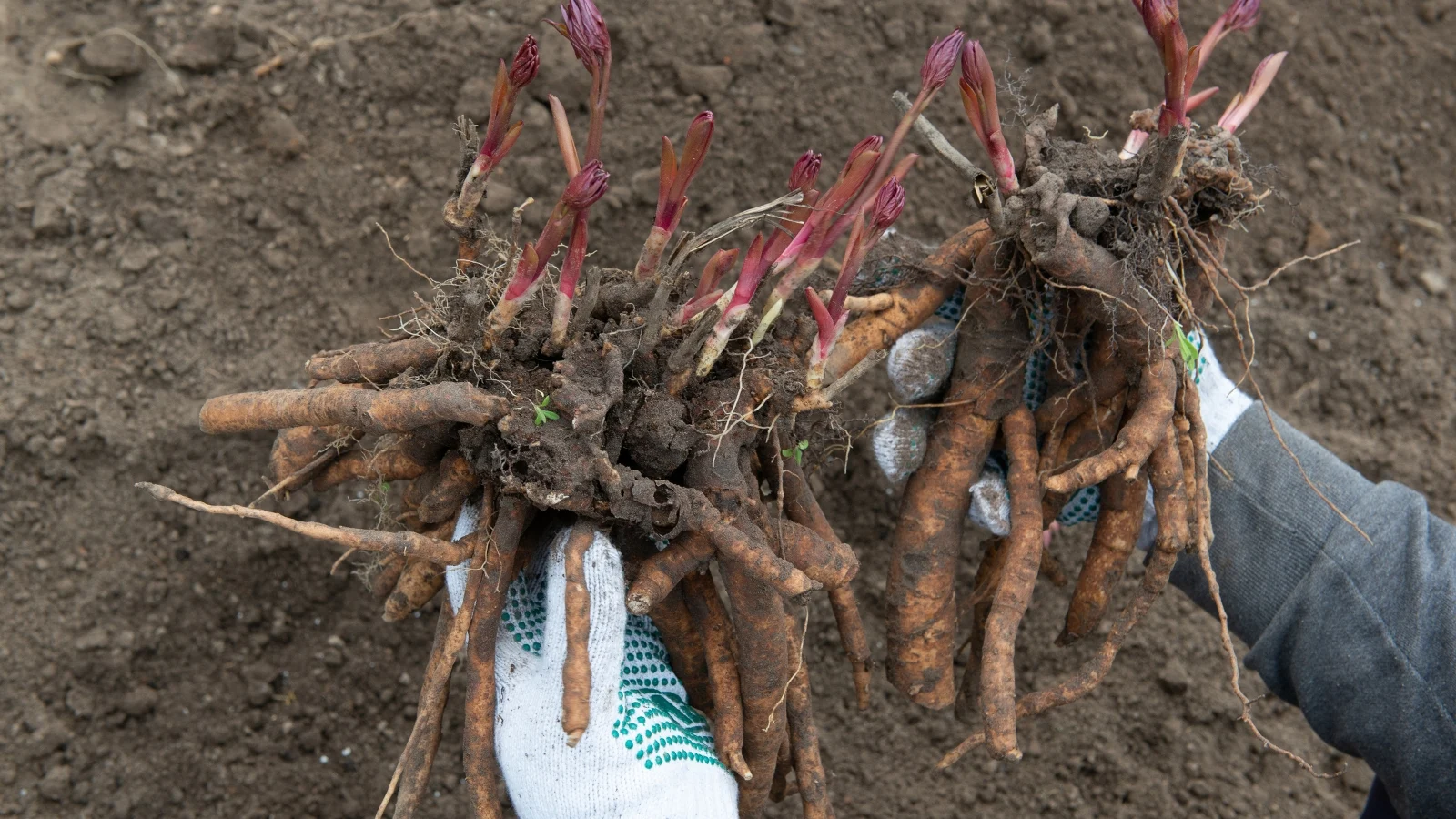
Division is part surgery, part treasure hunt. You are looking for the crown with its pinkish buds, often called eyes. Each division needs enough eyes and roots to rebound.
What you will need
- Spade or digging fork (I prefer a fork in heavy soil to reduce root damage)
- Pruners
- Soil knife or sturdy knife for cutting divisions
- Bucket of water or hose to wash soil off roots
- Alcohol for tool cleanup
Step-by-step division
- Water the plant the day before. Damp soil releases roots more easily.
- Cut stems back to a few inches so you can see what you are doing.
- Dig wide. Start 8 to 12 inches from the crown and go down deep, then gently lift.
- Wash or shake off soil so the eyes are visible.
- Split into divisions with 3 to 5 eyes each (2 can work, but it is slower). Make sure each piece has a solid chunk of root.
- Let cuts dry in the shade for an hour or two if they are very wet. This helps reduce rot.
- Replant promptly at the proper depth.
The planting depth that makes or breaks blooms
This is the peony rule that is worth being picky about. If you plant too deep, you can get gorgeous leaves and no flowers. If you plant too shallowly in very cold climates, winter can be harder on the buds.
- Cold climates (zones 3 to 5): Set eyes about 1.5 to 2 inches below the soil surface.
- Moderate climates (zones 6 to 7): Aim for about 1 to 1.5 inches below the surface.
- Warm climates (zones 8 and up): Stay very shallow, about 0.5 to 1 inch below the surface, to encourage blooming.
After planting, water deeply and mark the spot. New divisions may take a season or two to bloom well, which is completely normal. They are building roots first.
Fall cleanup checklist
- Wait for frost or natural yellowing, unless disease forces earlier action
- Cut herbaceous peonies to 1 to 2 inches above soil
- Remove all debris from the bed
- Compost only if foliage was healthy and your compost runs hot
- Trash diseased foliage to prevent reinfection
- Mulch after soil cools, especially in zones with freeze-thaw cycles
- Divide in early fall only if the clump is crowded or needs moving
- Replant divisions at the right depth for your climate
If you do just these few things, your peonies will head into winter clean, tucked in, and ready to wake up strong. And come spring, when those red shoots poke up like little candles, you will feel that quiet satisfaction that only gardeners understand.