
Passion Flower Vine Care in Pots and on Trellises

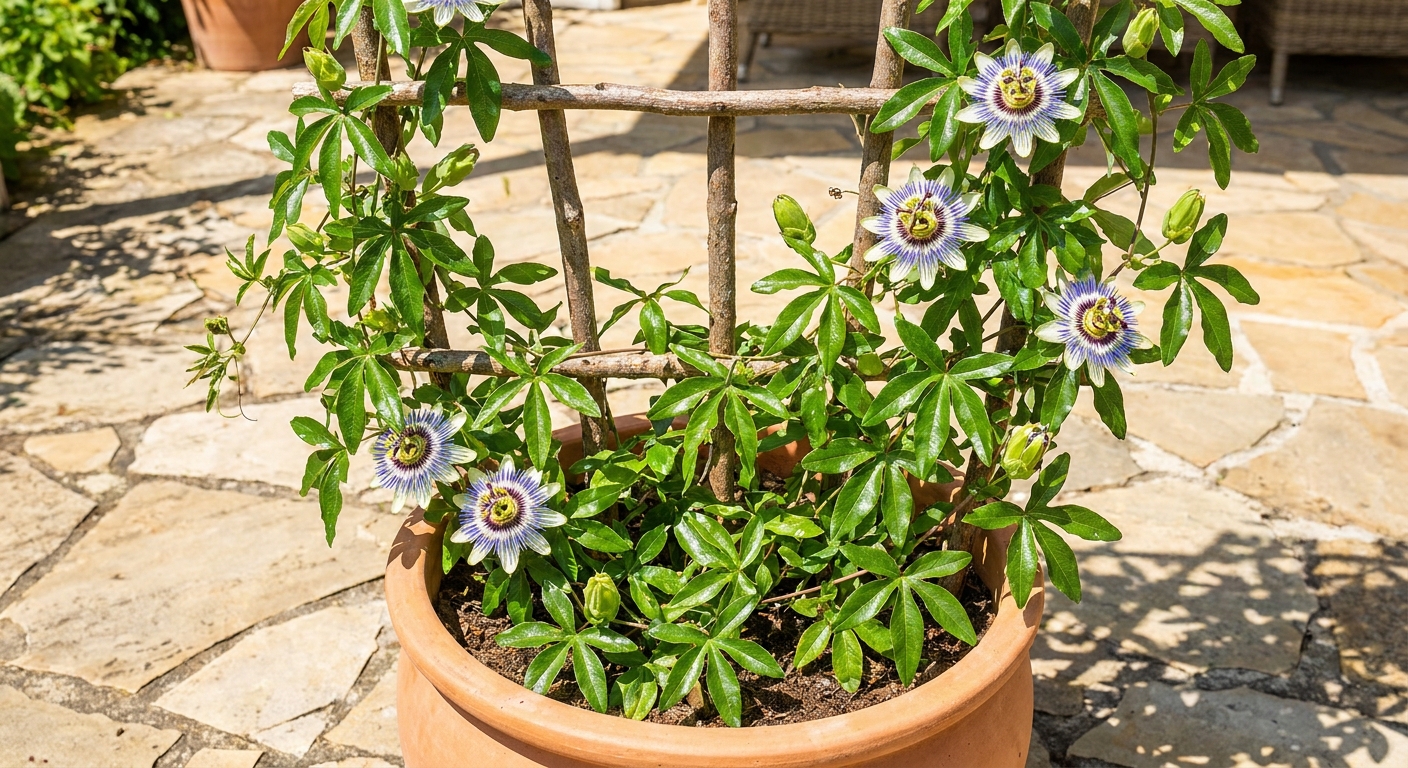
Passion flower vines (Passiflora) are the kind of plant that makes you stop mid-watering can and stare. The blooms look like something from another planet, and the vines can turn a bare balcony railing into a leafy privacy screen in one season. The trick, especially in containers, is giving them enough root room, strong support, and a winter plan that matches the species you chose.

Choose the right Passiflora
Passion flowers are a big family, and their cold tolerance varies wildly. Before you fall in love with a flower photo, check the label for the exact species or cultivar, then look up its USDA hardiness range. In containers, roots are more exposed to cold and wind, so plan for reduced hardiness compared with in-ground planting, often by 1 to 2 zones depending on pot size, material, and how sheltered the plant is.
Common species and what to expect
- Passiflora incarnata (maypop): One of the most cold-hardy options. Often root-hardy in cold winters when planted in the ground, but in a pot it still appreciates protection. Many cultivars are grown for edible fruit.
- Passiflora caerulea (blue passionflower): Popular ornamental with better cold tolerance than many tropical types. In mild climates it can overwinter outdoors with protection, but containers need extra care.
- Passiflora edulis (purple or yellow passionfruit): The classic fruiting passionfruit. Generally tender and happiest where winters are mild, or where you can bring the pot inside before frost. It often needs real heat and a long season to fruit well, especially in containers.
- Hybrids and named cultivars: Many are grown for flower color and size, and their hardiness can be all over the map. Treat them as marginal unless the tag gives clear guidance.
If your goal is fruit, make sure you are buying a fruiting type and not just a showy ornamental. Plenty of passion flowers bloom beautifully and still do not set edible fruit reliably in containers.
Pot sizing
In a small pot, passion flower vines swing between dry and stressed and wet and sulky. A larger container steadies moisture, buffers temperature, and supports consistent blooming.
Good container sizes
- Minimum for a young vine: 12 to 14 inches wide (about 5 to 10 gallons, depending on shape).
- Better for long-term growth and flowering: 16 to 20 inches wide (about 10 to 20 gallons).
- For fruiting types: lean larger rather than smaller. Fruit production is energy-intensive and the vine will punish a cramped root zone with flower drop.
Choose a pot with excellent drainage holes. If you use a saucer, empty it after watering so roots are not sitting in a puddle.
Container mix that works
Aim for a mix that holds moisture but never turns swampy.
- High-quality potting mix as your base
- Extra perlite or pumice for air space
- A handful of compost or worm castings for gentle nutrition
Avoid heavy garden soil in containers. It compacts, drains poorly, and can encourage root problems.
Trellis and support
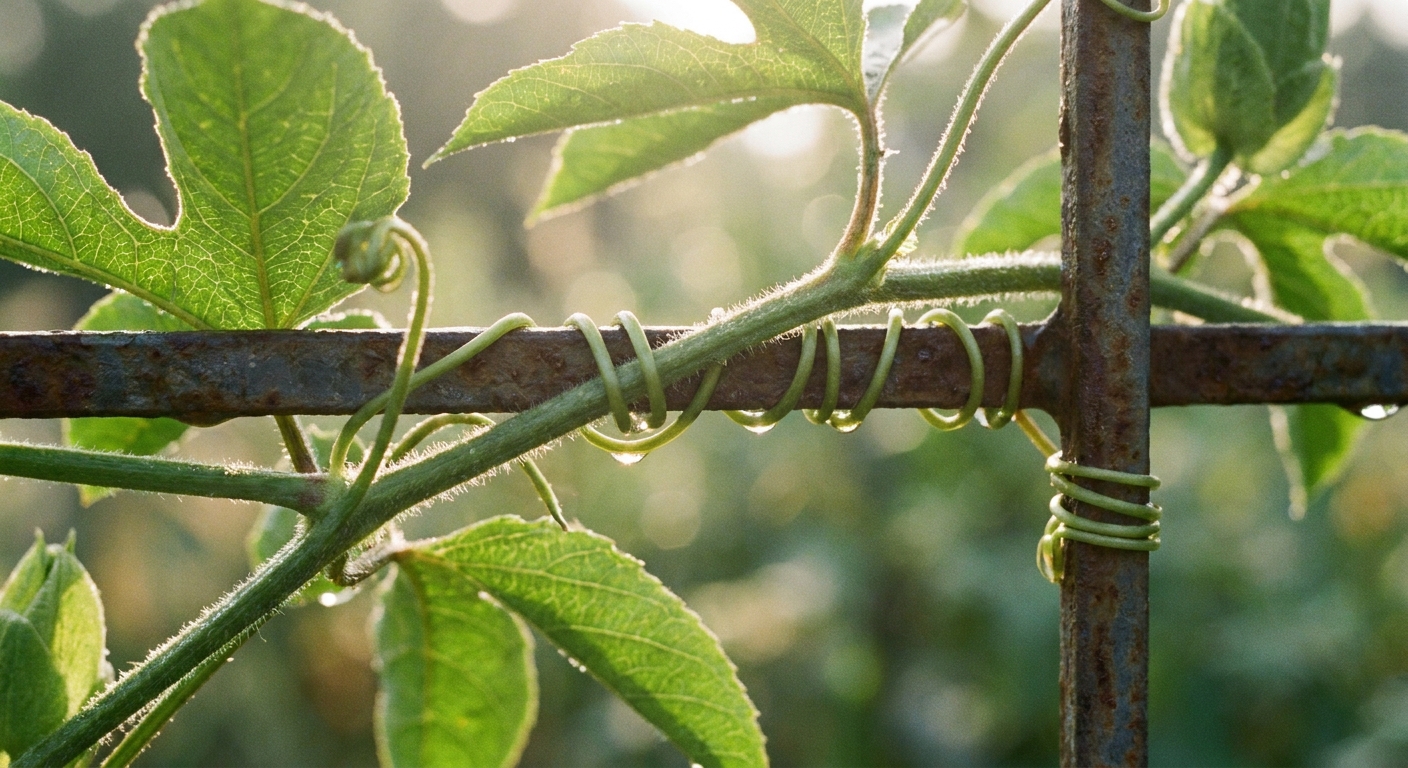
Passiflora climbs with tendrils, and once it gets going it can pull like a determined toddler. Give it something sturdy from day one so you are not wrestling a flopping vine later.
Trellis sizing and materials
- Height: 5 to 7 feet is a sweet spot for containers. Taller is fine if it is anchored safely.
- Strength: use thick bamboo, a wooden lattice, cattle panel, or metal trellis. Lightweight plastic supports often bow under the growth.
- Attachment: if possible, secure the trellis to the pot and a wall or railing. Top-heavy pots tip, especially in wind.
As the vine grows, gently guide new stems through the trellis openings. If a tendril wraps around something delicate like a string of lights, carefully redirect it early before it tightens.
Sun and placement
Most passion flowers bloom best with plenty of light, but containers heat up faster than garden beds. Your goal is bright light without cooking the root zone.
- Best bloom: 6 to 8 hours of sun is ideal for many varieties.
- Hot climates: morning sun with light afternoon shade can help prevent crispy leaves and bud drop.
- Cooler climates: give the warmest, sunniest spot you have, like a south-facing wall that reflects heat.
If your vine is all leaves and no flowers, insufficient light is one of the first suspects.
Watering in containers
In pots, passion flowers appreciate consistent watering. The fastest way to an unhappy vine is letting it dry bone-dry, then flooding it.
A simple watering rhythm
- Water deeply until you see water run from the drainage holes.
- Water again when the top 1 to 2 inches of mix feels dry.
- During peak summer growth, that might mean watering every day or two in smaller pots.
Mulching the surface with shredded bark or straw can help slow evaporation and keep the root zone cooler.
Feeding
These vines can grow fast, and fast growth needs steady nutrition. That said, too much nitrogen can turn your plant into a leafy jungle with fewer flowers.
What to feed
- In spring: a balanced fertilizer or a light top-dressing of compost to wake things up.
- As buds form and flowering begins: shift to a bloom-friendly fertilizer that is lower in nitrogen, with moderate phosphorus and higher potassium, or simply use a labeled bloom formulation.
- During heavy bloom: feed lightly but regularly, following label rates. In containers, more is not better.
If you are seeing lots of green growth with sparse blooms, ease up on high-nitrogen feeds and make sure the vine is getting enough sun.
Hand pollination for fruit
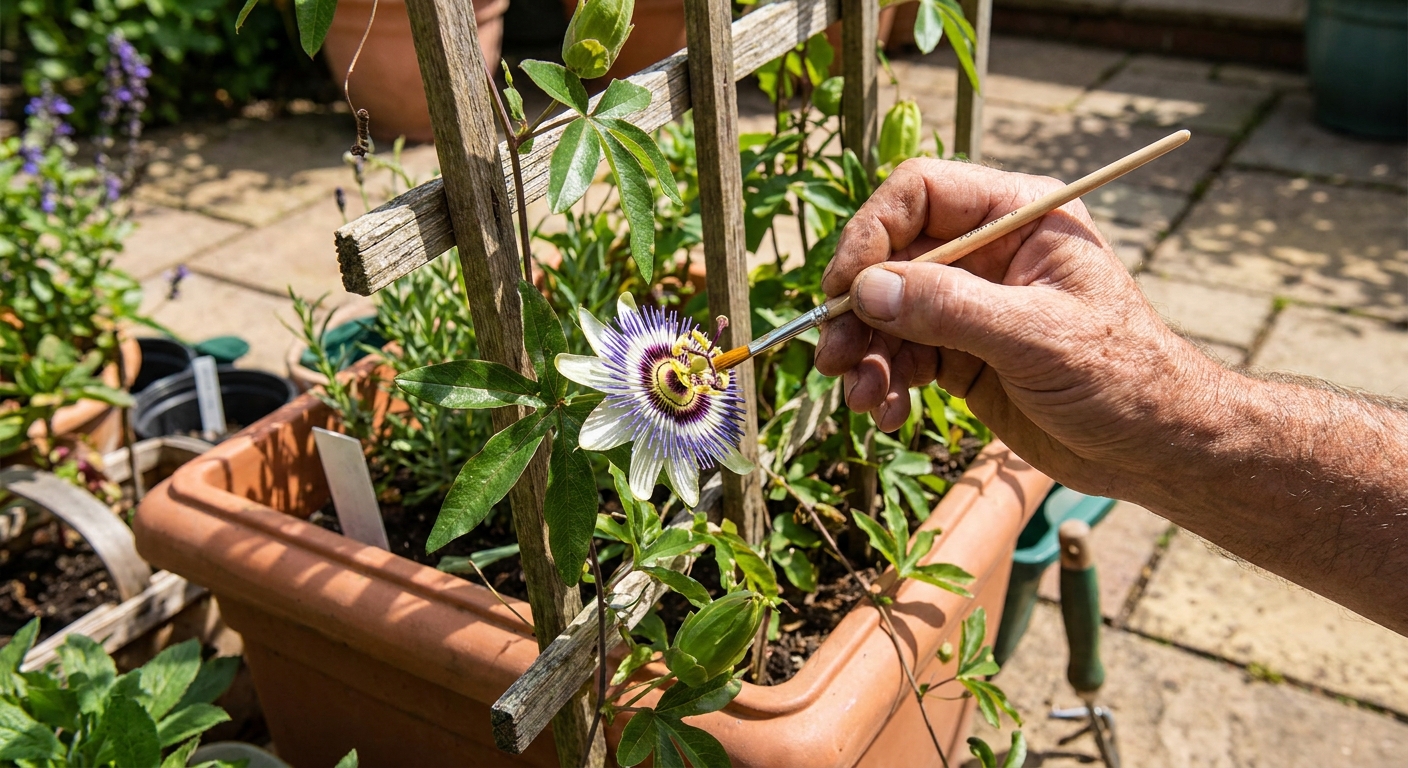
If you are growing a fruiting passionflower in a container, pollination is often the missing step. Balcony gardens can be surprisingly low on pollinators, and some types need cross-pollination or just benefit from a little human help. Also note that fruit set in pots can be limited by sun and heat, vine maturity, and whether you have two genetically distinct plants when a cultivar prefers a partner.
How to hand pollinate
- Go out mid-morning when the flower is fully open and dry.
- Use a small paintbrush or a cotton swab.
- Collect pollen by brushing the anthers (the pollen-bearing parts).
- Transfer pollen to the stigma (the central structure that receives pollen). Gently dab or sweep.
- Repeat for a few flowers over several days for better odds.
Some Passiflora set fruit more reliably with pollen from a different plant of the same species. If your vine blooms but never fruits, consider adding a second compatible plant, or confirm whether your cultivar is self-fertile.
Pruning and training
Pruning keeps container vines tidy, encourages branching, and helps direct energy toward flowers instead of endless wandering stems. A helpful rule of thumb is that many commonly grown passionflowers bloom best on fresh, new growth. That is why the main shaping cut is usually best timed for late winter or early spring, right before the vine wakes up. That said, some species and hybrids flower differently, and a hard chop can delay blooms, so if you are unsure, prune in stages and watch how your plant responds.
When to prune
- Late winter to early spring: do your main structural prune. Cut back lanky stems, remove weak growth, and set the framework you want on the trellis.
- After a main flush of flowers: lightly prune to shape the plant, tidy stray shoots, and encourage fresh flowering stems.
- Anytime: remove dead, damaged, or tangled stems when you see them.
- For fruiting types: avoid heavy pruning while fruit is developing. Focus on training and light thinning instead.
Use clean, sharp pruners and cut just above a leaf node. If you have ever apologized to a fern, you will understand why I also tell my passion vine, “You will thank me later.” It usually does.
Runners and rapid growth
Passionflower vines can be enthusiastic to the point of chaos. In a container, that energy needs boundaries.
Keep it contained
- Train early: wrap or weave new growth onto the trellis weekly so it does not grab nearby plants.
- Pinch tips: pinching the growing tips can encourage branching and a fuller look.
- Redirect and prune runners: if stems shoot out beyond your space, prune back to a node and re-tie the vine where you want it.
- Watch for sneaky rooting: long stems can sometimes find their way into adjacent pots or beds. If you want strict container growth, keep stems off soil surfaces.
Pests and wildlife
You are not the only one who loves Passiflora. Passionflowers are famous host plants for butterflies, including Gulf fritillaries in many regions. If you spot spiky caterpillars munching leaves, do not panic. They may be future butterflies, and a healthy, established plant can usually handle some feeding. Caterpillar colors and patterns vary by species and region, so think “spiky and determined” rather than one exact look.
What to watch for
- Butterfly caterpillars: welcome guests. If the vine is small and getting stripped, you can hand-move a few caterpillars to another passionflower (if you have one) or protect a young plant temporarily with insect netting.
- Aphids, spider mites, and whiteflies: common container pests, especially in hot, dry conditions or when overwintered indoors. Start with a strong rinse of water, then use insecticidal soap if needed.
- Snails and slugs: can chew tender new growth in damp spots. Hand-pick or use appropriate baits thoughtfully.
A gentle rule that keeps you out of trouble: avoid broad-spectrum pesticides on passionflowers. They can take out the good guys along with the bad, and if you are raising future butterflies, you do not want pesticide residues on the leaves.
Winter protection
This is where container-grown passionflowers either become a long-term love story or a one-season fling. Even hardy types can suffer in pots because roots freeze faster.
Options that actually work
- Bring it inside before hard frost: best for tender species like many forms of Passiflora edulis. A bright window, sunroom, or heated greenhouse is ideal.
- Indoor setup tips: give it the brightest window you have (or use a simple grow light), keep it a bit cooler to slow growth when possible, and check the plant closely for pests before it comes indoors. A rinse in the shower and a quick inspection of leaf undersides can save you weeks of winter aphid drama.
- Cool, protected storage: for semi-dormant overwintering, a cool garage or basement can work if the vine is kept barely moist and above freezing. Expect some leaf drop.
- Insulate outdoors in mild climates: move pots against a sheltered wall, wrap the container with burlap and leaves, and mulch heavily on the soil surface. Protecting the pot matters as much as protecting the top growth.
- Reduce watering: as growth slows, water less. Cold plus wet soil is a common root rot recipe.
In spring, wait until nights are reliably mild before moving the plant back outside. Then prune out winter damage and restart feeding once you see fresh growth.
Quick troubleshooting
- Lots of leaves, few flowers: not enough sun, too much nitrogen, or too much shade in late afternoon.
- Buds drop before opening: inconsistent watering, heat stress, or a sudden change in location.
- Yellowing leaves in a pot: check drainage first, then consider a gentle feeding and evaluate watering habits.
- No fruit: pollination issue, not a fruiting species, not enough heat or sun, vine not mature yet, or it needs a second compatible plant.
- Ragged leaves: could be caterpillars (often butterflies) or chewing pests like slugs. Check the plant before you treat it.
- Wilted growth with wet soil: think root trouble. Let the mix dry slightly, confirm drainage holes are clear, and consider repotting into a fresher, airier mix if the roots have been staying soggy.
- Spots or mildew on leaves: improve airflow, avoid wetting foliage late in the day, and thin crowded growth. Fungal issues are more common when plants are packed tightly against a wall with little breeze.
A simple care plan
If you want the short version to stick on your mental fridge, here it is:
- Pot: go bigger than you think, with excellent drainage.
- Support: sturdy trellis, anchored against wind.
- Light: full sun to partial shade depending on heat.
- Water: deep and consistent, never swampy.
- Feed: balanced in spring, lower nitrogen bloom formula during flowering.
- Fruit: hand pollinate if needed, and remember heat and maturity matter.
- Prune: main prune in late winter or early spring, then light shaping after flowering.
- Wildlife: expect caterpillars, and skip broad-spectrum pesticides.
- Winter: protect the roots, and bring tender types inside before frost.
Give your passion flower a strong start, and it will repay you with those wild, mesmerizing blooms that make even a small space feel like a secret garden.