
Oxalis (Purple Shamrock) Care Indoors

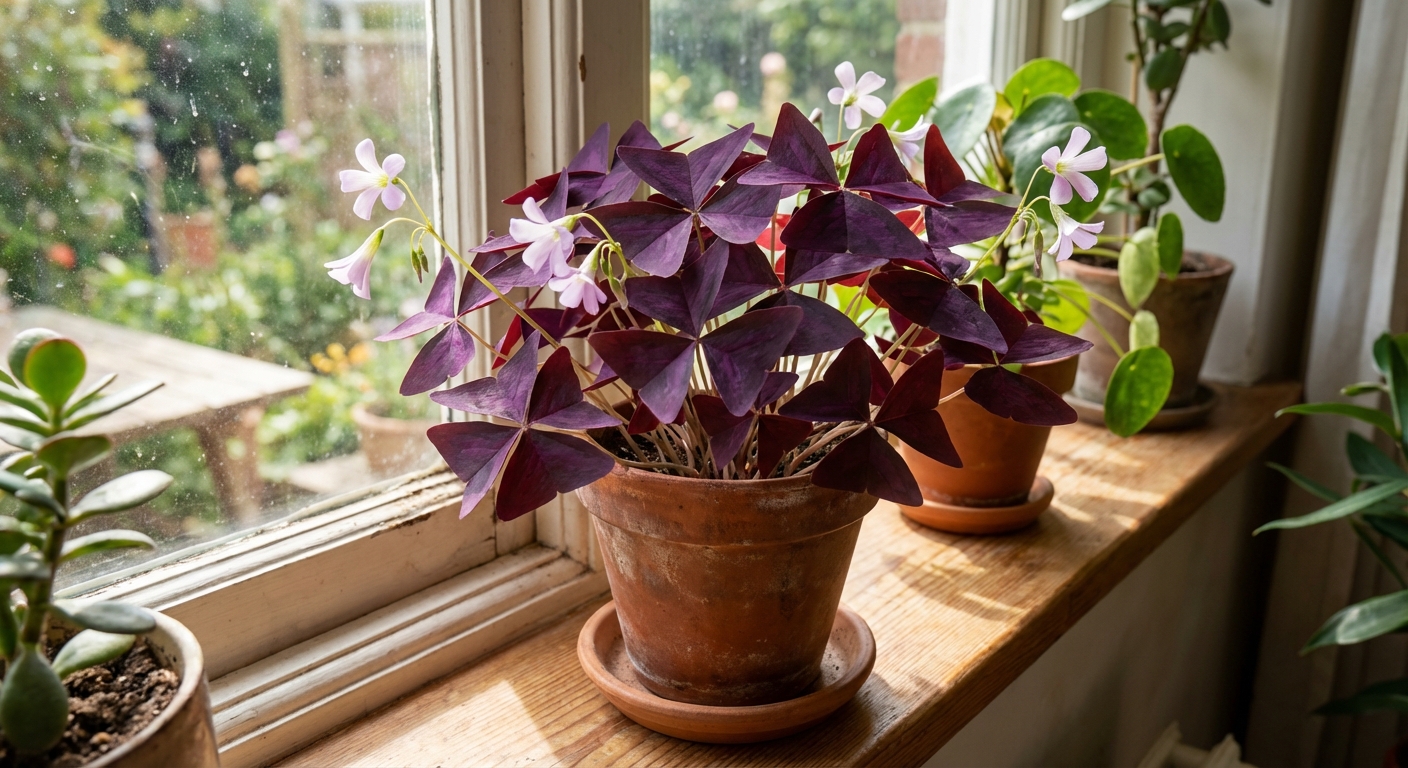
Oxalis, the purple shamrock plant, is one of those houseplants that makes you feel like a gardening wizard. The leaves fold up at night like little butterflies at rest, the color is rich and velvety, and when it is happy it sends up cheerful blooms on skinny stems like it is celebrating something.
Then one day it flops. Leaves yellow. Stems collapse. You do everything a responsible plant parent does, and it just looks worse.
Here is the truth that saves most Oxalis owners: your plant is probably not dying. It may be going dormant. Oxalis has a built-in rest cycle that can feel like betrayal if no one warned you. That said, rot and pests can mimic dormancy, so I will show you how to tell the difference. Let me walk you through the care basics, the dormancy rhythm, and the easy way to wake it back up.
Meet your Oxalis
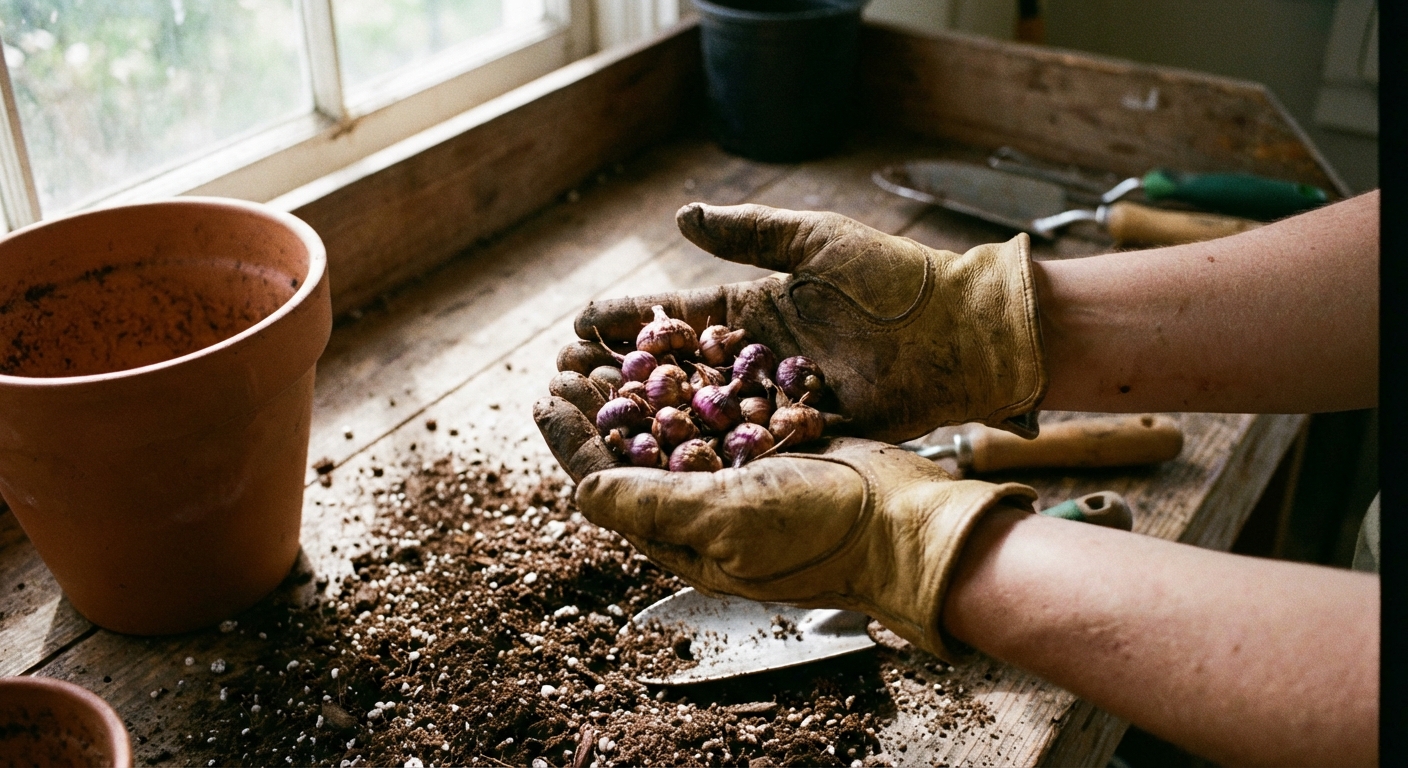
Most indoor shamrock plants are Oxalis triangularis, often called purple shamrock. It grows from small underground structures that are technically corms (and yes, they are often sold as “bulbs”). Those stored reserves are what make dormancy possible.
In plain terms: Oxalis is built to grow hard for a while, then rest, then grow again. When the timing is right, it will shut down foliage on purpose. That is not a failure. It is a survival strategy.
Leaf folding is normal
Oxalis leaves open in bright light and fold in low light or at night. This is called nyctinasty. If your plant “closes up” in the evening, it is not sad. It is just doing its thing.
Light
Indoors, light is the difference between a compact, vibrant Oxalis and a floppy one with long, stretched stems.
- Best light: bright light, mostly indirect, with a little gentle sun.
- Great window: an east window (morning sun) is almost always perfect.
- South or west window: can work well if you filter harsh midday or late-afternoon sun with a sheer curtain, especially in summer.
- Winter note: winter sun is weaker and often safe. If your Oxalis gets leggy in winter, it may actually need a few hours of direct sun or a grow light.
- Low light: the plant survives, but it gets leggy and the purple can look duller.
If your plant leans or reaches, rotate the pot a quarter turn weekly. I do this while I water so I do not forget.

Watering
Oxalis likes an even pattern: water well, let it dry a bit, then water again. The biggest mistake I see is treating it like a thirsty tropical plant and keeping the soil constantly wet. Those corms can rot.
During active growth
- Water when the top 1 to 2 inches of soil feels dry.
- Water thoroughly until excess drains out, then empty the saucer.
- Avoid “tiny sips” every day. Deep watering encourages healthier roots.
When growth slows
- Gradually reduce watering as leaves fade.
- As the plant loses foliage, aim for soil that is on the dry side so the corms can rest safely.
Quick gut-check: If stems are limp but soil is wet, that is often too much water or early rot. If stems are limp and soil is bone dry during active growth, it may be thirsty. Also check for heat or vent drafts, since hot, dry air can make an otherwise healthy plant droop fast.
Dormancy
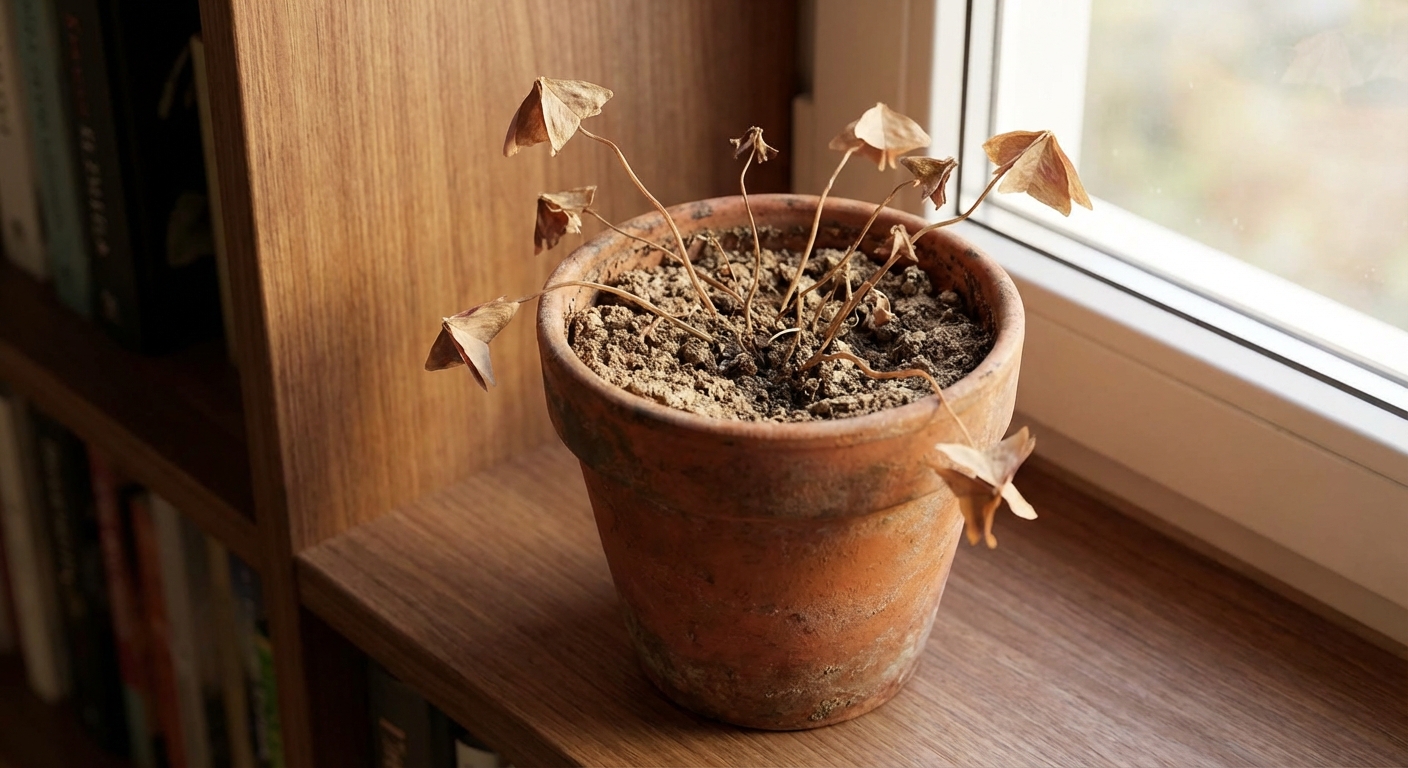
Oxalis dormancy is the number one reason people search, “Is my purple shamrock dead?” The plant can look truly gone. But if the corms are healthy, it will come back.
What dormancy looks like
- Leaves yellow from the base outward.
- Stems get floppy and collapse.
- Growth slows, then stops.
- The pot may look like bare soil with a few crispy stems.
When it happens
Indoors, dormancy timing varies. Some plants rest in winter with lower light. Others rest after a big bloom cycle. Stress can also trigger it, like a sudden change in light or inconsistent watering. The key is not the calendar. The key is what the plant is doing.
How long it lasts
Often 2 to 8 weeks, but it can be shorter or longer. In lower light or cooler conditions, it can rest for a few months. If the corms are firm and not rotting, patience is the main ingredient.
Dormancy vs trouble
If you are unsure whether you are watching a normal nap or a real problem, use this quick check.
- Likely dormancy: steady yellowing, drying stems, soil not staying soggy, no foul smell, corms feel firm.
- Possible rot: soil stays wet for days, a sour smell, blackened bases, mushy corms, stems that collapse while still green.
- Possible pests: sticky residue, webbing, cottony bits, or distorted new growth.
If something feels off, gently dig around one edge of the pot and check a corm. Firm is good. Soft is bad news.
Care during dormancy
When your Oxalis starts fading, your job is to stop fussing and help it rest without rotting.
Step by step
- Let the foliage die back naturally. While leaves are still green, the plant is still storing energy.
- Reduce watering. As more leaves yellow, water less often.
- Trim dead growth. Once stems are fully yellow or brown, snip them at the soil line with clean scissors.
- Pick a dormancy style. Both methods work. Choose based on your home conditions.
- Cooler and dimmer home: keep the pot almost completely dry. Check it every couple of weeks to make sure it is not damp or funky.
- Warmer and brighter home: give an occasional small sip (think: just enough to keep the soil from turning into dust for months). Then let it dry again.
- Avoid intense sun on a resting pot. Bright room light is fine. Just do not bake dormant corms in a hot window.
If you are worried about forgetting the pot for a month, set a reminder to check it every two weeks. You are not watering. You are just confirming it is not soggy and the corms are not turning to mush.
Reviving Oxalis
Reviving Oxalis is wonderfully low drama, even if the dormancy looked dramatic.
Wake-up plan
- Check the corms if you are unsure. Gently dig a little. Healthy corms feel firm. Rotten ones feel soft and may smell bad.
- Refresh light. Put the pot back in bright light near a window.
- Start watering lightly. Moisten the soil, then wait. Do not flood a pot that has been dry for weeks.
- Resume normal watering once you see new growth. When fresh stems appear, shift back to watering when the top 1 to 2 inches are dry.
- Hold fertilizer until it is clearly growing. New leaves first, food later.
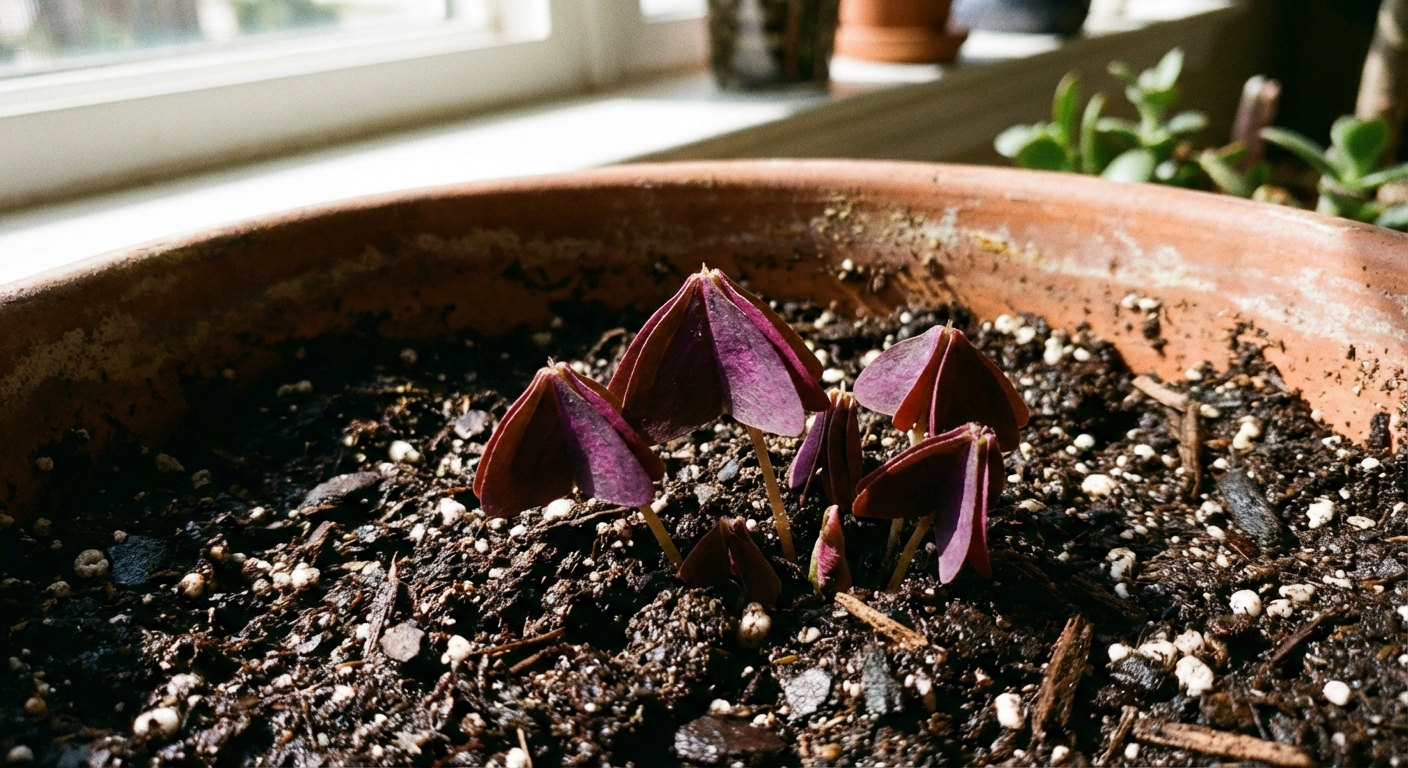
New shoots often pop up surprisingly fast once the plant decides it is time. If you see tiny purple spears, you are back in business.
Soil and pot
Oxalis is happiest in soil that holds a little moisture but drains quickly. If you have ever lost a bulb plant to rot, this is the same concept.
Easy soil mix
- Option 1: quality all-purpose potting mix + extra perlite (about 2 parts mix to 1 part perlite)
- Option 2: African violet mix with a handful of perlite (already lighter and airier)
Pot choice
- Use a pot with a drainage hole. Oxalis can tolerate many things. Standing water is not one of them.
- Oxalis likes being a bit snug. Oversized pots stay wet too long and invite rot.
Temperature and humidity
Oxalis is refreshingly adaptable in normal home conditions.
- Temperature: ideal around 60 to 75°F (15 to 24°C). Cooler nights are fine.
- Humidity: average household humidity is usually enough. If your air is extremely dry, it may appreciate a little extra humidity, but it is not as demanding as many tropical plants.
Avoid blasting it with hot, dry air from a vent. Leaves can crisp and the soil dries unevenly.
Fertilizing
During active growth, a little nutrition helps keep the foliage lush and encourages blooms.
- Use a balanced liquid houseplant fertilizer at half strength.
- Feed about once a month during active growth.
- Do not fertilize during dormancy. It is like offering a sandwich to someone who is asleep.
If you want more blooms, strong light does most of the heavy lifting. Feeding helps, but flowering is not guaranteed indoors. Sometimes your Oxalis is here for the leaves and the drama, not the flowers.
Pruning and grooming
Oxalis stays neat with simple cleanup.
- Remove yellowing leaves by gently tugging or snipping at the base.
- Deadhead spent flowers if you want a tidier look, though it is not required.
- If the plant gets leggy, it usually wants more light, not a haircut.
Repotting and propagating
Oxalis often becomes a crowded little clump over time, especially if it has been happy for a few growth cycles.
When to repot
- Best time is when it is waking up from dormancy or in early active growth.
- Repot if water runs straight through due to a dense root mass, or if growth has slowed despite good light.
How to propagate
Propagation is usually as easy as dividing the corms when repotting. Separate a few healthy corms, pot them in fresh mix, water lightly, and keep in bright light. You will often see new shoots within a couple of weeks.
Common problems
“My Oxalis is drooping”
- Most likely: too much water, it is entering dormancy, or the soil dried out too far during active growth.
- Also check: heat stress and vent drafts.
- Do this: feel the soil, then match your next step to the growth stage.
“Leaves are pale or stems are long and leggy”
- Cause: not enough light.
- Fix: move closer to a brighter window, rotate weekly, or add a grow light.
“Crispy leaf edges”
- Cause: hot sun through glass, very dry air, heat from a vent, or inconsistent watering.
- Fix: filter strong sun, water more evenly during growth, and move it away from hot airflow.
“It looks dead after dormancy”
- Cause: normal rest period, or rotted corms if soil stayed wet.
- Fix: feel the corms. Firm means viable. Soft means rot.
Pests
Oxalis can occasionally attract spider mites, aphids, or mealybugs, especially in dry indoor air.
- Rinse foliage in the sink and wipe leaves gently.
- Use insecticidal soap if needed, and repeat weekly for a few rounds.
- Isolate the plant while treating.
Pet safety
Oxalis triangularis contains oxalates (oxalic acid) and is mildly to moderately toxic to cats, dogs, and other pets if chewed or eaten. It can cause mouth irritation, drooling, and stomach upset. If you have a curious nibbling pet, place this one out of reach and call your vet if ingestion happens.
Quick checklist
- Light: bright light, mostly indirect with gentle sun
- Water (growing): when top 1 to 2 inches are dry
- Water (dormant): very little, keep on the dry side
- Soil: airy, fast-draining potting mix
- Dormancy: normal, often weeks, sometimes a few months
- Revival: brighter light + light watering until new shoots appear
A gentle reminder
If you take one thing from this page, let it be this: Oxalis teaches you to trust cycles. It grows, rests, and returns. The biggest favor you can do for a purple shamrock is to stop treating dormancy like an emergency, while still doing a quick sanity check for soggy soil, pests, or mushy corms.
When it folds up at night, I like to tell mine, “Sleep well.” Yes, I am that person who talks to her ferns. But honestly, Oxalis deserves it. It is doing exactly what it was designed to do.