
Overwatering vs. Underwatering


When a plant looks miserable, our first instinct is almost always water. More water. Less water. Panic water. I have been there, whispering apologies to a fern while holding a watering can like it is a defibrillator.
The tricky part is that overwatering and underwatering can look similar at first glance, especially when you are seeing droop, yellowing, or leaf drop. The good news: your plant is giving you clues in the soil, the stems, the leaf texture, and even the bugs buzzing around the pot. Let’s decode them.
Fast diagnosis: the 60-second watering check
- Touch the soil: stick a finger 2 inches down for small pots (about a 4 to 6 inch pot), 3 to 4 inches for bigger pots (about a 10 to 12 inch pot). In beds, push a trowel into the soil and feel a handful from below the surface.
- Lift the pot (houseplants and containers): a dry pot feels surprisingly light. A waterlogged pot feels heavy and dense.
- Look at the leaves: are they soft and yellowing or papery and crisp? Soft can mean too wet, crisp often points to too dry.
- Smell test: healthy soil smells earthy. Overwatered soil can smell sour, swampy, or like something is quietly rotting.
If you only remember one thing: overwatering is usually about oxygen deprivation. Roots need air as much as they need water. Underwatering is simply not enough moisture moving through the plant to keep tissues firm.
Overwatering vs. underwatering: quick comparison
| Clue | Overwatering | Underwatering |
|---|---|---|
| Soil feel | Soggy, sticky, stays wet longer than usual | Dry, dusty, pulls away from pot edges, may feel hard or compacted |
| Pot weight | Heavy | Light |
| Leaves | Yellowing (often lower leaves first), soft, may drop easily | Crispy edges, curling, thin or papery, may look dull |
| Droop style | Limp but wet-looking, leaves feel soft or supple rather than crisp | Limp and dry-looking, often perks up after watering |
| Stems | May feel mushy near soil line | Usually firm, but can become woody or shriveled in severe cases |
| Soil smell | Sour, musty, swampy | Little smell, or dry dusty smell |
| Pests | Fungus gnats common; algae on soil surface | Spider mites more common in very dry indoor conditions |
| Typical cause | Too frequent watering, poor drainage, dense soil, low light | Not watering deeply enough, water-repellent soil, heat and wind, small pots drying fast |
Signs you are overwatering
Overwatering is less about the amount of water you pour and more about how long the roots stay wet. Roots sitting in soggy soil cannot breathe well. They weaken, then rot, and the plant starts showing distress above the surface.
- Yellow lower leaves that feel soft, not crisp
- Drooping plus wet soil (this combo is a big tell)
- Mushy stems near the soil line, especially in houseplants
- Soil that stays damp longer than normal for that plant in your conditions (light, temperature, pot size, pot material, and mix matter a lot)
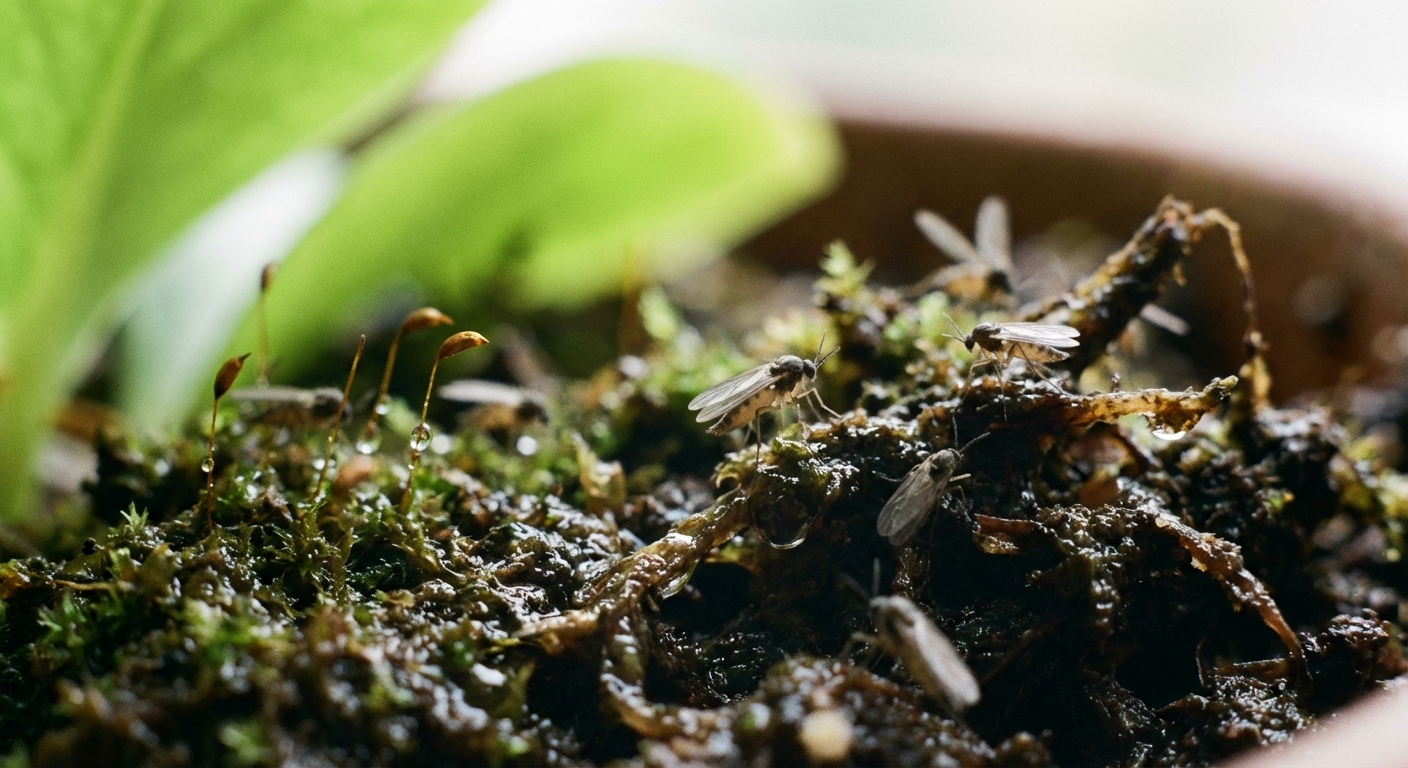
- Fungus gnats hovering around the pot or crawling on the soil
- Mold or algae on the soil surface
Signs you are underwatering
Underwatering can happen even when you water often, especially if you only splash the surface. Many plants need a slow, deep soak so water reaches the full root zone.
- Crispy leaf edges or brown tips, especially on thinner leaves
- Leaves curling inward to conserve moisture
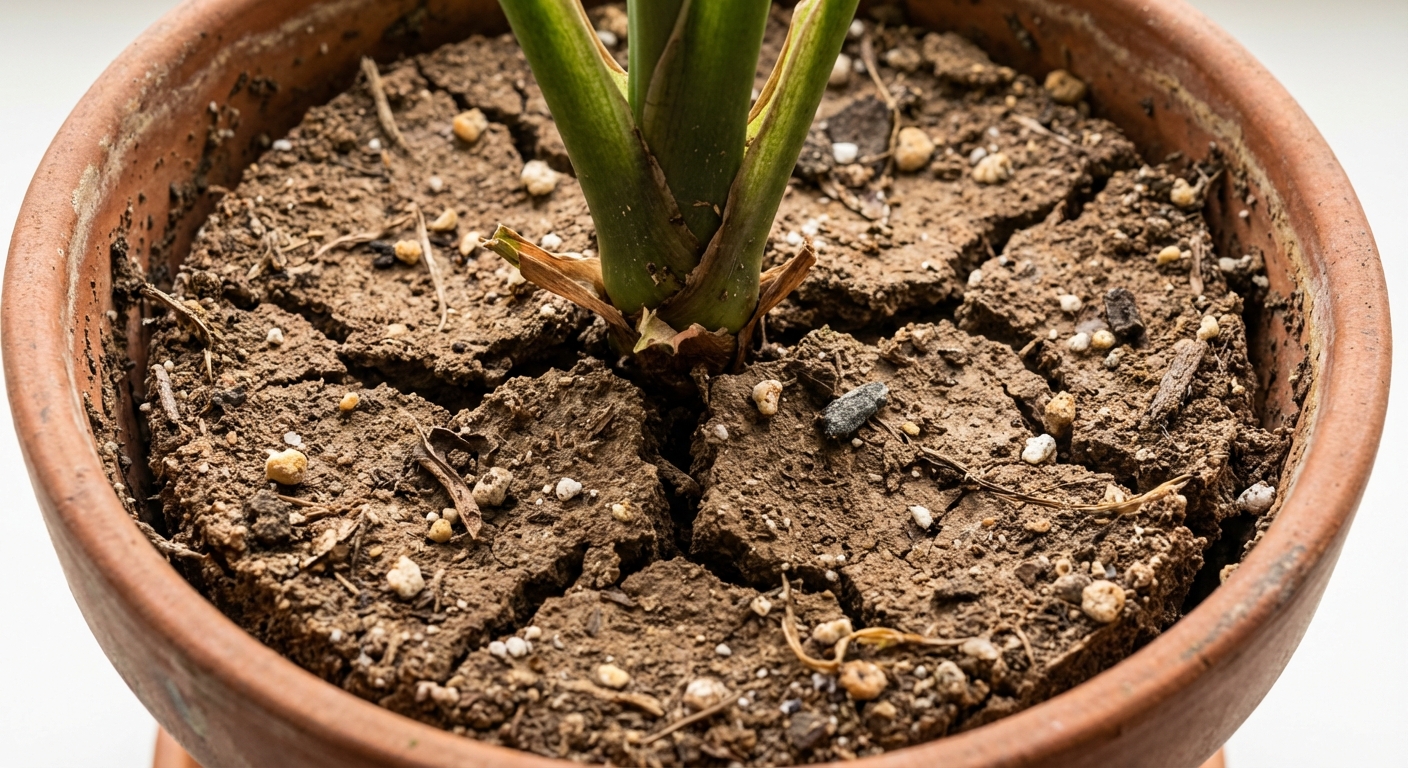
- Soil pulling away from the sides of the pot
- A lightweight pot and soil that feels dry several inches down
- Wilting that improves within a few hours after a thorough watering
- Dry, compacted garden soil that is hard to push your finger into
Why symptoms overlap
A plant can wilt from both extremes. In underwatering, it wilts because it cannot move enough water to keep leaves firm. In overwatering, it wilts because damaged roots cannot move water even though water is present.
If your plant is wilting and the soil is wet, pause before you add more water. Check roots and drainage first.
If the soil is wet and your plant looks thirsty, it is often a root issue, not a water shortage.
How to fix overwatering (houseplants and containers)
Step 1: Stop watering and increase airflow
- Pause watering until the top 2 inches are dry for most houseplants. For succulents, wait until the pot is dry much deeper.
- Move the plant to brighter indirect light if possible. Low light slows drying.
- Increase airflow with a small fan across the room, not blasting the plant.
Step 2: Check the pot and drainage
- Make sure the pot has a drainage hole. If it does not, repot.
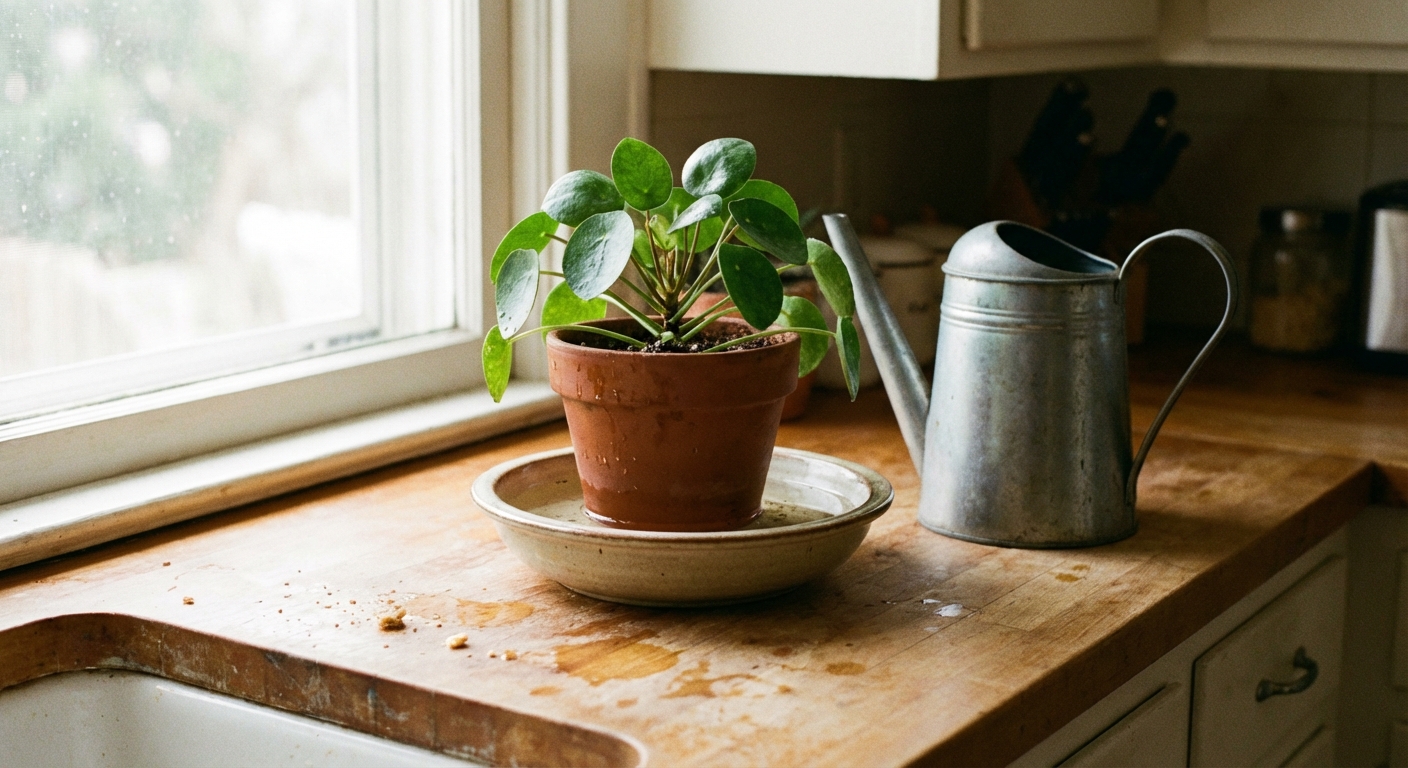
- Empty the saucer after watering. If you use a cachepot (a decorative pot that hides a nursery pot), check it for trapped water too.
Step 3: Inspect roots if the plant is declining fast
If you see mushy stems, a sour smell, or rapid leaf drop, gently slide the plant out of the pot.
- Healthy roots: firm, light-colored, earthy smell
- Rotten roots: brown or black, slimy, break easily, smell foul
Step 4: Trim rot and repot into fresh mix
- With clean scissors, cut away all mushy roots.
- Optional: dust cuts with a little cinnamon. Some people find it mildly helpful, but it is not a substitute for removing rot and improving conditions.
- Repot into a chunkier, better-draining mix. For many houseplants, adding orchid bark and perlite to potting soil helps dramatically.
- Use a pot only 1 to 2 inches wider than the root ball. Oversized pots stay wet longer.
Step 5: Water correctly after repotting
After repotting a plant that had rot, I usually wait 24 to 48 hours before watering so small root wounds can callus. Then water thoroughly and let excess drain fully.
New rule: water by soil dryness, not by the calendar.
How to fix overwatering (outdoor garden beds)
Overwatering in the ground is less common than in pots, but it absolutely happens, especially with frequent irrigation, heavy soil, compacted areas, low spots, or a high water table. The goal is the same: keep roots oxygenated.
Step 1: Pause irrigation and assess drainage
- Turn off sprinklers or drip lines for a few days if the soil is staying wet.
- After rain or irrigation, note where water puddles for hours. That is a drainage problem spot.
- If you suspect a perched water table (stays wet even when you stop watering), consider raised beds or relocating water-sensitive plants.
Step 2: Improve the soil structure
- Top-dress with 1 to 2 inches of compost. It helps both drainage and moisture holding over time.
- Avoid working wet soil. It compacts easily and makes the problem worse.
- In heavy clay, consider raised beds or planting on slight mounds.
Step 3: Reset your watering rhythm
Most garden plants do better with deep, less frequent watering rather than daily sprinkles. Aim to moisten the root zone, then let the top inch or two dry before watering again.
How to fix underwatering (houseplants and containers)
Step 1: Rehydrate properly, not just on the surface
- Water slowly until water runs out the drainage hole.
- Wait 10 minutes, then water again. This helps evenly moisten dry pockets.
- Empty the saucer after 15 minutes.
Step 2: If the soil repels water, bottom-water or soak
When potting mix gets extremely dry, it can turn hydrophobic and water will race down the sides without soaking in.
- Bottom-water: set the pot in a bowl of water and let it wick up moisture until the top of the soil feels evenly damp. This is often 10 to 30 minutes, sometimes longer for very dry mixes. Then let it drain.
- Soak: for severe dryness, submerge the pot up to the soil line and watch for bubbles. Pull it out once bubbling slows and the soil is evenly moist. This is often 5 to 15 minutes. Then drain thoroughly.
Step 3: Prune damage and reduce stress
- Trim fully crispy leaves. They will not recover.
- Move the plant out of harsh direct sun for a few days while it rehydrates.
- Skip fertilizer until you see new growth. Fertilizing a stressed, dry plant can burn roots.
Step 4: Prevent repeat drought
- Use a potting mix with some moisture-holding capacity (coconut coir, peat, compost), balanced with perlite for air.
- Consider a self-watering pot for consistently thirsty plants like peace lily.
- Group plants or use a pebble tray to slightly raise humidity for tropicals.
How to fix underwatering (outdoor garden beds)
Step 1: Water deeply and slowly
A quick spray often wets only the top inch. Roots stay dry and plants keep wilting.
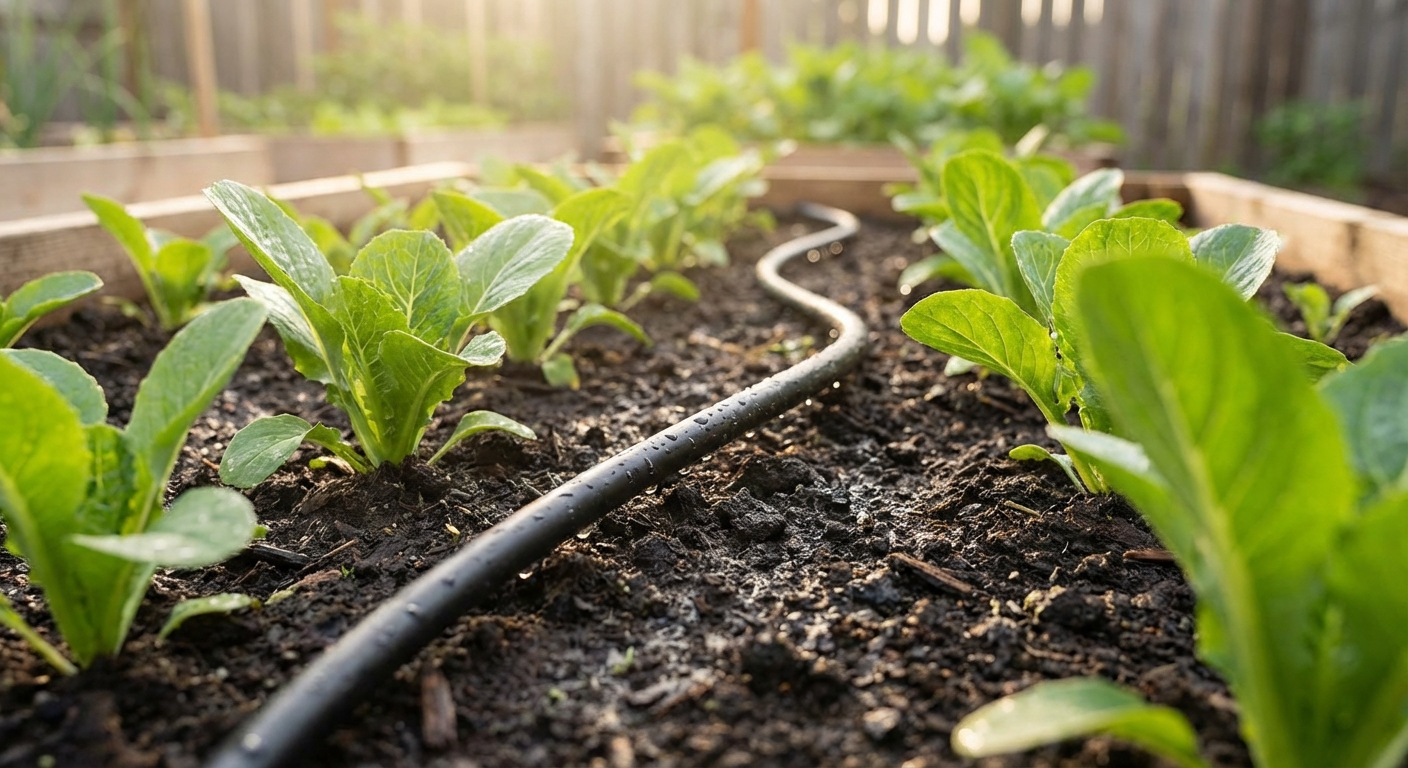
- Use a soaker hose or drip line long enough to moisten the root zone. Timing varies wildly by soil type and plant size, so check by digging a small test hole.
- Water in the early morning to reduce evaporation. Keep water aimed at the soil when you can, since disease risk is strongly tied to how long leaves stay wet.
Step 2: Mulch like you mean it
Mulch is the quiet hero of drought prevention.
- Add 2 to 4 inches of straw, shredded leaves, or bark mulch around plants.
- Keep mulch a couple inches away from stems to reduce rot risk.
Step 3: Check soil depth, not just the surface
Dig a small hole 6 inches deep and feel the soil. If it is dry down there, your watering is too shallow. If it is moist down there but the surface looks dry, you might be doing just fine.
Special cases that fool people
“My plant has yellow leaves, so it must be overwatered”
Often true, but not always. Yellowing can also come from nutrient deficiencies, cold stress, pests, or natural leaf aging. The deciding factor is soil moisture and root health.
“My outdoor plant wilts in the afternoon but looks fine at night”
That is frequently temporary heat wilt, especially in tomatoes, squash, hydrangeas, and young transplants. Check morning soil moisture before you change your watering routine.
“I water all the time, but it still dries out”
Look for hydrophobic potting soil, a rootbound plant, or a plant in too much sun for its container size. Sometimes the fix is a bigger pot and a deeper watering method.
Seasonal watering note
If your indoor plants struggle every winter, you are not imagining it. In low light and cooler temperatures, many houseplants grow more slowly and use less water. The same weekly schedule that worked in summer can quietly turn into overwatering by December. Let the soil lead, and expect longer dry-down times.
When to escalate
Sometimes the kindest move is to stop troubleshooting and switch to rescue mode.
- Take cuttings: if most roots are gone but you have healthy stems, propagating can save the plant faster than waiting for a damaged root system to recover.
- Repot urgently: if you smell rot, see a collapsing stem base, or the plant is dropping leaves rapidly with wet soil.
- Discard contaminated soil: do not reuse potting mix from a plant with serious rot. Clean the pot before replanting.
Better watering habits
- Water based on the soil, not the day of the week.
- Match water to light: low light means slow drying and less frequent watering.
- Choose the right soil: airy mixes for houseplants, compost-supported structure for garden beds.
- Drainage always: pots need holes, and garden beds need organic matter and loose structure.
- Keep a tiny log for two weeks if you keep guessing. One note per watering can change everything.
If you want, tell me what plant you have, where it lives (window direction or outdoor sun hours), and what the soil feels like right now. I can help you diagnose it in plain English, no guilt required.