
Ornamental Sweet Potato Vine Care

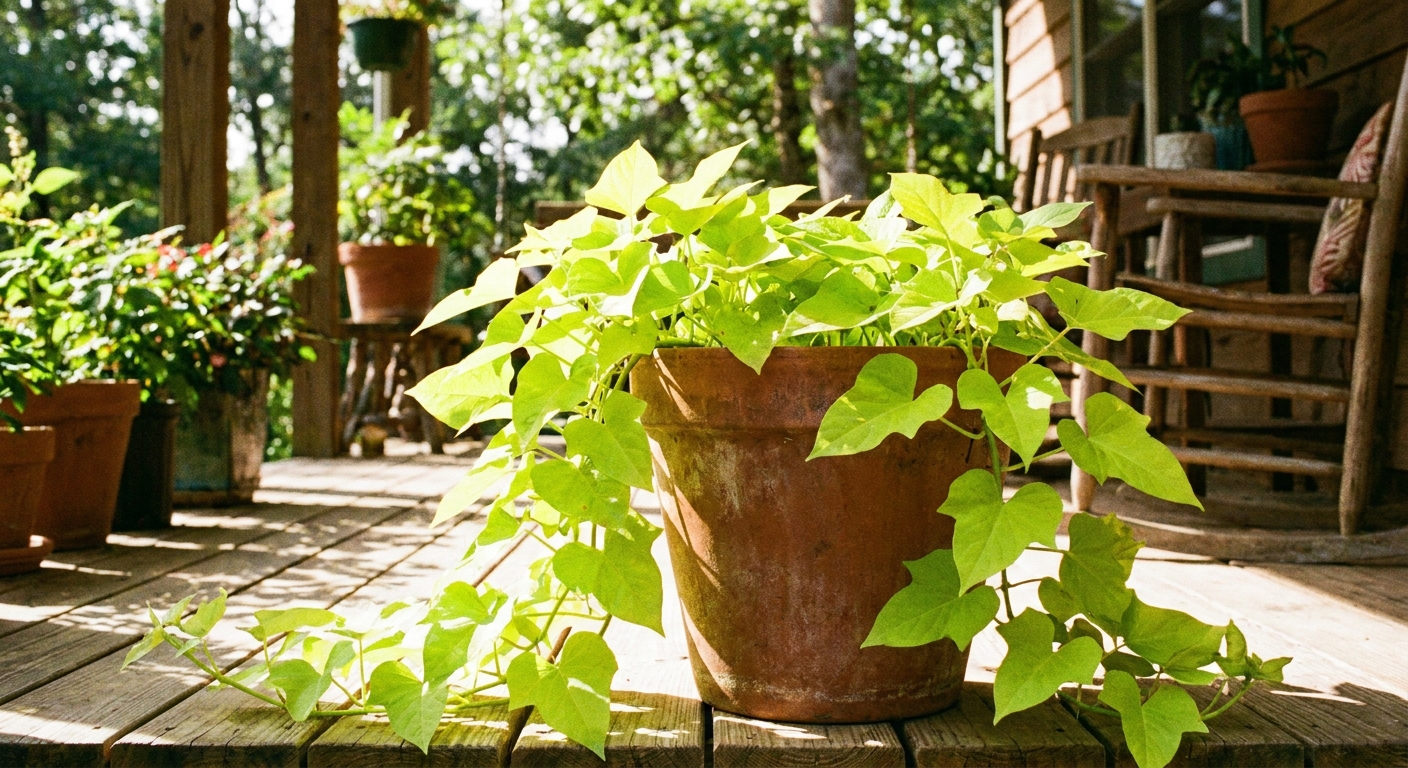
Ornamental sweet potato vine (Ipomoea batatas) is one of those plants I reach for when a pot looks “fine” but not finished. One tuck-in at the rim, and suddenly you get that satisfying spill of chartreuse, bronze, or almost-black foliage that makes everything around it look more intentional. It is fast, forgiving, and delightfully dramatic.
This page walks you through the real-life care: choosing trailing versus mounding types, giving it the right sun for the richest color, watering in containers without drowning it, trimming it back when it gets a little too wild, and dealing with the handful of pests that love it as much as we do. We will also cover what to do at the end of the season in cold climates where it is grown as an annual.

Know the habit
Sweet potato vine varieties generally fall into two “personalities,” and picking the right one saves you a lot of mid-summer frustration.
Trailing types
Trailing varieties are made for hanging baskets, window boxes, rail planters, and the outer edge of mixed containers. They can easily stretch several feet in a season, especially with regular water and feeding.
- Best for: spilling over container edges, softening retaining walls, helping cover bare soil quickly in beds
- Watch for: long strands that can look sparse if they get too much shade or too little water
Mounding types
Some cultivars stay more upright and bushy, forming a mound rather than long ropes. These are wonderful if you love the foliage color but do not want a plant trying to colonize the entire porch by August.
- Best for: smaller pots, mixed planters where you want the focus on flowers, front-of-border accents
- Watch for: slightly slower “spill” if you were expecting a waterfall effect
Plant label tip: If the tag says “spreading,” “trailing,” or lists a spread of 36 inches or more, plan for a spiller. If it says “compact,” “mounded,” or lists a spread closer to 12 to 18 inches, it will behave more politely.
Easy cultivar cues: You will often see chartreuse trailblazers like ‘Margarita’ (also sold as ‘Marguerite’), and compact, tidier options in the Sweet Caroline series. Labels vary by region, but these names pop up a lot in garden centers.
Sun and color
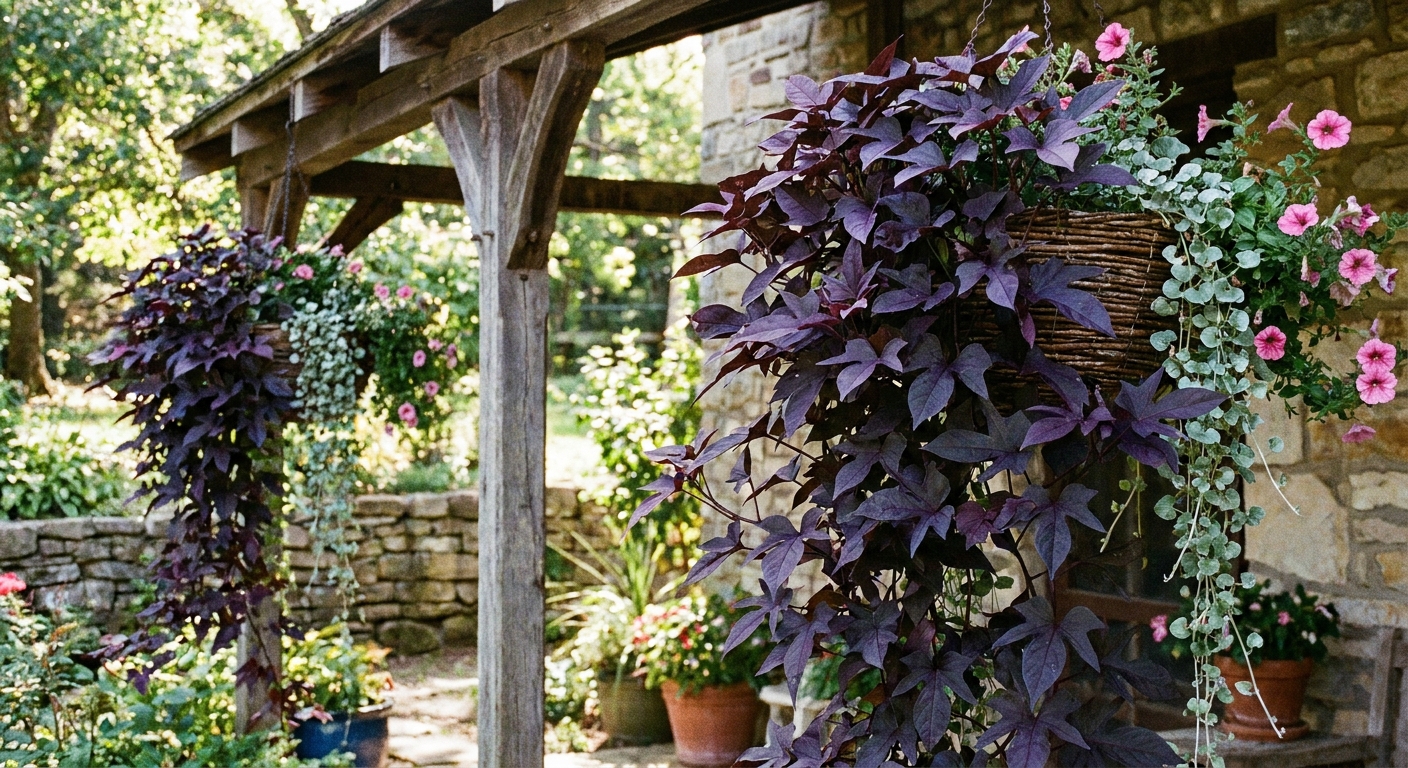
With sweet potato vine, light is not just about growth. It is about color. Leaf color is usually richest when the plant gets plenty of sun, but the exact “sweet spot” depends on the variety and your summer heat.
General rule
- Full sun to part sun produces the strongest color and fullest growth for most varieties.
- Too much shade often leads to longer internodes (leggy stems) and greener, less saturated foliage.
By foliage color
- Chartreuse and lime varieties: Usually happiest in sun to part shade. In very hot climates, a bit of afternoon shade can prevent scorching.
- Dark purple and near-black varieties: Typically need more sun for the deepest color. In shade they can turn more greenish-purple and stretch.
- Bronze and copper varieties: Color tends to intensify with sun, but they also appreciate consistent moisture in heat.
My porch reality check: If your container gets morning sun and bright afternoon shade, sweet potato vine will still look good. It just may be a little less intensely colored and a little more eager to reach.
When to plant
Sweet potato vine hates cold feet. Plant it outdoors after your last frost, once nights are reliably warm and the soil in beds has started to heat up. In chilly, wet spring weather it tends to sit and sulk instead of taking off.
Pots vs beds
Containers
In containers, sweet potato vine grows fast because the soil warms quickly and you control water and nutrients. The tradeoff is that it can dry out fast.
- Soil: Use a high-quality potting mix, not garden soil. A mix with some compost is fine, but keep it fluffy and well-draining.
- Pot size: For a mixed container, one plant can fill a 12 to 16 inch pot edge quickly. In window boxes, plan spacing so vines have room to spill without smothering neighbors.
- Drainage: Non-negotiable. If a pot has no drainage hole, use it as a cachepot and keep the plant in a nursery pot inside.
Beds
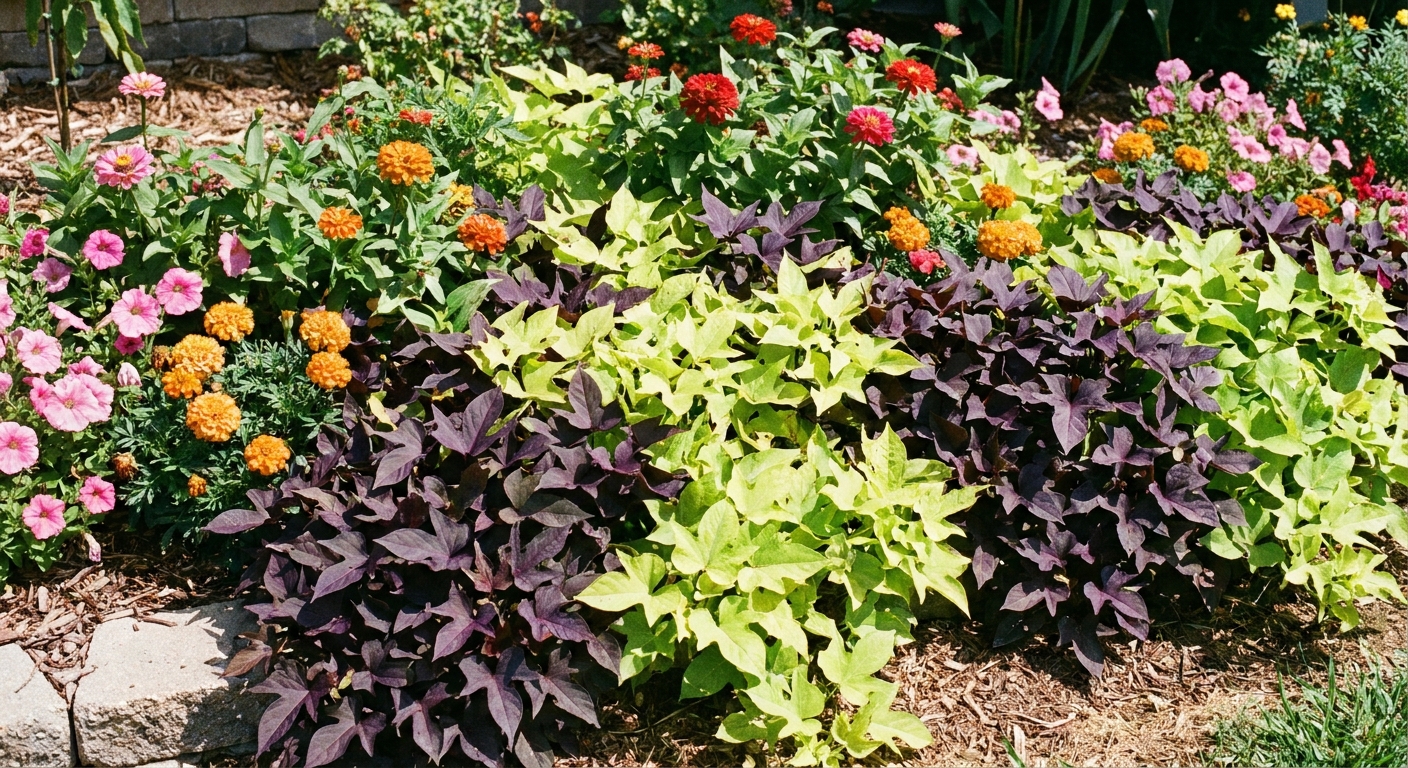
In garden beds, ornamental sweet potato vine makes a fantastic seasonal groundcover. It helps suppress weeds and knits together planting designs, especially around taller annuals and tropicals.
- Spacing: Give it room. A single plant can spread 2 to 4 feet depending on variety and conditions.
- Rooting habit: Stems can root where they touch soil. That is great for filling in fast, but it also means it can wander and “grab” territory if you let it.
- Edge control: If you have nearby delicate plants, be prepared to redirect or trim wandering stems.
Watering
Sweet potato vine is moderately drought-tolerant once established in the ground, meaning it can handle short dry spells. In a pot, it is basically living on your watering schedule. The goal is even moisture, not soggy roots.
When to water
- Stick a finger 1 to 2 inches into the potting mix.
- Water when the top inch feels dry, especially in warm, windy weather.
- If the plant looks slightly limp at midday but recovers by evening, it may be heat-stressed rather than truly thirsty. Check the soil before you soak it.
How to water well
- Water slowly until you see it run out of the drainage holes.
- Empty saucers after a deep watering so roots are not sitting in a puddle.
- In peak summer, planters in full sun may need daily watering, sometimes twice a day during heat waves.
Signs of overwatering
- Yellowing leaves with consistently wet soil
- Slow growth and a heavy, sour-smelling potting mix
- Wilting even though the soil is wet (roots are struggling)
Fix: Let the pot dry a bit, improve drainage, and consider repotting if the mix has collapsed into a dense, waterlogged mass.
Feeding
Sweet potato vine is not terribly fussy, but in containers it appreciates regular nutrition.
- In mixed pots: If you use a slow-release fertilizer at planting, you can often ride that through much of summer.
- For extra vigor: A balanced liquid feed every 2 to 4 weeks keeps foliage full.
- If it is swallowing your flowers: Ease up on nitrogen-heavy fertilizers. Too much nitrogen can push even faster vine growth, which means more shading and competition for your flowering neighbors (and a less impressive bloom show overall).
If your planter looks green but not vibrant, it is often a light issue, not a fertilizer issue.
Trimming
Trimming sweet potato vine is not “being mean.” It is like giving the plant a haircut that encourages it to branch and fill in. If you have ever thought, “This looks like a few long strings,” pruning is the cure.
Shaping
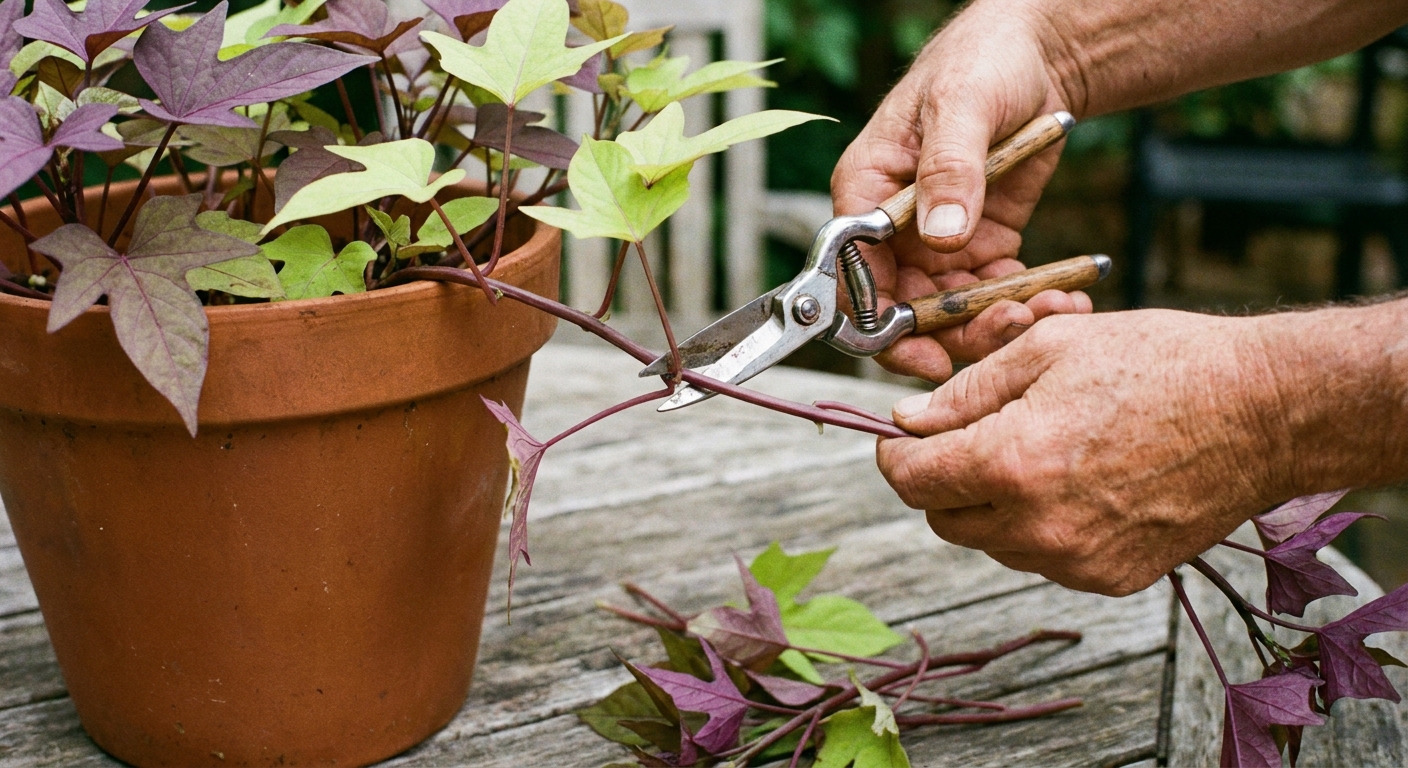
- Pinch or snip back vine tips by 2 to 6 inches to encourage branching.
- Trim leggy stems to keep the plant dense near the pot rim.
- Remove any damaged or sun-scorched leaves to keep things tidy.
Hard cutback
If your vine gets thin, tangled, or tired-looking, you can cut it back hard and it will rebound quickly in warm weather.
- Choose a cool part of the day (morning or evening).
- Cut back by one-third to one-half of the overall length.
- Water deeply after pruning.
- Give it a week. New shoots usually pop from nodes along the remaining stems.
Container pro tip: After a hard prune, the pot often dries out more slowly because there is less leaf surface. Adjust your watering accordingly.
Common pests
Ornamental sweet potato vine is generally easy, but a few pests love tender new growth, especially in warm, protected porch corners.
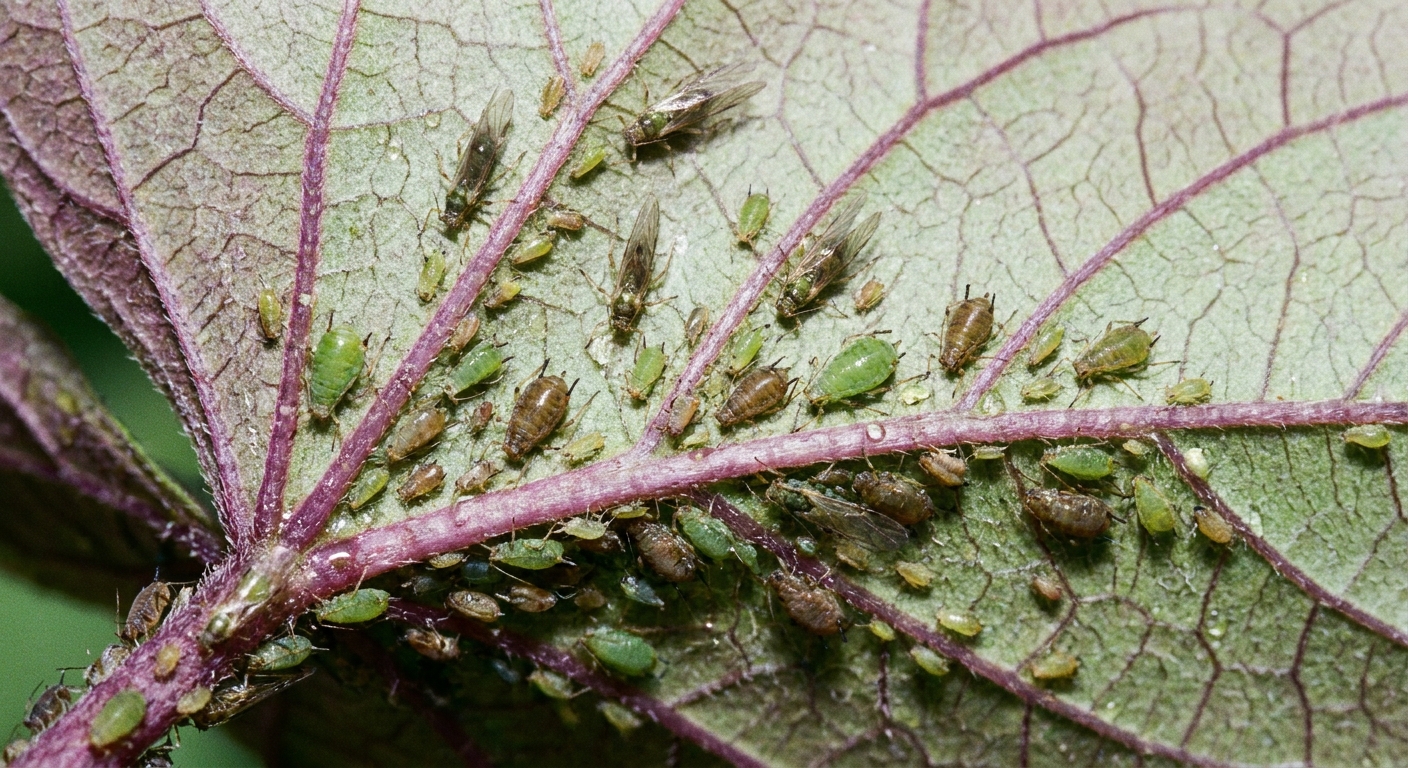
Aphids
- What you will see: clusters of tiny green, black, or brown insects on new tips, sticky residue (honeydew)
- What to do: blast them off with a firm stream of water, repeat as needed. If they persist, use insecticidal soap, spraying the undersides of leaves.
Spider mites
- What you will see: fine stippling on leaves, a dusty look, delicate webbing, worst in hot dry conditions
- What to do: rinse foliage thoroughly, increase humidity around the plant if possible, and treat with insecticidal soap or horticultural oil. Repeat weekly for a few rounds.
Whiteflies
- What you will see: tiny white insects fluttering up when you disturb the plant, sticky leaves
- What to do: yellow sticky traps can help reduce adults. Treat leaf undersides with insecticidal soap, repeating every 5 to 7 days for several cycles.
Sweet potato weevil (warm regions)
In some areas, pests that affect edible sweet potatoes can also show up on ornamental types. Sweet potato weevil is one of the big ones in warm climates. If you see chewing damage, distorted growth, or suspect weevils, remove heavily affected plants and avoid composting them. Local extension resources are genuinely helpful here because timing and pressure vary by region.
Flea beetles and other chewers
If you notice tiny “shot holes” or ragged chewing, you may be dealing with flea beetles or other generalist leaf chewers. Mild damage is usually cosmetic. For heavier infestations, focus on keeping plants vigorous, hand-removing what you can, and using region-appropriate controls.
Slugs and snails
- What you will see: ragged holes and shiny slime trails
- What to do: hand-pick at night, reduce hiding spots, and use iron phosphate bait if needed.
Leafy Zen habit worth adopting: When you water, glance under a few leaves. Catching pests early turns a battle into a quick cleanup.
Troubleshooting
- Leggy, sparse growth: not enough sun, or it needs a trim. Move to brighter light if possible and pinch back tips.
- Faded color: often shade-related. Some fading can also happen in extreme heat or when the plant is hungry in a pot.
- Crispy edges: underwatering, hot reflected heat, or too much intense afternoon sun. Water more consistently and consider a little afternoon shade.
- Yellowing: overwatering, poor drainage, or nutrient depletion. Check soil moisture and drainage first, then consider a light feed.
End of season
Ornamental sweet potato vine is a frost-tender perennial, hardy outdoors year-round mainly in warm zones (often USDA 9 to 11, depending on cultivar and microclimate). In colder climates it is typically treated as an annual because frost will blacken the foliage fast. I plan my end-of-season move before the first frost, or when lows start hovering in the mid-40s°F and I want to take cuttings while everything is still perky.
Option 1: Let frost take it
Enjoy it until the first hard frost, then pull it and compost healthy material. This is what most people do, and it is totally valid.
Option 2: Overwinter indoors
You can bring a pot indoors or take cuttings to root.
- Before bringing inside: rinse foliage, check for pests, and consider a preventative insecticidal soap spray.
- Light: bright window light is best. Low light indoors can make it leggy.
- Water: much less in winter. Let the top couple inches of soil dry between waterings.
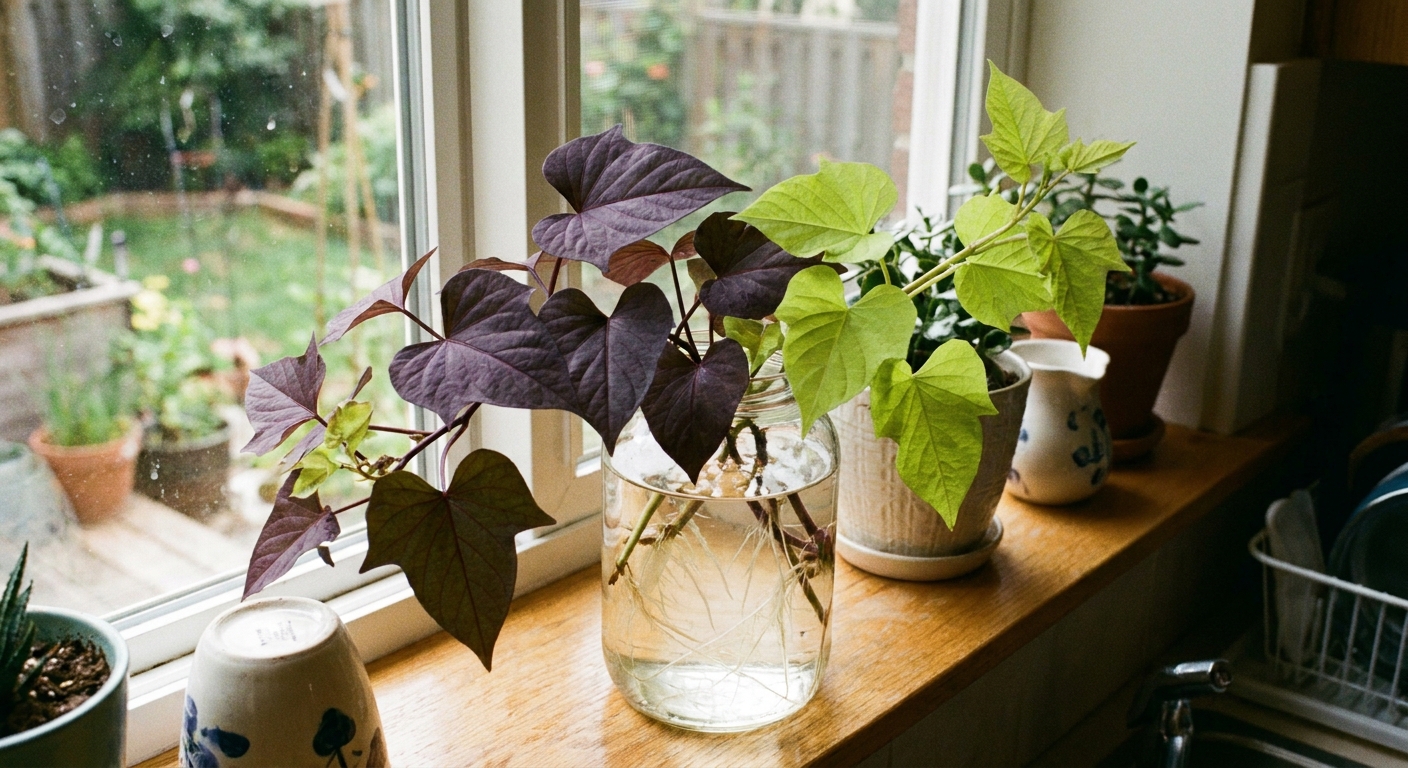
Option 3: Save cuttings
This is my favorite, low drama method.
- Snip 4 to 8 inch cuttings just below a node.
- Remove the lower leaves.
- Root in a glass of water on a bright windowsill.
- Pot up when roots are a few inches long.
Cuttings give you clean, compact plants for spring, and you skip hauling big pots indoors.
Option 4: Store tubers
Ornamental types can form tubers. In theory, you can dig them before frost, cure them briefly in a warm dry spot, and store them like a dahlia tuber in cool dry conditions. In practice, storage success varies, and tubers can rot or dry out. If you love experimenting, try it with a backup plan of cuttings.
Quick safety note
If you have pets or small kids who like to nibble plants, place sweet potato vine where it is not a snack. It is grown as an ornamental, not a salad green.
Care checklist
- Light: sun to part sun for best color, protect from intense afternoon heat if scorching
- Water (pots): water deeply when top inch is dry, do not let pots sit in water
- Pruning: pinch tips often, cut back by one-third to one-half for a mid-season refresh
- Feeding: light, consistent feeding in containers, avoid heavy nitrogen if it overwhelms neighbors
- Pests: check leaf undersides, treat early with water spray and insecticidal soap as needed
- Cold climates: expect frost kill, or save cuttings for an easy restart next year
If you take one thing from me, let it be this: sweet potato vine is a plant that wants to be pretty. Give it decent sun, consistent moisture in pots, and a fearless haircut now and then, and it will reward you with that lush, trailing magic all season.