
Orchid Pseudobulbs: What They Do, When They Shrink, and How to Water

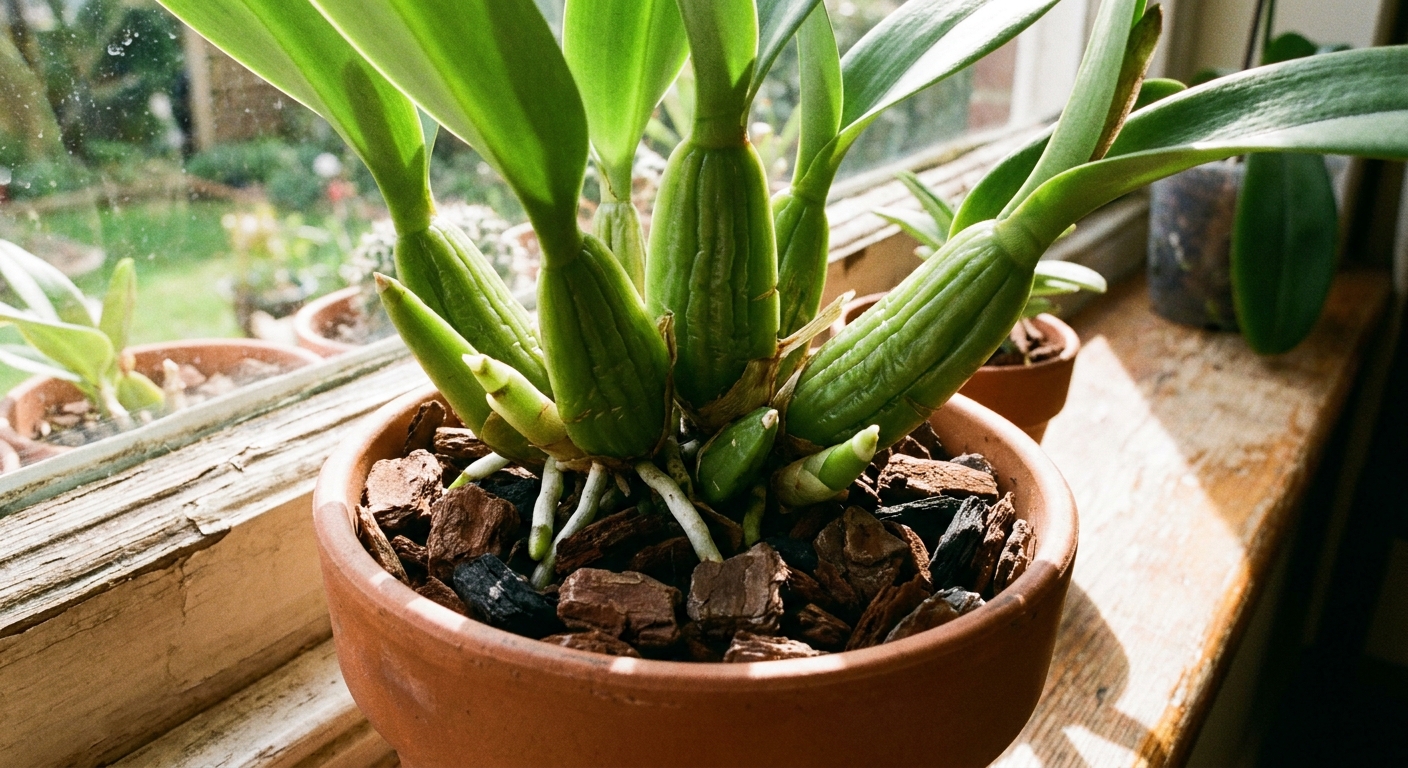
If your orchid has little chunky, cane-like, or egg-shaped “bulbs” marching along the pot, congratulations. You own a sympodial orchid with built-in storage. Those structures are pseudobulbs , and once you learn how to read them, watering stops feeling like a guessing game and starts feeling like a quiet, repeatable rhythm.

This page stays focused on pseudobulbs only. If you are troubleshooting aerial roots or keikis, that is a different set of signals entirely.
What pseudobulbs do (and which orchids have them)
Pseudobulbs are swollen stems that act like a pantry and water tank. In the wild, many sympodial orchids live in places where rain comes in pulses. Pseudobulbs help the plant coast between soakings.
Core jobs of a pseudobulb
- Water storage to buffer dry spells
- Energy storage in the form of carbohydrates that fuel new growth and blooms
- Insurance when roots are damaged or temporarily struggling after repotting
Common sympodial orchids with pseudobulbs
- Cattleya alliance : usually rounded or club-shaped pseudobulbs, often with one or two leaves on top
- Oncidium alliance: typically flatter, oval pseudobulbs with leaves emerging from the top and base
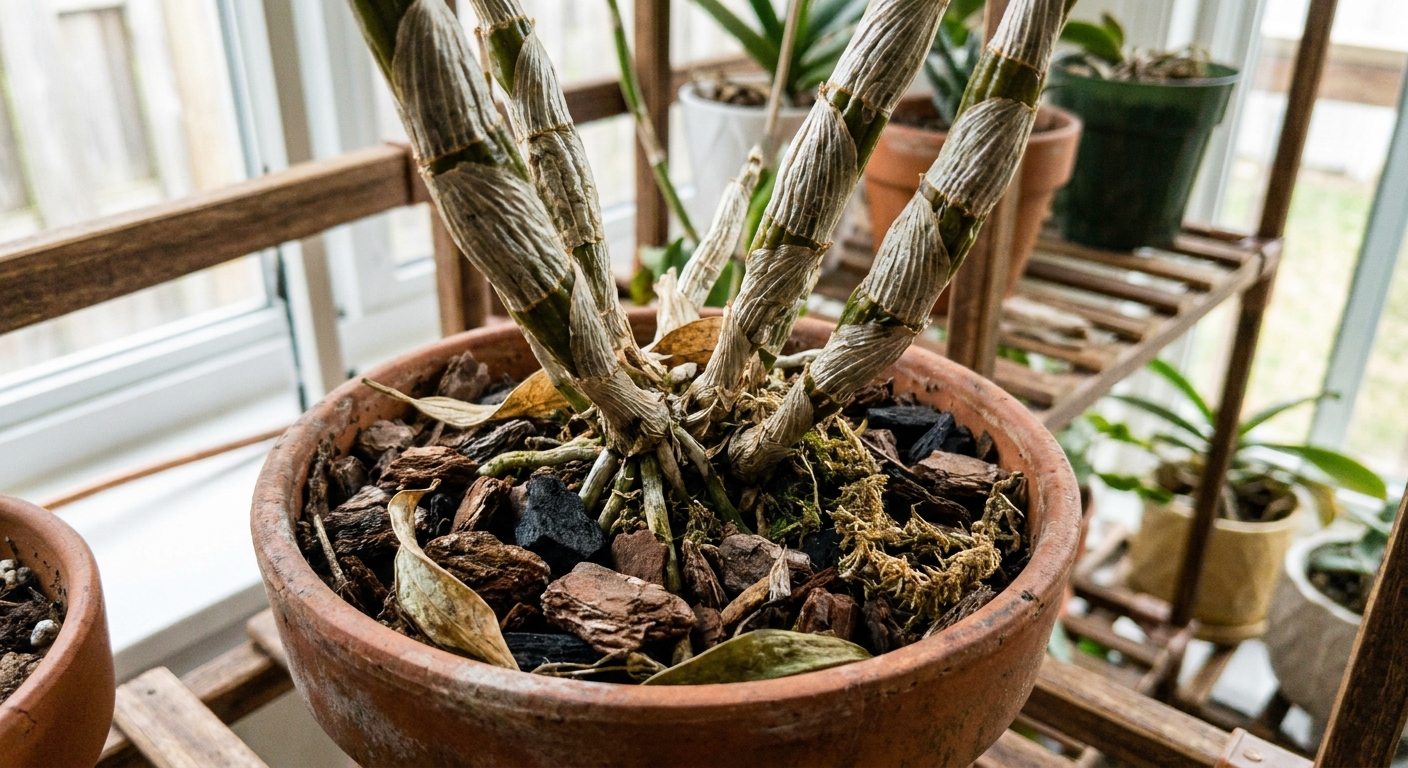
- Dendrobium (many types): often called “canes” rather than bulbs, but function similarly as storage stems
By contrast, Phalaenopsis (moth orchids) are monopodial and do not make pseudobulbs. They store more water in thick leaves and roots.
Pseudobulbs vs aerial roots
This is where a lot of new growers get tripped up. Pseudobulbs and aerial roots can both look a bit alien, but they tell you different things.
- Pseudobulbs: firm, swollen stems that sit along the potting surface or just above it. They are part of the plant’s “spine” in sympodial orchids.
- Aerial roots: roots that wander outside the pot. They do absorb water and nutrients when wet, but they also reflect humidity, airflow, and overall root health.
When you are deciding whether to water, roots and media moisture come first. Pseudobulbs are a longer-term signal. They tell you how well your routine has been working over the last couple of weeks, not just the last two days.
When pseudobulbs shrink: normal vs dehydration
A little wrinkling is not automatically an emergency. Many orchids gently “spend” water stored in older pseudobulbs to support new growth, especially during seasonal changes.
Normal seasonal shriveling
This tends to look like slow, mild wrinkling on the oldest pseudobulbs while the plant is actively doing something else: pushing a new lead, making roots, or finishing a bloom cycle.
- Wrinkles are shallow, like soft pleats
- New growth looks active (fresh roots, expanding leaves, swelling sheath or spike depending on type)
- Potting mix is being watered on a consistent routine, and roots look mostly healthy
In many Cattleyas and Oncidiums, it is common for last year’s pseudobulb to lose a bit of plumpness while the new pseudobulb fattens up.
Also worth knowing: older pseudobulbs do not always “refill” completely. Some stay a little creased forever and still do their job just fine.
Dehydration (or “water is not reaching the plant”)
Dehydration shrivel is usually faster and deeper. The pseudobulb can look deflated, with pronounced accordion-like folds. Sometimes the leaves also lose firmness.
- Wrinkles are deep and appear on multiple pseudobulbs, not just the oldest
- Leaves may look limp or overly soft
- Roots may be damaged (hollow, brown, mushy, or brittle and papery)
- Media may be either too dry for too long or staying wet and rotting roots so the plant cannot drink
A key insight: an orchid can look dehydrated even when the pot is wet, if root rot has taken away the plant’s ability to absorb water.
Warning signs that shriveling is not normal
- Rapid change over days instead of weeks
- New growth stalling or aborting
- Yellowing that spreads quickly (not slow aging of one old leaf)
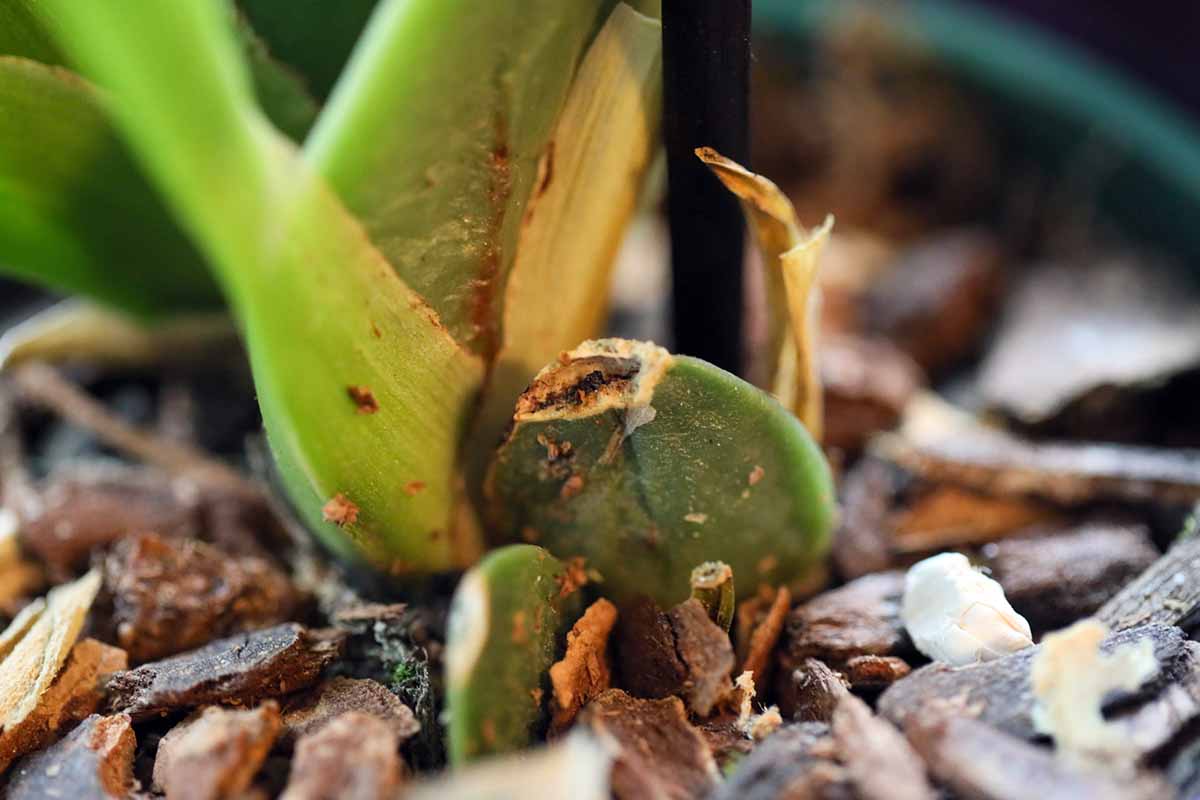
- Soft, dark spots on the pseudobulb (possible rot)
What healthy pseudobulbs look like
Healthy can look a little different across genera, but these cues are reliably helpful:
- Firmness: springy-firm, not squishy
- Skin: smooth to lightly textured, without wet-looking dark patches
- Wrinkling: mild pleats on older bulbs can be normal; deep accordion folds across many bulbs usually is not
- Color: commonly green to yellow-green (or naturally darker in some types). Sudden blackening, mushy areas, or a rapidly spreading yellow patch is a red flag
How to use pseudobulbs to time watering
I like to think of pseudobulbs as the orchid’s “weekly budget report.” They help you confirm whether your watering frequency matches your conditions.
The watering priority order
- Check the potting mix: Is it approaching dry, not bone-dry dust, but dry enough that water will flow through easily?
- Check the roots you can see: Silvery roots often indicate dryness in many orchids, while bright green roots often indicate recent moisture. Quick caveat: this works best for live roots with healthy velamen, and it is easiest to read in a clear pot. Dead, stained, or constantly wet roots can lie to you.
- Check pseudobulb firmness: Use this as a trend line. Is the newest growth staying reasonably plump over time?
What “firm” actually feels like
A healthy pseudobulb is usually springy-firm, not rock hard, and not squishy. If you gently pinch it between two fingers, it should resist like a ripe peach that still has some backbone.
If pseudobulbs are wrinkling, adjust like this
One important caution before you change anything: do not reflexively water more just because bulbs wrinkle. Wrinkling can come from underwatering, but it can also come from root loss due to staying too wet. Check roots and media first.
- Wrinkling + mix dries too fast: Water a bit more often, and consider slightly finer bark or adding a small amount of sphagnum in the center to hold moisture.
- Wrinkling + mix stays wet: You likely have root trouble or stale media. Increase airflow, ensure drainage, and consider repotting into fresher, airier mix.
- Wrinkling during new growth: Keep watering consistent. Do not let it swing between drought and flood. Many orchids are thirstiest when actively growing roots and new pseudobulbs.
How to water so pseudobulbs recover over time
When your media is ready for water, give a thorough soak until water runs freely out the bottom. Then let the mix drain completely. Sympodial orchids generally do best with a wet-to-dry cycle, not constant dampness.
- Use room-temperature water when possible.
- Water earlier in the day so new growth sheaths and leaf axils dry by night.
- If your water is very hard, consider occasional flushing with low-mineral water to reduce salt buildup, which can stress roots.
- Remember that watering frequency changes with pot type (plastic vs terracotta), media chunkiness, temperature, light, and airflow.
Orchid-by-orchid notes
Cattleya
Cattleyas like to dry a bit more between waterings than many Oncidiums, especially in chunky bark and bright light.
- Normal: older pseudobulbs slightly wrinkling as new growth matures
- Watch for: severely accordion-wrinkled bulbs paired with stalled growth, often a sign you are drying too long or roots are compromised
- Tip: water more as new roots emerge, then ease slightly once the new pseudobulb has hardened and the plant is resting
Oncidium
Oncidiums are famous for complaining when they get too dry. Their pseudobulbs can shrivel quickly in low humidity or if you miss a watering window.
- Normal: mild pleating on older bulbs
- Common issue: mix dries too fast, leading to pronounced wrinkling
- Tip: many (not all) Oncidium intergenerics prefer being watered just as the mix approaches dry, not after it stays dry for days
Dendrobium
Dendrobiums are a big family, so watering depends on the type. Many have cane-like pseudobulbs that store water and energy.
- Nobile-type Dendrobiums often want a cooler, drier winter rest to bloom well, and canes may wrinkle a bit.
- Phalaenopsis-type (Den. bigibbum-type) and other evergreen types generally want more consistent moisture during active growth.
- Tip: do not judge health by one cane alone. Look for overall vigor, new growth timing, and root condition.
Backbulbs: the old, leafless ones
Some older pseudobulbs drop their leaves and look like they are “done.” These are often called backbulbs. As long as they are firm (not rotting), they can still contribute stored energy to the plant. In some genera, backbulbs can even be used for propagation, although they are slow and require patience.
When pseudobulbs signal “repot me”
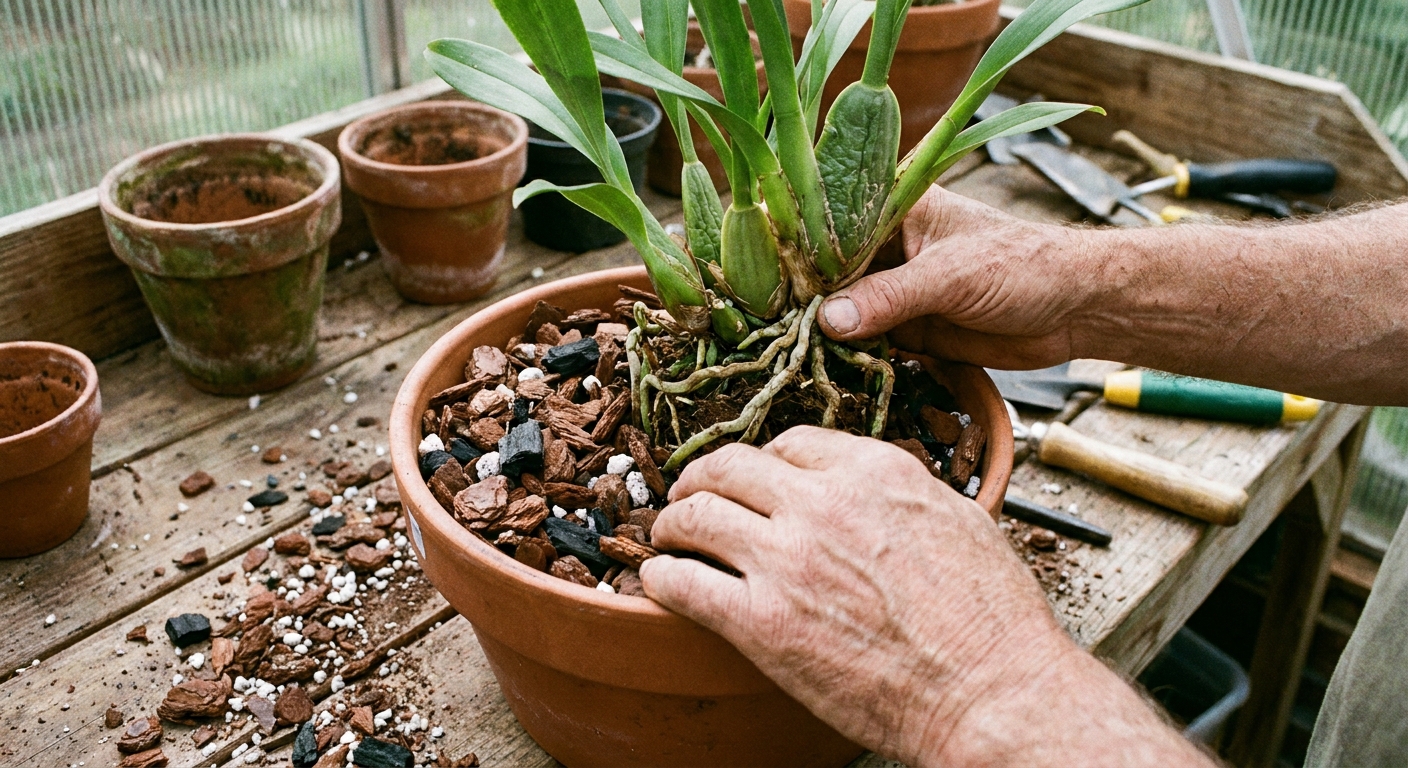
Pseudobulbs will not directly tell you “the media is old,” but they often show the consequences when the root zone is not working. Repotting is less about the calendar and more about what is happening in the pot.
Repot triggers to take seriously
- Media breaks down into fine, sour-smelling particles that stay wet too long
- Roots declining even though you are watering reasonably
- New growth is starting and you see new root tips, which is often the best time for sympodial orchids
- Plant crawling out of the pot, with new leads hanging over the edge
What not to panic-repot for
- One older pseudobulb wrinkling while new growth looks great
- Minor cosmetic scars or older leaf drop that happens gradually
Troubleshooting: what your pseudobulbs are telling you
Pseudobulbs are wrinkled but the pot is wet
- Likely cause: root rot or suffocated roots in broken-down media
- What to do: inspect roots, trim dead tissue, repot into airy mix, and water lightly until new roots establish
Pseudobulbs are shriveling fast during a heat wave
- Likely cause: the plant is using water faster than your routine supplies it
- What to do: water earlier, add humidity, provide gentle airflow, and reduce harsh midday sun
Pseudobulb is soft or blackening
- Likely cause: rot, sometimes starting from an injured spot or staying wet and stagnant
- What to do: isolate the plant, improve airflow, remove rotting tissue with sterile tools, and keep water off affected areas while you reassess conditions
New pseudobulb is small and skinny
- Likely cause: not enough light, inconsistent water during growth, or insufficient nutrition
- What to do: increase light gradually, keep an even wet-to-dry cycle during active growth, and fertilize lightly and regularly in the growing season
A gentle weekly check
If you want a calm routine that prevents most pseudobulb problems, try this once-a-week check:
- Lift the pot. A light pot usually means the mix is drying out.
- Look at roots you can see. Healthy roots are firm.
- Feel one older pseudobulb and the newest one. You are tracking trends, not perfection.
- Water thoroughly only when the mix is approaching dry, then let it drain completely.
Your goal is not to keep every pseudobulb photo-ready plump forever. Your goal is steady, resilient growth, with pseudobulbs that act like a savings account when the plant needs it.
If you tell your fern “good morning” while you do it, I will not judge. I do it too.