
Open vs Closed Terrariums

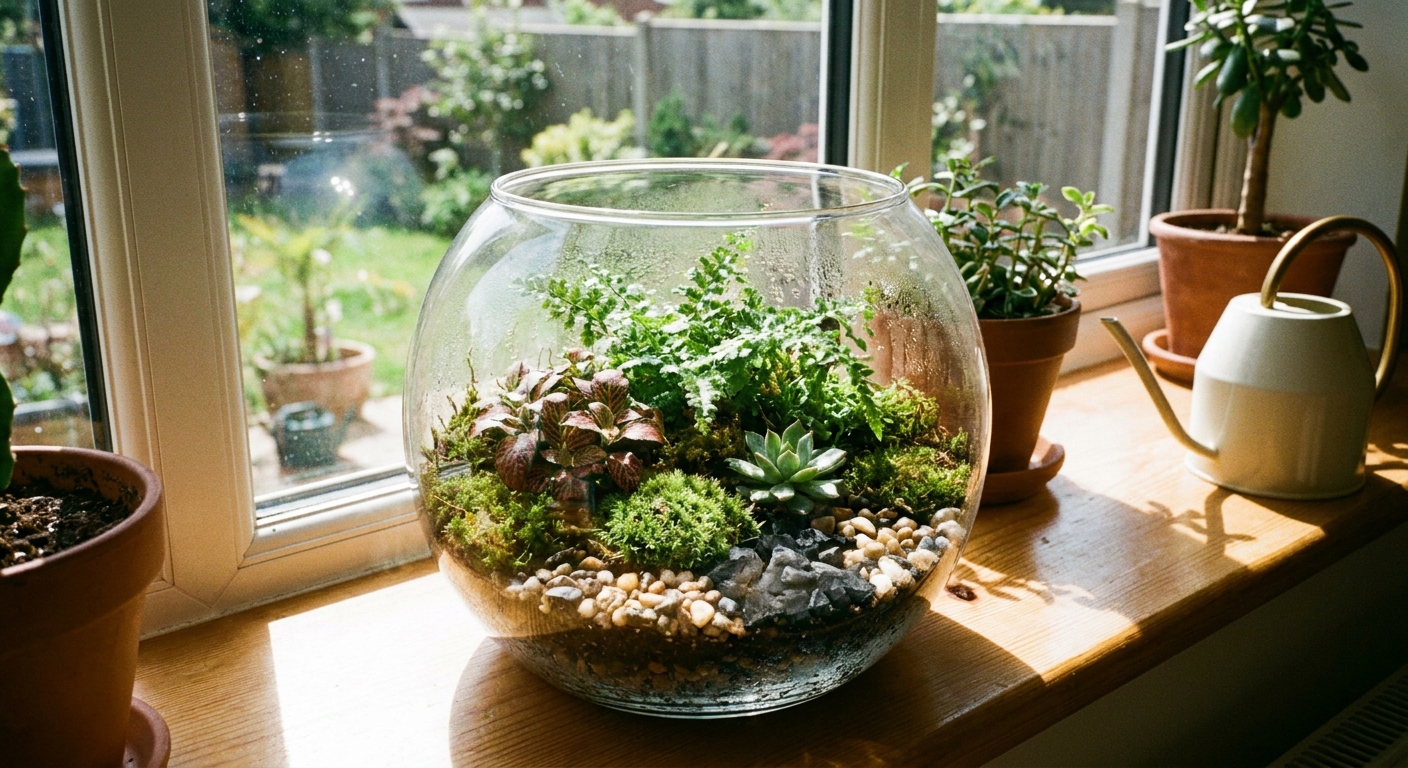
Terrariums look like tiny, magical worlds, until they turn into a swamp or a crispy bowl of sadness. The secret is not luck. It is choosing the right type of terrarium for the plants you love and then building the base so water behaves the way you want it to.
This page focuses on open terrariums vs closed terrariums and the very different ways they fail. Closed systems struggle with airflow and mold. Open systems struggle with drying out and inconsistent watering. Once you know which problems you are signing up for, terrariums get a whole lot more peaceful.

Open vs closed: what is the real difference?
Closed terrarium
A closed terrarium has a lid, cork, or fitted top. It is a mostly sealed humid environment where water cycles: moisture evaporates, condenses on the glass, then drips back down. Think tropical understory vibes.
- Pros: holds humidity, needs watering less often, great for humidity-loving plants
- Cons: easy to overwater, mold can spread fast, stagnant air can stress plants
Open terrarium
An open terrarium has no lid. It breathes like a houseplant pot, just in a prettier container. Humidity is close to room level, and water leaves the system through evaporation more quickly.
- Pros: much less mold risk, easier to correct mistakes, better for succulents and dry-tolerant plants
- Cons: dries out faster, watering needs are more hands-on, some tropical plants will struggle
Quick rule: If the plant wants high humidity, go closed. If the plant hates wet feet or needs airflow, go open.
Which one should you choose?
Choose a closed terrarium if you want
- Ferns, moss, fittonia, selaginella, and other humidity lovers
- A low-watering display that can run for weeks with minimal attention (once established)
- A stable, cozy microclimate away from heat vents and direct sun
Choose an open terrarium if you want
- Succulents, cacti, haworthia, aloe pups, and other arid plants
- Airy epiphytes mounted on wood (in specific, higher-humidity rooms or advanced setups)
- A terrarium that behaves more like a decorative planter
If you are a chronic overwaterer, open terrariums are forgiving. If you travel a lot, closed terrariums can be a better match.
Container choice: jars, bowls, and heat
Glass is beautiful, but it traps heat. A terrarium in direct sun can overheat very quickly, especially closed ones. Curved glass can also focus light in weird little hot spots, because of course it can.
- Best light: bright, indirect light near a window, or under a grow light
- Avoid: hot afternoon sun, radiators, heat vents, and drafty winter windows
- Wide opening: easier airflow and easier planting, especially for open terrariums
- Narrow neck jars: doable, but harder to prune and more prone to condensation issues when closed
Closed terrariums still need light. Low light plus high moisture is basically an invitation to weak growth and mold.
Drainage and substrate
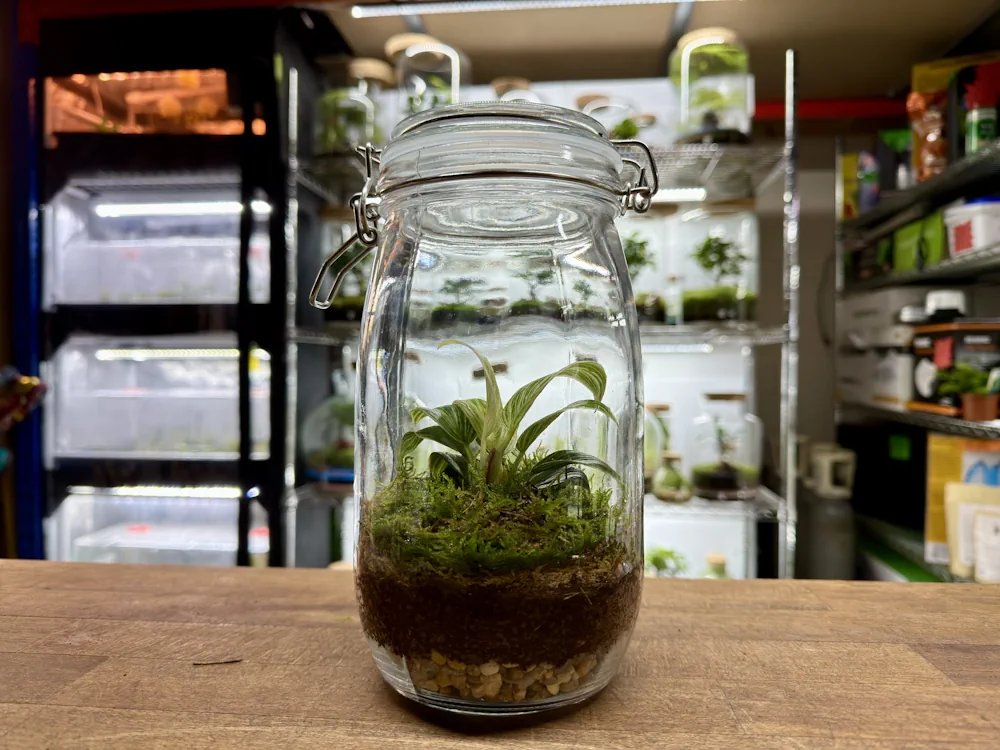
Terrariums usually have no drainage holes. That means you are responsible for creating a place for extra water to go, or using a soil mix that dries predictably. Open and closed setups handle this differently.
One important note before we get fancy: a drainage layer is not a substitute for watering correctly. It is a buffer, not a magic portal where mistakes disappear.
Drainage for closed terrariums
Closed terrariums reward restraint. Your goal is a stable moisture cycle, not a wet bottom layer.
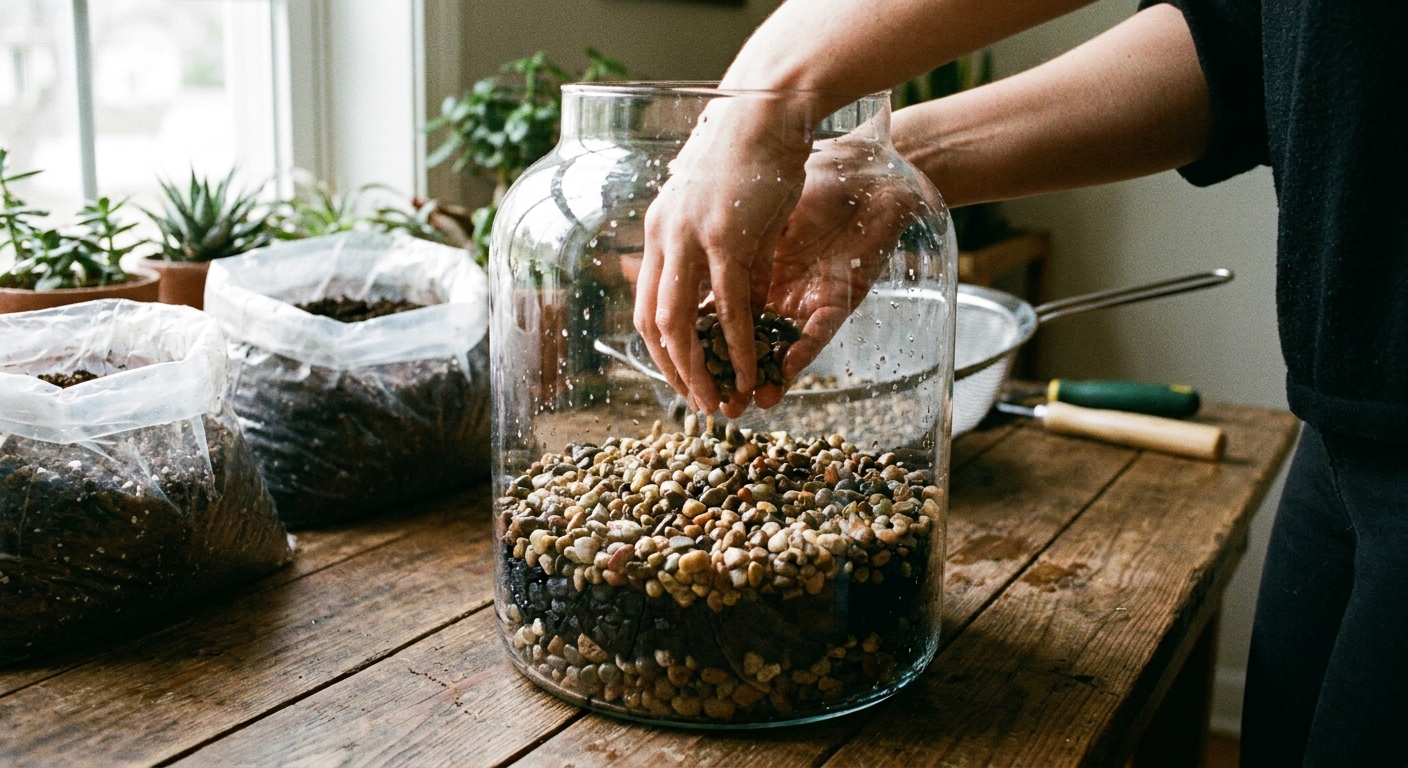
- Drainage layer: 1 to 2 inches of rinsed gravel, lava rock, or LECA
- Barrier: a thin layer of mesh to keep soil from falling into the rocks
- Optional charcoal: a small amount of horticultural charcoal can help with odors and freshness, but it is not a magic anti-mold shield
- Soil: airy, moisture-retentive mix like coco coir or peat alternative plus fine bark and perlite
Drainage for open terrariums
Open terrariums are trickier in a different way. Because evaporation is higher, people often overcompensate by watering too often, which creates a soggy base anyway.
Two approaches work well:
- Approach A, drainage layer: Use 1 to 2 inches of gravel or pumice, plus mesh barrier, then soil. Water lightly and consistently.
- Approach B, no drainage layer but a gritty mix: For succulent-style open bowls, skip the false bottom and use a very fast-draining mix (cactus soil amended heavily with pumice or perlite). Water sparingly.
My personal rule: If your open terrarium is planted like a houseplant (fittonia-style), add a drainage layer. If it is planted like a desert dish (haworthia-style), prioritize a gritty mix and lighter watering.
Best plants for open terrariums
Open terrariums shine when you pick plants that naturally stay compact and do not demand constant humidity. Focus on slow growers, tight rosettes, and small leaves.
Great open-terrarium plants
- Haworthia (zebra haworthia and relatives): slow, sculptural, handles indoor life well
- Gasteria and small aloe varieties: choose mini types, avoid the big bruisers
- Small peperomia (some types): pick compact varieties and watch watering
- Rhipsalis (mistletoe cactus): a cactus that likes more regular moisture, great for airy bowls
- Air plants (Tillandsia): best displayed on a rock or branch, not buried in soil
Plants to avoid in open terrariums
- Most true mosses, unless you are committed to frequent misting and gentle light
- Maidenhair ferns and other humidity divas
- Fast growers like wandering dude (Tradescantia) unless you enjoy constant pruning
- Most miniature orchids, unless you can provide consistent higher humidity and excellent airflow (this is more of an advanced project than a casual bowl on a shelf)
Size tip: Buy the smallest starter plant you can find. A 2-inch pot is your friend. Many “mini” plants are only mini because the nursery recently propagated them.
Best plants for closed terrariums
Closed terrariums are mini rainforests. Choose plants that enjoy humidity and tolerate lower airflow, and that stay naturally petite.
Reliable closed-terrarium plants
- Fittonia (nerve plant): practically made for jars, easy to trim and re-root
- Selaginella: lush, ferny texture that loves constant moisture
- Pilea depressa or small pilea types: trailing but manageable with trimming
- Mini ferns: button fern and lemon button fern often do well if not waterlogged
- Moss (as a topper): works best when light is gentle and condensation is controlled
Plants to avoid in closed terrariums
- Succulents and cacti, which usually rot in high humidity
- Plants that demand strong airflow and drier cycles, including many larger rex and cane begonias (some small terrarium begonias do exist, but choose intentionally)
- Anything you cannot prune easily in your container shape
Watering and moisture
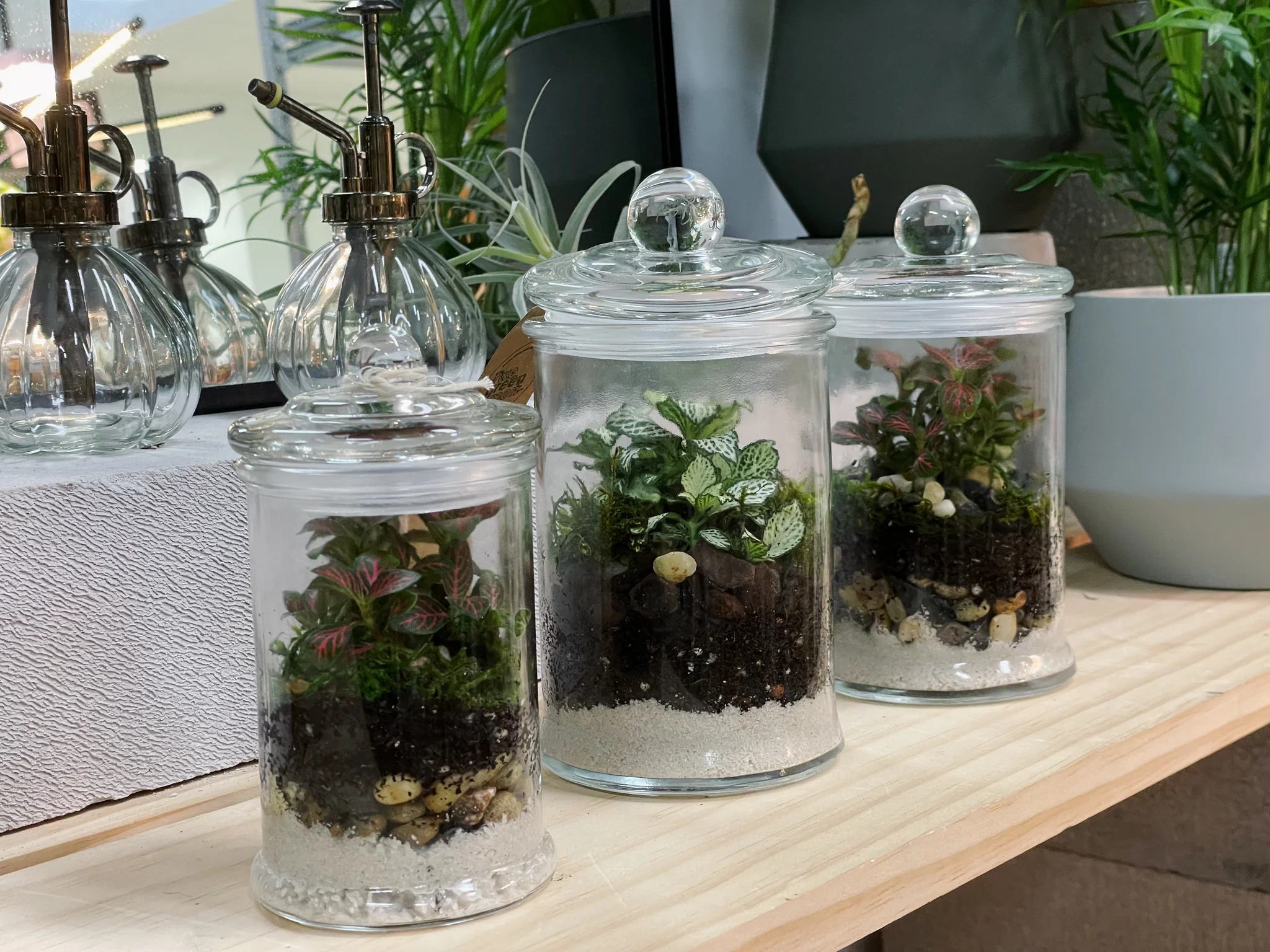
How to water a closed terrarium
- Start barely moist: your substrate should feel like a wrung-out sponge, not mud
- Watch the glass: a little morning condensation is fine, heavy fog all day means too wet
- Use the lid as a dial: if it is too wet, open the lid for a few hours or a day to vent
- Water rarely: many closed terrariums only need a splash every few weeks to months once established, but new builds, high light, or leaky lids may need more frequent tweaks
How to water an open terrarium
- Water at the roots: avoid constant misting as a substitute for real watering
- Small amounts, more often: think tablespoons, not cups
- Check depth: touch the soil a knuckle down, not just the surface
- Rotate the bowl: light is uneven on windowsills, and uneven growth leads to crowding
If you are unsure, under-water slightly and observe. You can always add water. Removing water from a sealed glass world is a whole production involving paper towels, siphons, and regret.
Fertilizer: tiny doses or none
Terrariums are not trying to win a “biggest plant” contest. In most builds, skip fertilizer or use it extremely sparingly.
- Why less is more: fertilizer can push fast, floppy growth, increase algae, and make mold problems more dramatic
- If you must: use a very dilute balanced fertilizer (think 1/8 to 1/4 strength) no more than a few times per year, and only if growth is clearly stalled in good light
- Closed terrariums: extra nutrients plus high humidity is a recipe for green glass and chaos
Stopping mold
Mold is most common in closed terrariums, but open terrariums can get it too, especially if the soil stays wet and debris builds up. The good news is that mold is often a setup and airflow problem, not a personal failure.
Why mold happens
- Too much moisture and not enough airflow
- Decaying leaves, old flowers, or wood pieces breaking down
- Soil that is too dense and stays soggy
- Terrarium placed in low light where evaporation slows
Springtails: the cleanup crew
If you want the modern, standard solution for keeping closed terrariums sane, meet springtails. They are tiny beneficial bugs that eat mold and decomposing plant bits. They do not fix a soaking-wet terrarium, but they help keep normal micro-mess from turning into a fuzzy apocalypse.
- Best for: closed terrariums and bioactive setups
- When to add: after planting, once the terrarium is moist and stable
- What they need: consistent moisture and leaf litter or organic bits to graze on
Prevent mold from the start
- Use clean materials: rinse gravel, use fresh potting components, wipe your container
- Do not overpack plants: crowded foliage traps moisture
- Remove debris quickly: dead leaves are mold snacks
- Vent closed terrariums: crack the lid occasionally, especially after watering
- Add springtails: they are not mandatory, but they are wildly helpful in closed builds
- Water with intention: add a little, wait, observe, repeat
If you already have mold
- Step 1: open the terrarium (or move the open one to brighter indirect light) to dry the surface slightly
- Step 2: physically remove moldy bits and any decaying plant matter with tweezers
- Step 3: consider adding springtails after you correct the moisture and remove debris
- Step 4: spot-treat only if needed using diluted hydrogen peroxide (3% mixed 1:1 with water), applied carefully to the affected area. Test a small area first and avoid sensitive moss and any beneficial microfauna you are trying to keep.
- Step 5: adjust your routine, usually less water and more ventilation
Important: if the entire substrate smells sour or looks like it is breaking down into sludge, you will save time by resetting the terrarium with fresh mix.
Setup steps
Closed terrarium setup
- Add 1 to 2 inches of gravel or LECA
- Add mesh barrier
- Add airy, moisture-friendly substrate
- Plant: place taller plants first, then groundcovers
- Top-dress with moss or leaf litter only if you can keep it clean
- Water lightly, seal, and observe for a week
- Add springtails once moisture is steady (especially if you are using leaf litter or wood)
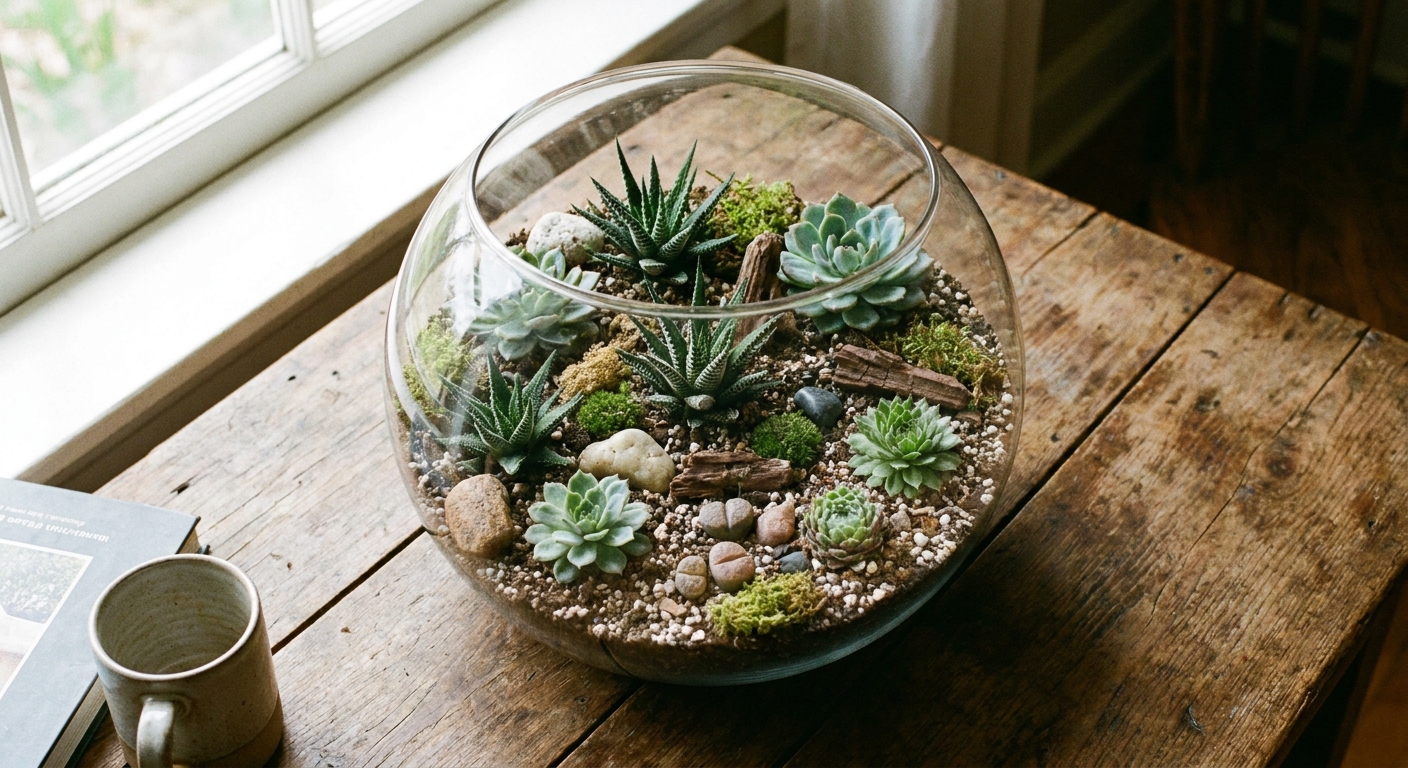
Open terrarium setup
- Decide: drainage layer plus soil, or gritty mix approach
- Build your base and slope slightly for visual depth
- Plant compact species with similar water needs
- Top-dress with gravel or sand to reduce soil splashing and fungus gnats
- Water lightly at the roots, then let the system settle
When to intervene
- Glass foggy all day (closed): too wet. Vent for a few hours to a day and pause watering.
- Yellow, mushy stems: likely rot from excess moisture. Remove affected growth, improve airflow, and let the substrate dry slightly.
- Crispy tips (open): likely underwatering or hot light. Move to bright indirect light and water at the roots.
- Musty smell: decay building up. Remove debris, vent more, and consider a reset if the substrate is sour.
- Fungus gnats: soil staying too wet. Let it dry more between waterings and use a gritty top-dress.
Common mistakes
Mistake: treating every terrarium like a closed rainforest
Fix: succulents belong in open, airy setups. If you love the look of a lid, choose tropical plants that want humidity.
Mistake: using regular potting soil straight from the bag
Fix: amend for airflow. Closed terrariums need an airy mix. Open succulent bowls need a gritty mix. Dense soil is a fast track to rot.
Mistake: letting leaves touch the glass
Fix: prune and reposition. Constantly wet leaf tips invite rot and fungus, especially in closed containers.
Mistake: over-decorating with wood and foraged bits
Fix: keep hardscape minimal until you have a stable moisture rhythm. Organic décor breaks down and can trigger mold blooms. If you do use leaf litter and wood, springtails help keep the mess from getting out of hand.
A simple checklist
- I want low maintenance and love humidity plants: closed terrarium
- I love succulents and tend to overwater: open terrarium
- My home is dry and I forget to water: closed terrarium
- My home is humid or I want minimal mold risk: open terrarium
Whichever you choose, remember this: terrariums are not about perfection. They are about observation. If you can slow down enough to notice how the glass looks in the morning and how the soil smells after watering, you are already doing the real work of gardening.