
Mushrooms in Your Lawn: What They Mean and When to Act

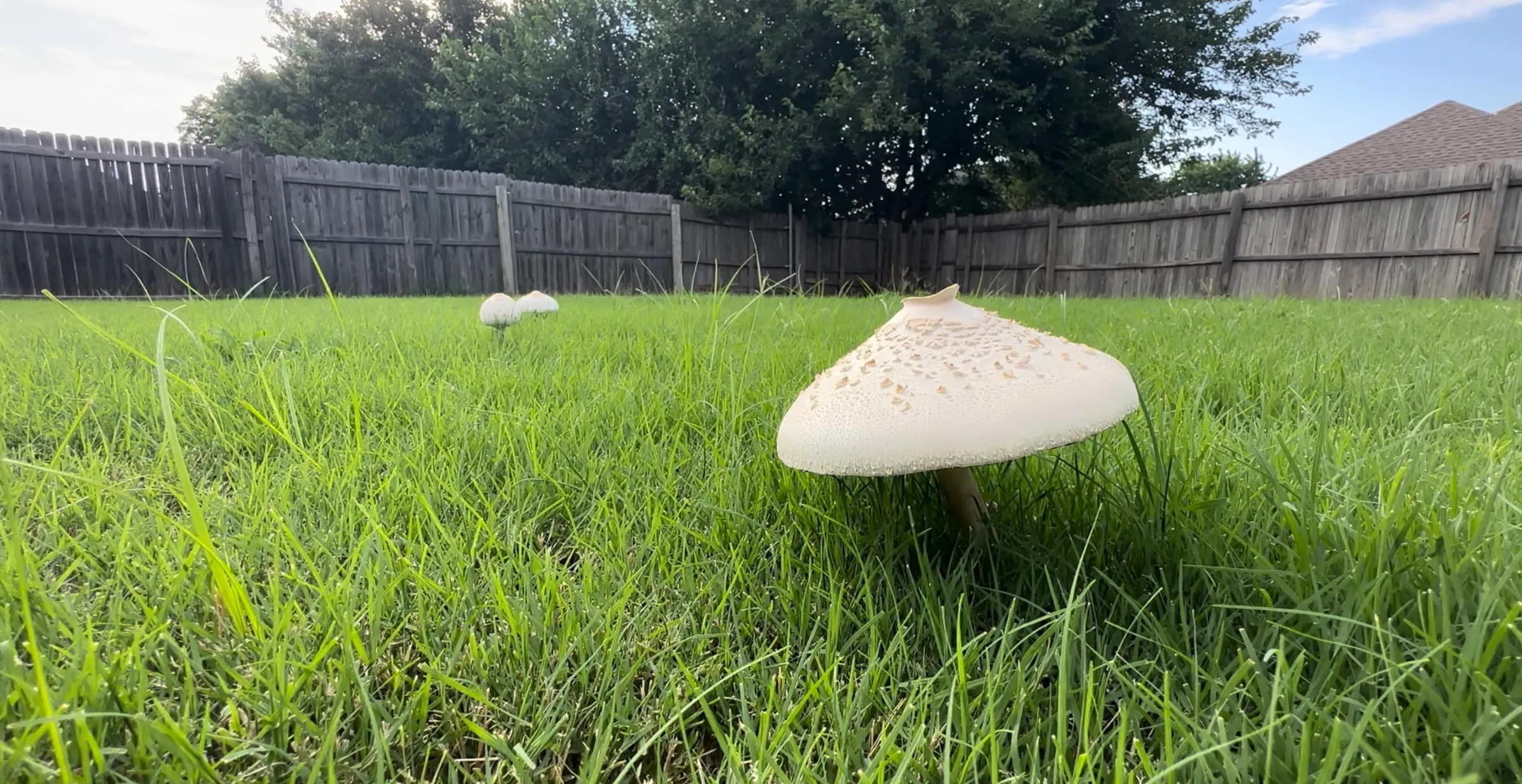
Mushrooms popping up in the lawn can feel like your yard is trying to tell you a secret. And honestly, it is. Most lawn mushrooms are simply the fruiting bodies of fungi already living in the soil, doing the quiet, unglamorous work of breaking down organic matter. That is often a sign of living soil, not a failing lawn. But sometimes it is also a hint that your grass is dealing with too much moisture, too little airflow, or a hidden stash of decaying wood.
This page will help you decode what you are seeing, protect pets and kids, and decide when it is time to intervene.

Why mushrooms show up in grass
Fungi live in the soil year-round as networks of threadlike strands called mycelium. When conditions are right, usually after rain or heavy irrigation followed by mild temperatures, the mycelium produces mushrooms to release spores.
In lawns, fungi commonly feed on:
- Dead roots and old grass clippings that have worked their way down into the soil
- Thatch, the spongy layer of stems and roots between grass blades and soil
- Buried wood like old tree roots, stump grinding debris, or construction scraps
- Mulch, compost, or leaf litter that has been incorporated into the lawn edge
So the mushroom itself is not “infecting” your lawn. It is more like a little flag that says: There is something tasty and damp down here.
Common mushrooms (usually harmless to turf)
Many lawn mushrooms are harmless to the grass. They can be annoying, slimy, or startling, but they are usually temporary.
Little brown mushrooms (LBMs)
These are the classic tiny caps that appear overnight after rain and collapse within a day or two. “LBM” is an informal catch-all category, not a precise ID, but in lawns they typically thrive in moisture and decomposing organic material. Most cause no turf damage.
Puffballs
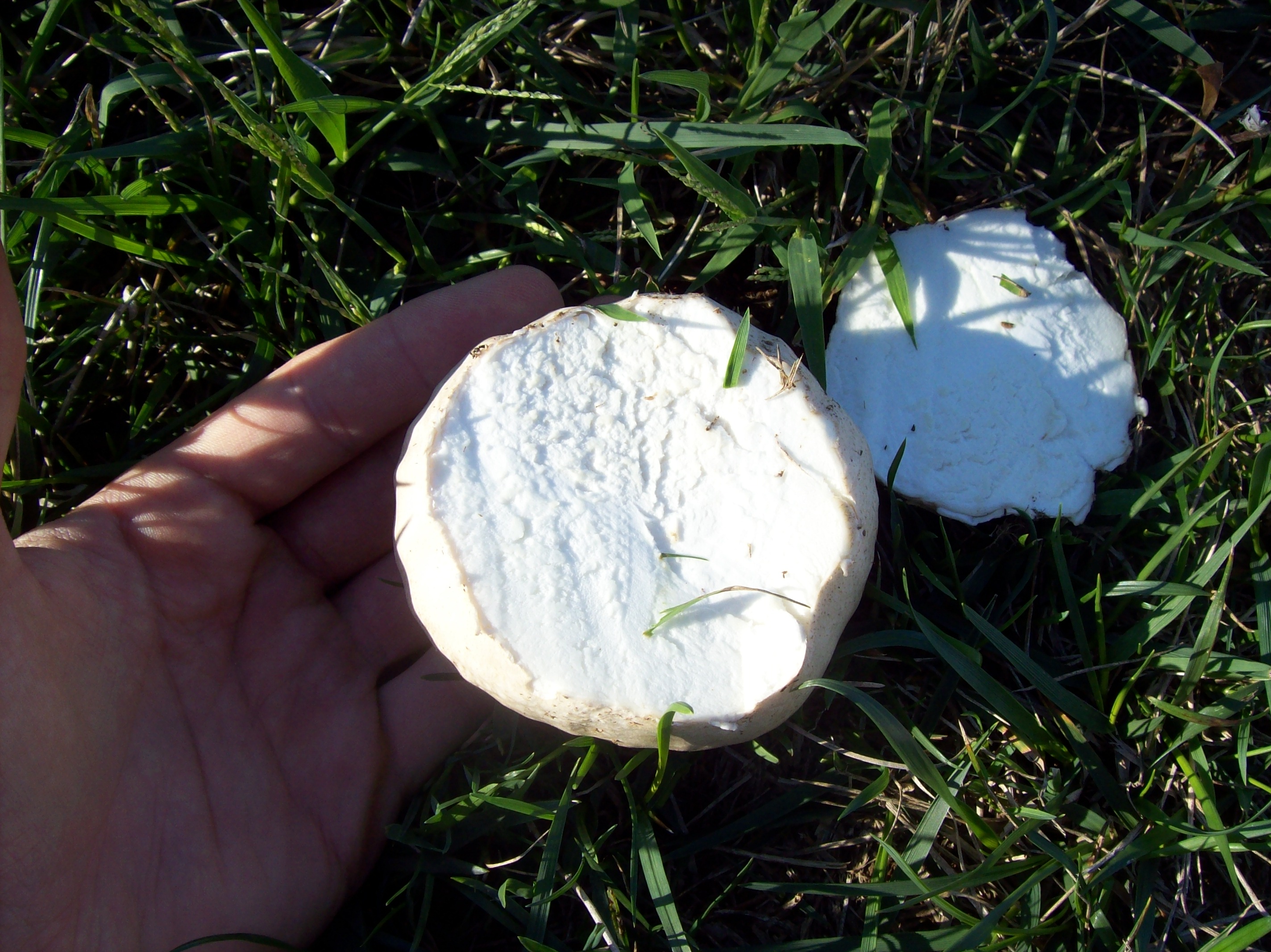
Round, white to tan balls that release a smoky puff of spores when mature. They often show up where the soil is rich in organic matter. Remove before they rupture if you do not want spore clouds or muddy foot smears.
Inky caps
These can look like little gray umbrellas and may melt into a black, inky liquid as they age. They are saprophytes, meaning decomposers, and are not attacking your grass.
Important: “Harmless to turf” does not mean “safe to eat.” Never assume edibility. Lawn mushrooms can also absorb lawn chemicals and pollutants.
Fairy rings: circles and arcs explained
Fairy rings are one of the most common mushroom patterns in lawns. They happen when a fungus grows outward in a widening circle underground. The mushrooms may pop up in a ring, an arc, or a broken necklace shape, depending on moisture and mowing. Not every ring fits neatly into a category, and different fungi behave differently, but turf references often describe three common patterns.
Three classic fairy ring types
- Type 1: A ring of dead or thinning grass. This is the one that worries people, and it can be the most damaging.
- Type 2: A ring of dark green, fast-growing grass. As organic matter breaks down, available nitrogen can increase, which can green up the turf.
- Type 3: A ring of mushrooms only, with no obvious grass change.
Why fairy rings can stress grass
Some fairy ring fungi create water-repellent zones in the soil as they grow. The result can be dry, hydrophobic soil inside or along the ring, even if you are watering regularly. You can end up with odd, droughty circles that do not respond to sprinklers.
Quick gut check: If the ring is greener than the rest of the lawn, it is usually more of an “aesthetic mystery” than an emergency. If the ring is browning and feels crusty-dry just under the surface, it is time to take action.
Mushrooms or slime mold?
One quick note, because it confuses a lot of people: slime mold can show up on turf as gray, tan, or black blobs or crusts after wet weather. It looks alarming, but it does not feed on the grass. Slime mold is usually cosmetic and can be brushed off with a rake or washed off with a hose once things dry out.
Decay fungi vs. a watering issue
Most lawn mushroom situations fall into two big buckets: fungi decomposing buried organic matter, or fungi thriving because the lawn stays too wet and airless.
Signs of buried wood or rich organic debris
- Mushrooms keep appearing in the same spot year after year
- A line of mushrooms traces where a tree root used to be
- The area feels a little spongy underfoot
- The lawn was built or renovated and may have buried lumber scraps or old stump grindings
What to do: Usually, you can simply rake or mow the mushrooms (bagging if you prefer). If you want them to stop long-term, you may need to dig out the decaying wood, or wait until it finishes decomposing.
Signs of overwatering, poor drainage, shade, or heavy thatch
- Mushrooms appear all over the lawn, not just in one spot
- The soil stays wet for days after irrigation or rain
- You see moss mixed in with grass
- You have thick thatch (over about 1/2 inch) that feels springy and holds moisture
- The area is shady with little airflow, especially under trees or along fences
What to do: Fix the growing conditions. Fungicides are rarely the best first move for lawn mushrooms because the mushrooms are the symptom, not the root cause.
How to reduce lawn mushrooms
If your goal is fewer mushrooms, think in terms of making the lawn less inviting for mushroom fruiting. You are not trying to sterilize the soil. You are trying to balance moisture and improve airflow.
1) Water for roots, not surface dampness
- Water in the early morning so blades dry quickly.
- Avoid daily sprinkling. Aim for deep, infrequent watering that encourages deeper roots.
- If you have irrigation, check for overspray or a stuck zone that keeps one patch soggy.
2) Reduce thatch and boost oxygen
- Core aerate compacted areas so water and air can move through the soil.
- If thatch is thick, consider dethatching (or power raking) at the right time for your grass type.
- Keep mowing at the recommended height for your turf and avoid scalping, which stresses grass and can increase thatch over time.
3) Improve drainage where water puddles
- Fill low spots and regrade gently so water does not sit.
- Use aeration plus topdressing with compost to gradually improve soil structure.
- If the area is chronically wet, a French drain or drain swale may be the real fix.
4) Manage shade and airflow
- Prune lower tree branches to let in dappled light.
- Thin dense shrubs along the lawn edge to increase airflow.
- In deep shade, consider converting the area to a shade garden or groundcover. Grass that barely survives will always be an easier target for moss and fungi.
5) Simple cleanup when mushrooms appear
- Pick them or rake them up before mowing if you want to limit spores and keep the mess down.
- Bag them and toss in the trash if you have kids or pets who might snack.
- Mowing alone is fine for most situations, but it may spread spores around and it will not prevent future flushes if conditions stay the same.
Are lawn mushrooms dangerous?
This is the part where I put on my gentle but firm “garden aunt” voice: assume any wild mushroom can be toxic if eaten. Some poisonous species look boring and ordinary. Kids and dogs do not reliably avoid them.
Smart safety habits
- Remove mushrooms promptly in play areas and along dog run routes.
- Teach kids: “Pretty or plain, we do not taste yard mushrooms.”
- Supervise puppies and curious dogs after rainy weather, when mushrooms pop fast.
- Wash hands after picking, and avoid touching your eyes or mouth until you do.
If you think a pet or child ate a mushroom
- Do not wait for symptoms.
- Remove any remaining pieces from the mouth if safe to do so.
- Call your veterinarian, local emergency vet, or an animal poison hotline. For humans, call your local poison control.
- If you can, take a clear photo of the mushroom and note where it was growing.
Good news: Touching mushrooms is not usually the issue. Eating them is.
When mushrooms mean trouble
Most of the time, mushrooms are just decomposers doing decomposer work. But there are a few moments when they are worth a closer look.
Mushrooms at the base of a tree
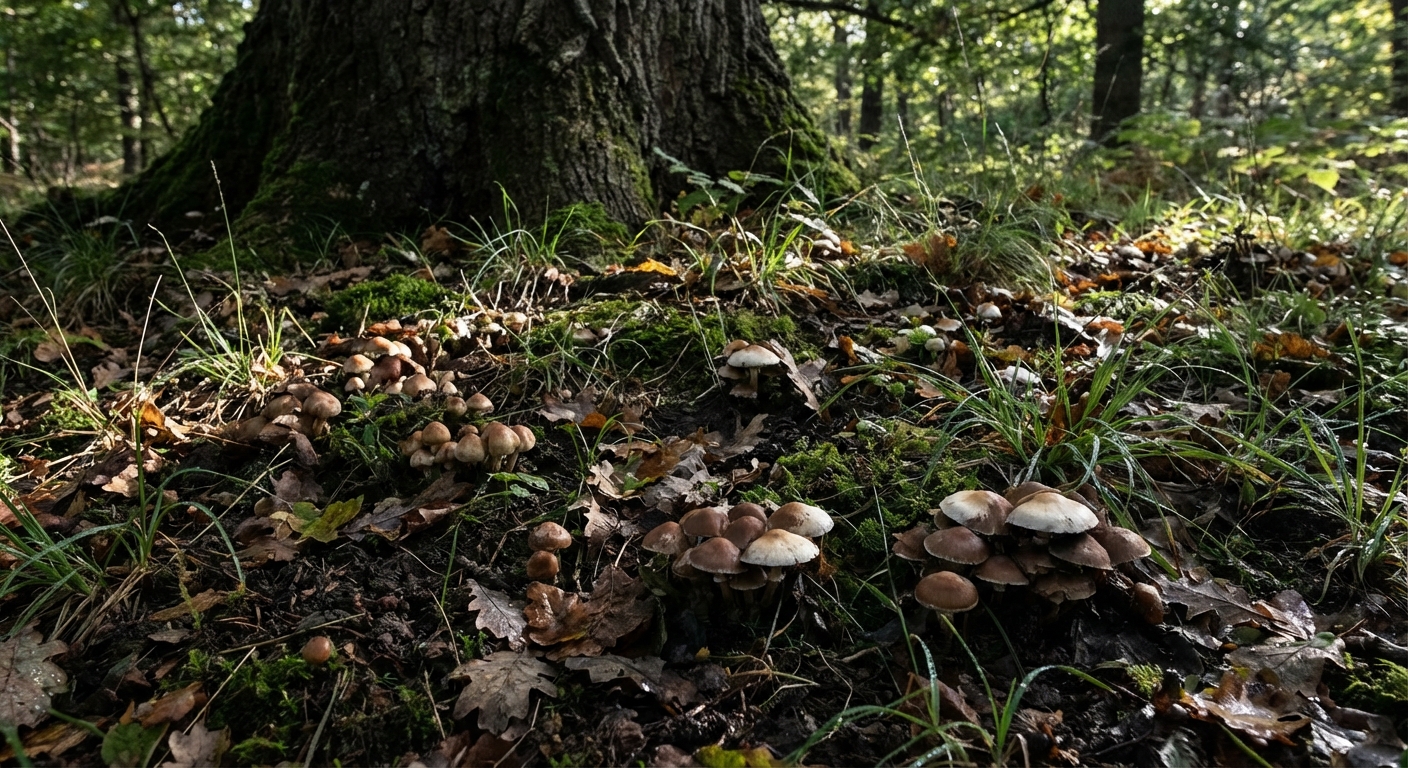
If you see repeated mushroom growth right at the trunk flare or emerging from exposed roots, it can sometimes indicate decay inside the root system or trunk. Identification matters here, because some fungi are mostly opportunistic decomposers and some are more concerning. Not every mushroom near a tree is a danger sign, but it is worth paying attention to, especially if the tree is large and close to a home or play area.
Extra red flags:
- New lean, heaving soil, or cracking ground near the base
- Large dead limbs, thinning canopy, or sudden decline
- Mushrooms or conks growing directly from the trunk wood
What to do: Consider a consultation with a certified arborist if safety is a concern. Tree structural issues are not a DIY guessing game.
A persistent line or patch that keeps fruiting
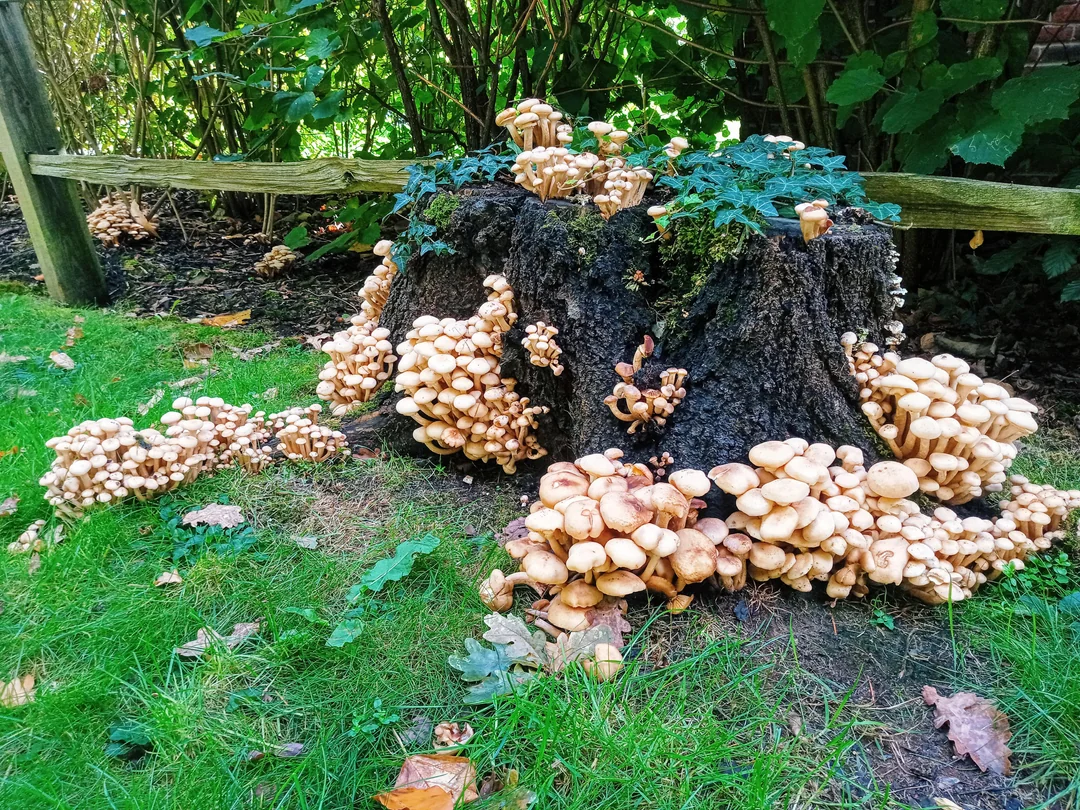
This often points to buried wood like an old stump, big roots, or construction debris. It is not automatically harmful, but it explains why the mushrooms keep returning.
A fairy ring with dead grass that will not recover
If the ring is expanding and grass is dying in a distinct band, you may need to combine aeration, deeply soaking the soil, and dethatching. In severe cases, homeowners sometimes remove and replace the affected turf and soil, but improving water penetration is usually the first, most practical attempt.
Should you use fungicide?
In most home lawns, fungicide is not necessary for mushrooms and often disappoints because it does not remove the food source underground. If mushrooms are showing up because the soil is wet, compacted, or thatchy, correcting those conditions is the more lasting solution.
For severe fairy ring damage, professionals often focus on improving water penetration first, using practices like core aeration, deep irrigation, and sometimes wetting agents (soil surfactants). Fungicide timing and soil movement can be technical, so it is a good moment to lean on a local extension office or a turf pro for guidance suited to your grass type and region.
Repairing thin or bare spots
If mushrooms came with thinning grass, fix the underlying issue first (drainage, compaction, shade, or thatch). Once conditions improve:
- Rake out dead material and loosen the top 1 to 2 inches of soil.
- Overseed (cool-season lawns) or plug/sod (warm-season lawns) in the right season for your turf.
- Keep the seedbed evenly moist until germination, then taper to deeper, less frequent watering.
Quick checklist
- Just a few mushrooms after rain: Pick or mow, then let them pass.
- Mushrooms everywhere: Cut back watering frequency, aerate, and check drainage.
- Spongy lawn or repeating patch: Suspect buried wood or thick thatch. Investigate and improve airflow.
- Fairy ring with browning grass: Aerate and soak deeply to push water past hydrophobic soil. Address thatch.
- Mushrooms at a tree’s base plus tree decline: Consider an arborist consult.
- Kids or dogs in the yard: Remove mushrooms promptly and supervise after wet weather.
To narrow down the “why,” take a close look at what the mushrooms are doing: are they popping up in a ring, along an old root line, in deep shade, or only after heavy watering? That pattern usually points you to the real fix faster than the mushroom itself.