
Monstera Deliciosa Care


Monstera deliciosa is the houseplant that makes people say, “I want that one.” Big, glossy leaves. Those iconic splits. A vibe that screams rainforest, even if you live in a second-floor apartment with one good window and a curious cat.
The secret to a happy Monstera isn’t perfection. It’s consistency. Give it bright, gentle light, water it like a plant (not a schedule), and pot it in a mix that lets roots breathe. Do those three things, and the rest is mostly fine-tuning.
Quick care snapshot
- Light: Bright, indirect light is ideal. A little morning sun is usually fine.
- Water: Water thoroughly when the top part of the soil has dried.
- Humidity: Comfortable home humidity works, but 50 to 70% helps it look lush.
- Soil: Chunky, airy mix that drains fast but holds a bit of moisture.
- Support: A moss pole or sturdy stake encourages larger leaves and upright growth.
- Repotting: About every 1 to 2 years, or when roots start circling and crowding.
Light
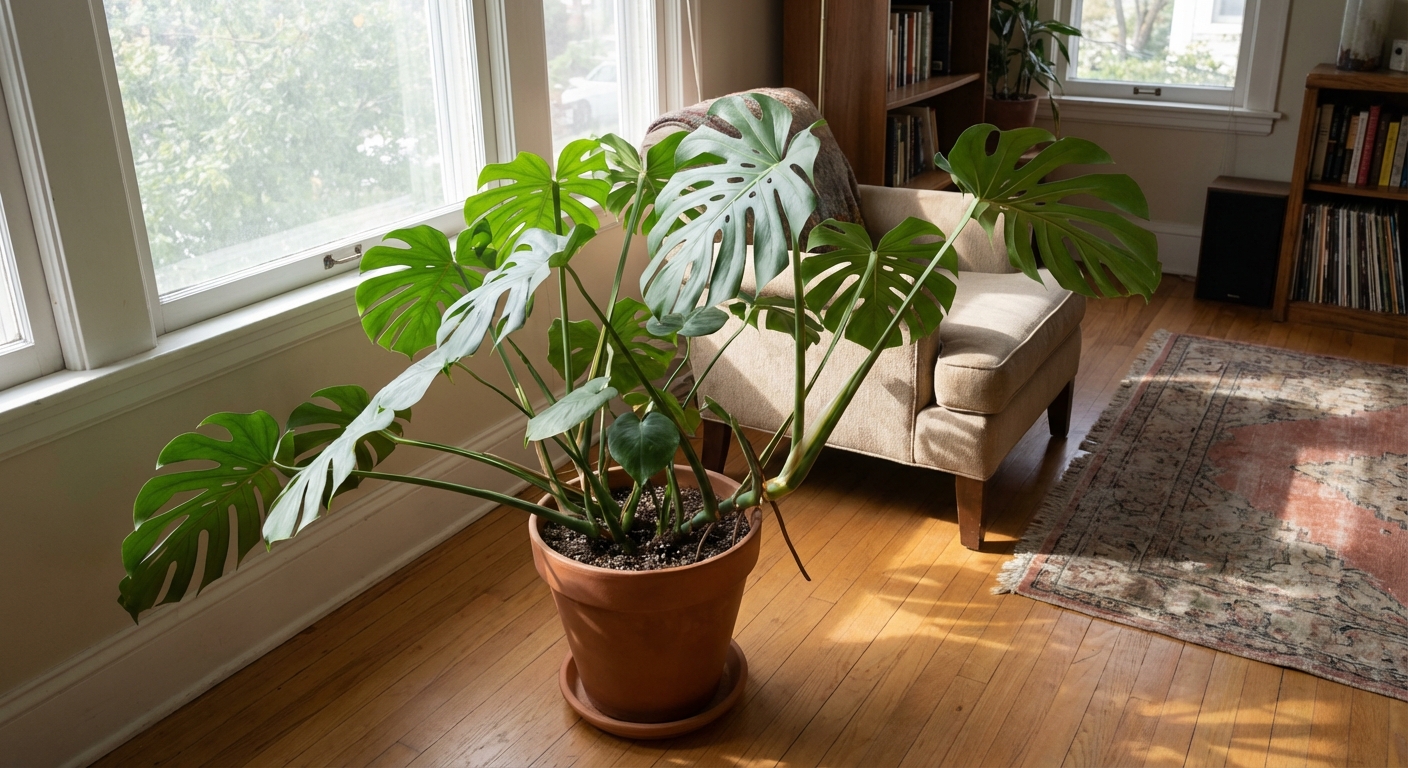
In the wild, Monstera deliciosa starts life on the forest floor and climbs toward filtered light. Indoors, that translates to bright, indirect light. Think a few feet back from an east or south window, or right near a north window.
Best window placements
- East-facing: Fantastic. Gentle morning sun, then bright shade.
- South-facing: Great if filtered through a sheer curtain or placed a few feet back.
- West-facing: Can work, but watch for hot afternoon sun that can scorch leaves.
- North-facing: Often okay for maintenance, but growth may be slower.
Signs your light is off
- Too little light: Long stretches between leaves, smaller leaves, slow growth, fewer splits.
- Too much direct sun: Tan or crispy patches, especially on the side facing the window.
If your Monstera leans, it’s not being dramatic. It’s reaching. Rotate the pot a quarter turn every week or two to keep growth balanced.
Watering
Most Monstera trouble starts with love that looks like overwatering. Monsteras want a soak, then a breather.
My go-to watering method
- Check the soil, not the calendar. For small pots, water when the top 1 to 2 inches feel dry. For larger pots, wait until the top 25 to 33% has dried.
- Water slowly until it drains out the bottom.
- Empty the saucer so roots aren’t sitting in water.
In brighter light and warmer months, you’ll water more often. In winter or low light, less. Your plant doesn’t own a calendar. It owns roots.
What to watch for
- Overwatering clues: Yellowing leaves (often lower ones), limp stems, soil that stays wet for many days, fungus gnats.
- Underwatering clues: Leaves look a bit droopy, soil pulls away from the pot edges, crispy tips that worsen quickly.
Note: If you’re unsure, wait one more day and check again. Monsteras forgive a little dryness better than soggy feet.
Humidity and temperature
Monstera deliciosa is surprisingly adaptable, which is why it’s such a beloved “starter” tropical plant. That said, it looks its best with a little extra moisture in the air.
Ideal range
- Humidity: 50 to 70% is the sweet spot, but typical indoor humidity can still work.
- Temperature: 65 to 85°F is comfortable. Try to avoid cold drafts and sudden temperature drops.
Easy humidity boosts
- Group plants together to create a mini humid microclimate.
- Run a small humidifier nearby during dry seasons.
- Use a pebble tray if you enjoy it, but don’t expect miracles in a large room.
Misting is fine if it makes you happy, but it’s not a long-term humidity solution. I consider it more of a leaf-cleaning ritual, which I fully support.
Soil mix
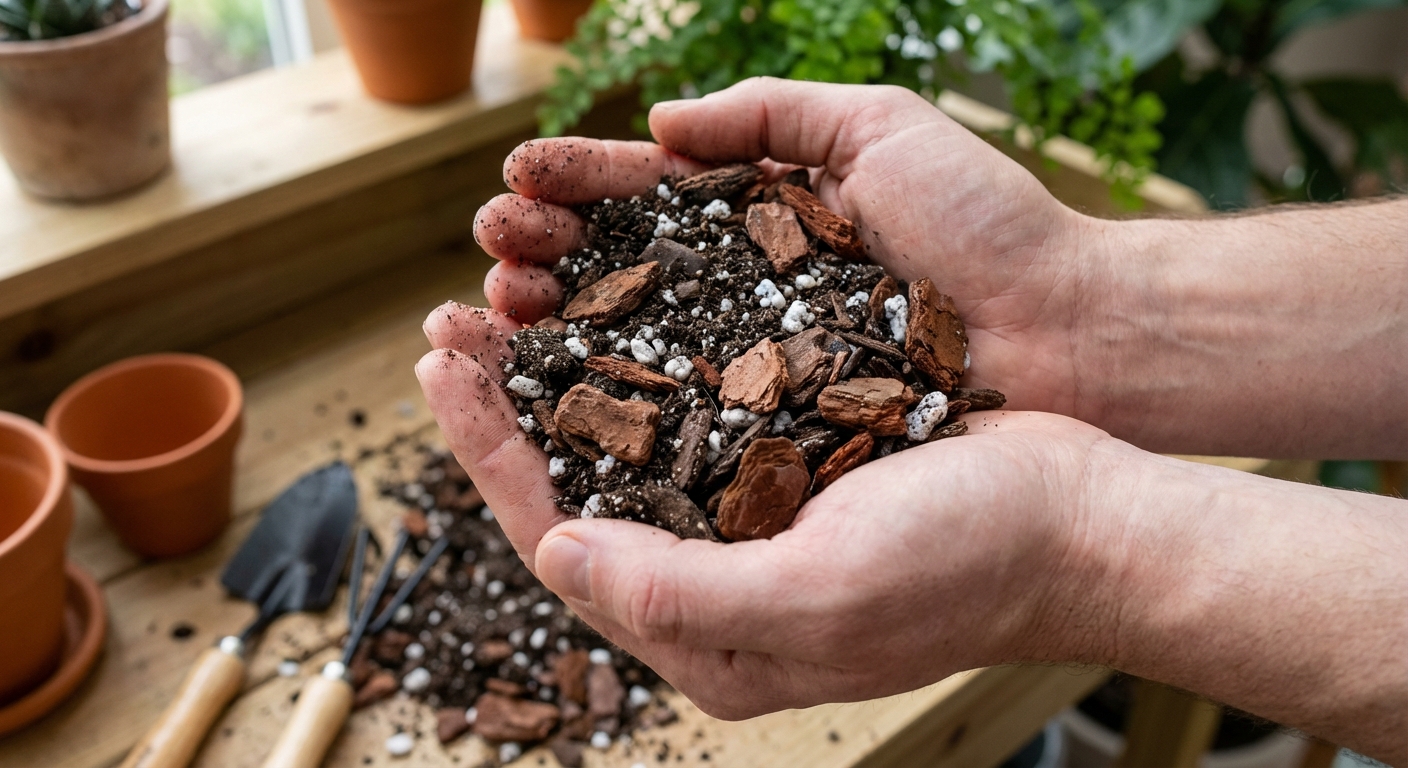
Monsteras are aroids. Their roots love oxygen. If you plant them in dense, water-holding soil, they sulk. If you give them a chunky mix, they take off.
A simple soil recipe
- 2 parts high-quality potting mix (peat-free if you can find it)
- 1 part orchid bark
- 1 part perlite or pumice
- Optional: a small handful of worm castings for gentle, organic nutrition
Choose a pot with drainage holes. If you adore cachepots, keep the plant in a nursery pot inside the decorative one so you can drain thoroughly.
Feeding
A Monstera in fresh potting mix doesn’t need much fertilizer right away. Once it’s actively growing, a light, consistent feed helps it put out larger leaves.
How I fertilize organically
- During spring and summer: feed every 4 to 6 weeks with a balanced liquid fertilizer diluted to half strength.
- In fall and winter: pause, or fertilize lightly only if your plant is still pushing new growth in strong light.
Too much fertilizer can show up as crispy edges or a white crust on the soil surface. If that happens, flush the pot with clean water and ease up.
Support and staking
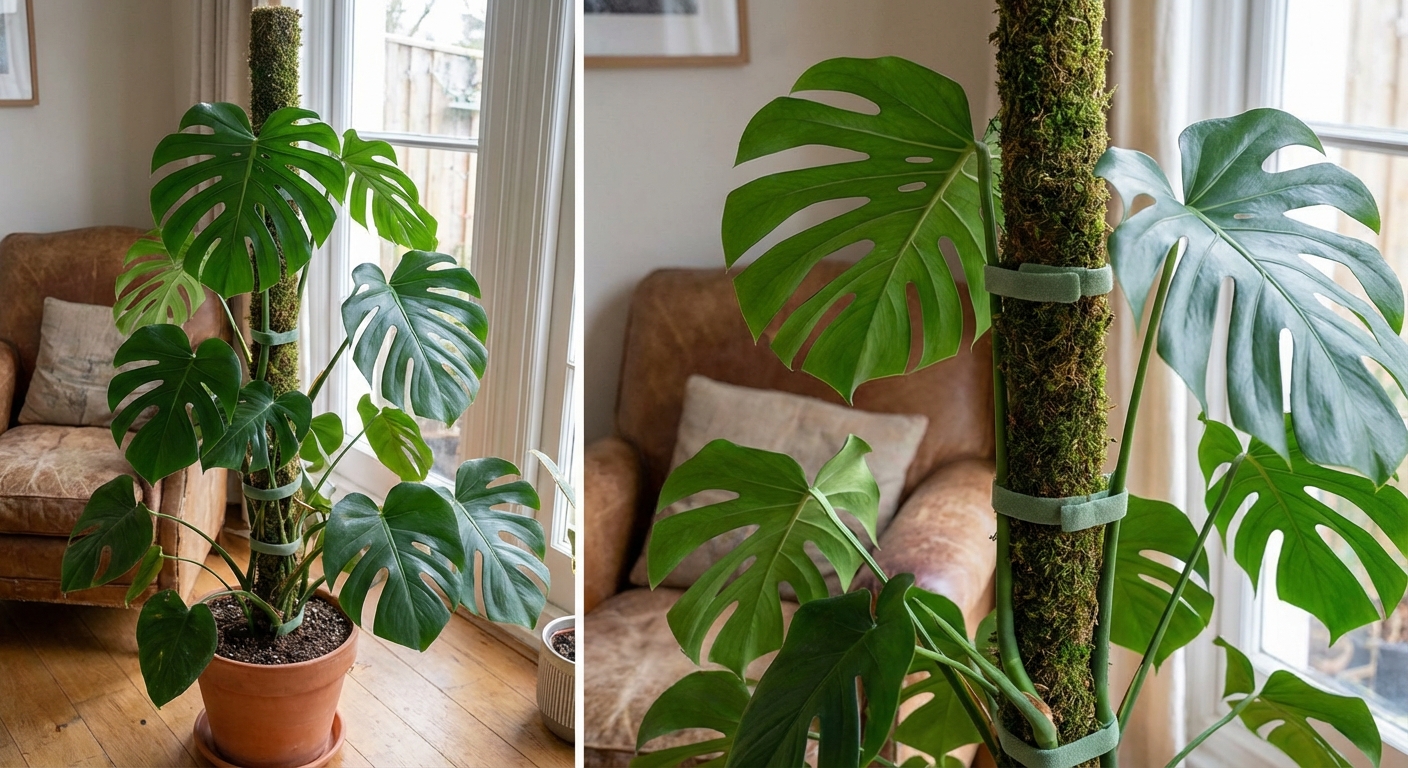
Monsteras are natural climbers. When they’ve got something to grab, they often produce larger leaves over time and grow in a more upright, tidy way.
Choosing support
- Moss pole: Classic choice. Offers texture for aerial roots to cling to.
- Coco coir pole: Less messy than moss, still grippy.
- Wood plank: Simple and sturdy, especially for larger plants.
How to stake without stress
- Install the pole when you repot if possible, before roots fill the pot.
- Gently gather stems and secure with soft plant ties. Avoid tight knots.
- Position the pole behind the main stems so the plant can lean in naturally.
Aerial roots aren’t a problem to solve. They’re your Monstera’s way of exploring. You can guide them toward the pole, tuck them into the soil, or leave them be.
Pruning and leaf care
Pruning a Monstera is mostly about shaping, removing tired leaves, and making space. You don’t need to hack it back unless it’s outgrowing your life.
What to prune
- Yellow leaves: Remove once mostly yellow. The plant has already reabsorbed what it can.
- Damaged leaves: Cosmetic choice. A torn leaf still photosynthesizes.
- Leggy growth: Prune to control length and reset the shape. Monsteras don’t reliably branch like shrubs, so “fullness” usually comes from better light, good support, and sometimes multiple vines in one pot. Bonus: the piece you cut is often perfect for propagation.
How to clean leaves
Dust blocks light. Wipe leaves with a damp microfiber cloth or soft sponge. Skip leaf shine products. They can leave buildup, attract dust, and sometimes cause spotting. Plain water is plenty.
Propagation
If you’ve ever looked at your Monstera and thought, “You’re too big,” congratulations. You’re also one snip away from having two Monsteras. The key is the node. No node, no roots.
How to take a cutting
- Find a node: Look for a small bump or ring on the stem where a leaf and aerial root emerge. An aerial root is helpful, but the node is the real requirement.
- Cut below the node: Use clean shears and take a cutting with at least one node (and ideally one leaf).
- Choose your rooting method:
- Water: Easy to monitor. Keep the node under water and change the water every few days.
- Sphagnum or perlite: Less rot-prone for some people. Keep it lightly moist, not soaked.
- Wait for roots: In bright, indirect light and warm temps, you’ll often see roots within a few weeks. Pot up once roots are a few inches long and branching.
After potting, keep the mix evenly moist (not soggy) for a week or two while it adjusts. Then go back to your normal watering rhythm.
Repotting
Monsteras like being a bit snug, but not strangled. Repotting is your chance to refresh soil structure, upgrade support, and check root health.
When to repot
- Roots circling the bottom or poking out of drainage holes
- Soil drying out extremely fast, sometimes in a day or two
- Stunted growth despite good light and feeding
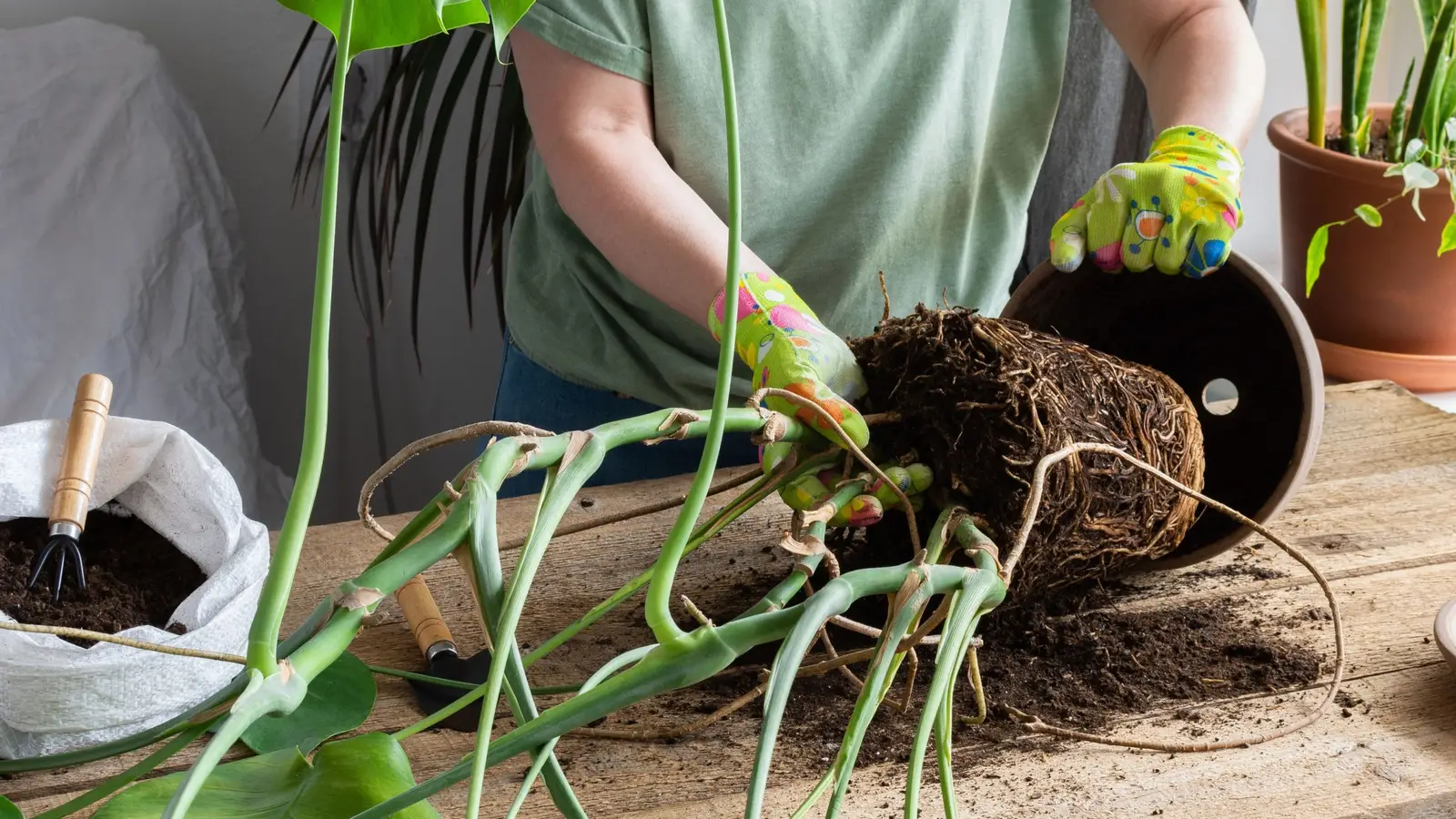
Step-by-step repot
- Choose a pot 1 to 2 inches wider than the current pot.
- Add a base layer of chunky mix.
- Slide the plant out and loosen the outer roots gently.
- Set it at the same soil level as before. Don’t bury the stems deeper.
- Backfill with mix, water thoroughly, and let it drain.
If the plant is huge and you dread repotting, do a top-dress instead. Remove the top 2 inches of soil and replace with fresh mix and a small amount of worm castings.
Troubleshooting
If your Monstera looks unhappy, don’t panic. Plants communicate with leaves because they can’t text us. Here’s how to translate the most common signals.
Yellowing leaves
- Most common cause: Overwatering or soil that stays wet too long.
- Also possible: Natural aging (older, lowest leaves), low light, root stress after repotting.
Fix: Let the soil dry more between waterings, improve drainage with a chunkier mix, and move the plant closer to bright, indirect light. If many leaves yellow quickly and soil smells sour, check roots for rot.
Brown, crispy edges
- Common causes: Dry air, underwatering, salt buildup from fertilizer or hard water.
- Less common: Too much direct sun.
Fix: Water more evenly, consider using filtered water if your tap is very hard, and flush the soil occasionally. A humidifier helps if your home air is desert-dry.
Brown spots or mushy patches
- Common causes: Overwatering, cold draft damage, or leaves staying wet for long periods.
Fix: Adjust watering, keep temperatures stable, and avoid splashing water onto leaves repeatedly. Remove severely damaged leaves with clean shears.
Slow growth
- Most common cause: Not enough light.
- Also possible: Rootbound plant, compacted soil, low nutrients, winter slowdown.
Fix: Increase light first. Then evaluate whether it needs a repot or a refresh of soil structure. If it’s spring or summer, add a gentle feeding routine.
No splits
Fenestrations are influenced by maturity, leaf size, light, and support. Young plants often have solid leaves, even with good care.
Fix: Provide brighter indirect light and a pole to climb. Be patient with maturity. Your Monstera isn’t withholding splits out of spite, I promise.
Pests
Check the undersides of leaves and along the stems, especially if growth looks distorted or the plant seems dusty no matter how often you clean.
- First step: Isolate the plant.
- Wash: Rinse leaves in the shower or wipe down thoroughly.
- Treat: Use insecticidal soap or horticultural oil. Repeat every 7 to 10 days for at least 3 to 4 rounds. For thrips, plan on a longer campaign, and consider a systemic treatment where it’s legal and appropriate for indoor use.
Pet and kid safety
Monstera deliciosa contains calcium oxalate crystals. If chewed, it usually causes mouth irritation, drooling, and discomfort. It’s rarely life-threatening, but it’s definitely not a snack.
- Place the plant out of reach if you’ve got curious nibblers.
- If chewing happens, remove plant bits, rinse the mouth (pets included, if they’ll allow it), offer water, and contact your vet, poison control, or a medical professional if symptoms are significant.
A simple routine
If you take nothing else from this page, take this: bright, indirect light + chunky soil + thoughtful watering solves most Monstera mysteries.
And if you’ve had a rough week and your Monstera gets a little dry, or you forget to rotate it, or you accidentally give it one too many “just a little sip” waterings, welcome to gardening. Adjust, keep going, and let the plant show you what it prefers. Mine does, loudly. I talk back to it, even louder.