Monstera Aerial Roots: What’s Normal, How to Train Them, and When to Cut

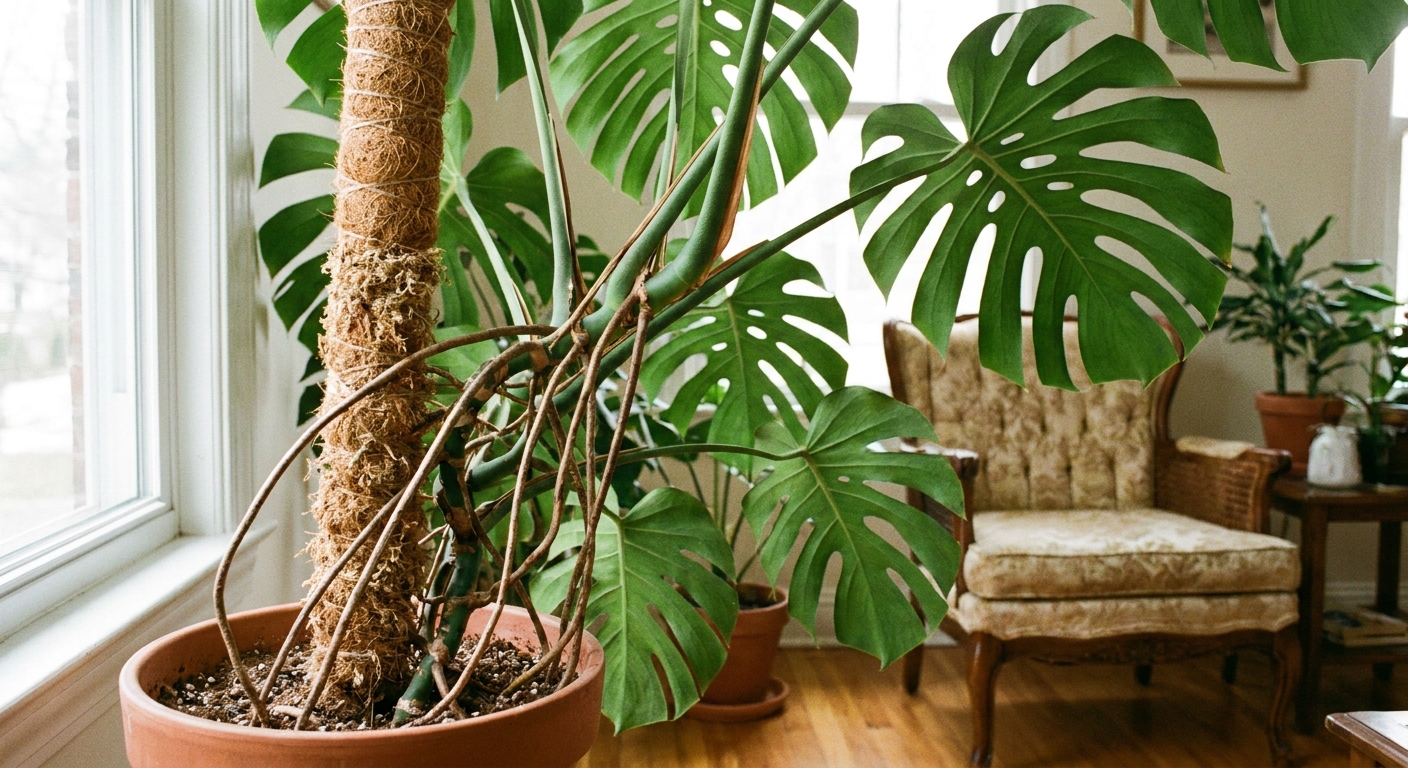
If your Monstera is suddenly growing long, tan “tentacles,” take a breath. Those are aerial roots, and they are one of the most normal, Monstera-being-a-Monstera things you will ever see. In the wild, Monstera deliciosa climbs trees like a polite little plant acrobat. At home, it is simply looking for something to grab and a little extra stability.
This page is all about what aerial roots mean, how to train them so your plant looks intentional instead of unruly, and when it is okay to cut them without stressing your leafy friend.

What aerial roots are
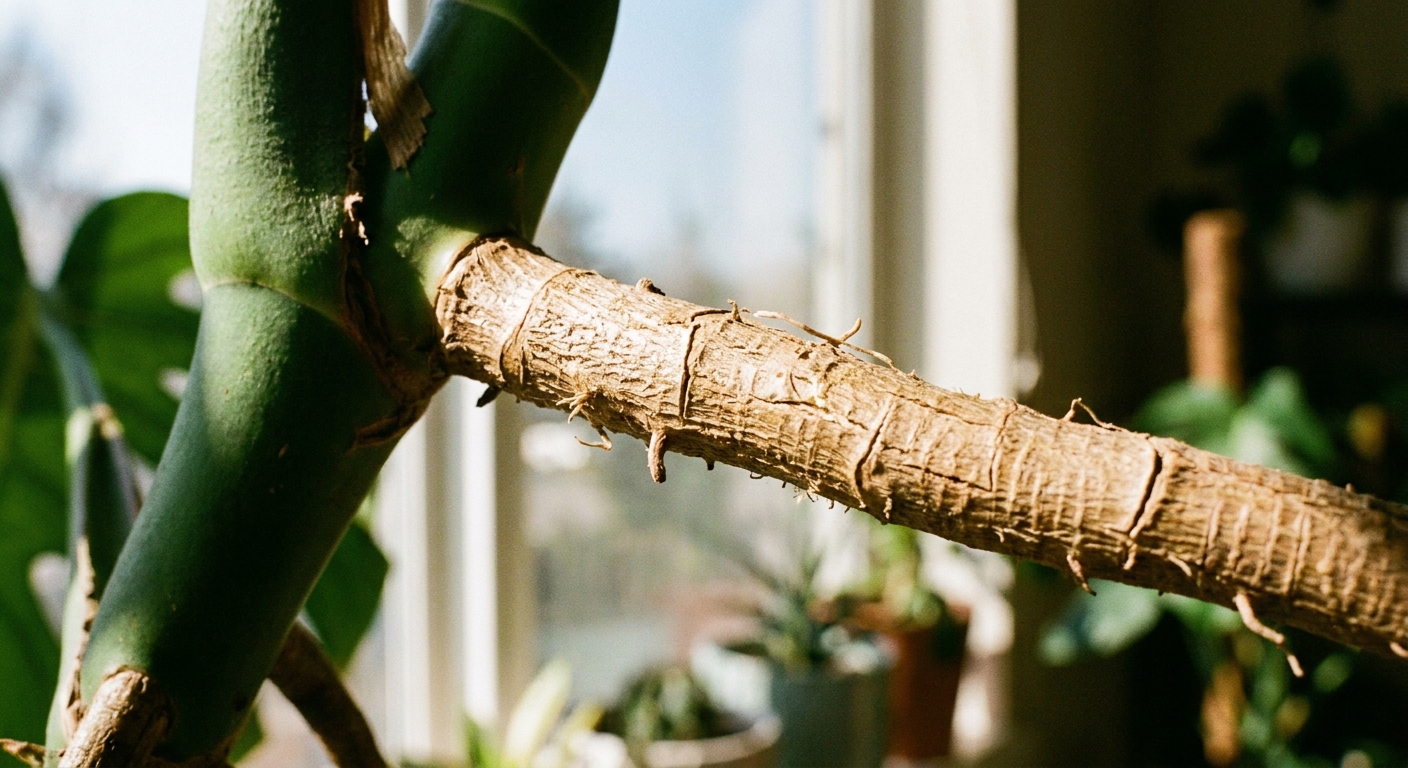
Aerial roots are roots that form above the soil line, usually from little nodes along the stem. On Monstera deliciosa and many other aroids, these roots serve a few key purposes:
- Climbing and anchoring: In nature, they grip bark and crevices to help the vine climb toward brighter light.
- Extra moisture: They can take up some moisture (and tiny amounts of dissolved minerals) when they are in contact with damp surfaces like moss, wet bark, or potting mix. Indoors, they are not really “feeding from the air” so much as grabbing humidity where they can.
- Stability as the plant matures: A big Monstera gets heavy. Aerial roots are part of how it supports itself as it reaches upward.
So if your plant is healthy and growing, aerial roots are often a sign it is entering its “I would like to climb now” era.
What’s normal vs red flags
Totally normal
- A few short roots near new leaves or along older stems
- Long roots that grow outward and then down, as if they are searching for soil
- Roots that look woody, tan, or light brown as they age (corking is normal)
- Occasional branching or splitting at the tip
When to look closer
Aerial roots themselves are rarely “the problem,” but they can hint at what your Monstera wants.
- Lots of aerial roots all at once: Often a sign the plant is actively vining and would love support, better light, or both.
- Wrinkled or shriveled aerial roots: Often from low humidity, inconsistent watering, or simply the root drying and hardening with age. If the leaves look fine, it is usually cosmetic.
- Mushy or blackened aerial roots with a bad smell: This can happen if roots are kept constantly wet (for example, packed into soggy moss) or if there is rot near the node. Check the stem and soil moisture, and improve airflow.
- White fuzzy growth on roots: Could be mold if things are staying too damp, or could be harmless root hairs. If it wipes off easily and smells musty, dry things out and increase ventilation. If you see cottony clumps plus tiny insects, sticky residue, or bumps on stems, inspect for pests like mealybugs or scale and treat accordingly.
Aerial roots and leaf size
Monsteras are natural climbers. When they grow upright with steady light and support, they often produce:
- Larger leaves as the vine matures
- More dramatic fenestrations (the famous splits and holes)
- Shorter gaps between leaves (tighter internodes) in good light
Aerial roots are part of this climbing toolkit. They do not “cause” fenestrations by themselves, but they often show up alongside the growth pattern that leads to bigger, more mature foliage.
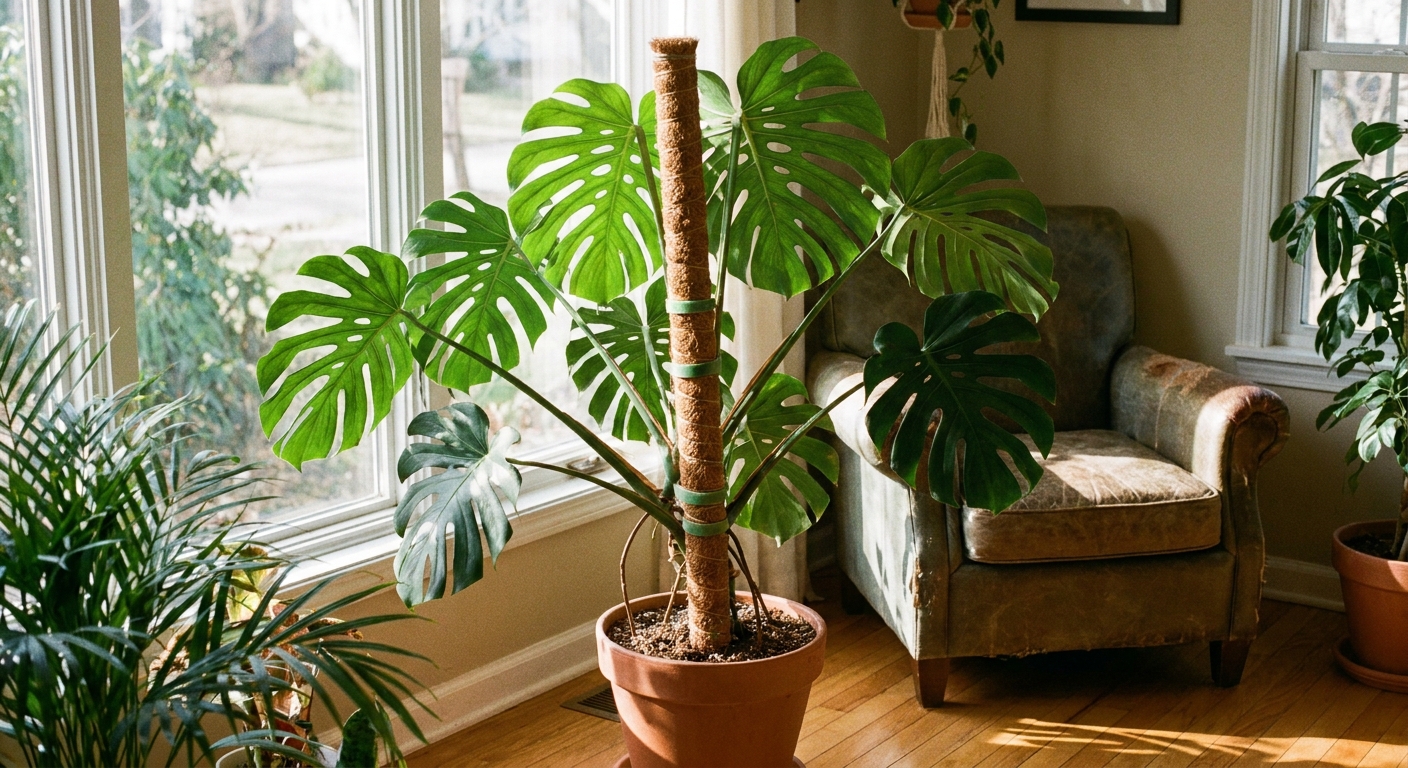
If your Monstera is tossing aerial roots into the air, it is basically saying: I am ready for a tree. At home, a pole works nicely.
When to add support
If your Monstera has any of these signs, it is a good time to add support:
- The plant is leaning hard toward the light or tipping its pot
- Stems are stretching and leaves are facing different directions
- You have multiple long aerial roots reaching out and down
- You want larger, more upright growth instead of a sprawl
Picking the right option
- Moss pole: Best if you want aerial roots to actually attach. A lightly moist pole can encourage roots to grow into it.
- Coir pole or wood plank: Great for structure, but roots may not grip as enthusiastically unless humidity is high.
- Trellis: Useful for guiding stems, less useful for root attachment.
- Wall clips: Handy for a “trained vine” look, but be gentle. Monsteras get heavy and can tear if clipped too tightly.
How to train aerial roots
Training aerial roots is mostly about giving them a destination and then being patient. I like to think of it as offering directions, not forcing obedience.
One golden rule: do not force a stiff root. If it does not bend easily, redirect it a little at a time over several days, or wait for a newer, more flexible root.
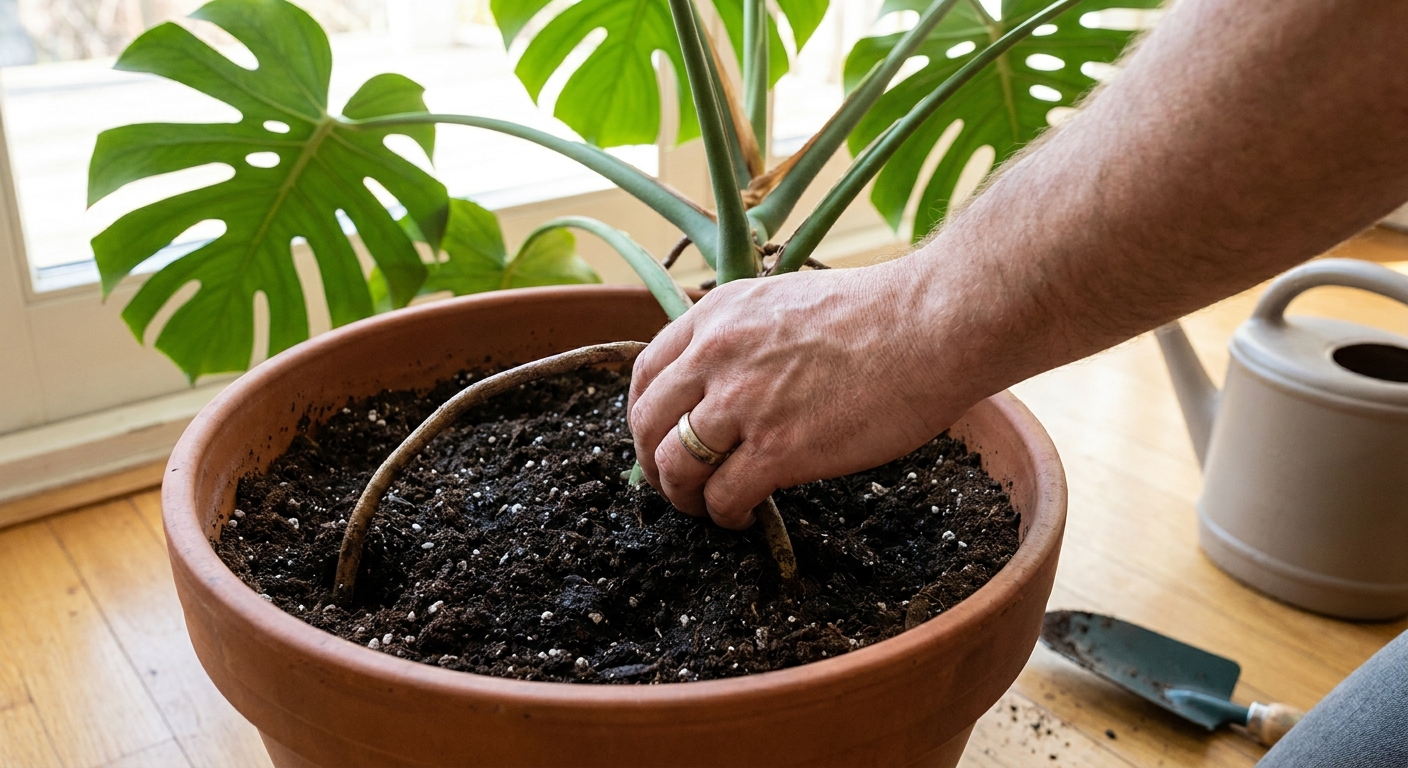
Option 1: Train roots into the pot
This is the simplest and tidiest method.
- Wait until the aerial root is long enough to bend gently.
- Guide it down toward the soil surface.
- Tuck the tip into the potting mix or pin it lightly with a U-shaped landscape staple or a bent plant wire.
- Keep watering habits normal. Do not keep the pot soggy just because a root is entering.
This can slightly improve stability and help the plant access moisture. It is also great if you dislike the octopus vibe.
Option 2: Train roots onto a moss pole
- Place the pole close to the main stem, ideally behind the vine where it naturally wants to climb.
- Orient the plant so the nodes face the pole. That is where the aerial roots emerge, and it makes attachment much easier.
- Use soft ties to secure the stem to the pole first. The stem is what you are training long-term.
- Gently guide aerial roots so they touch the pole.
- Mist the pole or keep it lightly moist if you want roots to actually grow into it. Damp, not dripping.
Pro tip: secure the stem, not the leaf stems (petioles). Leaves need freedom to swivel toward the light.
Option 3: Tuck roots behind the plant
If you are not ready for a pole and you just want things to look calmer, you can guide aerial roots behind the stems so they are less visible. Do this slowly over a week or two if the roots are stiff.
Can you cut aerial roots?
Yes, you can trim aerial roots, and your Monstera will not faint onto a chaise lounge in protest. But there are times when cutting makes sense and times when it is better to train or tuck instead.
When trimming is reasonable
- The root is awkwardly long and constantly snagging things
- It is growing into a walkway, curtain, or pet hangout zone
- You are staking or repotting and a root is in the way
- The root is damaged, mushy, or clearly rotting
When to leave them alone
- Your plant is using them to attach to a pole or support
- You are planning to take cuttings soon (nodes with roots can make propagation easier)
- The plant is very young and still establishing, and the roots are not bothering anyone
Important nuance: Aerial roots are not the same as the main soil root system. Trimming a few aerial roots does not usually harm the plant. That said, repeatedly chopping every new root can slow its ability to climb and stabilize.
How to cut roots safely
If you decide to trim, keep it simple and sanitary.
What you need
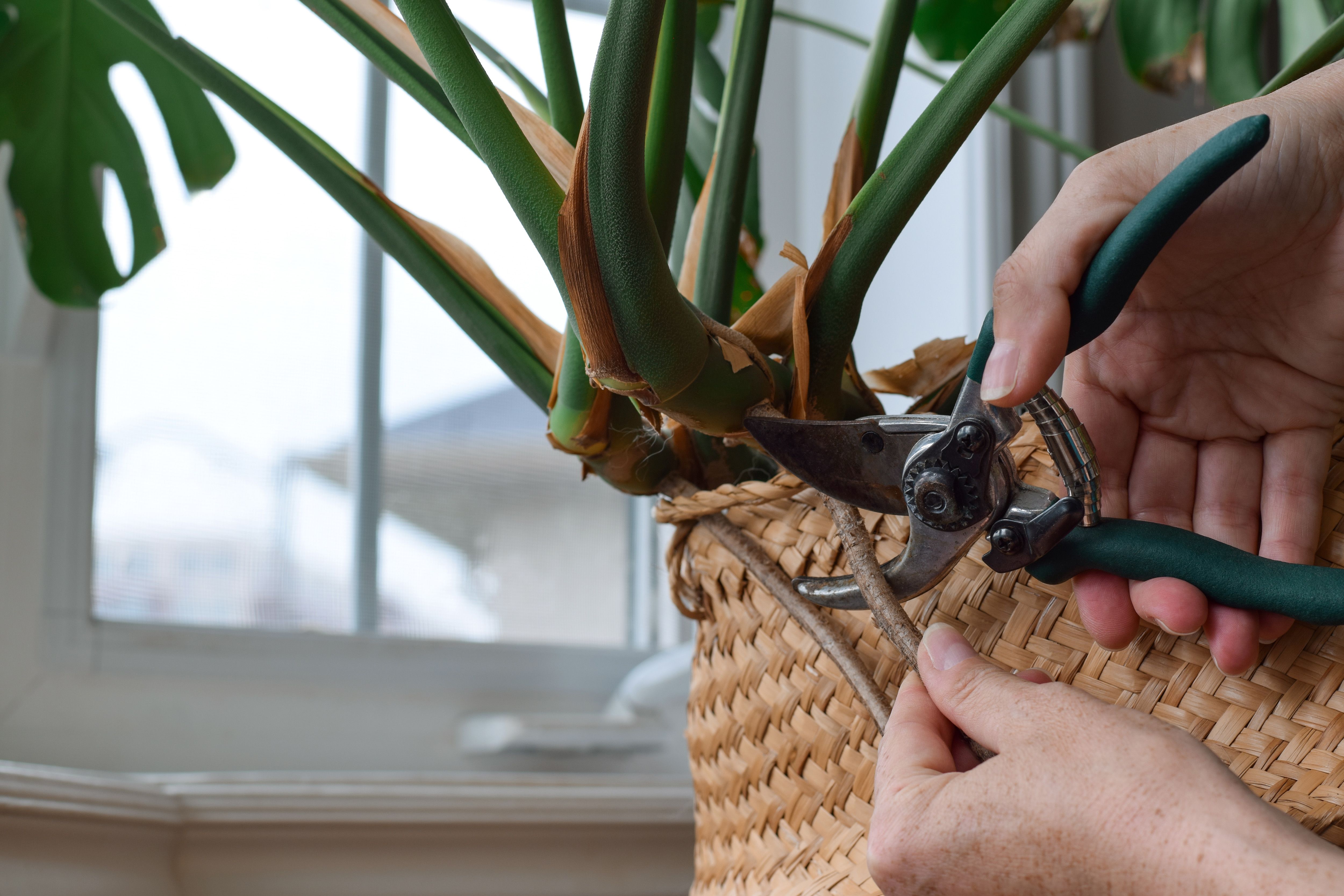
- Clean, sharp pruning snips
- Rubbing alcohol or soap and hot water for cleaning
- A paper towel
Step by step
- Clean your snips with alcohol or hot soapy water.
- Choose your cut point. I like to cut the aerial root a little away from the stem, leaving a short stub rather than slicing flush to the node.
- Make one decisive cut. Avoid crushing or tearing.
- Let it dry. No need to seal it. Just give the plant decent airflow and avoid getting the fresh cut repeatedly wet.
If a cut root tip oozes a little sap, that is normal. Wipe it gently. Aftercare is mostly about cleanliness, airflow, and not overwatering.
Tucking vs trimming
If the root can be guided somewhere useful, I tuck. If it is truly in the way, I trim.
- Tuck when you have a pole, a pot nearby, or a hidden path behind the vine.
- Trim when it is creating daily annoyance, getting damaged repeatedly, or showing signs of rot.
And if you are on the fence, try tucking first. You can always cut later. You cannot un-cut, at least not without waiting for your plant to grow a fresh one.
Common questions
Do aerial roots mean my Monstera needs water?
Not necessarily. They are more about climbing and anchoring. If the plant is also drooping, the soil is bone-dry, or leaves are curling, then yes, it might be thirsty. But aerial roots alone are not a watering alarm.
Should I put aerial roots in water?
You can, but it is not required. Constantly keeping an aerial root in a jar of water can work for propagation experiments, but for a potted plant it can be messy and may encourage algae or rot if airflow is poor. Training into the pot or onto a support is usually cleaner.
Can aerial roots damage walls?
They can cling to textured surfaces, and over time they may leave marks or pull at paint, especially in humid homes. If you want a wall-trained Monstera, use clips and keep aerial roots guided to a pole or into the pot rather than letting them attach directly to drywall.
My aerial roots are growing toward the floor. Is that normal?
Completely normal. In nature, they often grow downward until they find soil, leaf litter, or a trunk to latch onto.
Quick troubleshooting
- Roots are long and searching: Add a pole, increase light gradually, or both.
- Roots are shriveling: Consider slightly higher humidity and more consistent watering. If the plant otherwise looks great, it may just be cosmetic aging.
- Roots are mushy: Too wet and too little airflow. Let supports dry a bit and check the stem nodes.
- Roots are everywhere: Your Monstera is ready to be trained upward. It is not misbehaving, it is maturing.
If you remember one thing: aerial roots are not a flaw. They are your Monstera showing you its natural instincts. Give it something to climb, guide the roots with a gentle hand, and your plant will reward you with that lush, leafy drama we all came here for.