
Monstera Adansonii Care

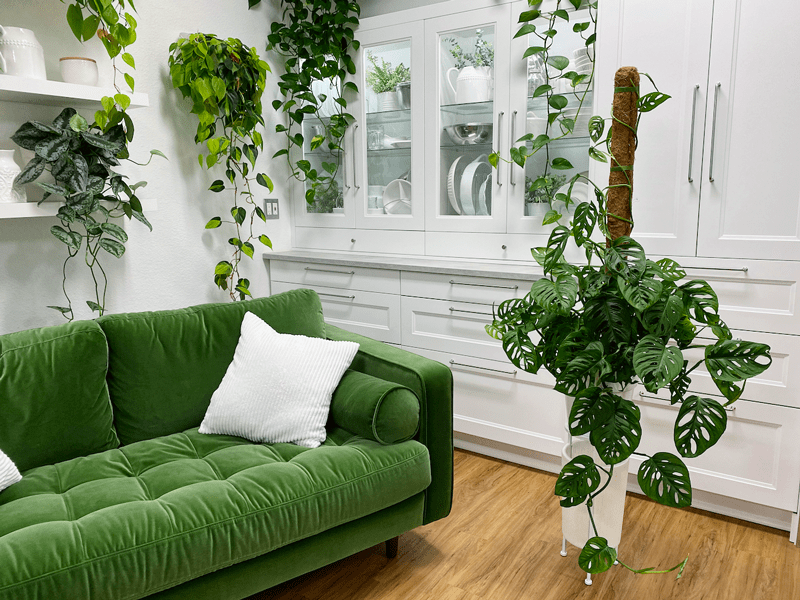
Monstera adansonii is the plant that makes people fall in love with holes in leaves. Those little windows, called fenestrations, look wild and tropical, but the care is wonderfully doable once you understand one key truth: this is a vining monstera. It wants to climb, it likes even moisture, and it gets dramatic when it sits in heavy, soggy soil.
If you have ever cared for Monstera deliciosa, you are in the right neighborhood, but not on the same street. Adansonii is lighter, faster, and fussier about drying out. Let’s get you to that lush, trailing or climbing “Swiss cheese vine” look without the panic watering.
Toxicity
Quick but important note: Monstera adansonii contains insoluble calcium oxalates and is toxic if chewed or ingested by cats, dogs, and people. Keep it out of reach of curious pets and kids, and wash hands after pruning if you have sensitive skin.
Monstera adansonii vs Monstera deliciosa
These two get mixed up constantly, mostly because both develop holes and both are sold as “Swiss cheese plant.” Here is the simple way I explain it at the nursery aisle.
- Growth habit: Adansonii is a vine that naturally climbs and trails. Deliciosa is thicker and more upright and can look self-supporting when young, but it is still a climber at heart and does best with a pole as it matures.
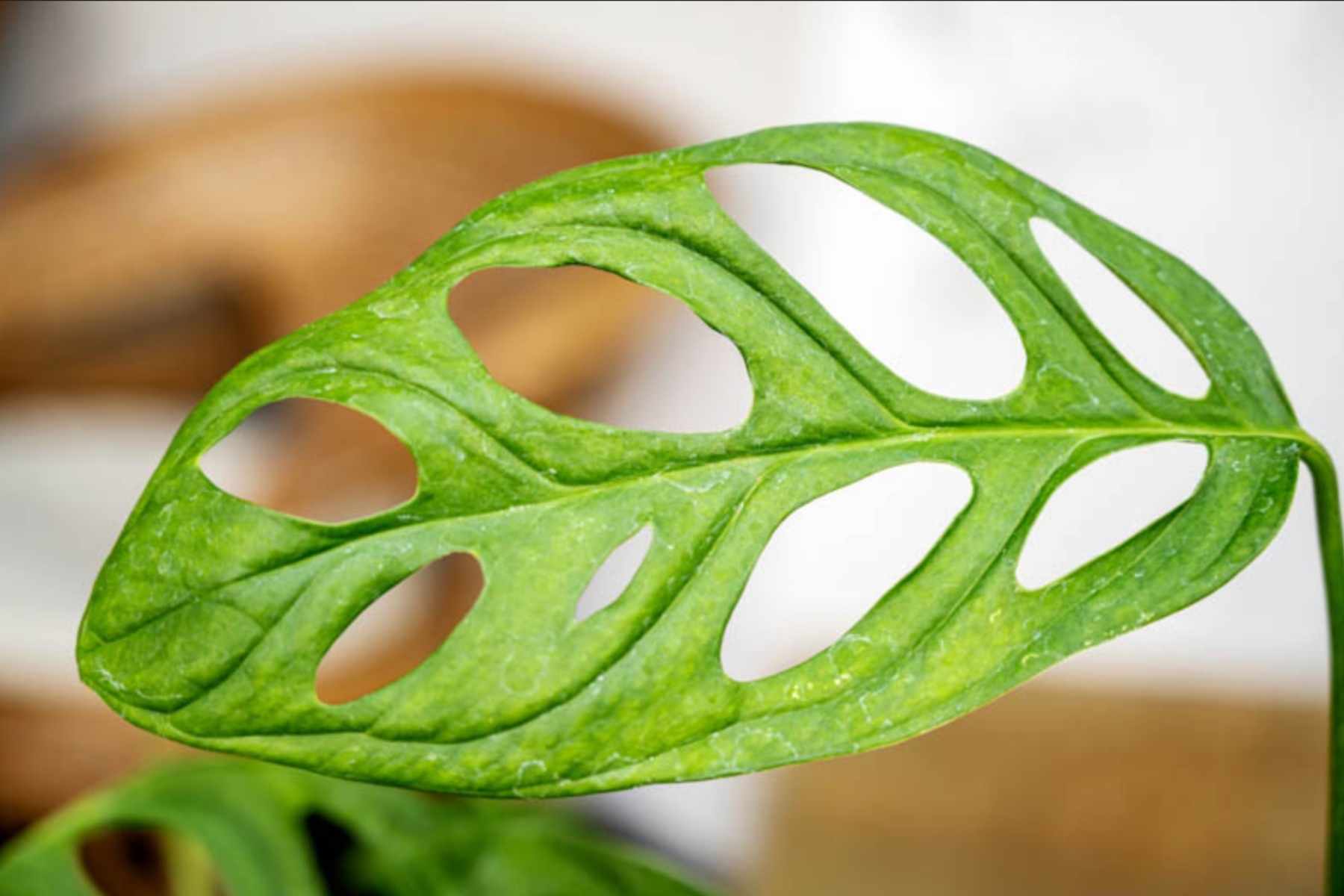
- Leaf shape: Adansonii leaves are smaller, thinner, and more oval. Deliciosa leaves are larger, thicker, and more heart-shaped as they mature.
- Fenestrations: Adansonii tends to have more holes earlier. Deliciosa tends to develop splits to the edges as it matures.
- Water sensitivity: Adansonii usually dislikes drying out too far and too long. Deliciosa is often a bit more forgiving.
- Support needs: Adansonii looks best when given something to climb. Deliciosa also likes support, but can still look “plant-like” without it for a while.
Light
Give Monstera adansonii bright, indirect light for the best growth and the prettiest fenestrations.
- Best placement: A few feet back from an east or south window, or near a bright west window filtered by a sheer curtain. If your sun is intense (season, elevation, or a very sunny room), back it up a bit more or add filtering.
- Low light: It will survive, but growth gets leggy and leaves stay smaller with fewer holes.
- Too much sun: Direct midday sun can bleach or scorch leaves, especially in summer.
If your vine is stretching toward the window, rotate the pot a quarter turn every week or two. It makes the growth more even, and yes, I talk to mine while I do it.
Grow light tip: Under a grow light, aim for about 12 to 14 hours a day and keep the light close enough to be effective without heating the leaves.
Watering
Monstera adansonii likes a rhythm: water thoroughly, then let the top layer dry slightly, then water again. The goal is even moisture, not constant wetness.
When to water
- Check the soil with a finger. Water when the top 1 to 2 inches feel dry.
- If the pot is small and the plant is rooty, you may water more often. If it is in a big pot with lots of unused soil, water less often.
How to water (my no-drama method)
- Water slowly until it runs from the drainage holes.
- Let it drain completely. Do not let it sit in a saucer of water.
- Empty the cachepot if you use one.
Seasonal note: In winter, growth slows and soil dries more slowly. Keep checking, but expect to water less.
Humidity and temperature
This vine is happiest when the air feels gently tropical. You do not need a greenhouse, but you do want to avoid crispy-dry air.
- Ideal humidity: Around 50 to 70%. It can do fine around 40 to 50% too, but growth is usually slower and leaf edges may look less perfect.
- Easy humidity boosts: A humidifier nearby is the real MVP. Grouping plants helps a bit too. A pebble tray can give a small, local boost right around the plant, but it is not a whole-room solution.
- Temperature: Aim for 65 to 85°F (18 to 29°C). Avoid cold drafts and temperatures below about 55°F (13°C).
Soil mix and pot
The fastest way to make Monstera adansonii unhappy is to plant it in dense, water-holding soil. You want a mix that stays lightly moist but drains quickly and pulls in oxygen.
A great DIY soil mix
- 2 parts quality indoor potting mix
- 1 part orchid bark (for chunk and airflow)
- 1 part perlite or pumice (for drainage)
- Optional: a small handful of worm castings for gentle nutrition
Pot tips
- Always use a pot with drainage holes.
- Choose a pot only 1 to 2 inches wider than the root ball when repotting. Oversized pots dry slowly and invite root rot.
- Repot when roots are circling and watering becomes frequent, usually every 1 to 2 years in active growth.
Fertilizer
Monstera adansonii is a steady grower when it has light and warmth, so a little food helps it keep pumping out those holey leaves.
- In spring and summer, fertilize every 2 to 4 weeks with a balanced houseplant fertilizer at half strength.
- In fall and winter, reduce to once a month or pause if growth slows significantly.
- If leaf tips brown or the soil crusts with mineral buildup, flush the pot with plain water periodically (about every 1 to 3 months, depending on your water and fertilizer routine), then back off the fertilizer.
Support and pruning
If you want bigger leaves and a fuller plant, give your Monstera adansonii a climbing job. When it climbs, it can mature and size up. When it only trails, it often stays smaller and leggier.
Best supports
- Moss pole or coco coir pole for aerial roots to grab
- Trellis for a tidier, decorative look
- Wall hooks with gentle plant ties (great for renters if you plan carefully)
How to prune
- Snip just above a node to encourage branching.
- Use clean scissors or pruners.
- Do not toss those cuttings. They are perfect for propagation.
Propagation
Monstera adansonii is one of those plants that makes you feel like a wizard. It roots readily as long as your cutting includes a node, which is the spot where a leaf meets the stem, often with a little aerial root nub nearby.
Water propagation
- Cut a vine section with at least one node (two nodes is even better).
- Remove any leaf that would sit underwater.
- Place the node in a jar of water in bright, indirect light.
- Change the water every few days or whenever it looks cloudy.
- Pot up when roots are a few inches long and have started branching.
Soil propagation
- Plant the node into a lightly moist, airy mix.
- Keep humidity higher by loosely covering with a clear bag (leave some airflow).
- Keep the mix slightly moist until you see new growth, then water normally.
Pro tip: For a fuller plant, tuck multiple rooted cuttings back into the same pot. Monstera adansonii looks its best when it is a little wild and abundant.
Common problems and fixes
Yellow leaves
Yellowing is usually a watering issue, but it can have a few different flavors.
- Yellow with soft stems, soggy soil: Overwatering or poor drainage. Let the mix dry more between waterings, and consider repotting into a chunkier blend.
- Yellow with dry soil and limp leaves: Underwatering. Water thoroughly and keep a closer eye on that “top 1 to 2 inches dry” checkpoint.
- Yellowing older leaves only: Normal aging, especially if new growth looks healthy.
Leggy growth and small leaves
- Most common cause: Not enough light.
- Fix: Move it closer to a bright window, add a grow light, and prune back long bare stretches. Then give it a pole to climb.
Browning leaf tips or edges
- Common causes: Low humidity, inconsistent watering, fertilizer buildup, or hard water.
- Fix: Increase humidity, water more evenly, flush the soil every 1 to 3 months as needed, and consider filtered or dechlorinated water if your tap water is very hard.
Leaves curling
- Usually: Thirst, heat, or a blast of dry air.
- Fix: Check soil moisture, move away from vents, and stabilize humidity.
No holes in the leaves
Fenestrations come from maturity plus good conditions.
- Increase light to bright, indirect.
- Give it support so it can climb.
- Be patient. New leaves often fenestrate more than old ones.
Pests to watch for
Monstera adansonii can attract the usual houseplant suspects, especially when the air is dry or the plant is stressed.
- Spider mites: Fine webbing, stippled leaves. Rinse the plant, then treat with insecticidal soap or horticultural oil.
- Mealybugs: White cottony clusters at nodes. Dab with isopropyl alcohol on a cotton swab, then follow with a gentle soap spray.
- Thrips: Silvery streaks and distorted growth. Isolate the plant and treat promptly.
Whatever the pest, isolation is your best first move. Pests love a social life.
Quick ID tip
One more thing that helps in the “Swiss cheese” confusion spiral: Rhaphidophora tetrasperma is often sold as “mini monstera,” but it is not a Monstera and its leaves split to the edges instead of forming lots of oval holes.
Quick care checklist
- Light: Bright, indirect
- Water: When top 1 to 2 inches are dry
- Humidity: 50 to 70% preferred (40 to 50% is okay)
- Soil: Chunky, airy, fast-draining
- Support: Moss pole or trellis for bigger leaves
- Feed: Half-strength fertilizer in spring and summer
If you remember nothing else, remember this: a Swiss cheese vine wants light, airflow at the roots, and a climbing goal. Give it those three and it will repay you with leaf after leaf of holey joy.