
Money Tree Care for Beginners

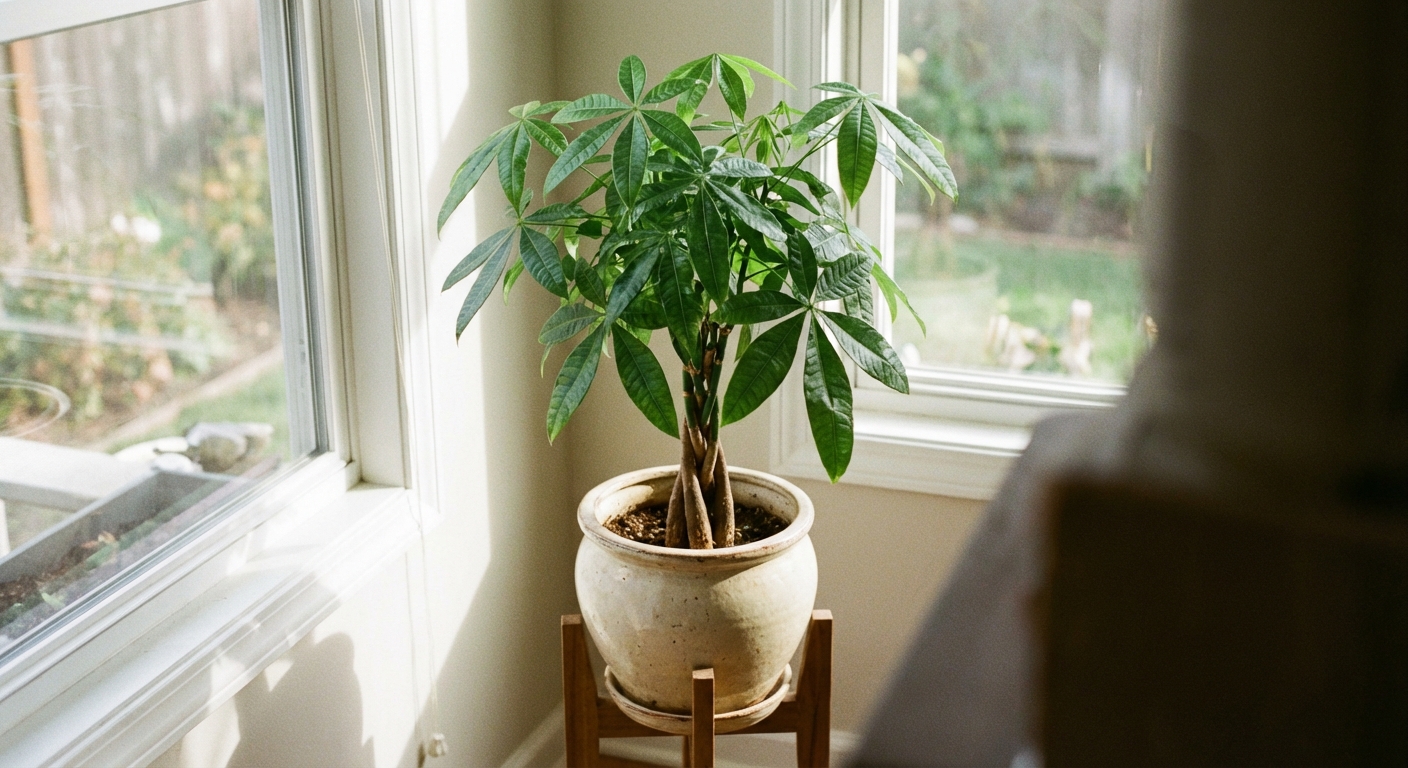
If you've ever wanted a houseplant that looks like it has its life together even when you don't, meet the money tree. Pachira aquatica is famous for its glossy, hand-shaped leaves, forgiving nature, and those twisty braided trunks you see in stores. It's also one of my favorite “confidence builder” plants because it gives you clear signals when it's thirsty or unhappy, and it bounces back with a little care.
Good news for beginners: money trees are genuinely low-maintenance indoors when you give them bright light, a pot with drainage, and a watering routine that lets the soil partly dry.
Quick nerdy note: plenty of commercial “money trees” are sold as Pachira glabra (or labeled loosely). Care is essentially the same, so you can use this guide either way.
Quick care basics
- Light: Bright, indirect light is ideal. It tolerates medium light but grows slower.
- Water: Water thoroughly, then let the soil partly dry before watering again.
- Soil: Airy, fast-draining potting mix. Think “moist but never swampy.”
- Humidity: Average home humidity is fine. Extra humidity helps in winter.
- Temp: 65 to 80°F (18 to 27°C) is the sweet spot. Avoid cold drafts and hot air vents.
- Growth: Moderate. Faster in spring and summer with good light.
- Pet safety: Often described as “generally considered non-toxic,” but lists vary by source and common-name mix-ups. If your pet chews plants, keep it out of reach and check a trusted reference like the ASPCA database for your specific plant.
Getting to know your money tree
The money tree is a tropical wetland tree in its native habitat, but indoors it behaves like a polite roommate. It wants consistent warmth, a drink when it's actually thirsty, and enough light to power new leaves. The biggest beginner mistake is loving it with too much water.
If yours has a braided trunk, that braid is usually done when the plant is young and flexible. It isn't a “natural” growth habit, but it's a common nursery training style and it can be maintained if you choose.
One more helpful thing to know: a braided money tree is often multiple plants sharing one pot. That can look great, but it also means you should check for tight bands or ties near the base that can cut in as the trunks thicken.
Light requirements
Money trees do best in bright, indirect light, like a few feet back from a sunny window or right near an east-facing window.
Best window spots
- East-facing: Excellent. Gentle morning sun is usually perfect.
- South or west-facing: Great if filtered by a sheer curtain or set back from the glass to prevent leaf scorch.
- North-facing: Often too dim for strong growth, but the plant may survive. Expect slower, leggier stems.
Signs the light is off
- Too little light: Long, stretched stems, smaller leaves, slower growth, leaning toward the window.
- Too much direct sun: Pale, scorched patches on leaves, crispy tips, leaves that look bleached.
Clara tip: Rotate your pot a quarter turn every week or two. It keeps the canopy even and prevents the classic “money tree doing yoga toward the window” look.
How to water (no panic watering)
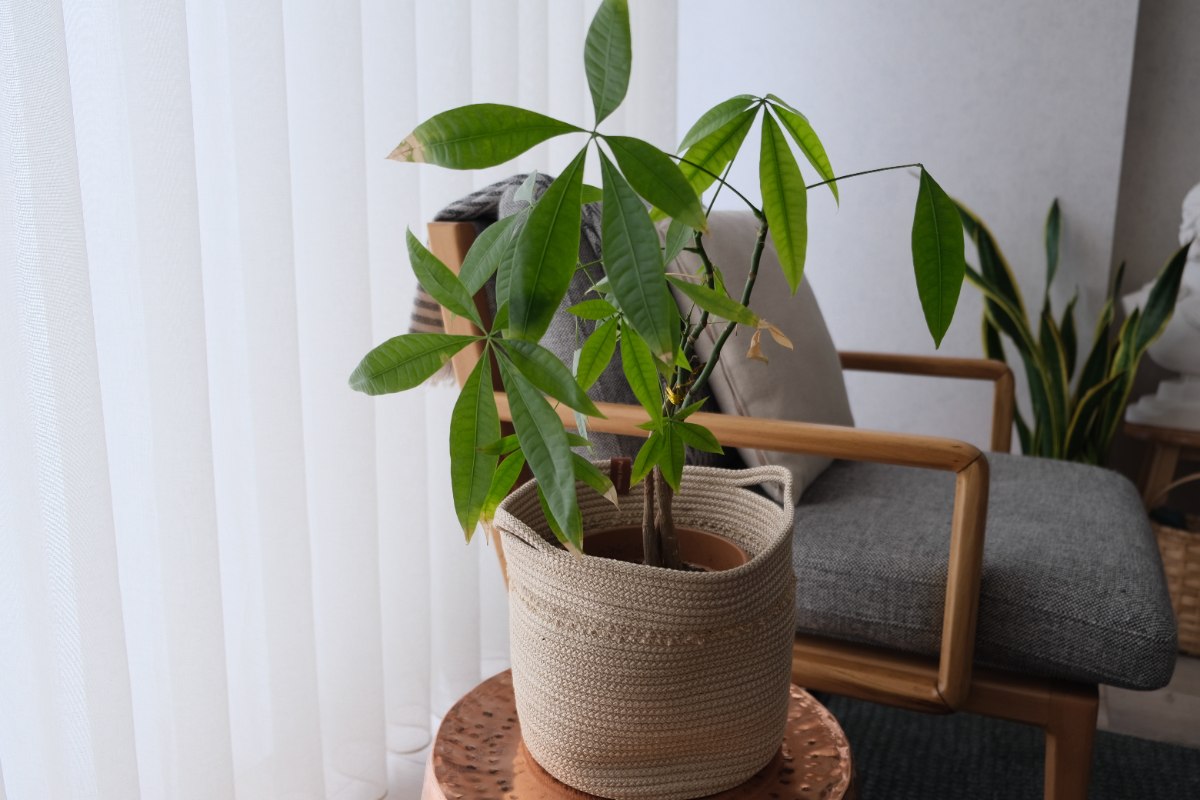
Money trees like a rhythm: a deep watering, then time to breathe. Your goal is even moisture with a partial dry-down between waterings.
The beginner-friendly method
- Check the soil first. When the top part of the soil feels dry, it's time.
- Water thoroughly. Water until it runs out the drainage holes.
- Empty the saucer. Don't let the pot sit in water.
- Wait again. The schedule changes with light, season, and pot size.
How dry is “dry enough”?
- Small pots: Let the top 1 to 2 inches dry, or roughly the top 25 to 50% of the pot.
- Larger pots: Let the top 2 to 4 inches dry, or about the top third to half of the pot.
Hands-off soil test
If you hate the finger test, use a wooden chopstick or skewer. Push it down into the root zone, wait a minute, and pull it out. If it comes out damp with soil clinging, wait. If it's mostly dry, you're good to water.
Typical watering frequency
- Spring and summer: Often every 7 to 14 days
- Fall and winter: Often every 14 to 21 days
Those are averages, not rules. A money tree in bright light and a terracotta pot will dry faster than one in medium light and a plastic pot.
Common watering problems
- Overwatering: Yellowing leaves, leaf drop, soft trunk near the soil line, soil that stays wet for many days
- Underwatering: Droopy leaves, dry crispy leaf edges, soil pulling away from the pot sides
Clara tip: If the soil is bone-dry and water runs straight through, your mix may be hydrophobic. Soak the pot in a bowl of water for 15 to 30 minutes, then drain well.
Best soil and pot setup
The secret to a low-stress money tree is drainage plus airflow. You want soil that holds some moisture but never turns into a soggy brick.
An easy soil recipe
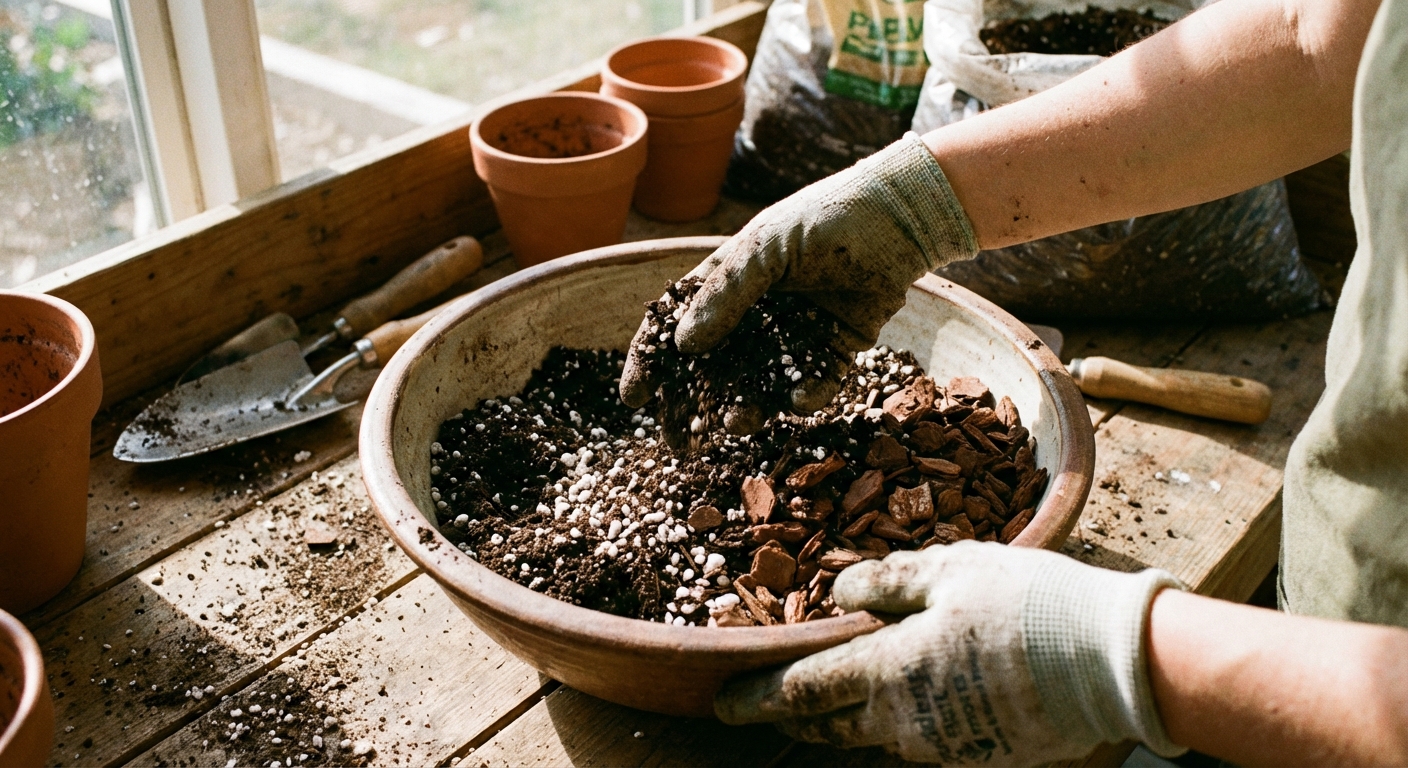
- 2 parts quality indoor potting mix
- 1 part perlite or pumice
- 1 part orchid bark (or coco chips) for chunkiness
If you prefer a bagged option, look for an aroid mix or a “chunky indoor plant mix” and add a little extra perlite if it feels heavy.
Pot choice matters
- Always use a pot with drainage holes. Non-negotiable for beginners.
- Terracotta: Great if you tend to overwater because it breathes.
- Plastic or glazed ceramic: Holds moisture longer, which can be helpful in very bright light or dry homes.
Braiding and training
That braided trunk is part plant, part hairstyle. If you buy a braided money tree, it was trained when the stems were young. Indoors, it'll keep growing upward and may loosen over time.
Should you keep the braid?
- Keep it if you love the look and don't mind occasional training.
- Let it go natural if you want sturdier, more tree-like growth with less fuss.
How to maintain or start a braid
Best timing: late spring through summer, when growth is active.
- Choose flexible stems. If they feel woody and stiff, don't force it.
- Braid loosely. You should be able to slide a finger between stems.
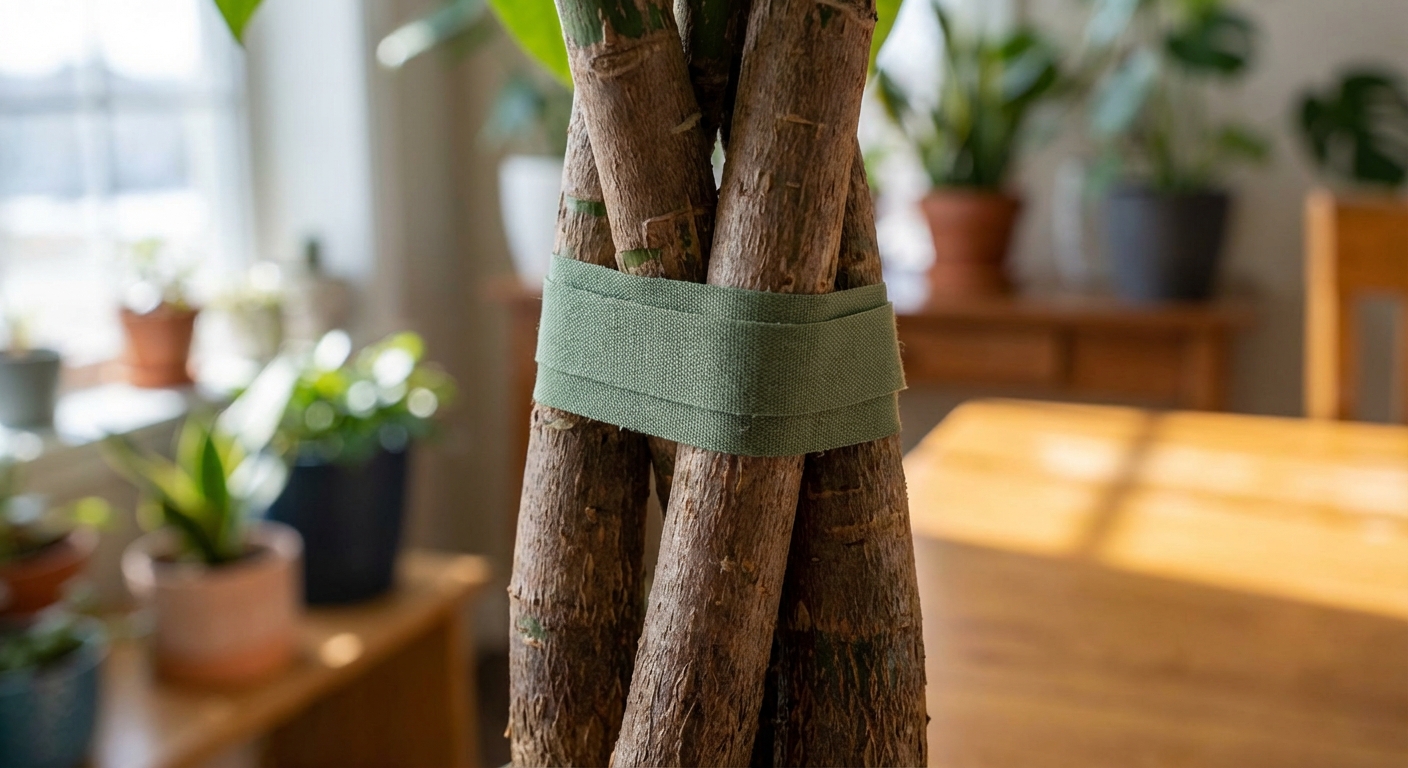
- Use soft ties. Velcro plant tape or soft fabric strips work well. Avoid wire that can cut in.
- Check monthly. Loosen ties as stems thicken to prevent girdling.
Important: Many nursery braids are secured with tight ties near the base. If you see ties cutting into the trunk, remove and replace them with softer, looser supports.
Pruning and shaping
If your money tree is getting tall and sparse, a little pruning can turn it from “leggy stick” to “lush canopy.” Pruning also helps balance a plant that leans toward the light.
When to prune
Prune in spring or early summer for the quickest rebound.
How to prune
- Use clean, sharp pruners.
- Choose a stem that's getting too tall or bare.
- Cut just above a leaf node (where a leaf attaches).
- Don't remove more than about 25 to 30% of the plant at once.
How to encourage growth
- Increase light first. More light equals more energy for new leaves.
- Fertilize lightly in spring and summer.
- Repot only when needed. Oversized pots stay wet longer and can slow growth.
- Keep leaves clean. Dust blocks light. Wipe leaves with a damp cloth.
Clara tip: Save healthy cuttings. Money tree propagation isn't always as effortless as pothos, and success rates vary. Tip or stem cuttings root best with warmth, bright indirect light, and higher humidity. Be patient.
Fertilizing
Money trees aren't heavy feeders. Too much fertilizer can cause salt buildup and leaf stress, especially in low light.
- When: Spring through early fall
- How often: Every 4 to 6 weeks
- What: A balanced houseplant fertilizer (like 10-10-10 or similar), used at half strength
- Skip fertilizer: In winter or if the plant is stressed, recently repotted, or in very low light
If you see a white crust on the soil surface or rim of the pot, flush the soil with plain water (let it drain fully) and ease up on feeding.
Repotting and root health
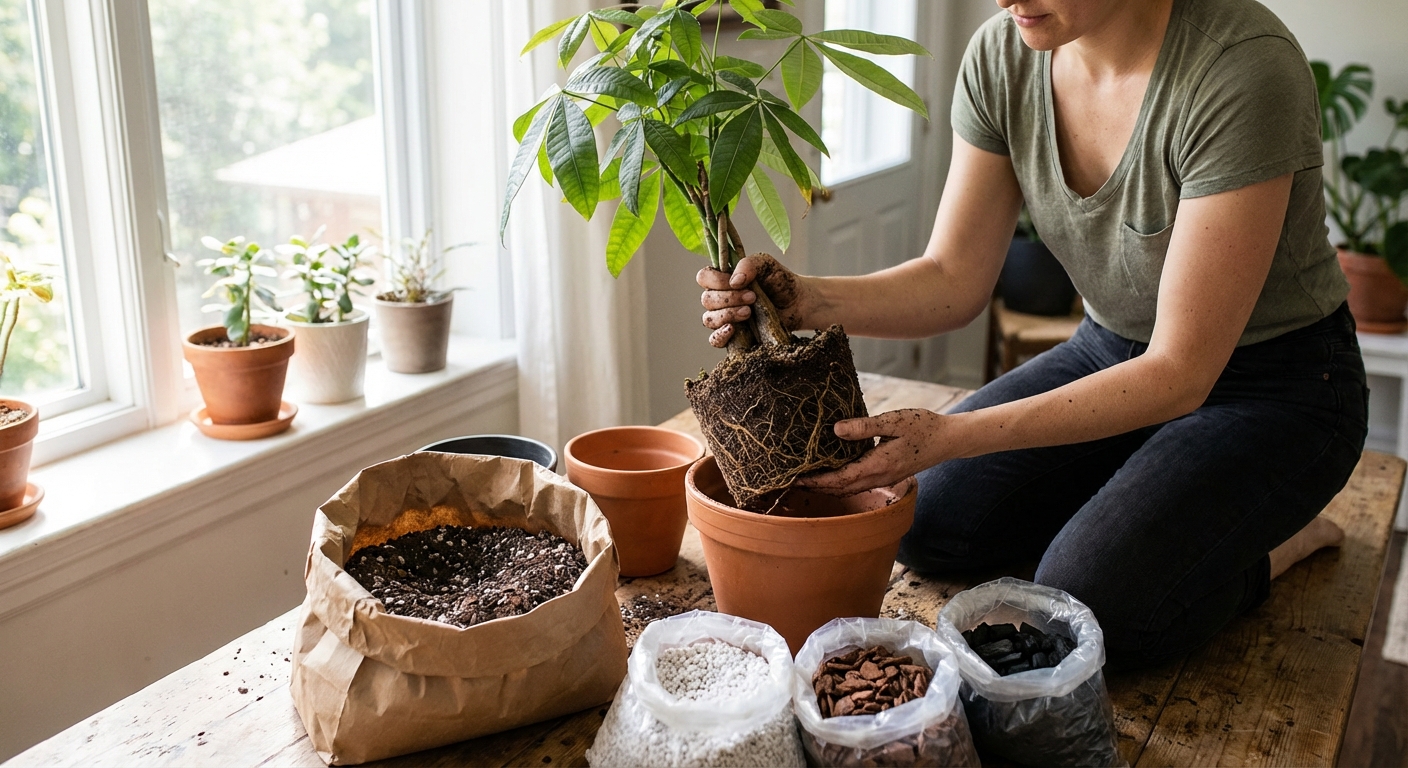
Money trees like to be slightly snug in their pots, but they don't want to be strangled. Repot when roots are circling the bottom or poking out of drainage holes, or when watering becomes a daily event because the plant dries too fast.
How often to repot
- Young, fast-growing plants: About every 1 to 2 years
- Mature plants: Every 2 to 3 years, or top-dress with fresh mix instead
Repotting steps
- Choose a pot 1 to 2 inches wider than the current one.
- Use fresh, well-draining mix.
- Gently loosen circling roots. Don't shred them.
- Repot at the same soil level. Don't bury the trunk deeper.
- Water once, then let it settle and dry slightly before watering again.
Common problems
Most money tree issues come down to three things: light, water, and drafts. Here's how to troubleshoot without spiraling.
Leaf drop
- Most common causes: Overwatering, sudden temperature changes, low light, or moving the plant
- What to do: Check soil moisture, move to brighter indirect light, keep away from heaters and AC, and give it two to four weeks to adjust after a move
Yellow leaves
- Most common causes: Soil staying wet too long, poor drainage, not enough light
- Also normal sometimes: An older, lower leaf yellowing now and then, especially after a move or seasonal shift
- What to do: Let the soil dry more between waterings, confirm drainage holes are open, consider switching to a chunkier mix, and increase light
Brown tips or crispy edges
- Most common causes: Underwatering, low humidity, fertilizer buildup, hot dry air
- What to do: Water more deeply when it's time, flush soil occasionally, keep away from vents, and consider a small humidifier nearby in winter
Drooping leaves
- Most common causes: Thirst or soggy roots
- What to do: Feel the soil. If dry, water thoroughly. If wet, pause watering and improve airflow and light. If the trunk base is soft, check for root rot.
Root rot
Signs: Persistent wet soil, sour smell, yellowing leaves, mushy roots, soft trunk at the base.
What to do: Unpot, trim mushy roots with sterile scissors, repot into fresh dry mix, and reduce watering. If rot is advanced, take healthy cuttings and start over. It happens, and it's not a moral failing.
Pests to watch for
Money trees can occasionally attract common houseplant pests, especially in dry indoor air.
- Spider mites: Fine webbing, speckled leaves. Rinse the plant in the shower and treat with insecticidal soap.
- Mealybugs: White cottony clumps in leaf joints. Dab with isopropyl alcohol on a cotton swab, then follow up with soap.
- Scale: Brown bumps along stems and leaf veins. Scrape gently and treat repeatedly.
Routine that prevents most pest drama: inspect the undersides of leaves when you water, and rinse dusty foliage monthly.
Care by season
Spring and summer
- More light and warmth means faster drying and more watering
- Fertilize lightly
- Best time for pruning and repotting
Fall and winter
- Growth slows and water needs drop
- Keep away from cold windows and drafts
- Hold fertilizer until brighter days return
Clara tip: Winter light changes sneak up on people. If your plant starts stretching or dropping leaves, try moving it a little closer to a bright window (still out of harsh direct sun), and expect watering to slow down.
Frequently asked questions
How big do money trees get indoors?
Indoors, many money trees stay in the 3 to 6 foot range, but with strong light and time they can grow taller. Pruning keeps them at a comfortable size.
Can I put my money tree outside?
Yes, in warm weather. Acclimate it slowly to brighter light and keep it out of harsh midday sun. Bring it back inside before nights dip below about 55°F (13°C), and avoid sustained cool temperatures.
Why is my braided trunk splitting or swelling?
Stems thicken as the plant grows. Tight ties can cut in and cause damage. Remove restrictive ties and re-secure loosely with soft tape if you want to keep the braid.
Do I need to mist my money tree?
Misting is optional and usually short-lived. If your air is very dry, a small humidifier or a pebble tray (with the pot not sitting in water) tends to help more.
How do I help it adjust after moving it?
Money trees can sulk after a location change. Keep care steady, avoid extra watering “just in case,” and give it two to four weeks to settle. Bright, indirect light and stable temperatures help a lot.
A simple weekly routine
- Once a week: Check soil moisture (finger or chopstick), rotate the pot, and look under leaves for pests.
- Every watering: Water deeply, then fully drain the saucer.
- Once a month: Wipe dusty leaves and inspect trunk ties if it's braided.
- Spring and summer: Feed lightly every 4 to 6 weeks if growth is active.
If you do nothing else, remember this: bright light + drainage + a partial dry-down will carry you a long way with a money tree. And if your plant drops a few leaves while it adjusts, talk to it gently. I do. The ferns never judge.