
Mole Crickets vs. Moles in the Lawn

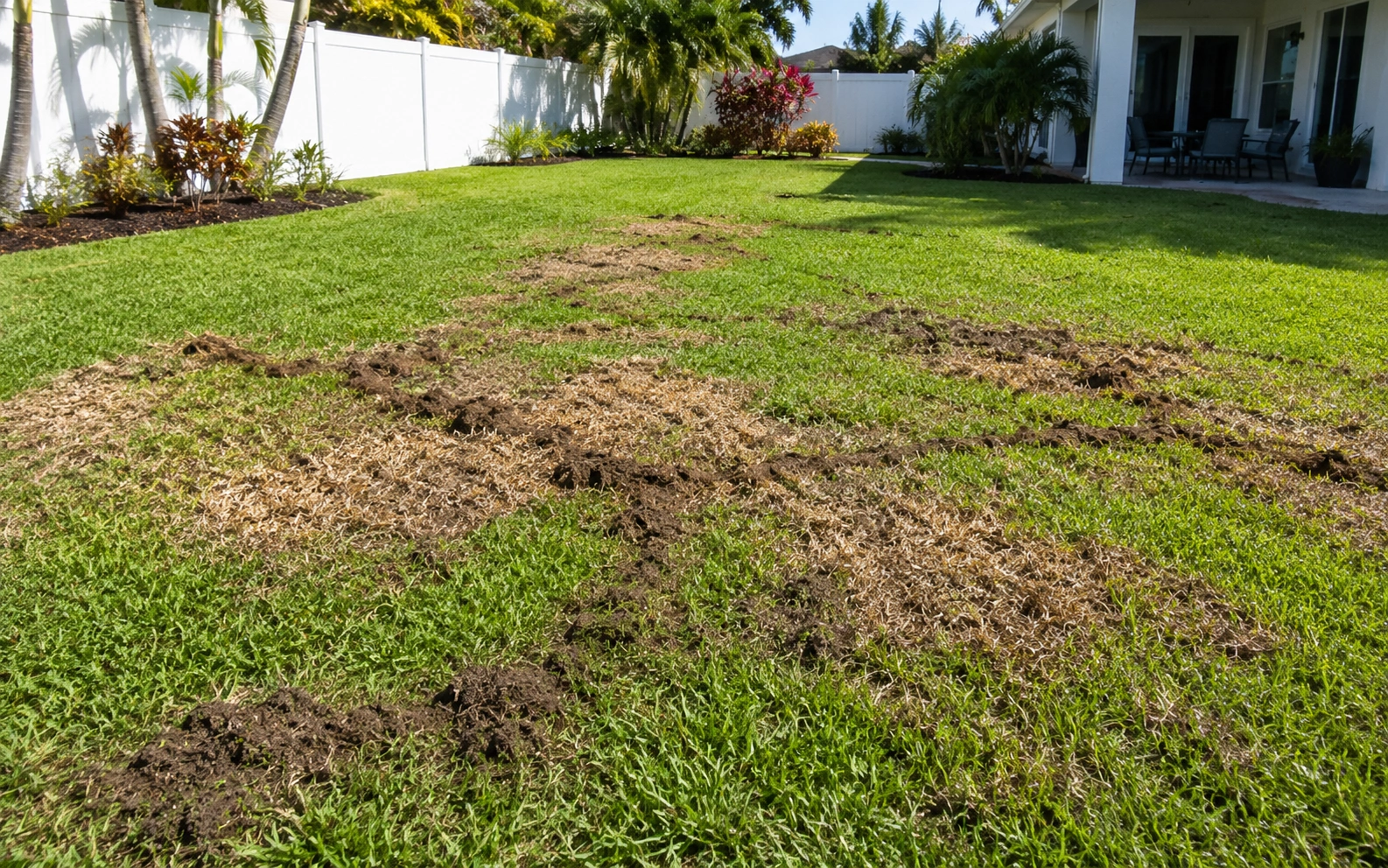
I have a soft spot for lawn mysteries, mostly because they look dramatic and feel personal. You walk out with your coffee, and overnight your grass has turned into a weird, bumpy quilt. The temptation is to declare, “Moles!” and start swinging at the problem with whatever remedy you remember hearing about.
But here is the catch: mole crickets and moles can both mess up turf, and the fixes are not interchangeable. If you use a “mole remedy” on a mole cricket problem, you will lose time while the insects keep feeding. If you treat for insects when you have a mammal tunneling, you will be frustrated and confused.
This guide will help you identify what you are actually dealing with by looking at the shape of the damage, not just the fact that the lawn looks rough.

The simplest difference
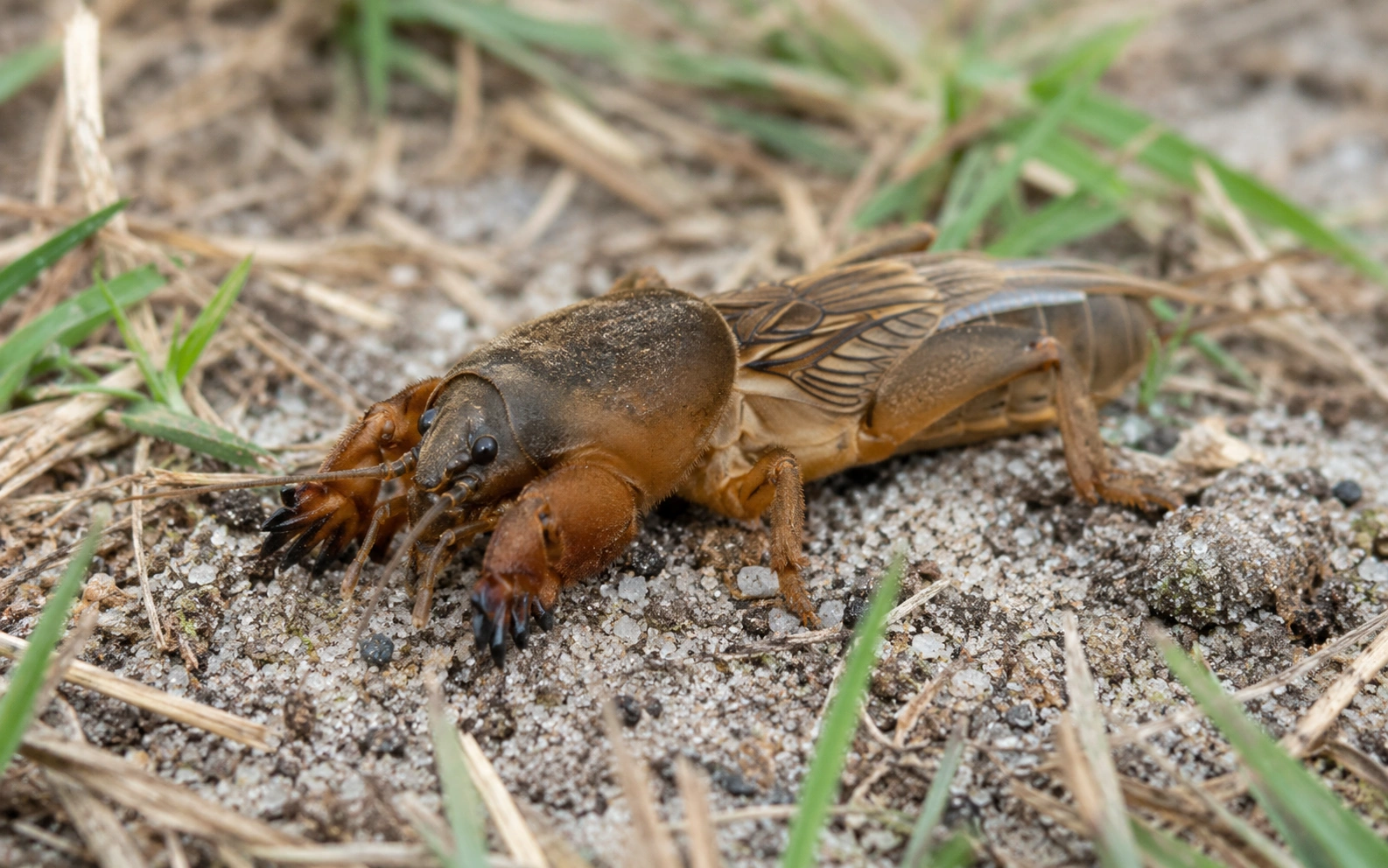
Mole crickets are insects. They live and feed in the top layer of soil, chewing roots and pushing soil around near the surface.
Moles are mammals. They are built to tunnel and create raised runways as they hunt for earthworms and grubs.
That one fact changes everything: insect problems need insect control, while mammal tunneling needs a completely different approach.
What mole cricket damage looks like
Mole crickets usually make the lawn look like it is losing its grip on the soil. Instead of one obvious mound, you often see patchy thinning that spreads and feels odd underfoot.
Common signs of mole crickets
- Spongy turf that lifts easily, like the grass is not firmly rooted.
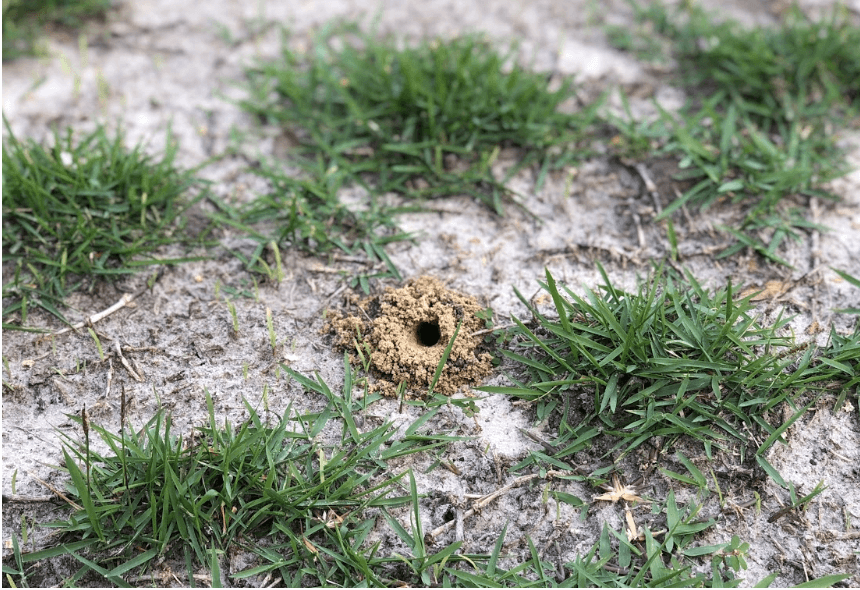
- Small round holes at the surface, often about the width of a pencil or smaller.
- Irregular, shallow burrowing right under the thatch and top inch or so of soil.
- Brown, dying patches that expand, especially during warm, active seasons.
- Seedlings and new sod struggling because roots get chewed.
One detail I see people miss: mole crickets can cause the lawn to look “scalped” in spots because the roots are damaged and the grass desiccates fast in sun and wind.
What mole damage looks like
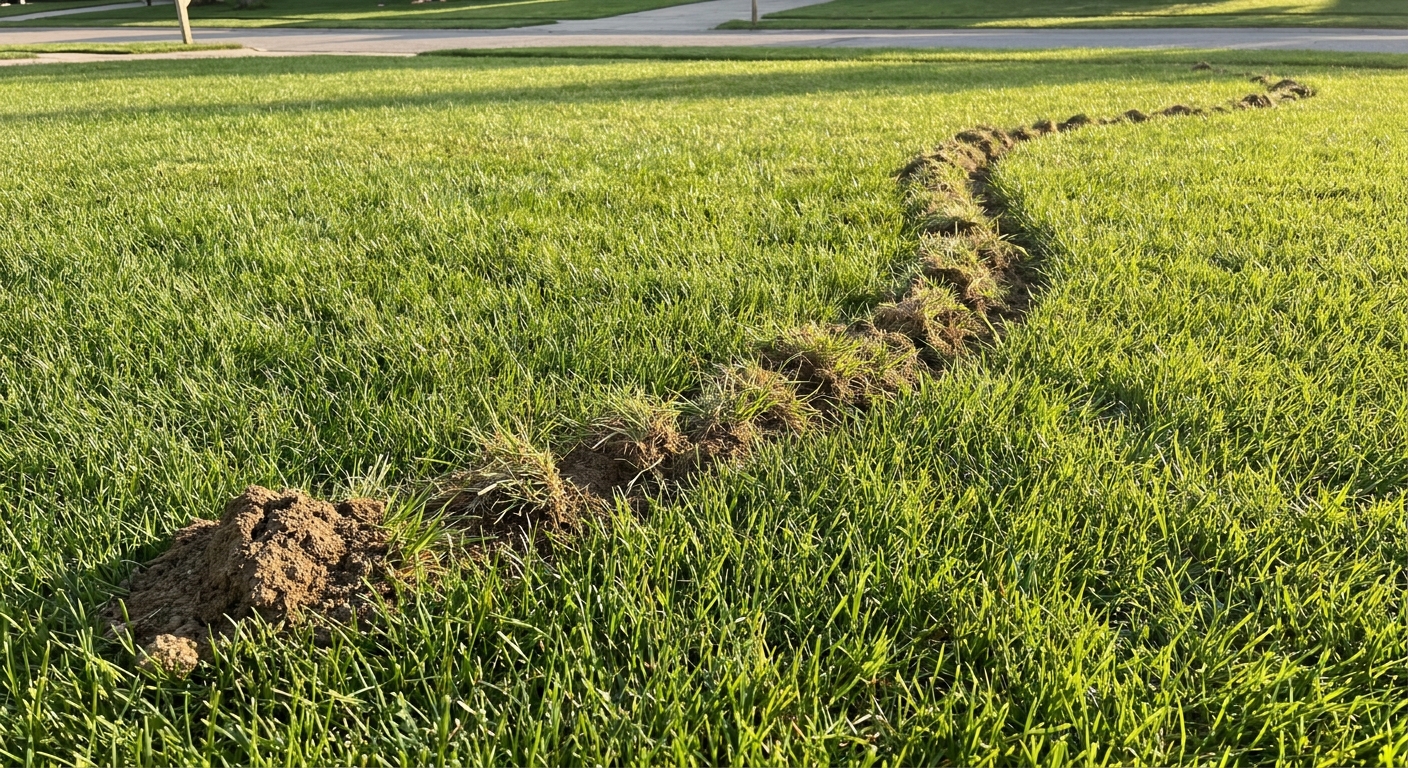
When you have moles, you are more likely to see raised tunnels that create long ridges, plus occasional mounds of soil. Think of it as a little underground highway system.
Common signs of moles
- Raised, winding ridges that you can feel with your foot as you walk.
- Distinct tunnels that run in lines, often along edges like sidewalks, driveways, or garden beds.
- Soil mounds in some cases, where the mole pushed extra dirt up and out.
- Grass that is still green in many places at first, because moles are not primarily eating grass roots.
If your lawn looks like someone shoved a broom handle under it and lifted long strips, that is much more “mole” than “mole cricket.”
Quick ID test
Step 1: Walk the area slowly
If it feels springy and unstable in patches, suspect mole crickets. If you feel long raised ridges, suspect moles.
Step 2: Look for the “signature” openings
- Mole crickets: small surface holes and shallow scrapes, plus thinning grass.
- Moles: ridges and sometimes volcano-like mounds of soil.
Step 3: Do the tug test
Grab a small tuft of grass and tug gently.
- If it lifts easily like a bad toupee, roots may be damaged, which points toward mole crickets or other root-feeding pests.
- If it is anchored well but the ground is ridged, moles jump higher on the list.
Why the wrong treatment wastes time
Here is the most important takeaway: mole cricket damage is caused by an insect feeding and digging near the surface. “Mole deterrents” aimed at a mammal will not stop that feeding cycle.
Likewise, dumping insect products on a true tunneling issue does not address the animal behavior creating the ridges.
So before you buy anything, diagnose first. You are not being picky. You are being efficient.
If it is mole crickets: what to do
With mole crickets, your goal is to reduce the population in the turf and then help the grass recover. The specifics can vary by region and grass type, but these steps are broadly useful.
1) Confirm activity at the surface
Mole crickets are often most active in warm conditions. Look for fresh disturbance and new holes. In heavily damaged areas, you may even spot them if you pull back grass and thatch.
2) Use targeted insect control
Look for products labeled for mole crickets, and follow the label exactly. In organic-leaning lawns, some gardeners have success with biological options like beneficial nematodes when conditions are right, but timing and soil moisture matter a lot.
If you prefer the least toxic route, your best strategy is usually:
- Spot-treat the damaged areas rather than blanket treating the whole yard.
- Water appropriately so any soil-applied control can move into the root zone where the insects are active.
- Repeat only as the label recommends, since overapplying is not just wasteful, it can harm beneficial soil life.
3) Support lawn recovery
- Rake lightly to lift matted grass and reduce thatch in damaged spots.
- Overseed or patch once feeding pressure is down.
- Topdress with compost if appropriate for your turf, to encourage deeper rooting and better soil structure.
I talk to my ferns, yes, but I also talk to my lawn when it is stressed: “Roots first.” Healthy roots make everything else easier, including pest resilience.
If it is moles: do not treat like insects
If your signs point clearly to moles, you will want a mole-specific approach, because this is a tunneling mammal and the solutions revolve around disrupting tunneling patterns and food sources.
To keep this page focused on diagnosis, I am not going to rehash removal steps here. The key is simply this: raised tunnels and ridges call for mole solutions, not mole cricket control.
Damage lookalikes
Sometimes the lawn is sending mixed signals. A couple of common imposters can muddy the waters:
- Grubs: also cause spongy turf and easy lift because roots get chewed.
- Drought stress: can create thinning, browning patches without any holes or tunnels.
- Compaction: makes grass weak and patchy, and critter activity may simply be more visible where turf is already struggling.
If you are unsure, take a close photo of the damage and inspect the soil right under the turf. You are looking for evidence of insects, root loss, or a defined tunnel pathway.
FAQ
Do mole crickets make mounds like moles?
Usually not. Mole crickets tend to create shallow disturbance and small openings, not pronounced soil mounds. Mounds and long ridges are more typical of a tunneling mammal.
My lawn is bumpy but I do not see holes. Is it still mole crickets?
It can be, especially if the grass feels spongy and is thinning, but bumpy ridges without surface holes often point more toward moles. Do the tug test and look for a raised tunnel line.
Can I have both at the same time?
Yes, unfortunately. A stressed lawn can attract multiple problems. If you see both clear ridges and root damage with spongy patches, treat it like two separate diagnoses and tackle the most active damage first.
Will a grub treatment fix mole crickets?
Not necessarily. Some lawn insect products overlap, but you should only use something that lists mole crickets on the label if that is your target pest.
What is the fastest way to stop mole cricket damage?
Fast usually means correct identification plus targeted control in the active areas, followed by basic lawn recovery steps so the turf can re-root.
A calm closing thought
Lawn damage feels urgent because it changes the whole look of your home overnight. But once you learn the visual language, it gets easier to stay calm: spongy, thinning turf and small holes suggest an insect story. Raised ridges and mounded soil suggest a tunneling mammal story.
Diagnose first, treat second. Your lawn will forgive you a lot faster when you give it the right kind of help.