
Majesty Palm Care Indoors

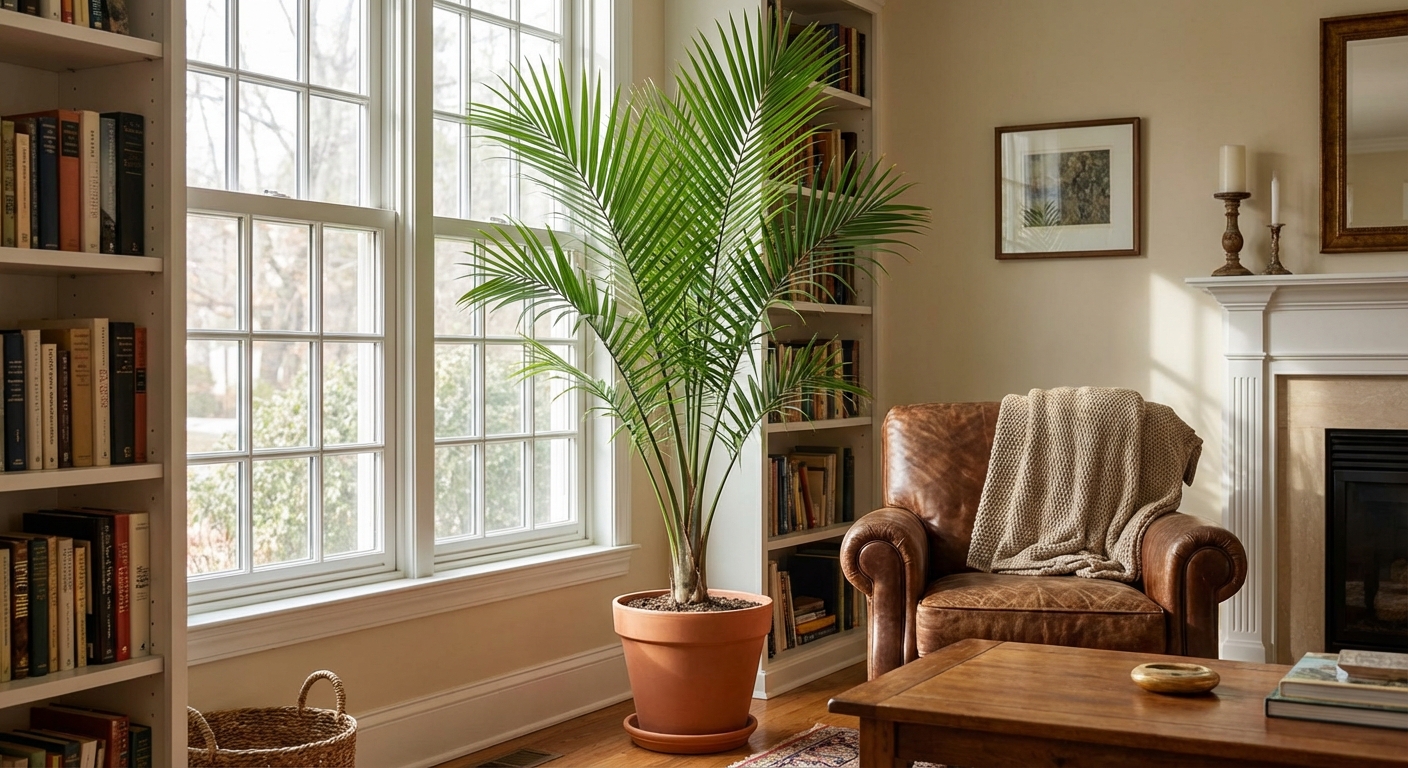
Majesty palm (Ravenea rivularis) is one of those houseplants that looks like a little slice of resort life, then quietly asks you to recreate the tropics in your living room. It can be done, but it helps to know the truth up front: this is one of the trickier indoor palms. Not impossible, just particular.
If you have ever grown a parlor palm and thought, “Palms are easy,” a majesty palm may humble you. Parlor palms tolerate lower light and average indoor humidity like a champ. Majesty palms want brighter light, steadier moisture, and higher humidity, plus they are magnets for spider mites when the air gets dry.
Quick care snapshot
- Light: Bright, indirect light. Can take gentle morning sun. If growth stalls, add a grow light.
- Water: Keep lightly and consistently moist, not soggy. Let the top 1 to 2 inches dry, then confirm deeper moisture with a skewer or meter (especially in big pots).
- Humidity: High humidity makes a big difference. Aim for 50% plus, and 60% plus for best looks if you can.
- Soil: Airy, moisture-retentive mix with excellent drainage.
- Temperature: 65 to 80°F is the sweet spot. Avoid cold drafts. Cold plus wet soil is a fast track to root trouble.
- Typical indoor size: Often 4 to 8 feet indoors over time (sometimes more with strong light and high humidity).
- Pet safety: Generally considered non-toxic to cats and dogs, but always double-check with a trusted source if your pet is a dedicated plant snacker.
- Common issues: Brown tips from dryness or salts, yellowing from watering or light problems, spider mites in dry air.
Why they struggle indoors
In the wild, majesty palms grow in humid, bright conditions with consistently moist soil. Indoors, we often give palms two things they do not love: dry air and inconsistent watering.
Majesty palms are also typically grown in nurseries under high light and frequent irrigation. When they come home, the sudden shift can trigger leaf yellowing, brown tips, and pest flare-ups. The goal is not perfection. The goal is steady, supportive conditions and patience while it adjusts.
One more behind-the-scenes detail: many “majesty palms” sold in stores are actually multiple seedlings packed into one pot. It looks lush, but it can mean crowded roots, faster drying, and more frequent watering needs.
Light
Majesty palms want more light than most people expect for an “indoor palm.” Low light is a slow grind toward decline: thin fronds, weak growth, and increased pest risk.
Best indoor placement
- Near an east window for strong indirect light and gentle morning sun.
- Near a bright north window can work in some homes, but north light is often weaker than people think. If your palm is stretching or dropping leaflets, treat that spot as “medium light” and supplement.
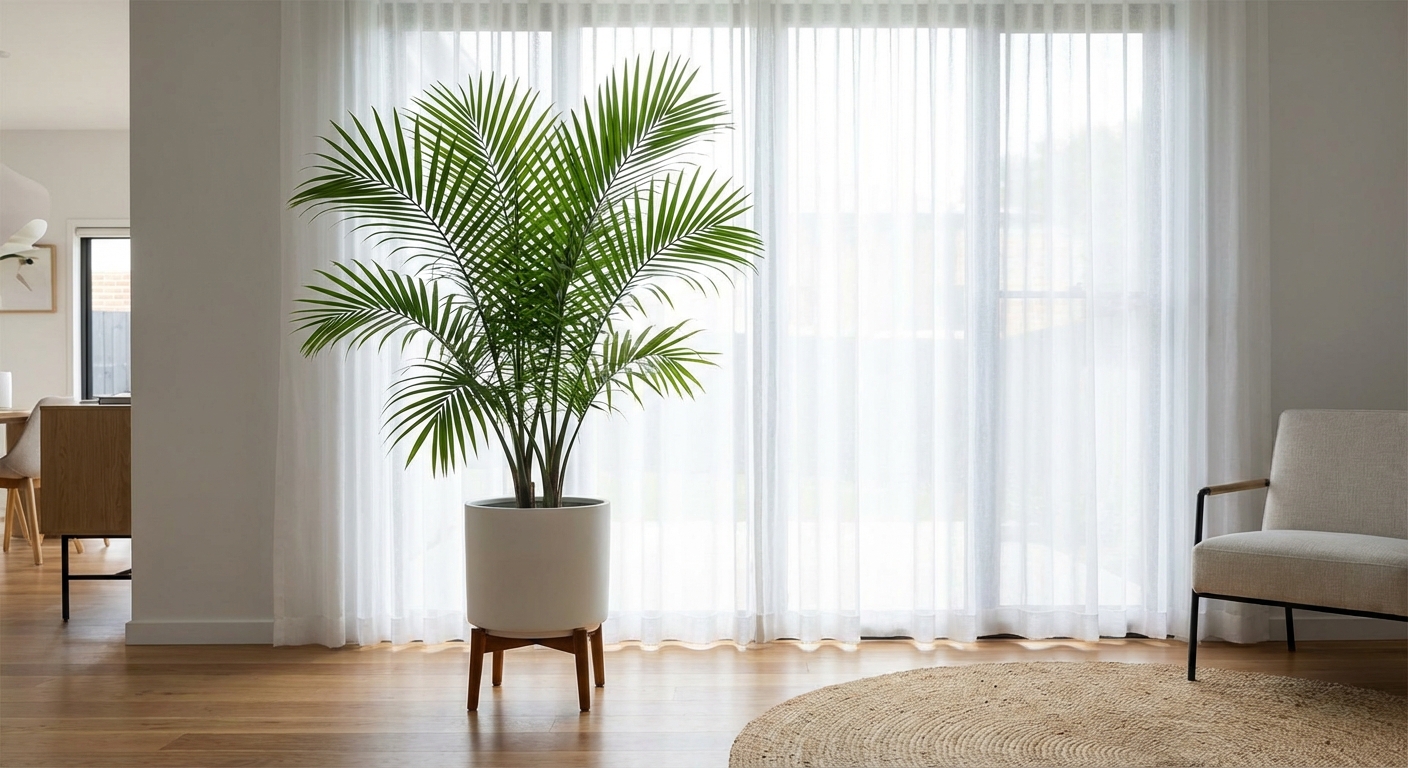
- South or west windows can work if you filter hot sun with a sheer curtain or place the palm a few feet back.
- Rotate the pot every 1 to 2 weeks so the palm grows evenly.
What “bright indirect” looks like
- A few feet back from an unobstructed bright window, where the room feels sunny but the fronds are not baking in harsh midday rays.
- If you can only offer medium light, a simple grow light for 10 to 12 hours a day can make the difference between “surviving” and “actually growing.”
Humidity
This is the part most indoor spaces struggle with, especially in winter heat or summer AC. Majesty palms can survive average humidity, but they rarely look their best in it.
Simple ways to boost humidity
- Use a humidifier nearby. This is the most reliable option.
- Group plants together to create a slightly more humid microclimate.
- Use a pebble tray (water below the top of the stones so the pot does not sit in water). This helps a little, not miracles.
- Keep away from vents, radiators, and drafty doors.
A note on misting: a quick mist feels nice, but it is usually too temporary to meaningfully raise humidity. If you mist, do it for your enjoyment, not as your main plan.
Watering
Majesty palms like soil that stays lightly and consistently moist. Think “wrung-out sponge,” not “dust-dry,” and definitely not “standing water.” The fastest way to lose one is to swing between bone-dry and soaking wet, especially if the plant is also sitting cool.
How to water (my no-drama method)
- Check the top 1 to 2 inches. If it feels dry, do not stop there. For medium and large pots, also check deeper moisture with a wooden skewer or moisture meter.
- Water slowly until it runs out of the drainage holes.
- Empty the saucer or cachepot after 10 to 15 minutes so the roots are not sitting in water.
Seasonal adjustments
- Spring and summer: Usually more frequent watering as light increases and growth speeds up.
- Fall and winter: Water less often, but do not let it fully dry out for long stretches. Also keep it warmer, because cold soil that stays wet is where trouble starts.
Soil and pot
The right potting mix is a balancing act: it needs to drain well so roots can breathe, but also hold enough moisture that you are not watering every day.
A good indoor mix
- High-quality potting mix as the base
- Added perlite or pumice for airflow
- A bit of fine orchid bark or coco chips for structure
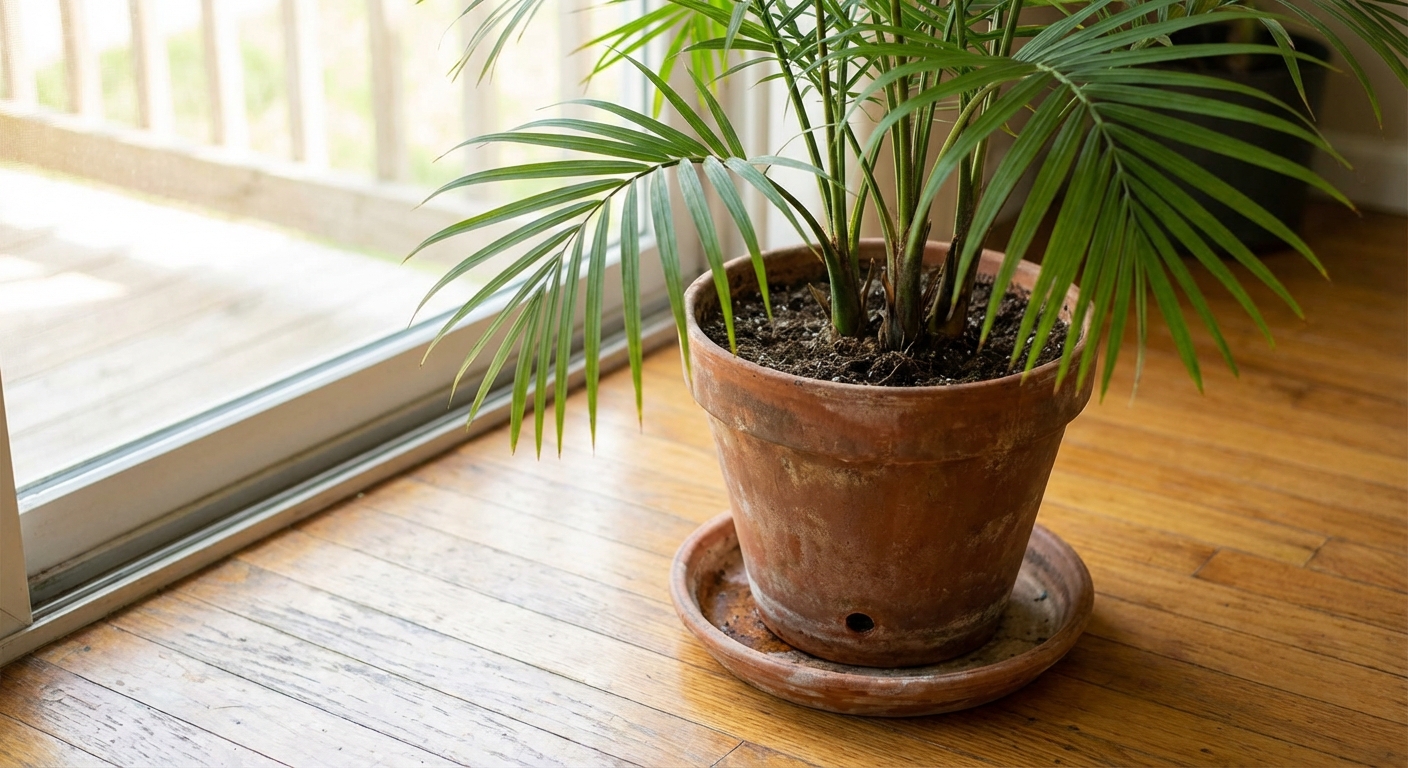
Use a pot with drainage holes. Majesty palms do not enjoy wet feet, and a drain-less pot turns “I watered carefully” into “oops” very quickly.
Fertilizer
Majesty palms can be a bit hungry when they are getting enough light. Underfeeding can contribute to pale foliage and weak growth, but overfeeding can lead to crispy tips from salt buildup.
- Fertilize in spring through early fall.
- Use a balanced houseplant fertilizer at half strength, about once a month.
- Pause or reduce feeding in winter when growth slows.
Water quality and salt buildup
If you see white crust on the soil surface or rim of the pot, that can be mineral salts from fertilizer or hard tap water. If brown tips keep returning and your water is hard, try filtered or rain water for a while.
Flush the pot with water occasionally (letting it drain thoroughly) to reduce buildup. A good rhythm for many homes is every 2 to 3 months, or anytime you notice crusting.
Brown tips
Brown tips are the number one majesty palm complaint. The frustrating part is that several different things can cause the same symptom. The good news is that you can usually narrow it down with a quick check-in.
Most common causes
- Low humidity (especially in winter)
- Underwatering or inconsistent watering
- Salt buildup from fertilizer or hard tap water
- Too much direct sun scorching the fronds
What to do this week
- Adjust placement to bright, indirect light.
- Raise humidity with a humidifier and keep it away from vents.
- Water more consistently, and check moisture deeper in the pot so you are not guessing.
- If you suspect salts, flush the soil with room-temperature water for a few minutes, letting it drain completely.
Can you trim brown tips?
Yes. Use clean scissors and follow the natural shape of the leaflet tip, leaving a tiny margin of brown so you do not cut into living tissue. And remember: trimming is cosmetic. The real win is preventing new browning.
Pruning
Think of pruning as tidy support, not a makeover. If a frond is fully yellow or fully brown, you can remove it at the base with clean pruners. If a frond is mostly green with a few crispy tips, it is still helping the plant, so trim tips only.
Do not remove many fronds at once. Palms store energy in their foliage, and a big haircut can slow recovery.
Spider mites
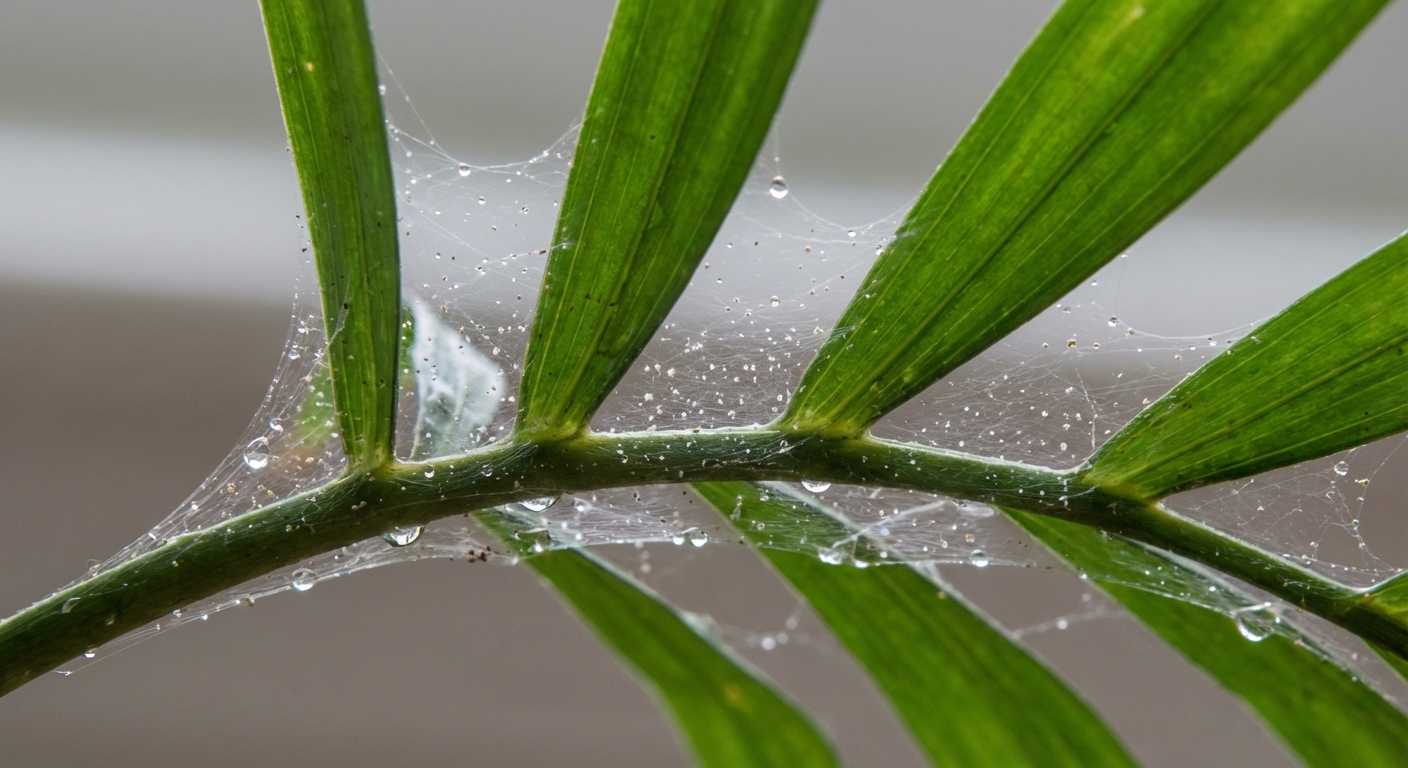
If your majesty palm suddenly looks dusty, speckled, or dull, and the air in your home is dry, think spider mites. They love palms, and they love dry indoor conditions even more.
Signs to look for
- Tiny pale speckles or stippling on fronds
- Fine webbing, often where leaflets meet the stem
- Fronds that look tired, grayish, or dusty even after watering
How to treat
- Isolate the plant from others if possible.
- Rinse the fronds thoroughly in the shower or with a gentle hose sprayer. Focus on the undersides.
- Wipe leaflets with a soft cloth to physically remove mites.
- Apply insecticidal soap or a horticultural oil labeled for houseplants, following the label exactly. Repeat on the schedule on the label (often every 5 to 7 days for a few rounds).
- To avoid leaf burn, apply soaps and oils in the evening or when the plant is out of hot sun, and never on a heat-stressed plant.
- Increase humidity and keep the plant evenly watered (steady moisture helps it resist pests).
Consistency matters more than a single heavy treatment. Spider mites are persistent, so we must be politely stubborn.
Yellowing fronds
Majesty palms naturally shed older fronds over time. If one of the lowest fronds is yellowing while new growth looks healthy, that is often normal.
Yellowing is more concerning when:
- Multiple fronds yellow quickly
- New growth is pale or weak
- Soil stays wet for long periods or dries out completely
Check your light and watering first. If the potting mix stays soggy, confirm your pot drains freely and consider repotting into a fresher, airier mix. Also check temperature. A palm in cool, wet soil is far more likely to decline than one that is warm and evenly moist.
Repotting
Majesty palms do not need constant repotting, but they appreciate fresh soil once they are rootbound or when the mix has broken down and holds too much water.
- Best time: Spring or early summer.
- Choose: One pot size up, not a big jump.
- Handle gently: Palms can sulk after rough root disturbance.
After repotting, water thoroughly, let it drain, then give it a few weeks of calm. Bright light, steady moisture, and no heavy fertilizing right away.
Majesty palm vs parlor palm
If you are deciding between the two, here is the honest vibe:
- Parlor palm (Chamaedorea elegans): Slow-growing, tolerant of lower light, typically easier in average home humidity. A steady companion plant.
- Majesty palm (Ravenea rivularis): Faster-growing when happy, needs brighter light and higher humidity, more prone to spider mites indoors. Gorgeous, but asks more of you.
If you want a palm that forgives a missed watering and does not mind a shadier spot, parlor palm is usually the better pick. If you have bright windows and can commit to humidity, majesty palm can be spectacular.
Troubleshooting checklist
If your majesty palm is struggling, check these in order:
- Light: Is it bright enough? If not, move closer to a brighter window or add a grow light.
- Watering rhythm: Are you swinging between dry and drenched? Check moisture deeper in the pot, not just the surface.
- Drainage: Does the pot have holes, and does water actually exit freely?
- Temperature: Is it sitting in a drafty spot or against a cold window? Cold plus wet is a major risk.
- Humidity: Is the air dry from heat or AC?
- Pests: Any speckling, webbing, or dusty fronds (spider mites)?
- Salt buildup: Any crust on the soil or pot rim? Consider flushing and using filtered water.
And a gentle reminder from someone who has talked to more than one fern: palms do not transform overnight. Give your adjustments a few weeks, watch the newest fronds, and celebrate small improvements. That is how indoor jungles are built.