
Maidenhair Fern Care

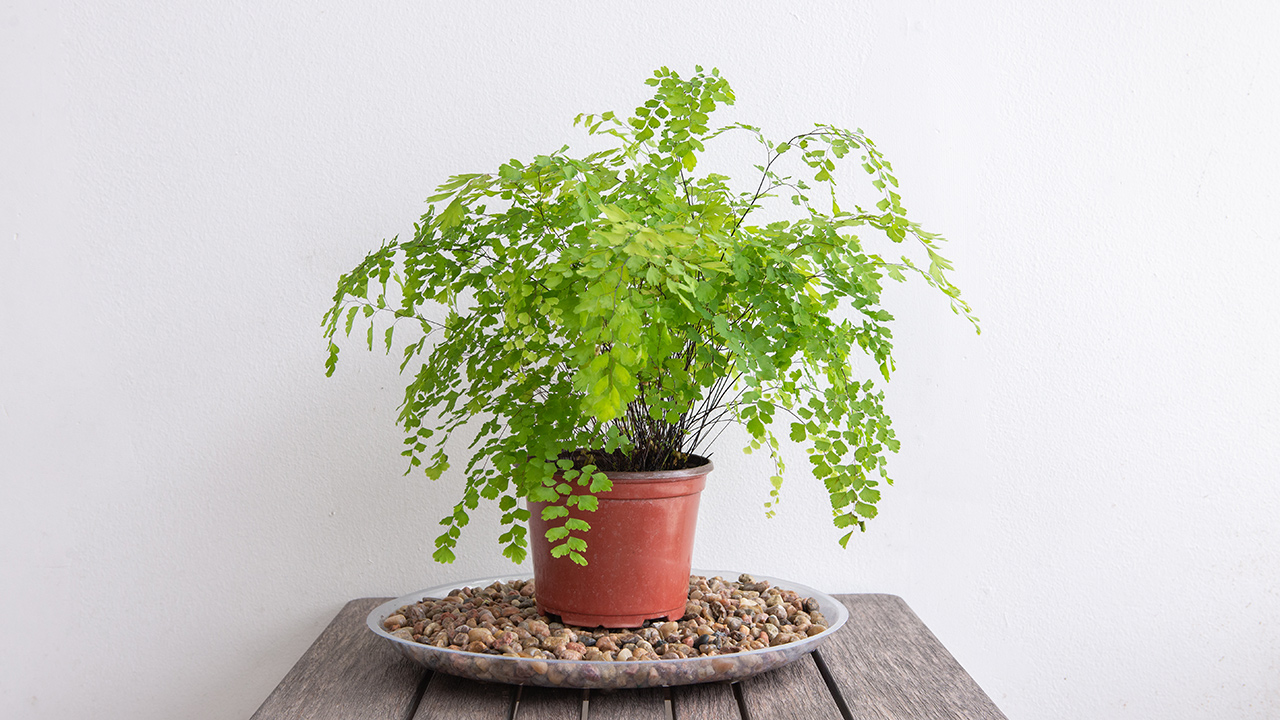
Maidenhair ferns are the tender souls of the houseplant world. Their fronds look like green lace, their stems are as dark and delicate as thread, and they do not tolerate “I forgot” care. But they are not impossible, either. The secret is to stop treating them like most houseplants and start treating them like a living humidity meter with roots.
If your maidenhair keeps browning, crisping, or dropping leaves, it is almost always one of three things: air that is too dry, moisture that swings between “dry” and “soaked,” or a pot and mix combo that drains badly or dries too fast. Let’s get you into a simple moisture routine and a setup that feels like a forest floor, even if you live in a studio apartment.

What they want
Common indoor maidenhair ferns are often Adiantum raddianum and close relatives, though you may also see A. capillus-veneris and others depending on where you live. In nature, they grow where moisture is steady and the air stays humid, often near streams or damp rock faces. Indoors, that translates to:
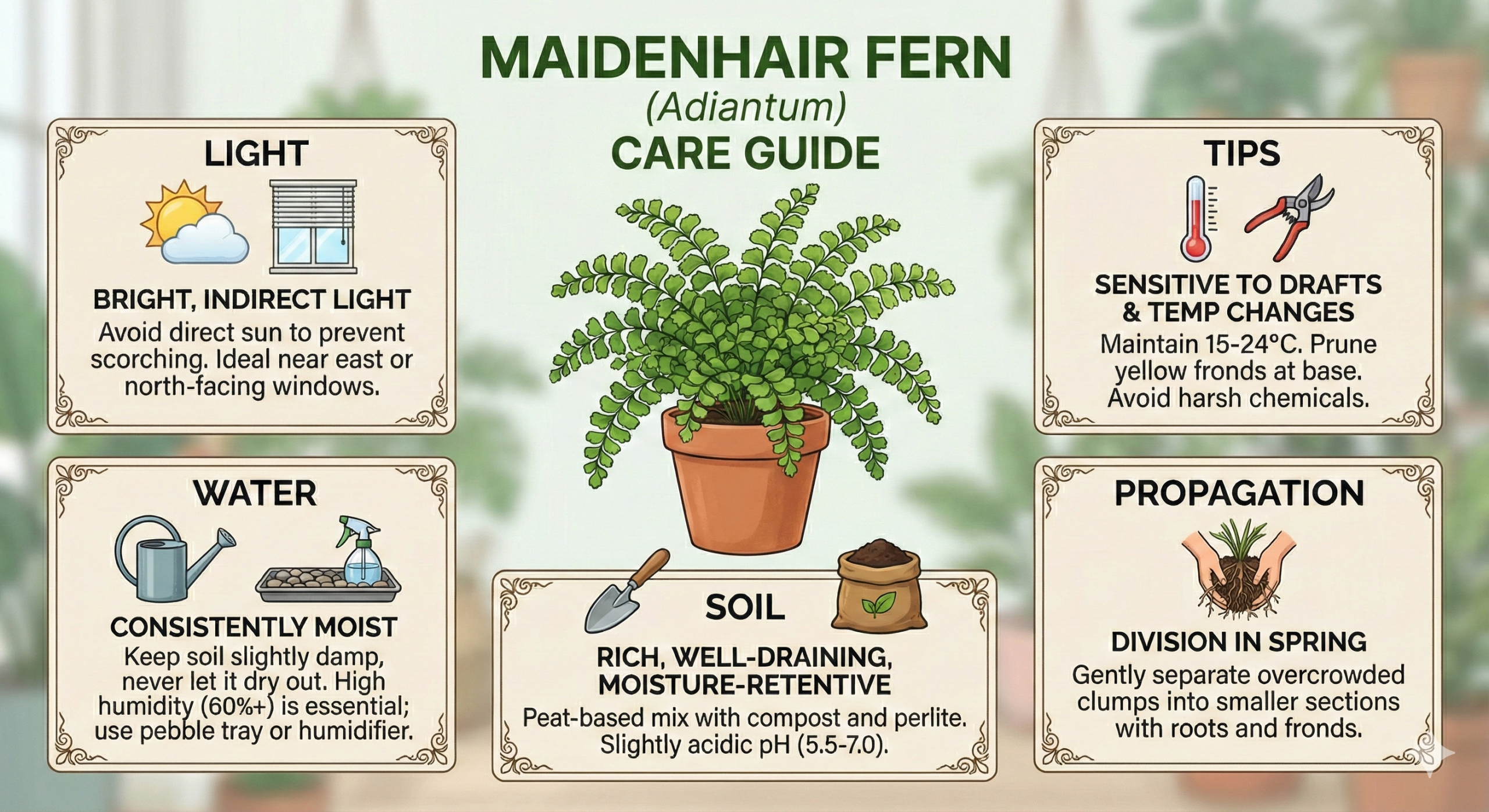
- Humidity: aim for 60% to 80% if possible (50% can work in gentler homes, but many ferns struggle there once heat or AC kicks on)
- Soil moisture: evenly moist, never bone dry, never waterlogged
- Light: bright, indirect light or gentle morning sun
- Temperature: 60°F to 75°F, away from heaters and AC blasts
They are happiest when their day-to-day conditions are steady. Big swings, especially in moisture, are what trigger brown fronds.
Humidity
If I could give every maidenhair owner one tool, it would be a small humidity meter. Guessing is stressful, and maidenhair ferns are not forgiving of optimistic guesses.
Best setups (ranked)
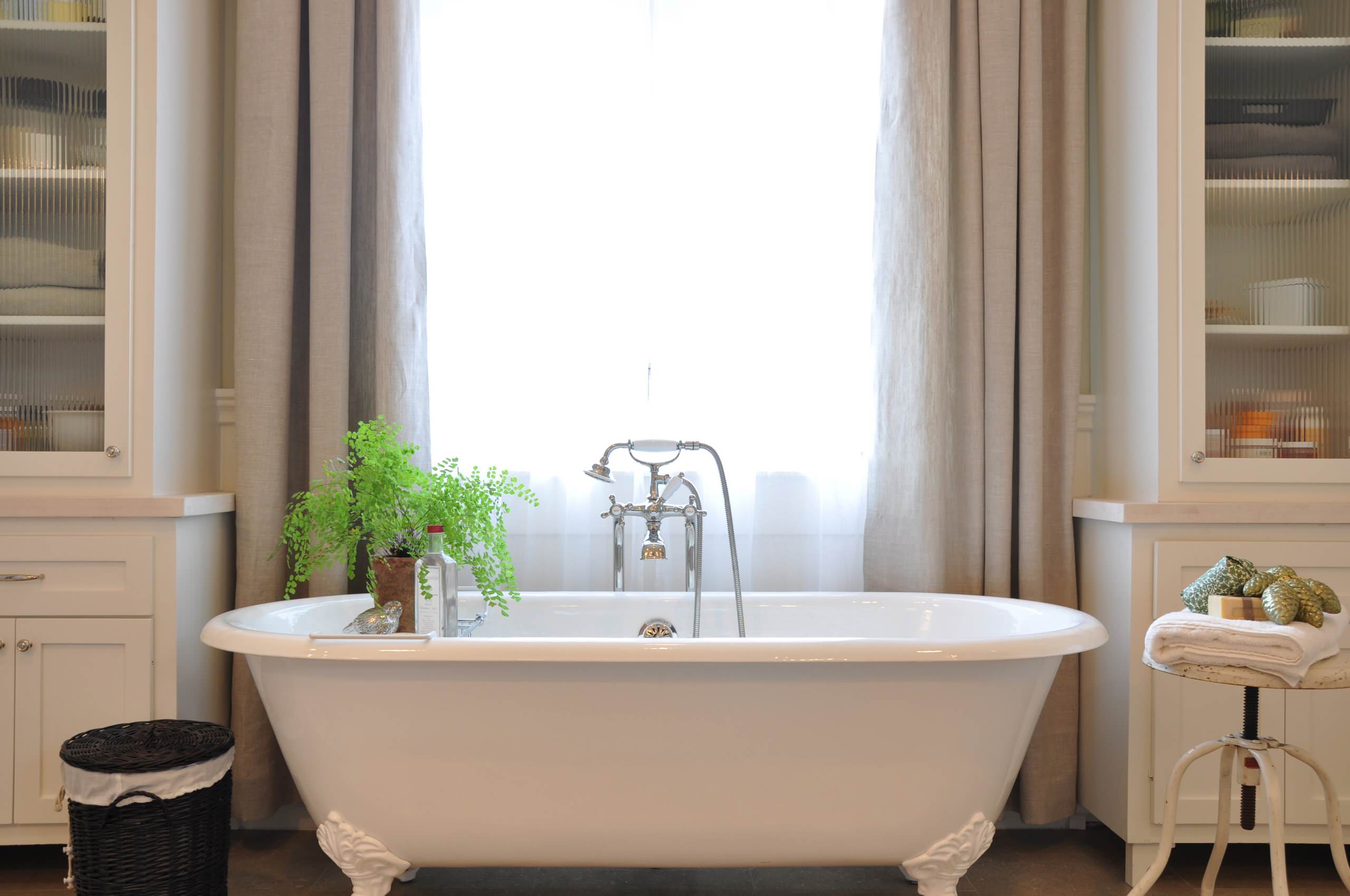
- Bathroom with a window: If you shower regularly, this can be a perfect microclimate. Keep it in bright, indirect light, not directly under a vent.
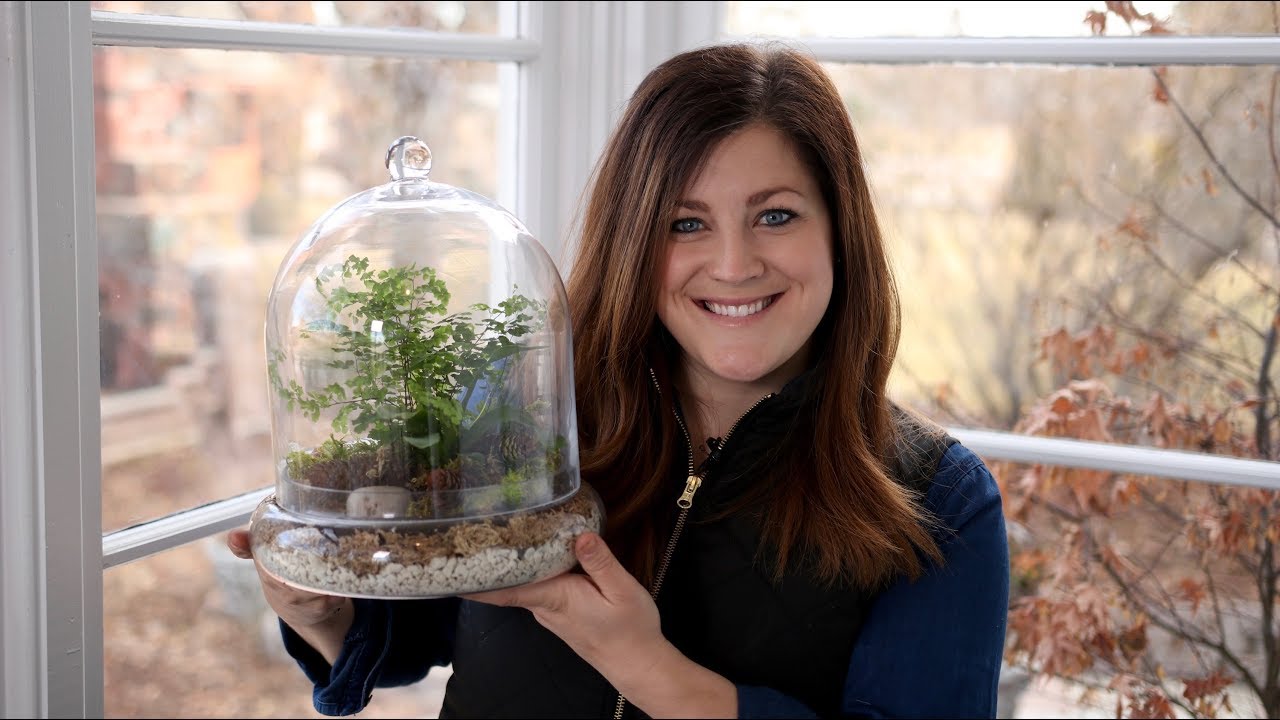
- Terrarium or clear cabinet: The most consistent option. You can keep humidity high without constantly misting. Leave a small gap or vent for airflow so fungus does not move in.
- Humidifier nearby: Aim the humidifier so it raises room humidity, not so it blasts the fronds directly. Direct mist may spot leaves and can increase the risk of leaf issues if air is stagnant.
- Pebble tray: Helpful only in small spaces and when paired with other methods. It is a support act, not the headliner.
Misting is optional. A light mist can temporarily boost leaf surface moisture, but it rarely changes room humidity for long. If misting is your only strategy, your fern will keep asking for more.
Watering
Maidenhair ferns want a steady sip, not feast-or-famine watering. Letting the pot dry out even once can cause widespread crisping. On the other hand, keeping the roots sitting in stagnant wet soil can rot them fast.
The finger test
- Press a finger into the potting mix up to your first knuckle.
- Water when the top 1/4 to 1/2 inch feels just barely damp or is starting to feel less cool.
- If your pot is large or deep, check a bit deeper too. A dry top with a wet core is a classic overwatering trap.
- If it feels wet, wait. If it feels dry at the surface and down a bit, water now.
How to water
- Take the plant to a sink or tray.
- Water slowly and evenly until water runs from the drainage holes.
- Let it drain completely. Never leave it soaking in a saucer long-term.
How often? In bright light and normal indoor conditions, many maidenhairs need water every 2 to 4 days. In a humid bathroom or terrarium, it may be less frequent. In winter, low light, cool rooms, or larger pots, it might be closer to weekly. Frequency is less important than consistency.
Water quality
Maidenhair ferns can be sensitive to mineral buildup. If you see white crust on the soil or pot rim, consider switching to:
- filtered water
- rainwater (if you can collect it cleanly)
- distilled water
Soil and pot
Here is the sweet spot: a mix that holds moisture but still drains and breathes. Many all-purpose potting soils either compact and stay soggy, or dry too fast in small pots.
A dependable mix
- 2 parts high-quality peat-free potting mix or coco-based mix
- 1 part fine orchid bark or pine bark fines (for structure and airflow)
- 1 part perlite or pumice (for drainage)
- Optional: a small handful of worm castings for gentle nutrition
If your home air is very dry and the pot keeps drying too fast, you can tweak the recipe: reduce the bark or perlite slightly, or add a bit more moisture-holding base mix. You want “evenly moist,” not “bone dry by tomorrow.”
If you prefer buying instead of mixing, look for a mix labeled for ferns, African violets, or “moisture-retentive but well-draining.” Then add a bit of perlite if it feels heavy.
Pot choice
A pot with drainage holes is non-negotiable. Plastic holds moisture longer. Terracotta breathes and dries faster. If you tend to forget watering, choose plastic. If you tend to overwater, terracotta can be a safety net, but it may require more frequent checks.
Light and placement
Think “under a tree,” not “in a sunbeam.” Maidenhair fronds scorch in direct midday sun, especially if humidity is low.
- Best: bright, indirect light near an east or north window
- Okay: a few hours of gentle morning sun
- Avoid: hot afternoon sun, heating vents, radiators, and AC drafts
If your fern is drying too fast despite careful watering, the light may be too intense or the air may be moving too much. Drafts are stealthy moisture thieves.
Why fronds brown
Brown fronds are your fern’s way of logging a moisture or stress event. The trick is to read where and how it is browning.
Common patterns
- Crispy edges and tips: low humidity, missed watering, or drying winds from vents
- Whole fronds crisping quickly: the pot dried out too far, even once
- Soft, dark, collapsing stems at the base: root rot from waterlogged soil or poor drainage
- Patchy brown with yellowing: inconsistent moisture, too much sun, or mineral buildup
- New growth browning early: humidity too low or salts accumulating in the soil
One important truth: brown fronds do not turn green again. Your goal is to stop the stress and encourage fresh growth from the crown.
Recover a crispy plant
When a maidenhair goes crunchy, the instinct is to drown it. Resist that. Crispiness is usually dehydration, but the fix is controlled rehydration plus humidity, not a swamp.
Step 1: Check roots and soil
- If the soil is bone dry and pulling away from the pot, do a bottom soak.
- If the soil is wet and smells sour, do not add water. You likely need to improve drainage and address rot.
Step 2: Rehydrate dry soil
- Set the pot in a bowl or sink with a few inches of water.
- Let it soak 15 to 30 minutes, until the top feels evenly moist.
- Lift it out and let it drain thoroughly.
This helps peat or coco mixes re-wet evenly. Top-watering a bone-dry pot often sends water straight down the sides and out the bottom, leaving the root ball dry.
Step 3: Raise humidity
For the next 1 to 2 weeks, give your fern a more humid home:
- move it to a bright bathroom, or
- place it in a clear storage bin or plant cabinet with the lid cracked for airflow
Do not seal it airtight. Stagnant air can invite mold.
Step 4: Prune what is dead
Use clean scissors to snip fully brown, crispy fronds at the base. If a frond is half-green, I usually leave it until new growth appears. The plant can still photosynthesize with what remains.
Step 5: Hold steady
Once you see new fiddleheads (tiny curled new fronds), stick to consistent moisture checks. This is the moment many people relax and the fern relapses. Keep the rhythm for a full month.
How long does recovery take?
If the crown and roots are healthy, you may see new growth within 2 to 6 weeks. If most fronds were lost, the plant can still bounce back, but it will look sparse for a while. Maidenhair recovery is rarely instant, but it is very real.
Bathroom vs terrarium
Both can work beautifully. The best choice depends on your home and your habits.
Choose a bathroom if
- you have a window or strong grow light
- you shower often enough to keep humidity up
- you want low-fuss care without special equipment
Choose a terrarium or cabinet if
- your home air is consistently dry
- you run heat or AC heavily
- you enjoy monitoring and fine-tuning conditions
In a terrarium setup, water less often than you think. Higher humidity means slower evaporation, and soggy soil is still a risk.
Pests and problems
Most maidenhair issues start with humidity and watering, but pests can pile on, especially when the plant is stressed.
- Spider mites: common in dry air. Look for fine webbing and stippled, dull fronds. Rinse the plant gently, raise humidity, and treat with insecticidal soap or horticultural oil as needed (test a small area first).
- Thrips: can cause silvery scarring and distorted new growth. Isolate the plant and treat promptly with a suitable houseplant insecticide or repeated soap treatments.
- Fungus gnats: usually a sign the top layer stays too wet. Let the surface dry slightly between waterings, use yellow sticky traps, and consider a biological control (like BTI) if persistent.
- Fungal spots: more likely with wet leaves and poor airflow. Improve air movement, avoid crowding, and water the soil instead of the fronds.
Repotting
Maidenhair ferns do not need constant repotting, but they do appreciate fresh mix when the old one breaks down.
- When to repot: roots circling the pot, the mix staying soggy for too long, or the soil shrinking and drying erratically. Spring is ideal.
- Go one size up: a slightly larger pot is usually enough. Oversized pots hold too much wet soil for too long.
- Do not bury the crown: keep the crown at the same level it was before. Burying it can invite rot.
Quick checklist
- Brown tips? Increase humidity and check watering consistency.
- Soil dries in a day? Move it out of strong light, switch to a more moisture-retentive mix, or use a slightly larger plastic pot.
- Fronds dropping? Look for drafts, missed watering, or a sudden temperature swing.
- Mushy stems at base? Stop watering, improve drainage, consider repotting into fresh mix.
- White crust on soil? Flush the pot thoroughly or repot, and use filtered or distilled water.
Fertilizing
Maidenhair ferns are not heavy feeders. Overfertilizing can burn roots and fronds, especially in small pots.
- Feed in spring and summer only.
- Use a balanced liquid fertilizer at 1/4 strength every 4 to 6 weeks, or skip fertilizer and top-dress with a small amount of worm castings.
- If your plant is stressed or crispy, do not fertilize until you see healthy new growth.
Seasonal shifts
Maidenhair ferns are all about steady conditions, but your home changes with the seasons.
- Winter: growth slows, light is weaker, and pots dry more slowly. Water less often, but do not let the mix fully dry. Keep humidity up, especially if you heat your home.
- Summer: brighter light and warmth can mean more frequent watering. Watch for faster drying and stronger sun.
Daily routine
This is the rhythm that keeps maidenhair ferns calm:
- Daily: touch the soil surface and check your humidity meter
- When needed: water thoroughly, then drain well
- Weekly: rotate the pot for even growth, wipe nearby surfaces if you are using a humidifier
- Monthly: inspect for mineral crust and trim fully dead fronds
If you take anything from this page, let it be this: maidenhair ferns do not require perfection. They require consistency. Set them up in humid, gentle light with a moisture-retentive mix, and they will reward you with that airy green softness that makes a room feel like a quiet woodland corner.