
Lucky Bamboo Care Indoors

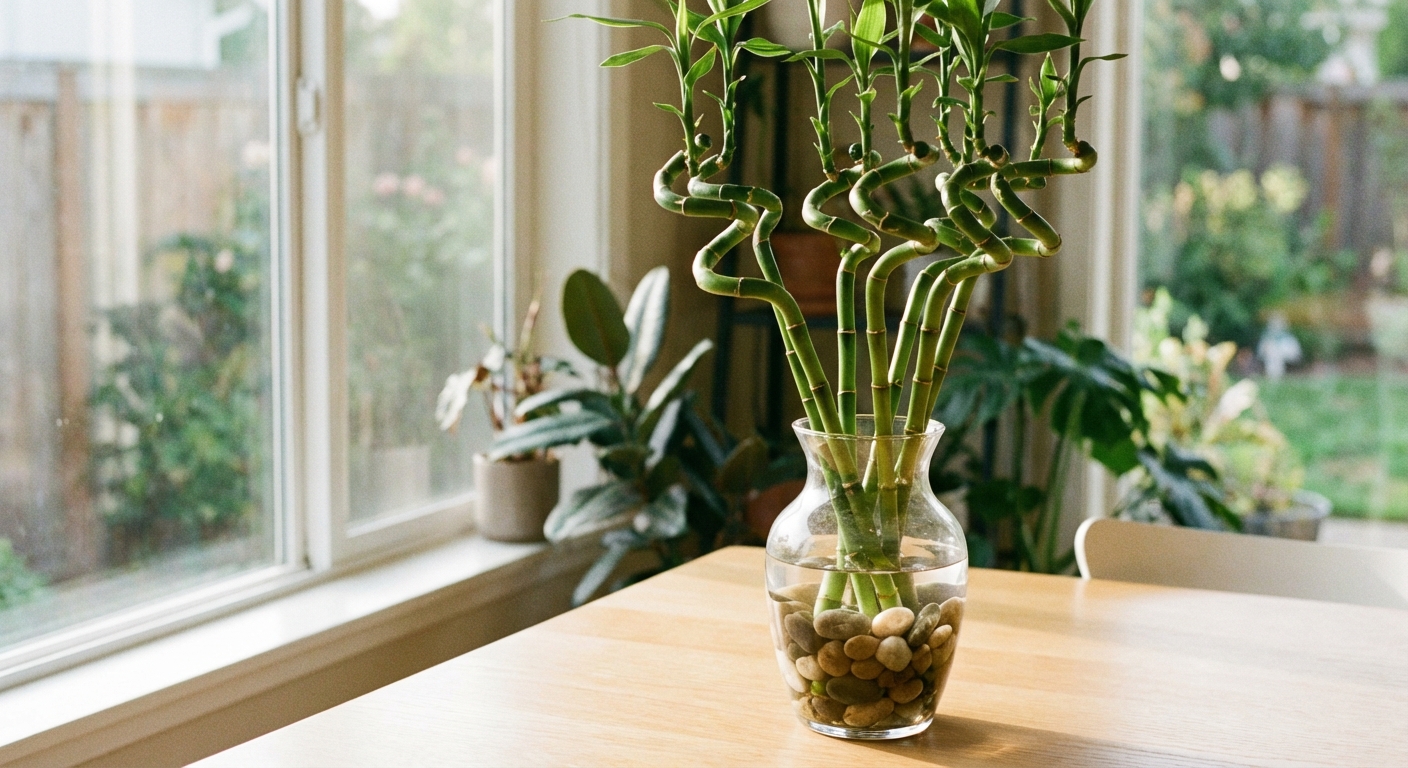
Lucky bamboo looks like it belongs in a spa lobby, but it is actually a tough little houseplant with a few very specific preferences. Despite the name, it is not bamboo at all. It is Dracaena sanderiana (often listed as Dracaena braunii), a dracaena that can live happily in a vase of water or in potting mix.
If you have ever watched a stalk turn yellow seemingly overnight, you already know the secret: lucky bamboo is easy, but it is also picky about water quality and light. Let’s get yours growing steadily, staying green, and looking intentional instead of “surviving in a jar.”
Lucky bamboo basics
What it needs to be happy
- Light: bright, indirect light is ideal
- Temperature: 65 to 85°F (18 to 29°C), away from drafts and heat vents
- Water quality: low chlorine and low fluoride is best
- Feeding: very light fertilizing, only occasionally
- Patience: it grows slowly indoors, especially in water
Is lucky bamboo toxic?
Yes. Like many dracaenas, lucky bamboo is considered toxic to pets if chewed (cats are especially sensitive). Place it where curious nibblers cannot reach. For people, it is usually just a “wash your hands after handling” kind of plant, but sap contact can occasionally irritate sensitive skin or eyes.
Light needs indoors
Lucky bamboo will tolerate lower light, but it truly thrives in bright, indirect light, the kind you would give a pothos or philodendron.
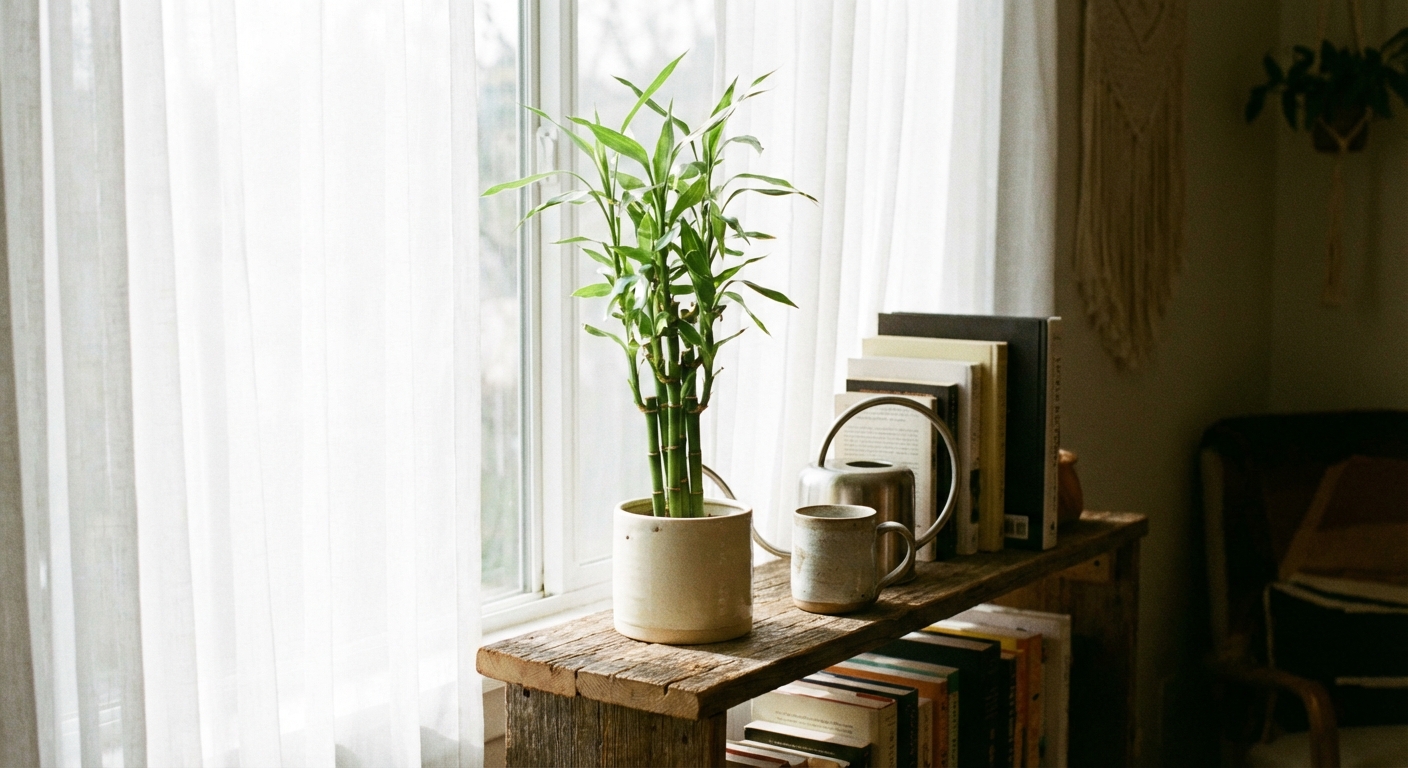
- Best spot: a few feet back from an east or north window, or behind a sheer curtain in a brighter window
- Okay spot: medium light across the room from a window
- Avoid: direct hot sun on the stalks and leaves, which can scorch and yellow them
If your plant is leaning hard toward the window, rotate the container a quarter turn every week or two. It is an easy way to keep growth more even.
How to grow lucky bamboo in water
Water-growing is the classic lucky bamboo look, and it can work for years if you keep the water fresh and the container clean to prevent rot.
Set up the container
- Use a vase or jar with enough weight to keep stalks upright. A narrow-neck container can help keep canes from flopping.
- Add smooth pebbles or river stones to anchor the canes.
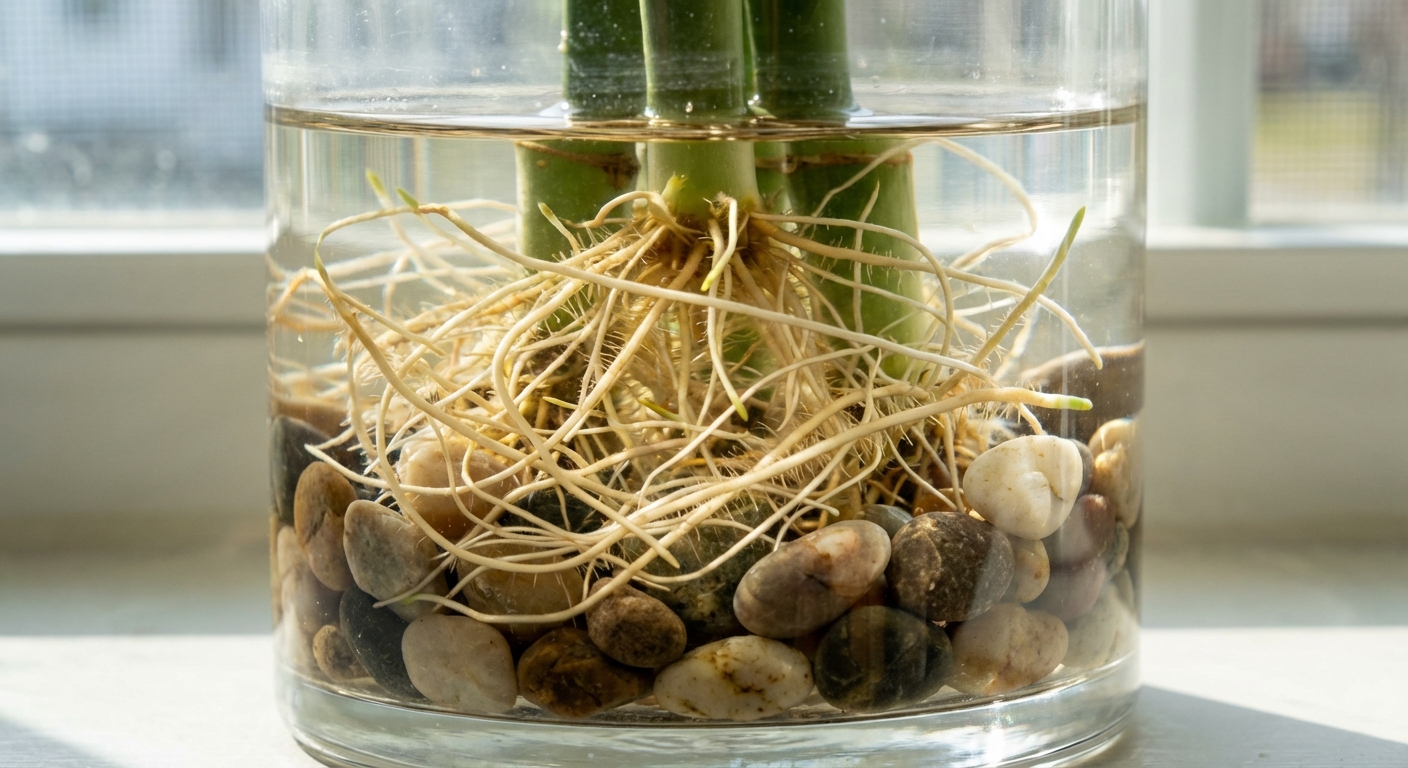
- Fill with water so that only the roots and the bottom 1 to 2 inches of stalk are submerged. Submerging more cane can increase rot risk, especially if water changes are infrequent.
- Optional but helpful: if algae is a repeat issue, consider a darker or opaque container (or a vase tucked inside a decorative sleeve) so less light hits the water.
Choose the right water (this matters)
Lucky bamboo can be sensitive to chlorine and fluoride, common in tap water. Sensitivity varies by plant and by water supply, so if yours keeps yellowing, this is the first thing I change.
- Best options: distilled water, reverse osmosis water, or collected rainwater (if you have a clean source)
- If using tap water: let it sit out in an open container for 24 hours to allow some free chlorine to dissipate
- Important: many cities use chloramine, which does not “gas off” the same way. If your water is treated with chloramine, resting it will not help much, so go with distilled, RO, or a filter rated for chloramine.
- Also note: letting water sit does not reliably remove fluoride, which is why some plants struggle long-term on tap water even when “rested.”
- Water temp: use room-temperature water when you can. Cold water straight from the tap can stress roots.
How often to change the water
- Top off: every few days to keep root level consistent
- Full change: every 1 to 2 weeks, or sooner if the water looks cloudy, smells “stale,” or you see slime or a film on the glass or stones
- Rinse: rinse stones and the inside of the vase during water changes to reduce buildup
If you see slimy biofilm, do a full reset: wash the container, rinse the rocks, and gently rinse the roots in lukewarm water.
How to grow lucky bamboo in soil
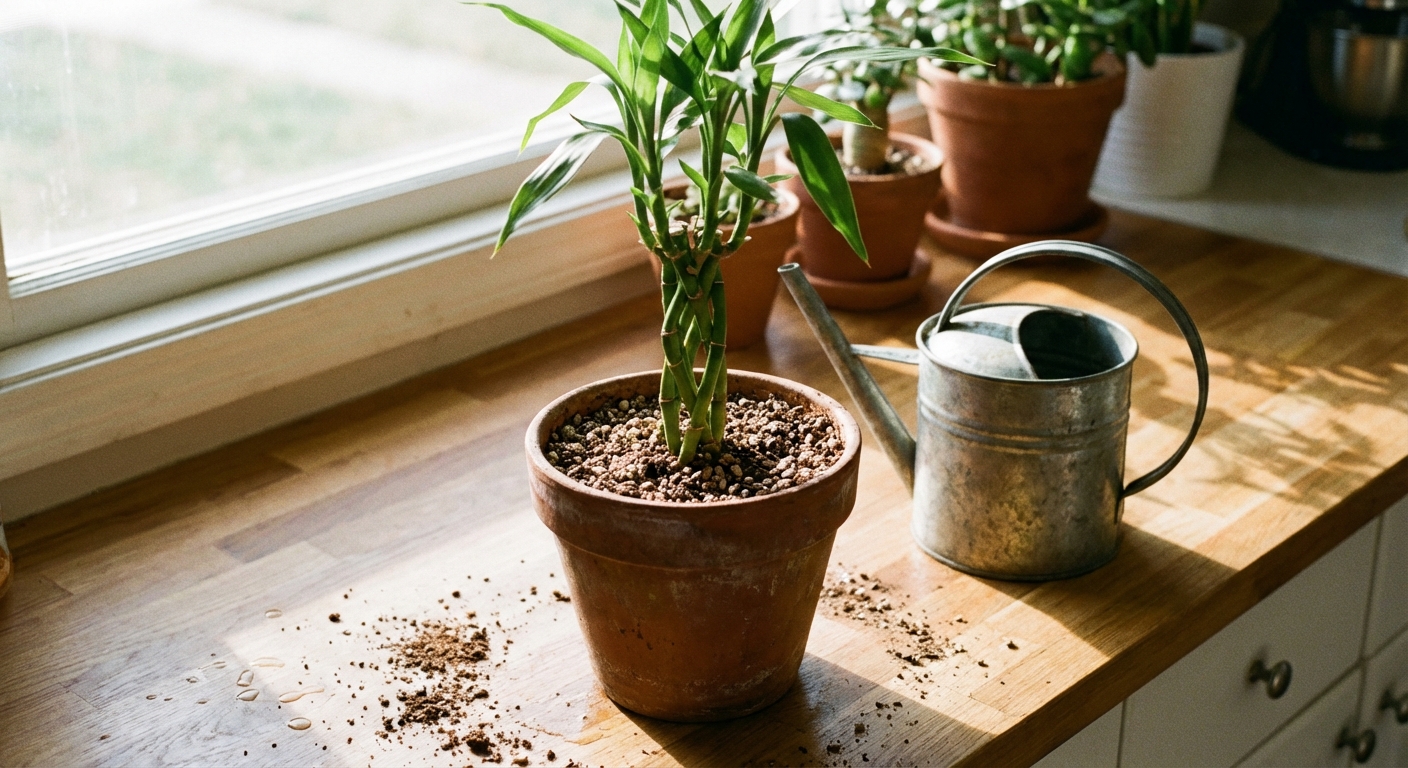
If you want faster growth and a little more forgiving routine, soil is a great option. Lucky bamboo can live in water, but it often grows stronger in a pot with drainage.
Pot and mix
- Choose a pot with a drainage hole.
- Use a loose, well-draining mix such as indoor potting soil cut with perlite or pumice.
- Plant so the roots are covered and the canes are stable, but do not bury the stalks deeply.
Watering in soil
Your goal is even moisture, not soggy soil.
- Water thoroughly until it drains, then empty the saucer.
- Water again when the top 1 to 2 inches of soil feel dry.
- If your home is cool or low light, it will dry more slowly. Adjust rather than sticking to a calendar.
- Use room-temperature water if possible.
Fertilizing lucky bamboo
Lucky bamboo is a light feeder. Over-fertilizing is one of the quickest ways to get brown leaf tips, salt buildup, and unhappy roots.
In water
- Use a very diluted liquid houseplant fertilizer or a fertilizer labeled for lucky bamboo.
- Feed about every 2 to 3 months during spring and summer.
- Skip fertilizing in winter or in low-light homes.
When I say diluted, I mean it. Think one-tenth to one-quarter strength. If you are unsure, go weaker.
In soil
- Feed monthly in spring and summer at half strength, or use a gentle organic option sparingly.
- Flush the pot with plain water every couple of months to reduce salt buildup, especially if using tap water.
Shaping and curling
Those curly, spiral lucky bamboo stalks are not a special variety. They are shaped over time by training toward light. It is slow, but it is fun if you like small, satisfying plant projects.
How to curl with light
- Place the plant in a spot with indirect light coming from one direction.
- After several days to a week, when you notice it bending, rotate the container slightly.
- Repeat gradual turns over weeks to months to encourage a spiral.
For tighter shapes, people sometimes use a three-sided box with an opening on one side to control where light enters. If you try this, keep airflow decent and check often to prevent trapped heat.
Can you cut lucky bamboo?
Yes. You can trim leafy shoots to keep the plant tidy. Use clean scissors and cut the shoot back to a node. The main cane can also be cut, but it will not regrow taller from the cut tip. Instead, it may push new side shoots below the cut.
If you cut a cane, the most important thing is a clean cut with a sterilized blade. Some people also dab a tiny bit of melted candle wax on the cut as an optional extra step. If you do, let the cut end dry for a short time first and keep the wax layer thin so you are not sealing in moisture.
Troubleshooting
Yellow stalks
A yellow cane is the classic panic moment. Unfortunately, a stalk that is fully yellow usually does not turn green again. The goal is to save what is still healthy and fix the cause so it does not spread.
- Common causes: chlorinated or fluoridated water, chloramine-treated tap water, too much direct sun, fertilizer burn, rot from keeping too much stalk underwater
- What to do: move to bright indirect light, switch to distilled or RO water, pause fertilizing, and lower the water level so mostly roots are submerged
If only one cane is yellowing in a group, remove it from the arrangement to protect the others, especially if the base looks soft.
Yellow leaves and brown tips
- Dry air: can cause crispy tips, though lucky bamboo is usually tolerant. Keep it away from heater vents.
- Salt buildup: from fertilizer or hard tap water can burn tips. Flush soil-grown plants, and for water-grown plants, do a full water change and skip feeding for a while.
- Too much sun: can fade and yellow leaves. Filter the light.
Mushy roots or soft, smelly base
This is rot, usually from stale water, dirty containers, or water levels that are too high for the way the plant is being maintained.
- Remove the plant from its container.
- Rinse roots gently and trim off mushy, black, or foul-smelling roots with sterilized scissors.
- Wash the vase and stones with hot soapy water and rinse well.
- Return the plant with fresh, clean water, keeping the water line lower.
If the cane itself is soft and dark at the bottom, you may need to cut above the rot and try to root the healthy top portion. If no firm tissue remains, that cane is unlikely to recover.
Algae in the vase
Algae is common in clear containers because light hits the water. It is not always harmful, but it can contribute to lower water quality and funky smells over time.
- Change water more often.
- Rinse stones and scrub the vase.
- Move the arrangement slightly farther from the window.
- Consider an opaque container if algae keeps returning.
Pests
Lucky bamboo can occasionally pick up common houseplant pests like spider mites or mealybugs, especially in dry indoor air.
- What to look for: fine webbing, tiny speckling on leaves, or cottony white clusters in leaf joints
- What to do: rinse the plant, wipe leaves and stems, then treat with insecticidal soap or neem oil. Repeat weekly a few times, because pests love a comeback tour.
Switching water and soil
You can move lucky bamboo between water and soil, but do it gently and expect a short adjustment period.
Water to soil
- Rinse the roots to remove any slime or algae.
- Pot into a well-draining mix in a container with a drainage hole.
- Keep the soil evenly moist (not soaked) for the first couple of weeks while it transitions.
Soil to water
- Rinse soil from the roots thoroughly.
- Trim damaged roots, then place in clean water with stones for support.
- Change water a bit more often at first to keep things fresh while it adapts.
A simple weekly routine
If you want lucky bamboo to feel effortless, give it a tiny recurring rhythm.
For water-grown plants
- Check water level and top off with distilled or RO water.
- Quickly rinse dust off leaves with lukewarm water if needed.
- Every 1 to 2 weeks, change the water and rinse the container.
For soil-grown plants
- Feel the soil and water only when the top layer dries.
- Rotate the pot occasionally for even growth.
- Wipe leaves with a damp cloth to help it photosynthesize efficiently.
Quick FAQs
How long does lucky bamboo live indoors?
With stable conditions, lucky bamboo can live for years. In water, longevity depends heavily on clean water and avoiding rot. In soil, it often grows stronger and can be longer-lived with proper drainage.
Should lucky bamboo be in rocks?
Rocks are helpful for anchoring stalks in water, but they are not required in soil. If using rocks in water, rinse them regularly to prevent buildup.
Can lucky bamboo grow in low light?
It can survive in low light, but growth will slow and it may stretch or become sparse. Bright indirect light keeps it sturdier and greener.
My best lucky bamboo tip
If your lucky bamboo is struggling and you do only one thing, change the water source. I have seen “mystery” yellowing stop completely after switching from tap water to distilled or reverse osmosis water. This is common with dracaenas that are sensitive to what is coming out of the faucet.
And if you slip up, do not take it personally. Lucky bamboo is forgiving, but it is also honest. It tells you quickly when something is off, and that is actually a gift. Adjust the light, clean up the water routine, and you will have those fresh green tufts again before you know it.