
Kentia Palm Care Indoors

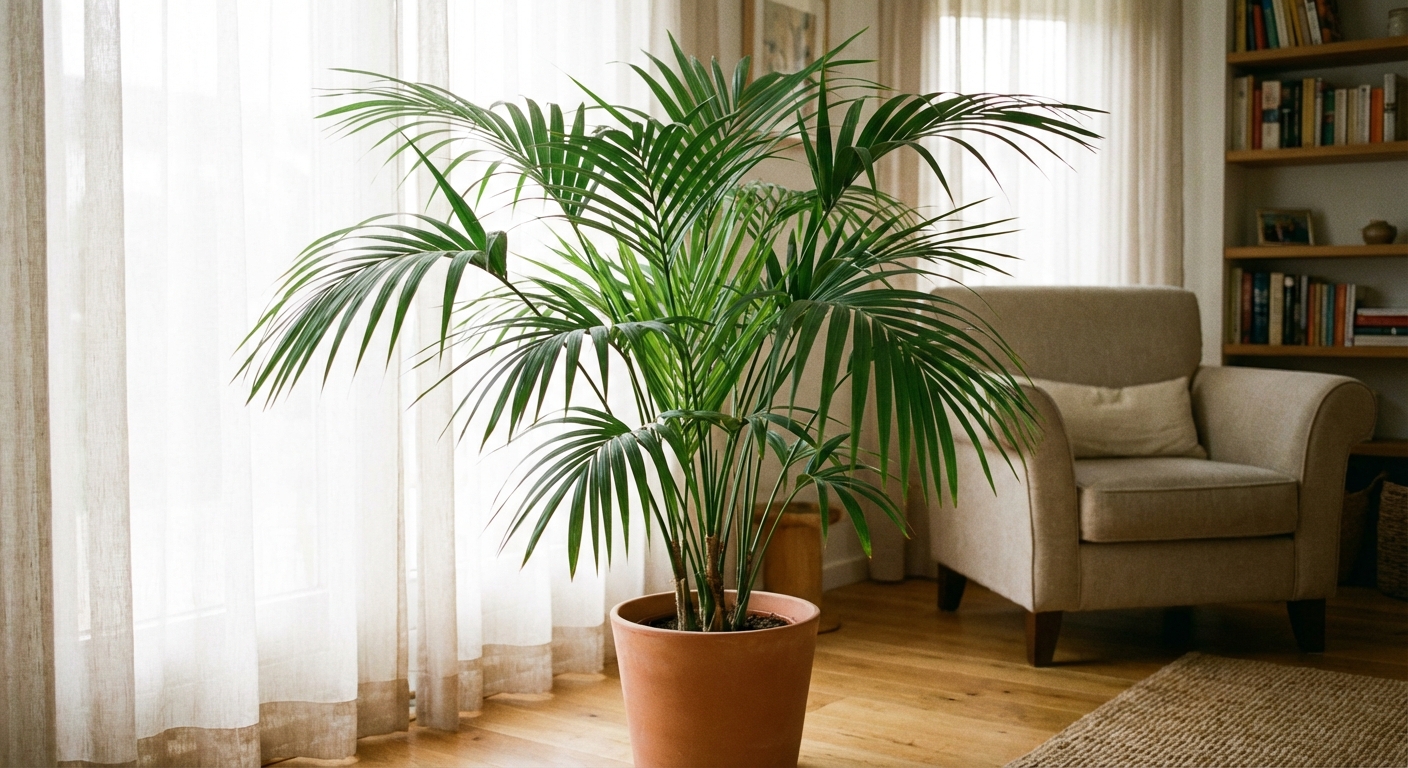
Kentia palm (Howea forsteriana) is the quiet luxury of houseplants. It has that graceful, feathered silhouette you see in old sunrooms and hotel lobbies, yet it’s surprisingly forgiving in everyday homes. The trick is knowing what it tolerates (lower light) and what it doesn’t (wet feet, stale air, and chronic underwatering followed by a flood).
If your Kentia’s looking tired, don’t panic. Palms are slow growers and slow communicators, so small adjustments done consistently are your best friend.

Know your Kentia
Kentia palms are native to Lord Howe Island off Australia and evolved under tall forest canopies. That background explains two big indoor traits: they handle less-than-perfect light, and they prefer evenly moist, well-aerated soil rather than extremes.
- Growth pace: Slow. A Kentia can live for decades indoors, which is why gentle care beats quick fixes.
- Structure: Multiple stems in a pot are often several seedlings planted together. Each stem is a single growing point, so protect the crown.
- Pet note: Kentia palms are generally considered non-toxic to cats and dogs, but chewing any plant can still upset stomachs.
Indoor light: low-light tolerant, not low-light loving
Kentias are famous for coping in lower light, but “coping” usually looks like slower growth and slightly wider spacing between leaflets. For the fullest, strongest fronds, aim for bright, indirect light.
Best placement
- Ideal: 3 to 8 feet from an east or north window, or behind a sheer curtain in a south or west window.
- Okay: A few steps back from a bright window, or in a room that stays comfortably lit most of the day.
- Avoid: Hot direct sun that hits the fronds for hours, especially through glass. This can scorch the leaflets.
Signs your light is off
- Too little light: Fronds lean hard toward the window, new fronds are smaller, and the plant feels “stalled” for months.
- Too much sun: Pale patches, crispy tan streaks, and frond tips that dry quickly even when soil moisture seems fine.
Clara tip: Rotate the pot a quarter turn every couple of weeks. It’s the simplest way to keep the palm symmetrical without “chasing” the light.
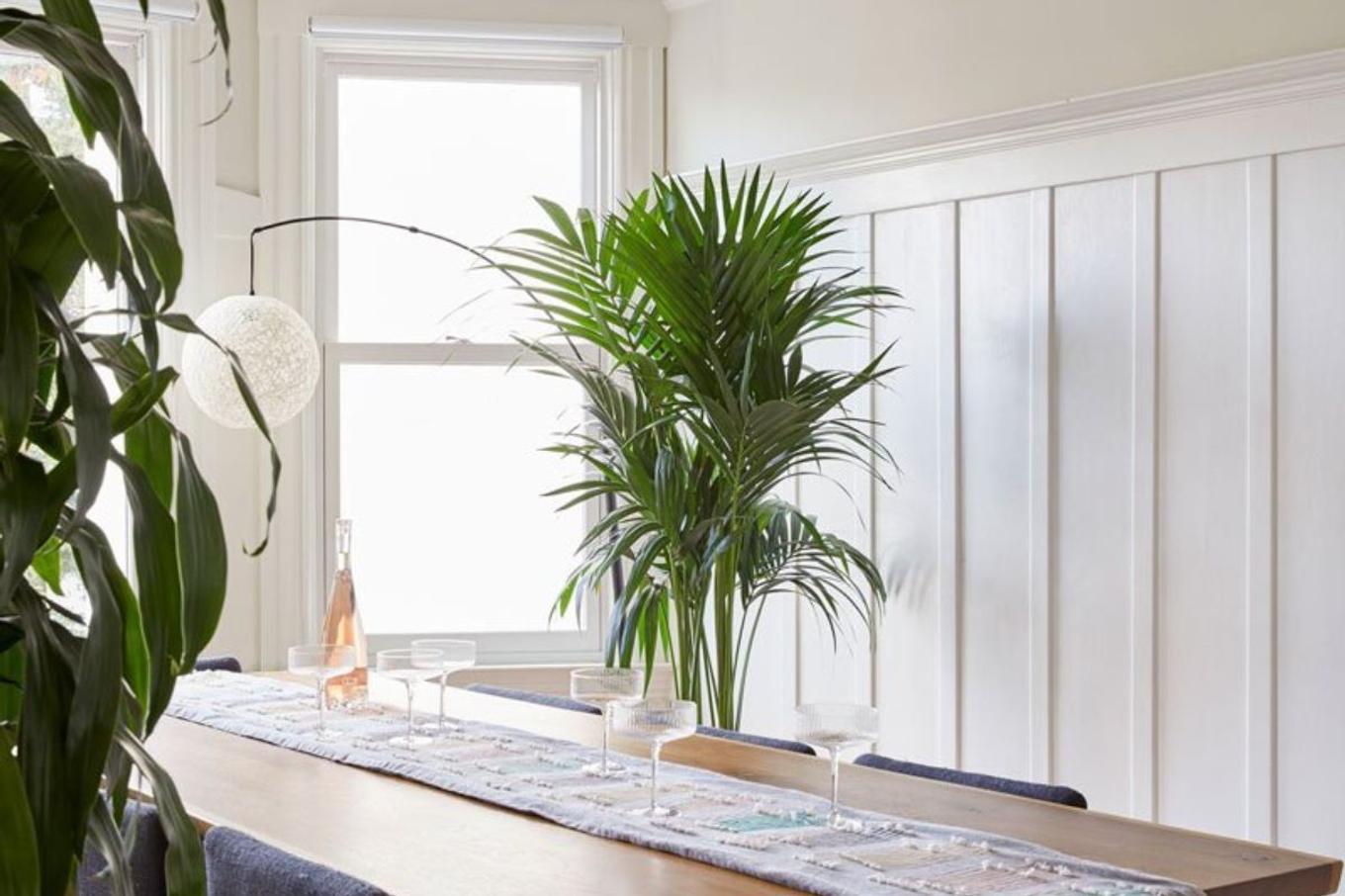
Watering: the #1 reason Kentia palms collapse
Most Kentia drama comes from one of two patterns: staying wet too long, or drying bone dry and then being heavily watered. Either way, roots lose function, and fronds start drooping, yellowing, or collapsing.
How often to water
There’s no perfect calendar schedule, but there is a reliable method. Water when the top 2 inches of soil are dry, and the pot feels noticeably lighter. In many homes, that lands around:
- Spring and summer: Every 7 to 14 days
- Fall and winter: Every 10 to 21 days
How to water correctly
- Check moisture first using your finger or a wooden skewer. Moist soil will cling and feel cool.
- Water slowly until it runs from the drainage holes.
- Empty the saucer after 10 to 15 minutes. Standing water is a root rot invitation.
What “collapse” usually means
- Drooping fronds with yellowing: Commonly overwatering, low light, or a cold draft combined with wet soil.
- Fronds folding inward, crispy tips: Often chronic underwatering or low humidity, sometimes paired with a heater vent nearby.
- Sudden full plant slump after a big watering: Soil stayed too dry for too long, then was saturated. Roots can struggle to rehydrate evenly.
Rescue move: If you suspect soggy soil, pause watering and increase airflow and light. If the potting mix feels dense or smells sour, plan a repot into a more breathable palm mix.
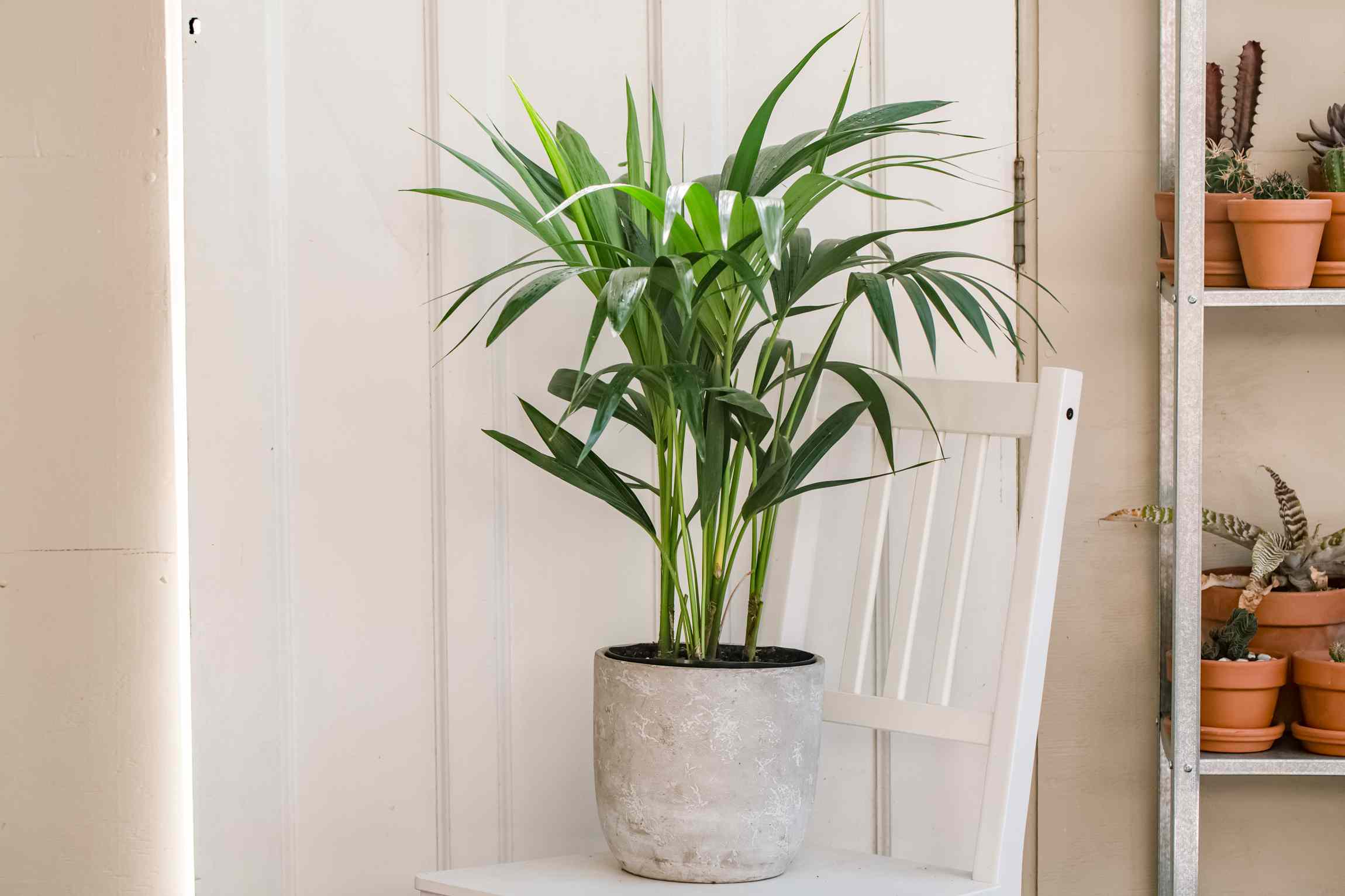
Soil and pot: airy roots make happy fronds
Kentia palms want moisture, but they need oxygen at the roots. Many store-bought palms come in peat-heavy mixes that hold water too long indoors.
A good indoor palm mix
- 2 parts high quality potting mix
- 1 part fine orchid bark
- 1 part perlite or pumice
This blend drains well while still holding enough moisture for a palm that prefers steady hydration.
Pot choice
- Must have: Drainage holes.
- Material: Terracotta breathes and helps prevent staying wet too long. Plastic holds moisture longer and can be fine if you water cautiously.
- Size: Go up only 1 to 2 inches wider when repotting. Oversized pots stay wet.
Feeding: slow and steady for a long-lived palm
Kentias aren’t heavy feeders. Over-fertilizing can show up as brown tips, salt buildup on soil, and stressed roots. Under-feeding can look like pale new growth and slow decline over years.
Best fertilizer approach
- Spring through early fall: Use a gentle, balanced fertilizer at half strength every 4 to 6 weeks, or use a slow-release palm fertilizer at the label rate.
- Late fall and winter: Skip feeding in low-light months unless your plant is under strong grow lights and actively pushing new growth.
Prevent fertilizer burn
- Water first, then fertilize on damp soil.
- Flush the pot every 2 to 3 months: water thoroughly so extra salts drain out.
- If you see crusty white buildup on the soil surface, gently scrape off the top inch and replace with fresh mix.
Humidity and airflow: the secret to pristine fronds
Kentia palms adapt to average home humidity, but they look their best with a little extra moisture in the air and consistent airflow. Dry air alone doesn’t usually kill a Kentia, but it can invite spider mites and crispy tips.
- Humidity target: 40 to 60 percent is a sweet spot.
- Easy boost: Group plants together or run a small humidifier nearby.
- Airflow: Gentle circulation helps prevent pests and fungal issues. Avoid blasting vents directly at the plant.
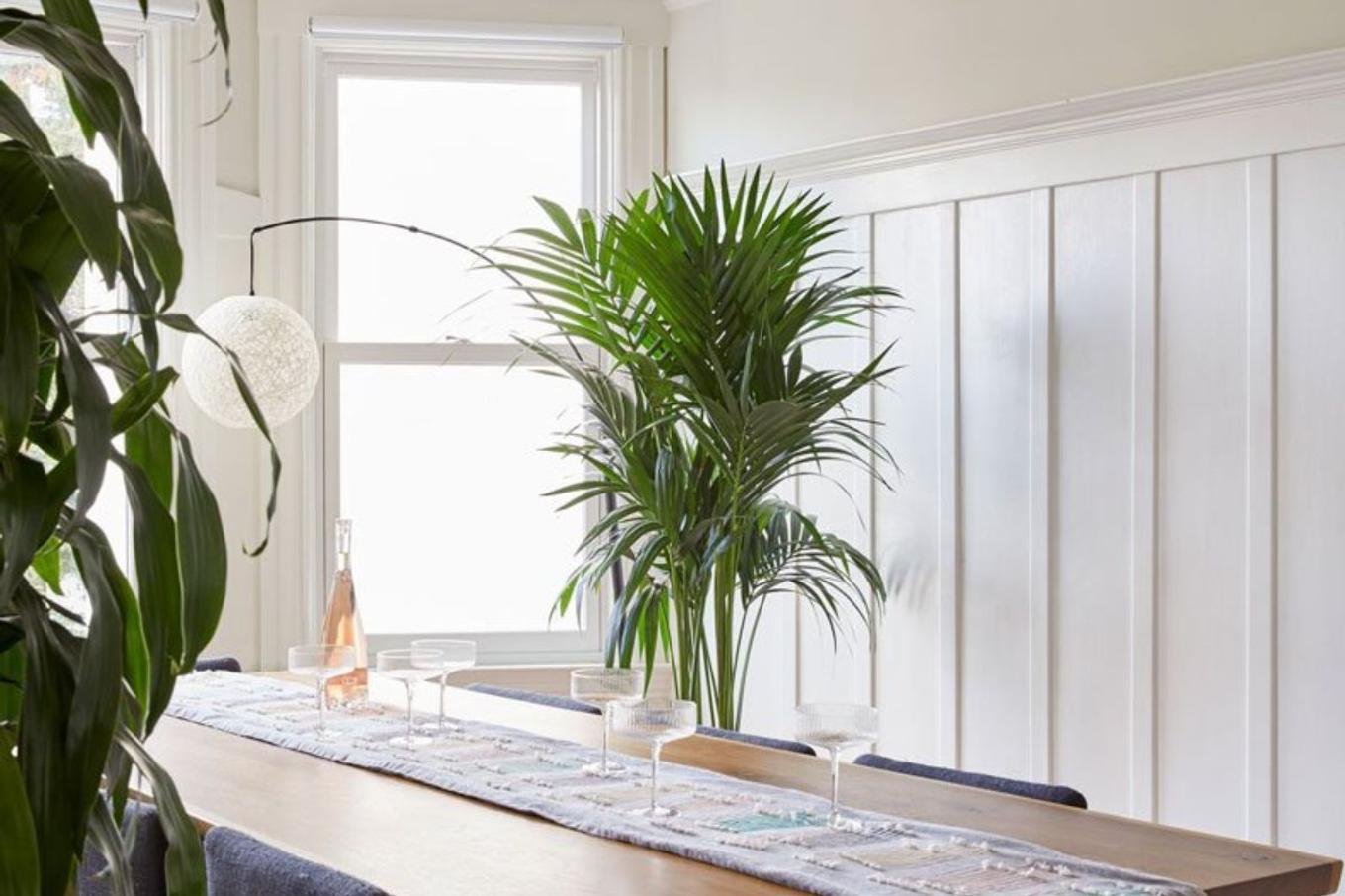
Frond problems and what they mean
Palms don’t replace leaves quickly, so a little browning is normal over time. The goal is to stop a minor cosmetic issue from becoming a pattern.
Brown tips
- Common causes: Low humidity, inconsistent watering, fertilizer salts, or hard water.
- What to do: Water more evenly, flush the soil, switch to filtered water if yours is very hard, and bump humidity.
- Can you trim: Yes. Snip just the brown tip, following the leaflet shape. Leave a thin brown edge rather than cutting into green tissue.
Yellowing lower fronds
- Sometimes normal: Oldest fronds gradually yellow and die as new ones emerge.
- If multiple fronds yellow fast: Often overwatering, low light, or root stress.
- What to do: Check drainage, confirm the top 2 inches dry between waterings, and increase light slightly.
Brown patches or scorched areas
- Likely causes: Direct sun through glass, cold drafts, or hot dry vents.
- What to do: Move the plant a bit back from the window, keep it away from exterior doors in winter, and redirect vents.
Drooping fronds
- Underwatered: Soil pulls away from the pot edges, fronds look limp, tips crisp.
- Overwatered: Soil stays wet, fronds droop and yellow, pot may smell musty.
- What to do: Match your fix to the soil. Don’t water a wet pot just because the fronds look sad.
Spider mites: prevention first, treatment early
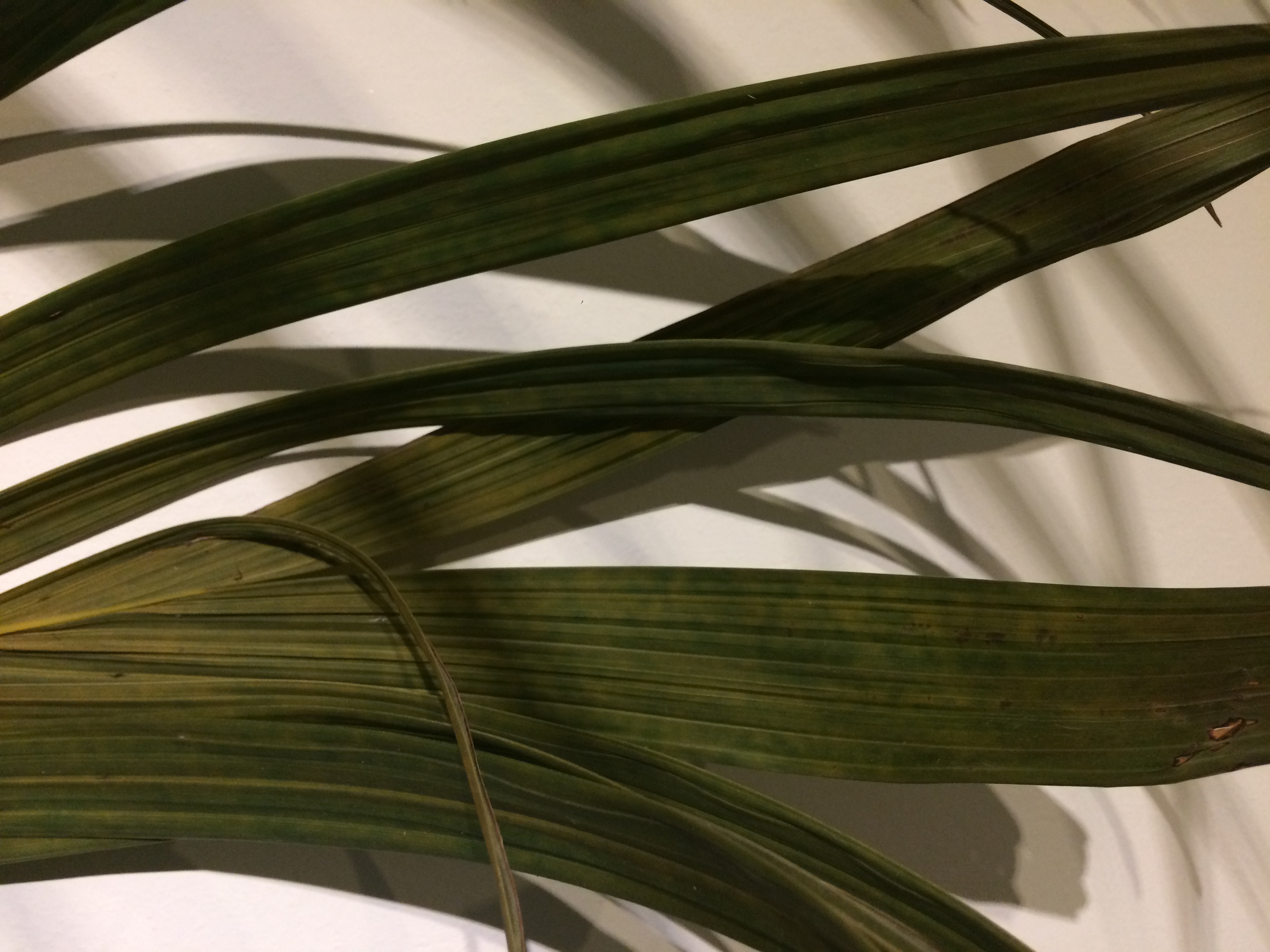
Spider mites are tiny sap suckers that love dry, dusty indoor conditions. Kentia palms aren’t doomed to get them, but they’re a common target when air is dry and fronds are neglected.
How to spot them
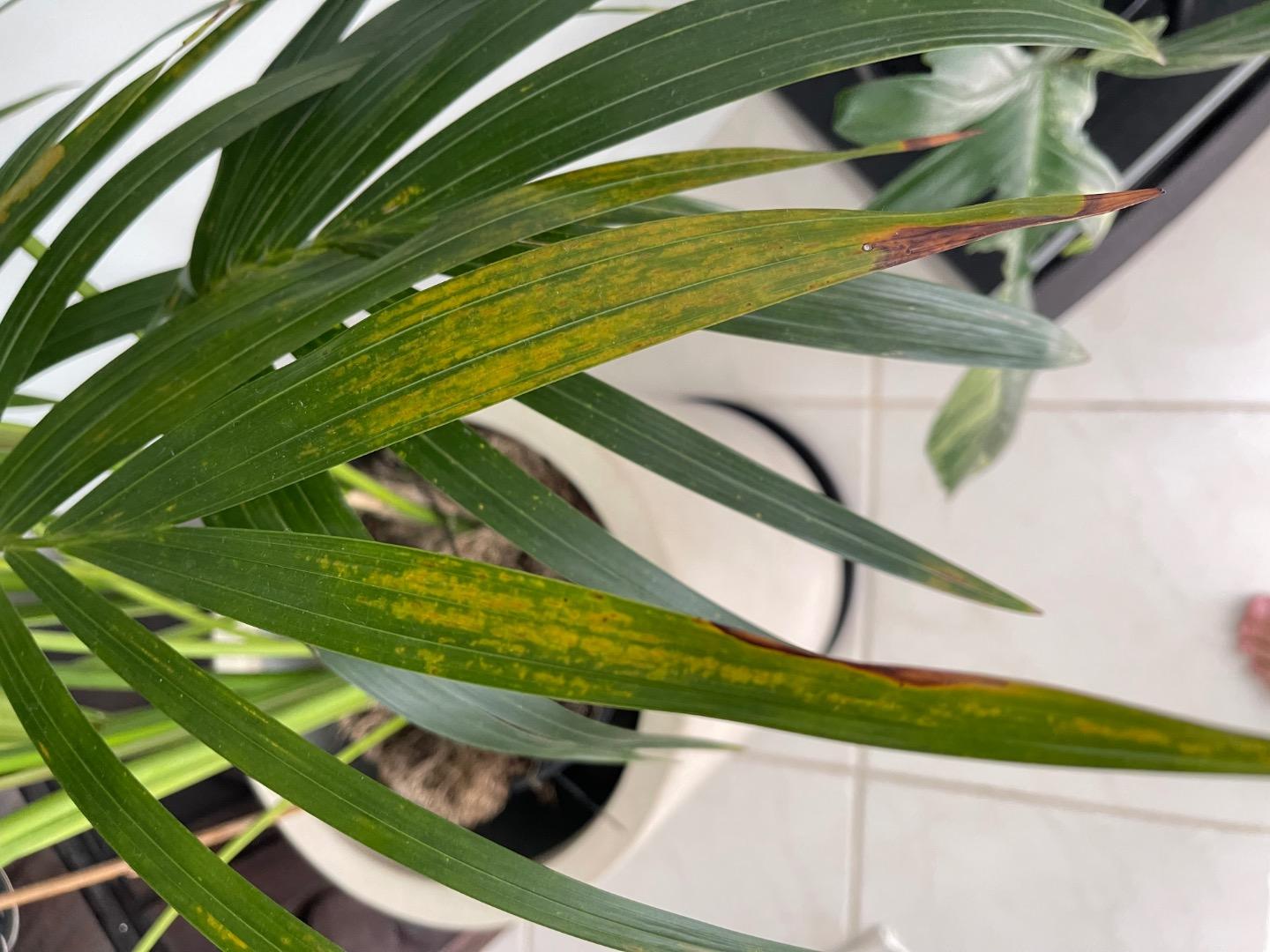
- Fine stippling or speckled fading on leaflets
- Very thin webbing, usually along the midrib or where leaflets meet the stem
- Leaflets that look dull and tired even after watering
Prevention routine (my favorite low drama approach)
- Dust monthly: Wipe fronds with a damp microfiber cloth or give the plant a gentle shower.
- Rinse the undersides: That’s where mites party.
- Keep humidity reasonable: Not rainforest, just comfortably not crispy.
- Quarantine new plants: Two weeks in a separate room saves a lot of heartbreak.
If you already have mites
- Isolate the palm.
- Rinse thoroughly in the shower, focusing on the underside of fronds.
- Apply insecticidal soap or horticultural oil according to label directions.
- Repeat every 5 to 7 days for 3 to 4 rounds to catch new hatchlings.
Pruning: what to cut and what to leave alone
With palms, less pruning is almost always better. Each frond is a little solar panel, and removing too many slows growth dramatically.
- Do remove: Fully brown, dead fronds by cutting near the base with clean pruners.
- Do not remove: Mostly green fronds with minor tip browning. They’re still feeding the plant.
- Never cut: The central spear or emerging new frond. That’s the growing point.
Repotting: how to do it without sulking
Kentias don’t love frequent repotting. They prefer to be slightly snug. Repot every 2 to 4 years, or when roots circle densely and water runs straight through.
Best timing
Late spring to early summer, when the plant can recover faster.
Gentle repot steps
- Choose a pot 1 to 2 inches wider with drainage.
- Slide the root ball out and loosen only the outermost roots.
- Set the palm at the same soil level. Don’t bury the stems deeper.
- Backfill with airy mix, water once, then let the top dry slightly before watering again.
Aftercare: Keep light bright but indirect, and skip fertilizer for 4 to 6 weeks.
Quick troubleshooting checklist
- Fronds drooping: Check soil moisture and pot weight before watering.
- Yellowing spreads: Increase light slightly and confirm drainage is working.
- Brown tips: Even out watering, flush salts, improve humidity.
- Speckling and dull leaves: Inspect for spider mites, rinse and treat early.
- No growth for months: Likely low light or cold conditions. Move to brighter indirect light and keep temperatures steady.
The long game: a Kentia that gets better every year
A Kentia palm isn’t a sprint plant. It’s a “settle in and exhale” plant. Give it steady light, consistent watering, and a small meal now and then, and it’ll repay you with elegant fronds for years.
If you want, tell me where yours sits (window direction, pot size, and how often you water). I can help you dial in a routine that fits your home instead of fighting it.