
Keep Squirrels Off Bird Feeders

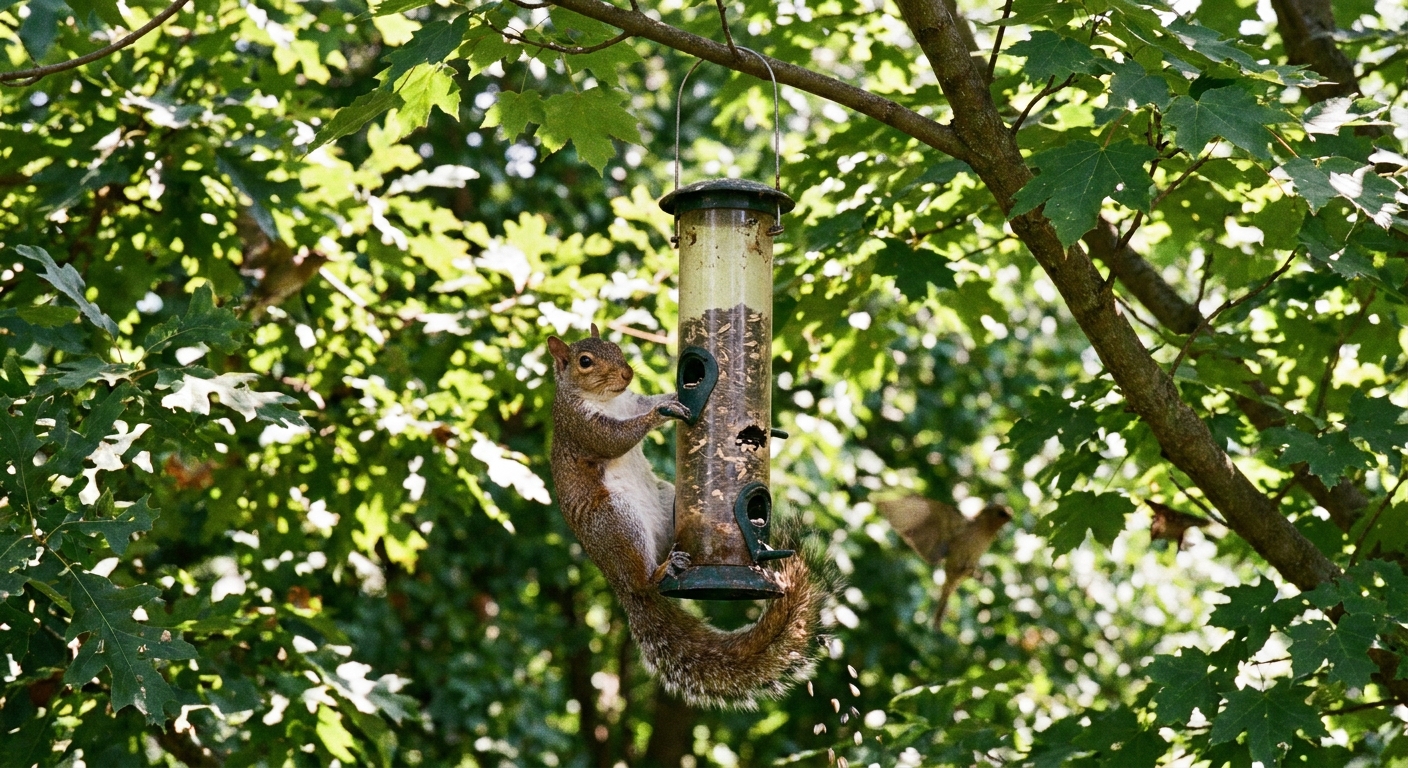
If you have ever watched a squirrel do a full Olympic routine on your bird feeder, you are not alone. I have a soft spot for the little acrobats, but I also want chickadees and finches to actually get dinner. The good news is you do not need anything harsh to win this tug-of-war. You need physics, smart placement, and the right feeder setup.
This guide is only about keeping squirrels off bird feeders. If you are dealing with squirrels digging in beds or nibbling edibles, Leafy Zen covers garden-focused deterrents elsewhere. Here, we are staying up in the air, right where the seed drama happens.

Why squirrels keep winning
Squirrels are not just hungry. They are motivated, lightweight, and built to climb, jump, and hang upside down while eating. Most “squirrel-proof” failures come down to one of these issues:
- The feeder is too close to a launch point like a fence, railing, roof edge, or branch.
- The baffle is the wrong size or placed too low or too high to block access.
- The pole is climbable because it is rough, too close to nearby objects, or missing a proper baffle.
- The feeder design is easy to grip and the squirrel can eat comfortably while hanging on.
Once you see it as a puzzle of distance, grip, and leverage, you can fix it in a weekend.
Baffles that work
A baffle is a physical barrier that blocks climbing or stops a squirrel from reaching the feeder. It is the most reliable, humane tool in the whole squirrel-off-the-feeder toolbox.
Pick the right style
- Stovepipe or tube baffles (for poles): A wide, smooth cylinder that spins or cannot be gripped. These are my favorite for a dedicated feeder pole setup because they protect the entire “trunk” of the system.
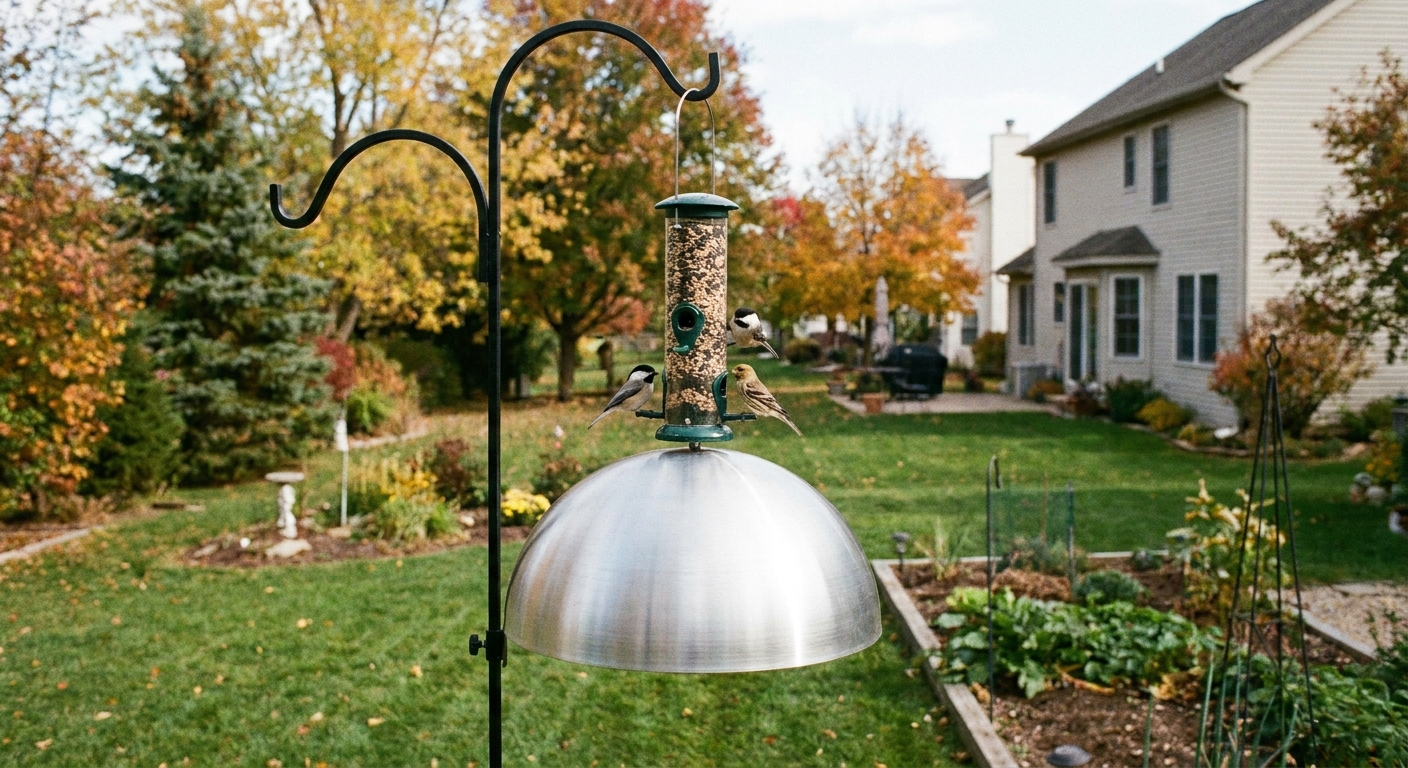
- Dome baffles (for poles or hanging): An umbrella-like dome, usually plastic or metal. Great for blocking climbing from below on a pole. When used above a hanging feeder, they can also stop squirrels that try to drop down from a branch or roofline.
- Wrap-around baffles: These can be added to an existing pole without dismantling the whole setup. A very practical option if you are retrofitting.
Get the size right
A baffle needs enough diameter to prevent a squirrel from simply hugging around it. Bigger is usually better, especially if you have athletic squirrels or a short distance between feeder and “launch pads.”
- Pole baffles: Aim for at least 8 inches in diameter. In many yards, 10 to 12 inches is a safer baseline for consistent results. A longer tube style adds even more protection.
- Dome baffles: Look for a dome around 15 to 18 inches across for dependable coverage. If squirrels are persistent, going larger can help.
Put it at the right height
Placement matters as much as design. For pole-mounted systems, place the baffle so it stops climbing before the squirrel can get close enough to jump onto the feeder.
- Typical target: Place a pole baffle around 4 to 5 feet off the ground.
- Keep space above it: Try for at least 4 feet of pole above the baffle before the feeder. More space gives squirrels less leverage to launch from the top edge.
Spacing rules for hanging feeders
If you hang a feeder from a hook or line, you are working with jump distance. Squirrels vary by species and athletic talent, so treat these as goals, not guarantees.
- Aim for 10 to 12 feet of clearance from fences, decks, railings, tree trunks, and overhanging branches when you can.
- Hang the feeder at least 5 feet high for comfortable bird access and easier baffle use.
- Use a hanging baffle above the feeder if squirrels are dropping down from branches or rooflines.
Common mistake: A great baffle loses the whole game if the feeder is still one clean leap from a deck rail.
Feeders that beat squirrels
Even with a good baffle, feeder design matters. A squirrel that cannot get comfortable will usually give up faster, especially if there is an easier snack elsewhere.
Weight-sensitive feeders
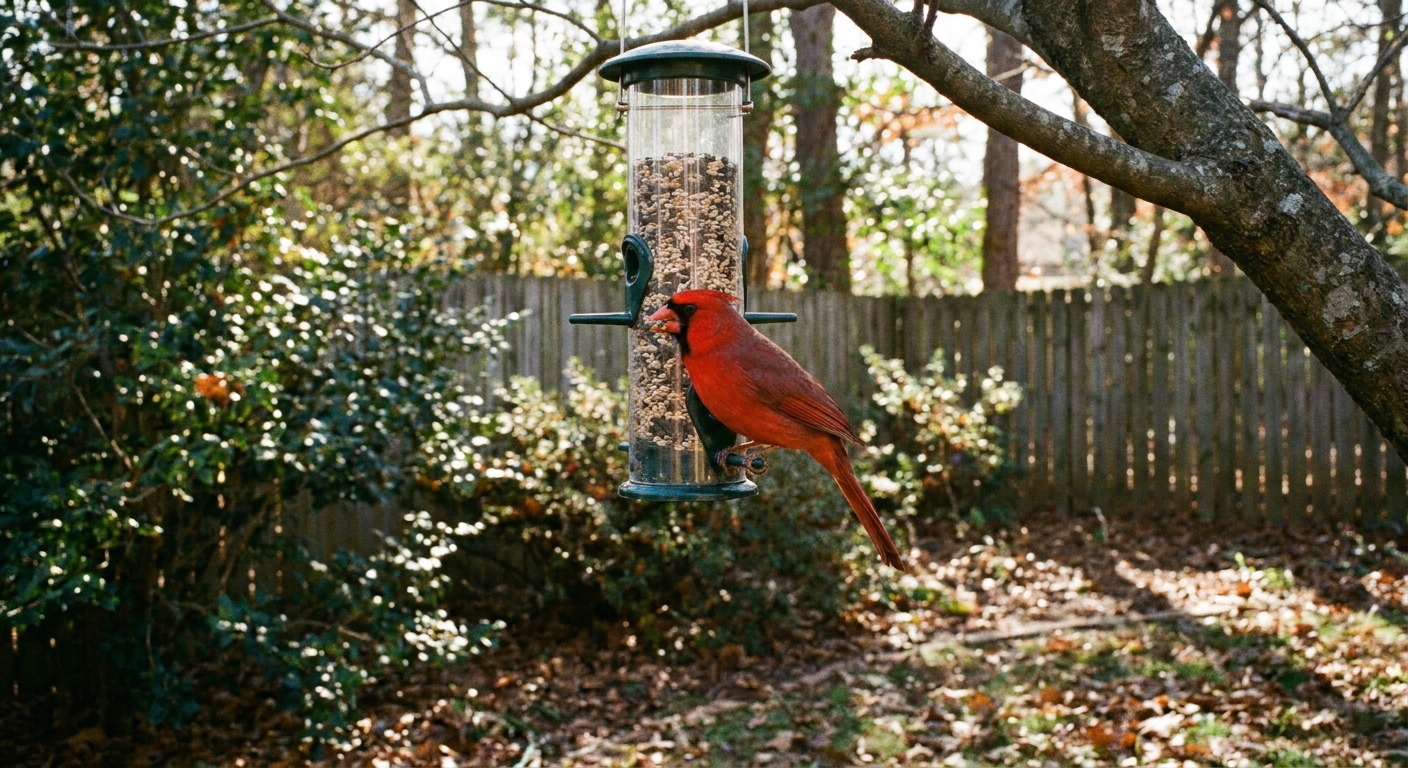
These feeders use a spring-loaded perch or shroud that closes access to seed ports when a heavier animal lands. They can be very effective, especially for mixed backyard flocks.
- Best for: Tube feeders for finches, chickadees, titmice, and other small songbirds.
- What to look for: An adjustable tension setting and sturdy metal parts where squirrels tend to chew.
- Tip: If you notice larger birds are being “locked out” too, adjust tension so it closes for squirrels but stays open for your target birds.
Upside-down suet feeders
Squirrels can hang, yes, but they do not love feeders that require awkward positioning without a stable hold. Upside-down suet feeders are a classic trick that favors woodpeckers, nuthatches, and chickadees.
Metal over plastic
If you have a squirrel that treats your feeder like a chew toy, choose metal mesh, metal ports, and metal hanging hardware. Plastic components often become the weak point.
Avoid easy platform dining
Tray or platform feeders are wonderful for some birding goals, but they are also basically a picnic table for squirrels. If you love platform feeding, consider placing it well away from your main songbird feeder zone and accept that it will be shared.
Seed that squirrels like less
This is not about starving anyone. It is about offering foods birds love that squirrels are less enthusiastic about.
Safflower
Many squirrels dislike safflower’s taste, while cardinals, chickadees, doves, and some finches will happily eat it. Results vary by neighborhood squirrel culture, but it is often a big help.
Nyjer for finches
Nyjer is a favorite of goldfinches and pine siskins, and squirrels are often less interested. Use a feeder designed for nyjer so it stays fresh and does not spill.
Hot pepper seed, use thoughtfully
Capsaicin does not affect birds the way it affects mammals because birds do not have the receptor that triggers the burning sensation. Hot pepper products can deter squirrels, but use them with care.
- Do not DIY with kitchen powders that may clump, mold, or blow into your eyes and lungs.
- Use gloves and avoid touching your face while filling feeders.
- Be mindful of pets and kids: Store spicy seed securely, and keep dust out of noses and eyes.
- Keep it dry so the coating stays effective.
Reduce waste
Spilled seed on the ground is an open invitation. Choose feeders with better containment, use seed catchers if they actually fit your feeder, and rake up hull piles if they are building a squirrel hangout under the feeder.
Yard layout
This is the part people skip, but it is often the deciding factor. You can buy the fanciest feeder in the world, then hang it one squirrel-jump away from a fence and wonder why it failed.
Pick the right spot
- Away from launch pads: Keep feeders far from anything a squirrel can leap from, especially tree branches, roofs, railings, and tall shrubs.
- Open, with cover nearby: Birds like a clear view for predator awareness, but they also appreciate nearby cover to dart into. Aim for a spot with shrubs or small trees 15 to 30 feet away rather than directly beside the feeder.
- Easy for you to access: If it is convenient to refill and clean, you will keep it cleaner and fresher, which helps bird health.
Use a dedicated feeder pole
If you are serious about squirrel control, a standalone pole with a proper baffle is hard to beat. Look for:
- Sturdy pole that does not sway wildly in wind.
- Multiple hooks if you want to separate seed types.
- Ability to add a baffle that is large enough for your situation.
Squirrel snacks elsewhere (optional)
This is not required, but it can reduce obsession in some yards. Some folks set up a separate area away from bird feeders with a squirrel feeder or a small scatter of corn. If you try this, keep it far from your bird feeding zone and monitor whether it increases squirrel traffic overall.
Humane extras
Stabilize the feeder
Some squirrels use a swinging feeder like a pendulum. A stabilizing arm, a sturdier hook, or a shorter hanging line can limit the “grab and ride” strategy.
Make pole climbing harder
- Smooth metal poles are harder to climb than wood.
- Keep poles clean of rough tape or textured coatings that add grip.
- Do not use sticky substances like petroleum jelly. It can coat fur and feathers and is not a good choice for wildlife safety.
Offer water away from the feeder
In hot weather, animals come for water as much as food. A birdbath or shallow water source placed away from your feeder may help reduce traffic right at the seed station. It may also attract more overall backyard activity, so consider your space and comfort level.
Safety and upkeep
Cleaner feeders, healthier birds
Bird feeders are community dining, which means germs can spread. Empty and scrub feeders regularly, and clean more often in warm or wet weather. Replace wet or clumped seed, and do not let oily seed sit and spoil in heat.
Windows and predators
If your feeder is near windows, reduce collision risk by placing it very close (about 3 feet or less) or farther away (about 30 feet or more), and consider adding visible window markers if strikes are a concern. Also keep an eye on cats and other predators. Nearby cover is good for birds, but you do not want it to become an ambush zone.
Skip poisons and risky tactics
Avoid poisons and glue traps. They are not selective, they can harm birds and other wildlife, and they can create messy secondary impacts. If you are considering trapping or relocation, check local regulations first.
Quick setup
If you want a simple starting point that works for most yards, do this:
- Install a dedicated metal feeder pole in an open spot.
- Add a large dome or stovepipe baffle about 4 to 5 feet off the ground.
- Hang the feeder so it is aiming for at least 10 feet from any jumping-off point.
- Start with safflower or a hot pepper treated blend if squirrels are persistent.
- Switch to a weight-sensitive tube feeder if they still manage to eat.
Then watch for one evening. Squirrels will show you exactly where your weak point is, and you can adjust one variable at a time.
Troubleshooting
They jump from a tree onto the feeder
Move the feeder farther out, prune back the nearest branch, or add a hanging baffle above the feeder if the drop is coming from above.
They climb the pole anyway
Your baffle may be too small, too close to the feeder, or installed low enough that they can jump past it. Upsize the baffle (often into the 10 to 12 inch range) or reposition it higher with more pole above it.
They hang on and eat upside down
Choose a feeder with a squirrel-resistant shroud or go to a weight-sensitive model. Also consider switching seed to safflower or treated seed to reduce reward.
They chew through parts
Replace plastic with metal components and check hangers and hooks. Chewers tend to return to the same weak point.
Common mistake: Fixing the feeder, but not the layout. If there is a fence, deck rail, or branch within jumping range, the squirrels will keep “solving” your setup.
A note from my garden heart
I know it can feel personal when a squirrel empties a feeder you just filled. But you do not need to fight nature. You just need to design a feeding station that is meant for birds, not for gymnastic mammals. Set the baffle, tweak the distance, choose seed with intention, and let the birds have their peaceful little café again.
If you tell me what your feeder is mounted on and what is nearby (fence, tree, deck, roof edge), I can help you troubleshoot your exact setup.