
Kalanchoe Care and Reblooming

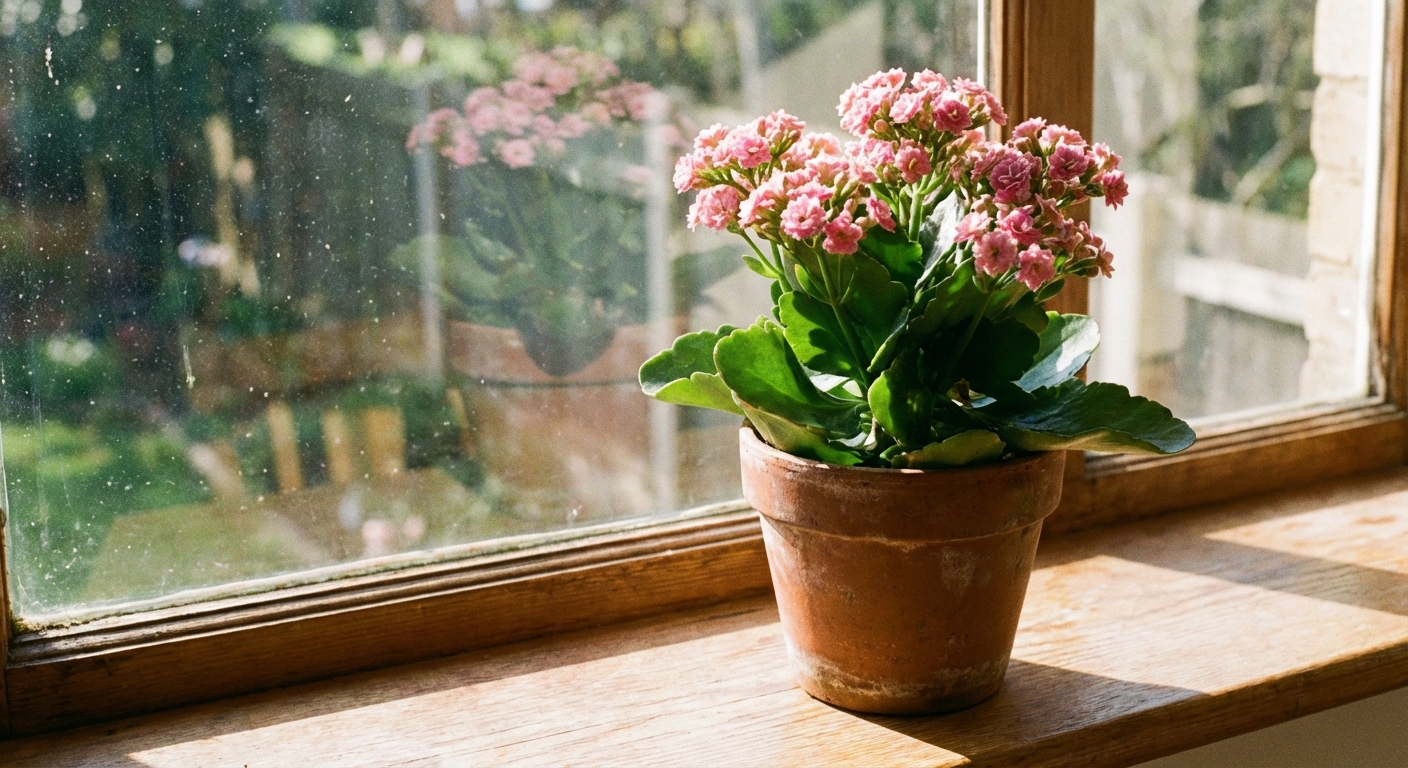
Kalanchoe blossfeldiana is that cheerful, grocery store bloomer that looks almost too perfect to be real. Clusters of tiny flowers in red, pink, orange, yellow, or white, perched on glossy succulent leaves. And then, after a few weeks, the show fades and people assume it is a one-and-done plant.
It is not. Kalanchoe can rebloom, but it plays by one very specific rule: it needs long nights to set buds. Give it bright days, dry feet, and a short “light diet” in the evening (as in, no household lights or TV glow during its night hours), and you can coax it back into flower like clockwork.
Meet the plant: what a kalanchoe wants
Kalanchoe blossfeldiana is a succulent from Madagascar. Think bright light, warm days, and soil that dries quickly. It stores water in its leaves, which is why the biggest mistake is usually love in the form of frequent watering.
- Type: Succulent houseplant, flowering
- Bloom season indoors: Often winter through spring, depending on when buds were set
- Growth habit: Compact mound, can get leggy in low light
- Toxicity: Toxic to pets if eaten (ASPCA lists Kalanchoe as toxic to cats and dogs). Keep it out of nibble range.
Light: compact or leggy
If you only nail one thing with Kalanchoe care, make it light. Bright light fuels blooms and keeps the plant sturdy.
Best placement
- Indoors: A bright south or west window is ideal. East can work if it is very bright.
- Direct sun: A few hours of gentle direct sun is great. In very hot climates or behind unshaded glass in intense midday sun, leaves can scorch.
- Outdoors (seasonal): In frost-free weather, it loves a bright patio with morning sun and light afternoon shade.
Signs your light is off
- Too little light: Stretched stems, wide gaps between leaves, flopping growth, fewer flowers.
- Too much intense sun: Bleached patches, crispy brown spots, stressed droop despite dry soil.
Clara tip: Rotate the pot a quarter turn weekly. Kalanchoe leans hard toward light, and a little spin keeps it looking like a neat, rounded bouquet.
Watering: soak, dry, repeat
Kalanchoes want a thorough drink followed by a real dry-out. That dry cycle is what keeps roots healthy and prevents leaf drop from rot.
How to water
- Check the soil with your finger. Wait until the top 1 to 2 inches are dry, and the pot feels noticeably lighter.
- Water deeply until water runs out of the drainage hole.
- Empty the saucer. No plant wants wet socks, especially a succulent.
How often?
Most homes land somewhere around every 10 to 21 days, but light, pot size, and season change everything. In winter, it usually needs less. In a bright window during active growth, it may need more.
Quick troubleshooting by feel
- Wrinkled, softish leaves: Often underwatering, but check roots too. A plant with root rot can look thirsty because it cannot drink.
- Yellowing leaves that drop easily: Frequently overwatering or low light combined with damp soil.
- Mushy stem base: Stop watering and inspect for rot immediately.
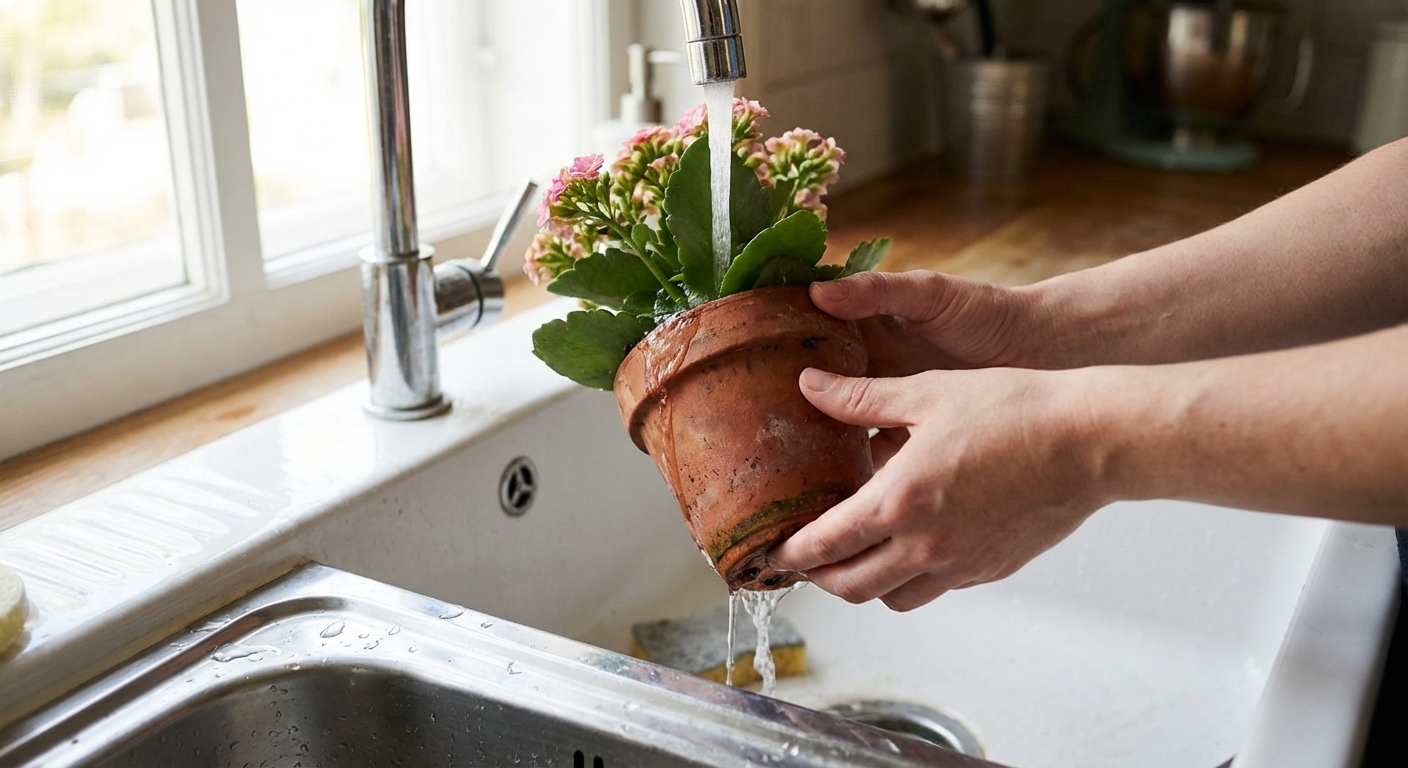
Soil and pot: drainage first
Kalanchoe roots need air as much as they need water. Dense potting mix holds moisture too long and invites rot.
Best soil
- Easy option: Cactus and succulent mix.
- Even better: Succulent mix plus 20 to 30 percent extra perlite or pumice for faster drying.
Best pot
- Must have: A drainage hole.
- Great choice: Terracotta, because it breathes and helps the mix dry evenly.
- Size: Slightly snug is fine. Oversized pots stay wet too long.
Quick post-purchase check
Store kalanchoes often come in a tight sleeve or a decorative cachepot. Make sure the nursery pot drains freely and never sits in pooled water. If the mix is very peat-heavy and stays wet for days, plan to repot after flowering.
Temperature and humidity
Kalanchoe is happiest in normal home conditions.
- Temperature: 60 to 80°F (16 to 27°C) is ideal. Avoid cold drafts and protect from frost. Below about 50 to 55°F (10 to 13°C), damage becomes much more likely, especially near cold windows.
- Humidity: Average indoor humidity is perfect. High humidity plus wet soil is where problems start.
Fertilizing: light feeding
This is not a heavy feeder. Too much fertilizer can push lush, weak growth at the expense of flowers.
Simple routine
- When: Spring through early fall, or whenever you see active growth.
- How: Use a balanced houseplant fertilizer at half strength every 4 to 6 weeks.
- Pause: Stop feeding during the rebloom dark-cycle period and during winter slowdowns.
After purchase: If your kalanchoe is actively blooming when you bring it home, wait until flowering slows before feeding. The plant is already spending energy on blooms.
Deadheading and pruning
Once the flowers fade, snip the spent clusters off at the stem just above a set of leaves. This keeps the plant compact and encourages branching.
- Deadhead: Remove old flower heads promptly to prevent energy waste.
- Pinch back: If stems get long, pinch or cut them back by one third. New side shoots will fill in.
- Save cuttings: Healthy stem tips can be rooted for free baby plants.
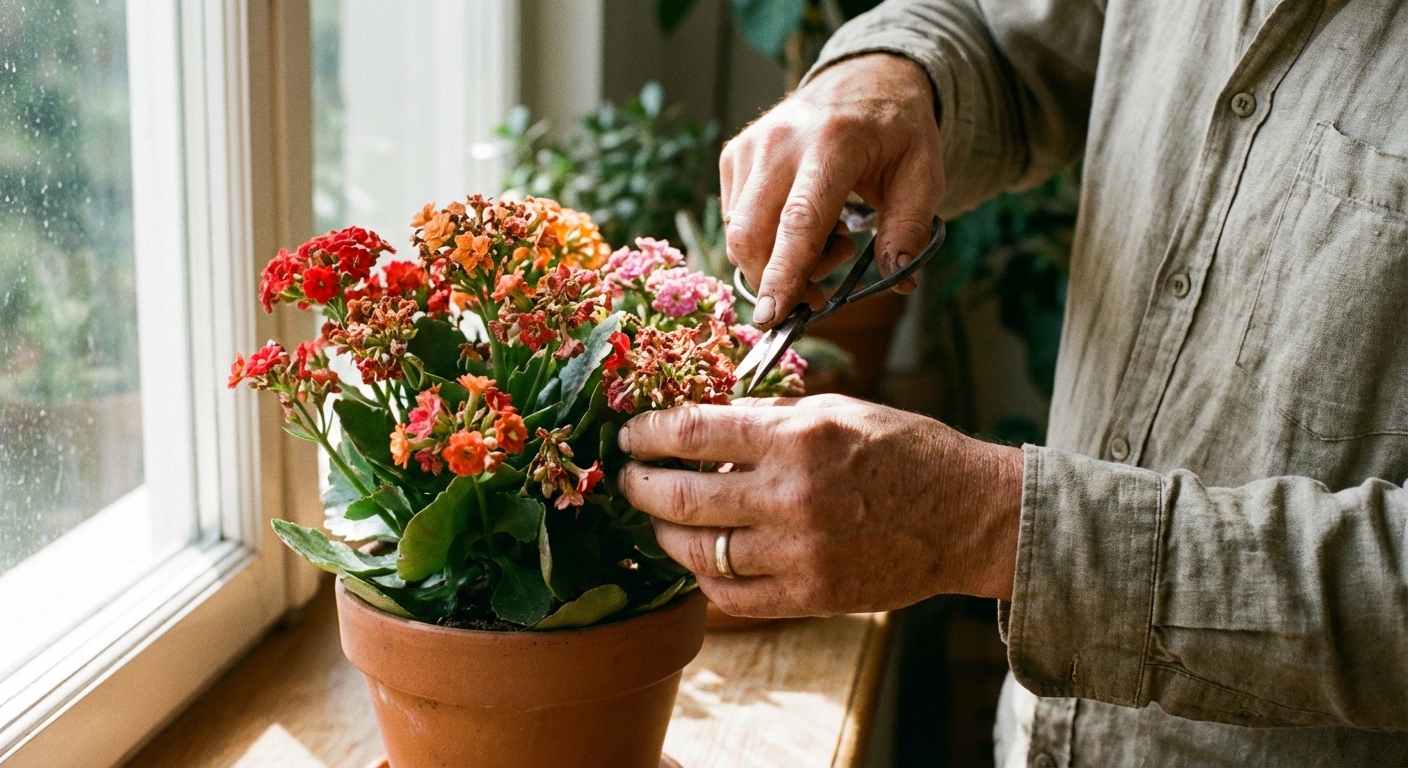
How to make kalanchoe rebloom
This is the magic trick, and it is more science than mystery. Kalanchoe blossfeldiana is a short-day plant, which means it sets flower buds when nights are long and uninterrupted.
In most homes, evening lamps can ruin the process. Repeated light interruptions at night, even brief ones if they are bright enough, can delay bud formation.
What to do
- Start after blooming ends. Let the plant rest for a couple of weeks after you deadhead, then begin.
- Give 12 to 14+ hours of complete darkness daily. Aim for 14 to 16 hours if you can, and keep it consistent for 4 to 8 weeks (many plants respond in the 6 to 8 week range). A closet works, or cover the plant with a breathable box. The key is darkness, not just dim light.
- Keep airflow in mind. If you cover the plant, use something that does not trap humidity, and do not cover a plant with wet soil. Stale, damp air is how mildew sneaks in.
- Give bright light for the remaining hours. Put it back in its sunny window during the day.
- Keep watering on the dry side. Do not let it shrivel, but avoid soggy soil.
- Watch for buds. Once you see small buds forming at the tips, stop the forced darkness and keep it in bright light to develop flowers.
Timing expectations
- Buds usually appear: Often around 4 to 8 weeks into a consistent long-night routine.
- Flowers open: Often a few weeks after buds form, depending on light and temperature.
Common rebloom roadblocks
- Night light: A nearby lamp, TV, or kitchen light can reset the clock.
- Not enough daylight: If daytime light is weak, buds may form poorly and blooms will be sparse.
- Overfertilizing: Can encourage leaves instead of flowers.
Clara tip: Set a repeating phone reminder. I have absolutely forgotten a plant in the closet overnight. It survived, but it was not impressed.
Common varieties
Most store kalanchoes are Kalanchoe blossfeldiana hybrids. You will also see a few close relatives sold as kalanchoe, especially in succulent sections.
Kalanchoe blossfeldiana (florist kalanchoe)
- Look: Glossy scalloped leaves, tight flower clusters
- Colors: Red, orange, yellow, pink, white, bicolor
- Care: This guide
Calandiva (double-flowered kalanchoe)
- Look: Rose-like, double blooms that last a long time
- Care: Same as blossfeldiana, including long-night reblooming
Kalanchoe tomentosa (panda plant)
- Look: Fuzzy gray-green leaves with brown edges
- Bloom: Grown more for foliage, flowers are not the main event indoors
- Care: Brighter light and drier watering, no special rebloom routine
Kalanchoe thyrsiflora (flapjack, paddle plant)
- Look: Big round leaves, often with red edges in strong light
- Note: Plants sold as “flapjack” are sometimes actually Kalanchoe luciae, a close look-alike.
- Bloom: Tall flower stalks, usually outdoors or very bright conditions
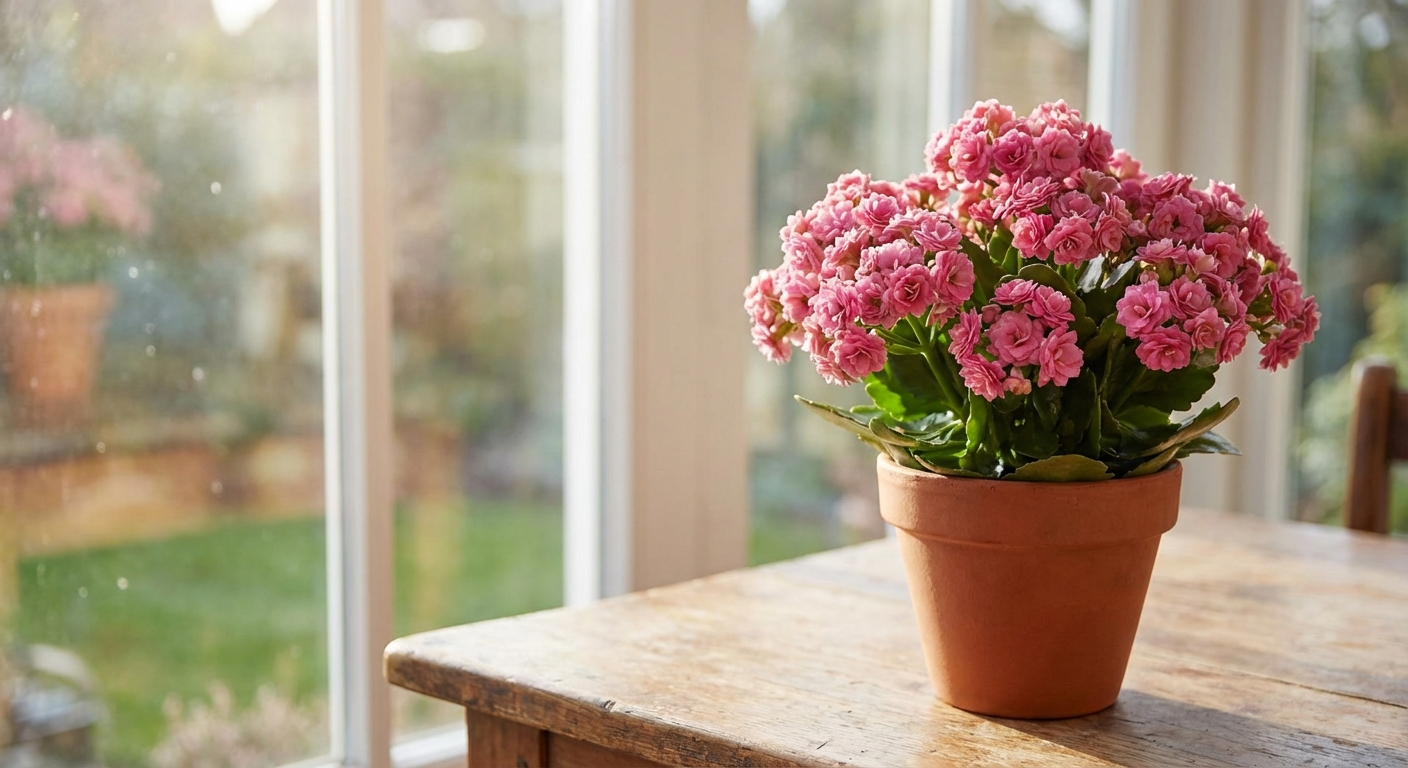
Troubleshooting
Leggy growth
- Cause: Not enough light, sometimes combined with warm indoor temps.
- Fix: Move to a brighter window, rotate weekly, and pinch back stems by one third. Consider a small grow light in winter.
Leaves dropping
- Cause: Most often overwatering, cold drafts, or sudden environment change.
- Fix: Let soil dry more between waterings, confirm drainage, keep temps steady. If soil is wet and leaves are yellowing, check roots for rot.
Soft, mushy leaves or blackened stems
- Cause: Root rot from consistently wet soil.
- Fix: Unpot, trim mushy roots, let cuts dry for a few hours, then repot into fresh, gritty mix. Take healthy cuttings as insurance.
Bud drop or buds never open
- Cause: Low light, temperature swings, underwatering during bud development, or moving the plant repeatedly.
- Fix: Bright light, steadier temps, water when the mix is mostly dry but do not let it bone-dry for weeks while buds are forming.
No rebloom after the dark cycle
- Cause: Nights were not dark enough, routine was too short, or daytime light was weak.
- Fix: Repeat for a full 6 to 8 weeks with truly uninterrupted darkness, or extend to 8 weeks if you had any hiccups. Ensure strong daytime light.
Pests (mealybugs and aphids)
- What to look for: Mealybugs look like little bits of white cotton tucked into leaf joints. Aphids cluster on soft new growth and buds. Both leave sticky residue.
- What to do: Isolate the plant, rinse what you can, then dab mealybugs with 70% isopropyl alcohol on a cotton swab. For aphids, use insecticidal soap or neem oil, and repeat weekly for a couple of rounds.
Repotting and propagation
When to repot
Every 2 to 3+ years is plenty, or simply as needed. Many kalanchoes are happy slightly rootbound. Repot when the plant dries out extremely fast, roots circle the pot, or the mix stays wet too long. Repot after flowering if possible.
How to propagate from cuttings
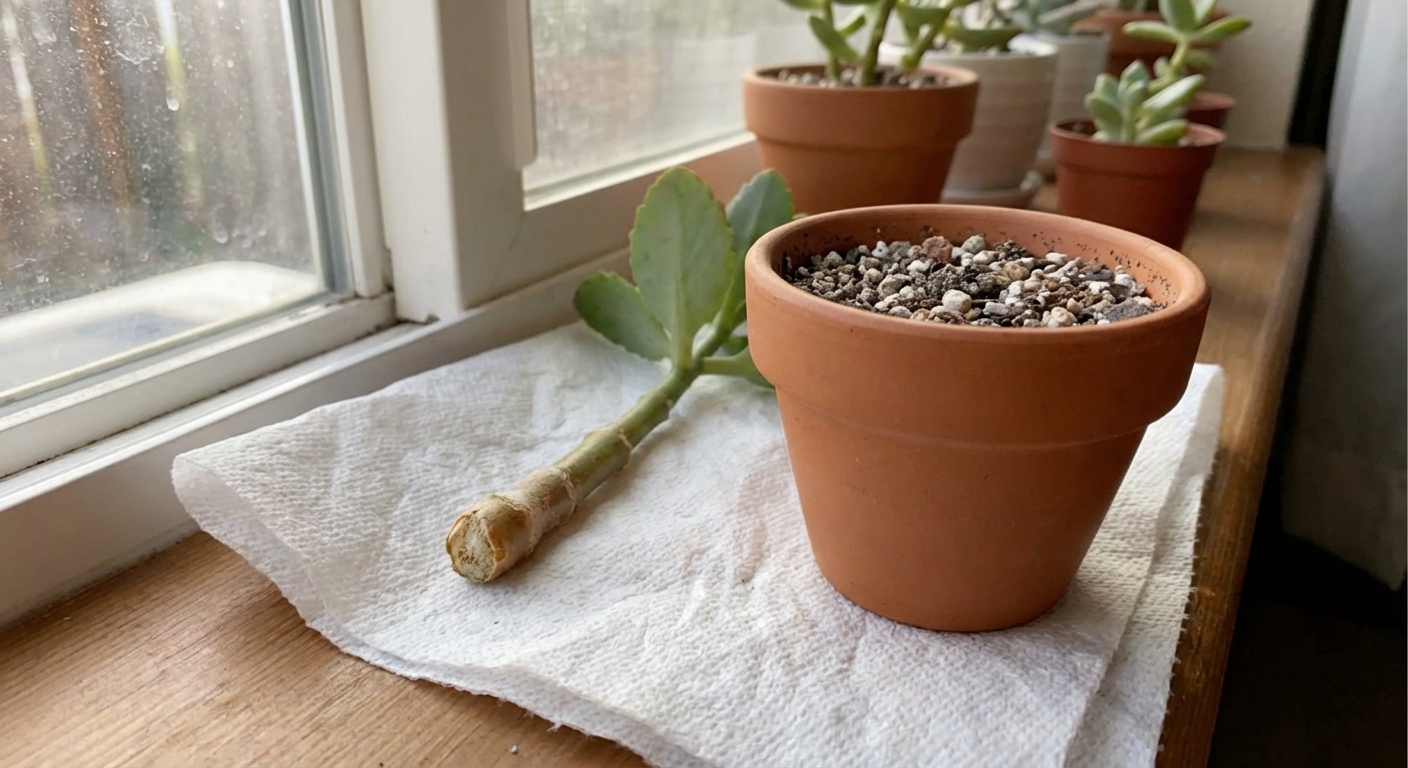
- Cut a healthy stem tip 3 to 5 inches long.
- Remove the lower leaves.
- Let the cutting dry and callus for 24 to 48 hours.
- Plant in dry succulent mix and wait 4 to 7 days before lightly watering.
- Keep in bright, indirect light until rooted, then increase light gradually.
Clara tip: If you are nervous about watering cuttings, err on the dry side at first. Kalanchoe cuttings rot faster than they root if the mix stays damp.
A simple care checklist
- Light: Bright window, a little direct sun is great
- Water: Soak, then let the mix dry well before watering again
- Soil: Fast-draining succulent mix, pot with a drainage hole
- Feed: Half-strength balanced fertilizer monthly in active growth
- After blooms: Deadhead and trim to encourage branching
- To rebloom: 12 to 14+ hours of complete darkness daily (aim for 14 to 16) for 4 to 8 weeks
If your kalanchoe is looking a little tired right now, you have not failed it. It is just asking for brighter days and drier feet. Give it that, then tuck it into long, dark nights for a while, and it will reward you with another round of confetti-bright blooms.