
Japanese Maple Leaf Scorch in Summer

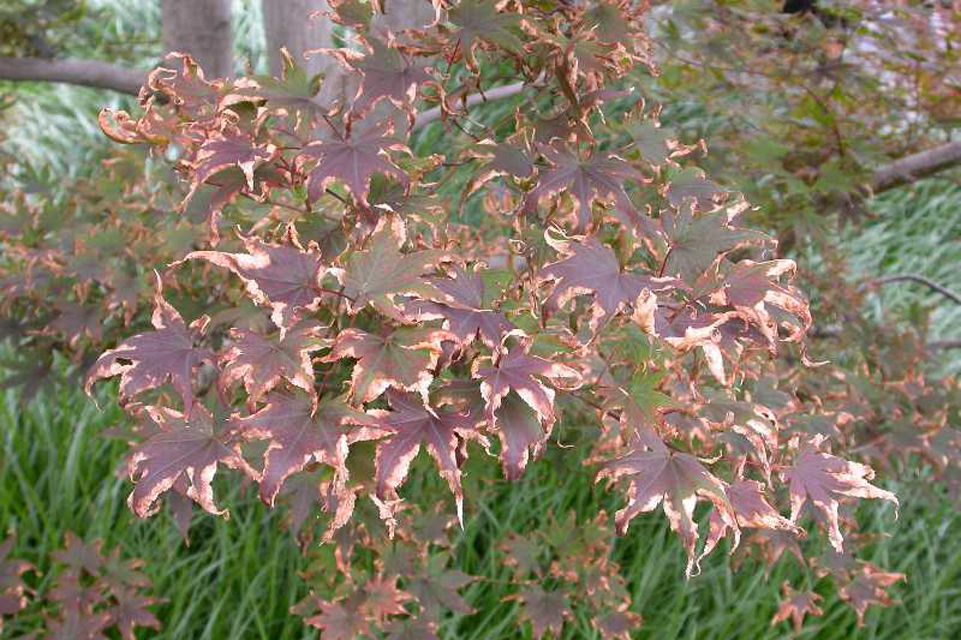
Japanese maples have that delicate, lacy elegance that makes you want to whisper when you walk past them. Then summer hits, and suddenly the leaf tips look toasted, the edges curl, and your once dreamy canopy starts crisping up like it spent the afternoon too close to a campfire.
That symptom has a name: leaf scorch . It is common, especially in hot, dry, windy stretches, and it is often fixable. The trick is figuring out why your tree is losing moisture faster than it can replace it, then adjusting the conditions so it can coast through the rest of the season.

What leaf scorch looks like
Leaf scorch is not a disease by itself. It is a stress response when the leaf tissue dries out. On Japanese maples, it usually shows up as:
- Brown or tan crispy edges, often starting at the tips
- Leaf curling or a slightly crinkled look
- Patchy browning on the side facing sun or wind
- Early leaf drop in mid to late summer
One important note: scorched leaves do not turn green again. Your goal is to stop the damage from spreading to new growth and help the tree store energy for next year.
Quick rule-out
Before you assume it is scorch, take 60 seconds to rule out the common look-alikes:
- Leaf spot or anthracnose: distinct dark lesions or blotches, sometimes with yellow halos, not just crispy margins.
- Verticillium wilt: sudden wilting or dieback on one side of the tree, not a slow, even “toasting” across the canopy.
- Herbicide drift : twisted, cupped, or strap-like leaves, often after lawn weed products were used nearby.
- Normal color change: fall color is more uniform and seasonal, not crispy edges in mid-summer.
If you are seeing mostly browned edges after heat or wind, scorch moves back to the top of the list.
Big causes: sun and wind
Sun stress (too much direct sun)
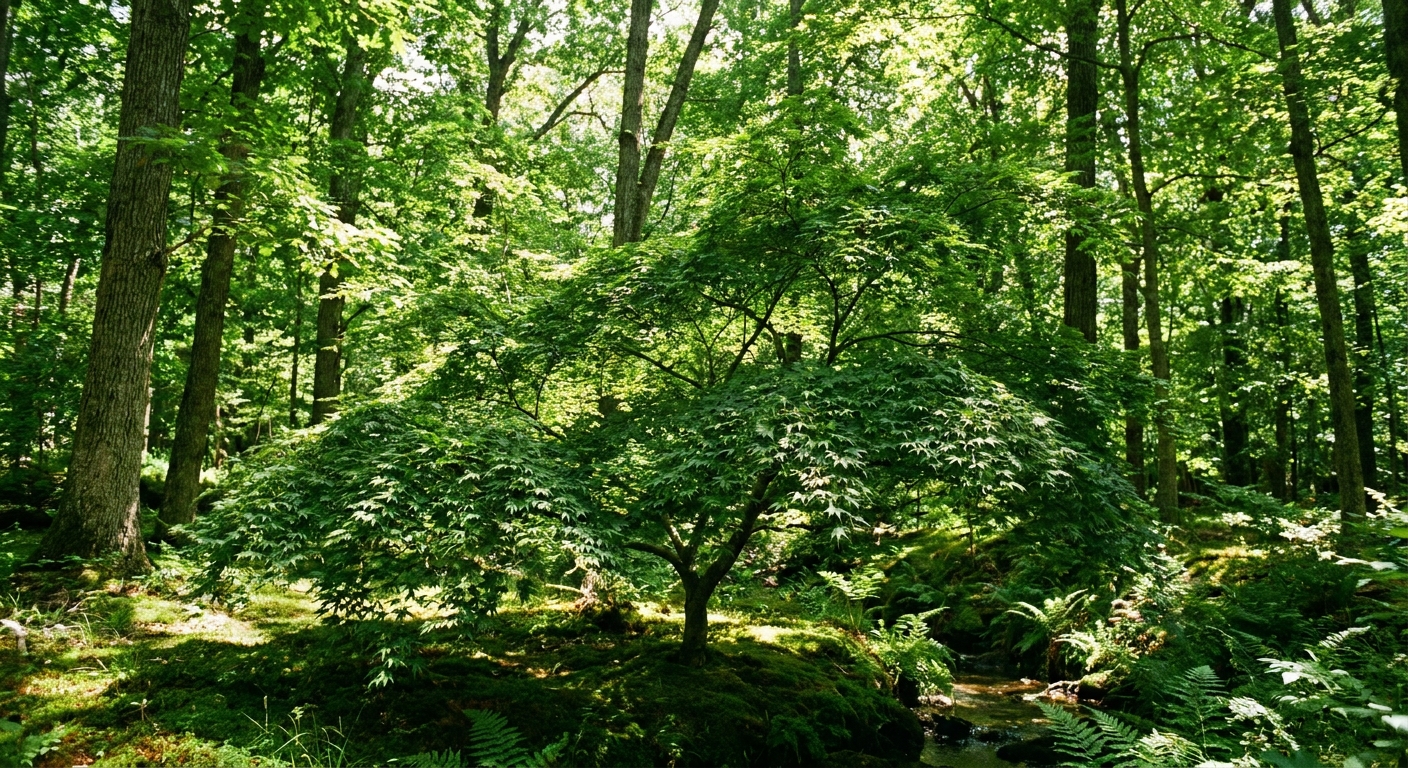
Many Japanese maples prefer morning sun and afternoon shade, especially laceleaf varieties and trees with finely dissected leaves. Harsh afternoon sun can overheat leaves and speed up water loss. That said, sun tolerance depends on the cultivar and your climate. A spot that works in a cool coastal summer can be brutal inland.
Clues it is sun stress:
- Worst scorch on the south or west side of the canopy
- Damage appears after a heat wave, even if you watered
- Container trees scorch faster than in-ground trees
Wind stress (drying winds)
Wind is sneaky because it dries leaves even when temperatures are not extreme. It also dries the soil surface faster, which is especially rough for shallow-rooted, container-grown maples.
Clues it is wind stress:
- Scorch is worse on the windward side
- The tree is near a corner, open driveway, or exposed patio
- Leaves look dry and papery, sometimes with a slightly silvery cast
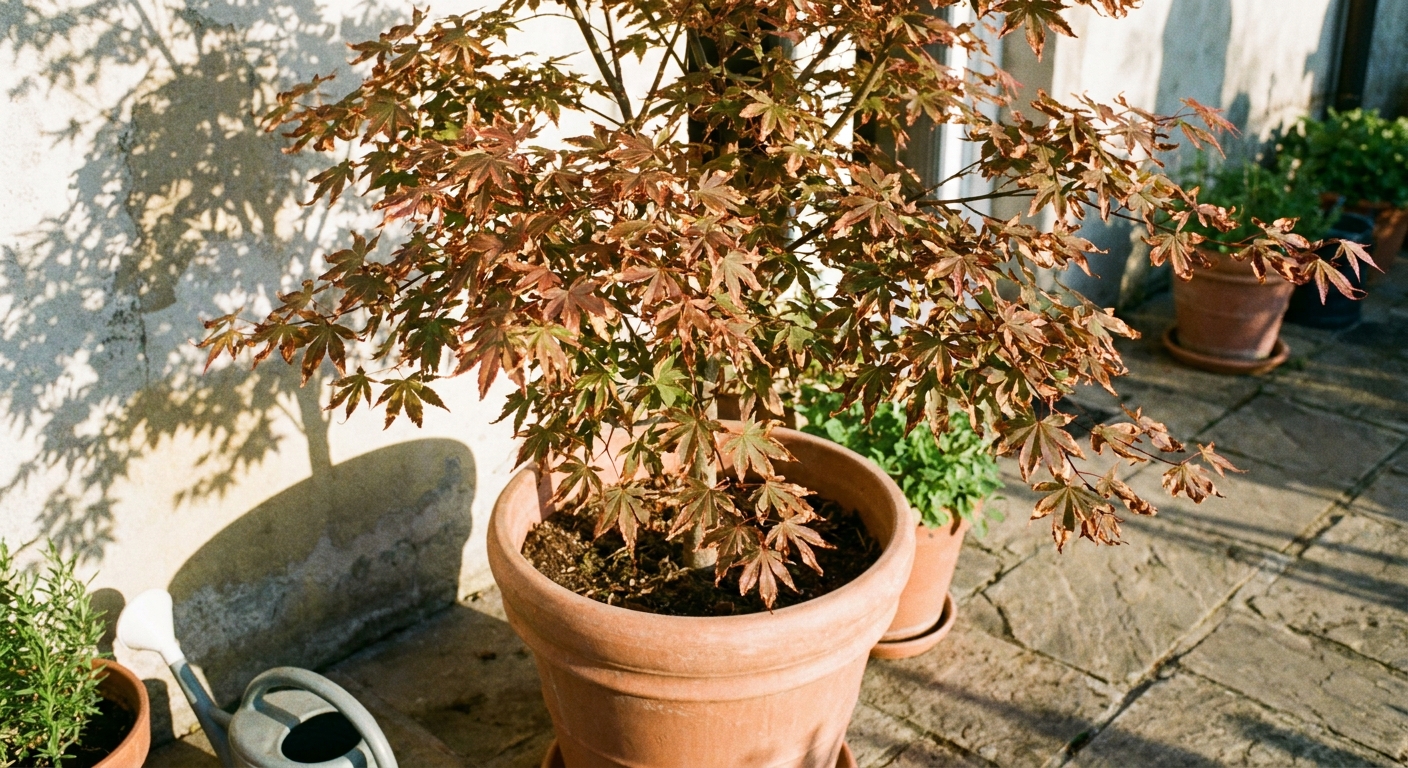
Why pots scorch faster
If your Japanese maple is in a pot, you are not imagining things. Containers heat up quickly and dry out fast, and the roots cannot chase moisture deeper into the soil the way they can in the ground.
Common container-specific scorch triggers:
- Black or dark pots baking in afternoon sun
- Small pots that cannot buffer heat and drying
- Potting mix that became hydrophobic and repels water
- Root-bound trees where water runs down the sides and exits
In-ground trees can scorch too, especially in sandy soil, newly planted trees, or any tree that is competing with lawn roots. But container trees are simply on hard mode.
Watering depth matters
Most summer scorch comes down to one simple mismatch: the leaves are transpiring faster than the roots can supply water. That can happen even if you water “often” if the water is not soaking in deeply.
How to water in-ground trees
- Water at the drip line and slightly beyond, not right at the trunk.
- Go slow enough that the water soaks in rather than running off.
- Aim to moisten the root zone deeply, often around 6 to 12 inches for established trees, depending on soil type and how the tree is rooted. In sandy soil, you may need more frequent deep watering. In clay, you may need less frequent watering with more time between sessions.
Quick check: Push a finger, a trowel, or a soil probe into the soil. If it is damp only in the top inch, you are giving sips, not drinks.
Frequency tip: In summer, many in-ground trees do better with a deep soak once or twice a week during dry spells, adjusted for rainfall, heat, and soil texture, rather than daily light watering that never reaches the deeper roots.
How to water container maples
- Water until it runs freely out of the drainage holes.
- In heat, check moisture daily. In a windy heat wave, some pots need water twice a day.
- If water runs down the sides and out quickly, submerge the pot (up to the rim) in a tub for 10 to 20 minutes to rehydrate the root ball, then let it drain fully. This is a rescue move for a dried-out, water-repelling mix, not a daily routine, and it only works if the potting media drains well.
Tip from my own scrappy balcony days: If you can lift the pot easily, it is too dry. A well-watered pot has satisfying heft.
Mulch helps
Mulch is one of the kindest things you can do for a Japanese maple in summer. It moderates soil temperature, reduces evaporation, and protects fine feeder roots.
Mulch rules that prevent problems:
- Apply 2 to 3 inches of mulch over the root zone.
- Keep it 3 to 6 inches away from the trunk. No mulch volcanoes.
- Use shredded bark, leaf mold, or composted wood chips. Avoid thick, soggy mats that stay waterlogged.
For containers, a thin mulch layer helps, but the bigger wins are shade for the pot, a larger container, and consistent watering.
Reflected heat
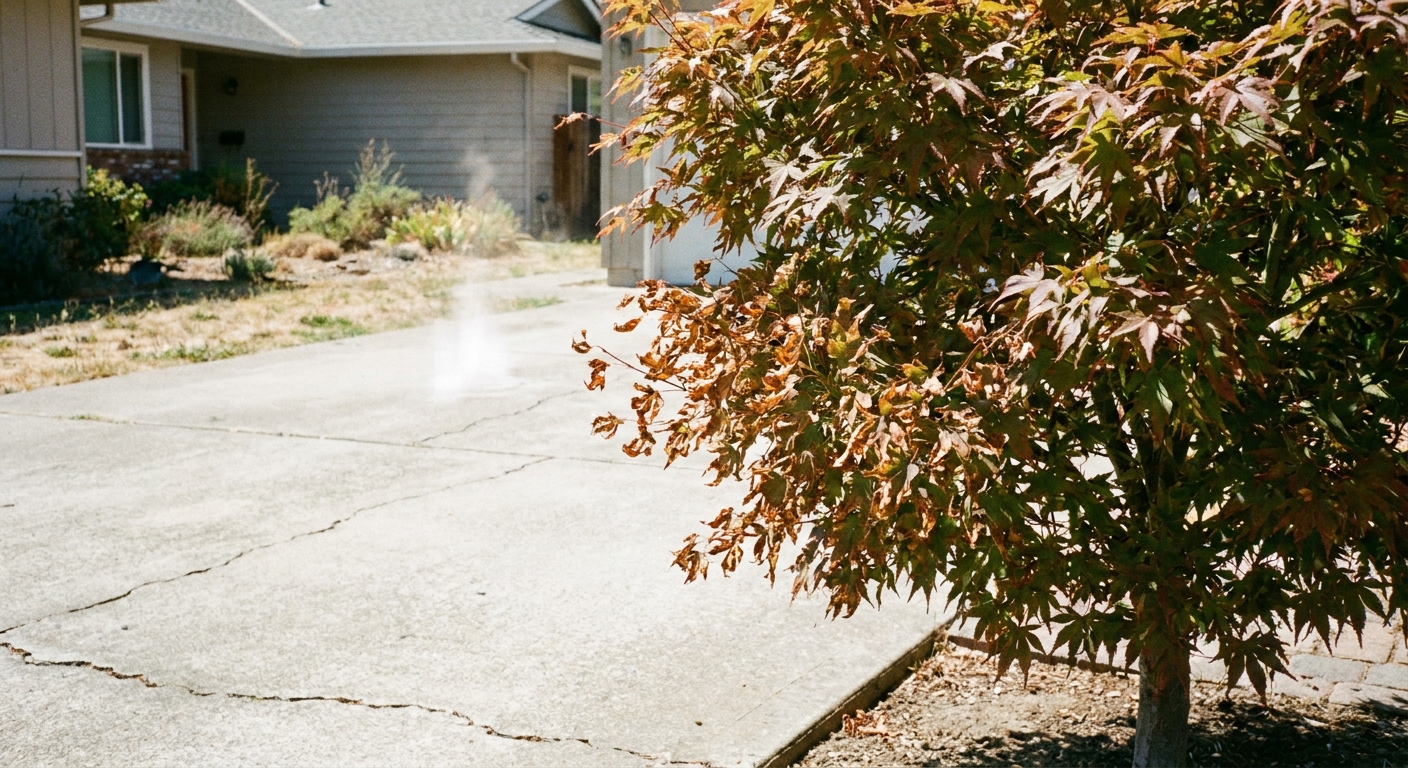
Japanese maples scorch badly near reflective or heat-holding surfaces like stucco walls, white fences, concrete, stone patios, and driveways. The tree gets hit from above by sun and from the side by radiant heat.
What to do:
- Move containers away from walls and paving, even a few feet helps.
- Create afternoon shade with a patio umbrella, shade cloth, or a strategically placed taller plant.
- For in-ground trees near paving, increase mulch width, water deeply, and consider a temporary shade screen during extreme heat.
Pruning and scorch
Japanese maples do not love aggressive summer pruning. When you remove too much canopy, you expose previously shaded inner leaves and bark to sudden sun and heat, and the tree loses some of its ability to self-shade.
Scorch-prone pruning situations:
- Thinning the canopy heavily right before a heat wave
- Removing large branches that used to shade the trunk
- Shearing for shape instead of selective cuts
Better approach: Do major structural pruning while the tree is dormant, and limit summer pruning to small, thoughtful touch-ups. If you must reduce sun exposure, add shade instead of removing branches.
Pests and root stress
Sometimes scorch is the final straw on an already stressed tree. If roots are compromised or pests are feeding, the tree cannot move water efficiently, and the leaves show it first.
Pests that worsen drought stress
- Aphids : sticky honeydew, shiny leaves, ants
- Spider mites: fine stippling, dusty look, delicate webbing in hot, dry weather
- Scale insects: small bumps on stems, overall decline
Most pest flare-ups are easier to manage when the tree is well-watered and not over-fertilized. A strong blast of water can knock down aphids. For spider mites, focus on rinsing leaf undersides (where they feed) and monitoring populations, especially during hot, dry weather when outbreaks are common. If you use insecticidal soap or horticultural oil, apply only when temperatures are moderate (many labels warn against applying above about 85 to 90°F) and follow label directions carefully to avoid further leaf burn. Avoid midday applications in full sun.
Root issues that mimic scorch
- Poor drainage leading to root suffocation and weak water uptake
- Root-bound containers where the root mass dries too quickly
- Recent transplanting with limited root establishment
- Girdling roots on older trees that restrict flow
If the soil is consistently soggy and the tree still scorches, that is a red flag for root trouble, not thirst.
Fertilizer and salts
High nitrogen fertilizer in summer can push soft, thirsty growth right when heat is most punishing. Also, salts from over-fertilizing or poor-quality irrigation water can burn roots, which then looks like scorch.
Safer summer habits:
- Avoid heavy feeding during heat. If you fertilize, do it lightly in spring.
- Use compost as a gentle option rather than strong quick-release fertilizer.
- If you suspect salt buildup in a container, occasionally flush the pot by watering until a generous amount drains out, then let it drain fully.
What to do now
When you are staring at crispy leaves, you want an action plan, not a lecture. Here is a calm triage checklist.
Immediate steps
- Water deeply and consistently. For pots, water until runoff and check daily.
- Provide afternoon shade, especially during heat waves.
- Reduce wind exposure with a temporary screen or by moving containers.
- Mulch in-ground trees, keeping mulch off the trunk.
- Pause heavy pruning and fertilizing during heat stress.
Should you remove scorched leaves?
If the leaves are mostly brown and crispy, you can remove them for tidiness, but it is not required. I usually wait unless they are falling off in piles or harboring pests. The tree needs stability more than a haircut.
When it is more than scorch
Leaf scorch is often seasonal, but sometimes it is a symptom of something bigger. Consider digging deeper if you notice:
- Whole-branch dieback, not just leaf edges
- Wilting that does not improve after deep watering
- Dark, sunken bark areas or cracking on exposed branches
- Mushrooms near the base or a sour smell in constantly wet soil
- Progressive decline year over year, earlier each season
At that point, it is worth assessing drainage, root flare visibility (is the trunk buried?), and potential vascular issues like verticillium wilt. If you suspect verticillium, avoid heavy pruning during stress and consider consulting a local extension office or a certified arborist for confirmation. Sanitizing tools between cuts is still a solid general best practice, even if it is not a perfect shield against soil-borne problems.
Prevention for next summer
Scorch prevention is about creating a buffer. You want cooler roots, gentler sun, and steady moisture.
For in-ground Japanese maples
- Plant where the tree gets morning sun and afternoon shade (the hotter the summer climate, the more that shade matters).
- Build a wide mulch ring and keep lawn competition away.
- Use a slow, deep watering routine during dry spells and adjust for your soil type.
- Protect the trunk and major branches from sudden exposure by pruning thoughtfully.
For container Japanese maples
- Use a larger pot than you think, with excellent drainage.
- Shade the container itself, not just the leaves.
- Check moisture daily in hot weather and water thoroughly.
- Repot before the tree becomes severely root-bound, typically every few years depending on growth.
A gentle reality check
If your Japanese maple scorched during an extreme heat event, you did not fail your tree. You are gardening in a world where summers are swinging hotter, drier, and weirder.
Focus on keeping the roots cool and evenly moist, protect the canopy from afternoon blast furnace sun and drying wind, and aim for improvement rather than perfection. Your maple can still put on a gorgeous show next season, even if this summer left a few crispy souvenirs.