
Indoor Olive Tree Care for Beginners

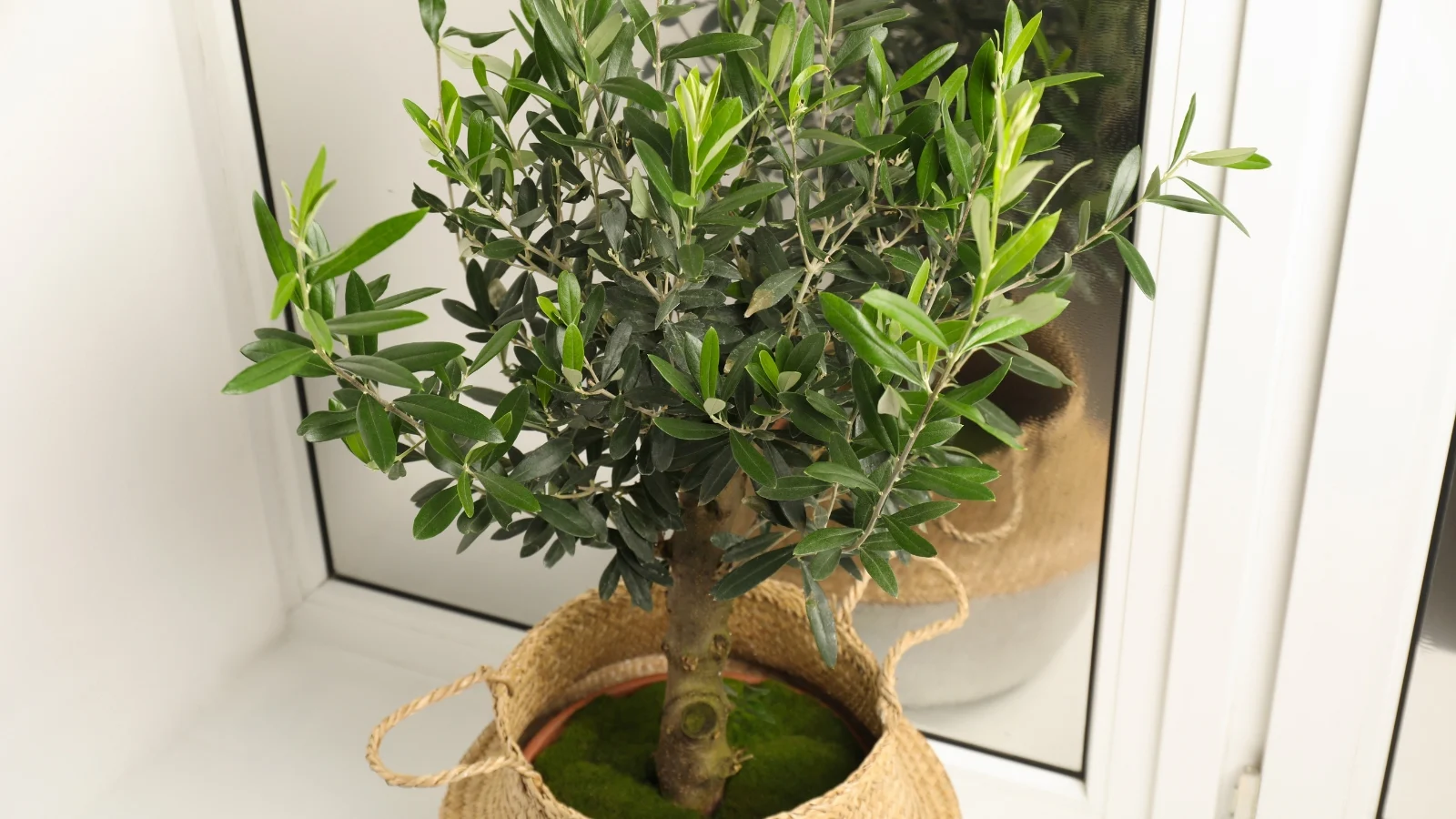
Indoor olive trees have a certain quiet confidence. Silvery leaves, sculptural trunks, and that Mediterranean vibe that makes your living room feel a little sunnier. The trick is this: olives are not typical houseplants. They love strong sun, they hate soggy roots, and many fruiting varieties often benefit from a cooler winter pause to encourage spring blooms.
If you are new to olives, breathe easy. You do not need a greenhouse or a mysterious “green thumb.” You just need to get a few basics right, then let the tree do what it is built to do.

Meet your indoor olive tree
Most indoor olives sold as houseplants are Olea europaea. Some are grown primarily for looks, and some are sold as fruiting cultivars. Both can live indoors, but fruiting takes a little extra cooperation from you.
- Ornamental olive: Often marketed simply as “olive tree.” Chosen for form and foliage. It may flower rarely indoors.
- Fruiting olive: Sometimes sold under cultivar names like Arbequina, Koroneiki, or Mission. These can flower and set a few olives indoors if light and winter conditions line up, but expect modest yields.
One more important note: olives are incredibly long-lived outdoors, but indoors they live in a smaller world. Your job is to imitate their favorite parts of the Mediterranean: bright sun, airflow, dry-ish roots, and a seasonal slowdown.
Light: the make-or-break factor
If I could sit your olive tree down for a pep talk, it would say, “More light, please.” In many homes, insufficient direct sun is the biggest reason indoor olives drop leaves, get leggy, and look generally unimpressed. That said, leaf drop also commonly comes from abrupt changes (like moving indoors), watering issues, or pests, so think of light as the first thing to check, not the only one.
How much light does an olive tree need indoors?
- Best: 6 to 8+ hours of direct sun daily from a south or southwest window.
- Good: Your brightest window plus a grow light in winter or in darker homes.
- Often not enough: “Bright indirect” light alone in most homes.
Tips to maximize light
- Rotate the pot a quarter turn every 1 to 2 weeks for even growth.
- Keep the glass clean. Dust and grime can noticeably reduce light.
- Give it space from curtains and overhangs that steal sun.
- Consider a grow light if you cannot provide strong sun. A strong full-spectrum LED placed roughly 8 to 18 inches from the canopy (follow your fixture guidance) for 10 to 12 hours daily can make a real difference. If you like numbers, a light meter app can help you compare spots in your home.
Leaf drop in winter? Olives are evergreen, so heavy leaf drop is a sign something is off. However, some leaf shed can happen indoors during winter when light drops and growth slows. If it is more than a light sprinkle, reassess light and watering first.

Soil and drainage: keep roots airy
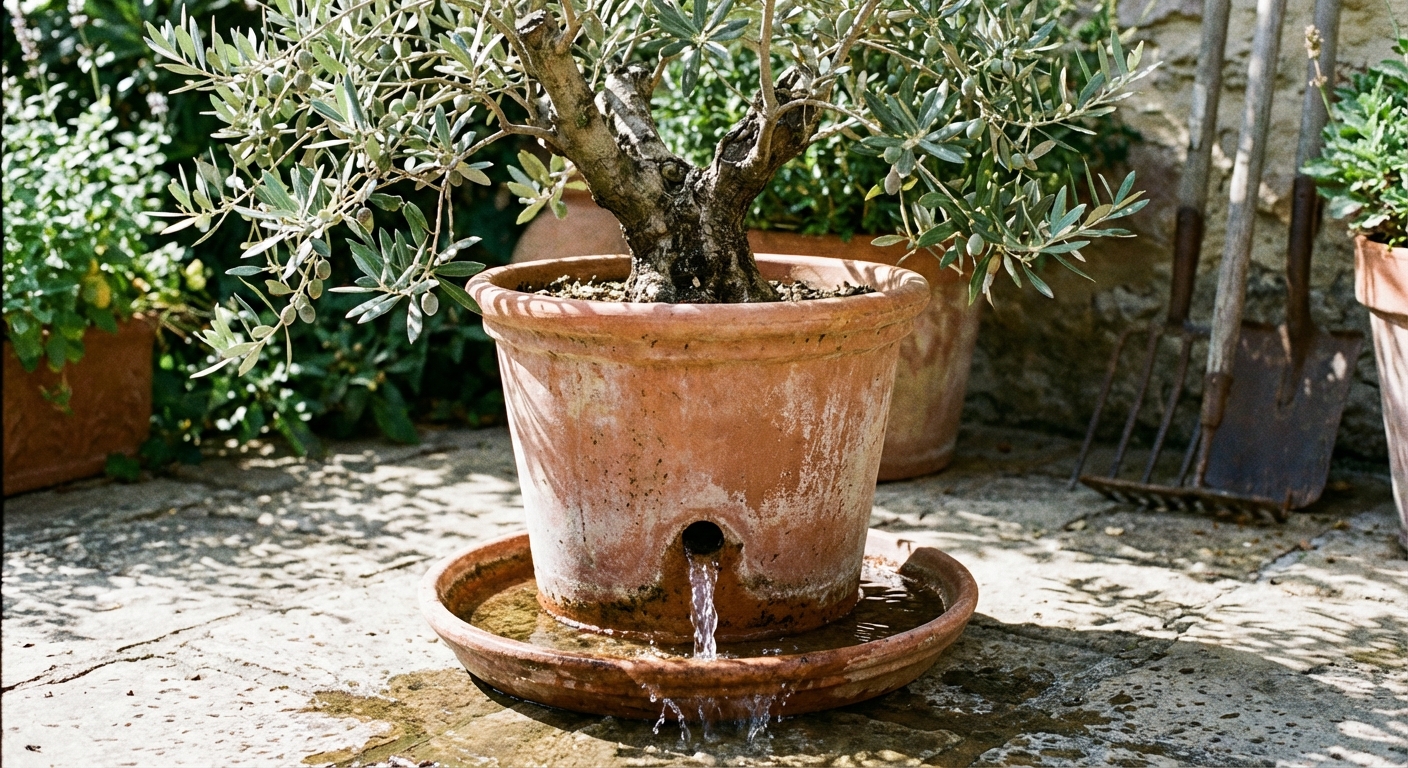
Olive roots want oxygen. Indoors, that means your potting mix needs to drain quickly and your container needs a drainage hole. A decorative cachepot is fine as long as the inner pot drains freely and never sits in water.
Choosing the right pot
- Drainage hole required. Non-negotiable for olives.
- Material: Terracotta is forgiving because it breathes and dries faster. Plastic holds moisture longer and demands more careful watering.
- Size: Avoid oversizing. A pot that is too big stays wet too long. When repotting, go up 1 to 2 inches in diameter.
Beginner-friendly soil mix
A good target is a mix that feels gritty and airy, not fluffy and peat-heavy. You can use:
- 1 part quality potting mix
- 1 part pumice or perlite
- Optional: a handful of fine orchid bark or pine bark fines for extra structure
If you prefer bagged options, a cactus and succulent mix can work, but they vary widely. Do a quick test: water should run through readily, and the mix should not stay soggy for days. If it does, cut it with extra pumice or perlite.
Watering: growth vs slowdown
Olives are drought-tolerant once established, but indoors in a pot they still need consistent care. The key is to water deeply, then let the mix dry down appropriately before watering again.
During active growth (spring through early fall)
- Water when the top 2 inches of soil are dry, and the pot feels noticeably lighter.
- Water slowly until it runs out the drainage hole, then empty the saucer.
- In bright sun, this may be weekly. In average indoor light, it might be every 10 to 14 days.
During winter slowdown (late fall through winter)
- Water less often. The tree uses less moisture, and evaporation is slower.
- Let the mix dry further down the pot before watering again.
- Expect intervals like every 2 to 4 weeks depending on light, temperature, and pot type.
Signs you are watering too much
- Yellowing leaves, especially lower leaves
- Leaf drop paired with consistently damp soil
- Musty smell, fungus gnats, or dark, soft roots (root rot risk)
Signs you are watering too little
- Leaves curl or feel crispy at the edges
- Pot dries extremely fast and the tree looks limp by late day
My favorite beginner move is the lift test. After you water, pick up the pot and feel its weight. Check again as days pass. Soon you will know, by heft alone, when it is time.
Winter cool-down for fruiting
Here is the part that surprises people: many fruiting olives do better with a cooler, brighter winter rest. Outdoors, olives experience shorter days and cooler nights, which helps set the stage for spring flowering. The exact “chill” needs vary by cultivar, and it is better to think of this as a helpful nudge, not a rigid rule.
Do indoor olives need winter chill?
For foliage and general health: Not strictly, as long as light is strong and watering is careful.
For flowering and fruiting: Many cultivars often benefit from a cool period with bright light. Indoors, constant warmth plus low winter light commonly leads to few or no blooms.
How to offer a gentle indoor “winter”
- Aim for a bright spot that stays cooler than the rest of the house, roughly 45 to 60°F (7 to 16°C) if possible, especially at night.
- Keep it away from heating vents and radiators.
- Maintain strong light. Cool plus dark is not helpful.
- Water sparingly during this rest period.
If you can safely move your olive to a bright, unheated sunroom, enclosed porch, or cool windowed stairwell for winter, many trees respond beautifully. If you cannot, do not worry. Treat fruit as a bonus and focus on growing a healthy, handsome tree.
Temperature, humidity, airflow
Olives prefer conditions that feel more like a breezy patio than a steamy jungle.
- Temperature: Comfortable indoor temps are fine. Avoid hot blasts from heaters and sudden temperature swings.
- Humidity: Average home humidity is usually acceptable. High humidity is not required.
- Airflow: Gentle airflow helps reduce pests and fungal issues. A nearby fan on low can be beneficial, especially in winter.
Feeding: light and seasonal
Indoor olives are not heavy feeders, but they do appreciate nutrients during active growth.
Simple fertilizing plan
- Spring through summer: Feed every 4 to 6 weeks with a balanced fertilizer (for example, something close to 10-10-10), mixed at half strength.
- Late fall through winter: Pause fertilizing while growth slows.
If your tree is under a strong grow light year-round and actively growing, you can feed lightly through winter, but only if the tree is truly pushing new growth.
Pruning basics: shape and light
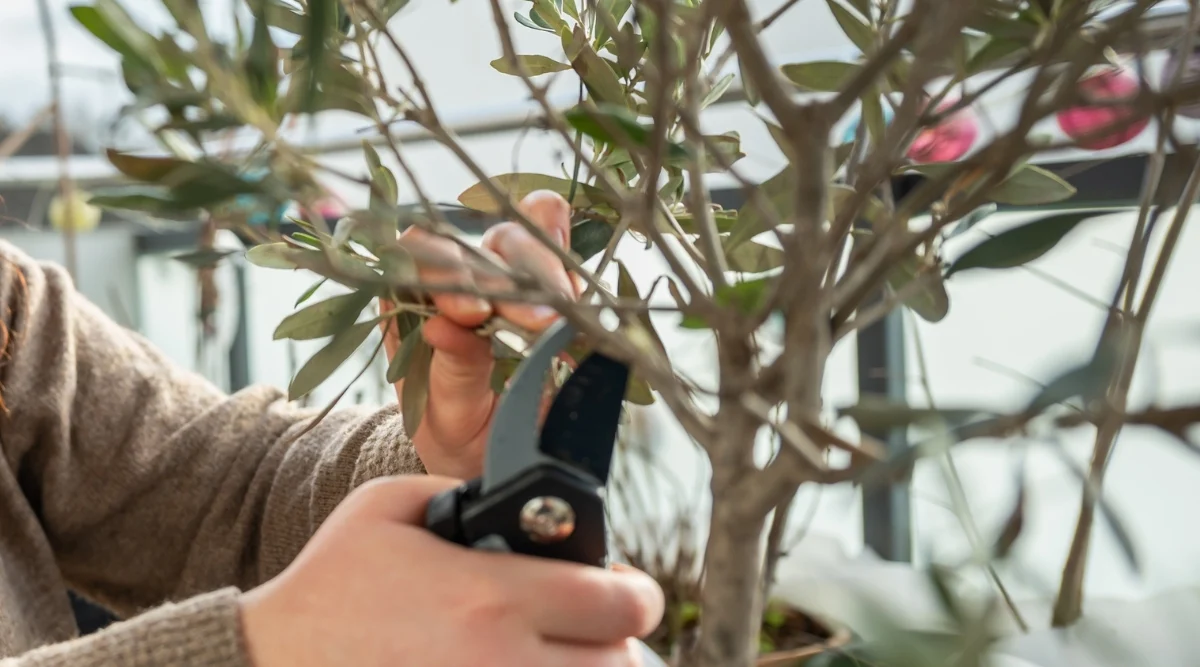
Pruning an olive tree indoors is less about strict rules and more about helping light reach the interior and keeping the plant proportional to your space. I like to think of pruning as giving the tree a clearer window to photosynthesize.
When to prune
- Best time: Late winter to early spring, just before active growth.
- Small touch-ups: Any time you spot dead twigs or awkward shoots.
What to prune (beginner checklist)
- Dead or damaged wood
- Crossing branches that rub
- Thin, weak interior growth to open the canopy
- Excessively long shoots to maintain your preferred shape
Use clean, sharp pruners. Make cuts just above a leaf node or branching point. Step back every few cuts and look at the overall silhouette. If you prune and then feel a little nervous, you probably did the correct amount.
Repotting and root care
Olives can live happily slightly snug in their pots, which is good news for indoor growers. Repot only when you see clear signs the tree has outgrown its container.
Signs it is time to repot
- Roots circling densely at the bottom or pushing up at the surface
- Water runs straight through because the pot is mostly roots
- The tree dries out unusually fast even with good soil
How often?
Typically every 2 to 3 years for young trees, and less often for mature indoor specimens.
When you repot, keep the root disturbance modest. You can loosen circling roots and remove a small amount of the outer root mass if needed, but avoid aggressive root pruning unless you have experience.
Summer outside, winter inside
If you have outdoor space, your olive may love a summer vacation. It is also where many indoor olive struggles begin, usually because of sun shock or hitchhiking pests.
How to move it outdoors safely
- Acclimate slowly: Start with bright shade for several days, then morning sun, then gradually increase to full sun. A sudden jump to all-day sun can scorch leaves.
- Check for pests weekly: Outdoors is great, but it is also where scale, aphids, and mites can move in.
How to bring it back indoors
- Inspect and rinse: Check leaf undersides, stems, and the soil surface. Rinse foliage with lukewarm water.
- Quarantine: Keep it away from other houseplants for 1 to 2 weeks, just in case.
- Expect some adjustment: Even a happy tree may drop a few leaves as it adapts to lower indoor light.
Water quality and salt buildup
Olives can be sensitive to salt and mineral buildup in pots, especially if you have hard water or fertilize regularly. If leaf tips brown, growth stalls, or yellowing persists despite good light and watering, consider water quality as a quiet culprit.
- Flush occasionally: Every month or two in the growing season, water thoroughly so plenty drains out the bottom. This helps leach excess salts. Do not let the pot sit in the runoff.
- If your water is very hard: Using filtered water now and then, or alternating with rainwater if available, can help.
Pest scouting: what to look for
The healthiest indoor olive trees are not pest-free because they are lucky. They are pest-free because someone pays attention. A weekly two-minute leaf check is genuinely powerful.
Common indoor olive pests
- Scale: Small brown bumps on stems and leaf undersides. Leaves may get sticky from honeydew.
- Mealybugs: Cottony clusters in leaf joints and branch crotches.
- Spider mites: Fine webbing and speckled, dusty-looking leaves, often worse in winter dryness.
- Aphids: Usually show up on fresh growth, especially if the tree is stressed or moved outdoors then back in.
Beginner-friendly response plan
- Isolate the plant from other houseplants.
- Rinse the foliage with lukewarm water in a shower or sink.
- Spot treat with a cotton swab dipped in rubbing alcohol for mealybugs or scale clusters.
- Use insecticidal soap or horticultural oil according to label directions, repeating as needed.
- Improve conditions that invited pests: more light, better airflow, and correct watering.
If you see black, sooty residue on leaves, that is often sooty mold growing on honeydew from pests like scale or aphids. Treat the pest first, then gently wipe leaves clean.
Troubleshooting
Leaves dropping
- Common causes: sudden change in light (especially moving indoors), low light, overwatering, pests, or cold drafts.
- What to do: move to your brightest window, confirm drainage, inspect for pests, and adjust watering to match the season.
Yellow leaves
- Common causes: soil staying wet too long, poor drainage, low light, or mineral buildup.
- What to do: let the mix dry more between waterings, flush the pot occasionally, and consider a grittier soil at the next repot.
No flowers, no fruit
- Common causes: not enough direct sun, no cool winter rest, and indoor conditions that do not mimic seasonal change.
- What to do: increase light dramatically, consider a cooler winter location, and keep expectations realistic.
Leggy growth
- Cause: the tree is reaching for light.
- What to do: move to brighter sun, add a grow light, and prune lightly in early spring to encourage branching.
If you want fruit
I love optimism, but I also love honesty. Indoors, an olive tree can absolutely thrive, but fruit is not guaranteed. Even when it flowers, fruit set is often limited by light levels, lack of insects, and the fact that indoor temperatures do not always cycle the way olives expect.
If your tree does bloom, gentle airflow can help move pollen around. You can also try hand pollination by lightly brushing flowers with a soft paintbrush and moving from bloom to bloom. Some varieties are self-fertile, but many fruit better with a second variety. Indoors, most beginners do best focusing on plant health first. A healthy olive is a beautiful olive, even without a harvest.
Pet safety notes
Olive trees are generally considered low toxicity, but reactions can vary by pet and by what gets chewed. If your pet likes to sample houseplants, place the tree out of reach and confirm specifics with a reputable pet poison resource or your veterinarian.
A simple routine
If you want the most beginner-friendly care plan, here is the one I recommend:
- Weekly: Check soil moisture with a finger and lift the pot. Scan leaf undersides for pests.
- Every 1 to 2 weeks: Rotate the pot for even light.
- Monthly in spring and summer: Fertilize lightly.
- Seasonally: Adjust watering down in winter and up in summer based on light and temperature.
The three non-negotiables
- Direct sun (or a strong grow light)
- Fast drainage (hole in the pot, airy mix)
- Conservative watering (deep soak, then dry down)
And yes, talk to it if you want. I do. My ferns pretend they are too cool for it, but the olive tree seems to enjoy the attention.