
Indoor Lemon Tree Yellow Leaves: Causes and Fixes

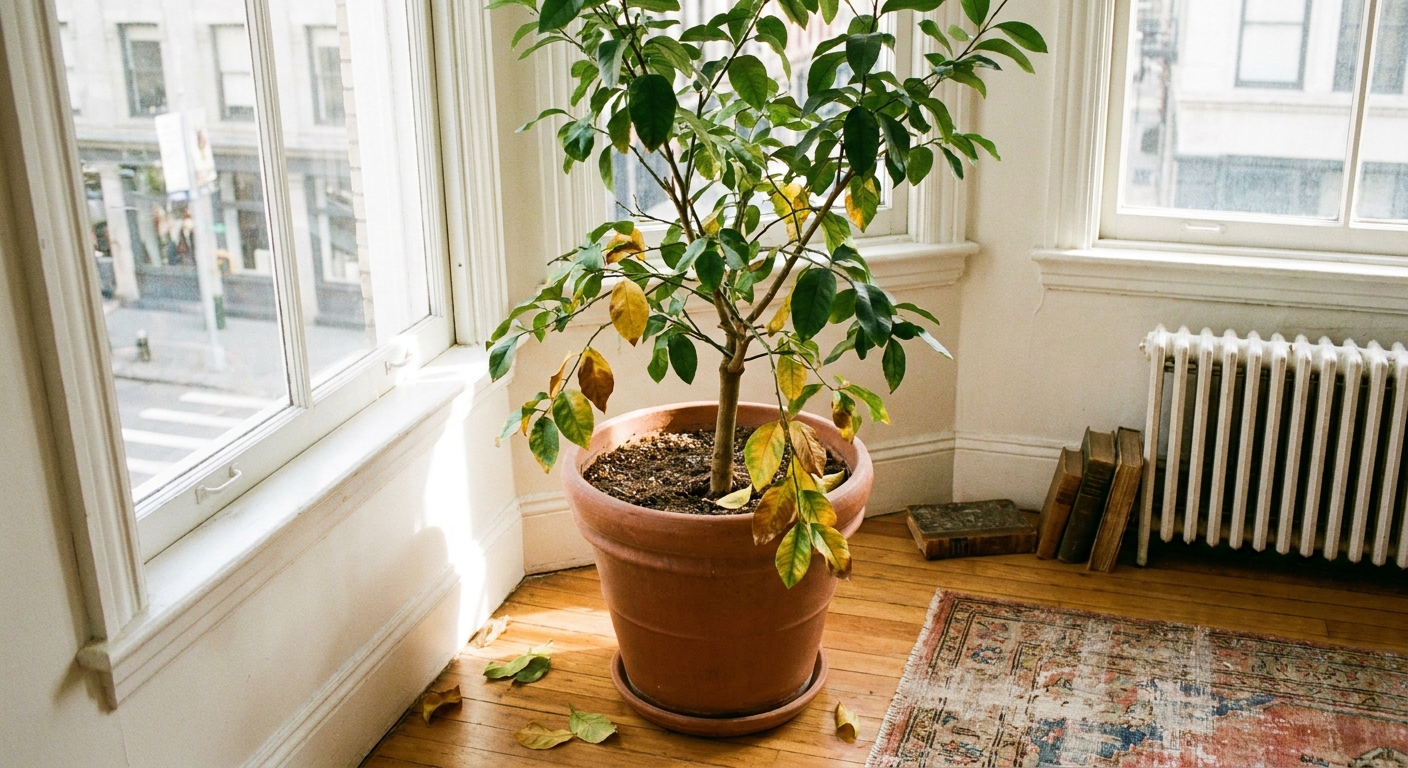
If your indoor lemon tree is turning yellow, take a deep breath. Citrus is dramatic in containers, especially in apartments where light is fickle and watering is a guessing game. The good news is that yellow leaves follow patterns, and once you read the pattern, the fix is usually simple.
In container culture, I like to troubleshoot in a specific sequence because one problem can mimic another. Start with light, then watering and roots, then nutrition, and only after that zoom in on salts and pests. Let’s walk it like a calm little checklist.

Step 1: Check light first
Indoor lemon trees want sun the way tomatoes want summer. When light is too low, the plant cannot photosynthesize enough to support all its leaves. The tree often responds by yellowing and dropping older leaves, especially on the interior and lower branches.
What yellowing looks like
- Yellowing starts on older, inner leaves, and leaf drop follows.
- Long, stretched growth with wider gaps between leaves (leggy growth).
- Little to no new growth, or new leaves that stay small.
What to do
- Use your brightest window: A south or southwest window is often best, but it depends on season, latitude, and obstructions like nearby buildings, trees, overhangs, and window screens.
- Rotate weekly: Quarter-turn every 7 days so it does not lean and shed shaded leaves.
- Add a grow light if direct sun is weak: Follow the manufacturer’s distance guidance (fixture strength varies a lot). A quick reality check is that leaves should cast a soft shadow, and the plant should not have to “reach” for the light. Increase intensity and duration gradually.
- Change light slowly: If it has lived in dim light, introduce stronger sun over 7 to 10 days to avoid scorch.
- Keep it out of blasts: Avoid direct heat from radiators and HVAC vents, and avoid cold window glass at night. Sudden temperature swings can trigger fast yellowing and leaf drop even when watering is perfect.
Clara note: When someone tells me they fertilized like crazy but their lemon is still yellow, nine times out of ten it is a light problem wearing a nutrition costume.
Step 2: Watering and roots
Overwatering and underwatering can both cause yellow leaves. In a pot, the roots live in a tiny universe, and oxygen matters as much as water. If roots sit wet, they struggle to breathe. If the rootball gets bone-dry, fine feeder roots die back and the plant sheds leaves.
Signs you are watering too often
- Leaves turn pale yellow and may feel a bit soft.
- Soil stays wet for many days, or smells sour or swampy.
- Leaf drop happens even though the soil looks damp.
- Fungus gnats hover near the pot.
Signs you are letting it get too dry
- Leaves yellow, then crisp at the edges, and drop.
- Pot feels very light when lifted.
- Water runs down the sides and out the bottom quickly (hydrophobic soil).
What to do
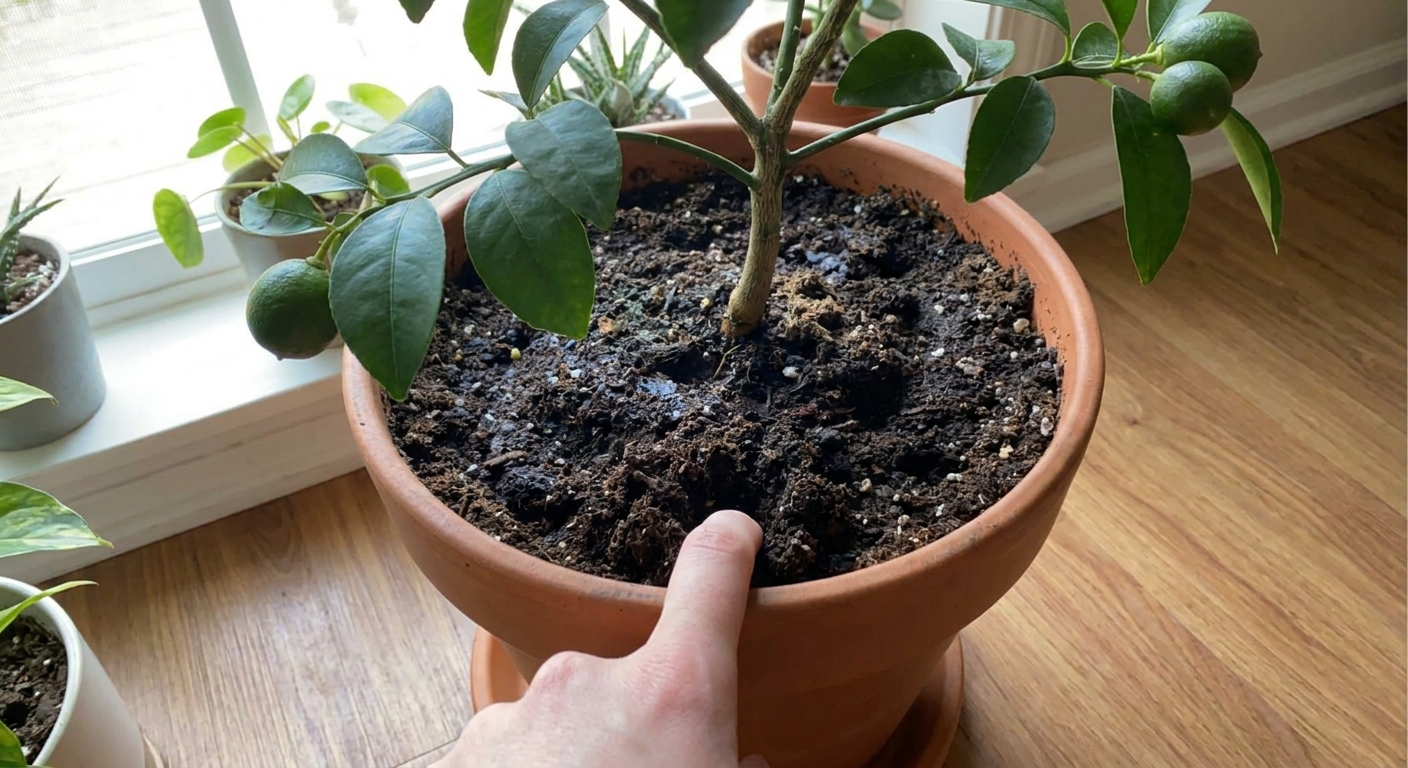
- Check the root zone, not the calendar: Water when the top 2 inches are dry and the pot feels noticeably lighter. For smaller pots, 1 inch may be plenty. A moisture meter can help if you actually place it deep enough to read the root zone.
- Water fully, then stop: Drench until water runs freely out of the drainage holes, then empty the saucer. Citrus hates wet feet.
- If soil stays wet too long: Increase light, make sure drainage holes are open, and consider a faster-draining citrus mix when you repot. “Yellow leaves” is sometimes just “soil that holds water too long.”
- If soil repels water: Bottom-water as a re-wetting step (often 30 to 60 minutes for very dry peat-based mixes), then let it drain completely. After the rootball is rehydrated, go back to top-watering and include occasional flushing so salts do not concentrate.
- Watch drafts and vents: Crispy edges and sudden leaf drop can come from dry heat or cold drafts as much as from watering mistakes. Move the pot a couple feet away from the source and reassess before you change everything else.
Step 3: Pot size and roots
Indoor lemon trees often arrive in a nursery pot that is either too small for long-term growth or packed with peat-heavy mix that behaves badly indoors. Yellow leaves can happen when roots are circling, oxygen-starved, or struggling in a mix that stays wet.
Quick root check
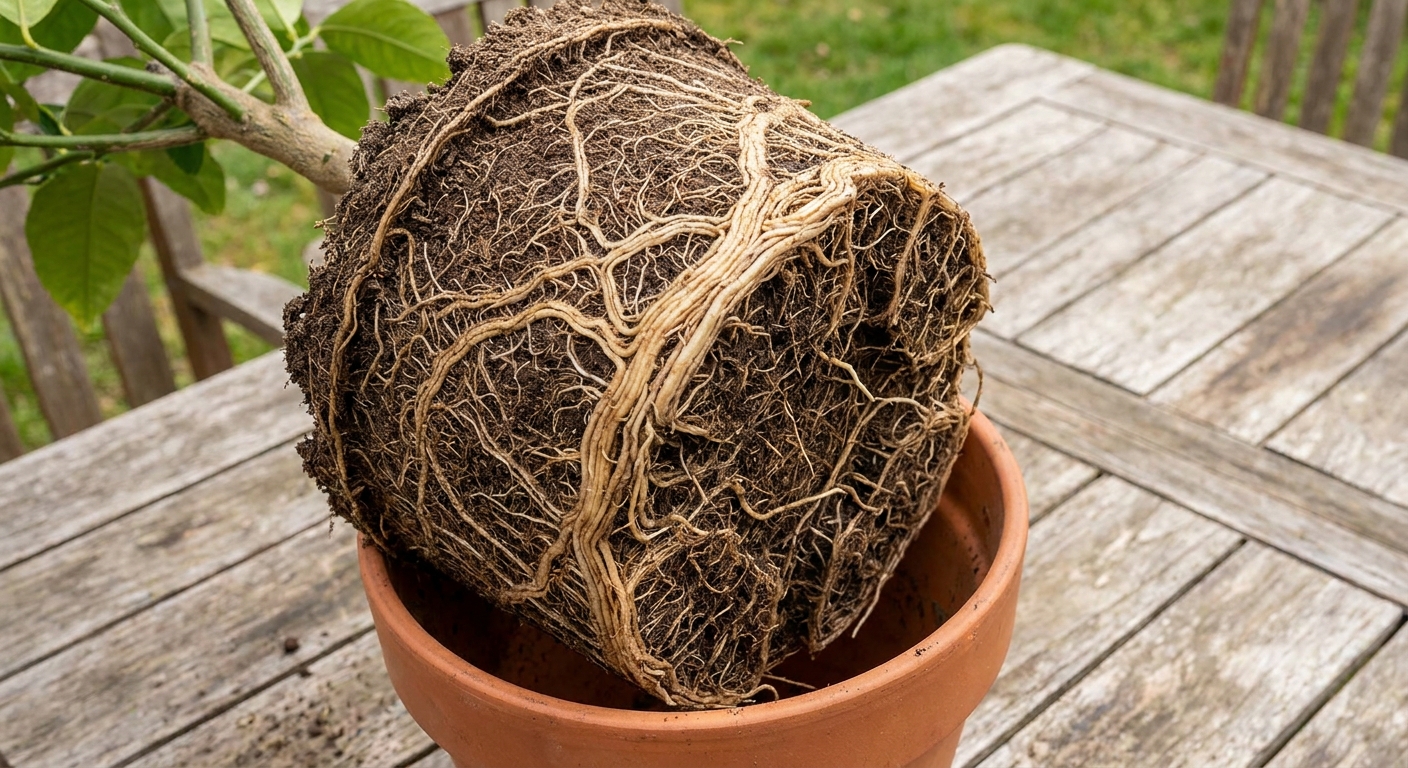
Slide the rootball out (gently). You are looking for:
- Healthy roots: creamy white to light tan, firm, and earthy-smelling.
- Rotting roots: brown or black, mushy, and foul-smelling.
- Rootbound: thick roots circling the pot, very little soil visible.
What to do
- If rootbound: Pot up one size only, usually 1 to 2 inches wider. Too big a jump holds extra wet soil and can backfire indoors.
- If roots are rotting: Trim mushy roots with clean scissors, then repot into a fast-draining citrus mix in a pot that matches the remaining root mass. In severe cases, downsizing is the right move.
- If the mix is heavy and stays soggy: Repot even if the pot size is fine. Many indoor citrus problems are really “soil mix problems.”
Soil tip: Look for a chunky, airy citrus mix, or build one with quality potting soil plus extra bark fines and perlite or pumice for drainage. You want water to move through, not linger.
Step 4: Nutrition
Once light and watering are in a decent place, then you can trust what the leaves are telling you nutritionally. Citrus is a heavy feeder in growth season, but indoor trees are easy to over-fertilize, too.
Iron chlorosis
Classic sign: new leaves are yellow with green veins (interveinal chlorosis). Iron is not very mobile in the plant, so symptoms show up on the newest growth first.
- Likely causes: high pH potting mix, alkaline (hard) tap water, salt buildup, cold roots, or chronically wet soil that impairs uptake.
- What to do: use a citrus fertilizer that includes micronutrients, and consider applying chelated iron as a short-term correction. If you suspect high pH or hard water, EDDHA chelate is typically the most reliable; DTPA can work but is less stable as pH rises. Also improve drainage and avoid overwatering, because roots must function to take up iron.
Nitrogen deficiency
Classic sign: older leaves gradually turn uniformly pale yellow or light green, and the plant looks generally “washed out.” Nitrogen is mobile, so the tree pulls it from older leaves to feed new growth.
- Likely causes: not fertilizing during active growth, depleted potting mix, or a tree that has been indoors year-round without enough feeding.
- What to do: feed with a citrus-specific fertilizer that includes nitrogen plus magnesium, iron, manganese, and zinc. Follow label rates and err on the lighter side indoors.
Simple feeding rhythm
- Spring through early fall: feed lightly and regularly (many people do every 2 to 4 weeks, depending on the product).
- Low-light winter: pause or reduce feeding unless you are using a strong grow light and the tree is actively growing. Fertilizer without light often equals stress.
Quick pH note
Citrus generally prefers slightly acidic conditions (often around pH 6 to 6.5 in containers). Most apartment growers will not test pH, and that is fine, but if you have hard water and you see “new leaves yellow, veins green,” pH and iron availability are worth suspecting.
Step 5: Fertilizer salts
Container citrus is prone to fertilizer salt buildup, especially when you use liquid feed often, never flush the pot, or let water evaporate from the saucer back into the soil. Salts can burn roots, interfere with nutrient uptake, and trigger yellowing and leaf drop.
Signs of salt buildup
- White crust on the soil surface or pot rim.
- Leaf tips browning along with general yellowing.
- The tree declines even though you have been feeding it.
What to do
- Flush the pot: Run clean water through the soil, aiming for about 2 to 3 times the container volume to drain out the bottom (example: a 2-gallon pot gets roughly 4 to 6 gallons of water). Let it drain completely. Do not leave it sitting in runoff.
- Switch to a gentler routine: Use fertilizer at the recommended dilution (or slightly weaker), and water with plain water in between feedings.
- Consider your water: Very hard water can contribute to mineral buildup and higher pH. If your tap water leaves heavy scale, using filtered water or collected rainwater (when safe and clean) can help.
Step 6: Pest check
Apartment citrus is a magnet for sap-suckers. Pests cause yellow stippling, leaf curl, sticky residue, and gradual decline that can look like nutrient issues.
Common indoor citrus pests
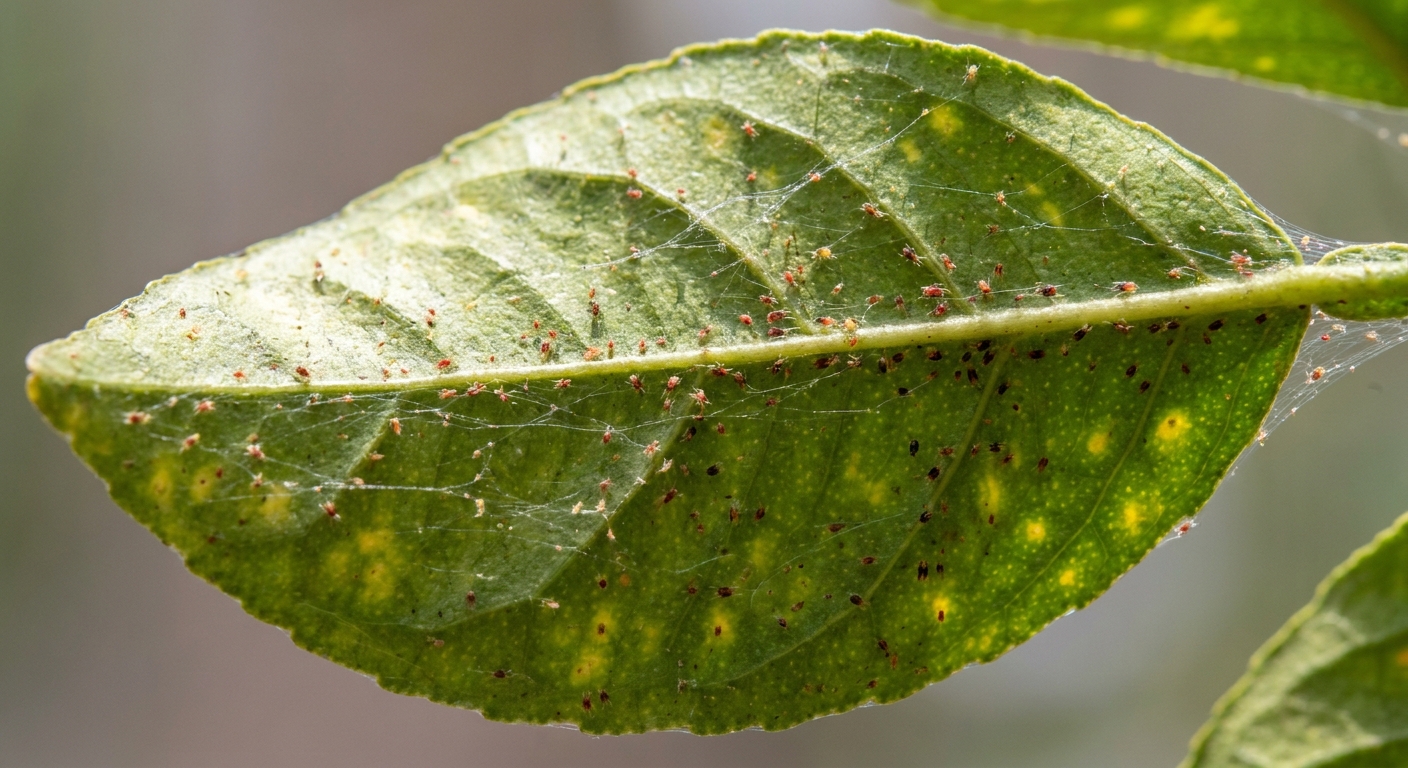
- Spider mites: fine webbing, dusty speckling, leaves yellow and dull.
- Scale: small brown bumps on stems and leaf veins, sticky honeydew.
- Mealybugs: white cottony clusters in leaf joints and stems.
- Aphids: clusters on tender new growth, curled tips, sticky residue.
What to do
- Rinse first: A lukewarm shower in the tub can knock pests back dramatically.
- Wipe and prune: Physically remove scale and mealybugs with a cotton swab dipped in rubbing alcohol. Spot-test first, and avoid dripping alcohol into the soil.
- Treat thoughtfully: Insecticidal soap or horticultural oil works well when applied thoroughly, especially on leaf undersides. Apply when the plant is out of direct sun, and avoid using oils during heat stress. When in doubt, test a small area first and follow the label.
- Isolate: Keep the tree away from other houseplants until pests are controlled.
Humidity and temperature
Indoor citrus can look “mysteriously thirsty” when the air is dry or the temperature swings fast. Low humidity plus hot air vents can cause leaf edge crisping, bud drop, and a general yellow-and-drop spiral.
- Avoid extremes: Keep the tree away from heater blasts, radiators, and AC vents. Also avoid pressing foliage against cold window panes in winter.
- Stabilize the zone: Citrus likes consistency. If your tree lives by a drafty window, even moving it a foot or two inward at night can help.
- Raise humidity in a real way: Grouping plants can help a bit, but a small humidifier is the most reliable option. Aim for a comfortable indoor range (often around 40% to 60%). Pebble trays are fine for catching drips, but they rarely change room humidity much.
Fast diagnosis
- Older leaves yellow and drop: often low light, inconsistent watering, or nitrogen deficiency.
- New leaves yellow with green veins: iron chlorosis or uptake problem (pH, salts, cold or soggy roots).
- Yellow plus brown crispy edges: underwatering, salt buildup, low humidity, or heat from vents.
- Yellow with sticky residue: scale, aphids, or mealybugs.
- Yellow with speckling and webbing: spider mites.
What not to do
- Do not fertilize harder first: If the tree is light-starved or overwatered, more fertilizer often worsens yellowing.
- Do not water on a calendar: Indoor conditions change weekly. Plants do not own clocks.
- Do not jump to a huge pot: Oversized pots hold extra wet soil and can encourage root rot.
- Do not treat pests once: Indoor pests require repeat checks and follow-up.
When yellow is normal
Even a happy indoor lemon tree will occasionally shed a few older leaves, especially after a change in environment. Common triggers include moving it closer to a window, bringing it indoors for winter, running the heater, or repotting. If the yellowing is limited to a handful of older leaves and new growth looks healthy, your tree may just be adjusting.
If you are seeing rapid yellowing across the whole plant, lots of leaf drop, or stems dying back, focus on roots, watering, and light right away. Those are the big three that keep citrus stable indoors.
7-day rescue plan
- Day 1: Move to the brightest window you have (often south or southwest) or set up a grow light using the fixture’s guidance. Rotate the pot so the best side faces the light.
- Day 1: Check moisture in the root zone. Water only if it is actually dry, then drain the saucer.
- Day 2: Inspect leaf undersides and stems for mites, scale, and mealybugs. Rinse or wipe pests.
- Day 3 to 4: If you see crusty salts, flush the pot with about 2 to 3 times the container volume of clean water and let it drain thoroughly.
- Day 5 to 7: If light and watering are steady and the pattern looks nutritional, feed lightly with a citrus fertilizer that includes micronutrients. If new leaves show green veins on yellow, consider chelated iron (EDDHA is often best if you suspect high pH).
Then give it two to three weeks. Leaves that are already yellow rarely turn fully green again, but the goal is healthy new growth and a slowdown of leaf drop.