
Hoya Compacta (Hindu Rope) Care

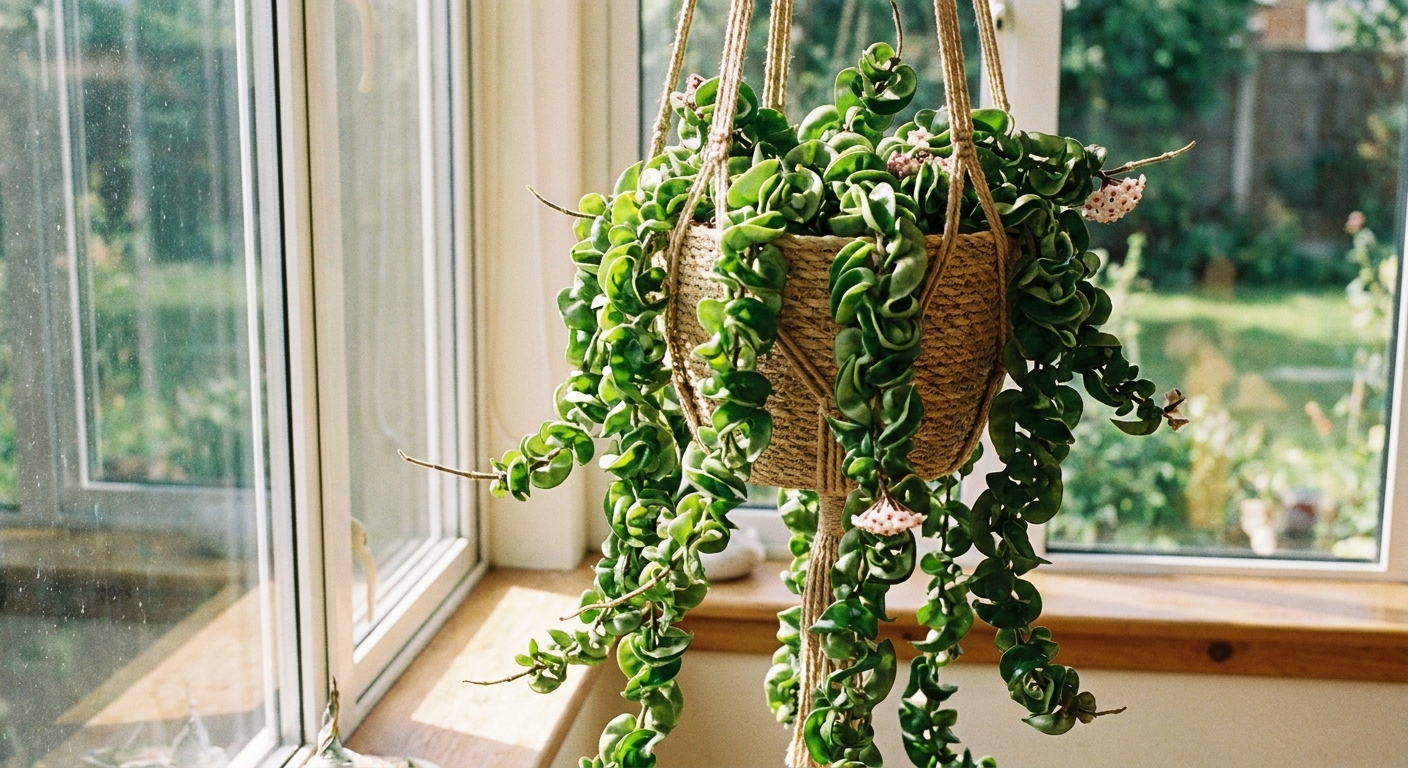
Hoya compacta, lovingly nicknamed Hindu rope, is one of those plants that looks like it came out of a fairy tale and then decided to live in your living room. Its thick, twisted vines and tightly curled leaves make it look like a green rope that got cozy and stayed that way.
It can also make perfectly competent plant parents whisper, “Why are you doing… nothing?” If your compacta grows slowly, blooms rarely, or hides pests in its tight little leaf folds, you are not alone. Let’s walk through what it actually wants, how to propagate it, and how to solve the most common problems without panicking.
Quick botanical note: You will often see this plant sold as Hoya compacta , but many sources treat it as Hoya carnosa ‘Compacta’ (a cultivar of Hoya carnosa). Same beloved rope, just a slightly different label.

What makes it different
Most hoyas have flatter leaves and more open growth. Hoya compacta grows like it is hugging itself. Leaves curl inward and stack tightly along the stem, creating those signature rope-like chains.
- Growth habit: Trailing, but dense and chunky rather than airy.
- Texture: Waxy, succulent-like leaves that store some moisture.
- Speed: Slow to moderate. It often focuses on roots first, then vines.
- Pest hiding spots: Those tight nodes are basically tiny caves for mealybugs if you are not watching.
You might also see variegated Hoya compacta with creamy edges or splashes. Variegated plants typically grow slower and need a bit more light to keep their coloring.
Light
Think “bright, gentle, and consistent.” The easiest way to keep a compacta happy is to give it bright indirect light for most of the day.
- Best: East window sun (morning) or a few feet back from a bright south or west window.
- Can handle: Some direct sun, especially morning sun. Start slow to avoid scorch.
- Too little light looks like: Very slow growth, less compact growth where possible, and no blooms.
- Too much light looks like: Bleached patches, crispy edges, or reddish stress tones that turn dry.
If you use a grow light, aim for a steady routine, about 10 to 12 hours daily. As a starting point, many LED grow lights land around 12 to 24 inches away, but the real rule is: keep the leaves comfortable (not warm) and adjust based on your light’s output and the plant’s response.
Watering
Overwatering is the quickest way to turn “wax plant” into “why is it mushy.” Compacta likes a soak and then a proper dry down.
How often to water
- Water when the potting mix is dry at least halfway down.
- In brighter light and warmer months, that might be every 7 to 14 days.
- In winter, it can stretch to 2 to 4 weeks depending on your home.
Small but important caveat: Frequency varies a lot with pot size, how chunky your mix is, temperature, and airflow. Use the soil dryness check as your anchor, not the calendar.
How to water correctly
- Water thoroughly until it drains from the bottom.
- Empty the saucer or cachepot so roots do not sit in water.
- Do not “sip water” it weekly. Instead, water deeply only when it has dried down.
Clara tip: The leaves are thick, but the plant still wants oxygen at the roots. “Drier than you think” beats “slightly damp all the time” for this one.
Humidity and temperature
Hoya compacta is forgiving, but it looks its best with a little extra humidity.
- Ideal humidity: 40% to 60% .
- Okay humidity: Average home humidity can work if watering and light are dialed in.
- Temperature: 65 to 80°F is the happy zone. Keep it away from cold windows and heating vents.
If you run very dry in winter, a small humidifier nearby helps. Misting is not my favorite for compacta because moisture can sit deep in the curls and invite fungal spots if airflow is poor.
Also normal: compacta can pause in winter, and it may sulk a bit after shipping or repotting. Slow does not always mean wrong.
Soil and pot
This plant wants an airy mix that drains quickly but does not turn to dust overnight.
An easy compacta mix
- 2 parts high-quality indoor potting mix
- 1 part orchid bark
- 1 part perlite or pumice
That chunky blend keeps roots oxygenated and helps prevent rot.
Pot basics
- Drainage holes: Non-negotiable.
- Material: Terracotta is great if you tend to overwater. Plastic holds moisture longer if your home is very dry.
- Size: Slightly snug is fine. Hoyas often bloom better when a bit root-bound.
Fertilizing
Compacta is not a heavy feeder, but a little nutrition helps it build those thick vines and, eventually, flowers.
- In spring and summer, feed monthly with a balanced fertilizer diluted to half strength.
- In fall and winter, pause or feed lightly every 6 to 8 weeks if the plant is actively growing under strong light.
Watch for salt buildup if you fertilize often. Flushing the pot with plain water every couple of months helps.
Pruning and training
Pruning is mostly for shaping and encouraging branching.
- Trim long vines just above a node to encourage new growth.
- Use clean snips and let cut ends dry for a minute before they touch anything damp.
- Compacta looks gorgeous in a hanging pot, but you can also train vines around a small hoop trellis.
Important: If you see little woody nubs where blooms used to be, those are spurs (also called peduncles). Do not remove them. Hoyas often rebloom from the same spurs.
How to propagate
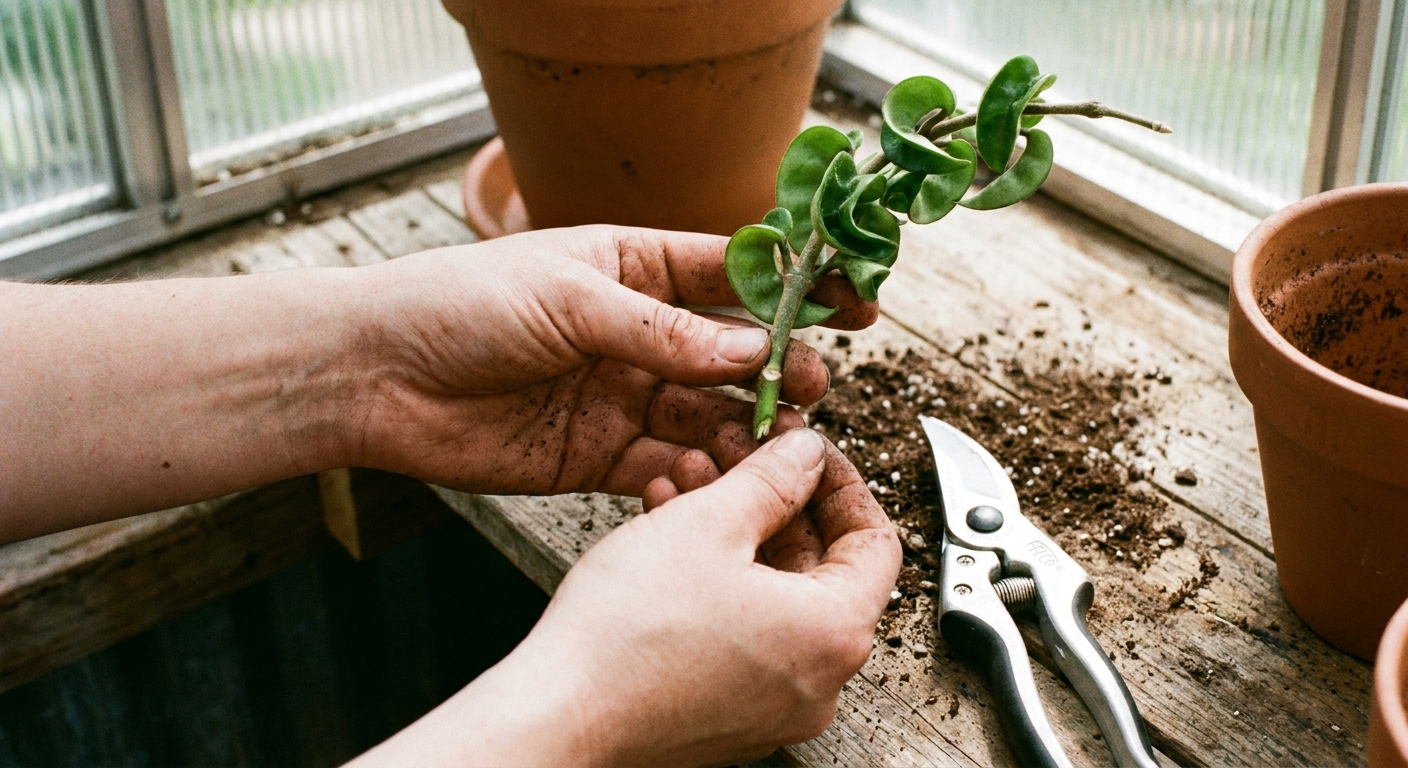
Propagation is absolutely doable, but the plant’s tight leaf spacing makes it feel fiddly. The secret is simple: get at least one good node in your cutting, and be patient.
Best time
Spring through early summer is easiest because the plant is naturally in growth mode.
Water propagation
- Take a cutting with 2 to 4 inches of stem and at least one node.
- Remove any leaves that would sit below the water line.
- Place the node in a small jar of water. Keep leaves above water.
- Put it in bright indirect light and change water weekly.
- Pot up when roots are 2 to 3 inches long (a helpful rule of thumb, not a law).
Water rooting is satisfying because you can see progress, but transition shock is real. When you pot it, keep the mix lightly moist for the first 1 to 2 weeks, then ease into normal watering.
Sphagnum or chunky mix (my favorite)
- Take a cutting with at least one node.
- Pre-moisten sphagnum moss or a very airy mix (bark plus perlite works well).
- Nestle the node into the medium so it makes firm contact.
- Cover with a clear bag or place in a propagation box for higher humidity.
- Vent daily for fresh air and keep warm.
This method tends to produce sturdier “soil-ready” roots.
Why cuttings stall
- Node not in contact: Roots form from nodes, not leaves.
- Too cold: Aim for warm room temps. A seedling heat mat on low can help.
- Too wet: Soggy moss or mix can rot the stem before it roots.
- Not enough light: Bright indirect light fuels rooting.
Blooming
Hoya compacta blooms are worth the wait. They form round clusters of tiny star flowers that look waxy and often smell sweet, especially at night.
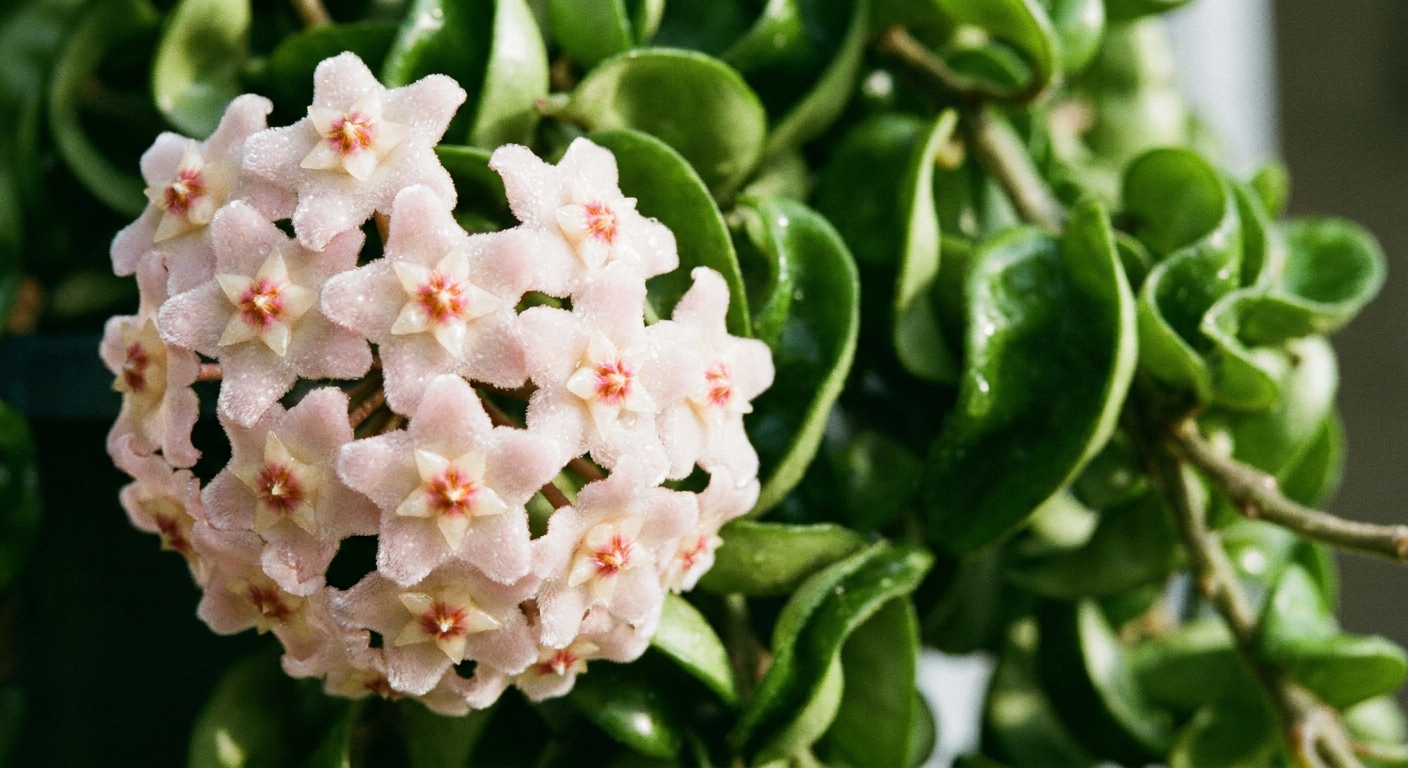
One practical heads-up: blooms can produce sticky nectar drips. It is normal, just protect your shelf or floor if your plant hangs overhead.
What helps it flower
- Strong light: Bright indirect light is the number one bloom helper.
- Maturity: Some plants need a couple of years to settle in.
- Snug roots: Slightly root-bound plants often bloom more readily.
- Steady care: Big swings in watering and location can delay blooms.
Mistakes to avoid
- Cutting off spurs: Leave them. That is where future blooms come from.
- Constant repotting: Repot only when truly needed, usually every 2 to 3 years.
- Low light winters: If it sits in a dim corner for months, bloom energy disappears.
Problems
Mealybugs in tight nodes
This is the big one for compacta. Mealybugs love those curled leaves because they can hide deep inside and feed undisturbed.
- Signs: White cottony fluff in folds, sticky residue, weak growth, leaf yellowing.
- First step: Isolate the plant.
- Mechanical removal: Use a cotton swab dipped in 70% isopropyl alcohol and gently dab inside curls.
- Caution: Alcohol can damage tender new growth and some variegated leaves. Test a small area first, and avoid saturating the plant.
- Follow-up: Repeat weekly for 3 to 4 weeks. Eggs hatch in waves.
- Optional: Insecticidal soap can help, but test a small area first and avoid soaking the tightest folds where moisture lingers.
Clara tip: A small paintbrush is perfect for coaxing alcohol into the creases without snapping vines.
Spider mites and scale
- Spider mites: Fine webbing and dusty-looking leaves, especially in dry air. Rinse the plant, increase humidity slightly, and treat with insecticidal soap if needed.
- Scale: Small brown bumps along stems and leaf undersides. Gently scrape off and spot treat, then repeat weekly.
Wrinkled or limp leaves
- Most common cause: Underwatering or a root system that cannot take up water (root issues).
- Check: If the mix is bone dry, water thoroughly and let it drain.
- If the mix is wet: Suspect root rot. Slide the plant out and inspect roots. Healthy roots are firm and pale. Rotten roots are dark and mushy.
Yellow leaves
- Overwatering: The classic culprit. Let the mix dry more between waterings.
- Low light: Leaves can yellow slowly in dim conditions. Move closer to a bright window.
- Natural aging: An occasional older leaf yellowing is normal, especially after a growth push.
Black spots or blemishes
- Cold damage: Leaves pressed against a cold window can spot.
- Moisture trapped in curls: Poor airflow plus wet folds can lead to spotting.
- Fix: Improve airflow, avoid misting into the folds, and keep temperatures steady.
Slow growth
Compacta is naturally slow, but if it has not moved in months, run through this checklist:
- Is it in bright indirect light?
- Are you watering only when at least half dry?
- Is it root-bound to the point of drying out in a day or two?
- Are there hidden mealybugs in the nodes?
- Is it simply winter, or did you recently repot or move it?
Pet safety
Good news for pet households: Hoya compacta is widely considered non-toxic to cats and dogs (commonly listed as pet-safe). That said, the milky sap can be irritating for some people and pets, and any plant can cause a tummy upset if a curious critter eats a lot of it. If you have a chewer, it is still worth placing the plant out of reach and confirming with a trusted reference like the ASPCA database or your vet.
Repotting
Repotting should be occasional, not routine.
- When to repot: Roots circling heavily, water runs straight through, or the mix has broken down and stays soggy.
- How much bigger: Go up just 1 to 2 inches in pot diameter.
- After repotting: Water once, then wait until the mix dries halfway again. Overwatering right after repotting is a sneaky rot trigger.
Quick recap
- Light: Bright indirect, gentle morning sun is great.
- Water: Soak, then let dry at least halfway down.
- Soil: Chunky and fast draining.
- Humidity: Average is fine, 40% to 60% is ideal.
- Blooming: Strong light, stable care, leave the spurs.
- Biggest threat: Mealybugs hiding in tight nodes.
- Bonus win: Commonly considered non-toxic to cats and dogs.
If your Hindu rope is moving slowly, take a breath. Hoyas are the definition of steady relationship energy. Give it light, let it dry between drinks, and check those curls for freeloading pests. Then let it do what it does best: quietly, stubbornly, beautifully grow.