How to Stake Dahlias for Strong Stems and Big Blooms

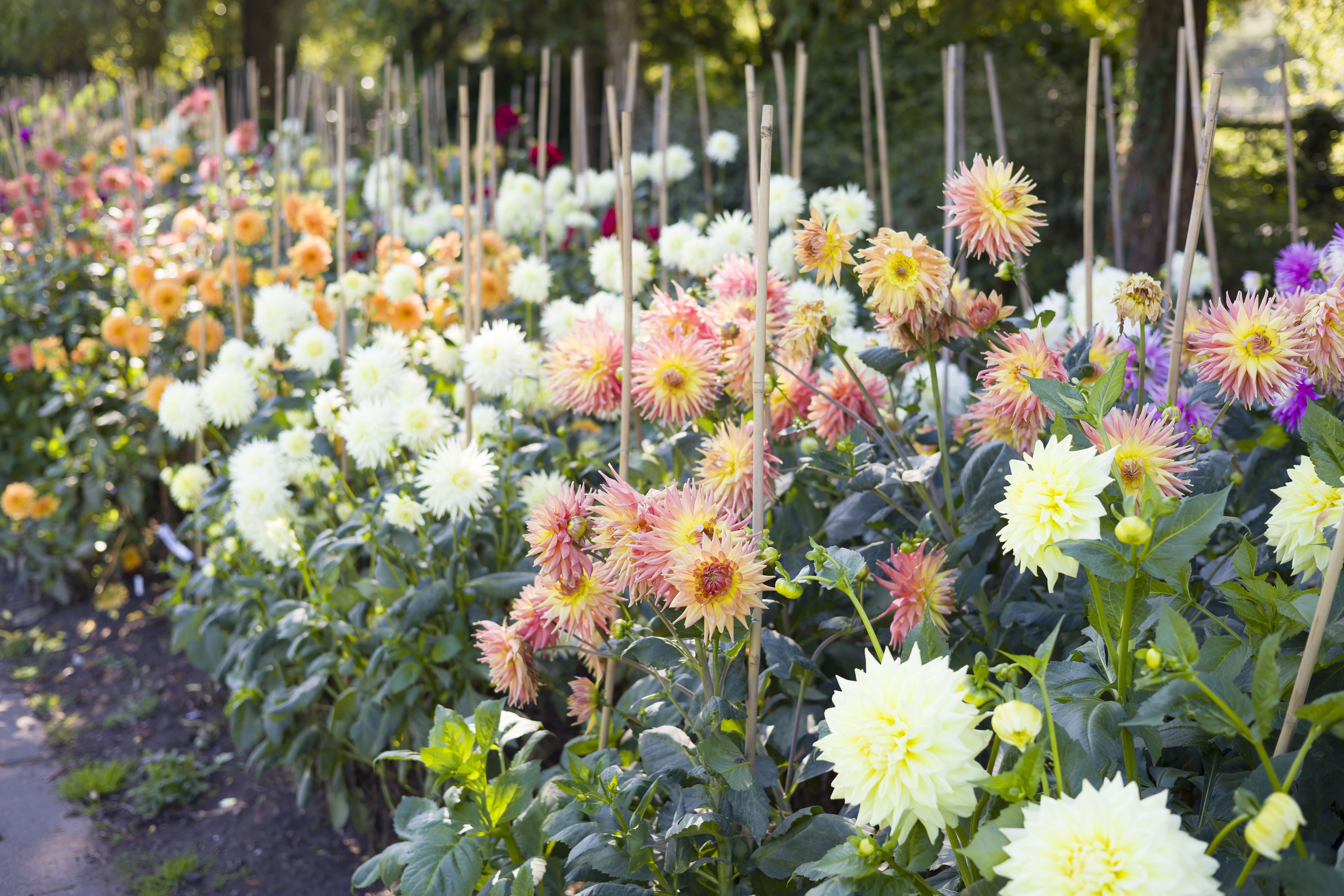
Dahlias have a funny way of making us feel like gardening superheroes right up until the first summer thunderstorm flattens them like a pancake. Those blooms are gloriously top-heavy, and the stems can be hollow and surprisingly brittle. Staking is not fussy, old-fashioned flower show behavior. It is simple plant insurance that keeps stems upright, flowers cleaner, and helps the plant keep building energy for next season.
Below, I will walk you through when to stake, which support style fits your garden, what materials actually hold up, and how to tie stems without bruising them. We will also touch on how staking connects to planting day and end-of-season care, without rehashing the whole tuber-planting routine.

Why support matters
Dahlias are fast growers. Once they hit their stride, they can shoot up feet of fresh, water-filled growth in a short window, especially after a rain or a good feeding. That lush growth is a joy, but it also means:
- Hollow stems can snap in wind, under the weight of wet blooms, or from an accidental bump while weeding.
- Leaning plants can shade themselves, which may reduce flowering and can limit airflow around leaves and blooms.
- Flopped stems kink, and a kinked stem does not reliably straighten back out.
When your dahlia stays upright, it can keep photosynthesizing steadily instead of spending the season recovering from repeated stem damage. That steady growth is one of the things that supports strong tuber development.
Who needs staking
Not every dahlia needs the same level of support. A quick, practical guide:
- Tall varieties (about 4 to 6+ feet) and large-flowered types (including many dinner-plate dahlias) almost always benefit from staking.
- Medium dahlias (about 3 to 4 feet) often do best with a corral, ring, or at least one sturdy stake in breezy spots.
- Compact bedding or patio dahlias (often under 3 feet) may not need staking in sheltered beds, but a small cage can still help in containers or windy corners.
If you pinch or top your dahlias for bushiness, expect more branching. More branching means more bloom stems, and usually a wider support plan.
When to stake
Stake early
The best time to install support is early, when shoots are 6 to 12 inches tall, or right around the time you can clearly see where the main stems are headed. Waiting until your plant is tall and leafy makes staking harder because you are more likely to spear tubers or snap a stem while wrestling a stake into place.
Connect it to planting day
If you remember one thing for planting season: place your stake at planting time or immediately after you plant the tuber. You do not need to tie anything yet. You are just claiming that spot in the soil while you still have clear visibility and bare ground. This is especially helpful for tall varieties and windy sites.
Hard soil tip: In stubborn ground, make a pilot hole first (with a metal rod, long screwdriver, or dibber) so you are not snapping stakes or forcing them in at a bad angle.
Re-check after growth spurts
Dahlias can grow several inches in a week during warm weather. Plan to check ties weekly once summer hits. A tie that was perfectly loose last week can start pinching this week.
Pick a method
There is no one right way. Think of staking like choosing shoes. You want the pair that fits your garden and how you like to move around in it.
Single stake
Best for: individual specimen dahlias, cut-flower rows, narrow beds, and gardeners who like neat vertical stems.
- Drive one sturdy stake 2 to 6 inches from the crown area.
- As the plant grows, tie stems to the stake at intervals.
- Great for tall, big-bloom plants that want serious backbone.
Watch-outs: You must keep up with tying, and one stake may not corral a wide, many-stemmed plant unless you are diligent.
Corral support
Best for: bushier varieties, informal beds, and gardeners who want a lower-maintenance approach after setup.
Common corral options include:
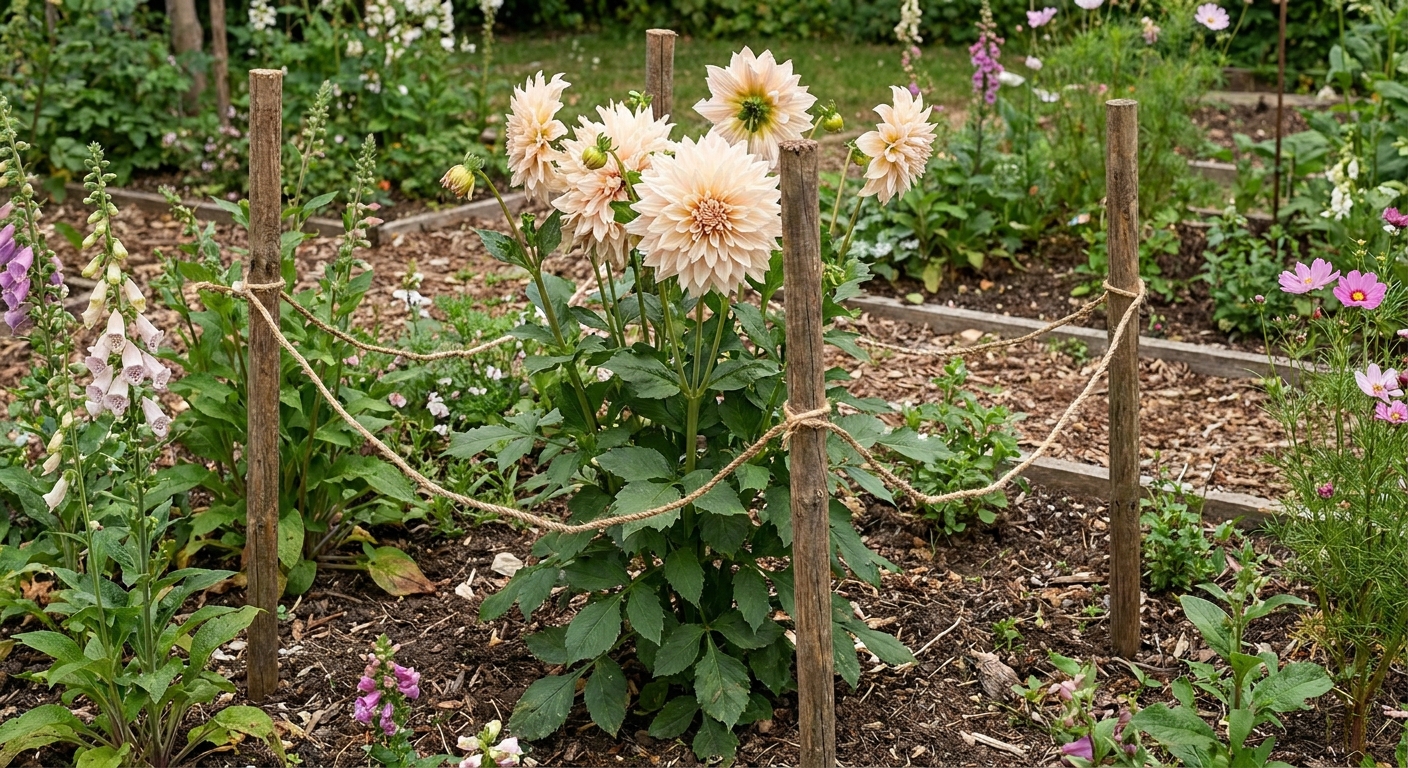
- Three or four stakes with twine woven around the outside as the plant grows.
- Tomato cages for shorter dahlias or compact varieties, especially in containers.
- Peony rings for medium-height dahlias with lots of branching.
Watch-outs: If you install a cage late, you will crush foliage to get it on. With twine corrals, you still need to keep twine high enough that stems are supported before they lean.
Materials that work
My rule of thumb is simple: if you can wiggle the support with two fingers, wind can wiggle it harder. Choose materials that match your dahlia’s mature height and your local weather.
Stakes for tall dahlias
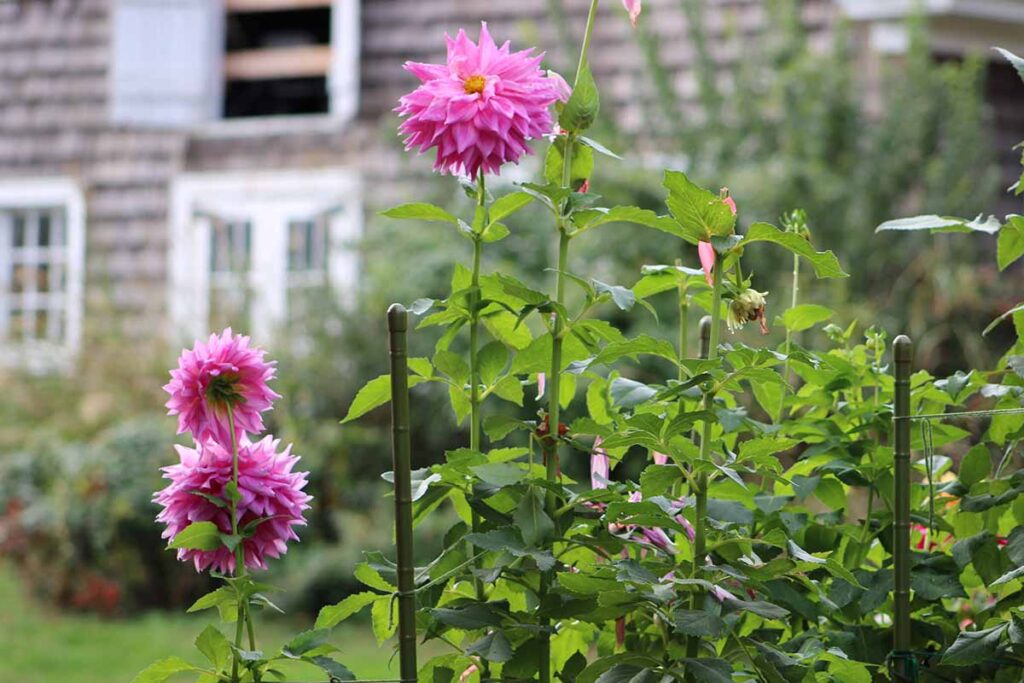
- Hardwood stakes (thick and durable), typically 5 to 7 feet for tall varieties.
- Metal T-posts for very windy areas or big show dahlias.
- Fiberglass or coated metal stakes if you want something long-lasting that does not rot.
- Heavy bamboo can work for medium heights, but use the thickest you can find.
How tall should the stake be
A simple sizing rule: choose a stake that is about 12 to 18 inches taller than the plant’s expected height, plus enough length to go underground.
For the underground portion, think 10 to 12 inches minimum in firm soil. In sandy beds, loose compost, or windy sites, go deeper and consider thicker stakes or a corral for extra stability.
Twine and ties
- Use: soft plant tie tape, stretchy garden tie, Velcro-style plant tape, jute twine (in a pinch), cotton strips, or reusable silicone ties.
- Skip: thin wire, fishing line, and anything that can cut into a thickening stem.
Sustainability note: I love reusable ties for years of service, and I also love compostable cotton strips when I am feeling thrifty. If you use synthetic ties, save them at cleanup time and reuse them rather than tossing them.
How to tie safely
Dahlia stems bruise more easily than they look. The goal is support, not a chokehold.
Use a loose figure-eight
The simplest stem-safe tie is a figure-eight:
- Loop the tie once around the stake.
- Cross the tie between the stake and the stem to form an “8.”
- Loop around the stem, leaving a finger’s width of space for growth.
- Secure with a simple bow or knot that you can adjust later.
This creates a little cushion in the middle, so the stem is not rubbing directly against the stake in the wind.
Where to place ties
- Start low: the first tie is usually 8 to 12 inches above soil level once the plant has some height.
- Add ties as it grows: every 8 to 12 inches is a good rhythm for tall types.
- Support heavy bloom stems: if one flowering stem is leaning out, give it its own gentle tie.
A small habit that helps
Tie on a calm morning, when stems are not being whipped around. And if you have been watering, wait until foliage is dry so you are not trapping moisture against the stem.
Single stake steps
If you want the cleanest look and the strongest individual support, this is my go-to.
- Choose the stake height: for a 4-foot dahlia, use a 5 to 6-foot stake so you have room to tie above the bloom line.
- Place the stake 2 to 6 inches from the plant’s crown area. If you already planted, aim for the outer edge of the clump rather than dead center.
- Drive it deep: 10 to 12 inches is a good minimum in firm soil. Go deeper in sandy or windy conditions.
- Begin tying once stems are tall enough to sway. Use a figure-eight tie.
- Adjust all season: loosen ties as stems thicken and add new ties as growth continues.
If you pinch for bushiness, expect more side stems. That is wonderful for blooms, and it also means you may need a second stake or a switch to a corral method for wide plants.
Corral steps
The corral method shines when dahlias branch into a full, round shrub of blooms. It is like giving the plant a supportive fence to lean on before it actually leans.
Twine corral
- Set stakes evenly spaced around the plant, 8 to 12 inches out from the stems.
- Start low: when the plant is 12 to 18 inches tall, tie twine to one stake and wrap around the outside to the next stake.
- Keep it loose: the twine should gently contain stems, not compress them.
- Add higher levels every 10 to 12 inches as the dahlia grows.
Cages and rings
If you use a tomato cage or peony ring, place it early and anchor it well. For cages in the ground, I like to add one extra stake and zip-tie the cage to it so the whole structure does not tip in a storm.
Wind and storms
If you garden in a breezy spot, you are not alone. I have watched a perfectly staked dahlia survive, and a poorly anchored support fail spectacularly. Here is what really helps.
Anchor well
- Drive stakes deeper than you think you need, especially in loose, compost-rich beds.
- Use thicker stakes for tall varieties and exposed locations.
- Stabilize cages by tying them to a separate stake.
Placement helps
If you are planning your dahlia bed next season, consider windbreaks: a fence, a hedge, or even taller perennials can reduce wind speed dramatically. Do not crowd dahlias tightly against a wall though. They still need airflow.
Before a big storm
- Check ties and add one extra tie on the tallest stems.
- Deadhead heavy blooms that are pulling a stem sideways. You can bring them indoors and enjoy them in a vase.
- Remove damaged stems cleanly after the storm rather than leaving a jagged break that invites rot.
Common mistakes
- Staking too late: If the plant is already leaning, install support gently and tie in stages over a week instead of forcing it upright in one go.
- Ties too tight: Loosen immediately. If a stem is already pinched, support above and below the pinch to reduce snapping risk.
- Stake too short: Add a second stake or switch to a corral. A too-short stake always fails right when flowers peak.
- One tie at the top only: Add lower ties. Support should start near the base where leverage is strongest in wind.
- Thin wire ties: Replace with something soft. Think “wide and gentle,” not “strong and skinny.”
Tubers and season end
Staking is not just about pretty flowers today. It also helps protect the plant’s leaf canopy from repeated breakage, which can help the plant keep building and sizing up tubers over the season.
Late-season tweaks
In late summer and early fall, blooms get heavier and stems get taller. This is the moment to:
- Add one final tie level near the top of the stake or corral.
- Keep deadheading so the plant keeps producing and does not put energy into seed.
- Water consistently to reduce stress and lower the risk of breakage during hot, dry stretches.
When frost hits
After the first frost blackens foliage, you will typically cut the plant down and move into your usual dahlia end-of-season routine. Staking makes that cleanup easier.
- Remove ties first and save reusable ones.
- Pull stakes carefully so you do not gouge tubers if you are lifting and storing.
- Compost natural twine if it is untreated, and set aside metal or plastic supports for next year.
If you label varieties, this is a sweet moment to tuck a tag onto the stake during the season. Then when you are doing fall cleanup, you are not guessing which dahlia was the peachy dinner-plate and which was the magenta pompom.
Quick checklist
- Install support early, ideally at planting time or when shoots are 6 to 12 inches tall.
- Pick a method: single stake for tidy strength, corral for bushier plants and easier maintenance.
- Use soft ties and a figure-eight loop to prevent rubbing and pinching.
- Re-check weekly during peak growth and after storms.
- Anchor deeply in windy sites and stabilize cages with an extra stake.
If you want, tell me your dahlia variety (or height) and whether you garden in containers, raised beds, or open ground. I can suggest the simplest support setup that will survive your local wind without turning your flower bed into a construction zone.