
How to Revive a Wilting or Drooping Plant


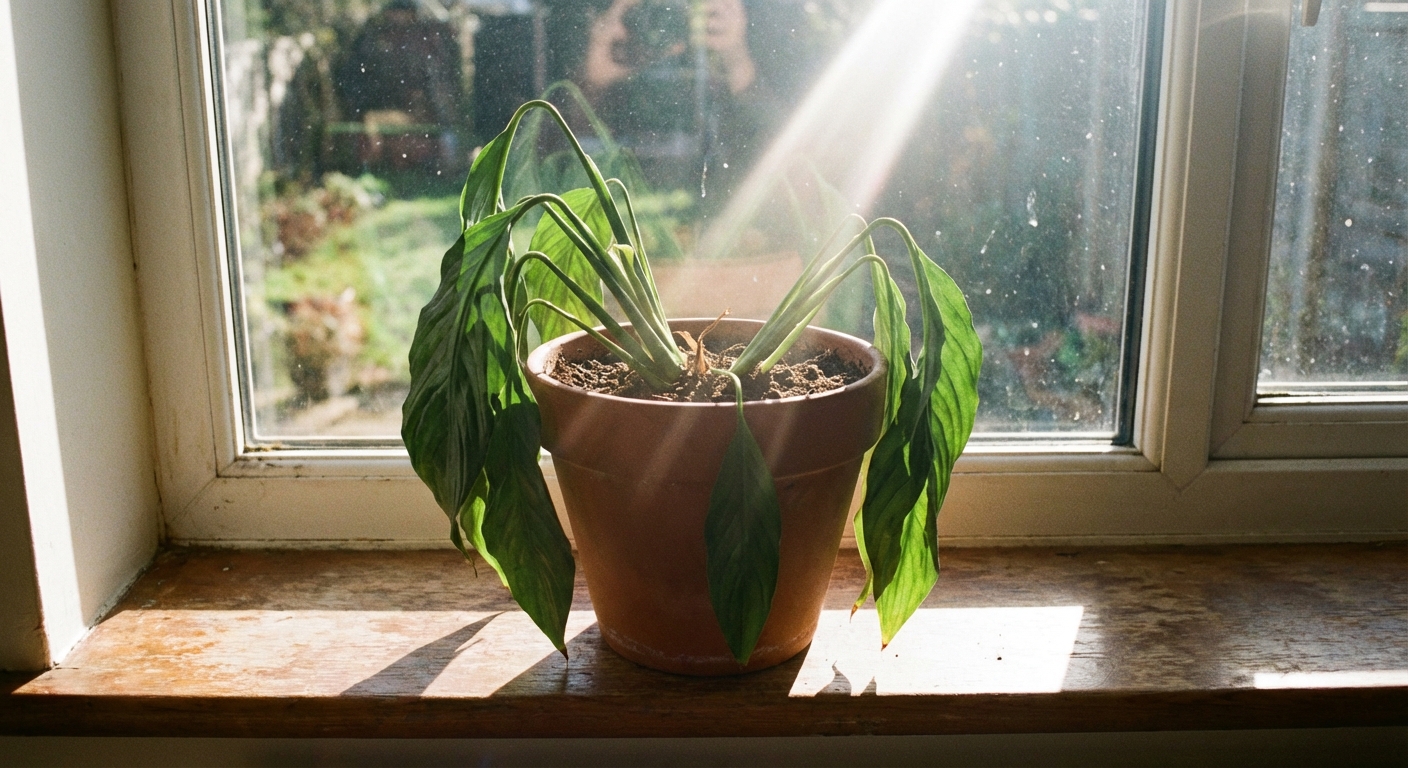
When a plant wilts, it can look like it gave up overnight. In reality, wilting is a water pressure problem. Your plant is either not moving enough water to its leaves, or it is losing water faster than it can replace it. The trick is figuring out why before you “fix” it into a worse mess.
I’m going to walk you through the most common causes, how to identify each one in a minute or two, and the exact steps I use to bring droopy plants back. No shame, no guessing, and yes, you can absolutely recover most plants if you catch it in time.
First: Do this 60-second droop check
Before you water, repot, or panic, run through this quick checklist. It narrows the cause fast.
- Feel the soil 2 to 3 inches down. Is it bone dry, evenly damp, or soggy?
- Lift the pot. Very light usually means dry. Heavy can mean saturated soil.
- Look at the leaves. Crispy edges and papery leaves point to dryness. Soft yellowing can point to too much water.
- Check the stem and base. Mushy or dark at the crown can signal rot.
- Scan for pests. Look under leaves and along stems for stippling, webbing, or sticky residue.
- Think about recent changes. Repotting, moving locations, a heat wave, or a cold draft often explains “sudden” droop.
If you want a simple rule: never water a droopy plant until you confirm the soil is actually dry. Overwatering is the most common well-meant mistake.
Cause #1: Underwatering (the classic thirst flop)
How to identify it
- Soil is dry several inches down and may pull away from the pot’s sides.
- Pot feels noticeably light.
- Leaves droop, then may turn crispy or brown at tips and edges.
- In gardens, the plant perks up in the evening but collapses again in midday heat.
Underwatering is not just “forgot to water.” It can also happen when potting mix turns water-repellent, roots are crowded, or sun and wind are pulling moisture out faster than expected.
How to fix it (step-by-step)
- Rehydrate slowly and thoroughly. Water until excess drains out the bottom (for pots) or until the soil is evenly moist (for beds).
- If water runs straight through, soak the root ball. Set the pot in a bowl or sink of water for 15 to 30 minutes, then let it drain completely.
- Check again in 1 hour. Many plants perk up within an hour or two. Woody plants may take longer.
- Adjust your routine. Water when the top inch (houseplants) or top few inches (garden beds) are dry, not on a strict calendar.
What not to do
- Do not blast a severely dry pot with tiny sips. That often wets the top and leaves the inner root ball dry.
- Do not fertilize a thirsty, wilting plant. Fertilizer on dry roots can scorch them.
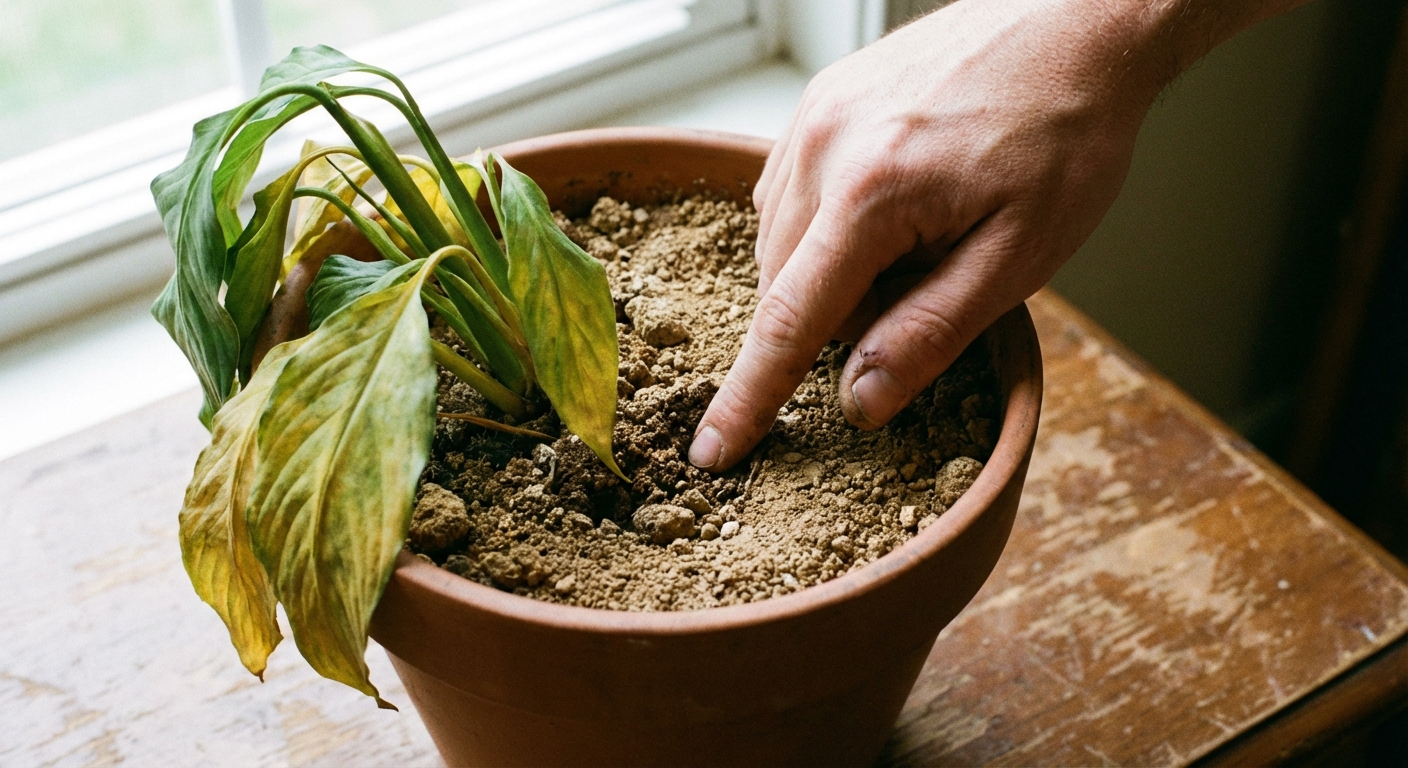
Cause #2: Overwatering (roots are suffocating)
How to identify it
- Soil feels wet or spongy days after watering.
- Leaves droop but feel soft, sometimes with yellowing.
- Fungus gnats hovering around the pot are a common clue.
- Pot is heavy, and the plant does not perk up after watering.
Overwatering is really lack of oxygen. Roots need air pockets. When soil stays saturated, roots struggle, then weaken, and wilting follows even though the soil is wet.
How to fix it (step-by-step)
- Stop watering. Let the soil dry to the plant’s preferred level.
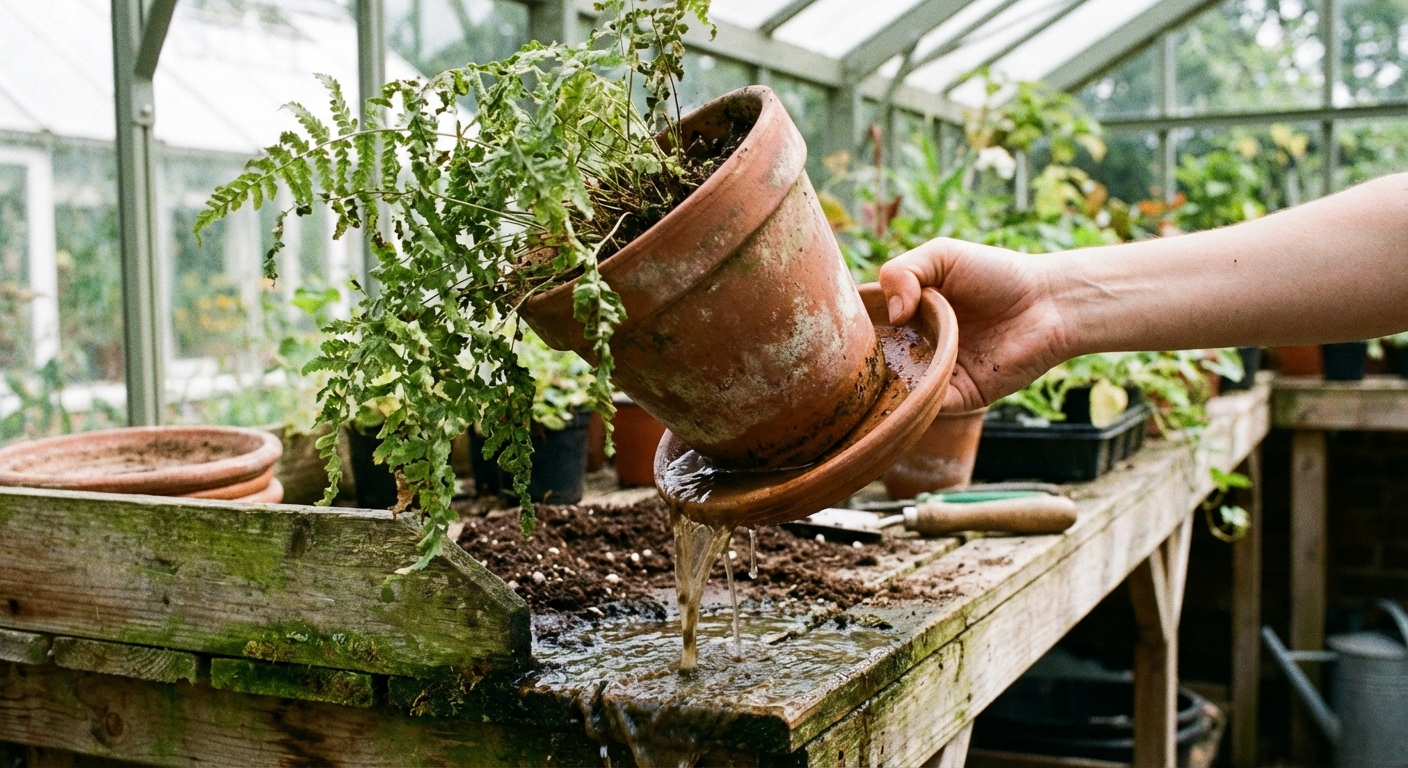
- Improve drainage immediately. Empty saucers. Make sure there is a drainage hole. If the pot has none, move the plant to one that does.
- Add airflow and gentle light. A bright spot and good air circulation help the pot dry evenly.
- For very soggy soil, wick out moisture. Tilt the pot and blot the drainage holes with paper towel, or set the pot on a thick layer of dry paper towel for an hour and replace as it dampens.
- Reassess your mix. If it stays wet too long, repot later into a chunkier, airier blend (more perlite, bark, or pumice depending on the plant).
Quick prevention tips
- Water based on soil feel, not leaf droop alone.
- Use pots with drainage and a potting mix suited to the plant (succulents need gritty, orchids need chunky, most tropicals like airy but moisture-retentive).
Cause #3: Root rot (overwatering’s ugly cousin)
Root rot is what happens when overwatering goes on long enough that roots begin to die and decay. A plant with root rot can look wilted even in wet soil because the roots can no longer drink.
How to identify it
- Persistent droop with wet soil.
- Yellowing leaves, leaf drop, or stems that look dull and tired.
- Soil smells sour, musty, or like something composting when it should not.
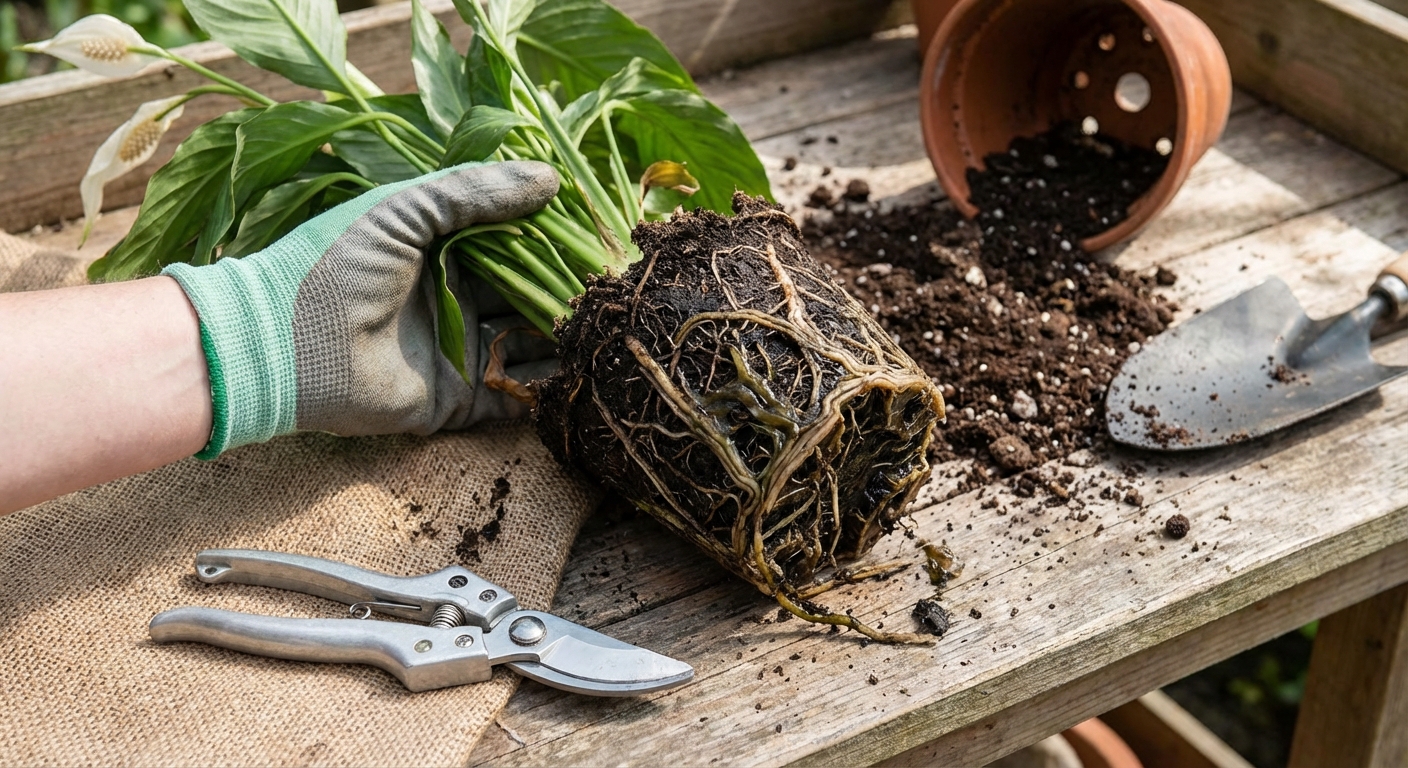
- When you unpot it, roots are brown, black, mushy, or slough their outer layer when touched.
How to fix it (step-by-step)
- Unpot the plant. Be gentle, but get a clear look at the roots.
- Rinse the root ball. Use lukewarm water so you can see what is healthy.
- Trim rot. With clean scissors, remove mushy or dark roots back to firm, pale tissue.
- Disinfect your tools. Wipe with isopropyl alcohol between cuts if rot is extensive.
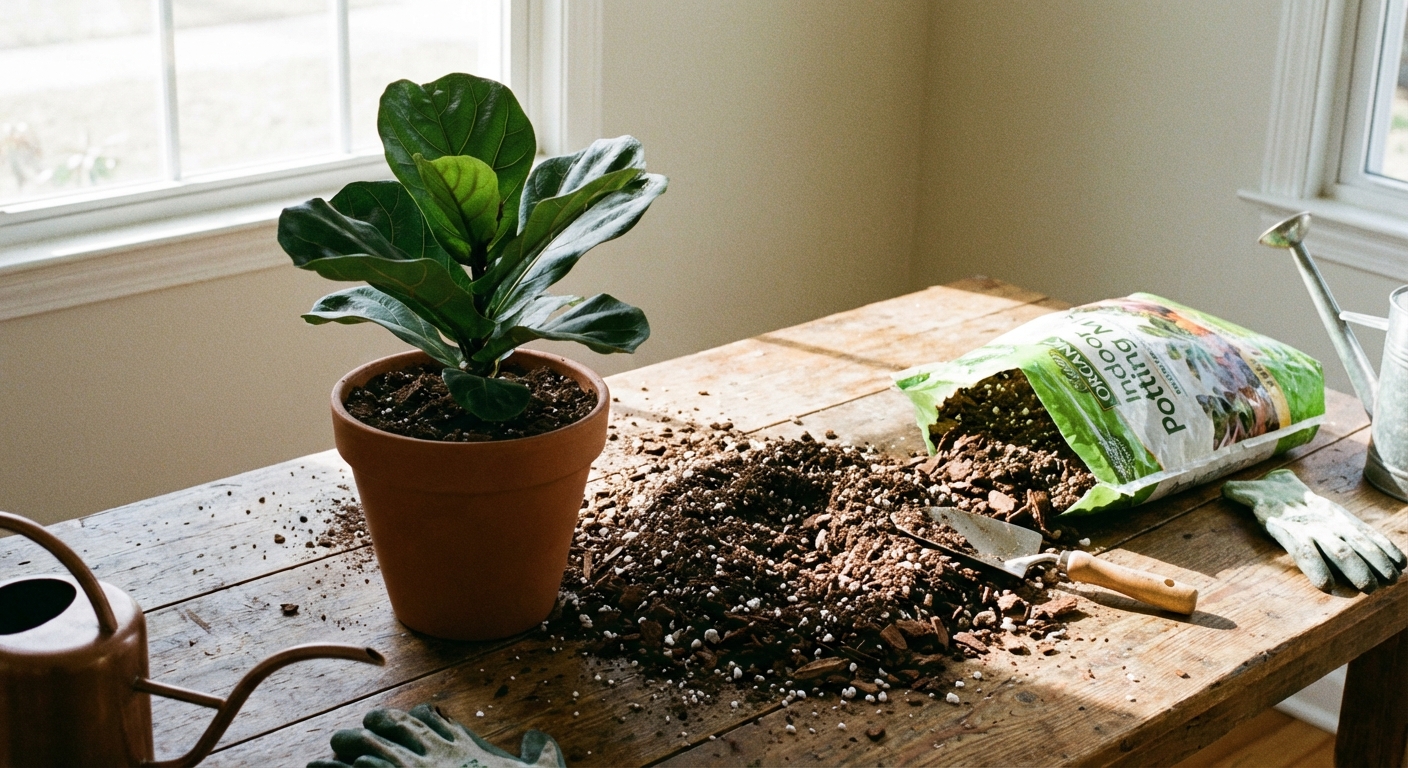
- Repot in fresh mix. Do not reuse the old soil. Choose a clean pot with drainage. If reusing the pot, scrub and wash it thoroughly first.
- Hold off on heavy watering. After repotting, lightly water to settle the mix, then wait until the top inch or two dries (depending on the plant) before watering again.
- Reduce stress while it recovers. Bright, indirect light and stable temperatures help. Skip fertilizer for 3 to 4 weeks.
My honest timeline: A plant recovering from root rot often looks “stuck” for a couple of weeks. You are waiting for new root growth. Celebrate tiny wins like a slightly perkier stem or a new leaf bud.
Cause #4: Transplant shock (it is not you, it is the move)
Repotting, planting out seedlings, or moving a plant outdoors can trigger temporary wilting. Roots get disturbed, tiny feeder roots break, and the plant loses water faster than the reduced root system can replace.
How to identify it
- Wilting starts within 24 to 72 hours after repotting or transplanting.
- Soil moisture may be fine, but the plant looks dramatic anyway.
- Leaves may look limp without the yellowing and soggy soil that scream overwatering.
How to fix it (step-by-step)
- Water in once, properly. After transplanting, water thoroughly to remove air pockets around roots.
- Give it gentler light for a few days. Bright shade or bright indirect light helps reduce water loss.
- Reduce wind and heat exposure. Wind is sneaky. It can dehydrate a transplant fast.
- Do not fertilize right away. Wait 2 to 4 weeks for most plants.
- Support humidity for tropical houseplants. Group plants together or run a humidifier nearby. Avoid sealing a plant in a bag unless you know it tolerates that well.
Cause #5: Temperature stress (hot sun, cold drafts, or a surprise freeze)
Plants are basically living water balloons. High heat increases transpiration. Cold can slow root function. Either one can cause droop fast, especially when combined with dry air or wind.
How to identify it
- Heat stress: Wilting during the hottest part of the day, scorched patches, dry soil, or hot containers in full sun.
- Cold stress: Limp leaves after a chilly night, blackened soft tissue, or droop near drafty windows, doors, and vents.
- Sudden change in location recently (moved outdoors, moved near a heater, or placed against a cold window).
How to fix it (step-by-step)
- Move the plant to a safer zone. Shade in the afternoon for heat, away from drafts for cold.
- Water at the right time. In gardens, water in the morning during heat waves. For pots, water when soil is dry to the correct depth.
- Mulch garden plants. A 2 to 3 inch layer of leaf mold, compost, or straw buffers temperature swings and reduces evaporation.
- Do not prune heavily during a heat wave. Leaves provide shade for stems and soil. Remove only truly dead material.
Cause #6: Pest damage (tiny mouths, big droop)
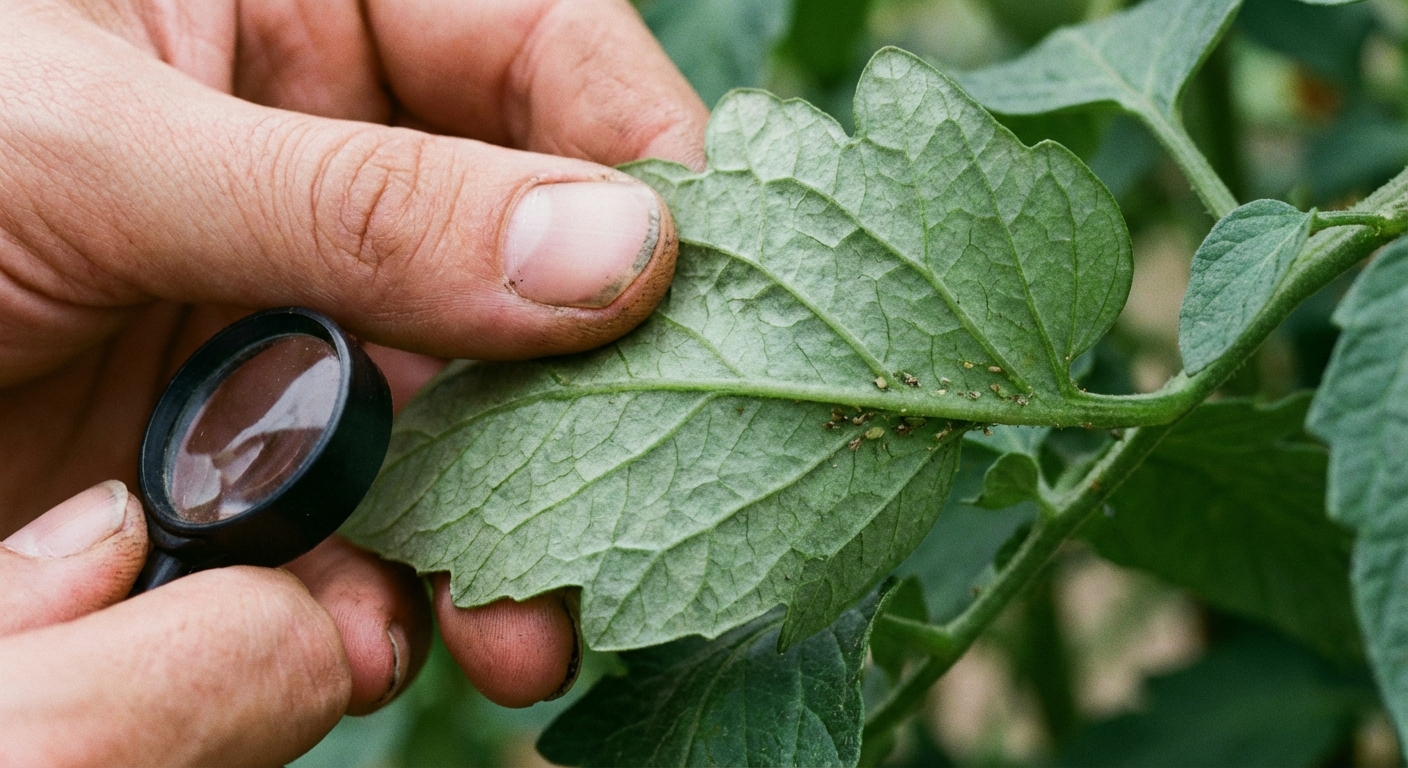
Pests can cause wilting by piercing leaves and stems, draining sap, and stressing the plant. The plant may look thirsty even when the soil is fine.
How to identify it
- Spider mites: Fine webbing, dusty look, tiny speckling on leaves.
- Aphids: Clusters of soft-bodied insects on new growth, sticky honeydew.
- Mealybugs: White cottony fluff in leaf joints and stems.
- Thrips: Silvery streaks or scarring, tiny fast-moving insects.
- Scale: Small brown bumps stuck to stems or leaf veins.
How to fix it (step-by-step)
- Isolate the plant. Pests spread, especially indoors.
- Rinse and wipe. A firm shower spray helps. Wipe leaves top and bottom.
- Treat with insecticidal soap or horticultural oil. Coat pests thoroughly. Follow label directions and keep the plant out of harsh sun until dry.
- Repeat. Most pests need treatments every 5 to 7 days for a few rounds to catch new hatchlings.
- Support recovery. Bright, indirect light, consistent watering, and no fertilizer until you see fresh healthy growth.
Extra causes people miss (but I see all the time)
Rootbound plants
If a plant dries out absurdly fast and wilts soon after watering, it might be rootbound. Roots circle the pot, leaving little soil to hold moisture.
- Clue: Roots coming out drainage holes, very fast drying, water running through instantly.
- Fix: Pot up one size or root-prune and refresh soil. Then water deeply.
Too much fertilizer or salt buildup
Excess salts can pull water out of roots, creating a wilted look.
- Clue: White crust on soil surface or pot rim, brown crispy tips, you have been fertilizing often.
- Fix: Flush the pot with plenty of water (let it drain fully), or repot into fresh mix if buildup is severe.
Herbicide drift or chemical exposure (outdoors)
Leaves may twist, curl, and droop after nearby spraying.
- Clue: Distorted new growth and droop soon after lawn or weed treatments nearby.
- Fix: Rinse foliage if recent, water deeply, and wait. Avoid additional stress like heavy pruning.
What to do right now (choose your path)
If you are standing over a droopy plant with a watering can in hand, here’s your simplest next step:
- Soil is dry: Water thoroughly, consider soaking if water beads or runs through.
- Soil is wet: Do not water. Improve drainage and airflow. Consider unpotting if it smells bad or keeps declining.
- Soil is fine but you repotted or moved it: Give it shade and stability for a few days.
- You see pests: Isolate, rinse, treat, repeat.
- It is very hot or very cold: Move it to a safer spot and buffer conditions.
If you only take one thing from me today: droop is a symptom, not a diagnosis. Your job is not to “water the droop.” Your job is to figure out what the roots are experiencing.
When a wilted plant will not bounce back
Sometimes, the kindest thing is an honest assessment. Your plant may not recover if:
- The main stem is mushy at the soil line (crown rot).
- Most roots are gone and there is little healthy tissue left.
- Leaves and stems turned black after a freeze.
Still, you can often save something. Try taking healthy cuttings to restart the plant, or salvage bulbs and tubers if they are firm and unrotted.
Quick droop FAQs
Why is my plant drooping after I watered it?
Most often: the soil was already wet (overwatering), roots are damaged (root rot), or the plant is heat stressed and needs shade and time. Check soil moisture 2 to 3 inches down before adding more water.
How long does it take a wilted plant to recover?
Thirsty plants often perk up in 1 to 6 hours. Plants with root damage can take 2 to 4 weeks to show real improvement because they need to rebuild roots first.
Should I mist a drooping plant?
Misting can help briefly with humidity-loving tropicals, but it is not a substitute for proper watering or root care. Focus on soil moisture and root health first.