
How to Prune Roses

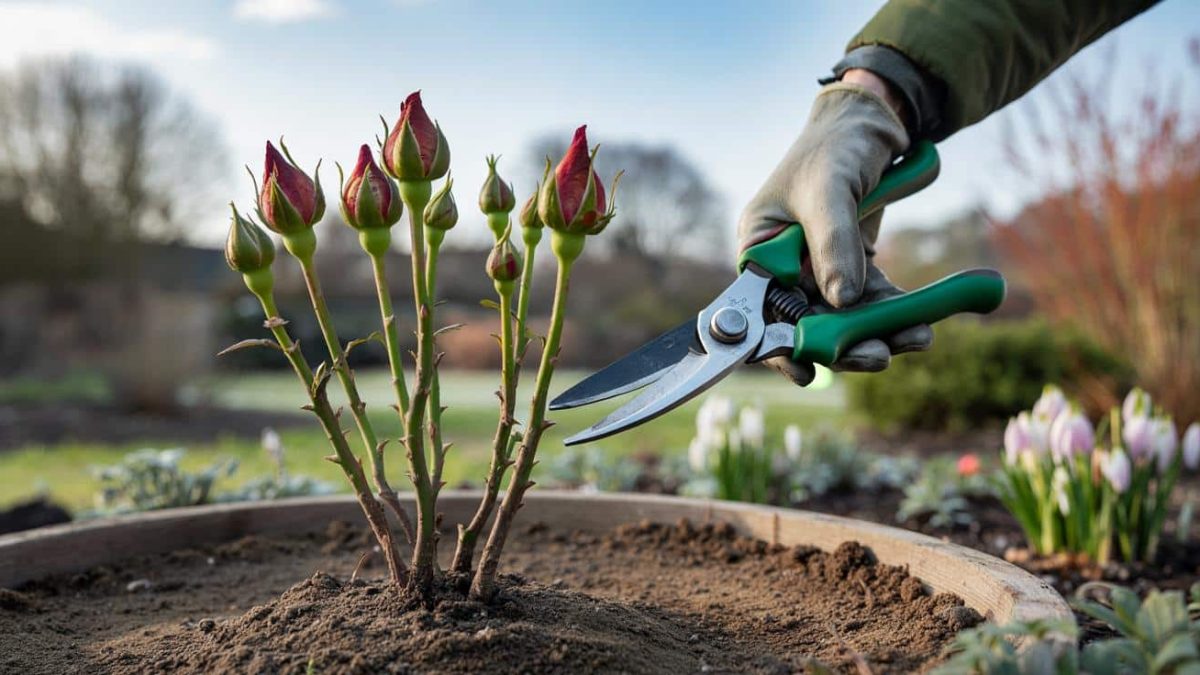
If roses make you nervous, you are not alone. The first time I pruned a rose, I stood there with my shears like they were a pair of scissors near a toddler. But here is the truth: roses are tougher than they look, and pruning is less about perfection and more about clear, confident cleanup that helps the plant breathe, bloom, and resist disease.
In this guide, I will walk you through exactly when to prune (by rose type), what tools you need, where to make cuts, and the most common mistakes beginners make, plus how to avoid them.
Rose pruning in one minute
- Start with safety: gloves and long sleeves save your arms.
- Remove the bad stuff first: dead, diseased, damaged wood.
- Open the center: fewer crossing canes, better airflow.
- Cut above an outward-facing bud: helps the plant grow out, not into itself.
- Do your main prune at the right season: usually late winter to early spring, but climbers, ramblers, and once-bloomers differ.
When to prune roses
The best timing depends on your rose type and whether it blooms once or repeatedly. A good beginner rule is this: major pruning happens when the plant is just waking up, not when it is actively pushing lots of soft growth.
Quick note on location: this article uses Northern Hemisphere seasons. If you are in the Southern Hemisphere, shift the timing by about six months. Also, if you live where late freezes are common, it is safer to prune a little later than a little earlier.
Late winter to early spring
This is the classic time for most roses, especially repeat bloomers (many hybrid teas, floribundas, and shrub roses). You are aiming for a moment when:
- The worst winter cold has passed.
- Buds are swelling and you can see where life is returning.
- You have not let the plant leaf out heavily yet.
Frost-prone regions: pruning too early can encourage new growth that gets zapped by a late freeze. If that is common where you live, wait until you see clear bud swell and steadier temperatures.
Garden cue: many gardeners prune when forsythia blooms. In mild climates, pruning may start as early as late January or February. In colder areas, it can be March or even April.
After the first flush
Throughout the growing season, you can:
- Deadhead spent blooms to encourage more flowers on repeat-blooming roses.
- Snip thin, weak growth that appears later and crowds the center.
- Shorten overly long shoots that flop into walkways.
Fall
In many regions, heavy fall pruning can trigger tender new growth right when the plant should be hardening off. In fall, I stick to:
- Removing diseased leaves or canes.
- Shortening extra-tall canes if wind will whip them and loosen the roots.
- Cleaning up the base to discourage pests and fungus.
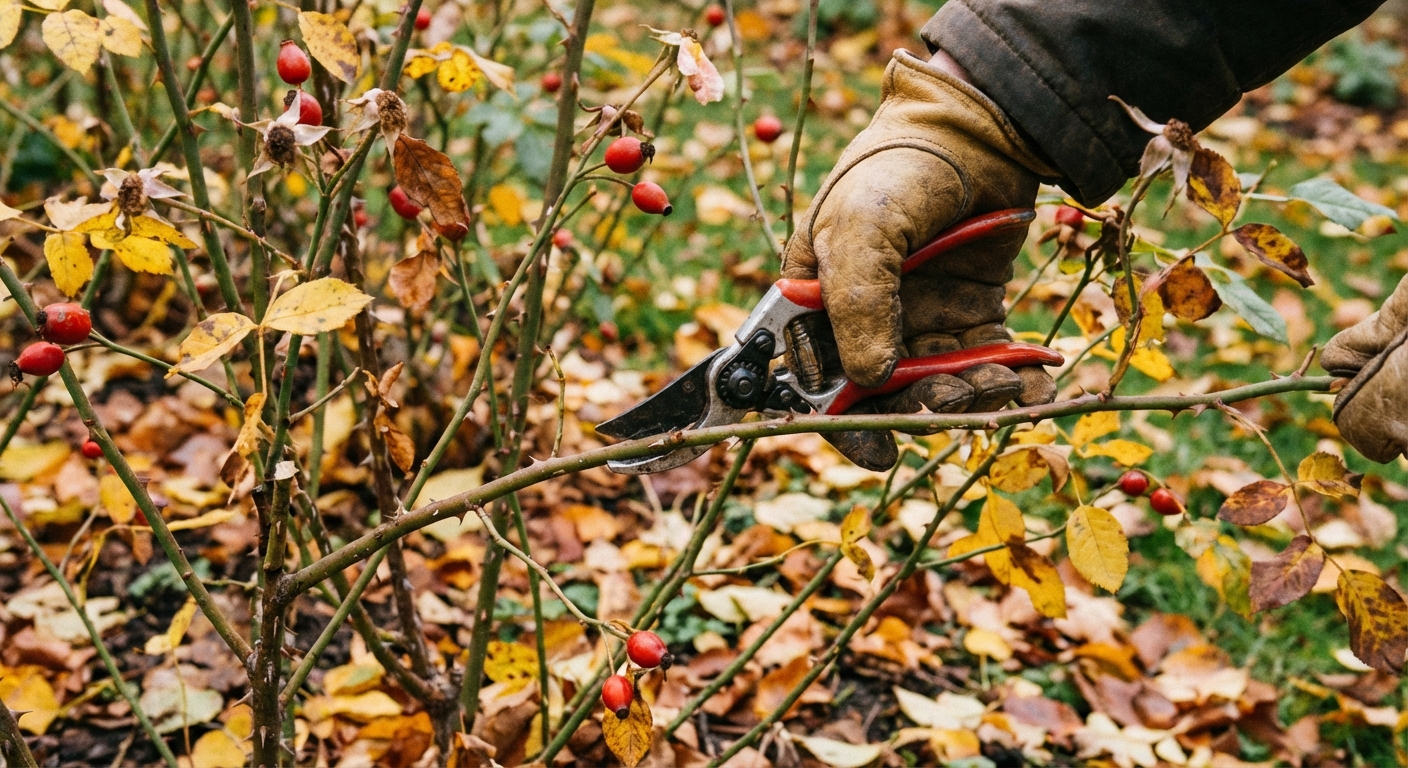
Timing by rose type
If you only remember one timing rule, make it this:
- Repeat bloomers: main prune in late winter to early spring.
- Once bloomers: prune right after flowering, because next year’s blooms often form on older wood.
Hybrid tea roses
Hybrid teas love a firm annual prune. It keeps the plant vigorous and encourages those classic long-stem blooms.
- Major prune: late winter to early spring, just as buds swell.
- In-season: deadhead and remove weak shoots as needed.
How hard? Beginners can aim to reduce the plant by about 1/3 to 1/2 during the main prune, depending on size and health.
Optional note if you want classic hybrid tea form: many rosarians prune hybrid teas harder, often down to roughly 12 to 18 inches (30 to 45 cm) with a handful of strong canes left. If that makes you nervous, stick with the moderate approach your first year.
Shrub roses and landscape roses
Shrub roses are forgiving. Many are bred to handle less fuss, which I deeply appreciate on busy weeks.
- Major prune: late winter to early spring for repeat-blooming shrubs.
- In-season: light shaping, deadheading optional depending on variety.
How hard? Usually light to moderate. Remove dead wood and thin for airflow, then shape.
Landscape note: some modern landscape roses are fine with a simple yearly tidy. Some gardeners even shear them lightly for speed. If you shear, do it in the main pruning window and follow up by thinning a few congested stems so the center is not packed tight.
Old garden roses and once-blooming shrubs
Many old garden types and once-blooming shrubs flower on older wood.
- Main prune: right after flowering.
- In-season: remove dead or damaged canes anytime.
How hard? Think tidy, thin, and renew gradually. If you cut them hard in late winter, you can remove the wood that would have bloomed.
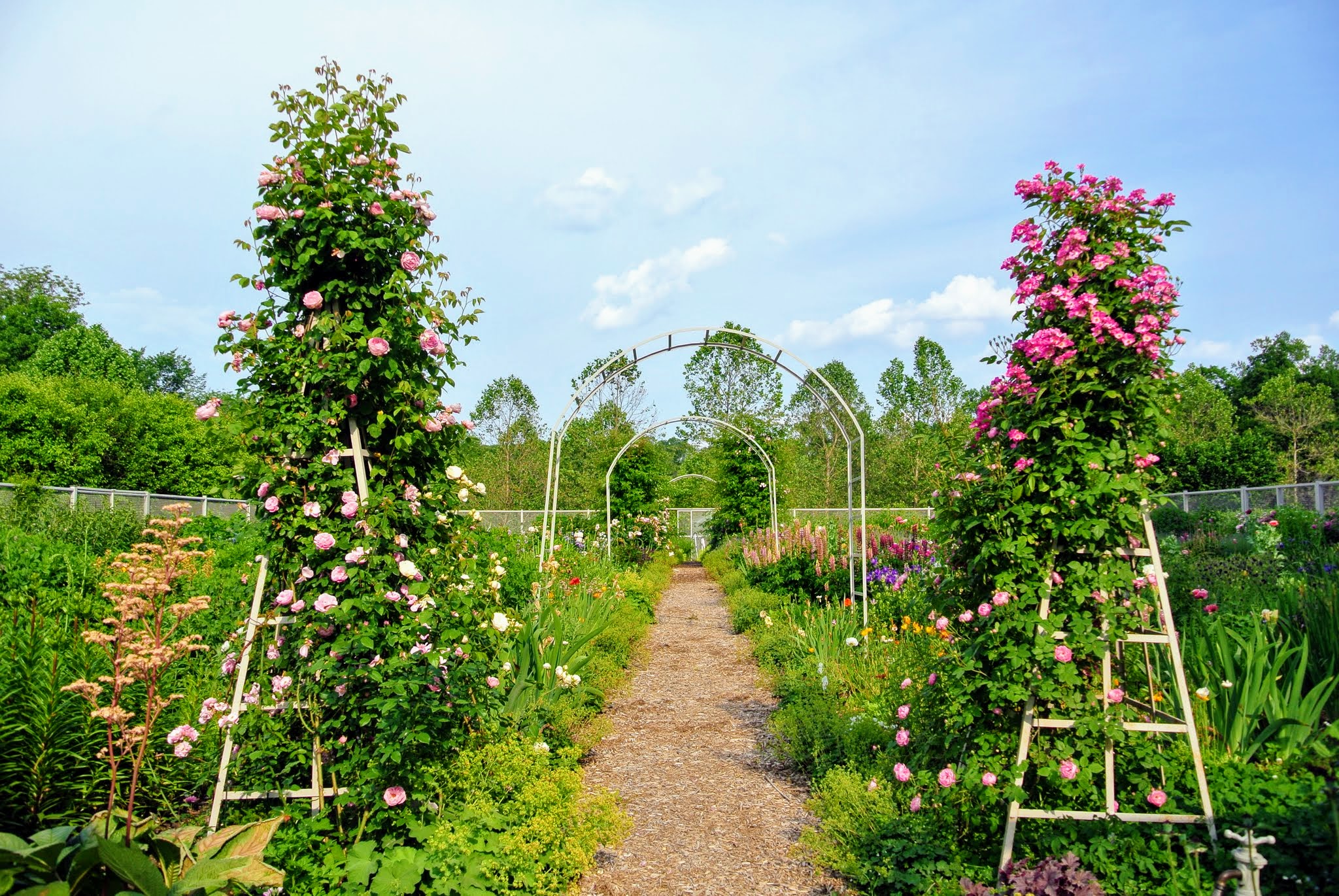
Climbing roses and ramblers
Climbers are the ones that trip up beginners, because the timing depends on whether they bloom on old wood or new wood. Also, people often say “climber” when they really mean “rambler.” Ramblers are usually vigorous, once-blooming, and happiest with after-bloom pruning and gentle renewal.
- Repeat-blooming climbers: do a main prune in late winter to early spring, then train and tidy after flushes.
- Once-blooming climbers and ramblers: prune right after flowering. Remove some of the oldest canes at the base over time and tie in new long canes as replacements.
How hard? Think training and selective thinning, not hacking. You keep a framework of main canes and renew older ones over time.
Tools you need
Good tools make pruning feel calmer and safer. You do not need a fancy kit, just a few reliable basics.
- Bypass hand pruners: these make clean cuts on live canes. Skip anvil pruners for most live pruning because they can crush stems.
- Loppers: for thicker canes your hand pruners struggle with.
- Pruning saw: for old, woody canes on mature shrubs or climbers.
- Thick gloves: rose gloves or any tough leather gloves that reach the wrists.
- Long sleeves and eye protection: especially for climbers that like to grab you back.
- Disinfectant: rubbing alcohol or a disinfecting spray for tools, especially if you suspect disease.
Tool hygiene tip: if a plant looks diseased, wipe blades and let them stay wet for a moment before moving on. Disinfecting between plants matters most when disease is suspected or confirmed.
Keep-it-going tip: keep pruners sharp and lightly oiled so they cut cleanly and last longer.
Where to make cuts
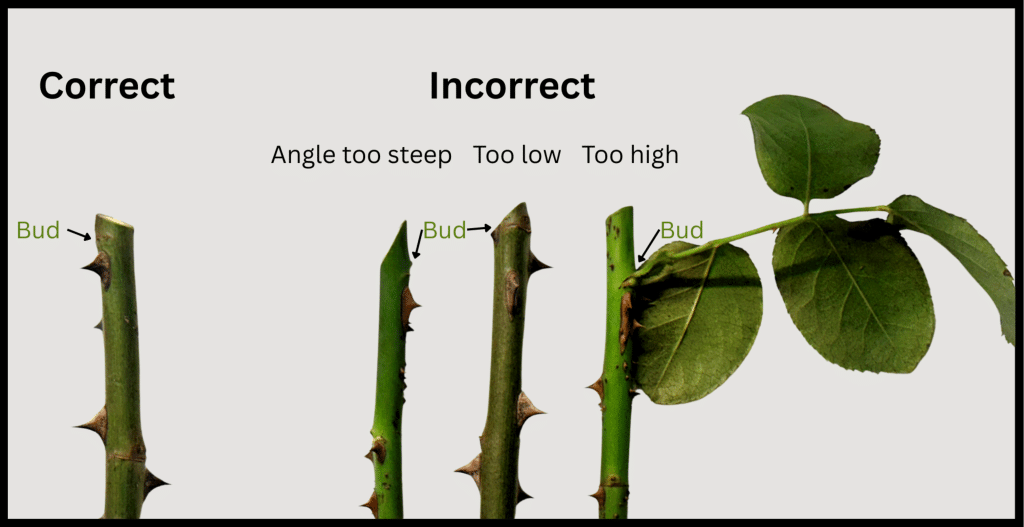
If you remember nothing else, remember this: roses respond best to clean cuts placed just above a bud that will grow in the direction you want.
Find a bud eye
Bud eyes are small bumps or nodes on the cane where new growth will emerge. On dormant canes they look like tiny raised nubs, often near where a leaf used to attach.
Choose an outward-facing bud
Look for a bud or leaf node on the outside of the cane, facing away from the center of the plant. On some roses the bud direction is subtle, so do not panic. If you cannot tell, choose a bud on the outside of the cane and focus on opening the center with your thinning cuts.
How far above the bud?
- Aim for about 1/4 inch (6 mm) above the bud.
- Too close can damage the bud. Too far leaves a stub that can die back.
Angle matters, but not obsessively
Many gardeners cut at a slight angle so water sheds off the cut. A gentle angle is fine. The bigger priority is a clean, not-crushed cut.
Remove suckers from below the graft
Many roses are grafted. If you see thin, fast-growing shoots coming from below the graft union (a knobby bulge near the base), those can be suckers from the rootstock. They steal energy and often have different leaves. Remove them as close to the origin as you can.
How to prune a rose bush
This is my beginner-friendly order of operations. It keeps you from getting lost in the tangle.
1) Quick health check
- Look for dead canes, cankers, or blackened areas.
- Notice where the plant is crowded or rubbing.
- Decide your goal: airflow, size control, more blooms, or training.
2) Remove dead, diseased, and damaged wood
- Dead wood is often gray, brittle, and dry inside.
- Diseased wood may have dark lesions, cracking, or sunken patches.
- Damaged wood includes splits and canes snapped by wind.
Cut back to healthy tissue. Healthy pith is typically light colored. If you cut and see brown inside, cut a bit farther down.
3) Take out crossing canes and inward growth
Canes that rub can create wounds that increase disease risk. Choose the stronger, better-placed cane and remove the other.
4) Thin for airflow
You are aiming for a shape that lets light and air into the center. For many bush roses, that means a simple open, vase-like structure.
5) Shape and shorten
Now you can reduce height and shape the outline. Step back often. Roses look different from every angle, and you will spot awkward canes when you view them from the side.
6) Clean up and dispose
- Rake fallen leaves, especially if you have had black spot.
- Do not compost diseased leaves or canes unless your compost reliably gets hot.
- Bag diseased debris for trash or use municipal green waste if accepted.
- Wipe tools with alcohol between plants if disease is present.
7) Aftercare
After pruning, give the plant a little support: water if conditions are dry, then add a layer of mulch or compost to buffer moisture and reduce soil splash (which helps with disease). Keep mulch a few inches back from the base so stems are not sitting in damp material.
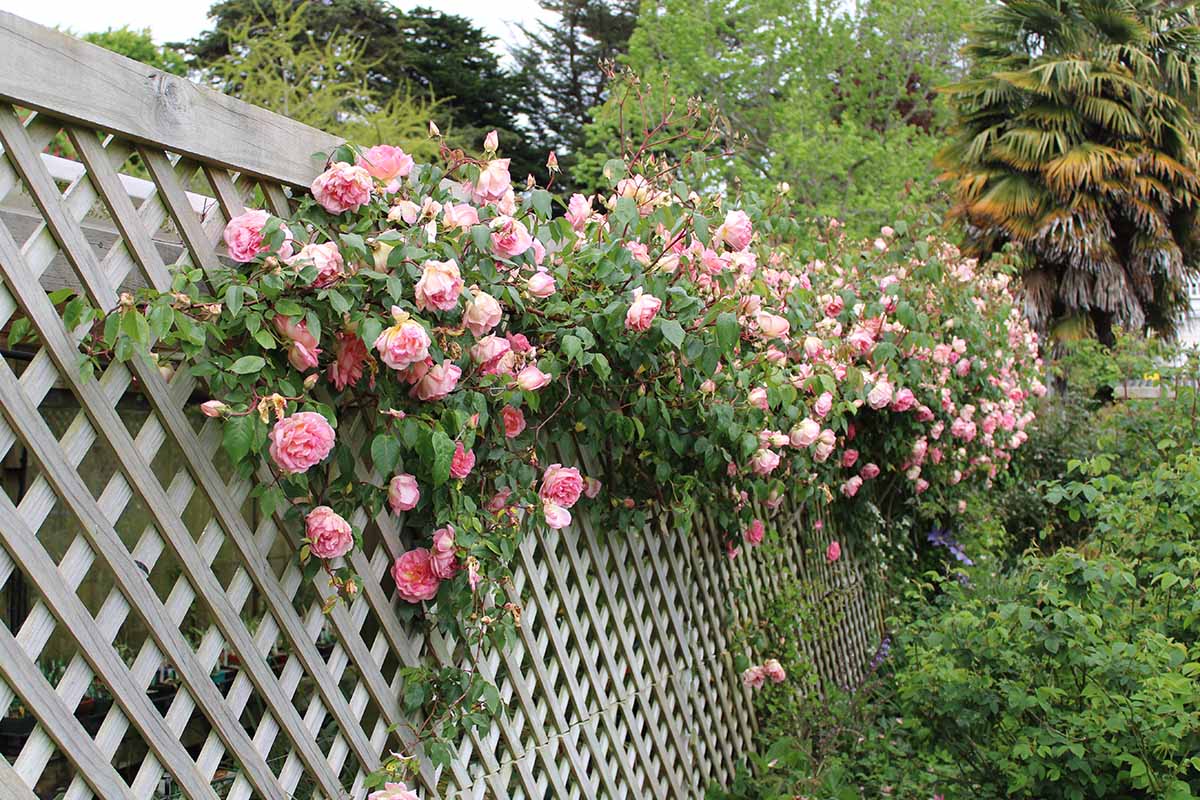
How to prune climbers
Climbers are more about training than shortening. The magic trick is encouraging lateral shoots, because laterals are where flowers often form.
Keep the main canes, prune the side shoots
- Main canes: these are your structural, long stems. Keep the healthiest ones and remove very old or unproductive canes over time.
- Lateral shoots: short side branches coming off the main canes. These are commonly shortened to a few buds in the main pruning season, or after flowering for once-bloomers and ramblers.
Train canes more horizontal
A cane tied more horizontally tends to produce more flowering laterals along its length. Use soft ties and avoid wire that can bite into stems.
Renew slowly
Instead of removing all older canes at once, replace them gradually. Each year or two, remove one of the oldest canes at the base and train in a new one.
Common pruning mistakes
Pruning at the wrong time
- Mistake: hard-pruning once-blooming climbers, ramblers, or once-blooming shrubs in late winter.
- Do instead: prune once-bloomers after they flower.
Pruning too early in frost zones
- Mistake: pruning during a warm spell, then losing new growth to a late freeze.
- Do instead: wait for bud swell and more reliable late-winter weather. Use a local cue like forsythia bloom if it helps.
Leaving long stubs
- Mistake: cutting several inches above a bud, leaving a snag.
- Do instead: cut about 1/4 inch above the bud.
Using dull or dirty tools
- Mistake: crushing canes with blunt pruners or spreading disease.
- Do instead: sharpen pruners and disinfect when disease is suspected. Give disinfectant a brief contact time.
Taking too much in one go
- Mistake: removing most of the plant because it looks messy.
- Do instead: follow the sequence: dead wood, crossing canes, thinning, then shaping. When in doubt, stop at about 1/3 reduction for many roses.
Sealing cuts
In most home garden situations, pruning sealants are unnecessary. Clean cuts and good airflow do more for plant health than painting wounds.
FAQ
How far back should I cut my rose bush?
It depends on the type. As a beginner guideline, many hybrid teas and floribundas handle a reduction of 1/3 to 1/2 in late winter to early spring. Shrub roses often need less, more of a tidy and thin. Once-blooming roses are usually pruned right after flowering instead of hard-pruned in late winter.
Can I prune roses in summer?
Yes, lightly. Summer is great for deadheading, removing weak shoots, and small shaping cuts. Avoid heavy pruning during extreme heat.
What if I pruned wrong?
Your rose will almost certainly forgive you. Clean up any ragged cuts, remove obvious crossing or damaged stems, then let the plant regrow. Next season, you will prune with more confidence. That is how gardeners are made.
Do I need to fertilize after pruning?
After your main spring prune, many roses appreciate feeding once new growth begins. Pair pruning with soil care: a top-dressing of compost plus an organic rose fertilizer (following label directions) is a gentle, effective combo.
Do I need to worry about thorn punctures?
Thorns happen. Wear gloves, rinse any puncture well, and keep an eye on it. If you are due for a tetanus booster, consider getting up to date before deep pruning season.
A pruning mindset that works
If you are standing there hesitating, give yourself this permission slip: you are not sculpting a museum piece. You are helping a living plant stay healthy.
Focus on three goals and you will do beautifully:
- Health: remove dead, diseased, damaged wood.
- Air: reduce crowding and crossing canes.
- Shape: cut above outward buds to guide growth.
And if you catch yourself apologizing to the rose, just know you are in good company. I talk to my ferns. Your roses can handle a little heartfelt pruning pep talk.