How to Prune Blueberry Bushes for More Fruit

If blueberry bushes had a love language, it would be sunlight on fresh, young wood. Pruning is how we give them that. Done right, it is not “cutting your harvest off.” It is setting the plant up to pour its energy into fewer, stronger canes that can hold big clusters of berries without turning the center of the bush into a shaded tangle.
I like to think of pruning blueberries as gentle editing. We keep the best chapters, remove the tired pages, and make space for new growth that will carry the juiciest fruit.

What pruning does for blueberries
Blueberries fruit best on healthy, well-lit wood, especially on strong shoots that are not ancient and exhausted. One key detail that makes pruning feel less mysterious: most fruit forms on last season’s growth (1-year-old shoots) that grew off older canes. Brand-new canes that pop up from the base this year are your future, but they usually do not carry a heavy crop right away.
Pruning helps you:
- Grow bigger berries by reducing overcrowding and improving light and airflow.
- Prevent disease by opening the canopy so leaves dry faster after rain.
- Keep harvests consistent by balancing old, mid-aged, and young canes.
- Stop the “leggy center” problem where fruiting shifts to the outer tips and the inside becomes a shaded thicket.
If you have ever had a bush that makes plenty of leaves but fewer berries each year, pruning is often the missing piece.
Which blueberries this applies to
This approach fits most highbush and rabbiteye blueberries grown in home gardens. The big idea is the same: renew the bush by removing older canes and keeping productive, well-lit fruiting wood.
Lowbush blueberries are often managed differently (sometimes mowed or burned on a cycle), so use this as a general guide only if you are growing true lowbush types.
When to prune (timing by climate)
The best time for major pruning is when the plant is dormant, but the worst of winter has passed. You want the structure visible and the buds set, so you can make smart choices.
Cold winter climates (zones roughly 3 to 6)
- Late winter to early spring, after the coldest stretch is over and before buds break.
- A common sweet spot is February to March, depending on your area.
Mild winter climates (zones roughly 7 to 10)
- Mid winter through late winter is usually fine, often December to February.
- If your blueberries keep some leaves or never look fully “asleep,” prune once growth is slow and you can clearly see cane structure.
What about fall pruning?
I skip major fall pruning. In many regions, fall cuts can encourage tender growth that gets zapped by cold, and the plant also has less time to heal.
That said, in warm-winter areas, light post-harvest cleanup can be acceptable. Keep it modest: remove broken wood, obviously diseased pieces, and the branches that are truly in the way. Save your real cane removal for dormancy.
Quick rule: If your winters are harsh, wait until the harsh part is over. If your winters are gentle, you have more flexibility, but dormancy is still your friend.
Pruning goals
Before you cut anything, it helps to know what a “finished” blueberry bush looks like.
For mature bushes (about year 4 and up)
- 8 to 12 main canes total is a solid target for most backyard plants.
- A mix of ages is ideal: a few younger canes, several mid-aged canes, and only a couple older canes.
- An open center that lets dappled light reach into the bush.
- Cane spacing that allows air to move through without leaves constantly rubbing.
How much to prune each year
Most years, you will remove roughly 10 to 25 percent of the wood on an established bush. Treat that as a starting point, not a law of nature. Pruning intensity depends on vigor, cultivar, and whether the plant is in a pot or in the ground.
If you are nervous, start lighter. You can always remove more, but you cannot glue a cane back on.
What you are cutting
Blueberries are easier to prune once you can read them like a little winter map.
- Canes are the main stems coming from the base. Think of them as the bush’s “skeleton.”
- Laterals are side branches off the canes. These carry a lot of your fruiting wood.
- Fruit buds are usually plumper and rounder than leaf buds. They often sit near the tips of shoots.
Old canes often look more gray, thick, and rough. Newer canes look smoother and more vigorous, and they tend to throw lots of healthy side growth. As a very rough guide, canes older than about 5 to 6 years often start losing steam, but cane age is not always easy to judge. Let vigor be your compass.
Tools and prep
- Hand pruners for pencil-sized wood.
- Loppers for thicker canes.
- A small pruning saw for the oldest, thickest canes at the base.
- Rubbing alcohol or disinfectant wipes for sanitation.
I like to prune on a dry day. Less slipping, less mess, and you are not tracking mud everywhere. Also, please do your wrists a favor and sharpen your pruners. Clean cuts heal better.
Sanitation note: At minimum, sanitize tools between plants. If you suspect disease, sanitize between cuts on obviously diseased wood too.
How to prune for more fruit
This is the order I use because it keeps decisions simple and prevents accidental over-pruning.
Step 1: Remove dead, damaged, and diseased wood
- Cut out anything that is clearly dead or broken.
- Remove canes with cankers or sections that look shriveled, blackened, or unusually cracked.
- Make cuts back to healthy wood, or remove the cane at the base if the issue is on the main stem.
Step 2: Remove low, sprawling, or ground-touching branches
Branches that drag on mulch become berry smudgers and disease magnets. Trim them back to an upright lateral or remove them entirely if they are weak.
Step 3: Remove the oldest canes at the base
This is the heart of blueberry pruning for yield. Each year on a mature, healthy bush, aim to remove 1 to 3 of the oldest canes, depending on plant size and vigor, so you stay near that 8 to 12 cane goal. Cut them at or near the soil line, as close to the ground as you can without gouging the crown.
- Old canes tend to produce smaller berries and less vigorous new fruiting wood.
- Taking them out encourages strong new canes from the base.
Tip: If you can only do one pruning action this year, do this one.
Step 4: Thin the center
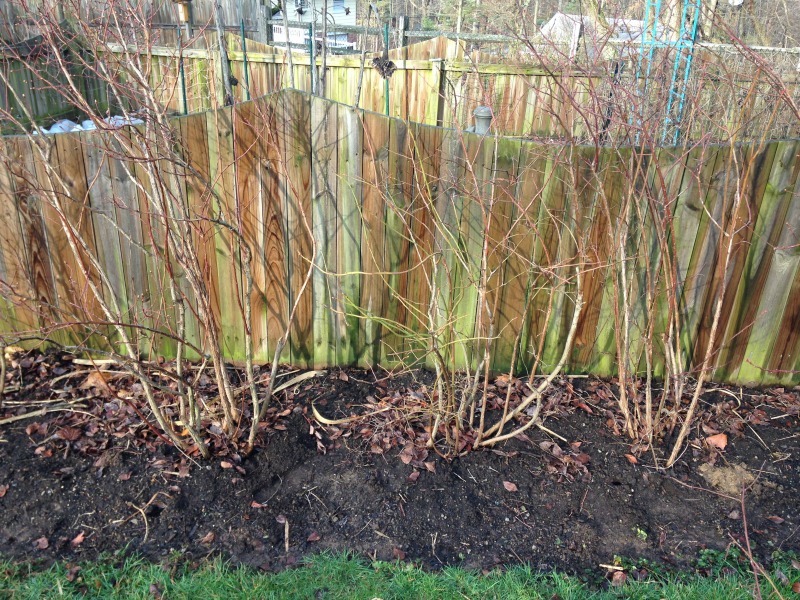
After you remove old canes, step back. Squint a little. If the center still looks like a crowded subway at rush hour, thin more.
- Remove canes that cross and rub.
- Remove spindly upright shoots that are shaded and weak.
- Keep the strongest, best placed canes that form a roomy vase shape.
Airflow is not just about disease. Better light inside the bush helps buds develop and fruit ripen more evenly.
Step 5: Head back long whips (sometimes)
Not every blueberry needs heading cuts, but they are helpful when a cane is very long and flops outward or is racing above the rest.
- Shorten a tall cane by cutting back to a strong outward-facing lateral.
- Avoid shearing the whole plant into a hedge. Blueberries generally respond poorly to shearing.
If you see lots of fat fruit buds packed at the very tip, do not panic. You can keep some tip fruiting, but if the tip is thin and will bend under fruit weight, a heading cut can improve berry size and prevent breakage.
Pruning by age
Year 1 to 2
In the first year especially, the goal is a strong plant, not a huge harvest. If your bush tries to set fruit right away, many growers pinch off most blossoms in year 1 and allow a light crop in year 2. Pruning-wise:
- Remove broken or weak shoots.
- Encourage a few strong upright canes.
- Do not get aggressive. Young blueberries need leaves to build energy.
Year 3
- Remove a little crowding and any weak inward growth.
- Begin the habit of identifying the oldest cane, even if you do not remove much yet.
Year 4 and beyond
This is when the classic routine works best: remove old canes, thin the center, tidy low growth, and lightly head back if needed.
Rejuvenation for overgrown bushes
If your bush has not been pruned in years, you usually have two choices: gradual renewal (safer) or hard rejuvenation (faster but more disruptive).
Option A: Gradual renewal
For most home gardens, I prefer this plan because you still get some fruit while fixing the structure.
- Year 1: Remove the oldest 1/3 of canes at the base.
- Year 2: Remove another 1/3 of the oldest canes.
- Year 3: Remove the final oldest canes, keeping the best younger ones.
Each year, also thin the center and remove low, weak growth. By year 3, you have basically rebuilt the bush.
Option B: Hard rejuvenation
Some blueberries can handle being cut down very hard, but you will likely sacrifice harvest for a season or two. Use this when the bush is a gnarly thicket and gradual renewal feels impossible.
- Remove most old canes at the base, leaving a handful of the strongest younger canes.
- In extreme cases, growers cut the entire bush down low, but this is high stress and not my first choice for backyard plants.
If you go hard, baby the soil: keep consistent moisture, top dress with acid-friendly, low-salt organic matter (composted pine bark is a favorite), and refresh mulch to support vigorous regrowth. Skip manure-based or high-pH composts.
Container vs in-ground
Blueberries in pots can be wonderfully productive, but they live with a smaller root system and less buffering from heat and drought. That changes how bold you should be.
Container blueberries
- Prune a bit lighter overall. The plant has less root mass to rebound quickly.
- Prioritize removing 1 old cane per year once the plant is mature, rather than 2 or 3 if it seems stressed.
- Keep the bush slightly smaller and balanced so it does not become top heavy.
- Be extra strict about removing low branches that shade the pot surface, since container humidity can invite fungal issues.
In-ground blueberries
- You can usually follow the standard routine more confidently.
- Bushes often push stronger replacement canes from the crown, especially when soil health is good and mulch is maintained.
My pot-grown rule: If your blueberry struggled last summer, had pale leaves, or dried out frequently, prune conservatively and focus on improving the growing conditions first.
How to tell you pruned enough
When you finish, your bush should look a little airy, not scalped. Here are signs you hit the sweet spot:
- You can see into the center from multiple angles.
- The remaining canes are upright and well spaced, not all leaning outward.
- You have removed at least one older cane on a mature bush (unless it is a smaller container plant that needs a gentler touch).
- You still have plenty of healthy fruit buds on strong shoots.
If you are staring at the plant thinking, “Did I do too much?” you probably did not. Blueberries are tougher than they look, especially when they are planted in the right acidic, organic-rich soil.
Common mistakes
- Shearing like a hedge: This creates dense outer growth and shaded interiors. Fix it by switching to selective cane removal.
- Only trimming the tips: You keep all the old canes and never renew the plant. Fix it by removing old canes at the base each year.
- Keeping too many skinny canes: Spindly wood rarely holds great fruit. Fix it by keeping fewer, stronger canes.
- Pruning too early in very cold climates: Fresh cuts can be stressed by deep freezes. Fix it by waiting until late winter.
Aftercare
Pruning is a stress, but it is also a signal. The plant is about to grow. Help it along with good basics.
- Mulch: Refresh with pine bark, pine needles, or wood chips. Aim for a few inches, kept slightly back from the crown.
- Water: Keep moisture steady, especially for container plants.
- Fertilizer: If you fertilize, do it in spring as growth starts. Many gardeners use an acid-forming fertilizer labeled for blueberries, applied lightly and according to the label.
- Clean up: Rake up prunings. If you removed diseased wood, bag it and toss it rather than composting it.
- Observe: Watch where new canes emerge. Those are your future fruit makers.
And yes, I talk to my ferns, but I also talk to blueberries while pruning. Mostly I say, “Thank you for your service,” right before I cut out an old cane. It feels dramatic, but it works for my soul.
Quick checklist
- Prune during dormancy, late winter is ideal for most regions.
- Remove dead, damaged, and diseased wood first.
- Cut out low, ground-touching branches.
- On mature bushes, remove 1 to 3 oldest canes at or near the soil line, adjusting to vigor and your 8 to 12 cane target.
- Thin crossing and crowded growth to open the center.
- Head back only when necessary to control height or flopping.
- For containers, prune a bit lighter and keep the canopy balanced.
If you want more fruit, remember this: blueberries love renewal. A few confident cuts each year will give you a healthier bush and a bigger, sweeter bowl of berries come summer.