
How to Grow Zinnias from Seed

Zinnias are the kind of flower that make you feel like a gardening genius. They sprout quickly, bloom like they mean it, and often keep going until frost if you keep picking. If you have ever stared at a seed packet and wondered whether you are about to grow a bouquet or a disappointment, this one is for you.
I have grown zinnias in balcony pots, raised beds, and scrappy little in-ground patches where the soil used to be more rock than anything. They are forgiving, but they do have a few preferences. Give them sun, warmth, and breathing room, and they will pay you back with armfuls of color.
Quick facts before you sow
- Botanical name: Zinnia elegans (most common garden zinnia)
- Life cycle: Annual
- Sun: Full sun, at least 6 to 8 hours
- Germination: Often 3 to 7 days in warm soil
- Days to bloom: Often 60 to 75 days from seed (variety and weather matter)
- Best sowing time: After your last frost, once nights are reliably warm
- Top success tip: Space plants generously for airflow to reduce powdery mildew
Direct sow or start indoors?
Zinnias are happiest when they can grow without their roots being disturbed, which is why many gardeners direct sow them. That said, starting indoors can give you earlier blooms, especially in shorter growing seasons.
Direct sowing (my go-to)
- Best for: Most climates, gardeners who want simple success
- Pros: Fast germination, sturdy plants, no transplant fuss
- Cons: Blooms start a bit later than indoor starts
Starting indoors
- Best for: Short seasons, cutting gardens where you want early stems
- Pros: Earlier flowers, more control over germination
- Cons: Transplants can stall if roots are disturbed or planted out too early
When to plant zinnia seeds
Zinnias want warm soil. If you sow too early, the seeds may rot or seedlings will sulk. Wait until after the last frost and when the garden feels like it is shifting into summer.
- Outdoor sowing target: Usually 1 to 2 weeks after last frost, or when soil is around 60 to 70°F (16 to 21°C).
- Indoor start target: About 4 weeks before your last frost date. Zinnias grow fast, so earlier than that often creates leggy, overgrown starts.
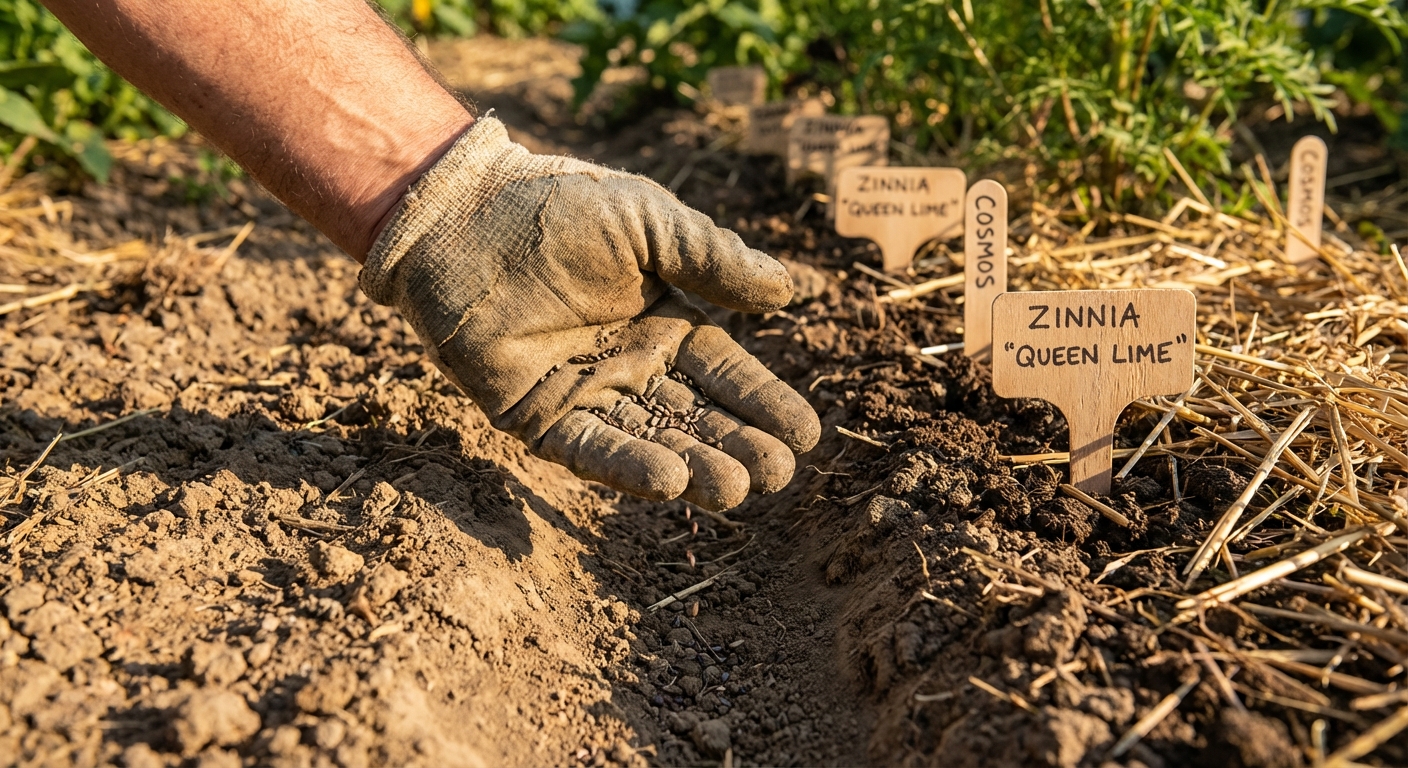
If you are itching to plant and the nights are still chilly, scratch the itch by prepping your bed, labeling rows, and talking to your ferns instead. Your future zinnias will thank you.
How to direct sow zinnia seeds
1) Pick your sunniest spot
Full sun is where zinnias shine. Less sun often means fewer blooms and more mildew trouble.
2) Prep the soil, lightly
Zinnias are not divas, but they do better in soil that drains well. Work in a little finished compost if your soil is sandy or depleted. Avoid heavy nitrogen fertilizers that push lots of leafy growth with fewer flowers.
3) Plant at the right depth
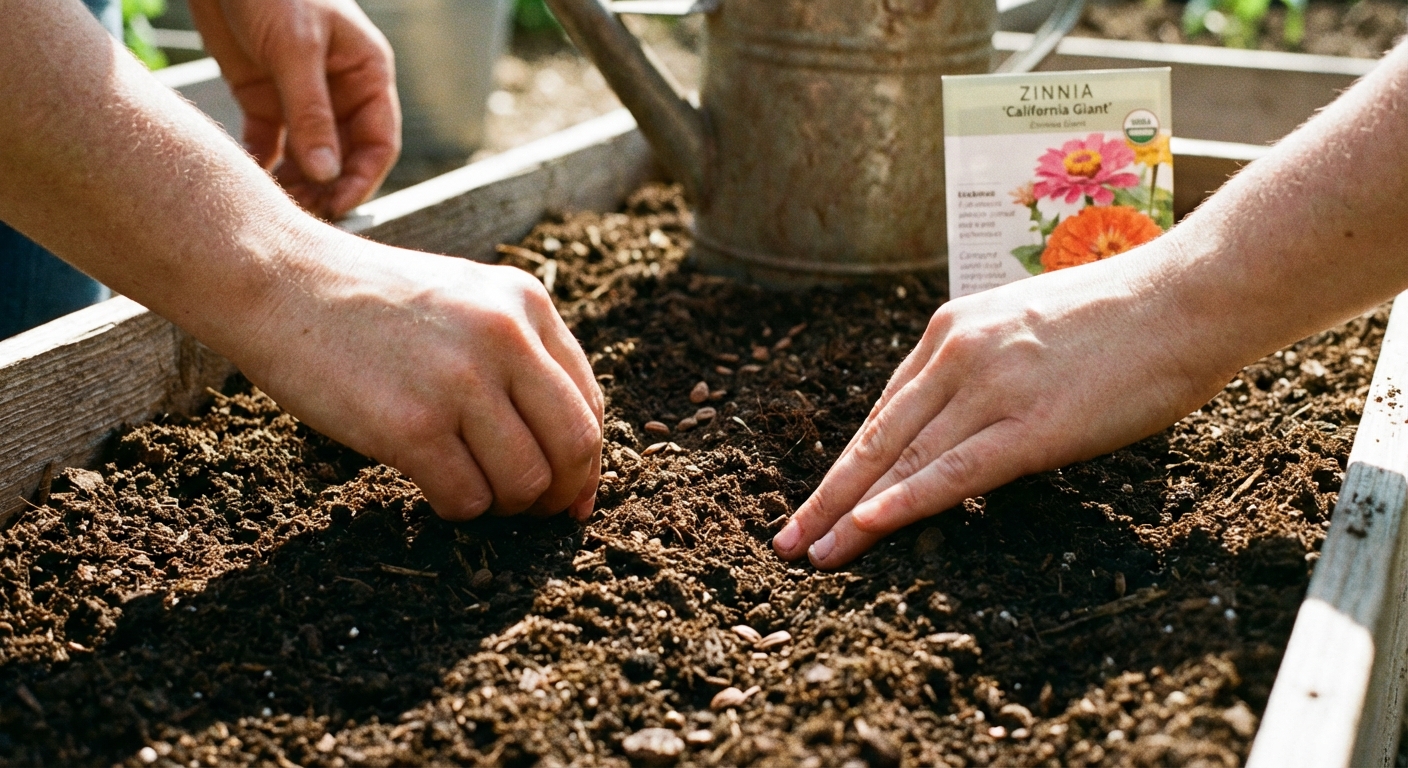
Sow seeds about 1/4 inch deep. Cover lightly and press the soil gently so the seed makes good contact.
4) Water gently and keep evenly moist
Water with a soft spray so you do not dislodge seeds. Keep the top inch of soil moist until germination, then ease into deeper, less frequent watering.
5) Thin seedlings on purpose
It feels cruel the first time. It is not. When seedlings are a couple inches tall, thin to your final spacing (see the spacing section below). Crowding is one of the biggest reasons zinnias get powdery mildew.
How to start zinnia seeds indoors
What you need
- Cell trays or small pots (slightly larger cells can help reduce root disturbance)
- Seed-starting mix (light, sterile, drains well)
- Bright grow light or a very sunny window (grow light is best)
- Fan (optional but excellent for sturdy stems)
Step by step
- Fill containers with moist seed-starting mix and level it gently.
- Sow 1 to 2 seeds per cell about 1/4 inch deep. Cover lightly.
- Keep warm and evenly moist. Most zinnia seeds germinate quickly under warm conditions.
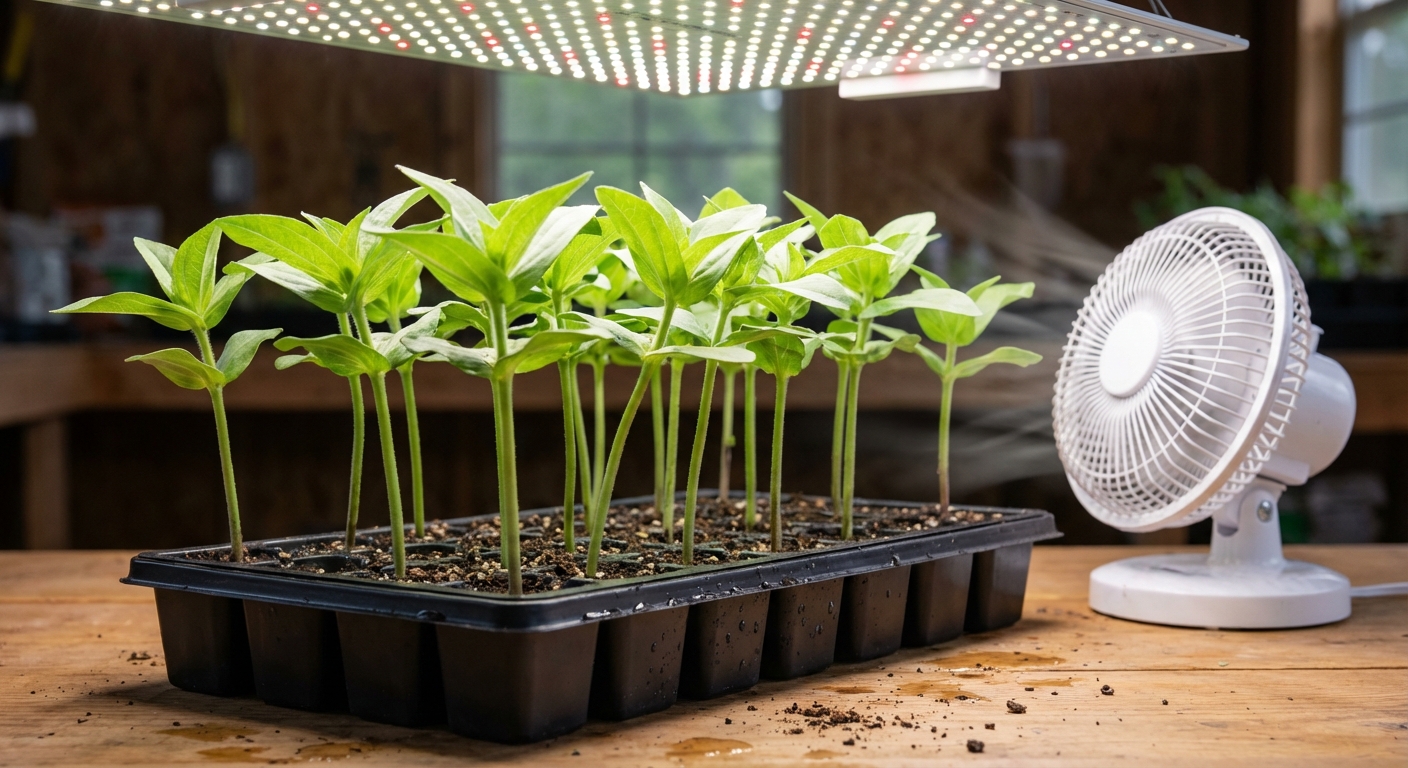
- Provide strong light as soon as seedlings emerge. Keep lights close (a few inches above the seedlings) and run 14 to 16 hours a day.
- Thin to one seedling per cell by snipping extras at soil level.
- Harden off for 5 to 7 days before planting out, gradually increasing sun and wind exposure.
- Transplant carefully after frost, once nights are consistently warm and the soil has warmed. Plant at the same depth they grew in the pot and water in well.
If your indoor seedlings stretch, it is almost always a light issue. More light, closer light, and a gentle breeze from a fan makes a big difference.
Spacing for healthier zinnias
If zinnias had a mantra, it would be: sun and airflow. Proper spacing helps prevent powdery mildew and encourages strong stems for cutting.
Recommended spacing
- Compact varieties (about 10 to 18 inches tall): 6 to 10 inches apart
- Medium varieties (about 18 to 30 inches tall): 10 to 12 inches apart
- Tall cutting types (about 30 to 48 inches tall): 12 to 18 inches apart
When in doubt, check your seed packet and follow the variety guidance. In general, tighter spacing can encourage longer stems, and wider spacing improves airflow and can mean healthier foliage in humid weather.
Watering and feeding
Watering
Zinnias do best with deep watering rather than frequent sips. Aim water at the soil line, not the leaves. Humid, still air and crowded plants are mildew heaven, and watering at the base helps keep foliage cleaner and reduces other leaf problems.
- Water deeply when the top couple inches of soil feel dry.
- Morning watering is best so plants dry quickly.
- Mulch can help keep soil moisture steady and reduce splashing soil onto leaves.
Fertilizing
If your soil has decent organic matter, zinnias usually do not need much feeding. Too much nitrogen can mean huge plants with fewer flowers.
- Mix in compost at planting time if your soil is lean.
- If growth seems pale or slow, use a balanced, gentle organic fertilizer according to the label.
Pinching and deadheading
Here is where zinnias go from pretty to absolutely relentless.
Pinch for bushiness
When seedlings are about 8 to 12 inches tall, you can pinch the growing tip (snip just above a set of leaves). This encourages branching, which means more stems and more flowers. If you are growing for long stems, you might pinch just once, then let them stretch.
Deadhead the right way
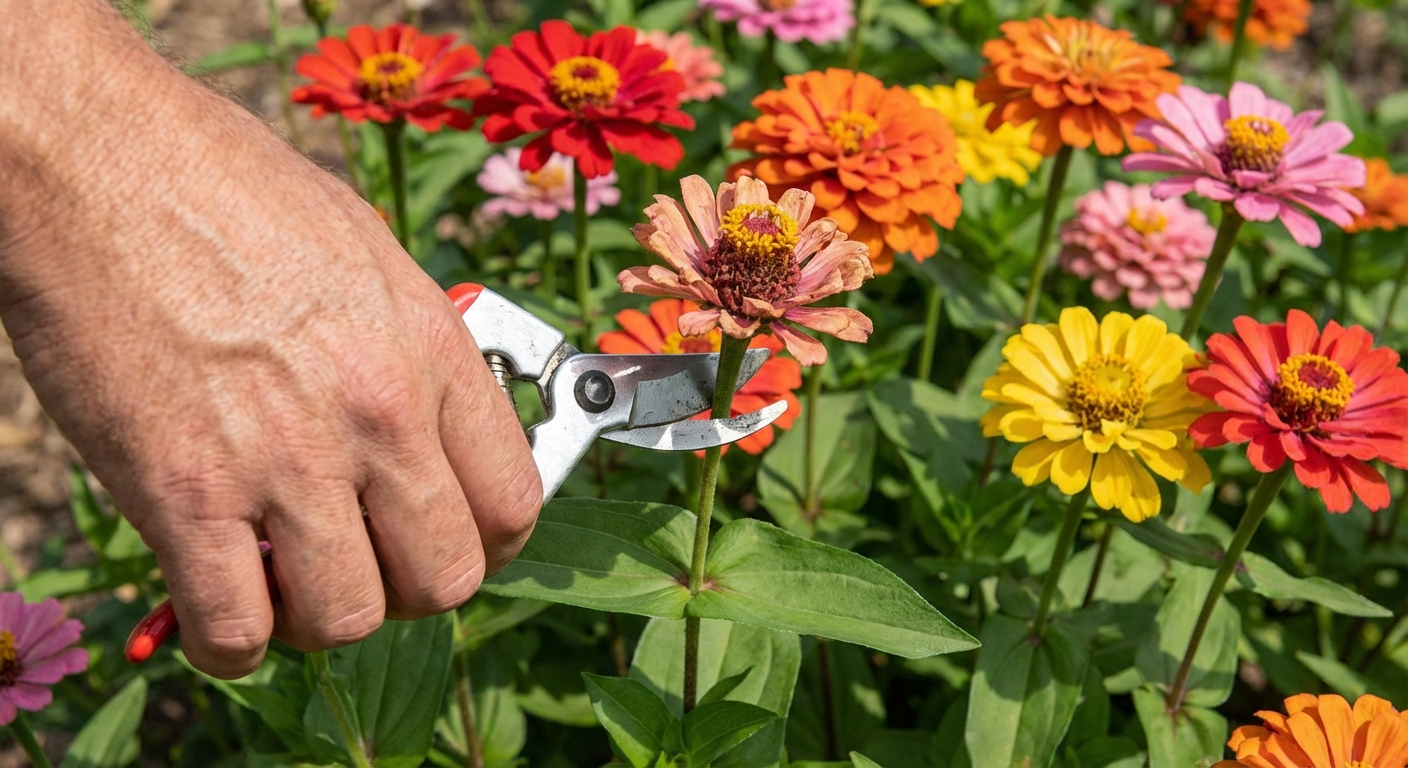
Deadheading is not just plucking off brown petals. Cut the entire flower stem back to a set of leaves or a side shoot. That is where the next flowering stem will form.
Pick often for more blooms
Cutting is the best kind of deadheading. Harvest when blooms are fully open and pass the wriggle test: hold the stem about 8 inches below the flower and gently shake. If the bloom flops, it is too young. If it stays firm, it will last longer in a vase.
Powdery mildew
Powdery mildew shows up as a white, dusty coating on leaves. Zinnias can still bloom with mild mildew, but prevention keeps plants healthier and the garden looking fresher.
Why zinnias get it
- Crowded plants with poor airflow
- Shade or too little sun
- Humid, still conditions
- Stressed plants (inconsistent watering)
- Susceptible varieties
Prevention checklist
- Space generously and thin seedlings early.
- Grow in full sun.
- Water at soil level as a general best practice and to keep foliage cleaner.
- Keep beds tidy. Remove heavily infected leaves and dispose of them in the trash, not your compost pile.
- Rotate locations year to year if mildew is a recurring problem.
If you spot it anyway
Start by improving airflow: remove a few leaves near the base, harvest stems more often, and avoid overhead watering. Organic gardeners often reach for sulfur or potassium bicarbonate products labeled for powdery mildew. Follow label directions carefully, and test on a small area first.
Best varieties for cutting
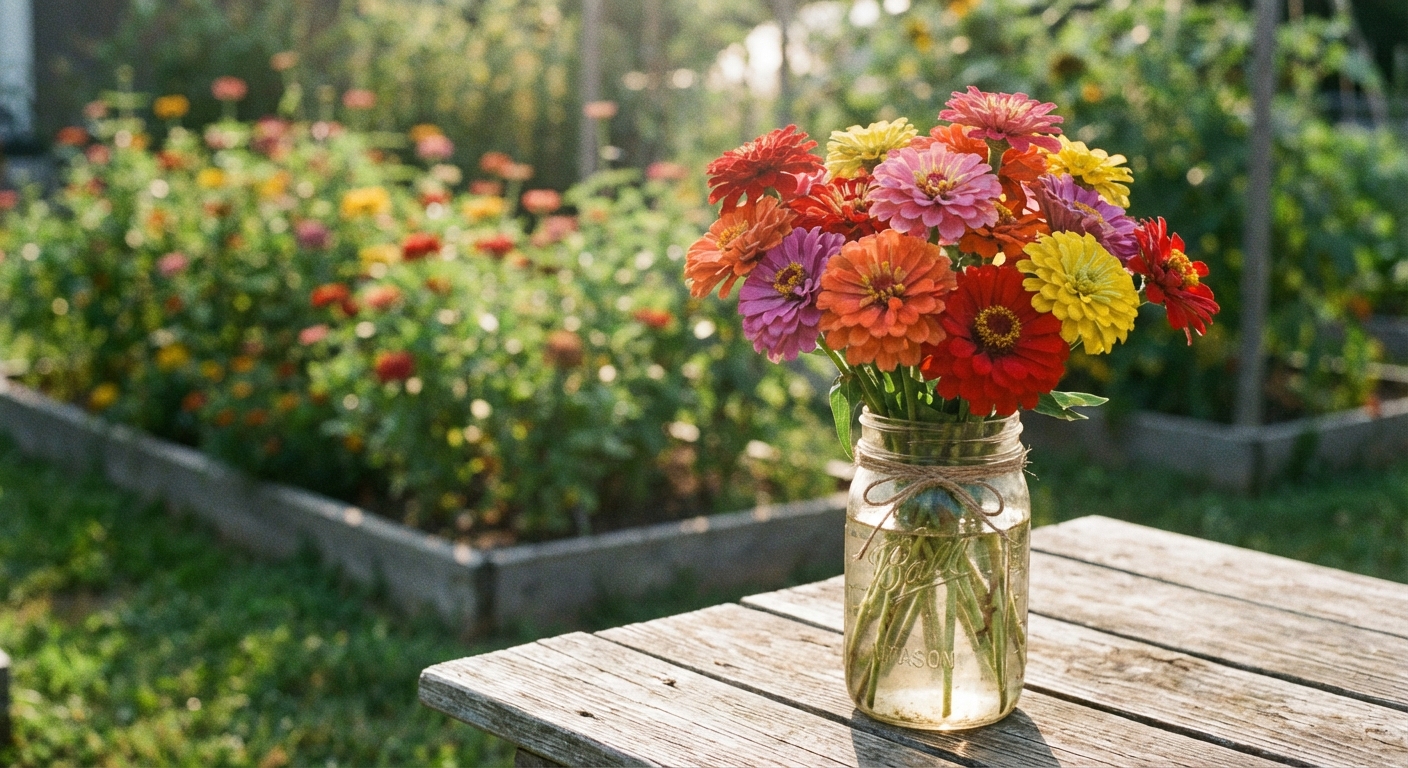
If your goal is bouquets, look for taller plants with sturdy stems and blooms that hold up in a vase. Here are a few favorites that earn their keep.
Classic tall workhorses
- Benary’s Giant: Big, long-lasting blooms and strong stems. A cutting garden staple.
- Oklahoma series: Smaller blooms than Benary’s but very productive and great in arrangements.
- Queen Lime series: Dreamy antique tones that play well with everything.
Extra petal drama
- Zinderella: Scabiosa-flowered look with a pincushion center.
- Dahlia-flowered mixes: Full, layered blooms that read as lush in bouquets.
Containers and borders
- Zahara: Heat-tough and known for strong disease resistance in many gardens.
- Profusion: Compact, floriferous, and reliable for smaller spaces.
Common problems
Seedlings disappear overnight
Likely culprits are slugs, earwigs, or birds. Use simple barriers, check at dusk, and re-sow. Zinnias catch up quickly.
Plants are tall and floppy
Often caused by too much shade or rich nitrogen-heavy feeding. Move to more sun next year, go lighter on fertilizer, and consider staking tall varieties in windy spots.
Leaves look scorched or stippled
Check for spider mites in hot, dry weather. Increase watering consistency, hose off undersides of leaves in the morning, and keep plants from getting stressed.
Chewed petals or sticky buds
If flowers look ragged, check for common culprits in your area like aphids, Japanese beetles, or earwigs. Hand-pick beetles in the morning, blast aphids off with water, and keep the area weeded so pests have fewer hiding spots.
Flowers are small
Could be variety-related, drought stress, or a plant that needs regular picking. Harvest often and keep water steady.
How to save seeds
Zinnia seed saving is one of those end-of-season joys that makes you feel like you are in on a secret. If you are growing open-pollinated varieties (not hybrids), saved seeds are more likely to come true to type, but there is a catch: zinnias cross-pollinate readily, especially if you grow multiple varieties close together.
- Let a few of your best blooms fully mature and dry on the plant.
- On a dry day, harvest the dried flower heads and let them finish drying indoors for a week.
- Pull out the seeds. They are often tucked at the base of dried petals.
- Store in a labeled paper envelope in a cool, dry place.
If you want better odds of true-to-type seeds, grow one variety, increase distance between varieties, or bag a few blooms for seed saving. And if your saved seeds produce surprises, zinnias tend to surprise you in the nicest possible way.
A simple timeline
- Week 0: Sow after frost when soil is 60 to 70°F (16 to 21°C), or start indoors 4 weeks before last frost.
- Week 1: Germination (often 3 to 7 days in warm conditions) and first true leaves.
- Week 3 to 5: Thin seedlings, keep watering consistent, pinch if desired.
- Week 8 to 11: First big flush of blooms.
- All summer: Cut and deadhead regularly for continuous flowering.
My best advice
Plant them a little later than you think, give them more space than you think, and cut them more often than you think. That trio solves most zinnia problems before they start.
And if you mess up? You are in excellent company. Zinnias are fast enough that you can re-sow and still end up with a season full of color. Dirt is patient, and so are we.