
How to Grow Sweet Potatoes at Home

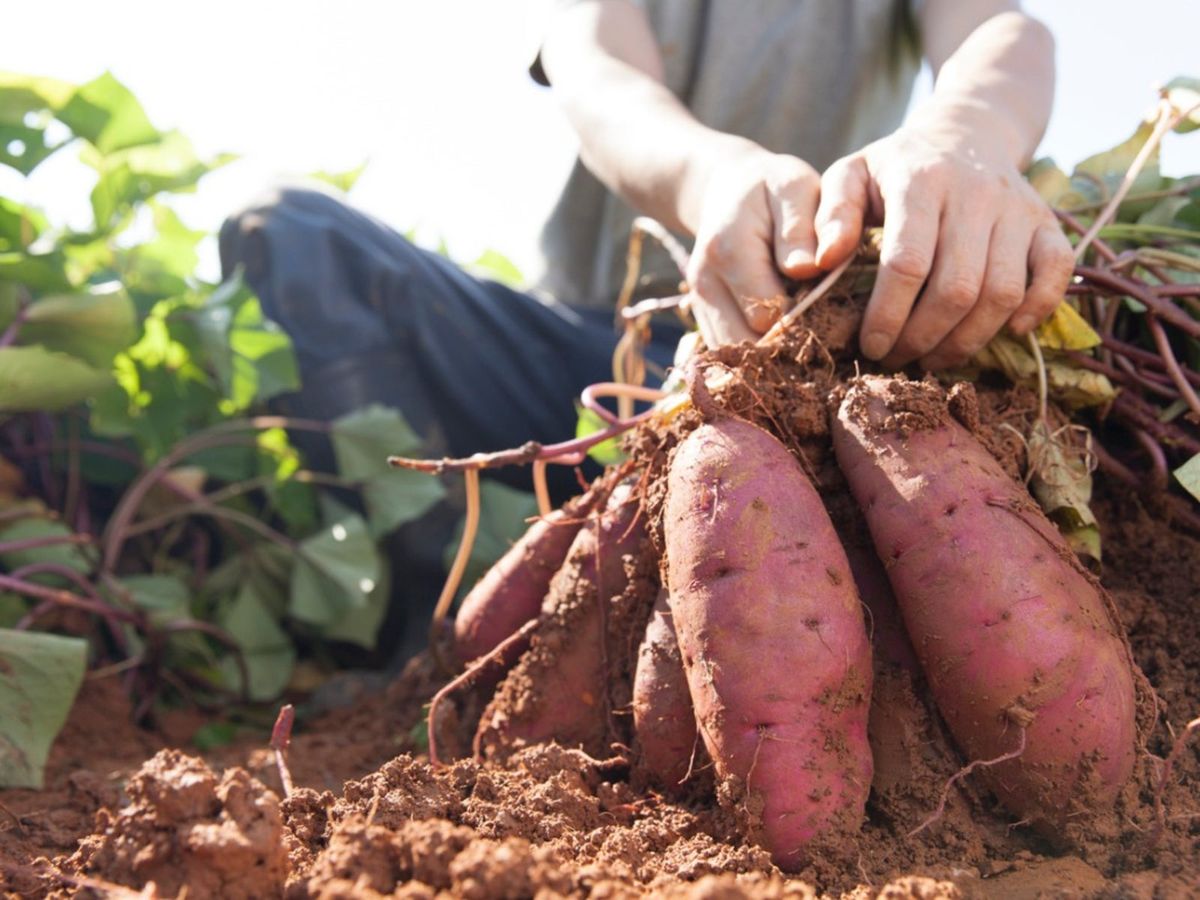
Sweet potatoes are one of those plants that look a little wild and romantic above ground, then quietly reward you with treasure below. In most home gardens, they are typically grown from slips rather than true seed. Slips are leafy sprouts that root and become the new plant. Once you learn that one quirky detail, the rest feels wonderfully doable.
Whether you have a sunny backyard bed or a single big pot on a patio, I will walk you through choosing a growing setup, starting slips, planting at the right time, keeping vines happy, and harvesting and curing so your sweet potatoes taste, well, sweet.
Quick note on terminology: those underground “sweet potatoes” are technically storage roots (not true tubers). Gardeners often say tubers anyway. In this guide, I will mostly say roots or sweet potatoes for simplicity and accuracy.
Quick basics
- What you plant: slips (sprouted shoots), not seeds
- Sun: full sun, ideally 8+ hours
- Soil: loose, well-drained, not too rich in nitrogen
- Heat: sweet potatoes love warm soil and hate frost
- Time to harvest: usually 90 to 120 days after planting slips (variety dependent)
If your summers are short or cool, choose an early variety and plan on containers or raised beds that warm up faster.
Garden bed or container?
Both work beautifully. Pick the option that fits your space, your climate, and how much vine sprawl you can tolerate.
Choose a garden bed if:
- You have space for vines to roam
- Your soil drains well or you can mound it
- You want higher yields per plant
Choose containers if:
- You have limited space or only a patio
- You want warmer soil earlier in the season
- You want easy control over soil texture and drainage
If you are on the fence, try both once. Gardening is allowed to be a delicious experiment.
Sweet potato slips: what and why
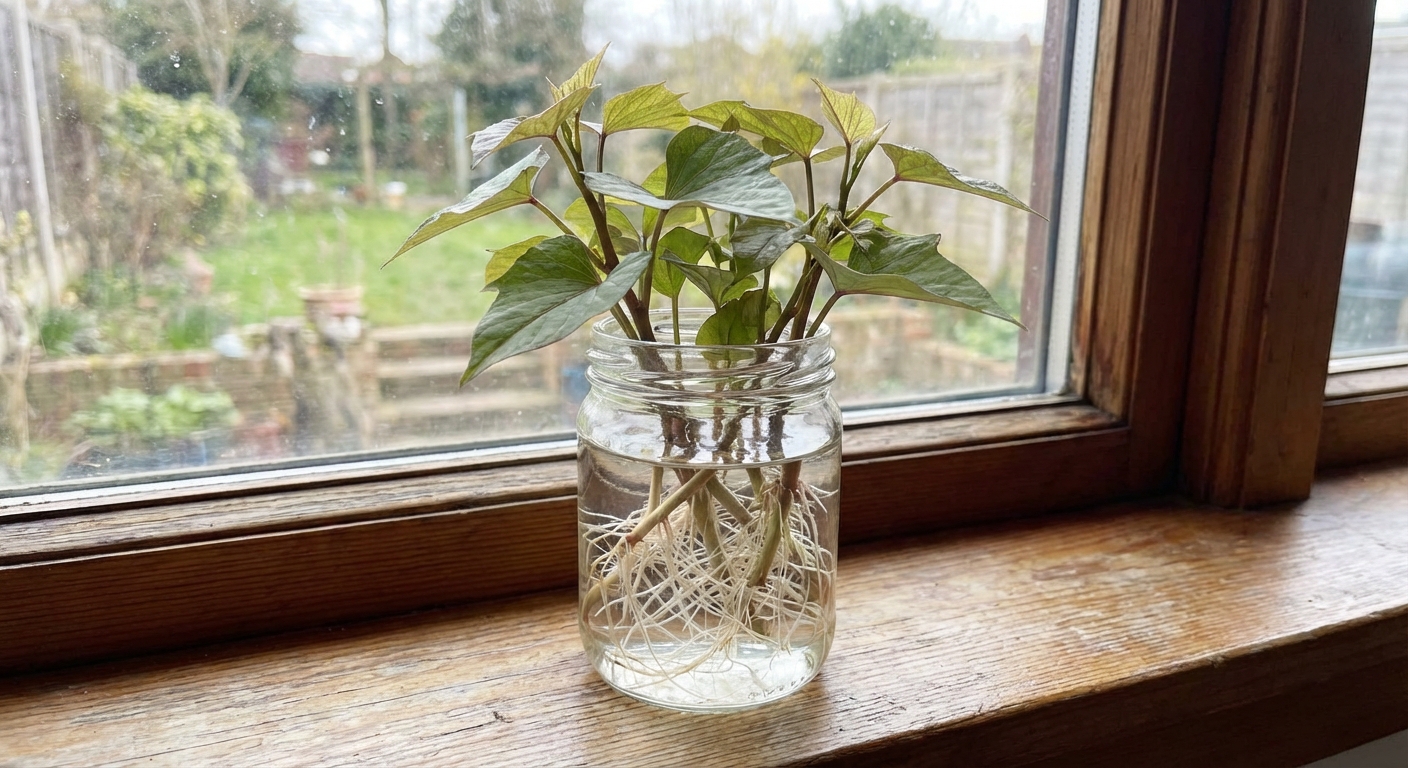
A slip is simply a sweet potato shoot that you root in water or potting mix. Each slip becomes a full plant. This matters because:
- It is the standard way sweet potatoes are propagated for reliable results.
- Slips help you start with vigorous growth once the weather turns warm.
- One sweet potato can produce many slips, which is wonderfully budget-friendly.
You can order slips from reputable growers (great for specific varieties) or start your own from a store-bought sweet potato (fun and surprisingly easy). If you are choosing varieties, a few popular beginner-friendly options to look for include Beauregard, Covington, and Jewel. If your season is short, ask for early-maturing types recommended for your region.
How to start slips
This is the part that makes people feel like plant magicians. Two important notes before we begin:
- Organic is best because some conventional sweet potatoes may be treated to reduce sprouting.
- Store-bought works, but variety is a mystery. If you want a specific type like Beauregard or Covington, ordering slips is the simplest route.
Method 1: Water jar
What you need: 1 sweet potato, a jar or glass, toothpicks (optional), and bright light.
- Rinse the sweet potato and check for soft spots. Firm is best.
- Suspend it over water with the bottom half in water. Toothpicks can help hold it at the rim, but you can also nestle it in a narrow jar.
- Give it warmth and light. A sunny window or under a grow light works well. Warmer homes (about 75°F to 85°F) sprout faster.
- Change the water every few days to keep things fresh.
- Wait for sprouts (often 1 to 3 weeks, but longer in cooler conditions).
- Take slips when shoots are about 5 to 8 inches long. Twist them off gently at the base.
- Root the slips in a jar of water until they have a little tuft of roots. This often takes about 5 to 10 days in warm conditions, and can take longer if your home is cool.
Method 2: Soil tray
What you need: a shallow tray, potting mix, and a warm spot.
- Lay the sweet potato on its side and cover it halfway with moist potting mix.
- Keep warm and evenly moist (not soggy).
- Harvest slips when shoots reach 5 to 8 inches, then root them in water or plant them into small pots to root.
When to start slips: about 6 to 10 weeks before you plan to plant outside.
When to plant outdoors
Timing is everything with sweet potatoes. They want warm soil, warm nights, and no hint of frost.
- Plant after your last frost when nights are consistently warm.
- Soil temperature: 65°F is a workable minimum, and 70°F or warmer is ideal for strong growth.
- Night temperatures: often happiest when nights are generally above 55°F.
If you plant too early, slips sulk. If you plant when the soil is truly warm, they take off fast.
Soil needs
Sweet potatoes form their best storage roots in soil that is light, fluffy, and drains well. They hate compacted clay and they do not need heavy feeding.
What they love
- Loose soil at least 10 to 12 inches deep
- Good drainage so roots do not rot
- Slightly acidic to neutral pH (around 5.8 to 6.8 is often ideal)
- Moderate fertility with plenty of organic matter
The biggest mistake: too much nitrogen
If you give sweet potatoes rich, nitrogen-heavy fertilizer, you can get an absolutely stunning jungle of vines and disappointing roots. Aim for balanced nutrition and lean slightly toward potassium and phosphorus rather than nitrogen.
Simple bed prep: mix in compost, loosen the soil deeply, and skip fresh manure.
Mulch tip: wait until the soil is genuinely warm before mulching heavily. Mulch too early can keep soil cool and slow your plants down.
Growing in garden beds
In the ground, sweet potatoes are happiest in mounded rows or raised beds because warmth and drainage improve dramatically.
Spacing
- Between slips: 12 to 18 inches (more space often means bigger sweet potatoes)
- Between rows: about 3 feet, because vines sprawl
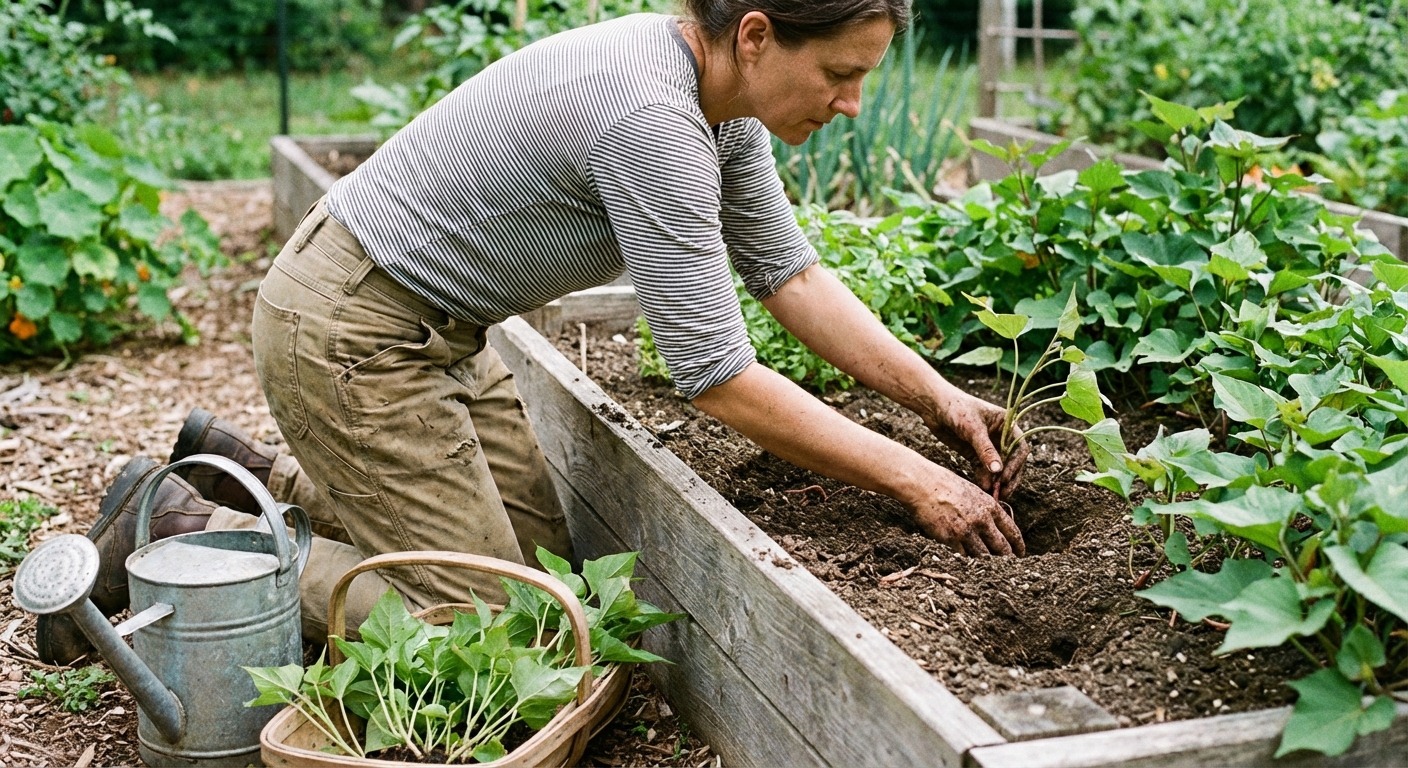
Planting slips
- Water your slips a couple hours before planting.
- Make a hole deep enough to bury the slip stem while keeping the leaves above soil.
- Plant slips so at least 2 to 3 nodes are under soil. Nodes are where roots form.
- Firm gently and water well.
- Mulch lightly once the soil has warmed, to reduce weeds and conserve moisture.
Growing in containers
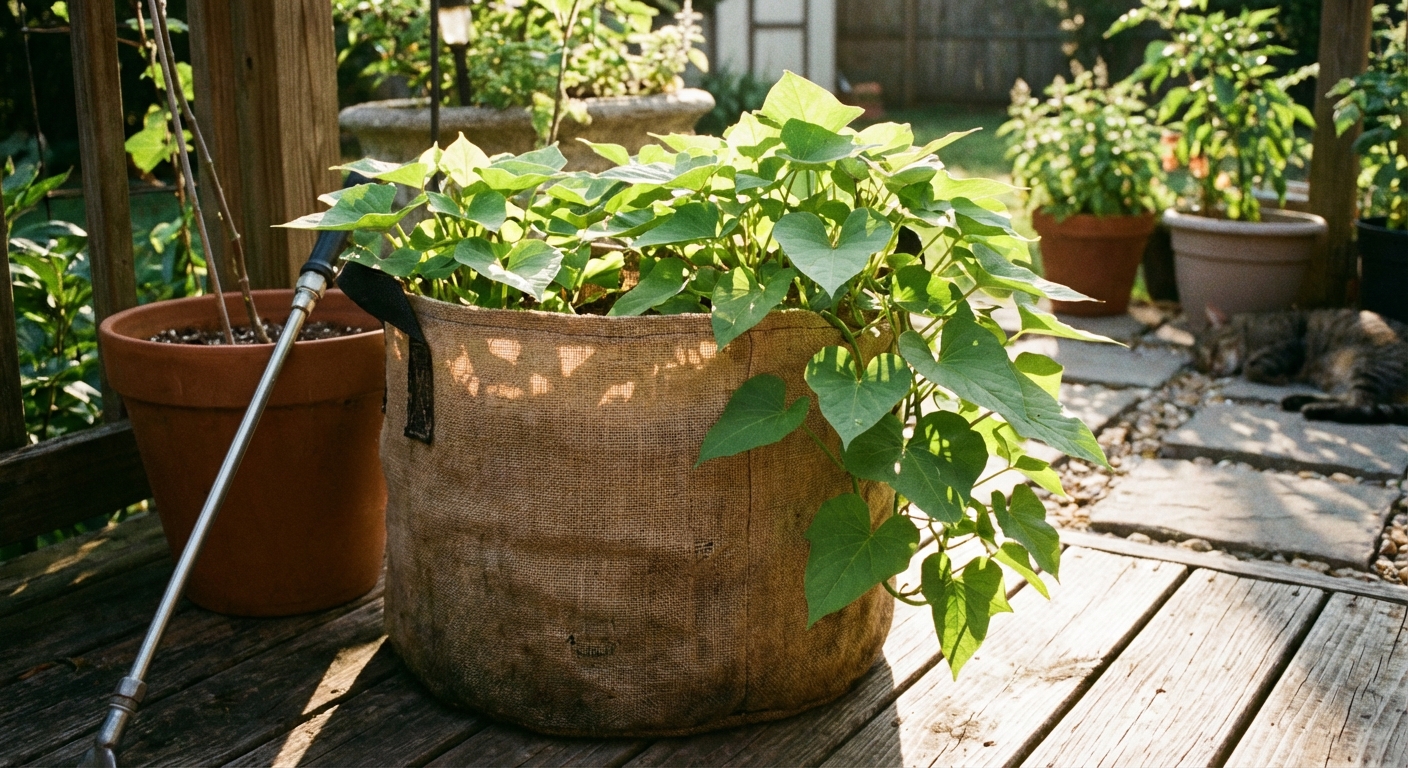
If you have a sunny patio, you can absolutely grow sweet potatoes in a container. The keys are container size, drainage, and consistent watering.
Container size
- For best yields: 15 to 20 gallons per plant
- Smaller containers can work: some gardeners manage in 10 to 15 gallons, especially with compact or early varieties, but yields may be smaller
- Depth: at least 12 to 16 inches
Drainage matters
Choose a pot with multiple drainage holes (fabric grow bags are excellent for this). Waterlogged containers are the fastest route to disappointment.
Container soil mix
Use a light, well-draining mix. A simple approach:
- High-quality potting mix as the base
- Compost mixed in for biology and gentle nutrients
- Aeration material if your mix is heavy (perlite, pumice, or similar)
Planting in a pot
- Fill the pot leaving a few inches at the top for watering room.
- Plant one slip per large container (crowding reduces root size).
- Water deeply and keep evenly moist until established.
Tip: Dark-colored pots warm faster, which sweet potatoes love, but they also dry out faster. Check moisture more often during heat waves.
Watering and feeding
Watering
Sweet potatoes like consistent moisture early on, then slightly drier conditions as storage roots mature.
- First 2 to 3 weeks: water regularly to help slips root in
- Mid-season: deep watering when the top inch or two is dry
- Last 2 weeks before harvest: reduce watering to help prevent cracking and rot
Fertilizing
If your soil has compost, you may not need much else. If growth looks pale or slow, choose a fertilizer that is not nitrogen-heavy. A soil test is the gold standard, but a gentle, balanced organic fertilizer used sparingly works for many home gardens.
Managing vines
Sweet potato vines sprawl. It is what they do. In beds, they can run several feet in every direction. In containers, they spill over like a living green waterfall.
Trellis or sprawl?
You can train vines up a sturdy trellis, especially in tight spaces. It saves room and improves airflow. For many gardeners, the simplest path to good yields is letting vines sprawl naturally, but results vary by variety and conditions. If you trellis, tie vines loosely and support them so they do not snap in wind or under their own enthusiasm.
Vines rooting along the way
Where vines touch soil, they can root at the nodes. This is not harmful. Some gardeners find that gently lifting wandering vines now and then helps encourage the plant to focus energy near the main crown, while others see no difference. Consider it an optional tweak, not a rule.
Weeding
Weed early. Once vines cover the ground, they shade out many weeds on their own.
Pests and problems
Sweet potato weevil
In some regions, sweet potato weevils are a serious pest. Signs include damage to roots and stems, and bitter-tasting sweet potatoes.
- Use certified slips if weevils are known in your area.
- Rotate crops and avoid planting near previous sweet potato beds.
- Harvest promptly and do not leave roots in the ground after the season ends.
Slugs and snails
They can chew tender young slips.
- Hand-pick at dusk
- Use iron phosphate bait if needed
- Keep mulch pulled back from stems during establishment
Cracking or misshapen roots
- Inconsistent watering can cause cracking.
- Compacted soil can cause odd shapes.
- Rocky soil can fork roots.
Lots of leaves, few sweet potatoes
This is usually excess nitrogen, too much shade, or a season that never got warm enough. Next year, pick a sunnier spot, warm the soil with raised beds, and go easy on fertilizer.
When and how to harvest
Sweet potatoes are ready when they have had enough warm days to size up, usually 90 to 120 days after planting, and ideally before the first frost. Frost can damage the vines, and cold soil can reduce storage quality.
Signs harvest is close
- Vines slow down and may begin to yellow as the season cools
- Sweet potatoes feel appropriately sized when you gently dig at the edge of the plant (a careful “peek test”)
Harvest steps
- Choose a dry day if possible.
- Cut back vines to make digging easier.
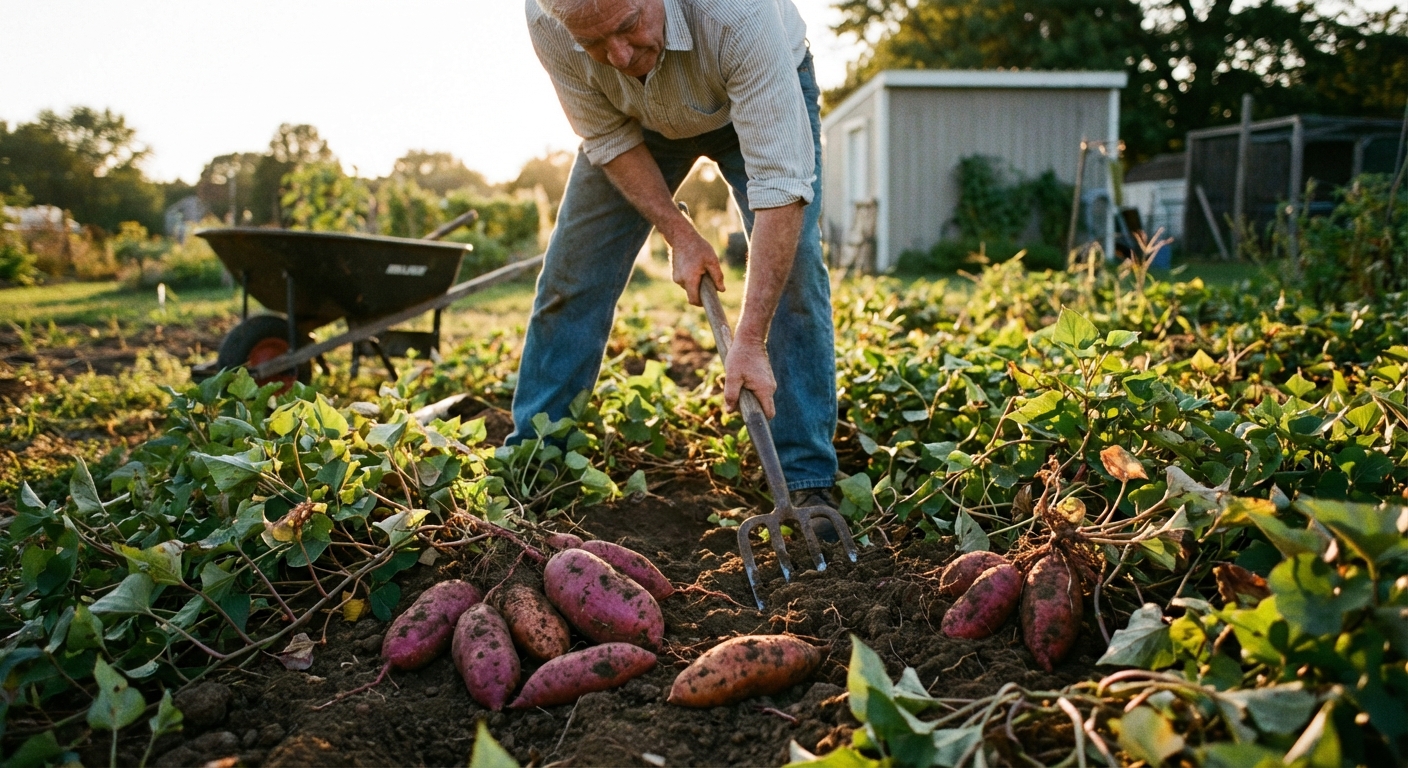
- Dig wide around the plant to avoid spearing roots. In beds, start 12 to 18 inches away from the crown.
- Lift gently with a garden fork or your hands.
- Handle like eggs. Freshly dug sweet potatoes bruise easily.
Curing
If you do one “extra” thing, make it curing. Freshly dug sweet potatoes are not at their sweetest yet. Curing helps heal small scratches, improves storage life, and converts starches into sugars.
How to cure at home
- Temperature: about 80°F to 85°F
- Humidity: high, around 85% to 90%
- Time: 7 to 14 days
Easy home setup: place sweet potatoes in a single layer in a warm room, closet with a small heater, or a large cooler with a warm water bottle changed daily. Keep them out of direct sun. Good airflow helps, but you want the space to stay warm and humid.
After curing: storage
Store cured sweet potatoes in a cool, dark place, ideally around 55°F to 60°F. Do not refrigerate. Cold temperatures can cause hard centers and off flavors. In good conditions, many varieties store for months.
Growing timeline
- 6 to 10 weeks before planting out: start slips
- Planting time: 1 to 3 weeks after last frost, once soil is warm
- Weeks 1 to 3: establish roots, keep evenly moist
- Mid-season: vines take off, water deeply as needed
- 90 to 120 days after planting: harvest before frost
- Next 1 to 2 weeks: cure in warmth and humidity
- After curing: store and enjoy
FAQ
Can I grow sweet potatoes from a whole sweet potato planted in the ground?
You can, but it is less reliable and often produces weaker results than planting slips. Slips are the standard because they root quickly and produce more uniform plants.
How many sweet potatoes do you get from one slip?
It varies by variety, season length, and soil, but a healthy plant can produce several storage roots. In containers, yields are often smaller than in the ground, but still absolutely worth it for the flavor alone.
Do sweet potato vines need pruning?
Not usually. You can trim to keep them in bounds, especially in containers. Avoid heavy pruning late in the season when the plant is focusing on bulking up roots.
Are ornamental sweet potato vines the same as edible sweet potatoes?
They are related, but ornamental varieties are grown for leaves and color, not root quality. Some produce roots that are technically edible, but often not tasty.
A final note
Sweet potatoes teach patience in the best way. You spend months looking at vines and trusting that something wonderful is happening underground. Then you dig, and it feels like a small miracle you grew yourself.
If your first harvest is small or funny-shaped, you are in excellent company. Loosen the soil a bit more next time, wait for warmer planting weather, and keep going. Plants forgive. Soil learns. And you will too.