
How to Grow Raspberries in Pots and Containers

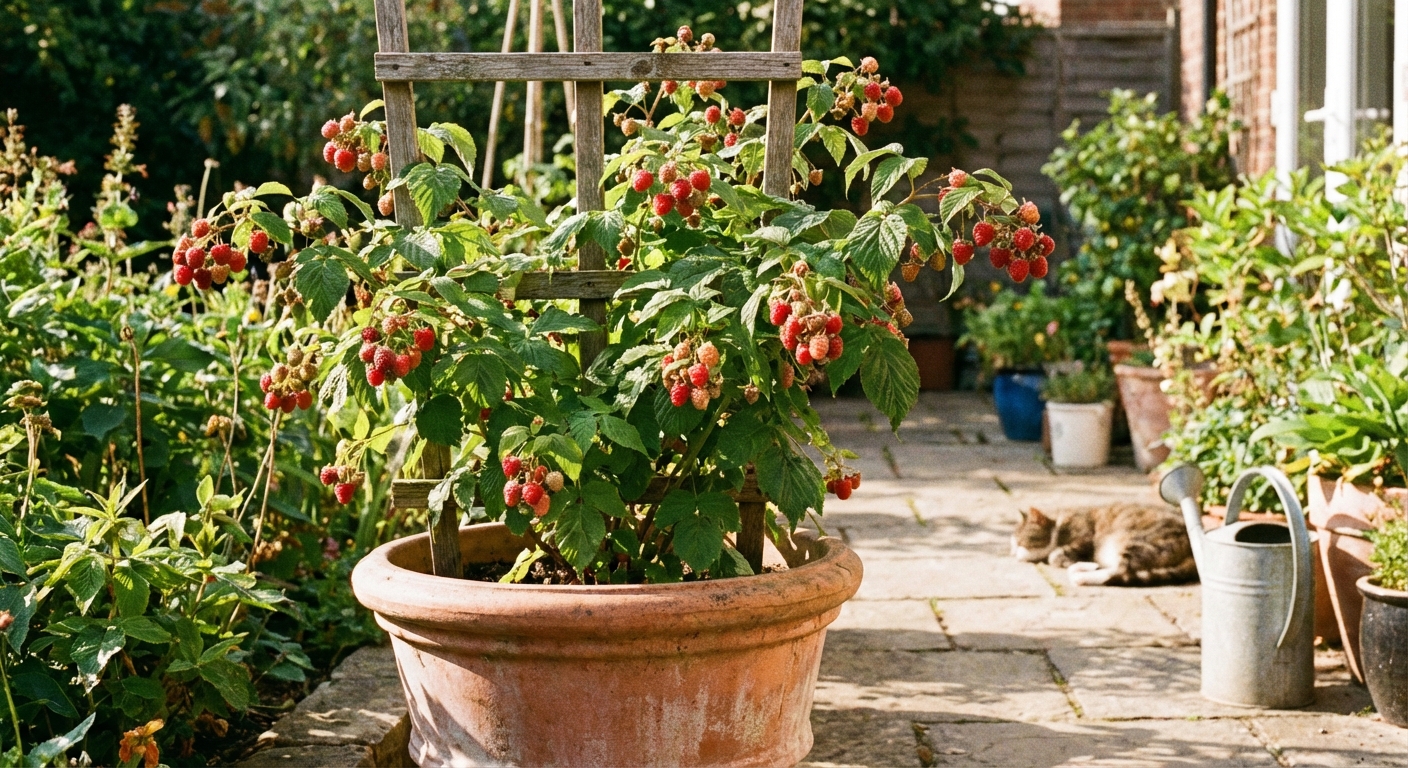
If you have ever eaten a sun-warmed raspberry straight off the cane, you know it is basically proof that magic is real. The good news is you do not need a big garden to grow them. With the right variety, a generously sized container, and a simple support, raspberries can thrive on patios, balconies, and tiny back steps.
I have a soft spot for container fruit because it makes you pay attention in the best way. You will notice when the pot dries a bit faster than the ground. You will learn what “good drainage” really feels like. And you will get to move your berry patch around like patio furniture. Yes, I absolutely chat with my raspberry canes while I water. They have earned it.
Can raspberries grow in containers?
Yes, as long as you give them a few essentials: enough root room, steady moisture, support for the canes, and (container-specific) a winter plan for the roots.
A quick cane clarity moment, because this makes pruning make sense: raspberry canes are biennial. Primocanes grow in year one. Floricanes are those same canes in year two, when they fruit and then die. For primocane-fruiting (everbearing) types, that first-year cane can fruit in fall, and if you keep it, it can fruit again the next summer before it retires permanently.
Container growing is especially great if you:
- Only have a balcony, deck, or paved yard
- Want to avoid spreading runners into garden beds
- Need to move plants to chase sun or protect them in winter
- Have heavy clay soil, poor drainage, or lingering soil-borne disease in your yard
Choose a type
Before you buy a plant, decide how you want to harvest. This choice affects pruning, support, and how long you will be picking berries.
Summer-bearing (floricane fruiting)
These raspberries produce one main crop in early to mid-summer on second-year canes called floricanes. The canes grow the first year (primocanes), then fruit the next year, then die.
- Pros: Big, concentrated harvest, often heavier yields
- Cons: Shorter picking window, pruning is a little more “two-year-cycle” focused
- Great for: Freezing, jam-making, big harvest weekends
Everbearing (primocane fruiting)
Everbearing types produce a fall crop on the tips of first-year canes. Many will also produce a smaller early summer crop the following year on the lower parts of those same canes if you do not cut everything down.
- Pros: Longer season, often simpler pruning options in containers
- Cons: Sometimes smaller berries than the best summer-bearers, yields depend on how long fall stays friendly
- Great for: Patio picking, small-space gardeners who want berries for weeks
Easy varieties for containers
- ‘Raspberry Shortcake’: Compact, container-famous, great starter plant
- ‘Heritage’: Classic primocane type, reliable, widely available
- ‘Autumn Bliss’: Popular primocane type with good flavor and strong performance
- ‘Polka’: Primocane type known for early, sweet fall berries in many climates
My container-friendly variety tips:
- Look for compact or “patio” selections when available. These tend to have shorter, sturdier canes.
- Choose disease-resistant cultivars if your area is humid or you have had cane problems before.
- Consider thornless if kids will be harvesting. Thorns can make picking feel like a tiny medieval challenge.
Color note: Red raspberries are most common, but you can also grow golden and purple raspberries in containers. Care is similar.
Pot size and setup
If there is one place to “go big,” it is the container. Raspberries have substantial root systems, and cramped roots mean fewer canes and fewer berries.
Container size (what works)
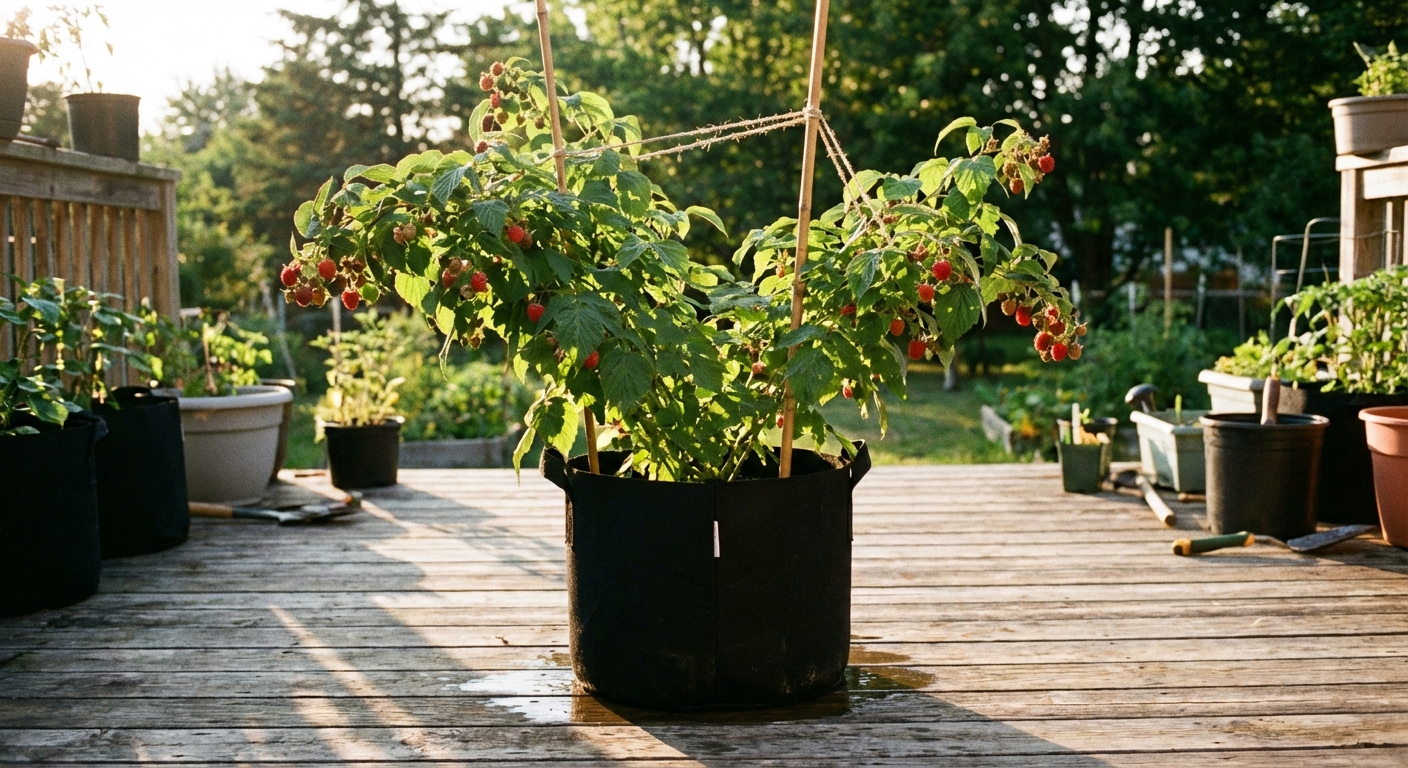
- Best results for most full-size varieties: 15 to 30 gallons per plant (about 18 to 24 inches wide)
- Smaller pots for true patio types: Some compact cultivars can manage in 10 to 15 gallons, but you will water more and yields may be smaller
- Half-barrel size: Excellent for 1 plant, sometimes 2 if you are diligent with water and feeding
Depth matters: Aim for at least 16 to 18 inches deep. Wider is often better, because raspberries spread via new shoots from the crown and roots.
Drainage is not optional
Your pot needs several drainage holes. Raspberries like moisture, but they do not like soggy roots. If you are using a decorative outer pot, keep the plant in a nursery pot inside it, or add hidden drainage and elevate the container slightly so water can escape freely.
Soil mix
In the ground, raspberries love rich, well-drained soil loaded with organic matter. In containers, you want that same vibe, but with extra emphasis on drainage and structure.
Simple soil recipe
- 60% high-quality peat-free potting mix (or a premium potting mix you trust)
- 20 to 30% finished compost
- 10 to 20% perlite, pumice, or pine bark fines for drainage and air space
Compost note (worth reading): Compost varies wildly. If yours is dense or stays wet, keep it closer to 15 to 20% and bump up the perlite or bark. The goal is soil that holds moisture but still feels springy and light when you squeeze it.
pH and feeding basics
Raspberries generally prefer a slightly acidic to near-neutral soil, roughly pH 5.5 to 6.5 (and many do fine creeping a bit higher). Most quality potting mixes land in a workable range.
- Mix in a slow-release organic fertilizer at planting time, following label rates.
- Top-dress with compost each spring like you are tucking the plant in with a cozy blanket.
Sun and placement
Raspberries fruit best with 6 to 8 hours of direct sun. More sun usually means more berries, but in very hot climates, a little afternoon shade can prevent stressed plants and sunscalded fruit.
- Best spot: Bright, sunny, with good airflow
- Avoid: Tight corners with stagnant air, which can increase fungal issues
- Container perk: You can rotate or reposition for even growth, especially on balconies where light comes from one direction
Watering (the part that matters most)
In pots, raspberries are only as happy as their moisture level. Too dry and berries shrivel. Too wet and roots sulk. The sweet spot is consistent, even moisture.
How often to water
This depends on pot size, sun, wind, and temperature, but here is a practical rhythm:
- Spring: Water when the top 1 to 2 inches of soil feels dry
- Summer and fruiting: Expect to water daily in hot weather. In extreme heat or wind, especially with smaller pots, it can be twice daily
- Cool weather: Reduce frequency, but do not let the root ball fully dry out
Best watering method
- Water slowly until you see water draining from the bottom.
- Empty saucers so roots are not sitting in water.
- Mulch the top of the pot with 1 to 2 inches of straw, shredded leaves, or pine needles to reduce evaporation and keep soil cooler.
Clara’s honesty corner: If you travel often in summer, set up drip irrigation. Self-watering reservoir planters can work, but only if they are truly large and you monitor them at first. A constantly saturated reservoir can turn “helpful” into “soggy,” especially with heavy mixes.
Support and trellising
Even compact varieties appreciate support. Without it, canes flop, berries get muddy, and airflow suffers. Support also makes harvesting feel calm instead of like you are wrestling a bramble.
Easy support options
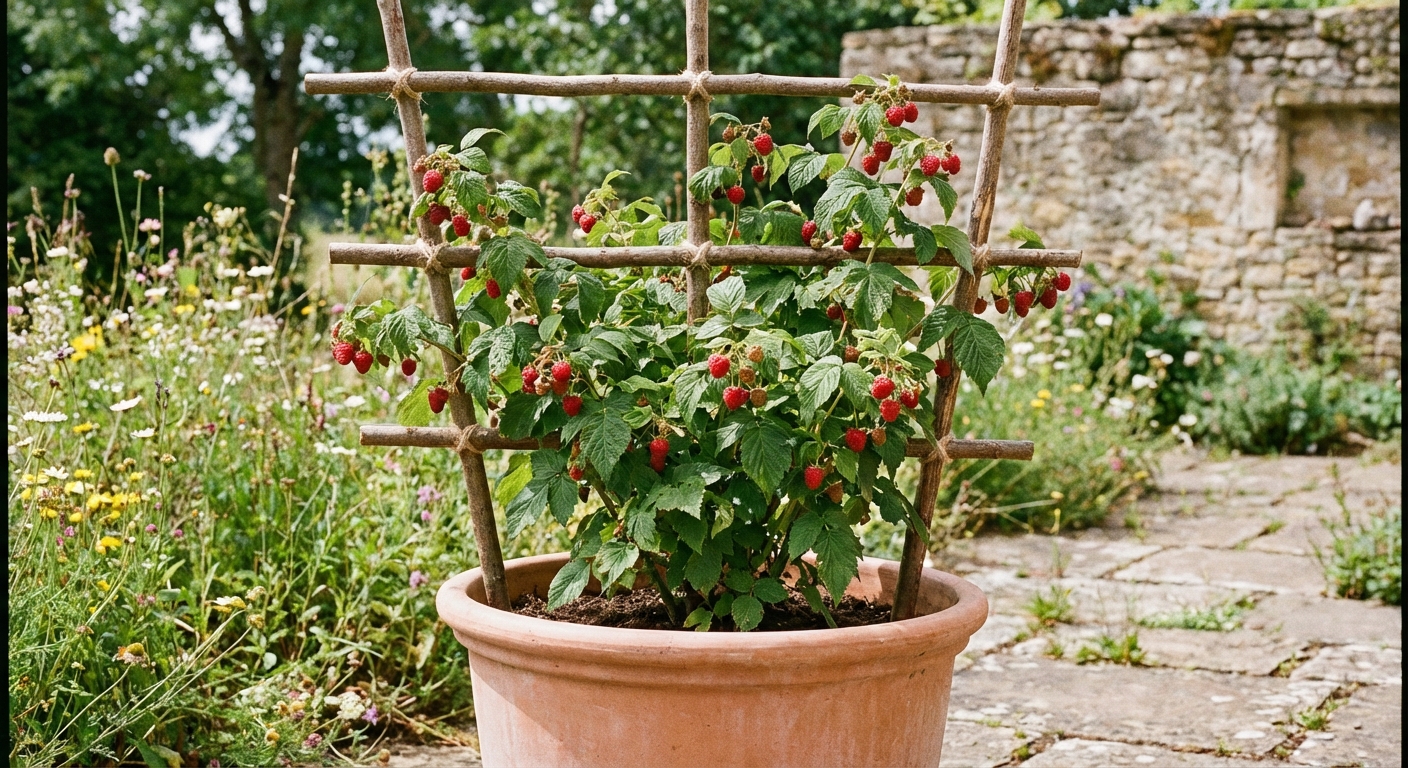
- Single sturdy stake: Best for compact plants, tie canes loosely with soft garden ties
- Two stakes with horizontal twine: Create a simple “fence” to corral canes
- Small fan trellis: Great on patios, keeps canes spread for sun and airflow
- Tomato cage (heavy-duty): Works in a pinch, especially for everbearing types
Planting in a pot
Planting is straightforward, but a few small details make a big difference later.
When to plant
- Early spring: Ideal in most climates
- Fall: Great in mild-winter areas, giving roots time to settle before summer heat
Step-by-step
- Soak the root ball if the plant is dry, especially if it is bare-root or slightly root-bound.
- Fill the pot with your soil mix so the plant will sit at the same depth it was growing in its nursery pot.
- Set the plant in the center, spread roots gently if bare-root.
- Backfill and firm lightly so there are no big air pockets, but do not pack it down hard.
- Water deeply until water drains out.
- Add mulch to protect soil moisture and reduce splash on leaves.
- Install support now, before roots fill in.
How many plants per pot? For most gardeners, one raspberry plant per 10 to 30 gallon container is the easiest path to success (smaller end for true patio types, larger end for full-size vigor).
Pruning (simple, not scary)
Pruning is the difference between a tidy, productive container and a thorny tangle. The key is knowing what type you have.
Summer-bearing pruning
- After harvest, cut the canes that fruited (floricanes) down to soil level. They will not fruit again.
- Keep the strongest new canes (primocanes) to fruit next year. In a pot, 4 to 6 strong canes is a reasonable target, depending on container size.
- Remove weak, spindly canes to keep airflow and reduce disease.
Everbearing pruning
Option A: One big fall crop (simplest)
- In late winter, cut all canes to the ground.
- You will get one main crop in late summer to fall on the new canes.
Option B: Two crops (more fiddly)
- After fall harvest, leave the canes standing.
- The next summer, they will fruit lower on the cane.
- After that summer crop, cut those spent canes to the ground, and keep the new primocanes for the next fall crop.
If you are container growing for the first time, I recommend Option A. It is clean, predictable, and very patio-friendly.
Thinning extra shoots
Raspberries love to make new shoots. In containers, that enthusiasm needs a gentle editor.
- Pull or snip extra shoots so you keep your target cane count.
- Remove “wanderers” that pop up at the pot edge if they are crowding your main clump.
- When in doubt, keep the thickest, healthiest-looking canes and let the skinny ones go.
Feeding
Raspberries are not wildly demanding, but in containers they do rely on you to replenish nutrients.
- Early spring: Top-dress with compost and apply an organic balanced fertilizer (follow label rates)
- After first flush of growth: A light second feeding can help, especially if leaves look pale
- During fruiting: Keep watering consistent. Avoid heavy nitrogen, which can push leaves at the expense of berries.
Healthy leaves should look medium to deep green. Yellowing can mean underfeeding, overwatering, or a rootbound plant. In containers, it is often one of those three.
Pollination
Most raspberries are self-fertile, so you typically only need one plant to get fruit. But you will get better berry set and fuller clusters when pollinators visit.
- Place pots where bees can find them easily, in sun and not tucked behind screens.
- Plant nearby pollinator favorites in containers too, like thyme, calendula, borage, or lavender if your climate allows.
Common problems
Small berries or poor fruiting
- Cause: Not enough sun, inconsistent water, too many canes, or insufficient feeding
- Fix: Move to brighter light, water more consistently, thin canes, refresh nutrients
Leaves yellowing
- Cause: Overwatering, poor drainage, nutrient deficiency, or a pot that is too small
- Fix: Check drainage holes, let the top inch dry between waterings, feed lightly, consider upsizing the container
Powdery mildew or leaf spots
- Cause: Crowding, poor airflow, overhead watering late in the day
- Fix: Prune for airflow, water at soil level, avoid wetting foliage, remove affected leaves
Birds stealing berries
- Cause: Birds have excellent taste
- Fix: Use bird netting draped over a simple frame, or move pots closer to human activity
Balcony pests
- Watch for: Aphids and spider mites (especially in hot, dry, sheltered spots)
- What helps: A strong spray of water, insecticidal soap as needed, and keeping plants well-watered and not overcrowded
- Regional heads-up: Spotted wing drosophila and other fruit pests vary by area. Check your local extension for current guidance and timing.
Winter protection
In-ground raspberries are insulated by the earth. Pots are not. Roots in containers can freeze harder and faster, especially during cold snaps and windy weather.
How to overwinter containers
- Mild winter climates: Move pots against a sheltered wall and keep them watered occasionally.
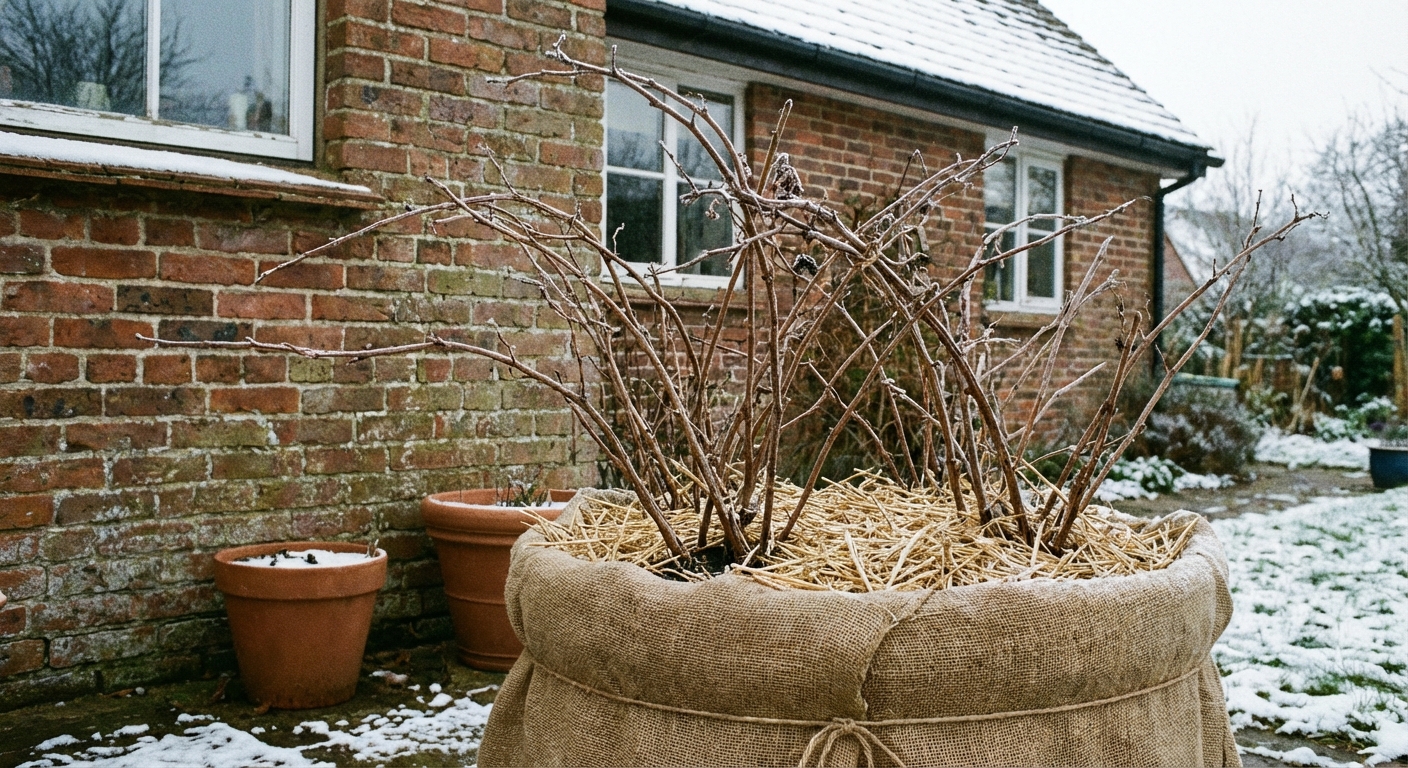
- Cold winter climates: Consider moving the pot into an unheated garage or shed once the plant is dormant, or wrap the container with burlap and add straw around the pot for insulation.
- Do not bring them into a warm house: They need dormancy to reset and fruit well.
Water in winter: Dormant plants still need some moisture. Check monthly and water lightly if the soil is bone dry and not frozen.
Harvesting
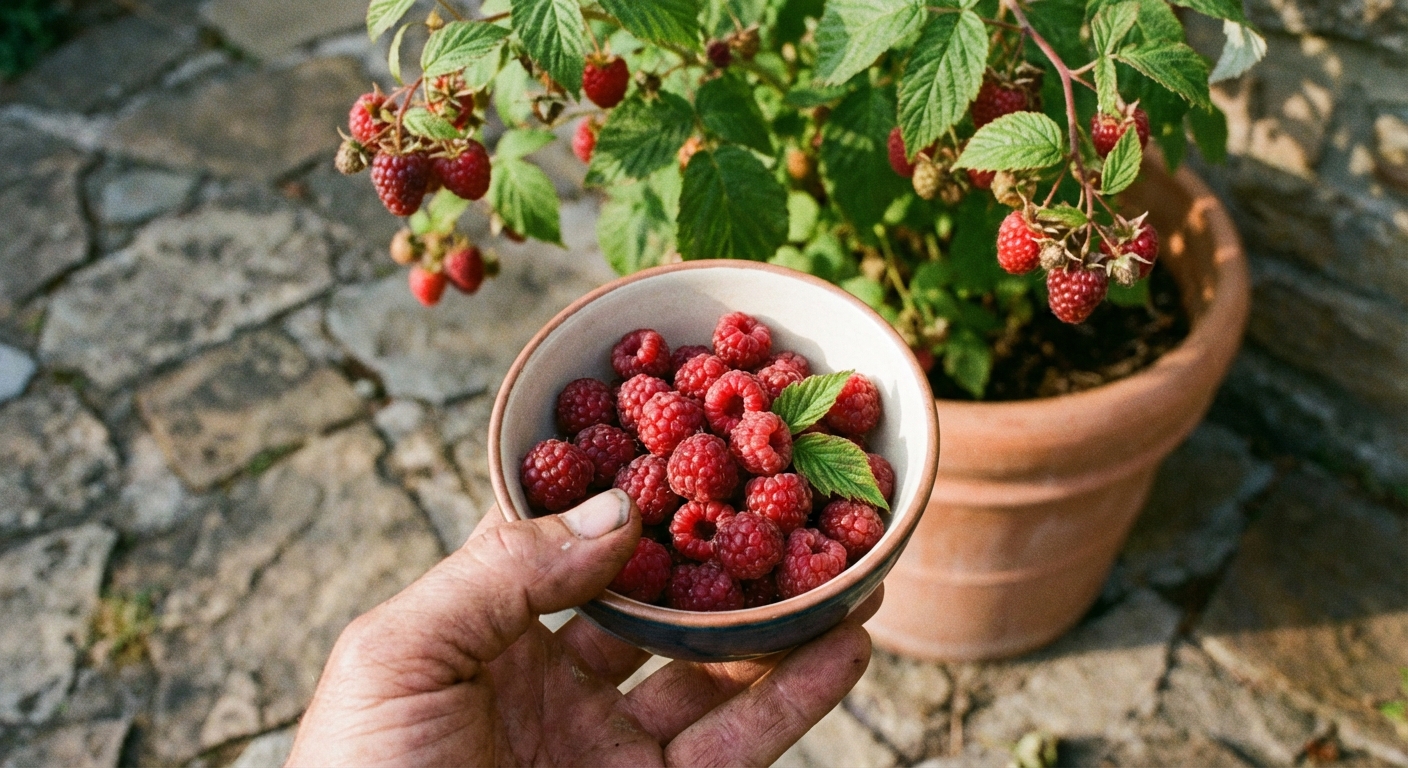
Raspberries do not ripen much after picking, so timing matters. The reward is immediate, juicy perfection.
- Pick when fully colored and the berry releases easily from the core with a gentle tug.
- Harvest often during peak season, ideally every day or two.
- Pick in the morning after dew dries for best flavor and firmness.
- Handle gently and use a shallow container to prevent crushing.
If you have everbearing raspberries, keep watering consistent during late summer heat. That is the secret sauce for plump fall berries.
Refreshing pots
Container raspberries can live for years, but the potting mix does not stay fresh forever.
- Every 2 to 3 years: Consider root pruning and repotting into fresh mix, or at least remove and replace the top few inches with new potting mix and compost.
- Clue you are due: Water runs straight through, growth is weaker, or the plant seems hungry no matter what you do.
Quick checklist
- Pot: 15 to 30 gallons with drainage (10 to 15 for true patio types)
- Soil: Potting mix + compost + aeration (perlite or bark)
- Sun: 6 to 8 hours
- Water: Consistent moisture, especially during fruiting
- Support: Stake, trellis, or sturdy cage
- Prune: Based on type, thin to avoid crowding
- Winter: Insulate pot or move to sheltered, unheated space
A gentle nudge
If you are nervous about growing fruit, raspberries are an excellent confidence builder. They grow with real enthusiasm, they tell you clearly what they need, and the payoff is delicious and immediate. Start with one good plant in a big pot, give it sun and consistent water, and let that first handful of berries rewrite your “black thumb” story.