
How to Grow Pumpkins and Winter Squash at Home

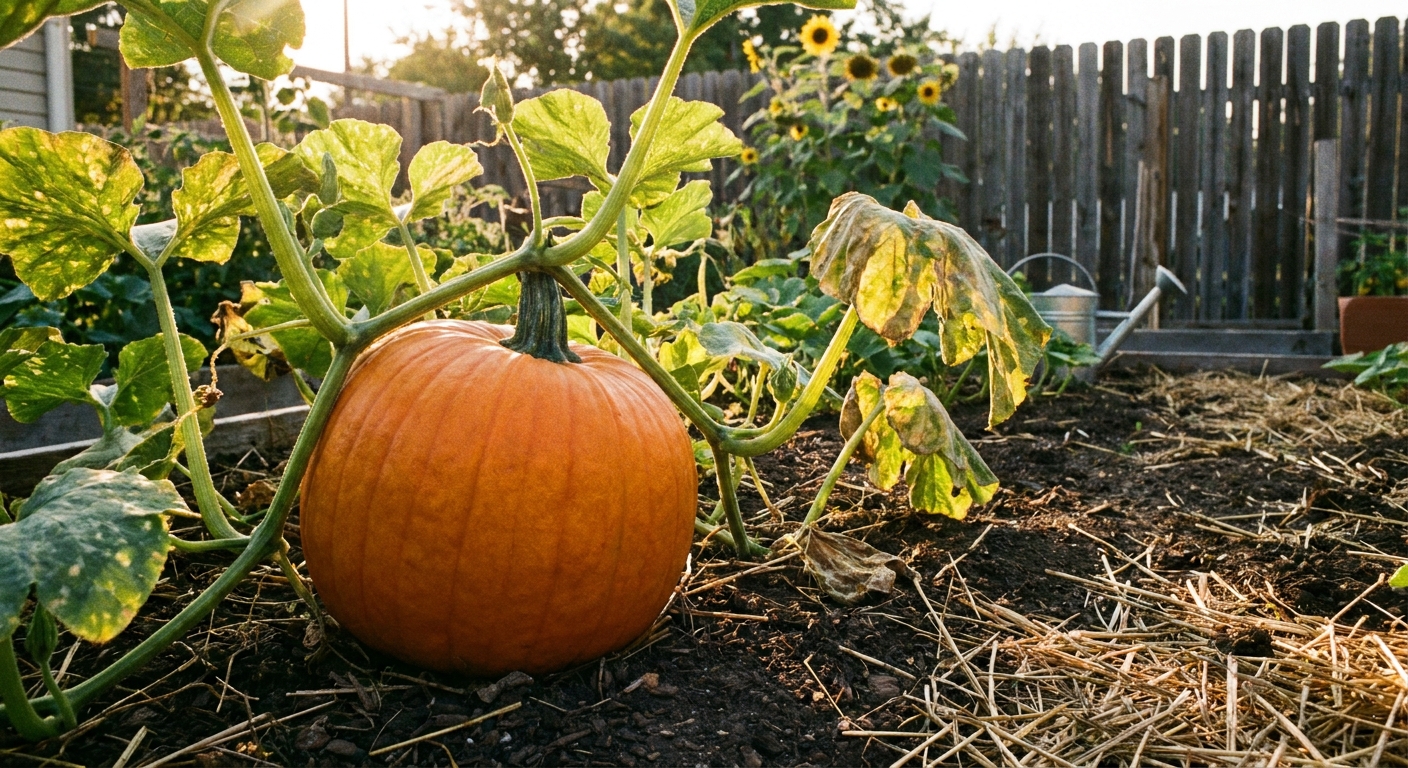
If you have ever admired a pumpkin patch and thought, How do people even manage all that vine chaos? I promise, it is not magic. It is mostly sunlight, warm soil, steady watering, and letting the vines do what vines were born to do. Pumpkins and winter squash are generous plants when you meet their basic needs. They sprawl, they flower, they attract pollinators, and by fall you are hauling in armloads of dinner and decorations.
This guide covers pumpkins, butternut squash, and acorn squash, with practical tips for choosing a good spot, managing vines, improving pollination, avoiding powdery mildew, and finishing the season strong with proper harvest, storage, and (when appropriate) curing.

Choose the right site
Winter squash and pumpkins are basically solar powered. The more sun you give them, the better they flower, size up, and resist disease.
Sun and space
- Sun: Aim for 8+ hours of direct sun if possible. Six hours can work, but expect fewer and smaller fruits.
- Space: Vining types can run 10 to 20 feet (sometimes more). Even compact varieties appreciate room for airflow.
- Air movement: Good airflow helps prevent powdery mildew. Avoid tucking plants into tight corners where leaves stay damp.
Soil: think rich, loose, and well-drained
These plants are heavy feeders with big roots. They love soil that holds moisture but does not stay soggy.
- Texture: Loamy soil is ideal. In clay, add compost to improve drainage and rooting.
- Organic matter: Mix in 2 to 3 inches of finished compost before planting.
- pH: Slightly acidic to neutral is best, around 6.0 to 7.0.
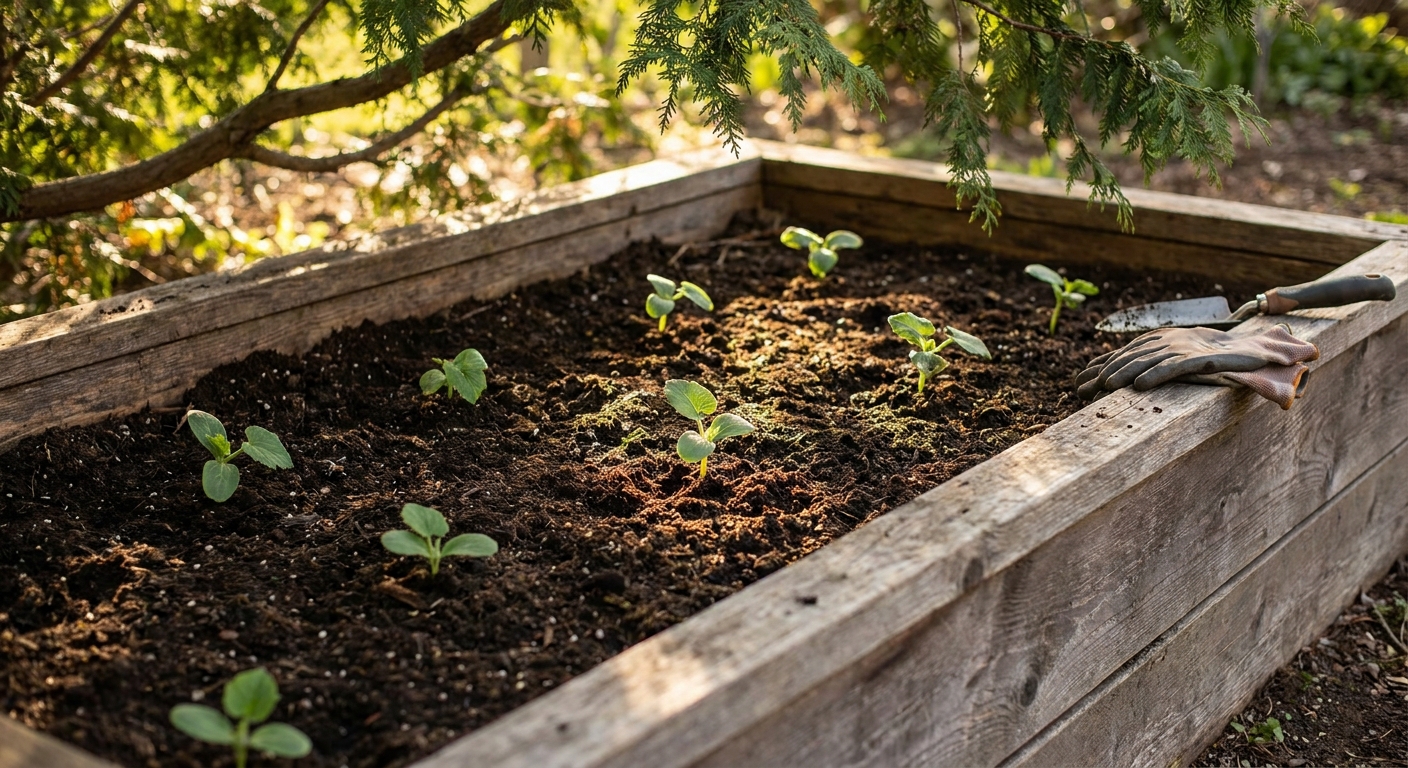
If you can manage it, planting into a compost-enriched mound or raised bed is a classic squash success move. The soil warms faster, drains better, and roots breathe easier.
Vining vs bush types
Before you buy seeds, decide how you want your garden to behave. Do you have space for a joyful sprawl, or do you need something that stays mostly in its lane?
Vining types
- Best for: Big harvests, larger fruit, long storage, and gardens with room to spread.
- Spacing: Typically 4 to 6 feet between plants, and plenty of run-out space.
- Examples: Most carving pumpkins, many butternuts, and many traditional acorn varieties.
Bush or semi-bush types
- Best for: Smaller gardens, raised beds, and large containers.
- Spacing: Often 2 to 3 feet between plants, depending on the variety.
- What to expect: The plant stays compact-ish, but you still get thick stems and broad leaves. You still need airflow and steady water.
Seed packets usually tell you whether a variety is vining, bush, or semi-bush. When in doubt, assume it vines and plan accordingly. Squash has a way of outgrowing our optimism.
When and how to plant
Pumpkins and winter squash are warm-season crops. Cold soil slows them down and invites stress, pests, and disease.
Timing
- Direct sow: Plant outdoors after your last frost when soil is consistently warm. A good target is 65°F (18°C) soil temperature or warmer.
- Starting indoors: Start seeds 2 to 4 weeks before transplanting. Squash does not love root disturbance, so use biodegradable pots or be gentle when planting out.
Planting basics
- Depth: Sow seeds about 1 inch deep.
- In hills or mounds: Plant 2 to 3 seeds per mound, then thin to the strongest seedling.
- Water in well: Keep soil evenly moist during germination, then shift to deeper, less frequent watering once plants establish.
One more thing I do almost every year: I label the variety right at planting time. By August, all squash leaves look like squash leaves, and my memory gets suspiciously selective.
Pollination tips for more (and better) fruit
Squash plants have separate male and female flowers, and they rely heavily on bees. If you see lots of flowers but no fruits forming, pollination is the first thing I investigate.
How to tell male vs female flowers
- Female flowers have a tiny baby fruit (an ovary) behind the blossom. On pumpkins it looks like a mini pumpkin.
- Male flowers are on thinner stems and do not have the swelling behind the bloom.
Encourage pollinators
- Avoid spraying insecticides, especially during bloom.
- Plant a few nearby nectar plants (like calendula, borage, or native flowers) to keep bees visiting.
- Water at the base in the morning so flowers are dry and inviting when they open.
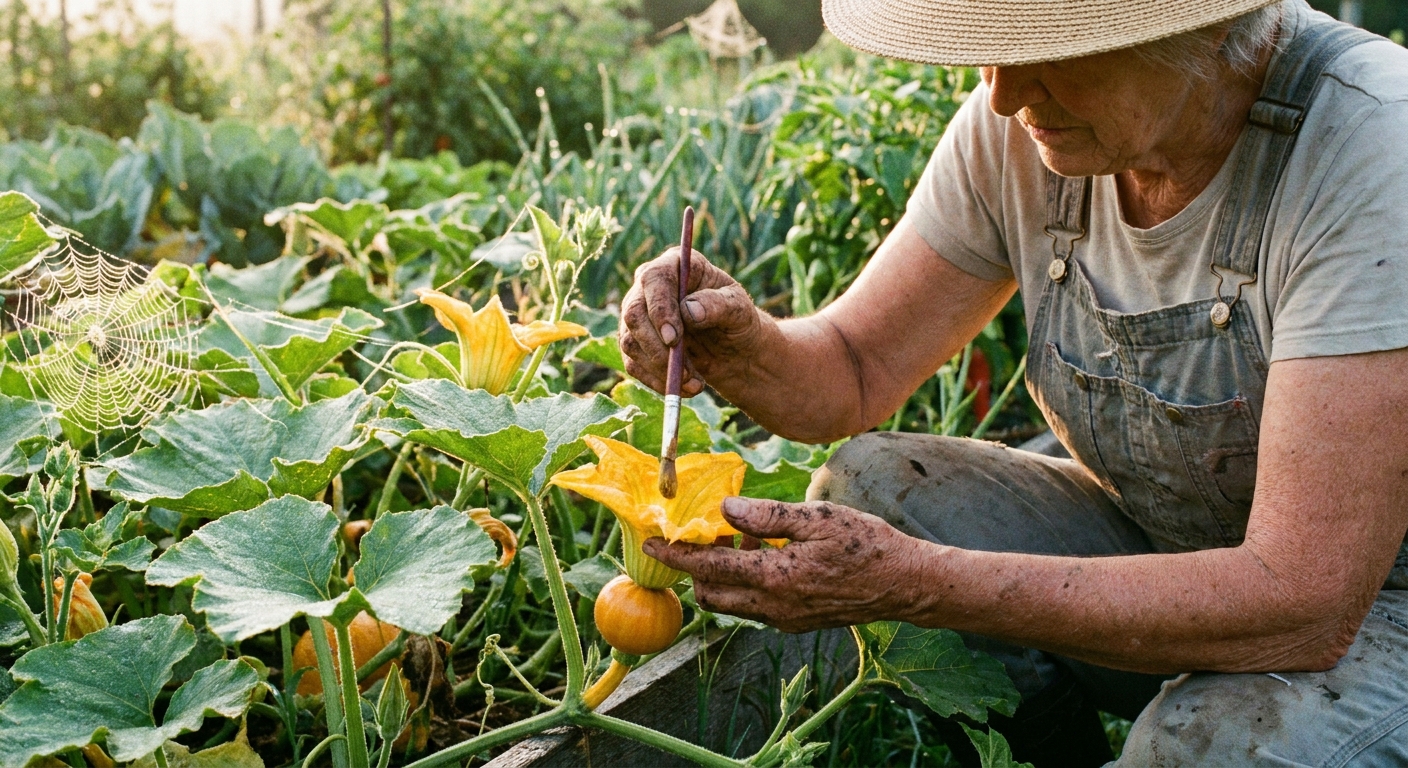
Hand-pollination (simple and surprisingly satisfying)
If pollinators are scarce, you can step in. Do this early in the morning when flowers are freshly open.
- Pick a freshly opened male flower.
- Peel back the petals to expose the pollen-covered center.
- Gently rub the pollen onto the center of a female flower.
- Mark the pollinated female with a twist tie or note if you like tracking success.
Watering and mulch: the calm, steady approach
Inconsistent moisture is a common reason for stress, poor fruit development, and disease pressure. These plants do best with deep watering and a protective mulch layer.
How much to water
- Target: Roughly 1 to 2 inches of water per week total, depending on heat, wind, and soil type.
- Deep, not daily: Water deeply so roots grow down. Shallow daily watering encourages shallow roots.
- Avoid wet leaves: Use drip irrigation or a soaker hose if you can.
Mulch for moisture and clean fruit
Mulch is my quiet secret for nicer pumpkins and fewer problems.
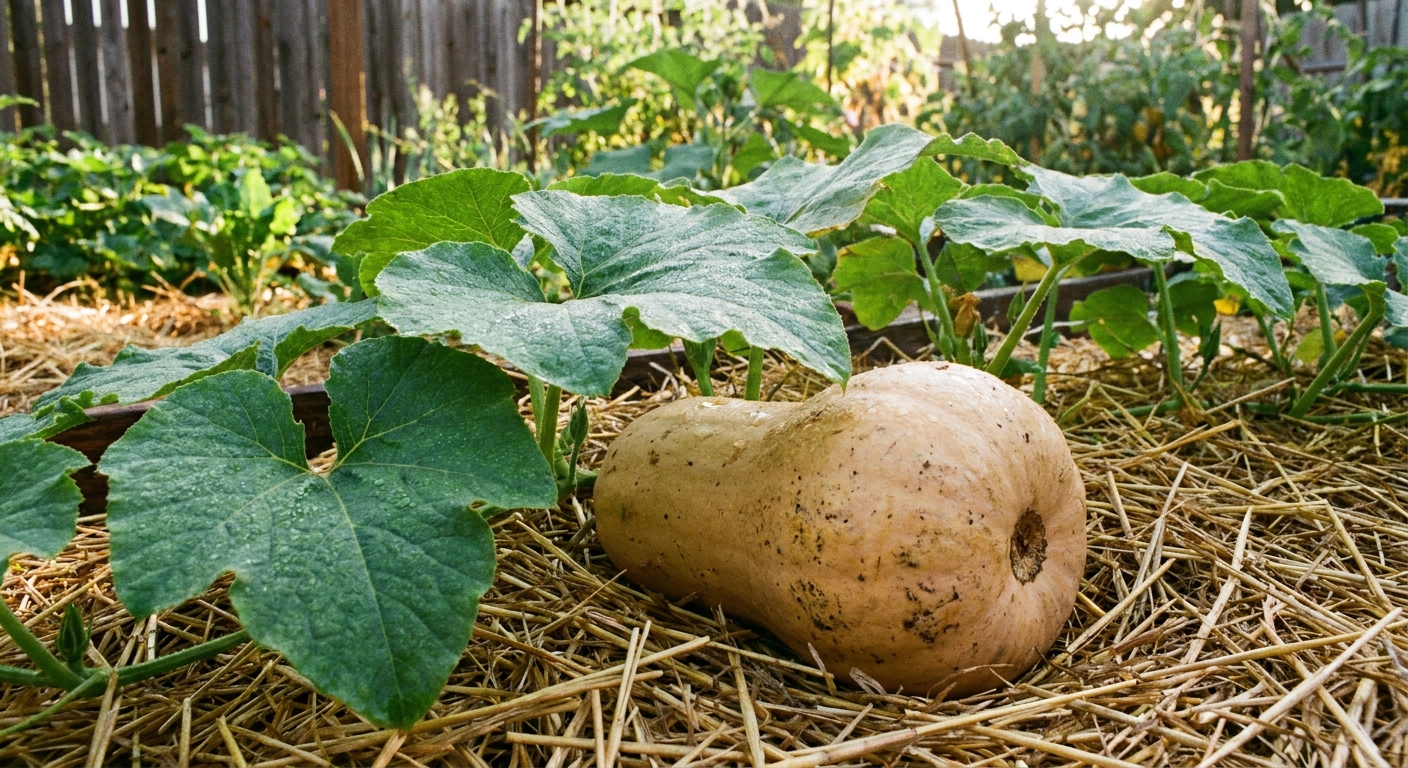
- Benefits: Conserves moisture, keeps weeds down, moderates soil temperature, and helps prevent soil splash that can spread disease.
- What to use: Straw, shredded leaves, or untreated grass clippings (thin layers) work well.
- For fruit protection: Slide a piece of cardboard, a wooden board, or a flat stone under developing pumpkins and squash to reduce rot and slug damage.
Powdery mildew prevention (and what to do when it shows up)
Powdery mildew is the classic white, dusty coating on leaves. It is common late in the season, especially when days are warm and nights are cool. The goal is not perfection. The goal is keeping leaves healthy long enough to finish ripening your crop.
Prevent it with smart habits
- Give plants space: Crowding traps humidity and reduces airflow.
- Water the soil, not the foliage: Morning watering is best.
- Mulch: Reduces soil splash and keeps plants less stressed.
- Remove the worst leaves: If a few leaves are heavily infected, prune them off and throw them in the trash, not the compost.
- Rotate crops: Avoid planting squash in the same spot each year if possible.
Variety selection helps
If powdery mildew is a yearly visitor in your garden, choose varieties labeled as having resistance or tolerance. It will not be bulletproof, but it buys you time.
Organic-friendly options
If mildew arrives early and is spreading fast, organic controls can help. Sulfur and potassium bicarbonate products are commonly used in organic gardening. Always follow label directions, spray in cooler parts of the day, and test on a small area first. Even organic sprays can burn leaves if used incorrectly.
Managing vines and fruit set
Once vines take off, your job shifts from planting to gentle guidance.
Train vines where you want them
- Redirect young vines: While stems are flexible, move them a few inches at a time to keep pathways clear.
- Do not snap them: Older vines can crack if you force a bend. If you need to move a thick vine, do it gradually over a couple of days.
Should you prune?
You can, but you do not have to. Pruning can improve airflow and help the plant focus energy on fewer fruits.
- For large pumpkins: Some growers limit the plant to a few fruits and pinch back growing tips after fruit sets.
- For home gardens: I usually focus on removing diseased leaves and keeping vines from smothering other crops.
Feeding during the season
If your soil was amended with compost, you may not need much extra. If growth looks pale or sluggish, a side-dressing of compost or an organic, balanced fertilizer can help. Once flowering and fruiting begin, avoid going heavy on nitrogen. Too much nitrogen can mean gorgeous leaves and fewer fruits.
Harvest cues: pumpkins, butternut, and acorn squash
Harvest timing is where winter squash becomes truly winter squash. Pick too early and you get bland flavor and poor storage. Pick too late and you risk frost damage or rot.
General harvest rules
- Wait for a hard rind: You should not be able to dent the skin easily with a fingernail.
- Let the stem mature: A drying, corky stem is a great sign, especially for pumpkins.
- Harvest before a hard frost: Light frost may not ruin everything, but hard frost can damage rinds and shorten storage life.
- Cut, do not twist: Use pruners or a knife and leave a few inches of stem on pumpkins and squash when possible.
Pumpkins
- Color: Deep, consistent color for the variety.
- Rind: Hard and tough.
- Stem: Drying and firm, not green and juicy.
Butternut squash
- Color: A deep beige or tan (not pale).
- Rind: Very hard when ready.
- Vine: Often begins to yellow back as fruit matures.
Acorn squash
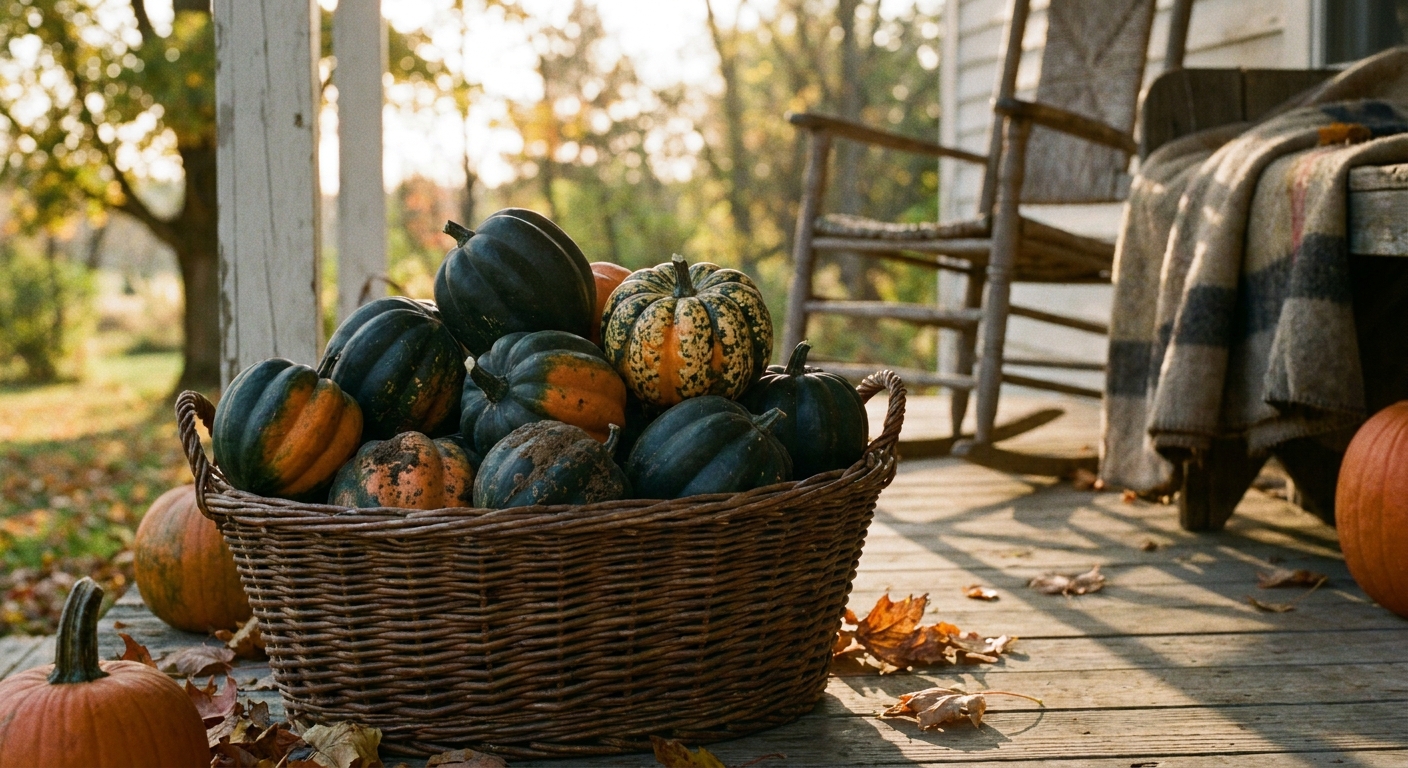
Acorn squash can be tricky because some varieties darken early. Use the rind and stem as your best clues.
- Rind: Hard and resistant to scratching.
- Ground spot: The patch where it sits on the soil should be dull, not glossy.
- Stem: Drying and firm.
Curing and storage for long-lasting squash
Curing is the step that turns a decent harvest into a pantry that lasts deep into winter. It helps the rind toughen and minor surface scuffs seal over. It also improves flavor in many varieties.
How to cure (pumpkins and butternut)
- Handle gently: Bruises become rot later.
- Keep them dry: Do not wash unless you need to. If you do wash, dry thoroughly.
- Conditions: Warm and well-ventilated is ideal, roughly 75 to 85°F with good airflow for 7 to 14 days.
A note on acorn squash
Acorn squash is the exception here. Skip the warm curing stage. Warm curing can degrade texture and shorten storage life, so once acorn squash is harvested and dry on the surface, move it straight to cool storage.
Storage basics
- Temperature: Cool, not cold. Many winter squash store best around 50 to 60°F.
- Humidity: Moderate. Too dry shrivels, too humid encourages rot.
- Airflow: Do not stack tightly. Store on shelves or in single layers with space between fruits.
- Check monthly: Use any squash with soft spots first.
Typical storage timelines
- Butternut: Often 2 to 6 months in good conditions.
- Pumpkins: Varies by type. Some store 1 to 3 months, while certain varieties last longer.
- Acorn: Usually shorter, often 1 to 2 months. Many taste best earlier rather than later.
If a squash has a soft spot, a cracked stem, or a nicked rind, treat it like a “use first” squash. There is no shame in a quick roast dinner. That is what they are for.
Growing pumpkins and winter squash in large containers
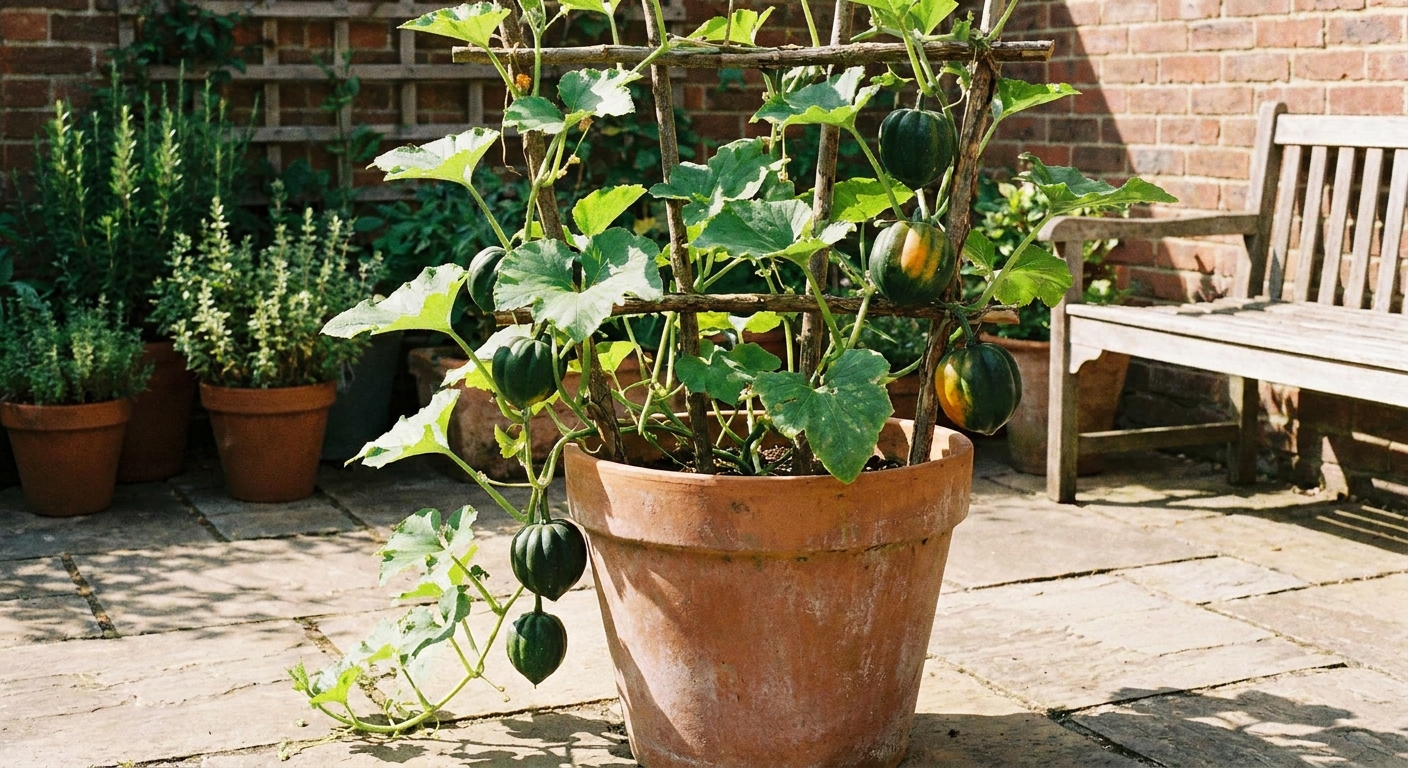
Yes, you can grow winter squash in containers, and it is genuinely fun. The key is choosing a compact variety, giving it a big enough pot, and staying on top of watering.
Choose the right container and soil
- Size: Aim for 15 to 25 gallons per plant. Bigger is better for moisture stability.
- Drainage: Non-negotiable. Make sure there are multiple drainage holes.
- Soil: Use a high-quality potting mix and blend in compost. Garden soil in pots usually compacts and drains poorly.
Best varieties for pots
- Bush and semi-bush acorn types are often the easiest in containers.
- Mini pumpkins and compact butternut types can also work with a trellis and attentive care.
Trellising in small spaces
Training a squash vine up a sturdy trellis saves space and improves airflow. Use soft ties to guide the vine. For heavier fruits, you can support developing squash with a sling made from old fabric or mesh produce bags tied to the trellis.
Container care tips
- Water more often: Pots dry out fast in summer. Check daily during heat waves.
- Fertilize lightly but regularly: Nutrients leach out of containers. A diluted organic liquid feed or periodic compost top-dressing helps.
- Watch for stress: Wilting in the afternoon can be normal, but if it does not recover by evening, it is thirsty.
Quick troubleshooting
Flowers falling off with no fruit
- Early blooms are often male. Give it time.
- Low pollinator activity can cause poor fruit set. Try hand-pollinating.
- Heat stress can interfere with pollination. Keep watering consistent.
Small fruits turning yellow and dropping
- Often incomplete pollination. Hand-pollinate in the morning.
- Sometimes drought stress. Deep water and mulch.
Leaves with white dusting
- Likely powdery mildew. Improve airflow, avoid wetting leaves, remove worst leaves, and consider organic controls if spreading early.
Sudden wilting (even with water)
- Check for squash vine borer, especially on pumpkins and vining squash. Look near the base of the stem for a small hole and orange-brown “sawdust” (frass).
- Remove and trash badly infested vines. In early cases, some gardeners carefully slit the stem, remove the larva, then mound soil over the wound to encourage new roots.
Holes in leaves and ragged damage
- Squash bugs, cucumber beetles, and slugs can all show up. Check undersides of leaves and near the crown early in the morning.
A gentle end-of-season rhythm
By late summer, squash vines can look a little tired. That is normal. Your job is to keep enough healthy leaf area to finish ripening fruit, harvest before hard frost, and then store well so your pantry does not betray you in November.
If you are new to this, start simple. Grow one pumpkin plant or one butternut. Watch the flowers. Notice how the vines move. Make one or two mistakes and learn from them. That is gardening, and it is exactly how you grow your confidence along with your food.