
How to Grow Lemon Trees Indoors

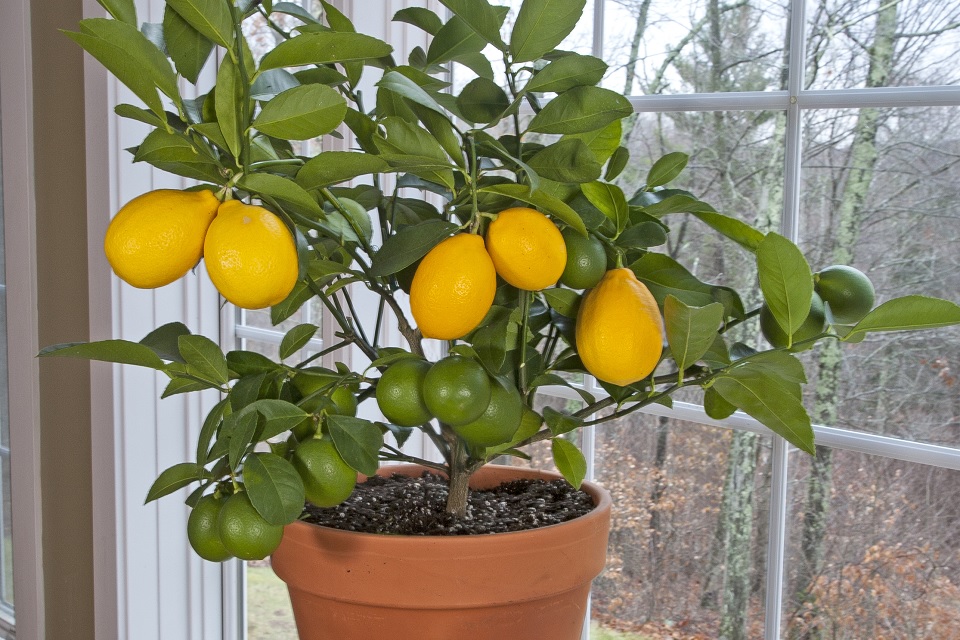
There is something quietly magical about a lemon tree living in your home. Glossy leaves, that clean citrus scent when you brush past it, and if you get the care right, little white blossoms that can perfume an entire room. The secret is not “luck” or a “green thumb.” Indoor citrus is mostly about meeting a few non-negotiable needs: very bright light, excellent drainage, consistent watering, and regular feeding.
This guide focuses on Meyer lemon (the indoor favorite), but the same approach works for other dwarf citrus like calamondin, kaffir lime, key lime, and dwarf mandarins.
Best lemon varieties for indoors
If you want fruit indoors, choose a plant that is naturally compact and happy in a container. Seed-grown lemon trees can take many years to fruit and often disappoint indoors. For most homes, a grafted dwarf tree is the way to go.
Top choices
- Meyer lemon: Sweeter, less acidic lemons; vigorous, reliable bloomer; often the easiest indoor lemon.
- Ponderosa lemon: Very large fruit; can be a bit more vigorous and needs strong light.
- Calamondin (citrus that acts like a houseplant): Small tart fruit; very ornamental and tolerant of indoor life.
- Key lime or Persian lime (dwarf forms): Possible indoors, but they demand intense light and steady warmth.
What to look for at the nursery: a label that says dwarf or patio, a sturdy central trunk, no sticky residue on leaves, and new growth that looks healthy (not pale, not speckled, not webby).
Container selection and drainage
Indoor citrus fails for two main reasons: not enough light, and roots that stay wet too long. Your pot choice is your first line of defense.
Choose the right pot size
- Start with a container 1 to 2 inches wider than the nursery pot (or up to 3 inches for larger trees).
- Going too big too fast makes the soil stay wet longer, which invites root rot.
Drainage is not optional
- Pick a pot with drainage holes.
- Use a saucer or tray, but empty it after watering. Citrus roots hate sitting in water.
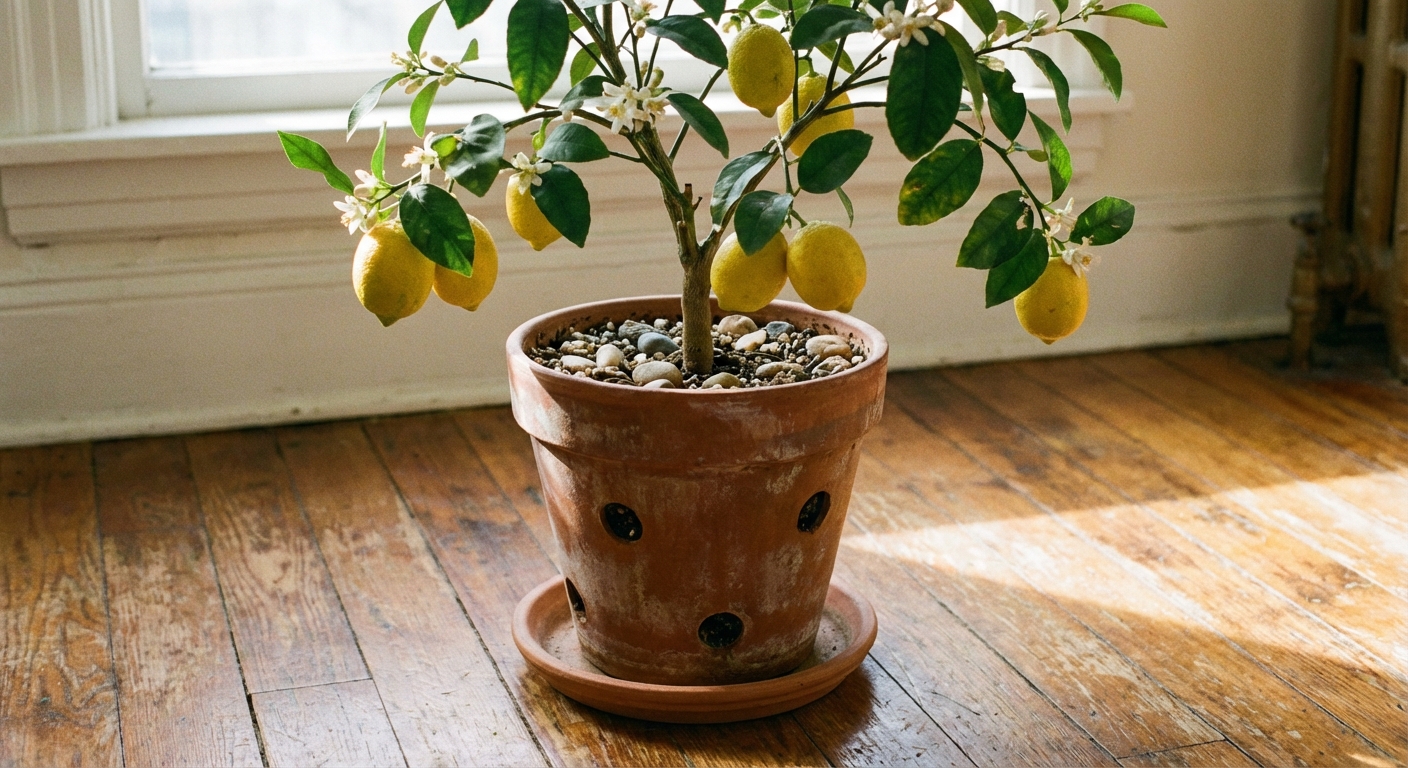
- Skip “drainage layers” of rocks in the bottom. They do not improve drainage in containers and they steal root space.
Material matters
- Terra cotta: Breathable and forgiving if you tend to overwater, but dries faster.
- Plastic or glazed ceramic: Holds moisture longer, which can be helpful in dry homes, but you must be more careful with watering.
The best soil mix for indoor lemon trees
Citrus wants a mix that holds some moisture but drains quickly and stays airy. Typical houseplant soil is usually too water-retentive on its own, especially in winter.
Easy citrus soil recipe
Mix the following:
- 2 parts high-quality potting mix (peat or coco coir based is fine)
- 1 part perlite or pumice for airflow
- 1 part fine orchid bark or pine bark fines for structure and drainage
If you prefer a bagged option, look for a citrus and cactus style mix, then lighten it further with a handful or two of perlite for indoor conditions.
What about pH and “acid-loving” soil?
Citrus does best in slightly acidic soil (roughly pH 6.0 to 6.5). Most quality potting mixes land close enough. The bigger issue indoors is usually hard water slowly raising pH and locking out nutrients like iron and manganese. If your tap water leaves white crust, consider occasional watering with filtered water or rainwater.
Light requirements: the make-or-break factor
If I could gently “nag” you about only one thing, it would be light. Indoor lemon trees are sun lovers trying to live a houseplant life.
Window light
- A south-facing window is ideal in the Northern Hemisphere (north-facing in the Southern Hemisphere).
- Give it as much direct sun as you can: think 6 to 8+ hours when possible.
- Rotate the pot a quarter turn every week or two to keep growth even.
Grow lights (often necessary)
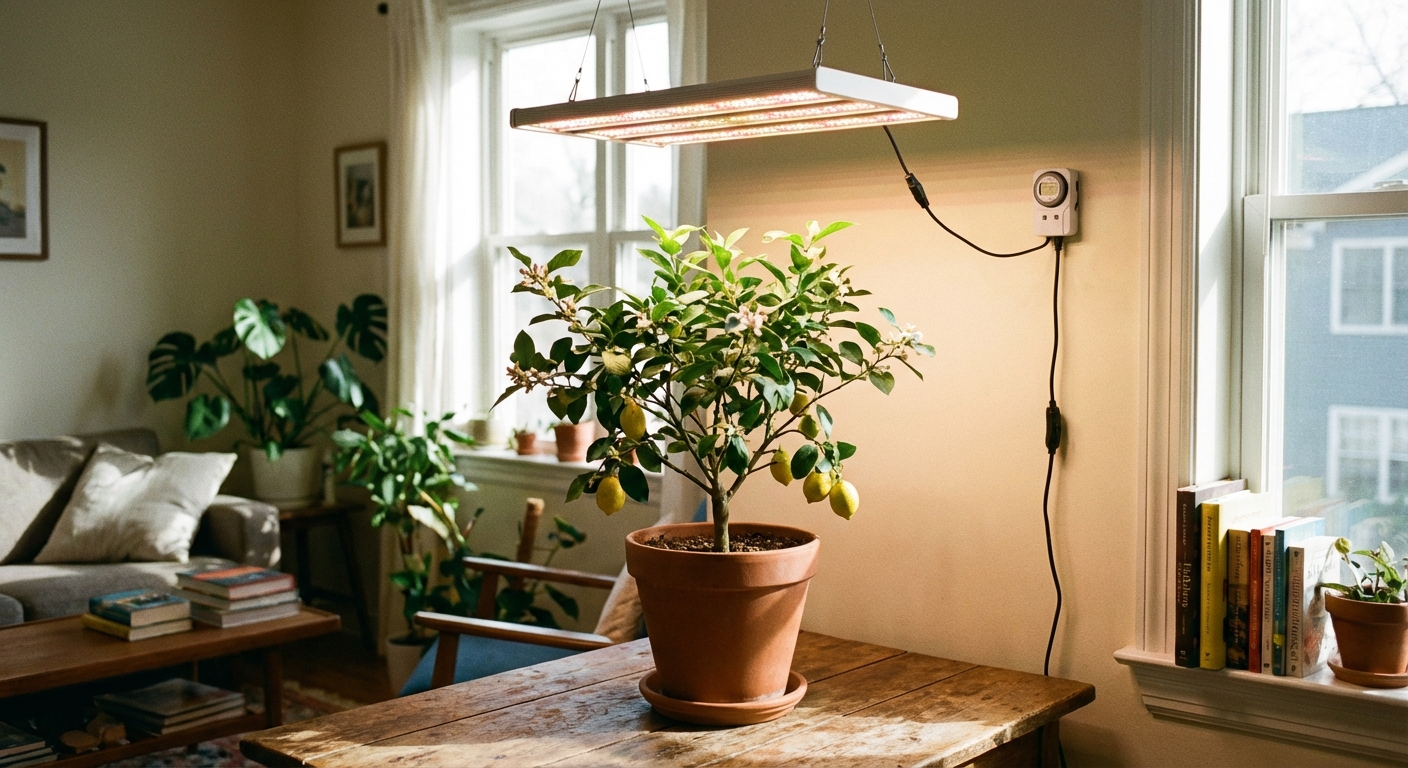
In many homes, especially in winter, a grow light turns “surviving” into “fruiting.” Look for a full-spectrum LED grow light and aim for:
- 12 to 14 hours of light daily (use a timer, your future self will thank you).
- Keep the light close enough to be useful, often 8 to 18 inches above the canopy depending on the fixture.
Clue you need more light: long, stretchy growth, big gaps between leaves, leaf drop, and lots of flowers that never become fruit.
Temperature and humidity
Citrus likes consistency. Most indoor lemons are happiest when your home feels comfortable to you, too.
- Temperature: Aim for 65 to 80°F (18 to 27°C). Avoid cold drafts and heat vents.
- Night drop: Slightly cooler nights are fine, but try to keep it above 55°F (13°C).
- Humidity: Average household humidity can work, but very dry winter air can trigger leaf drop and invite spider mites. A small humidifier nearby helps more than misting.
Watering schedule: how to do it without guessing
Indoor citrus wants a rhythm: deep watering, then a partial dry-down. Not sips every day, and not a swamp for a week.
When to water
- Check the soil with your finger. Water when the top 2 inches feel dry.
- If the pot is large, you can also lift it. A light pot usually means it is time.
How to water
- Water slowly until you see water flowing from the drainage holes.
- Let it drain fully, then empty the saucer.
How often is “normal”?
It depends on light, pot material, and season, but here is a realistic baseline:
- Spring and summer: often every 4 to 7 days
- Fall and winter: often every 7 to 14 days
Two common watering mistakes: keeping it constantly damp (root stress), or letting it bone-dry repeatedly (leaf drop and bud drop). Citrus is surprisingly dramatic about both.
Feeding indoor lemon trees
Lemon trees are hungry plants, especially in containers. If yours is putting out new leaves, flowers, or fruit, it needs nutrients on a regular schedule.
What fertilizer to use
- Choose a fertilizer labeled for citrus or fruiting plants.
- Make sure it includes micronutrients, especially iron, magnesium, manganese, and zinc.
When and how often
- Spring through early fall: feed lightly but consistently. Many gardeners use a diluted liquid fertilizer every 2 to 4 weeks.
- Late fall and winter: if growth slows due to lower light, reduce feeding or pause. If you are using strong grow lights and the plant is actively growing, you can continue with a lighter schedule.
One extra tip for fruiting
During heavy flowering and fruit set, steady nutrition matters more than big doses. Overfertilizing can push leafy growth at the expense of flowers, and it can burn roots. If you are unsure, go weaker and more consistent.
Hand pollination indoors (so flowers become fruit)
Outdoors, bees do this for you. Indoors, you get to play bee. Thankfully, it is easy and kind of charming.
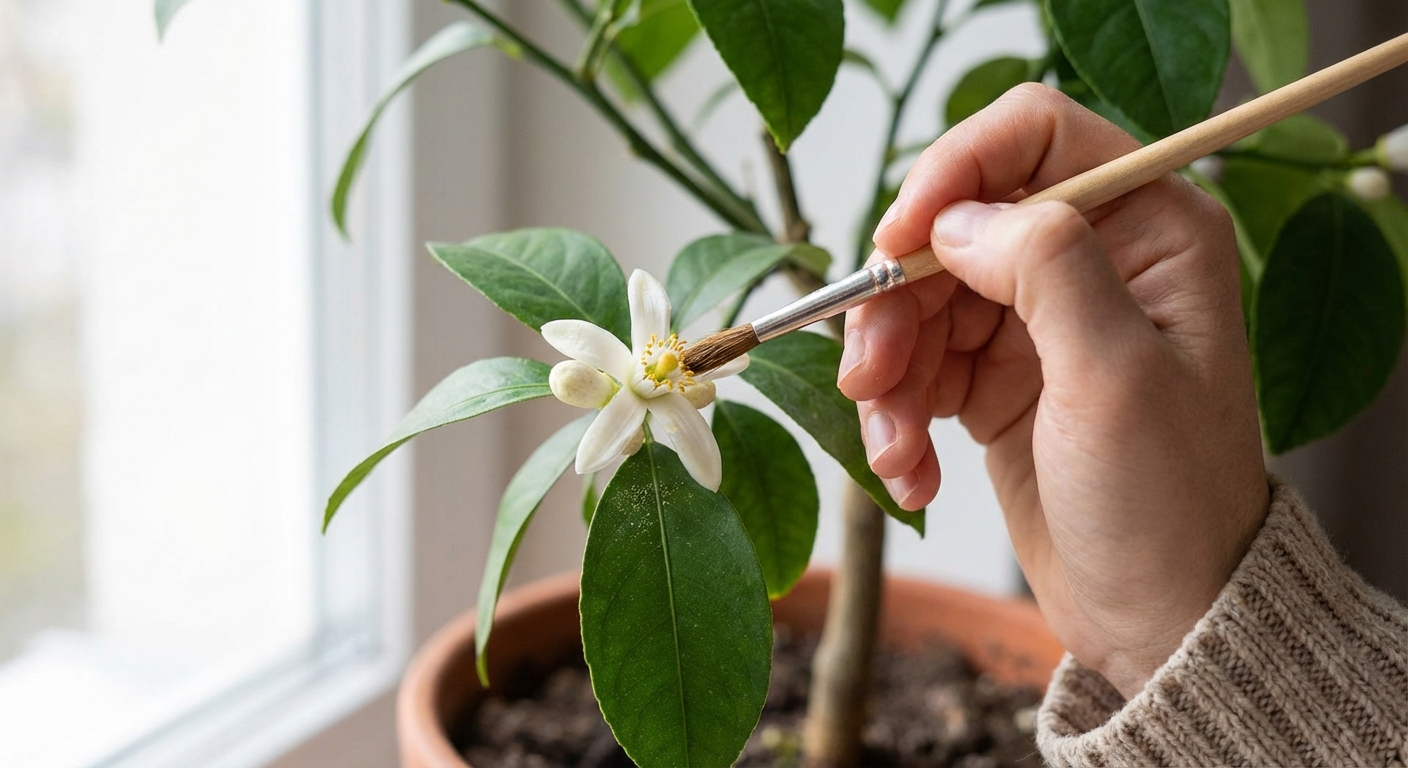
How to hand pollinate citrus blossoms
- Wait until blossoms are fully open.
- Use a small, clean paintbrush or cotton swab.
- Gently swirl inside a flower to pick up pollen.
- Move to the next flower and repeat, doing a few rounds across the tree.
Do this once a day for several days while the tree is blooming. If you have a fan nearby, a gentle breeze can also help move pollen around.
Pruning, shaping, and keeping it manageable
Indoor lemon trees can get leggy if light is marginal, or simply enthusiastic if they are happy. A little pruning keeps your tree balanced and encourages branching.
- Best time: late winter to early spring, just before a growth push.
- Remove: dead twigs, crossing branches, and any growth that shoots straight up and crowds the center.
- Shape: aim for an open canopy so light reaches more leaves.
Watch for suckers: Most indoor citrus is grafted. If you see a vigorous shoot coming from below the graft (often near the base), prune it off. Those suckers can steal energy and will not produce the fruit you want.
Repotting and root care
Citrus likes being slightly snug in its pot, but not strangled. Repot when the tree dries out very fast, roots circle the pot, or growth stalls despite good light and feeding.
How often to repot
- Typically every 2 to 3 years for many indoor trees.
- Top-dressing in between helps: replace the top 1 to 2 inches of soil with fresh mix and a little compost.
Repotting steps
- Choose a pot 1 to 2 inches wider than the current one.
- Gently loosen circling roots.
- Replant at the same depth. Do not bury the trunk flare.
- Water thoroughly and keep it out of harsh, hot sun for a few days while it settles.
Summering outdoors (optional, but amazing)
If you have a balcony, patio, or sunny stoop, your lemon tree will usually be happier outside in warm months. Real sun is hard to beat.
How to move it without shock
- Harden off for 7 to 10 days: start in bright shade, then gradually increase sun.
- Bring it back indoors before nights dip below 55°F (13°C).
- Check for pests before you bring it inside. A quick rinse of the leaves and a close inspection saves headaches.
Common problems and how to fix them
Indoor citrus can be a little theatrical. The good news is that most issues have a clear cause once you know what to look for.
Leaf drop
Most common causes: sudden change in light, overwatering, underwatering, cold drafts, or very dry air.
- Keep the tree in the brightest spot you have and avoid moving it around once it is settled.
- Confirm drainage and adjust watering to the “top 2 inches dry” rule.
- Keep it away from exterior doors, drafty windows, and heating vents.
Yellow leaves
- Older leaves yellowing and dropping: can be normal, especially after a move or seasonal shift.
- Many yellow leaves at once: often watering stress or low light.
- Yellow leaves with green veins (chlorosis): often iron or manganese lockout, commonly from high pH or hard water. Use a citrus fertilizer with micronutrients and consider occasional filtered or rainwater watering.
Flowers but no fruit
- Not enough light is the number one reason.
- No pollination. Hand pollinate during bloom.
- Tree is too young. Some grafted trees fruit quickly, but many still need a season or two of settling in.
- Inconsistent watering can cause blossoms to drop before fruit set.
Fruit forms, then drops
Some fruit drop is normal. A young tree often sets more fruit than it can mature. But heavy drop usually points to stress.
- Increase light and keep watering consistent.
- Feed regularly during active growth.
- Avoid big temperature swings, especially cold nights near windows.
Sticky leaves, tiny bumps, or webbing
These are classic indoor pest signs.
- Spider mites: fine webbing, pale speckling. Rinse leaves, increase humidity, and treat with insecticidal soap if needed.
- Scale: small brown bumps on stems or leaf veins, sticky honeydew. Remove with a cotton swab dipped in rubbing alcohol, then monitor.
- Mealybugs: white cottony clusters. Dab with alcohol and follow up with soap sprays.
For any pest issue, isolate the plant, treat consistently, and wipe down nearby surfaces. Citrus leaves are glossy and pests love to hide along the midrib and leaf undersides.
A simple indoor lemon tree routine
If you want a no-fuss checklist, here is the rhythm I recommend to new citrus growers:
- Daily: glance at leaves for pests, check if it is wilting or dropping buds.
- Weekly: rotate the pot, feel soil moisture, wipe dusty leaves with a damp cloth.
- Every watering: water deeply, then drain fully.
- Every 2 to 4 weeks (growing season): fertilize lightly with a citrus fertilizer that includes micronutrients.
- During bloom: hand pollinate for a few days.
And yes, I talk to my plants. No, my lemon tree has not answered yet. But I swear it perks up when I tell it how good it smells.
Frequently asked questions
How long does it take an indoor Meyer lemon tree to produce fruit?
A grafted Meyer lemon can flower and fruit within 1 to 2 years in good conditions, sometimes sooner if you buy a more mature tree. Low light is the biggest delay indoors.
Do I need two lemon trees to get lemons?
No. Most lemons, including Meyer, are self-fertile. One tree can produce fruit on its own, especially if you hand pollinate indoors.
Why are my lemons staying green?
They often ripen slowly indoors. Fruit can take months to mature. Temperature and variety affect color, and some lemons can be ripe while still slightly green. Judge ripeness by size, a slight softening, and how easily the fruit releases from the stem when gently twisted.
Can I grow a lemon tree from a grocery store lemon seed?
You can grow a pretty plant, but fruit is a long, uncertain wait. Seed-grown trees may take many years and may not match the parent fruit. If your goal is indoor lemons, start with a dwarf grafted tree.
Final pep talk from someone who has cleaned up a lot of dropped leaves
Indoor lemon trees teach patience, but they also reward it in a very tangible way. If your tree drops leaves after a move, sulks in winter, or makes you wonder if it secretly hates you, take a breath. Adjust the light, check drainage, water with intention, and feed consistently. Citrus is resilient when its roots and sunlight needs are met.
When you pick your first homegrown lemon, you will understand why so many of us keep making room for just one more plant.