
How to Grow Eggplant at Home

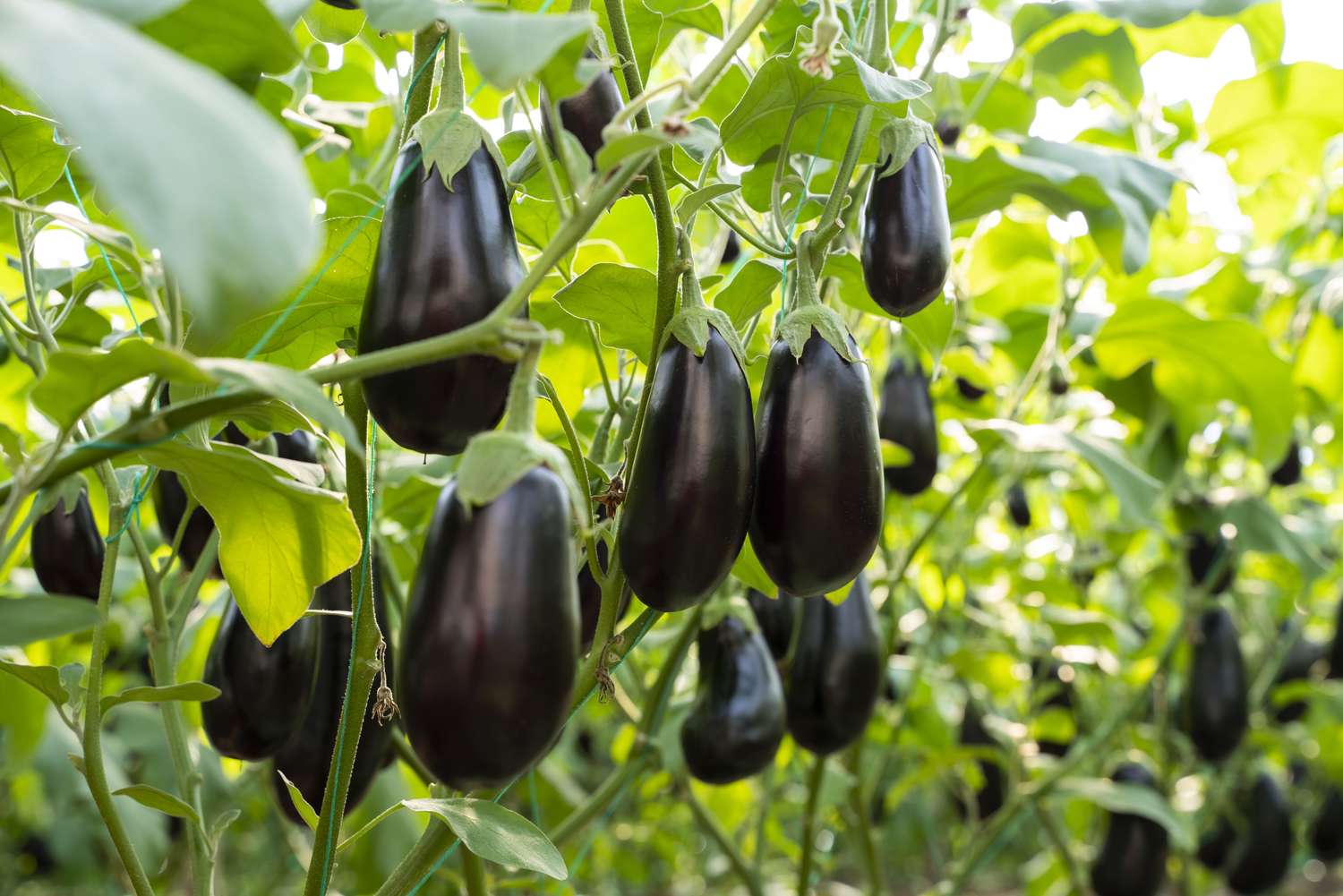
Eggplant is one of those plants that looks a little fussy on paper, but once you understand what it is really asking for, it becomes wonderfully dependable. Give it real heat, full sun, and steady moisture, and it will reward you with glossy fruit that makes you feel like you should be wearing an apron and running a tiny farm stand.
I like to think of eggplant as a warm-blooded vegetable. If tomatoes are happy in summer, eggplant wants that same summer, turned up a notch. Let’s get you there, whether you are growing in a backyard bed or on a sunny patio.

Pick the right eggplant variety
Variety choice matters more with eggplant than many gardeners expect. The “perfect” variety is the one that matches your space, your summer heat, and how you like to cook.
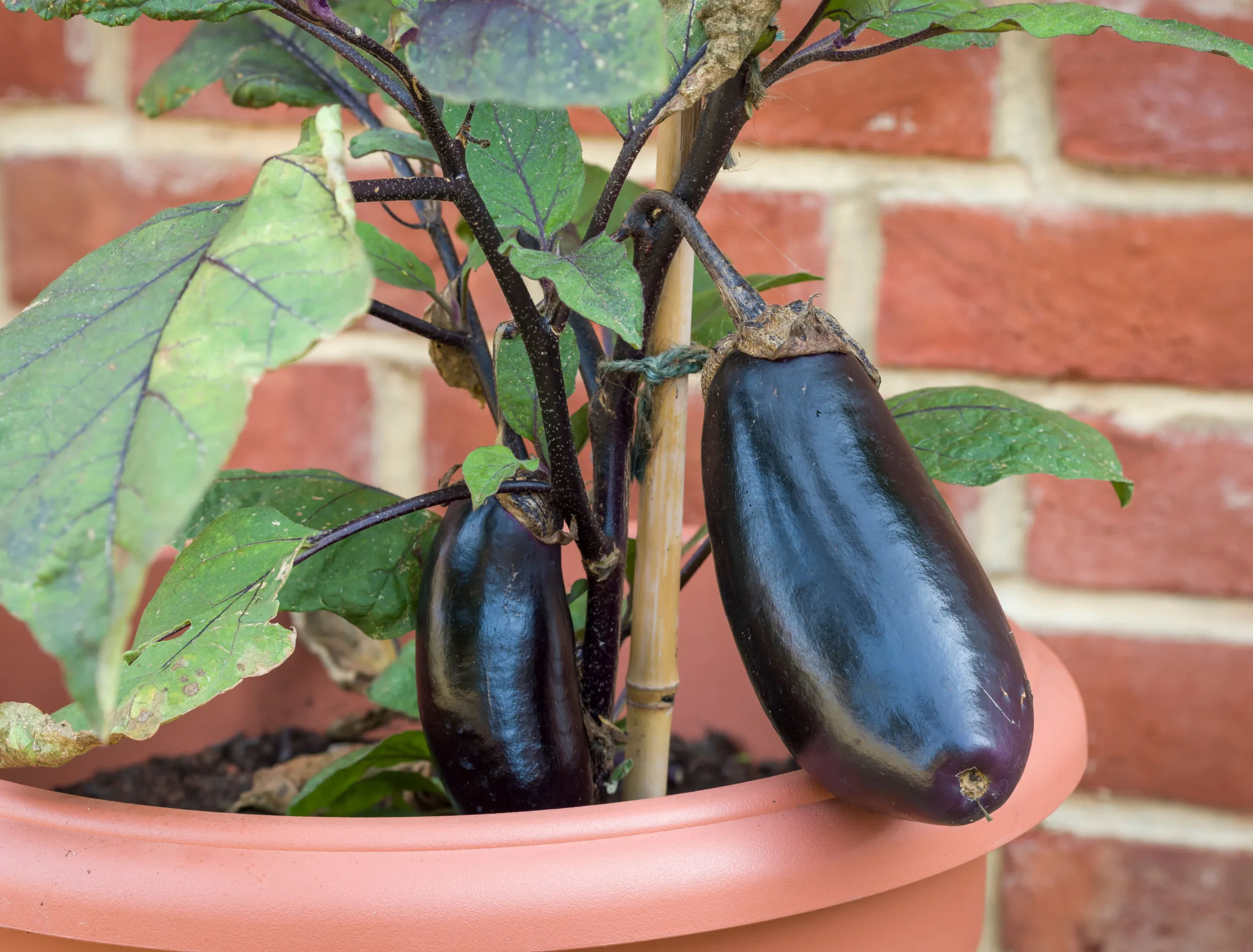
Best for containers
- Fairy Tale: petite purple-and-white striped fruit, fast and generous in pots.
- Patio Baby: bred for containers, compact plant, early producer.
- Hansel: slender, tender fruit; great for grilling; works well in large containers.
- Little Finger: long thin fruit, reliable and productive in smaller spaces.
Best for in-ground beds
- Black Beauty: classic large deep-purple fruit; needs heat and a bit more time.
- Classic Italian types (large oval fruit): excellent for roasting and parmesan-style dishes.
- Asian types (long slender fruit): often less bitter, quicker to cook, and frequently high yielding.
Quick rule of thumb: If your summers are short or nights run cool, choose smaller-fruited, earlier varieties. Big, heavy eggplants are delicious, but they take longer and demand more consistent heat.
Sun and heat
Eggplant wants:
- Full sun: 6 to 8+ hours, and as much as you can reasonably give it.
- Warm soil: eggplant sulks in cold ground and will just sit there.
- Warm nights: consistent growth happens when nights are comfortably mild.
If your spring is slow and chilly, warm the bed with black plastic or dark landscape fabric for a week or two before planting. In containers, you are already ahead because pots warm faster.
Seed or transplants
Starting from seed
Eggplant seeds like warmth even more than tomato seeds. For best germination, aim for about 80 to 90°F (27 to 32°C). A heat mat makes this easy if you have one.
- When to start: about 8 to 10 weeks before your last expected frost date.
- Temperature: warm conditions help seeds sprout quickly and evenly.
- Light: once sprouted, give strong light close overhead to prevent leggy seedlings.
- Pot up: if roots fill the starter cells, move to a larger pot so growth does not stall.
Harden seedlings off gradually, but do not rush them outside into cold nights. Eggplant does not forget a chilly week.
Nursery transplants
If you want the simplest path, buy healthy transplants. Look for stocky plants with deep green leaves and no pests on the undersides.
- Avoid plants already flowering heavily in tiny pots. They can be rootbound and stressed.
- Choose plants with thick stems and compact growth, not tall and floppy.
Where to plant
In-ground beds
Eggplant loves rich, well-drained soil with lots of organic matter. Before planting, work in compost and, if your soil is lean, a balanced organic fertilizer.
- Spacing: generally 18 to 24 inches between plants (more room improves airflow and reduces stress).
- Rows: 30 to 36 inches apart for comfortable harvest access.
Containers
Containers are fantastic for eggplant as long as you go big enough and keep up with watering.
- Container size: 5 to 10 gallons per plant is the sweet spot.
- Soil: quality potting mix plus compost. Avoid heavy garden soil in pots.
- Drainage: non-negotiable. Eggplant hates wet feet, even though it likes steady moisture.
Planting time
Plant eggplant outdoors only after your frost risk has passed and the weather has settled into true warmth. If tomatoes are still wearing their sweaters, eggplant is not ready.
- Night temperatures: ideally steady at about 55°F (13°C) or warmer.
- Soil temperature: aim for roughly 65°F (18°C) or warmer for reliable growth.
- Plant at the same depth as the transplant was in its pot, or just slightly deeper.
- Water in thoroughly to settle soil around the roots.
- Add mulch once the soil is warm to conserve moisture and reduce stress.
In windy spots, plant next to a fence or use a sturdy stake early. A loaded eggplant branch can snap fast.
Staking and support
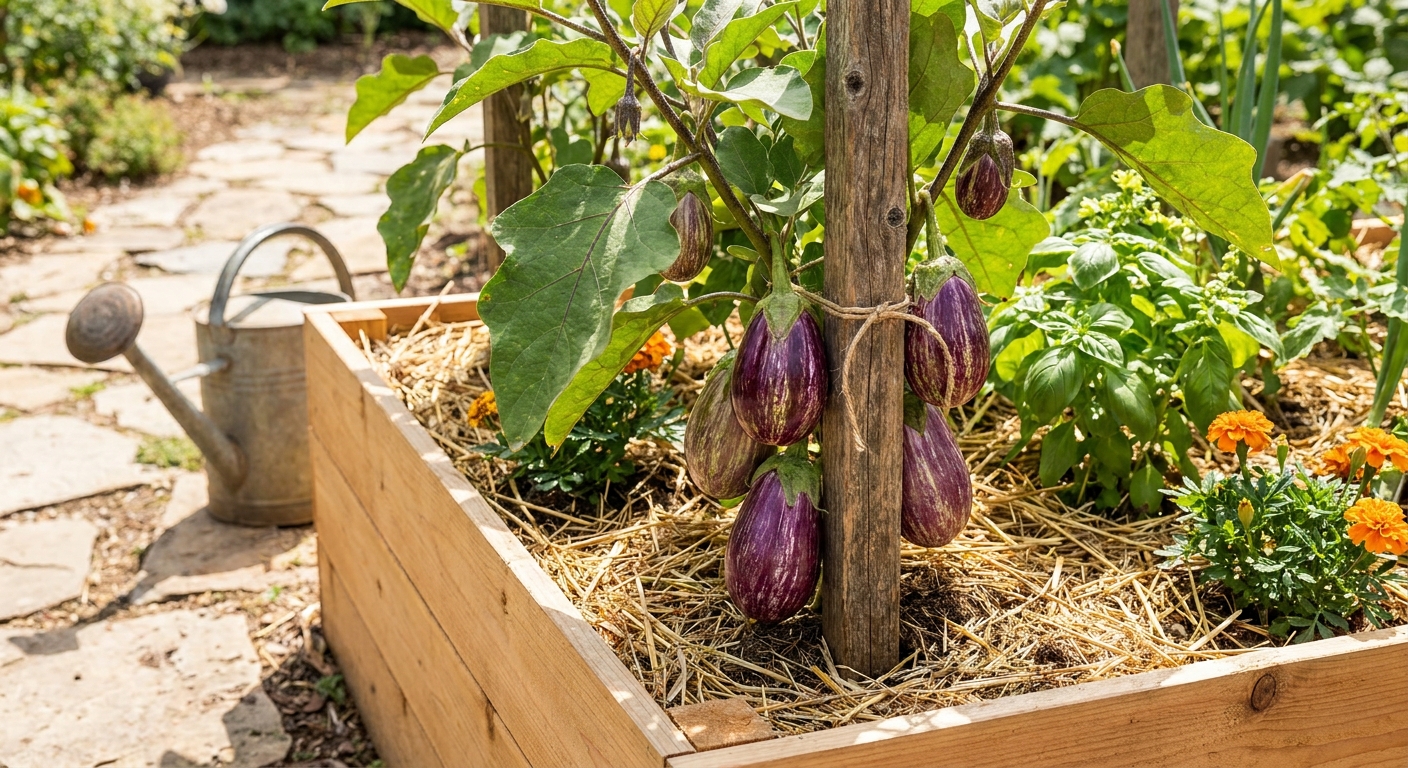
Many eggplants benefit from support, especially in containers or when fruit sets heavily.
- Single stake: simple and effective, tie loosely with soft plant ties.
- Tomato cage: works well for bushy varieties, especially in raised beds.
Support is not just about keeping plants upright. It also keeps fruit off the soil and improves airflow, which helps with disease prevention.
Watering rhythm
Eggplant wants consistent moisture. Big swings, very dry then very wet, can lead to flower drop and stressed leaves, and they can contribute to tougher or more bitter-tasting fruit, especially if fruit is allowed to get overmature.
- Deep watering: water slowly so moisture reaches the root zone.
- Morning is best: leaves dry faster, lowering disease risk.
- Mulch: straw, shredded leaves, or untreated grass clippings help keep moisture even.
Container note: pots can need daily watering during heat waves. If you are watering every day, check that the potting mix is not compacted and that water is actually soaking in, not running down the sides.
Feeding eggplant
Eggplant is a moderately heavy feeder, especially once it starts flowering and setting fruit.
Simple organic feeding plan
- At planting: mix compost into the bed or container and add a balanced organic fertilizer if needed.
- When flowering begins: side-dress with compost or apply an organic vegetable fertilizer.
- During heavy fruiting: continue light feeding every few weeks, especially in containers where nutrients wash out faster.
Container feeding tips
- Easy mode: mix a slow-release organic fertilizer into the potting mix at planting time.
- Boost mode: once flowering starts, add a diluted liquid feed every 1 to 2 weeks if growth looks slow or leaves look pale.
If plants are huge and leafy but not flowering well, ease up on nitrogen-heavy inputs. Too much nitrogen can push leafy growth at the expense of fruit.
Pollination and fruit set
Eggplant flowers are self-fertile, but they still benefit from gentle movement. If your plants flower but do not set fruit, try:
- Lightly tapping flower clusters midday to shake pollen loose.
- Making sure plants are not heat-stressed or drought-stressed.
- Ensuring nighttime temperatures are not staying cool for long stretches.
Helpful targets: fruit set is often slow when nights hang below about 55°F (13°C). It can also dip during extreme heat spells, even when the plant looks fine.
Organic fixes for common problems
Flea beetles
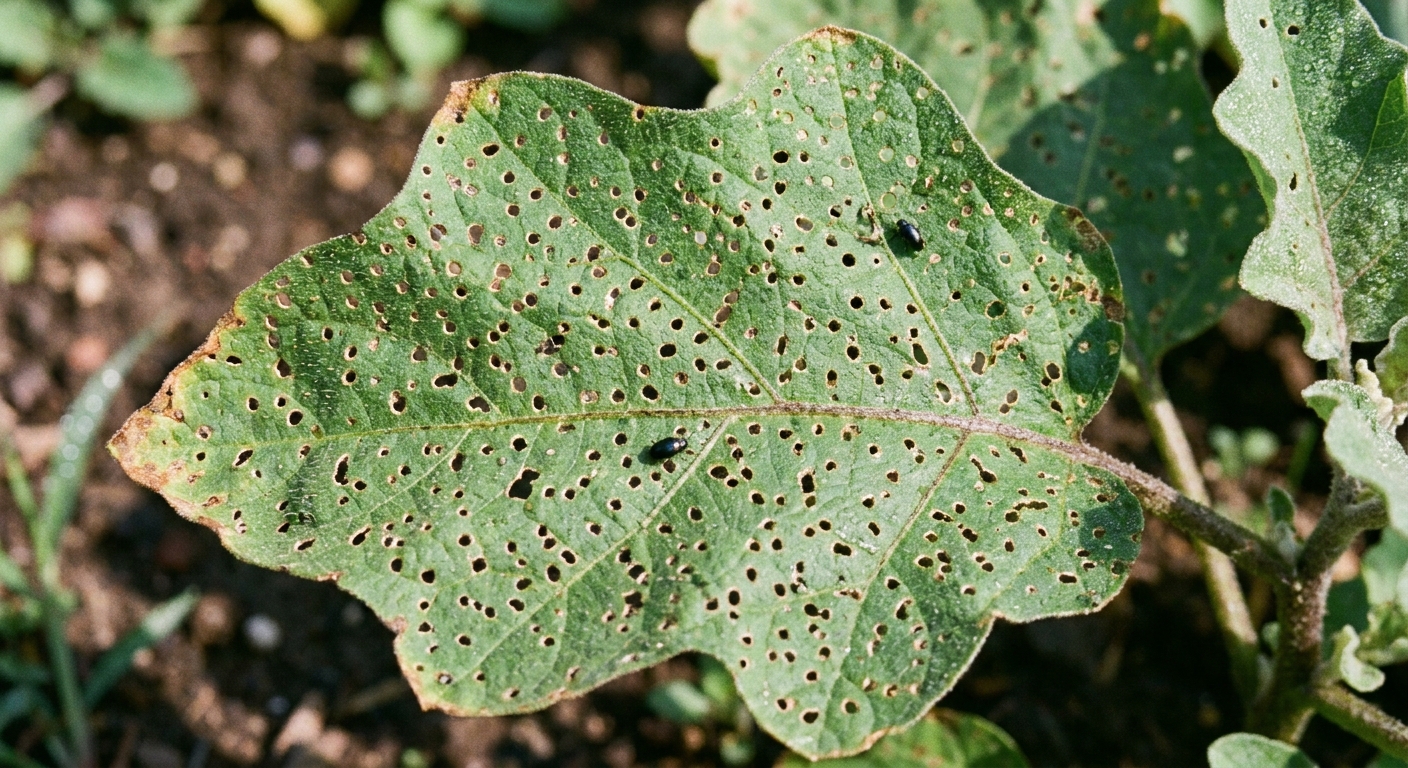
Flea beetles can chew eggplant leaves into lace, especially when plants are small. Mature plants usually outgrow the damage, but seedlings can stall.
- Use row cover early: lightweight insect netting is a type of row cover, and it blocks beetles during the vulnerable stage.
- Mulch: can reduce beetle activity by interrupting their life cycle at the soil surface.
- Handy organic option: dusting with kaolin clay can discourage feeding.
- Organic spray option: spinosad may help in some situations when used carefully and according to label directions. Apply in the evening and avoid spraying open blooms to reduce impact on pollinators.
One of my favorite low-stress strategies is to baby young eggplants under row cover, then remove it once plants are sturdy and growing fast.
Colorado potato beetle
If you have ever grown potatoes, you already know this little striped menace. Colorado potato beetles love eggplant, too, and they can defoliate a plant surprisingly fast.
- Hand-pick: check leaves (especially undersides) and squish orange egg clusters and soft young larvae.
- Row cover: very effective early in the season if beetles are common in your area (remove when flowering if you need pollinator access).
- Organic option: Bt var. tenebrionis can work well on young larvae when used per label directions.
Blossom drop
Eggplant can drop blossoms when conditions are stressful. The most common triggers:
- Temperature swings: very hot days paired with cooler nights, or unseasonably cool weather.
- Water stress: letting plants dry out, then overcorrecting.
- Too much nitrogen: lush leaves, fewer fruit.
Fix it: stabilize moisture with deep watering and mulch, avoid high-nitrogen feeding, and be patient. Once weather settles into warm consistency, fruit set often improves quickly.
Yellowing leaves
Some lower leaf yellowing can happen as plants age, but widespread yellowing is a clue to investigate.
- Overwatering or poor drainage: roots struggle, leaves yellow. Improve drainage, water less often but more deeply.
- Underfeeding in containers: nutrients wash out fast. Add a gentle organic fertilizer and compost top-dress.
- Cool stress: chilly nights can make plants look pale and stalled. Protect with row cover temporarily or wait for warmer weather.
- Pests: check leaf undersides for aphids or spider mites. A strong water spray and insecticidal soap can help if needed.
My habit: before I add anything, I check soil moisture with my finger and inspect the undersides of leaves. Most yellow-leaf mysteries are solved right there.
Disease prevention basics
Eggplant is not complicated, but it does appreciate a clean, breathable setup. Most disease issues are easier to prevent than to fix.
- Rotate crops: avoid planting eggplant (and its relatives like tomatoes, peppers, and potatoes) in the same spot year after year.
- Water at the base: keep foliage drier to reduce leaf spot pressure.
- Give it air: proper spacing and staking reduce humidity around leaves.
- Sanitation: remove heavily spotted leaves, and clean up plant debris at season’s end.
If a plant suddenly wilts and does not bounce back after watering, consider wilt diseases (like verticillium or bacterial wilt). In that case, the best move is usually to remove the plant and lean hard on rotation next season.
Optional pruning
Eggplant does not require pruning, but a tiny bit of tidying can help in some gardens.
- For airflow: remove a few lower leaves that touch the soil once the plant is established.
- In cool climates: some gardeners pinch off the first flower or two to encourage the plant to size up before fruiting. Consider it optional, not a rule.
Harvesting eggplant
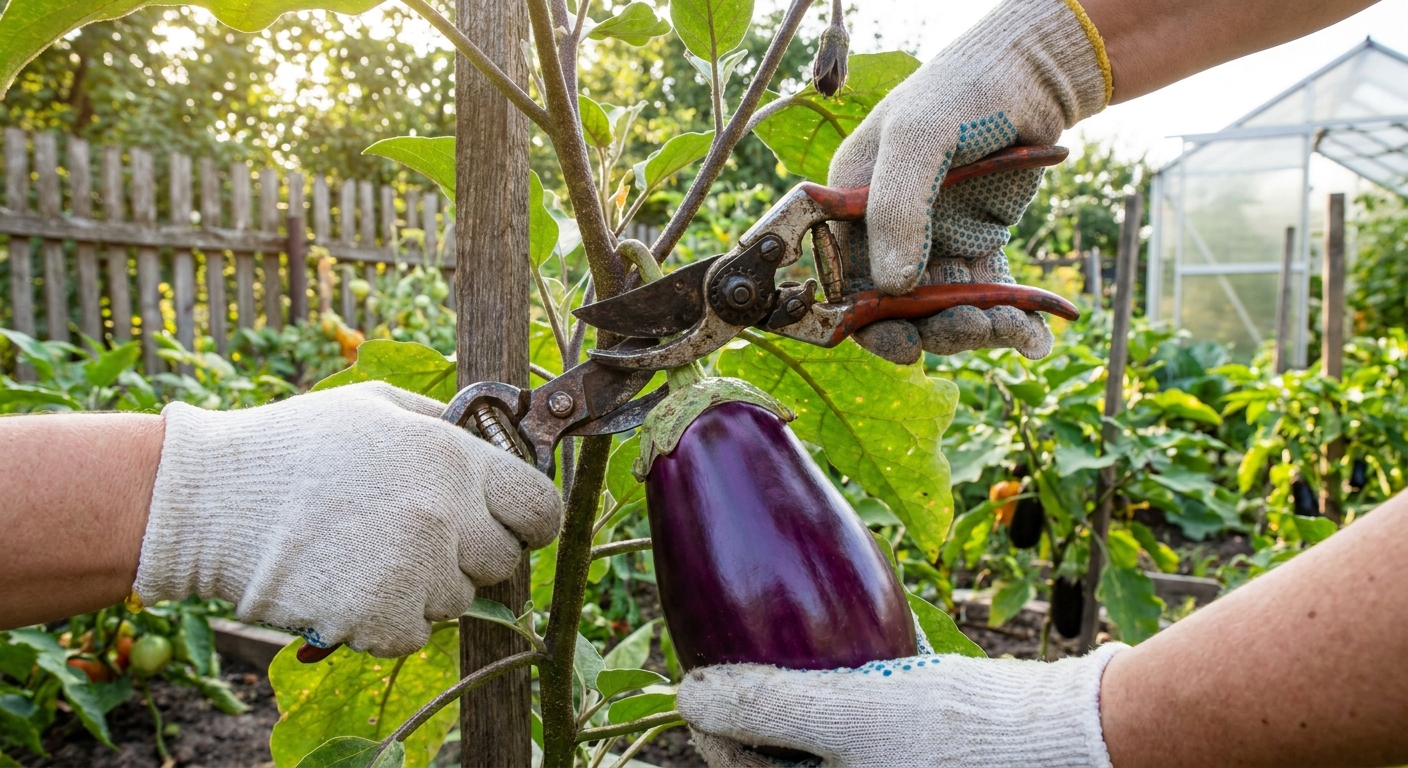
Eggplant is best harvested when the skin is glossy and the fruit feels firm and heavy for its size. If it gets dull, overly hard, or the seeds inside start to brown, it is moving past its prime.
- Use pruners or a knife. The stem can be tough and spiky.
- Harvest regularly to encourage the plant to keep producing.
If you are unsure, pick one a little earlier rather than later. Younger eggplant is often sweeter and more tender.
Season extension
Because eggplant loves warmth, it is a perfect candidate for simple season extenders.
- Early season: warm soil with dark cover; use row cover to reduce wind and pest pressure.
- Late season: cover plants on cool nights to keep fruit ripening.
At the end of the season, pull plants and add them to the compost if they were healthy. If you had significant pest or disease issues, discard plant debris to reduce next year’s problems.
Eggplant success checklist
- Full sun and real summer heat
- Warm soil before planting (about 65°F or warmer is a great target)
- Big container (5 to 10 gallons) or roomy spacing in beds
- Consistent watering plus mulch
- Support early so branches do not snap
- Row cover when plants are young if flea beetles or potato beetles are a problem
- Harvest glossy fruit before it turns dull and seedy
If eggplant has intimidated you before, try a compact variety in a big pot where you can control warmth and moisture. Once you get your first shiny fruit, you will understand why I always make room for at least one plant, even when my garden is already “full.”